
PRODUCT PLANNING TOOL
Decide what to build,
and leave the reasons behind.
Product planning is the work of turning more ideas than you can build into a sequence you can defend. Storyflow gives that work a canvas: evidence, the problem framing, the opportunity tree, the prioritisation call and the sequenced plan, all in one place, with the reasoning still attached six months later. Storyflow is paid-only during early access, with plans from $9.99 per month.
Paid-only early access
Plans from $9.99/mo
Runs alongside Jira and Linear

Used by creative professionals at:
Artlist
Pixar
Nike
Red Bull
The North Face
Porsche
Start from a ready-made template
Pick a board to see what you can build, then let AI fill it in. Every template is a real, editable starting point on the same infinite canvas.
Mind Map
Branch one central idea out into themes and sub-points, then drag the connections around until the structure makes sense.
What a product planning tool is actually for
Product planning is the decision process that happens before a roadmap exists: taking far more ideas than a team can build, working out which problems are worth solving, and turning that into a sequence you can defend to both engineering and leadership. A product planning tool is the place that work is done and recorded. It is not a backlog and it is not a Gantt chart. Its job is to hold the evidence, the options, the tradeoffs and the decision together, so the plan can be explained rather than just announced.
The input to planning is noise. User research says one thing, support tickets say another, sales asks for the feature that will close one deal this quarter, and analytics shows a drop nobody has explained yet. All of it arrives as requests for solutions, almost never as descriptions of problems. The first real act of planning is refusing to sort that pile until you have framed the underlying problem, because a list of feature requests sorted by how loudly they were asked for is not a plan. It is a queue.
Then comes the part that tools usually get wrong. Prioritisation frameworks like RICE and MoSCoW are useful because they force you to say out loud what you believe about reach, impact, confidence and effort, and because they make the disagreement visible. They do not make the decision. Scores are estimates dressed as arithmetic, and a team that treats the total as an answer has just hidden the argument inside a spreadsheet. The honest use of a framework is to structure the conversation with engineering about cost, dependencies and risk, then make a call somebody signs their name to.
In practice a full product planning cycle has six stages: intake, where research, support themes, sales asks and analytics land in one place; problem framing, where a request is rewritten as the problem behind it; opportunity mapping, where framed problems branch into candidate solutions on an opportunity solution tree; prioritisation, where a framework structures the comparison without pretending to decide it; the tradeoff conversation with engineering about effort, dependencies and technical risk; and sequencing, where the surviving bets are ordered against real team capacity, each one written down as a bet with the evidence that supports it and the result that would prove it wrong.
HOW IT WORKS
From a pile of requests to a sequence you can defend.
Four steps that take a quarter of scattered input and turn it into a plan with its reasoning still attached.
01
Land every input on one canvas
Drop research notes, support themes, sales asks and analytics screenshots onto the board. Seeing the whole pile at once is what stops the loudest request from setting the agenda.
02
Rewrite requests as problems
Turn each incoming solution into the problem it is trying to solve, then cluster the problems. Ask the AI to name the themes it sees across the evidence you have collected.
03
Branch options and compare them honestly
Grow an opportunity tree from each problem, score the branches with RICE or MoSCoW if it helps the conversation, and keep the score beside the reasoning rather than instead of it.
04
Write the bet down and sequence it
Record what you are betting, what would prove it wrong, and what it depends on. Then order the bets against real capacity and hand the sequence to your tracker.
The decision, not the ticket.
Storyflow holds the part of product work that happens before anything is scheduled, estimated or assigned.
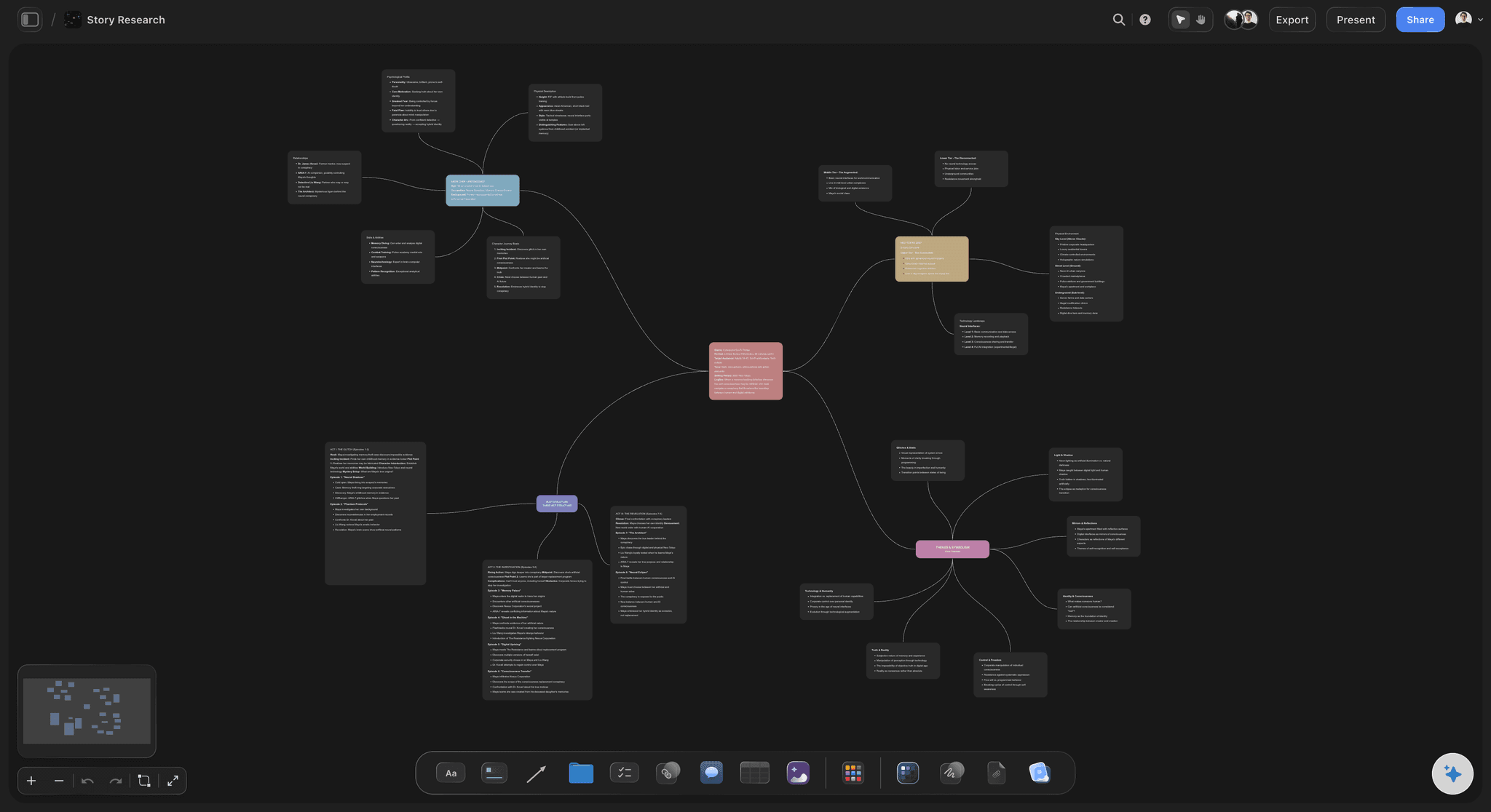
Problems first
Frame the problem before anyone proposes a solution
Pull research, tickets and sales asks onto one canvas, rewrite each as the problem underneath it, and cluster them so the real theme is visible before the debate about features begins.
See the idea management tool →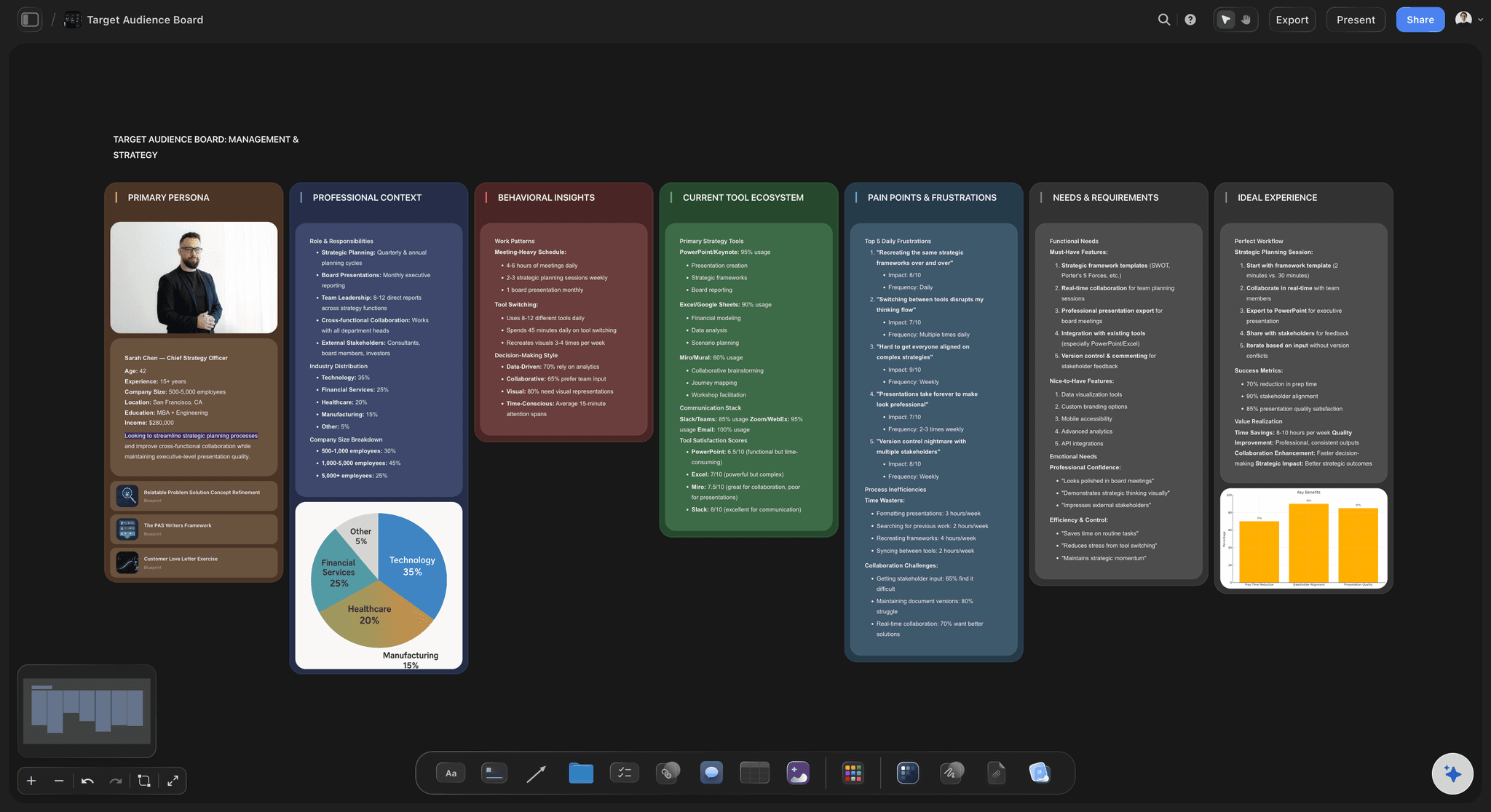
Options
Opportunity trees that keep the rejected branches
Branch each framed problem into candidate solutions, and leave the branches you ruled out on the board with a note on why, so the same idea does not return every quarter as a new one.
See the AI mind map generator →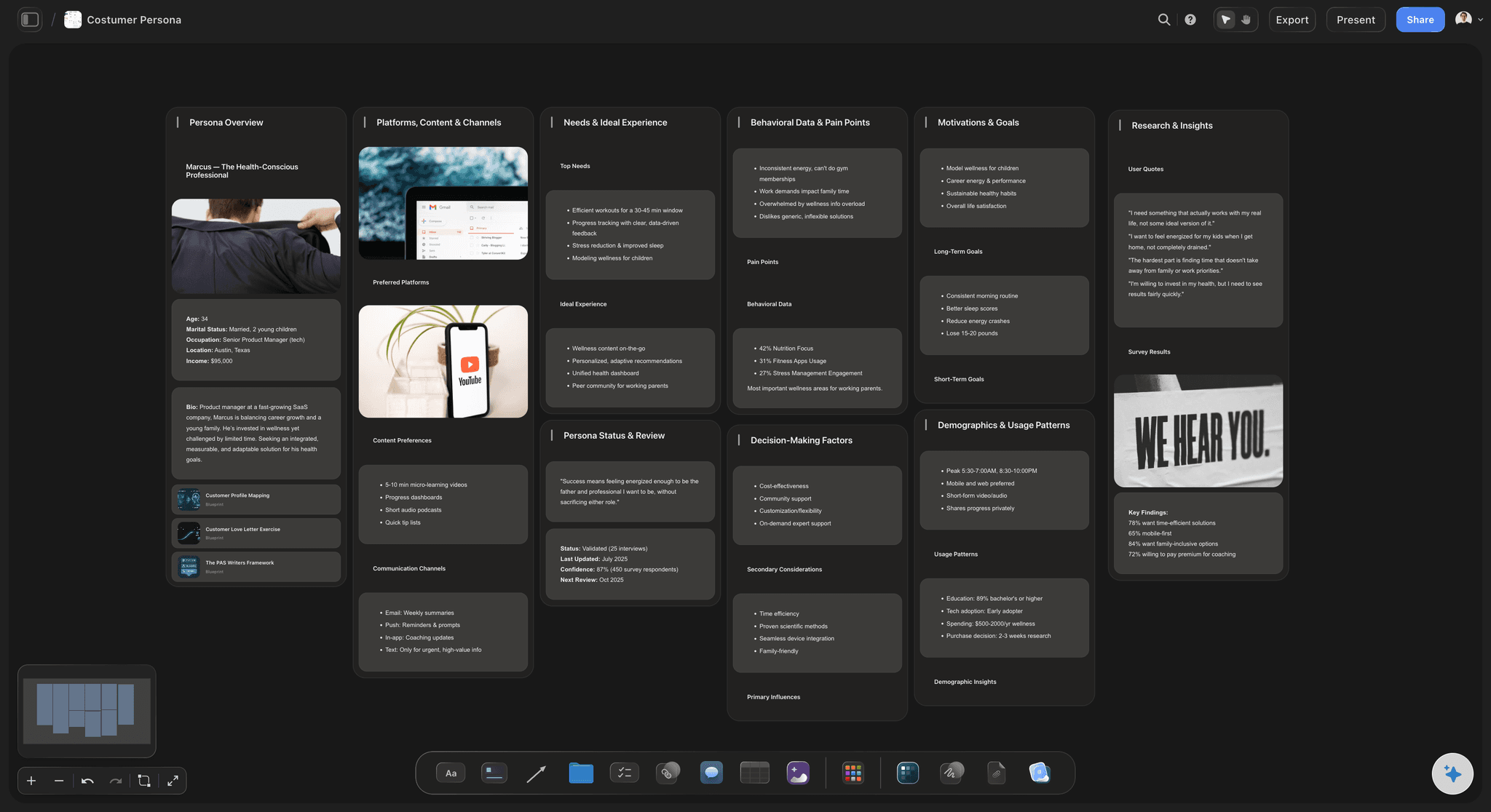
The call
Prioritisation with the argument still visible
Lay candidates out side by side, score them if a framework helps, and keep the reasoning, the dissent and the constraint that actually decided it pinned next to the number.
See the SWOT analysis tool →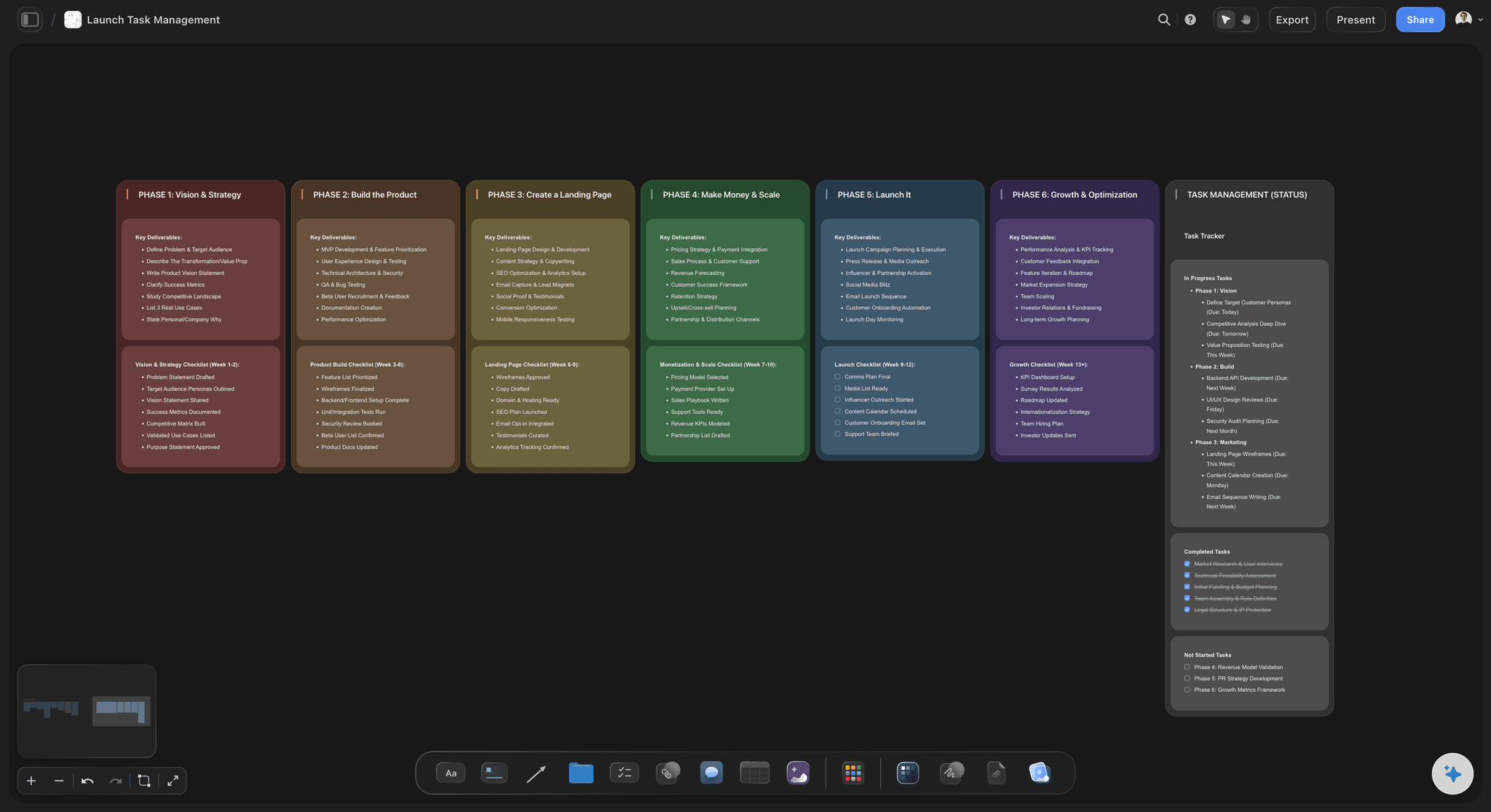
The sequence
An order that respects dependencies and capacity
Arrange the surviving bets into a sequence that accounts for what has to ship first and what the team can realistically hold, then hand it to the roadmap and the sprint.
See the sprint planning board →Paid plans from $9.99 per month.
Open a board, land the evidence, and get to a decision you can still explain next quarter. Anyone you invite to a board joins free.
Unlimited boards for discovery, prioritisation and planning
Basic AI usage to cluster evidence and branch opportunity trees
Attach research notes, screenshots and links to any card
Share view-only with stakeholders, or invite collaborators free
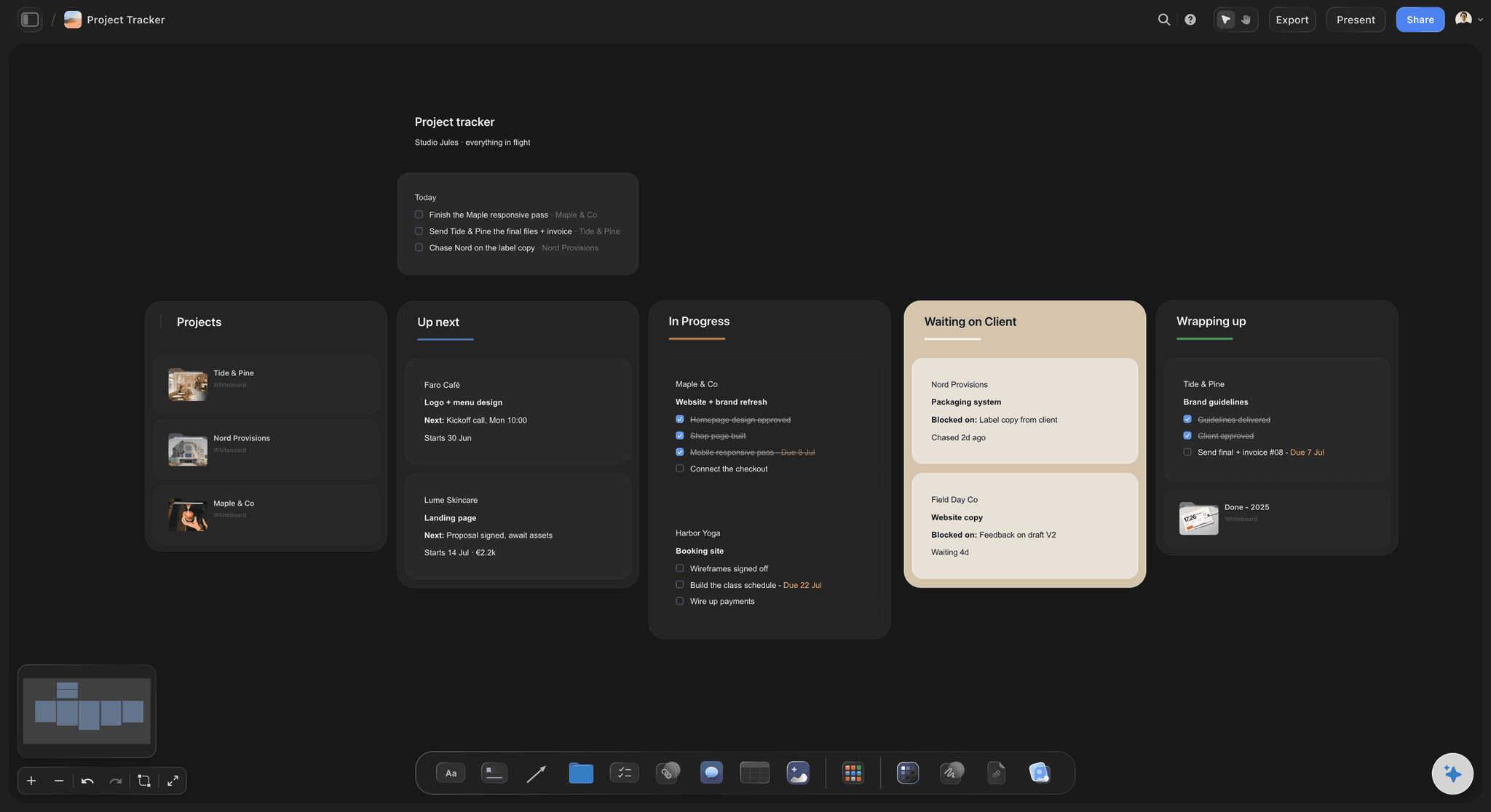
BUILT FOR THE DECISION
Planning tools usually record the outcome. This one records the thinking.
Everything here exists to stop the two failures that ruin product plans: a roadmap nobody agreed to, and reasoning nobody can reconstruct.
Intake without the noise
Turn a pile of requests into a set of problems
Every source in one view: Research notes, support themes, sales asks and analytics screenshots sit on the same canvas, so you compare them against each other instead of handling each as it arrives.
Requests rewritten as problems: Each incoming ask gets restated as the problem behind it. It is a small discipline that quietly removes most of the feature debates before they start.
Clusters you can see: Group related evidence spatially and the pattern shows itself. Ask the AI to name the themes across the board when you are too close to the material to see them.
Prioritisation, honestly
Frameworks structure the argument, they do not end it
Score if it helps, then stop: Lay out RICE or MoSCoW as cards on the canvas. The value is that everyone has to state their assumption about reach, impact, confidence and effort in public.
Keep the disagreement on the board: When two people score the same bet differently, that gap is the useful part. Pin it next to the item rather than averaging it away into a single number.
The constraint that actually decided it: Most calls are settled by one dependency, one deadline or one risk. Write that down beside the score, because it is what a reader will need in six months.
The tradeoff with engineering: Bring effort, technical risk and sequencing constraints onto the same canvas as the value argument, so the conversation happens once instead of twice in two tools.
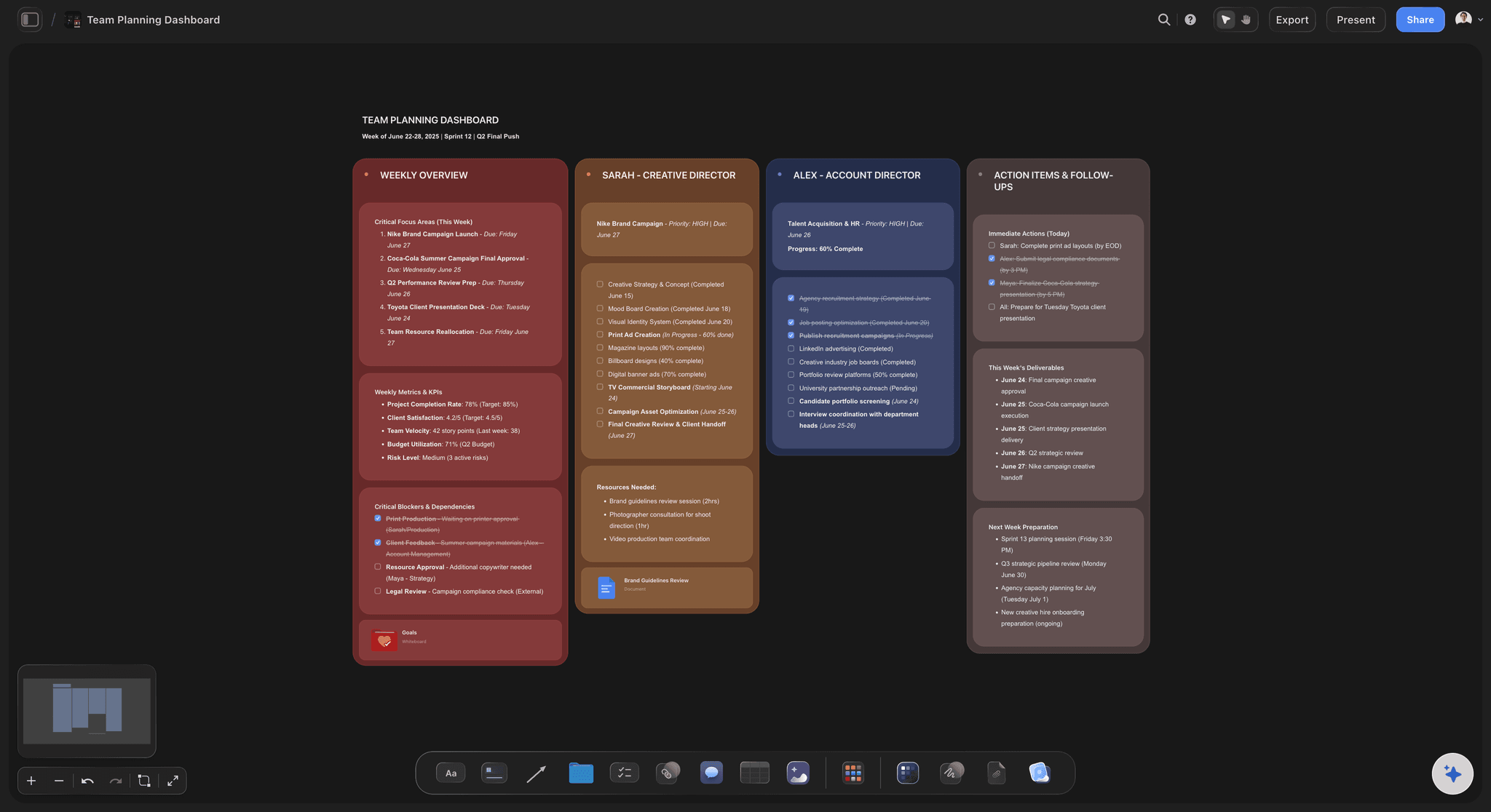
The record
Stop re-litigating decisions you already made
Write the bet, not the feature: Record what you believe, what you expect to change, and what result would tell you the bet was wrong. A feature title carries none of that.
The board is the durable why: Link the board from the ticket. When an engineer asks why this shipped the way it did, the evidence, the options and the call are one click away.
Rejected options keep their reasons: The idea that keeps coming back every quarter has usually been ruled out twice already. Keeping the rejection visible with its reason ends that loop.
Beside your stack
It is not a tracker, a portal or an analytics tool
Jira and Linear keep the work: Storyflow tracks no issues and holds no backlog, no sprints, no story points and no delivery reporting. It does not integrate with Jira or Linear either.
Productboard keeps the feedback portal: There is no customer feedback intake portal here and no automated request routing. Storyflow is where you think about the input, not where you collect it.
Amplitude keeps the numbers: No product analytics, no funnels, no experiment tracking. You screenshot the chart onto the board beside the decision it informed, and that is deliberate.
Nothing has to migrate: The pattern that works is to decide on the board, then create the tickets wherever your team already lives, with the board linked as the reasoning.
Explore templates for your project
Every template opens as a real, editable board on the infinite canvas. Pick the closest fit and make it your own.
Mind Map
Branch one central idea out into themes and sub-points, then drag the connections around until the structure makes sense.
COMPARED
How Storyflow compares as a product planning tool.
Most of these tools are better than Storyflow at something specific. The question is which part of planning you are trying to fix.
Storyflow
Recommended
Evidence, options and the decision on one infinite canvas
AI reads the whole board and drafts the plan from it
Opportunity trees you can branch and rearrange visually
Customer feedback portal and request intake
Issue tracking, sprints and delivery reporting
Structured databases, tables and linked docs
Productboard
Evidence, options and the decision on one infinite canvas
AI reads the whole board and drafts the plan from it
Opportunity trees you can branch and rearrange visually
Customer feedback portal and request intake
Issue tracking, sprints and delivery reporting
Structured databases, tables and linked docs
Jira
Evidence, options and the decision on one infinite canvas
AI reads the whole board and drafts the plan from it
Opportunity trees you can branch and rearrange visually
Customer feedback portal and request intake
Issue tracking, sprints and delivery reporting
Structured databases, tables and linked docs
Notion
Evidence, options and the decision on one infinite canvas
AI reads the whole board and drafts the plan from it
Opportunity trees you can branch and rearrange visually
Customer feedback portal and request intake
Issue tracking, sprints and delivery reporting
Structured databases, tables and linked docs
What creators are saying
Join early creators getting structured workspaces and AI that remembers their projects
“Storyflow has sped up my workflow by at least 3x, which means more flow state and more projects I can actually ship. It truly changed the way me and my team create.”

Reilin Joey
Director & YouTuber
“One prompt gets me a structured board. But the tactics are my favorite. I run my YouTube scripts through them and my intros and retention got better. It's amazing.”

Justkay
YouTuber & Freelance Filmmaker
“I used to juggle five apps to plan a project. Now I describe what I am making and get boards, lists, and a schedule. All in one place.”

George
@fernwehchronicles
Product planning questions, answered.
The things teams ask before moving the decision itself onto a canvas.
Product planning is the work of turning more ideas than you can build into a defensible sequence. It starts with messy input from research, support tickets, sales conversations and analytics, frames those inputs as problems rather than feature requests, branches each problem into candidate solutions, compares them against value and cost, and ends with an ordered plan that respects dependencies and team capacity. The output is a set of bets with reasons attached, not a list of features with dates. Planning is the decision. The roadmap is how you communicate it afterwards.
Make the call once, and keep the reason.
Open a canvas, land the evidence, and build a plan that still explains itself two quarters from now. Plans start at $9.99 per month.