
Extremely simple, seriously capable
A list of tactics is not a plan.
A map of bets is.
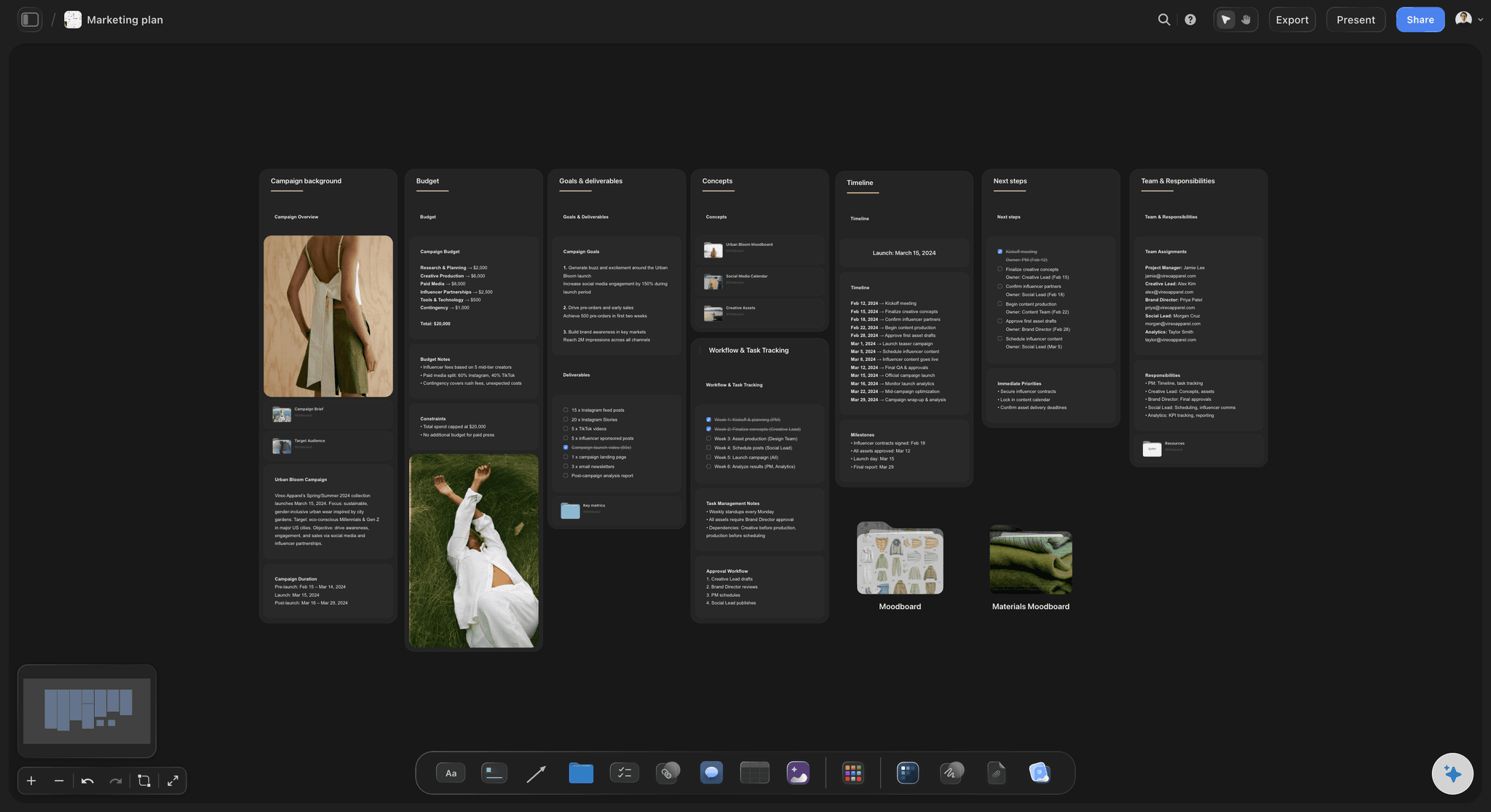
Lay each tactic out against the objective it serves and the audience it reaches, and the gaps become obvious: three tactics stacked on one goal, nothing at all on another. Then turn the set you chose into a campaign plan and a calendar on the same canvas.


Creatives working for these brands already got early access
- Red Bull
- Canon
- Artlist
- Porsche
See how easy it is to get started
Watch a real project come together, from a blank board to a finished plan, clicked through step by step.
Start from a ready-made template
Pick a board to see what you can build, then let AI fill it in. Every template is a real, editable starting point on the same infinite canvas.

Mind Map
Branch one central idea out into themes and sub-points, then drag the connections around until the structure makes sense.
What are marketing tactics, and why does the list format fail?
A marketing tactic is a specific action you take to move a specific objective: a comparison page, a partner webinar, a referral incentive, a paid retargeting set, a founder posting on one channel for ninety days. Strategy is the choice of where to compete and what to claim, and tactics are the moves that carry it. Most plans confuse the two, which is why so many marketing documents list activities and never say what any of them is supposed to change.
The list is the format doing the damage. A list of thirty tactics reads as thorough and hides the two things that actually decide whether the plan works: which objective each tactic serves, and whether the objectives are covered evenly. In practice a listed plan almost always has four tactics piled on the goal the team enjoys and nothing on the one that is hard. You cannot see that in a bulleted document. You can see it immediately in space.
On a canvas, each tactic is a card placed against the objective it serves and the stage of the funnel it touches. Empty regions are missing bets, dense ones are duplicated effort, and both are visible from a distance before anyone has read a word. Cards carry the cost, the owner, and the expected signal, so choosing is a real comparison. When the set is chosen, the AI turns it into a campaign plan and a calendar on the same canvas.
Ultra fast from brief to board
From a pile of ideas to a set of bets you can defend.
Map them, compare them honestly, cut, then convert what survives into a plan.
01
State the objectives first
Two or three, each specific enough to fail at. Everything after this is placed against them, so vague objectives produce an unfalsifiable plan.
02
Get every candidate tactic on the board
Describe the business and the AI proposes a wide set to react to, mapped by objective and funnel stage. Add the ones only you would know about.
03
Cost and cut
Put effort, owner, and the signal you would expect on each card. Then cut, and look at what is left: three bets on one objective and none on another is a decision, not an accident.
04
Turn the survivors into a plan
Ask the AI to convert the chosen tactics into a sequenced campaign plan and a calendar on the same canvas, with the objective each one serves carried across.
See the plan's shape before you commit a quarter to it.
Objectives on one axis, tactics placed against them, and the gaps doing the arguing.
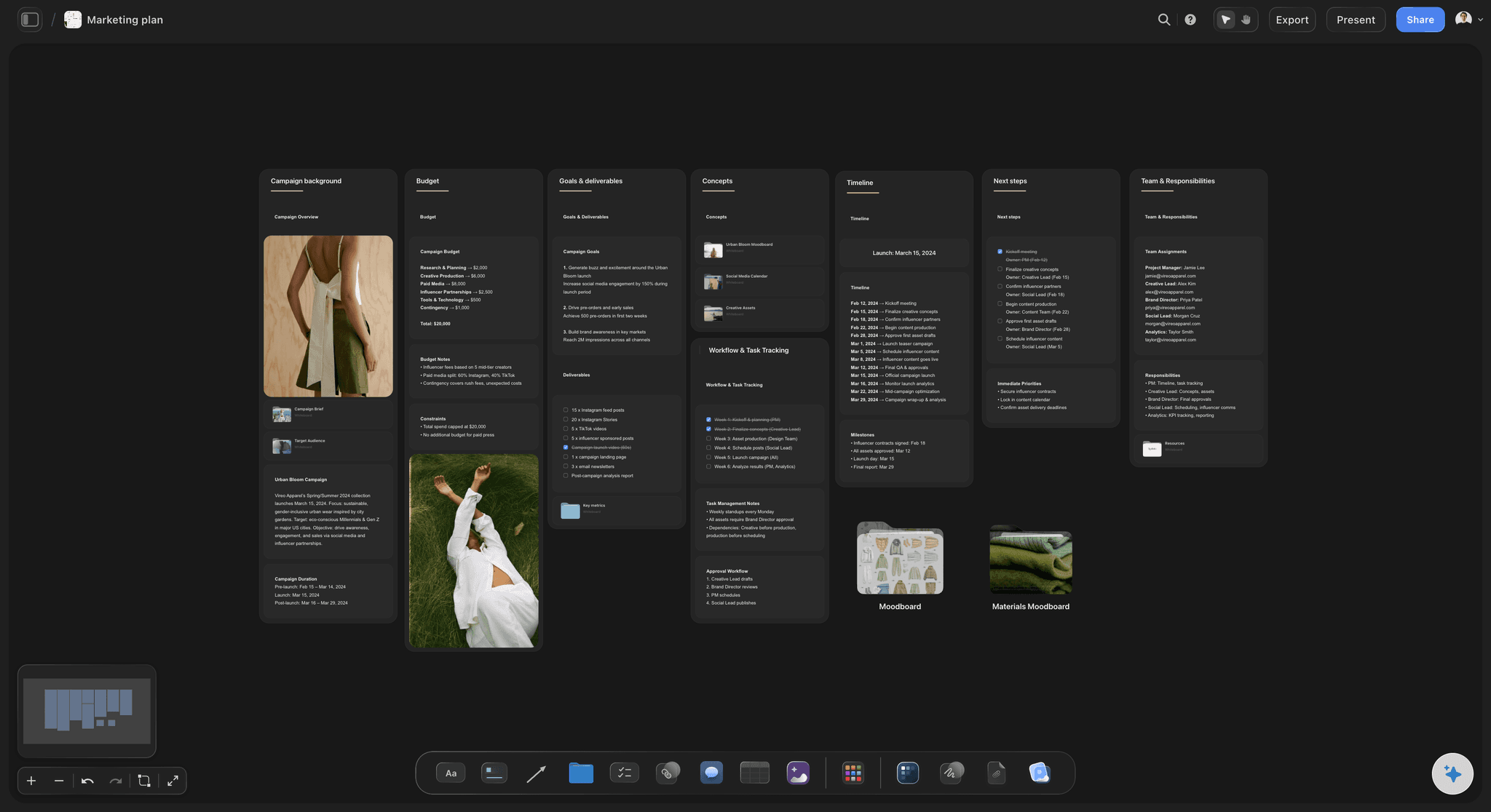
Coverage you can see
Every tactic placed against an objective
A region with nothing in it is a goal you have no plan for. In a list that same gap is invisible, which is how a thorough-looking plan ships with a hole in the middle of it.
See the marketing strategy generator →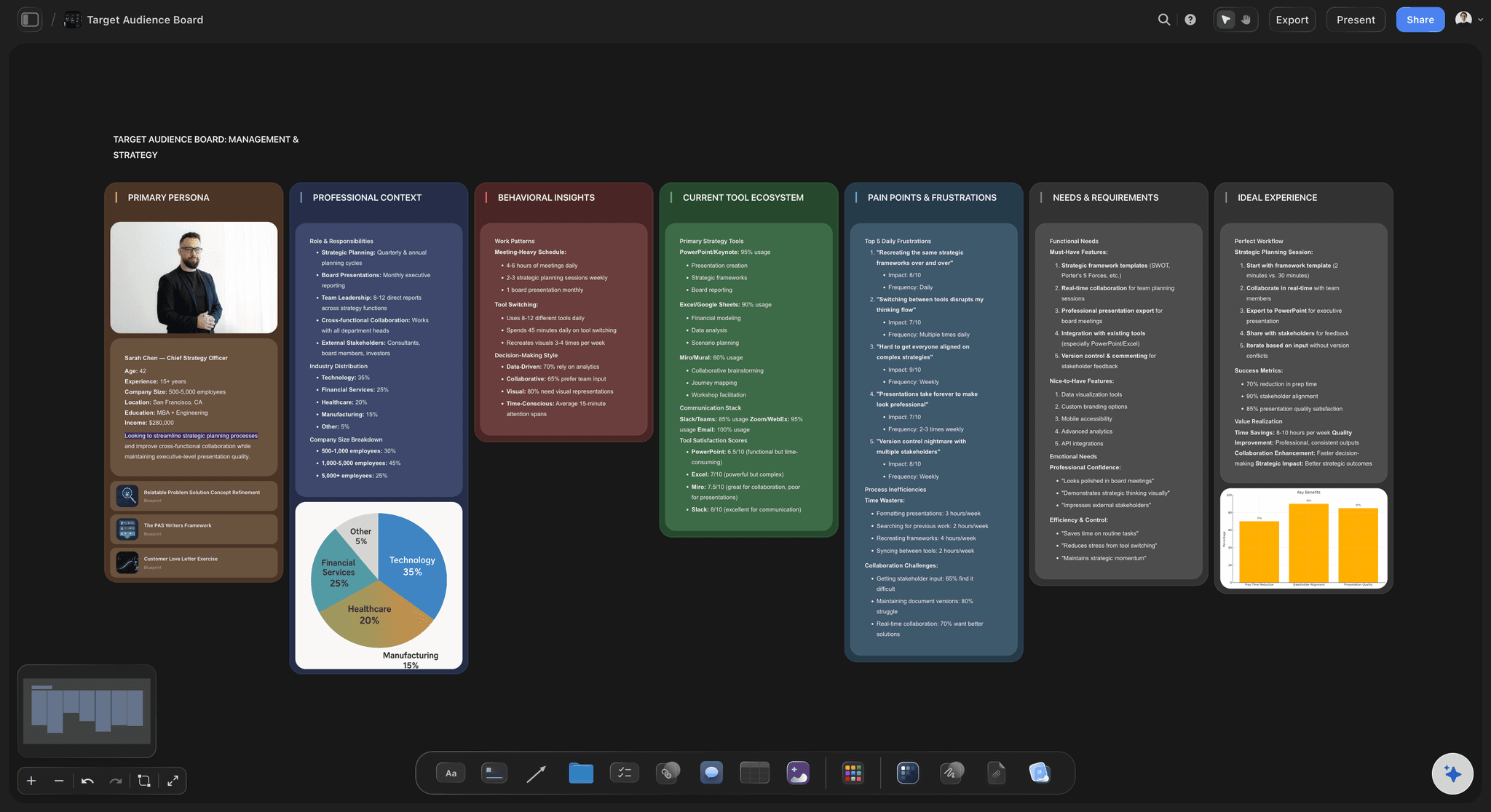
Honest comparison
Cost and expected signal on the card
Effort, owner, and the result that would count as evidence sit on each tactic. Comparing two tactics then means comparing two claims rather than two nouns.
See the marketing plan generator →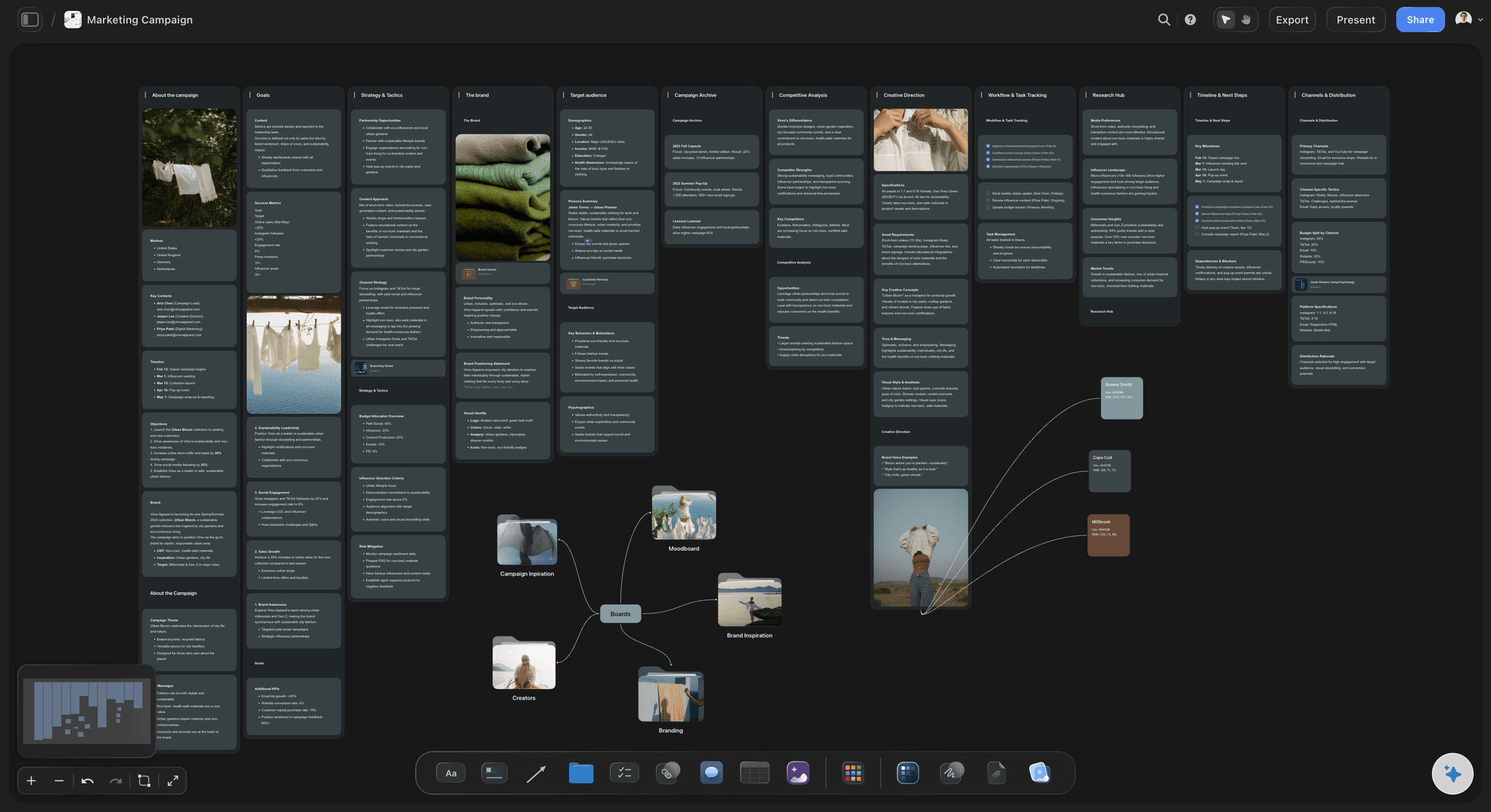
A wide first pass
An AI that proposes what you did not think of
The hardest part of choosing tactics is that you only choose from what you remembered. Describe the business and get a wide candidate set to cut down, which is a better starting position than a blank board.
See the campaign planner →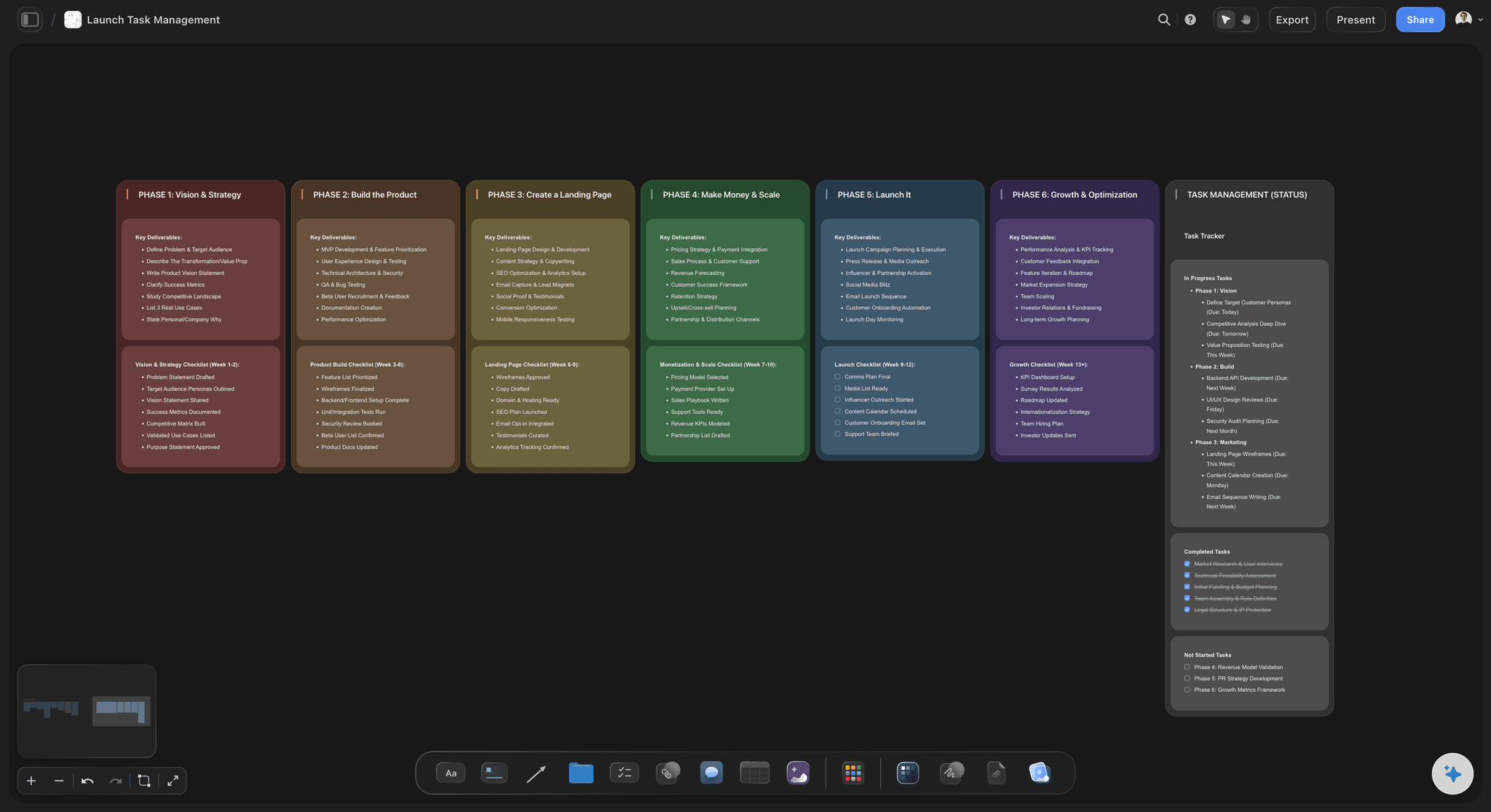
Plan, not document
The chosen set becomes the campaign
Convert the survivors into a sequenced plan and a calendar on the same canvas, so the tactics you argued about are the tactics that get scheduled rather than a summary of them.
See the campaign calendar →Keep the tactics you rejected, and why.
A quarter later, the question is usually what you decided not to do and on what grounds. No object cap means the rejected half of the board survives instead of being deleted for tidiness.
Unlimited boards and objects on an infinite canvas, no object cap
AI usage to propose tactics and convert them into a plan
Competitor examples, screenshots, and links on the board, with unlimited file uploads
Unlimited collaboration, or share view-only with no account needed to view
Built for people with taste
The four questions that separate a plan from a list.
What each tactic is for, what it costs, when it runs, and how you will know.
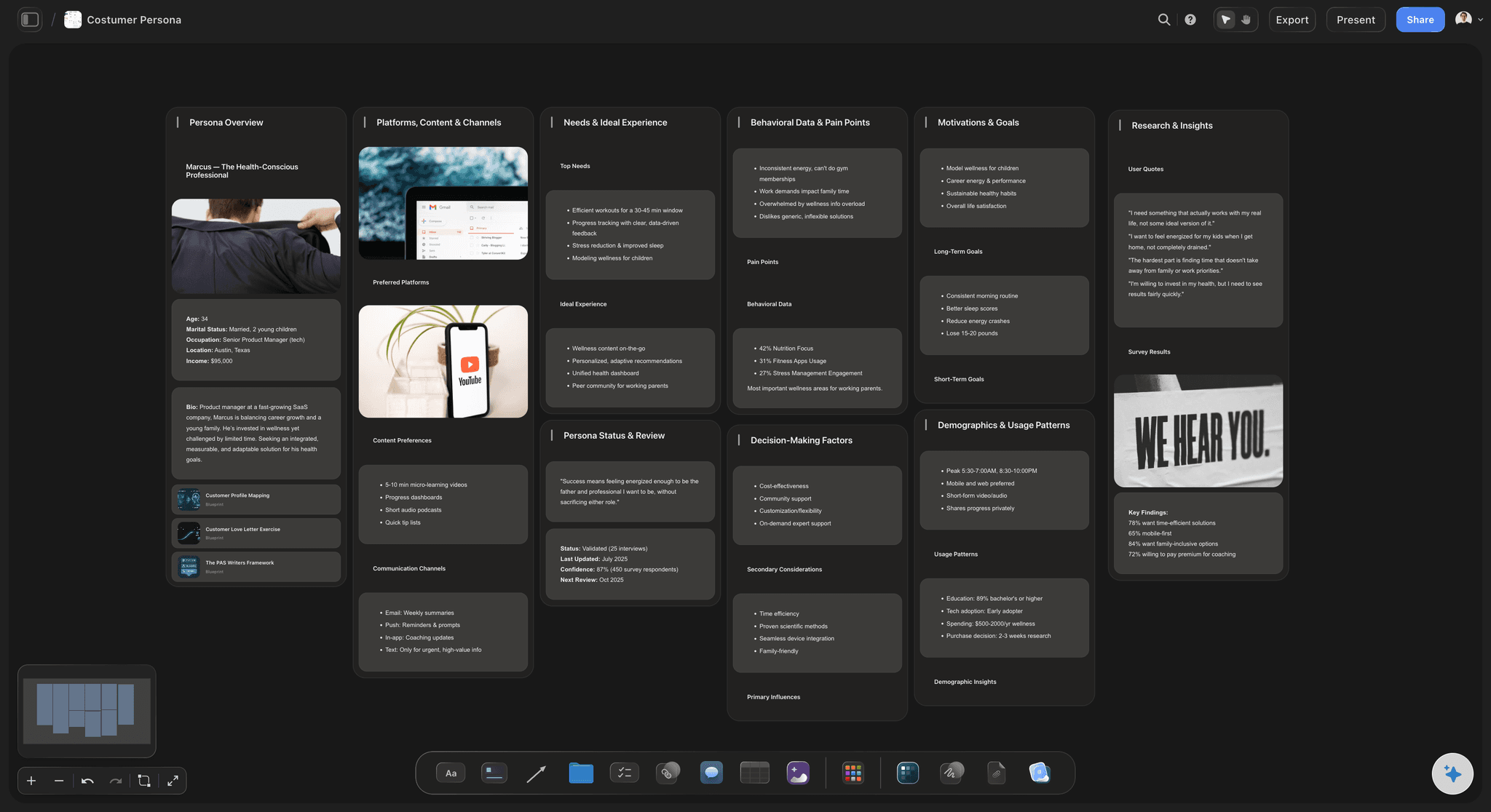
Purpose
One tactic, one objective
Place it, do not tag it: Putting a tactic in an objective's region forces the decision. A tactic that could go anywhere usually serves nothing in particular.
Funnel stage as the second axis: Awareness, consideration, conversion, retention. A plan that is entirely top of funnel is visible as a stripe rather than as a suspicion.
Name the audience: The same tactic aimed at two different segments is two tactics, and pretending otherwise is how budgets get halved by accident.
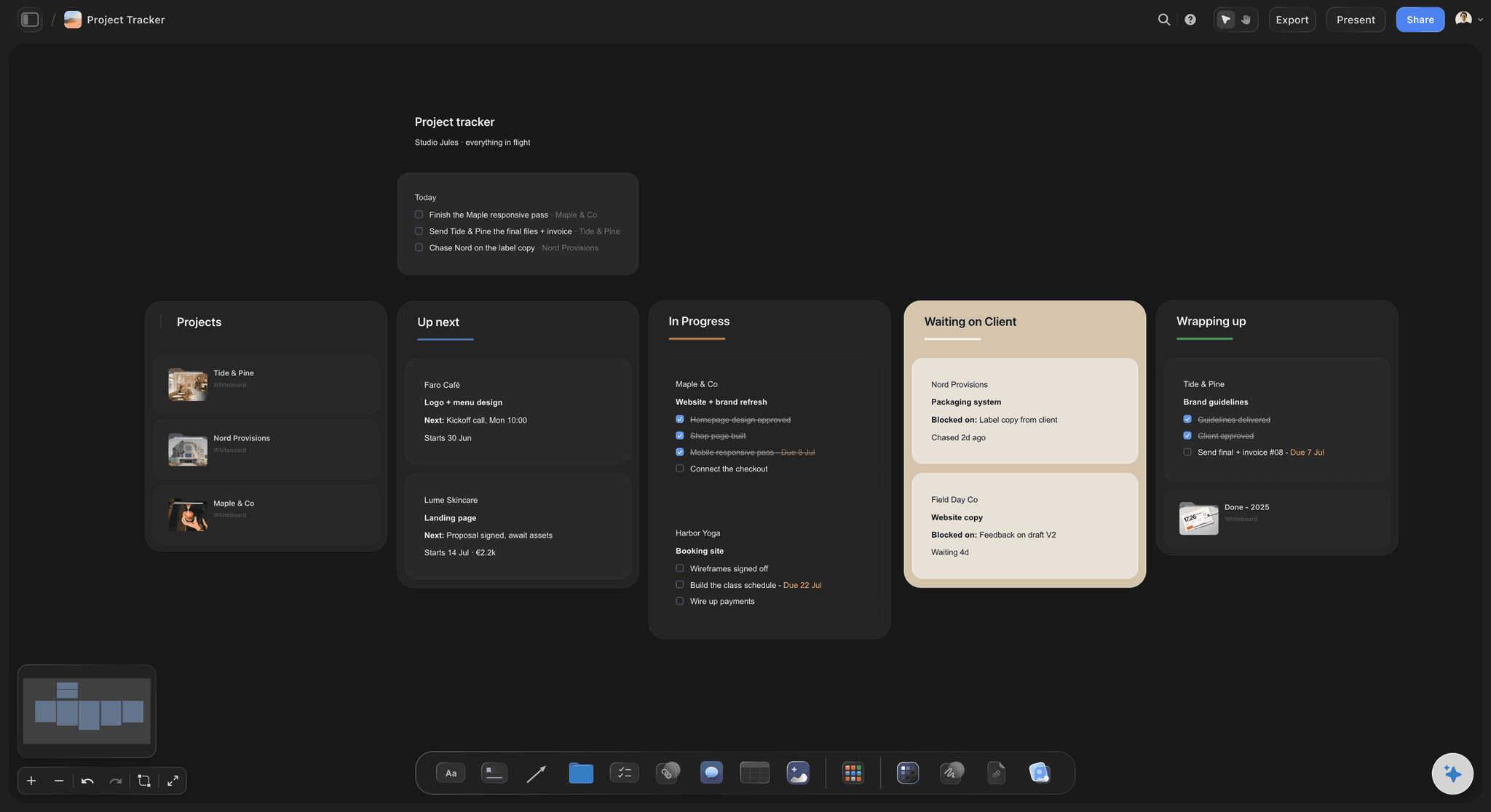
Cost
What it actually takes
Effort, not just spend: Most tactics fail on team hours rather than budget. Putting the real effort on the card is what stops a plan from containing six full-time projects.
An owner per tactic: A tactic with no name on it does not happen. Assigning it on the board makes the shortfall visible while it is still a plan.
Dependencies in view: Connect a tactic to the asset it needs, so the plan shows that three of them are waiting on the same landing page.
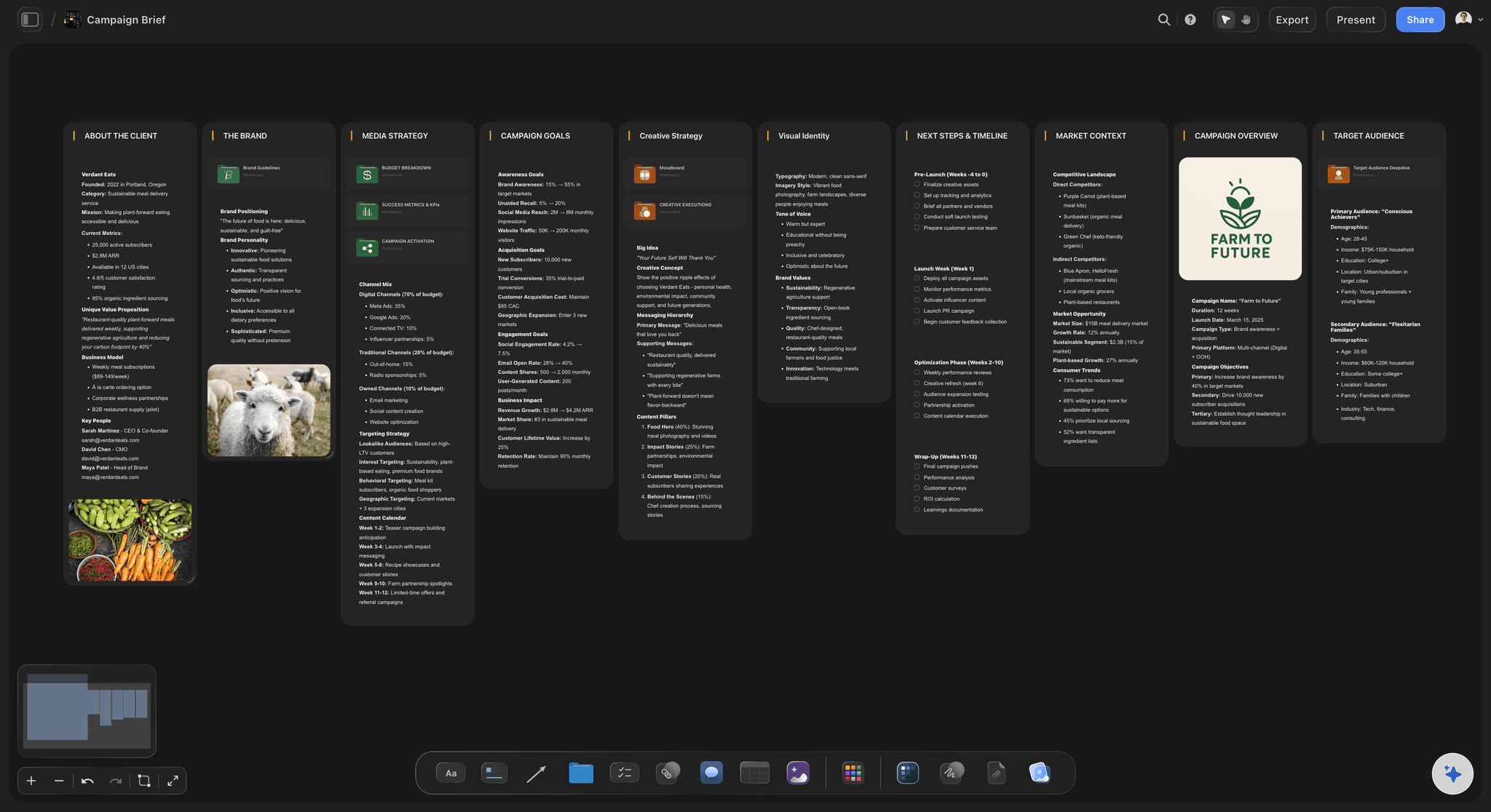
Sequence
Order, not just selection
Some tactics need others first: Referral works after retention. Paid works after the page converts. Laying the set out in order exposes the ones that were scheduled too early.
Concentrate rather than sprinkle: Two tactics run properly beat six run thinly, and seeing the whole set at once is what makes that cut possible.
Convert to a calendar: Turn the sequence into dated work on the same canvas so the order survives contact with a schedule.
Evidence
Deciding in advance what would count
The signal, before you run it: Write what result would make you keep going. Agreeing that afterwards turns measurement into a negotiation.
A review that reads the board: Come back at the end of the quarter and mark what worked on the same cards, so next quarter's plan starts from evidence.
Share it for challenge: A view-only link lets a founder or a client push back on the plan in a browser with no account.
Explore templates for your project
Every template opens as a real, editable board on the infinite canvas. Pick the closest fit and make it your own.
Mind Map
Branch one central idea out into themes and sub-points, then drag the connections around until the structure makes sense.
What creators are saying
Join early creators getting structured workspaces and AI that remembers their projects
“Storyflow has sped up my workflow by at least 3x, which means more flow state and more projects I can actually ship. It truly changed the way me and my team create.”

Reilin Joey
Director & YouTuber
“One prompt gets me a structured board. But the tactics are my favorite. I run my YouTube scripts through them and my intros and retention got better. It's amazing.”

Justkay
YouTuber & Freelance Filmmaker
“I used to juggle five apps to plan a project. Now I describe what I am making and get boards, lists, and a schedule. All in one place.”

George
@fernwehchronicles
Marketing tactics questions, answered.
What people ask when a list of activities is not convincing anyone.
Strategy is the choice of where to compete, who for, and what to claim, and tactics are the specific actions that carry the claim to those people: a comparison page, a partner webinar, a referral incentive, a paid retargeting set. The practical test is that a tactic can be scheduled and assigned to a person, and a strategy cannot. Most plans that feel weak are lists of tactics with no strategy above them.
State two or three objectives specific enough to fail at, place every candidate tactic against the objective it serves, then put the real effort and the expected signal on each card. Cut until what remains can actually be run by the people you have. Look at the coverage afterwards: several tactics on one objective and none on another is the most common defect, and it is invisible in a list.
Comparison and alternative pages, a partner or co-marketing webinar, a referral incentive, lifecycle email, paid retargeting, a founder posting consistently on one channel, community sponsorship, review-site presence, a product-led free tool, and customer case studies. The list matters far less than the mapping: the same tactic is strong for one objective and pointless for another.
Fewer than feels comfortable. Two tactics run properly usually beat six run thinly, because most tactics only produce a signal after sustained effort. The value of seeing the whole set on one board is that it makes the cut possible: you can see that six of them are competing for the same person's week.
Write the signal on the card before you run it, including the timeframe. Deciding afterwards what would have counted as success is a negotiation rather than a measurement. Then come back at the end of the period and mark the outcome on the same cards, so the next plan starts from evidence rather than from preference.
Yes, and it is most useful as a wide first pass. Describe the business and the objectives and it proposes a broad candidate set mapped by objective and funnel stage, which beats a blank board because you only ever choose from what you remembered. Expect to cut most of it and to add the ones only you would know about.
Yes, on the same canvas. Ask the AI to convert the chosen set into a sequenced plan and a calendar, carrying each tactic's objective and owner across, so the plan that gets scheduled is the one you argued about rather than a summary written afterwards.
Not during early access. Storyflow is paid-only right now, with plans starting at $9.99 per month, an infinite canvas, and no object cap. Every paid plan includes AI usage, unlimited file uploads, unlimited collaboration, and view-only sharing that needs no account to view. A Free plan launches before the end of 2026.
Stop listing activities. Start placing bets.
Every tactic against the objective it serves, the gaps visible, and the chosen set converted into a plan.