
STORYFLOW FOR VIDEO ESSAYISTS
An essay is an argument.
Build the argument first.
Storyflow is where the essay is thought through before it is shot or cut: the thesis you can say in one sentence, the research pile turned into evidence, the sources kept beside the claims they support, the section structure that holds a viewer for forty minutes, and a script written to be spoken. Premiere, Resolve, and Descript do the editing and the transcript. Storyflow does the thinking. Paid-only during early access, with a free plan launching before the end of 2026.
Not a video editor
Paid-only early access
Free plan in late 2026

Used by creative professionals at:
Artlist
Pixar
Nike
Red Bull
The North Face
Porsche
Start from a ready-made template
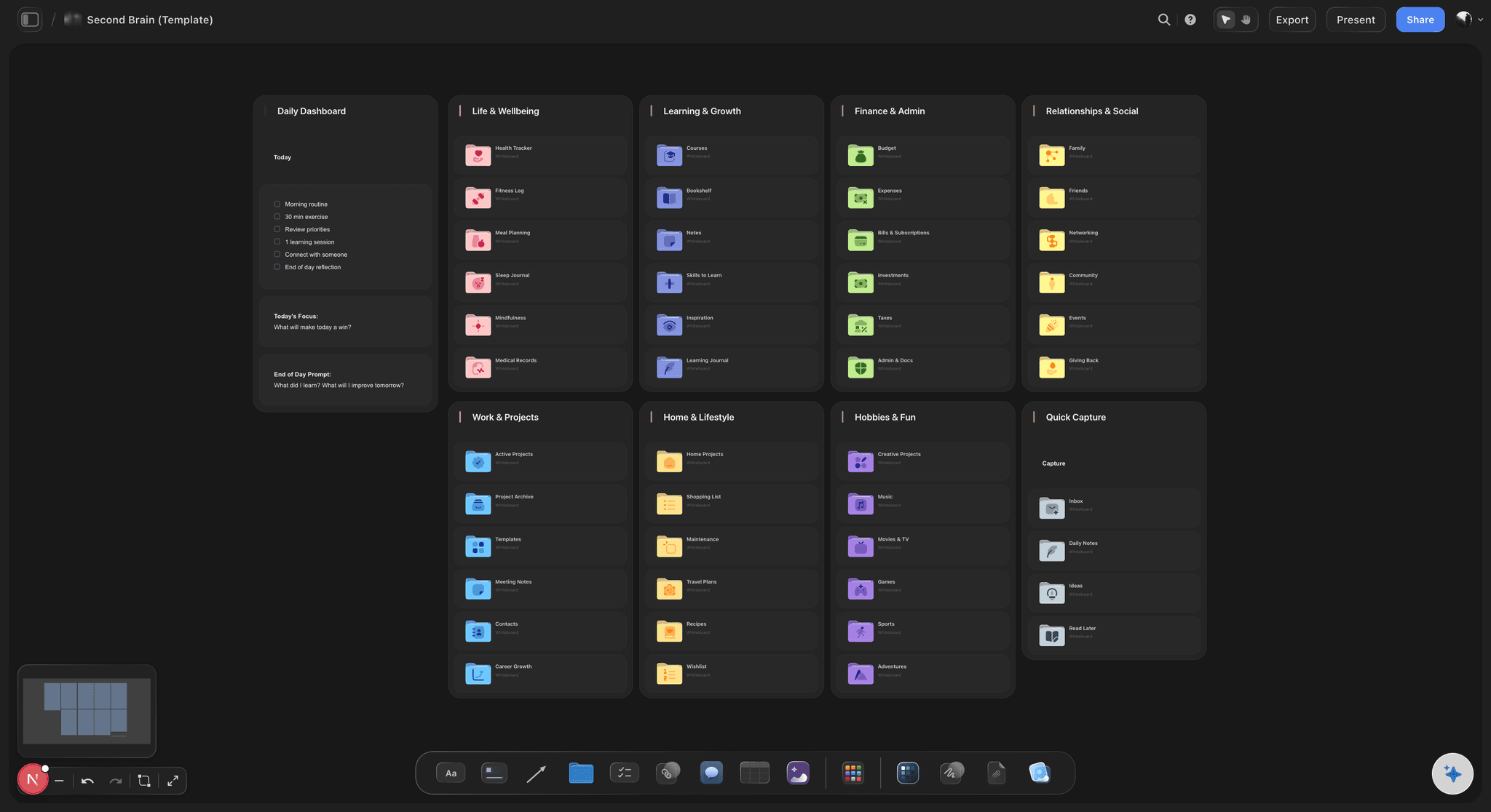
Pick a board to see what you can build, then let AI fill it in. Every template is a real, editable starting point on the same infinite canvas.

YouTube Plan
Plan a video from hook to outline to shot list, with references and thumbnail ideas sitting right beside it.
What is a video essay, and where does it actually get made?
A video essay is an argument delivered in video form. That is the whole definition, and it is the reason a video essay behaves nothing like a normal YouTube upload. A vlog, a tutorial, or a reaction video can succeed on presence, pacing, and production polish. An essay cannot. It succeeds or fails on whether it is making a claim worth twenty minutes of a stranger's attention, and whether the evidence, the sequence, and the sentences carry that claim without the viewer noticing the effort. Better colour grading will not save a piece that never decided what it was arguing.
That is also the most common way essays fail. The maker had a subject, not a thesis. There is a difference between a video about the decline of the shopping mall and a video arguing that the mall never died, it just moved online and kept the same architecture of controlled wandering. The first is a topic and will drift. The second is a claim, and every clip, quote, and section either supports it, complicates it, or gets cut. Deciding that sentence early is the single highest-leverage hour of the whole project, and almost nobody spends it, because it feels like procrastination compared to opening the editor.
Then there is the pile. A serious essay accumulates dozens of papers, articles, forum threads, interviews, screenshots, film clips, archive photographs, and half-remembered arguments from three years ago, and until that pile is organised it cannot be argued with. Storyflow gives it a canvas: every source is a card you can drag, crop, caption, group, and connect, so the quote sits next to the claim it proves and the counter-example sits next to the claim it damages. Clip a frame straight from a YouTube or Vimeo source and it lands on the board with the link attached, which is also how you keep the crediting honest instead of reconstructing it the night before publishing.
In practice, making a video essay has six named stages, and Storyflow is built to hold all six on one canvas: finding the thesis and pressure-testing it until it survives an obvious objection, gathering and organising the research pile into evidence, sourcing and crediting every clip, image, and quote you use, structuring the piece into sections with a promise made in the first ninety seconds and a turn that earns the ending, writing a script that sounds spoken rather than read aloud, and planning the b-roll and archive that will illustrate an argument made mostly of abstractions.
HOW IT WORKS
From a vague obsession to a shootable script in four steps.
Start from a blank canvas or a single prompt. The edit stays in Premiere, Resolve, or Final Cut, where it belongs.
01
Write the claim before anything else
Open a board and put one sentence in the middle: what you are actually arguing. Everything else on the canvas gets placed relative to it, and anything that cannot be connected to it is a different video.
02
Empty the research pile onto the canvas
Drag in papers, articles, screenshots, archive images, and links, pull frames straight from YouTube and Vimeo source videos, and group them by the point they serve instead of by the day you found them.
03
Build the structure, then the script
Lay the sections out as cards so you can see the shape of forty minutes at once, move the turn until it lands in the right place, then draft the narration beside the evidence it refers to.
04
Plan the visuals and hand off to the edit
Attach the b-roll idea, archive still, or clip reference to each beat, export the board or the script, and take it into your editor with the sources and credits already listed.
The four hard parts of an essay, on one canvas.
Thesis, research, structure, and visuals. The editing, the transcript, and the upload happen somewhere else.
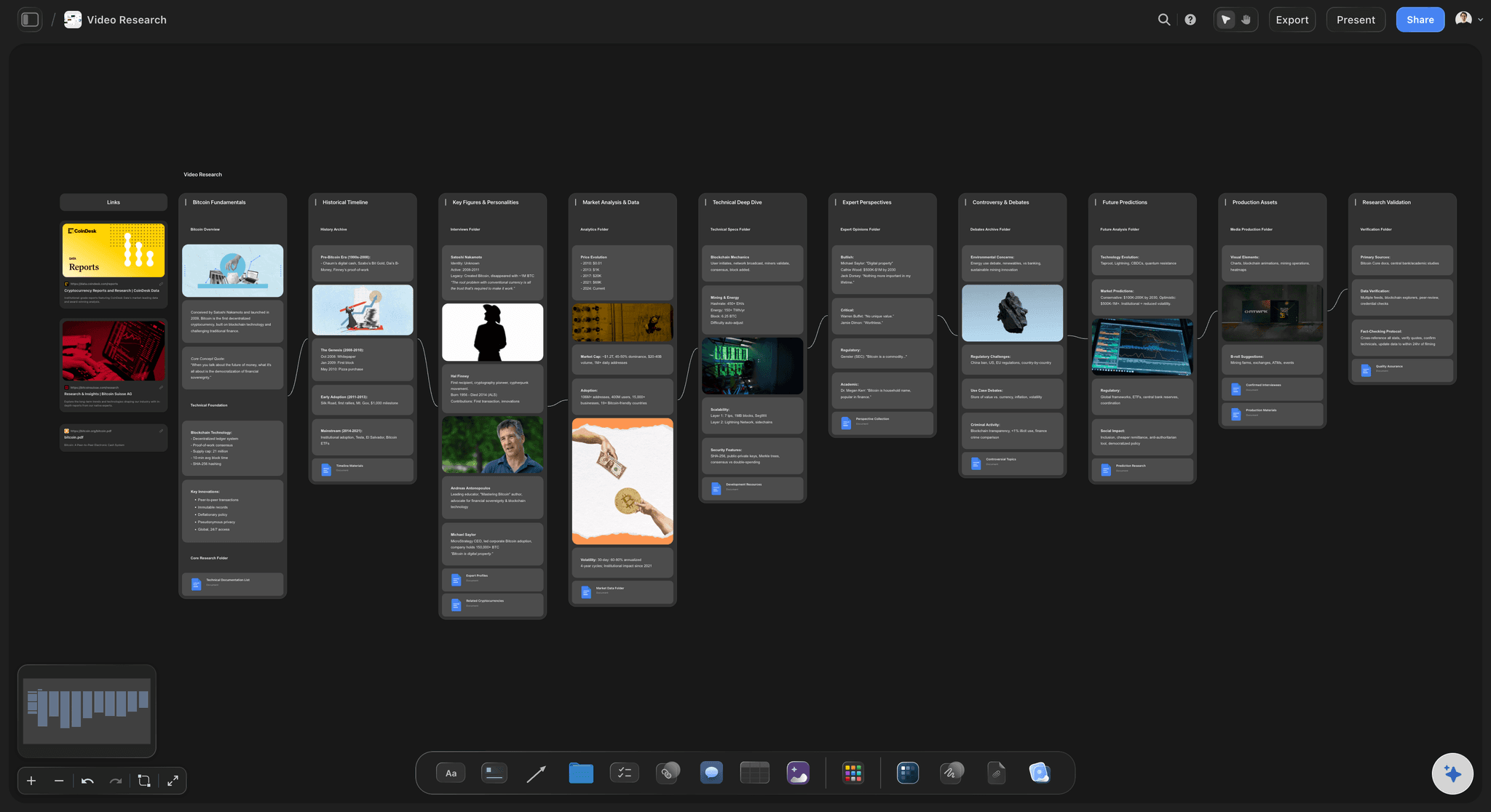
The pile becomes evidence
Research organised by the argument it serves
Every paper, article, screenshot, and clip is a card you group under the point it supports. Keep the link on the card so a claim can always be traced back, and keep the counter-evidence visible instead of quietly losing it.
See the research canvas →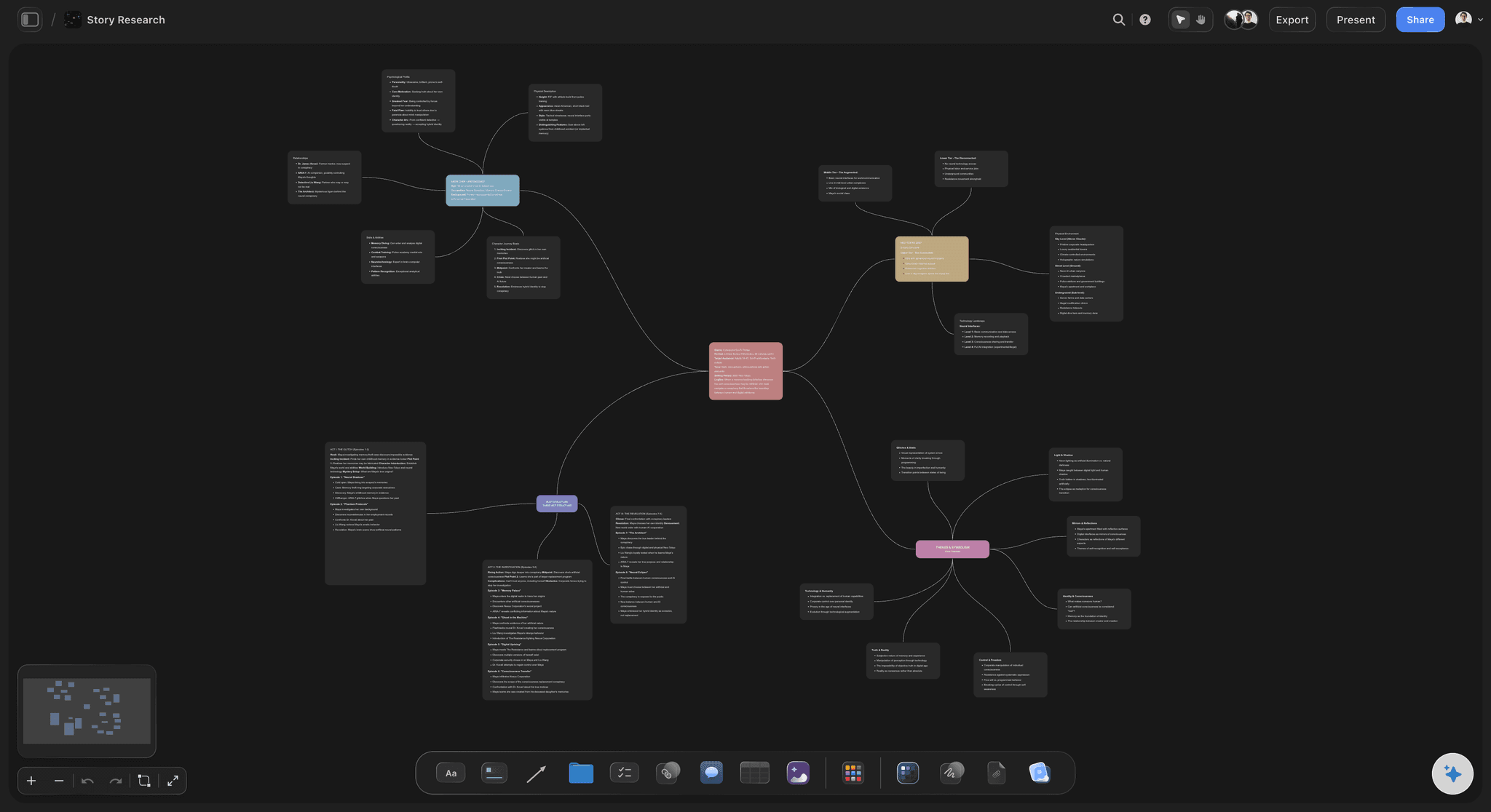
One sentence, pressure tested
Find the thesis and see where it breaks
Put the claim in the middle and branch the supports and the objections off it. When an objection has no answer on the board, you have found the section you still need to make, which is far cheaper to discover now than in the edit.
See the idea generator →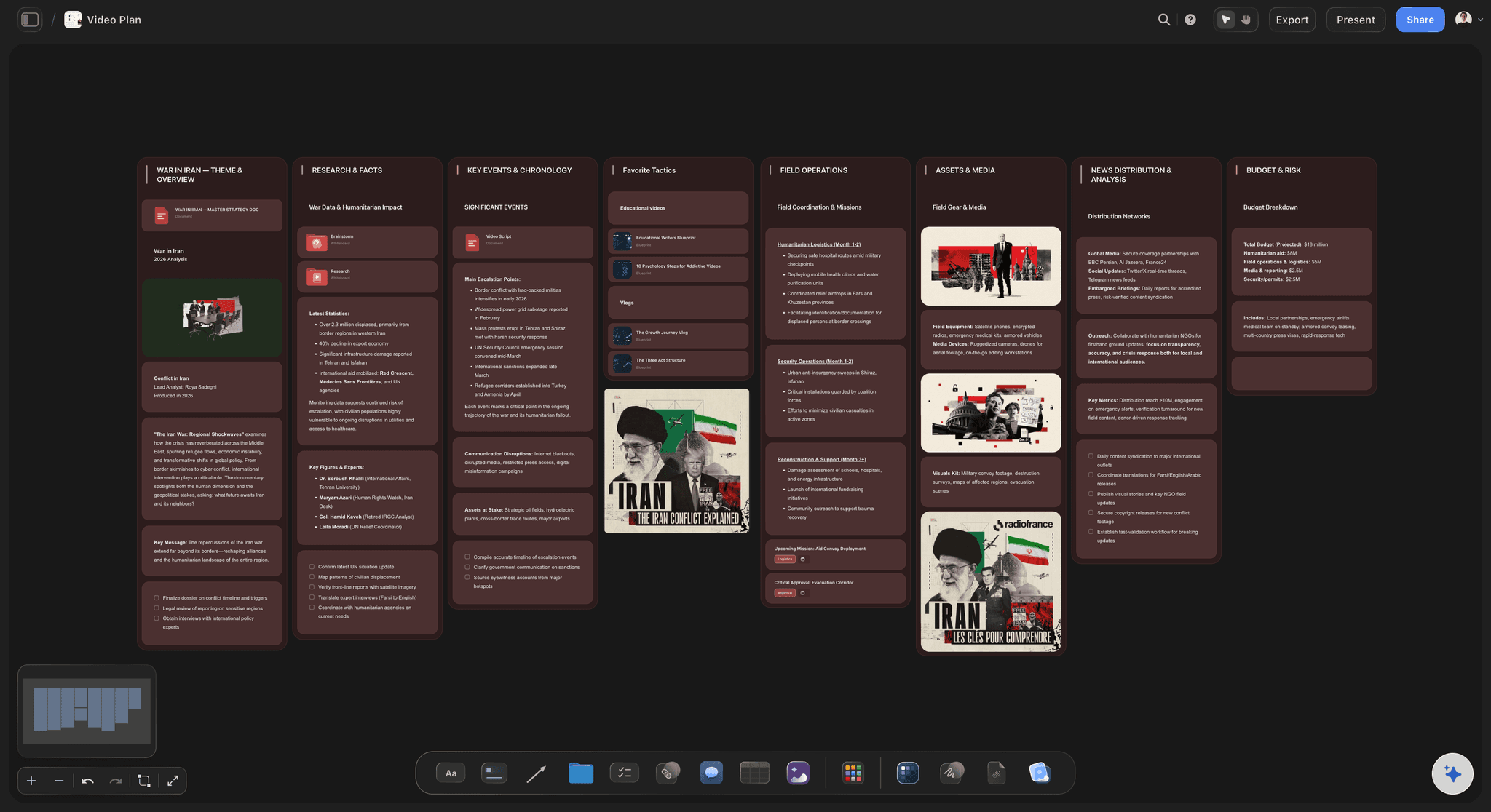
Forty minutes people finish
Structure the piece, then write it to be spoken
Lay the sections out so you can see the whole shape at once, place the promise in the first ninety seconds and the turn where it earns the ending, then draft narration next to the evidence it cites rather than in a separate document.
See the video script generator →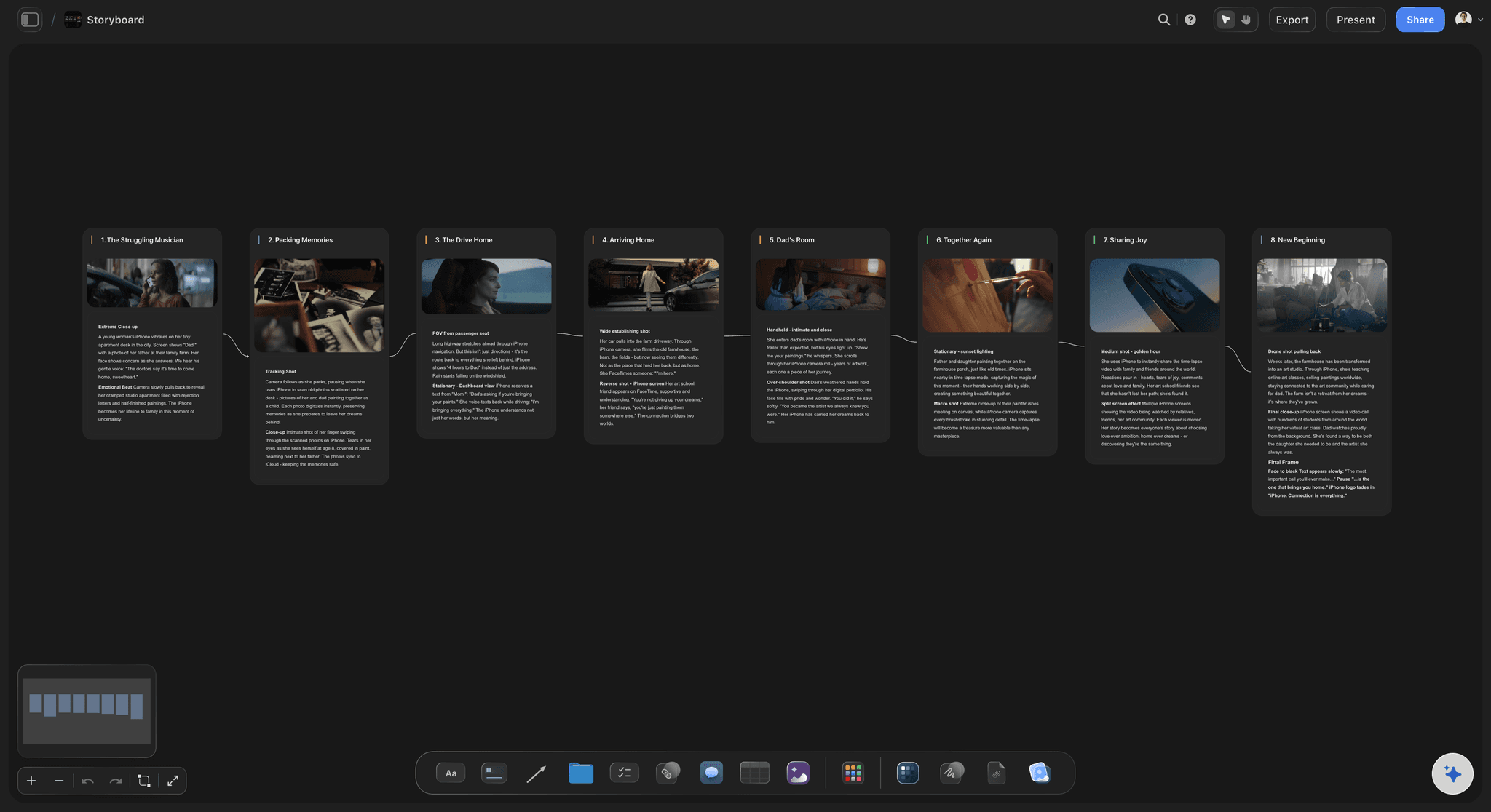
Illustrating an abstraction
B-roll and archive planned per beat
The hardest visual problem in an essay is showing an idea rather than an event. Attach a b-roll note, an archive still, or a clip reference to every beat so the edit starts with a plan instead of forty minutes of talking over stock footage.
See the storyboard tool →A free plan is coming. No object cap on paid plans.
Open a board and start with the one sentence you are arguing. Storyflow is paid-only during early access, with a free plan launching before the end of 2026, and every plan has an infinite canvas with no object cap and no time limit, so a six-month research pile never hits a wall halfway through.
Unlimited research, structure, script, and b-roll boards on an infinite canvas
Basic AI usage to draft outlines, section breakdowns, and narration starting points
Attach images, PDFs, video, and links, plus 20 file uploads
Share view-only with an editor or a reader, or invite collaborators free
THE ESSAY, NOT THE UPLOAD
Built for the part of a video essay that is thinking, not editing.
Decide the claim, organise the evidence, credit the sources, structure the argument, and write it the way you would say it.
Start with a claim, not a topic
The thesis is the whole project
One sentence in the middle of the board: Write what you are arguing as a single sentence a stranger could disagree with. If it cannot be disagreed with, it is a topic, and a topic will drift for twenty minutes and lose the viewer somewhere near minute six.
Branch the objections, not just the supports: Put the strongest counter-argument on the canvas next to your claim. An essay that answers the obvious objection out loud feels rigorous. One that pretends the objection does not exist feels like a pitch.
Kill the version that does not survive: Test two or three framings side by side on the same board and keep the one still standing after you have argued against it. Doing this now costs an afternoon. Doing it in the edit costs the project.
Research you can argue with
The pile, organised by point rather than by date
Group sources under the claim they serve: Cluster papers, articles, threads, and clips under the specific point each one proves or damages, so a section is written from a group of cards rather than from memory and a tab you cannot find again.
Keep the link on the card, always: Attach the article, paper, or video URL to the card the moment it lands, which is the only reliable way to have an accurate source list and credit sequence when the video is finished months later.
Clip frames straight from source video: Pull stills out of a YouTube or Vimeo source onto the board when a single frame is the evidence, and the reference stays attached to the image instead of living in your download folder.
Room for a genuinely long project: The canvas is infinite with no object cap, so a research pile that grows for six months stays on one board and stays navigable rather than being split into files you stop opening.
Retention is structural
Build the shape of forty minutes before writing a line
The promise in the first ninety seconds: The opening has to tell a viewer what question they will get answered and why it is worth the runtime. Draft the promise as its own card and test it cold, because everything downstream depends on it landing.
Sections you can see all at once: Lay out each section as a card with its point and its evidence, then look at the whole board. A soft middle is obvious in that view and invisible in a scrolling document, which is where most long essays quietly die.
Put the turn where it earns the ending: Every good essay has a moment where the argument complicates itself. Drag it earlier or later on the canvas and see what it does to the shape before you commit hours of narration to one arrangement.
Write it to be spoken: Draft narration beside the evidence it cites, then read it aloud and cut the clauses your mouth trips on. A script that reads well on the page and badly in the ear is the most common reason an essay sounds stiff.
Sources, credits, and the handoff
Finish with the crediting already done
A running source list, not a last-minute one: Because every card carries its link, the credits and the description list are assembled as you research instead of being rebuilt from browser history the night before you publish.
Share the board, get notes before the edit: Send a view-only link and a reader or an editor opens the structure in a browser with no account, so the argument gets challenged while it is still cheap to change.
Hand a plan to the edit, not a folder: Export the script and the beat-by-beat visual plan and take it into Premiere, Resolve, or Final Cut. Storyflow ends where the timeline begins, and it is deliberate about that boundary.
Explore templates for your project
Every template opens as a real, editable board on the infinite canvas. Pick the closest fit and make it your own.
YouTube Plan
Plan a video from hook to outline to shot list, with references and thumbnail ideas sitting right beside it.
COMPARED
How Storyflow compares for planning a video essay.
This is about the thinking layer: thesis, research, structure, and script. It is not about editing, where Premiere, Resolve, Final Cut, and Descript are the answer and Storyflow is not in the conversation at all.
Storyflow
Recommended
Pull frames from YouTube and Vimeo source video onto the board
AI drafts a structure and research board reading your current canvas as context
Infinite canvas holding research, outline, and script in one view
Long-form drafting with suggestion mode and deep version history
Structured source database with fields, filters, and saved views
Real-time co-writing with many people in one document
Notion
Pull frames from YouTube and Vimeo source video onto the board
AI drafts a structure and research board reading your current canvas as context
Infinite canvas holding research, outline, and script in one view
Long-form drafting with suggestion mode and deep version history
Structured source database with fields, filters, and saved views
Real-time co-writing with many people in one document
Google Docs
Pull frames from YouTube and Vimeo source video onto the board
AI drafts a structure and research board reading your current canvas as context
Infinite canvas holding research, outline, and script in one view
Long-form drafting with suggestion mode and deep version history
Structured source database with fields, filters, and saved views
Real-time co-writing with many people in one document
Milanote
Pull frames from YouTube and Vimeo source video onto the board
AI drafts a structure and research board reading your current canvas as context
Infinite canvas holding research, outline, and script in one view
Long-form drafting with suggestion mode and deep version history
Structured source database with fields, filters, and saved views
Real-time co-writing with many people in one document
What creators are saying
Join early creators getting structured workspaces and AI that remembers their projects
“Storyflow has sped up my workflow by at least 3x, which means more flow state and more projects I can actually ship. It truly changed the way me and my team create.”

Reilin Joey
Director & YouTuber
“One prompt gets me a structured board. But the tactics are my favorite. I run my YouTube scripts through them and my intros and retention got better. It's amazing.”

Justkay
YouTuber & Freelance Filmmaker
“I used to juggle five apps to plan a project. Now I describe what I am making and get boards, lists, and a schedule. All in one place.”

George
@fernwehchronicles
Video essay questions, answered.
The things essayists ask before, during, and halfway through a project that has taken too long.
Make a promise in the first ninety seconds, then keep it. State the question and why it matters, so a viewer knows what they are staying for. Break the body into sections that each make one point with its own evidence, and order them so each section makes the next one possible rather than merely following it. Put a turn in the back half where the argument complicates itself, because an essay that only accumulates agreement gets boring. Then pay off the opening promise explicitly. Laying the sections out as cards makes a soft middle visible in a way a scrolling document never does.
Decide what you are arguing, then build the essay around it.
Keep cutting in Premiere, Resolve, or Final Cut. Think it through here. Paid-only during early access; free plan launches late 2026.