
An ultra-fast canvas that stays calm
Turn a pile of notes
into themes you can act on.
Storyflow is an affinity diagram maker on a truly infinite canvas. Drop every research note, quote, and observation onto the board, cluster the ones that belong together, and let AI suggest groupings when the pile gets big. When the themes emerge, turn them into a plan on the same canvas.


Creatives working for these brands already got early access
- Red Bull
- Canon
- Artlist
- Porsche
See how easy it is to get started
Watch a real project come together, from a blank board to a finished plan, clicked through step by step.
Start from a ready-made template
Pick a board to see what you can build, then let AI fill it in. Every template is a real, editable starting point on the same infinite canvas.

Mind Map
Branch one central idea out into themes and sub-points, then drag the connections around until the structure makes sense.
From a pile of notes to a clustered diagram
Dump every note in seconds
Drop your quotes, findings, and observations onto Storyflow's infinite canvas as cards, one idea per note. Paste a batch and let each line become its own card ready to sort.
Let AI suggest the clusters
When a research round leaves a hundred notes on the board, ask the AI to propose groupings. It reads your active board as context and gives you a first pass to accept, merge, or override.
Attach the evidence beside it
Drag any image, PDF, or video from your computer and it lands as a card next to the note it backs. The raw source lives with the theme instead of behind a spreadsheet row.
Shape the themes and turn them into work

Cluster and name by hand
Every note is a real canvas card you can drag between clusters, recolor, and regroup as your read of the data changes. Name each theme once its shape is clear, entirely under your control.
Synthesize with your team
Sharing and inviting collaborators is free on every plan, so a workshop or research team can cluster the wall together. Send a view-only link and stakeholders explore the diagram without an account.
Turn themes into a plan
Ask Storyflow to convert the clustered themes into a research report, persona, or backlog on the same canvas. The themes carry across, and boards link to each other so nothing gets retyped.
Ultra fast from brief to board
Build an affinity diagram in four steps.
Start from a wall of raw notes and let the themes surface. Either way the clusters stay yours to rearrange.
01
Open your canvas
Start in the browser on Plus. Nothing to install, just an infinite canvas ready for every note you want to sort.
02
Dump every note
Drop your quotes, findings, and observations onto the canvas as cards, one idea per note, or paste a batch and let each line become its own card to cluster.
03
Cluster and name the themes
Drag related notes together into groups, or ask the AI to suggest clusters when the wall is big. Name each theme once its shape is clear, and recolor to keep clusters distinct.
04
Turn themes into a plan
Convert the finished themes into a research report, backlog, or roadmap on the same canvas, share a view-only link, or export the diagram as an image or PDF.
Affinity mapping that turns scattered notes into clear themes.
Cluster notes from the bottom up, let AI suggest groupings, and keep the whole synthesis on one canvas that turns into work.
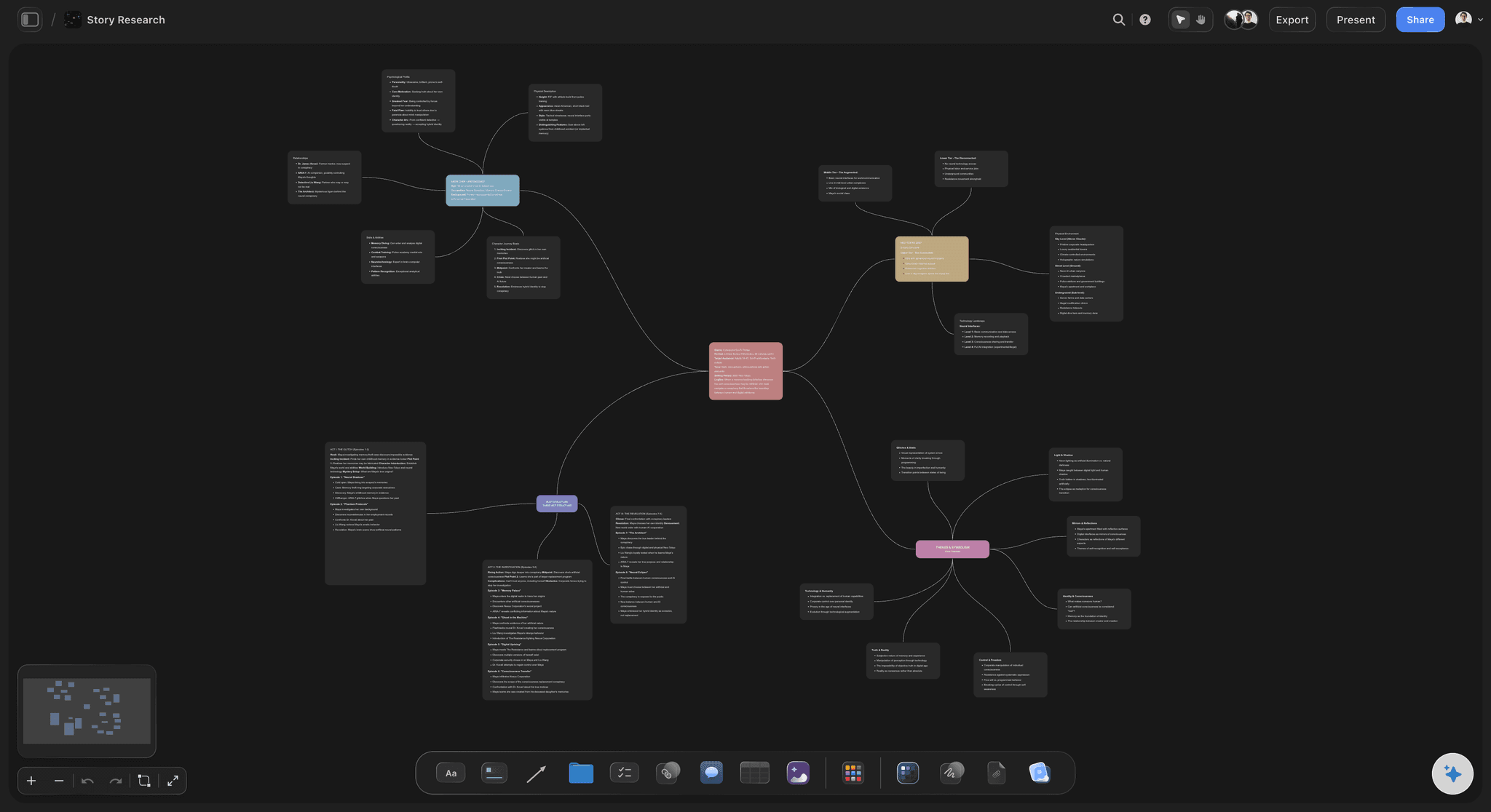
Themes emerge bottom-up
Cluster notes, do not pre-sort them
Drop every note onto the canvas and drag the related ones together into clusters. The themes surface from the data instead of being forced from a template, which is the whole discipline of affinity diagramming.
See the infinite canvas →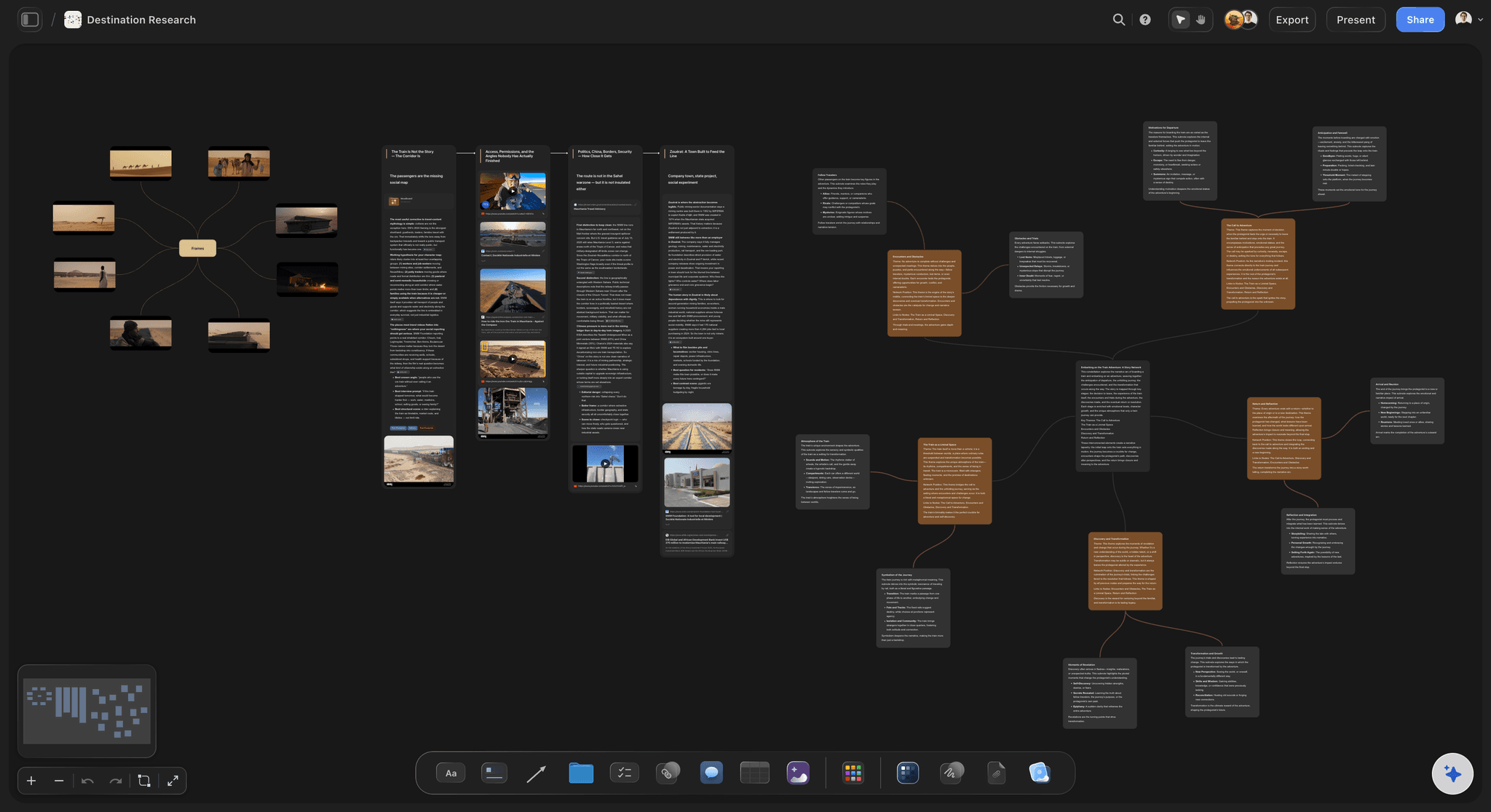
AI suggests the groupings
Ask AI to cluster a big wall
When a research round leaves a hundred notes on the board, describe what you want in the AI chat and it suggests clusters, using your current board as context, not a generic template. You refine the groupings from a real starting point instead of sorting every card by hand.
See the AI brainstorming tool →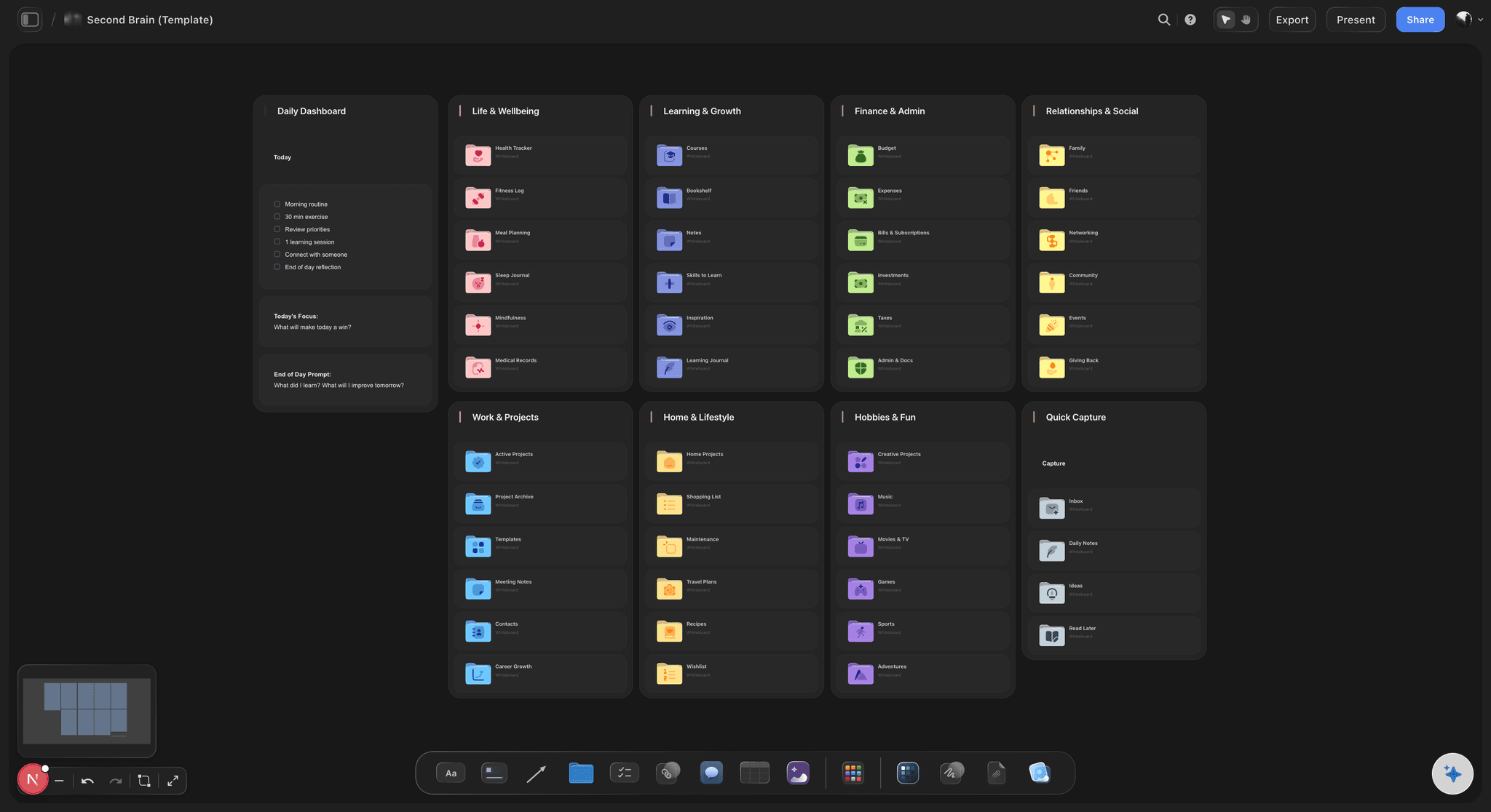
Room for the whole research round
No cap on the wall of notes
Affinity walls get big, and that is the point. With a truly infinite canvas and no object cap on any plan, a full round of interviews or a workshop's worth of stickies fits on one board without running into an edge.
See the infinite canvas →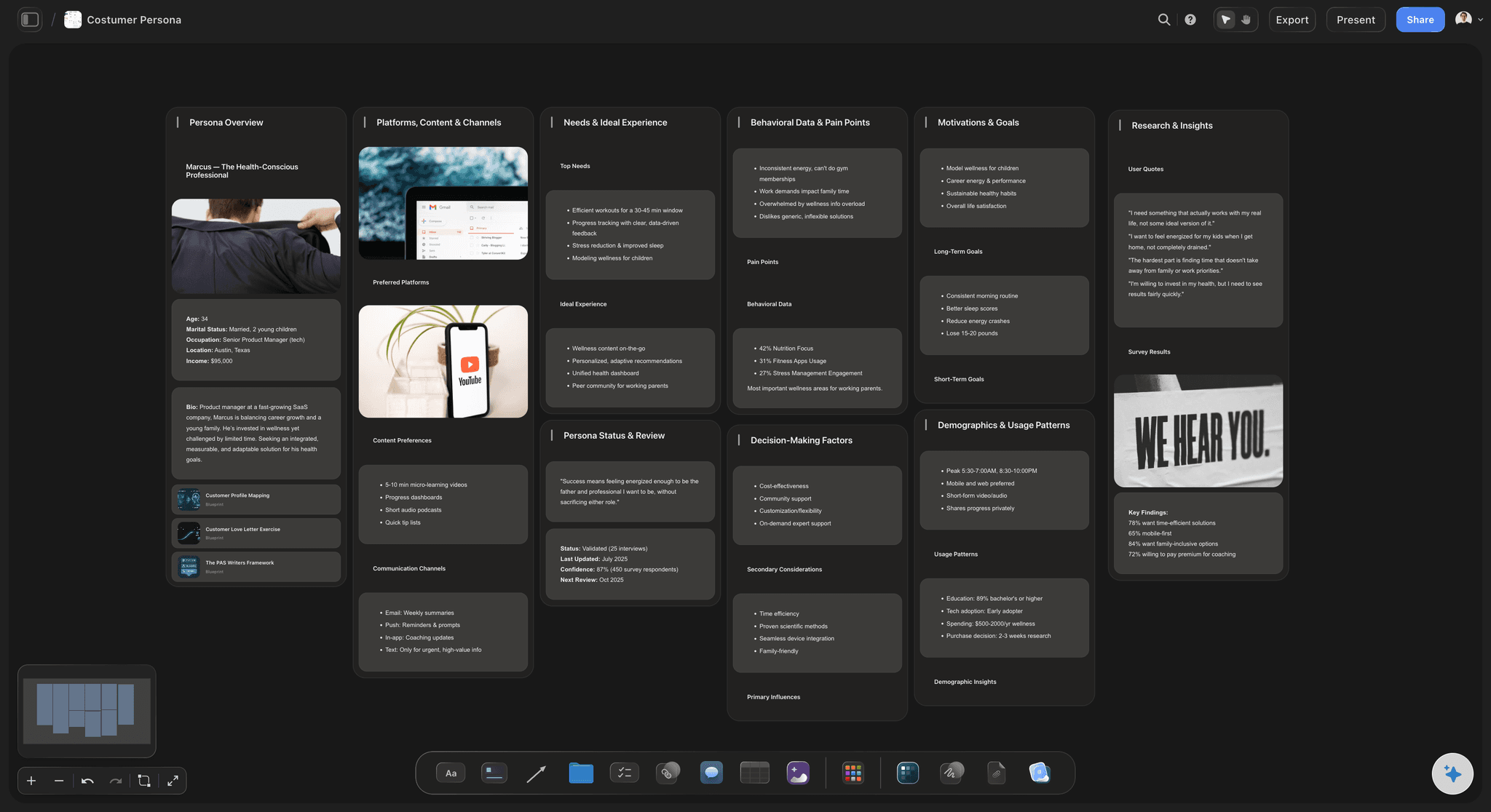
The diagram becomes work
Themes become real plans
Once the notes are clustered, turn the themes into a research report, product backlog, or roadmap on the same canvas. The themes carry over, so you plan from the synthesis you built instead of retyping it into another tool.
See the concept map maker →Paid-only during early access. No note cap.
Storyflow is paid-only while in early access, with Plus at $7.99/month billed annually, and no object cap or time limit on any plan. A free plan launches before the end of 2026.
Unlimited affinity diagrams with room for every note
Basic AI usage to suggest and refine clusters
Attach images, PDFs, video, and links to any note
Share the diagram view-only, or invite collaborators free
Built for people with taste
Built for the way researchers actually synthesize.
Group notes into themes from the bottom up, let AI help when the wall is big, and keep the whole synthesis visible at once.
Clustering is the point
Group notes into emergent themes
One note, one idea: Put each quote or finding on its own card so it can move between clusters freely. Paste a batch and let each line become a note ready to sort.
Drag related notes together: Pull notes that feel connected into a cluster, split a cluster that grew too broad, and let the themes surface as you go instead of deciding them upfront.
Name and color the clusters: Add a header card once a group's shape is clear and recolor each cluster so the themes inside a big wall read at a glance rather than blurring together.
AI that reads the board
AI clusters from what is already there
Suggest a first grouping: Describe what you are looking for and the AI suggests clusters across the notes on the canvas, giving you a first pass to accept, merge, or override.
Bring in your sources: Add up to five documents and three boards as context from the + menu, so a research plan, discussion guide, or brief shapes the themes the AI proposes.
Re-cluster a messy corner: Point at a group that feels too broad and ask the AI to split it, or ask for a tighter set of themes. It works from the notes you placed instead of drifting off-topic.
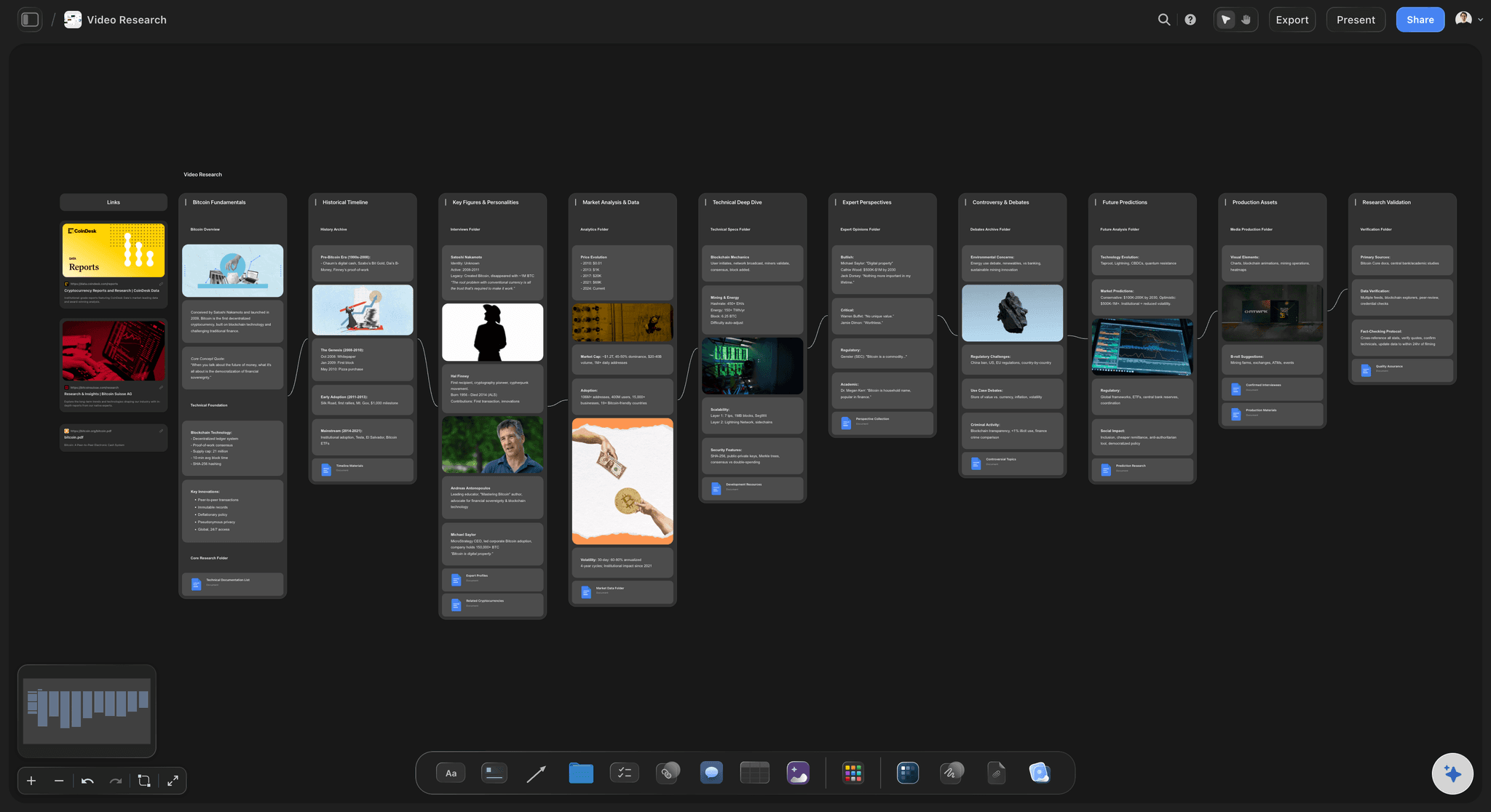
More than text on a note
Evidence beside every note
Drop in anything: Images, video, GIFs, PDFs, and links sit on the canvas next to the note they support. The raw evidence lives with the theme instead of behind a spreadsheet row.
Frame grabs from video: Pull stills from YouTube and Vimeo straight onto the board when a moment from a session recording backs a finding better than a paraphrase can.
Notes where you need them: Longer write-ups live as documents on the same canvas, so the wall stays scannable and the full context behind a theme is one click away.
The diagram is step one
From affinity diagram to finished plan
Turn themes into real boards: Convert the clustered themes into a research report, persona, or product backlog on the same canvas, with the AI carrying your themes across.
Synthesize as a team: Invite collaborators free to cluster the wall together, or send a view-only link so a stakeholder can explore the whole diagram in the browser without an account.
Export anywhere: Need the diagram in a readout, deck, or report? Export it as a clean image or a PDF in one step.
Explore templates for your project
Every template opens as a real, editable board on the infinite canvas. Pick the closest fit and make it your own.
Mind Map
Branch one central idea out into themes and sub-points, then drag the connections around until the structure makes sense.
One app instead of five
How Storyflow compares to other affinity mapping tools.
Plenty of tools let you drag sticky notes around. The question is whether the wall gets clustered with AI and turns into work.
Storyflow
Recommended
AI suggests clusters from your wall of notes
Freeform infinite canvas for the whole research round
Themes become reports and backlogs on the same canvas
No note or object cap on any plan
Miro
AI suggests clusters from your wall of notes
Freeform infinite canvas for the whole research round
Themes become reports and backlogs on the same canvas
No note or object cap on any plan
FigJam
AI suggests clusters from your wall of notes
Freeform infinite canvas for the whole research round
Themes become reports and backlogs on the same canvas
No note or object cap on any plan
Mural
AI suggests clusters from your wall of notes
Freeform infinite canvas for the whole research round
Themes become reports and backlogs on the same canvas
No note or object cap on any plan
What creators are saying
Join early creators getting structured workspaces and AI that remembers their projects
“Storyflow has sped up my workflow by at least 3x, which means more flow state and more projects I can actually ship. It truly changed the way me and my team create.”

Reilin Joey
Director & YouTuber
“One prompt gets me a structured board. But the tactics are my favorite. I run my YouTube scripts through them and my intros and retention got better. It's amazing.”

Justkay
YouTuber & Freelance Filmmaker
“I used to juggle five apps to plan a project. Now I describe what I am making and get boards, lists, and a schedule. All in one place.”

George
@fernwehchronicles
Affinity diagram questions, answered.
Everything people ask about building affinity diagrams in Storyflow.
An affinity diagram maker lets you put many individual notes on a board and cluster the related ones into themes, so structure emerges from raw research instead of being decided upfront. Storyflow does this on an infinite canvas where every note is a real card you can drag between clusters, recolor, and regroup, rather than a fixed grid.
A mind map is a hierarchy: one central topic with themes branching outward, best for radiating a single idea. An affinity diagram has no fixed center. It clusters many small, equal notes into emergent themes from the bottom up, which is what you want when you have more data than structure. Storyflow does both, and our mind mapping page goes deeper on the branching mode.
Not during early access. Storyflow is paid-only right now, with Plus starting at $9.99 per month ($7.99/month billed annually). It includes unlimited diagrams, basic AI usage to suggest and refine clusters, 20 file uploads, and view-only sharing, with no object cap or time limit on any plan. A free plan launches before the end of 2026.
Yes. When the wall gets big, describe what you are looking for in the AI chat and it suggests clusters across the notes on your board, using the current canvas as context. You stay in control: accept a grouping, merge two clusters, split one that grew too broad, or override the AI entirely by dragging notes yourself.
Both. You can dump every note and cluster them entirely by hand, dragging cards into groups and naming the themes yourself. The AI is there when you want it, to suggest a first grouping or split a messy cluster, but the diagram is always yours to reshape.
Yes. Attach images, PDFs, video, GIFs, and links to any note, and grab frames straight from YouTube and Vimeo onto the canvas. The evidence behind a finding lives right beside the note instead of behind a spreadsheet row, which is useful for research synthesis and readouts.
Yes. Invite collaborators free to cluster the wall together on one shared canvas, so a workshop or research team can group notes at the same time. When you are done, share a view-only link so stakeholders can explore the themes in their browser without an account.
Yes. Ask the AI to turn the clustered themes into a research report, persona, or product backlog and it builds the new board on the same canvas from the synthesis you did. The affinity diagram becomes something you can act on instead of a picture you screenshot, and you can export it as an image or PDF too.
The insights are already in your notes. Cluster them into themes.
Dump every note, group what belongs together, and turn the themes into a plan.