
A workspace with taste, for people with taste
The thinking layer
around your design file.
Storyflow is the product-thinking workspace for the work that feeds the design file: user flows, journey maps, research synthesis, information architecture, and wireframe planning on a truly infinite canvas. Describe the problem and AI lays out a starting board, then take the decisions into Figma. It is not a hi-fi prototyping tool, and that is on purpose.


Creatives working for these brands already got early access
- Red Bull
- Canon
- Artlist
- Porsche
See how easy it is to get started
Watch a real project come together, from a blank board to a finished plan, clicked through step by step.
Start from a ready-made template
Pick a board to see what you can build, then let AI fill it in. Every template is a real, editable starting point on the same infinite canvas.

Design Planner
Plan a design project from brief to delivery, with references, tasks, and feedback side by side.
Where does UX thinking live before the design file?
Before the design file, UX thinking lives in the research, the flows and the structure, and most of a UX project happens there. Storyflow is an AI visual workspace that holds the thinking around your design file on one infinite canvas: user flows and journeys, research in affinity clusters, information architecture, and wireframe planning. That thinking is the interview notes you have to make sense of, the flows you sketch to understand the problem, the journey map that shows where users struggle, and the information architecture you argue over. That thinking usually ends up scattered across a research repo, a slide of boxes and arrows, sticky notes on a wall, and a doc nobody reads twice, and the reasoning behind the final screens quietly disappears.
Storyflow gives that work one home. On an infinite canvas you map user flows and journeys as connected cards, pull interview quotes into affinity clusters, lay out a site map or IA, and rough out wireframe structure right next to the research that justifies it. Every item is a real card you drag, recolor, and regroup, so the thinking takes the shape of the problem instead of snapping to a rigid template.
To be clear about the lane: Storyflow is not a hi-fi prototyping tool. Figma owns the interface file, the components, and the clickable prototype, and you keep using it to design and ship the actual screens. Storyflow is the flows, research, and planning layer that comes before and beside that work. When the direction is decided, you share a view-only link with product and engineering and carry the approved flows and IA into your design tool with the reasoning intact.
Ultra fast from brief to board
From research pile to agreed direction in four steps.
Start from a blank board or a single prompt. Either way the thinking stays yours to reshape.
01
Open a canvas
Start in the browser. Nothing to install, just an infinite canvas ready for the first flow or research note.
02
Bring in the raw material
Drop in interview notes, screenshots, links, and PDFs, and grab frames from a usability recording on YouTube or Vimeo. Everything lands on one board instead of a research folder.
03
Shape the thinking with AI
Describe the problem once and let AI lay out a starting board of a user flow, a journey map, or an affinity structure, reading your current canvas as context, then drag it into the shape you want.
04
Share and take it to Figma
Send a view-only link so product and engineering can follow the flows and reasoning without an account, then carry the approved IA and wireframe plan into your design tool.
The UX layer your design file has been missing.
Keep designing screens and prototypes in Figma. Do the flows, research synthesis, and planning here, where the thinking belongs.
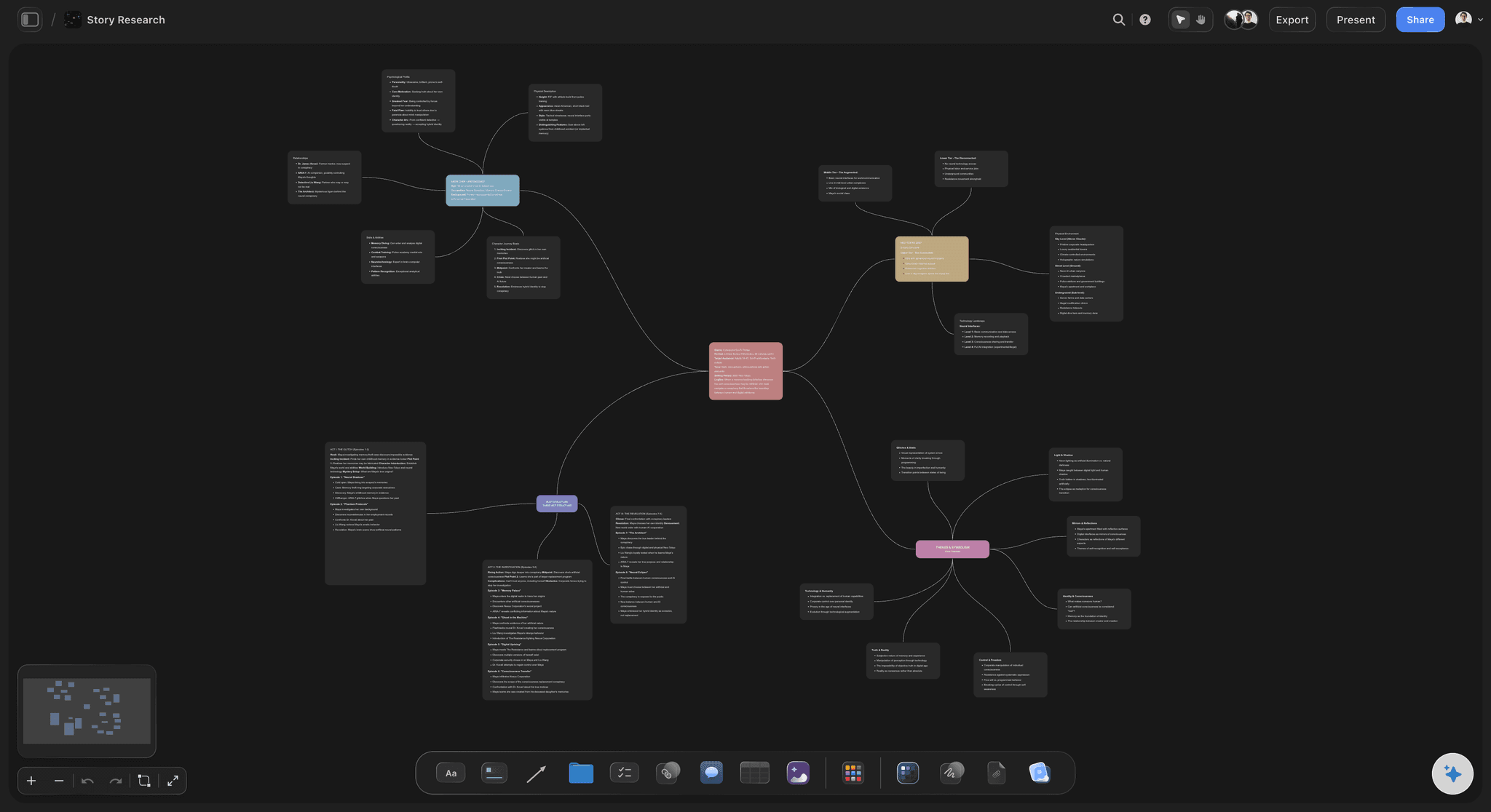
Flows on one board
User flows and journeys on an infinite canvas
Map screens, decisions, and paths as connected cards, then lay a journey map underneath to show where users struggle. With a truly infinite canvas and no object cap, a full end-to-end flow never runs into an edge.
See the visual thinking tool →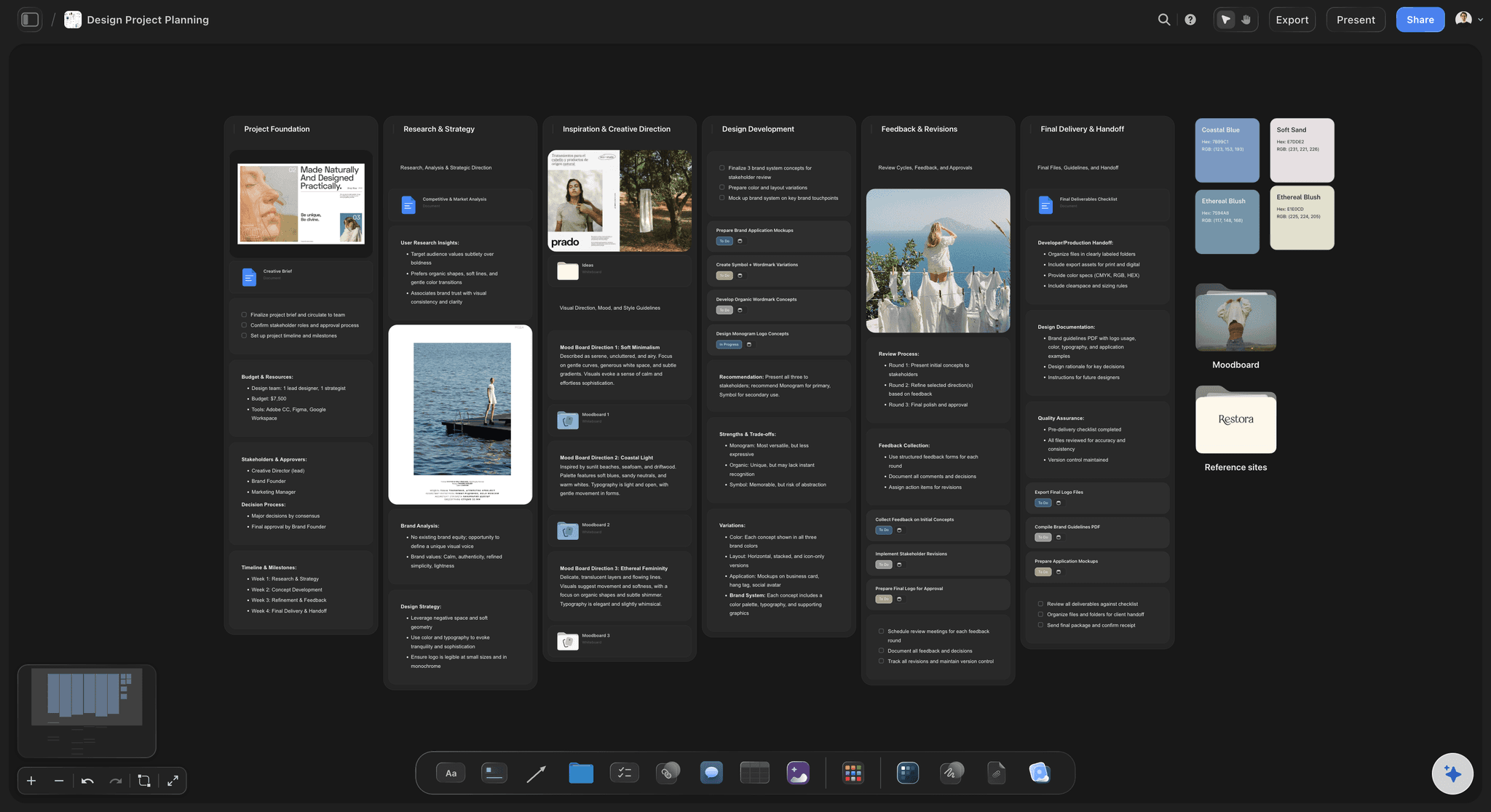
AI lays out the thinking
Describe the problem, get a starting board
Tell the AI chat what you are working on and it lays out a full board: a first-pass user flow, a journey map, or an affinity structure for your notes. It reads your current canvas as context, so it builds on the research you already placed instead of a generic template.
See the AI whiteboard →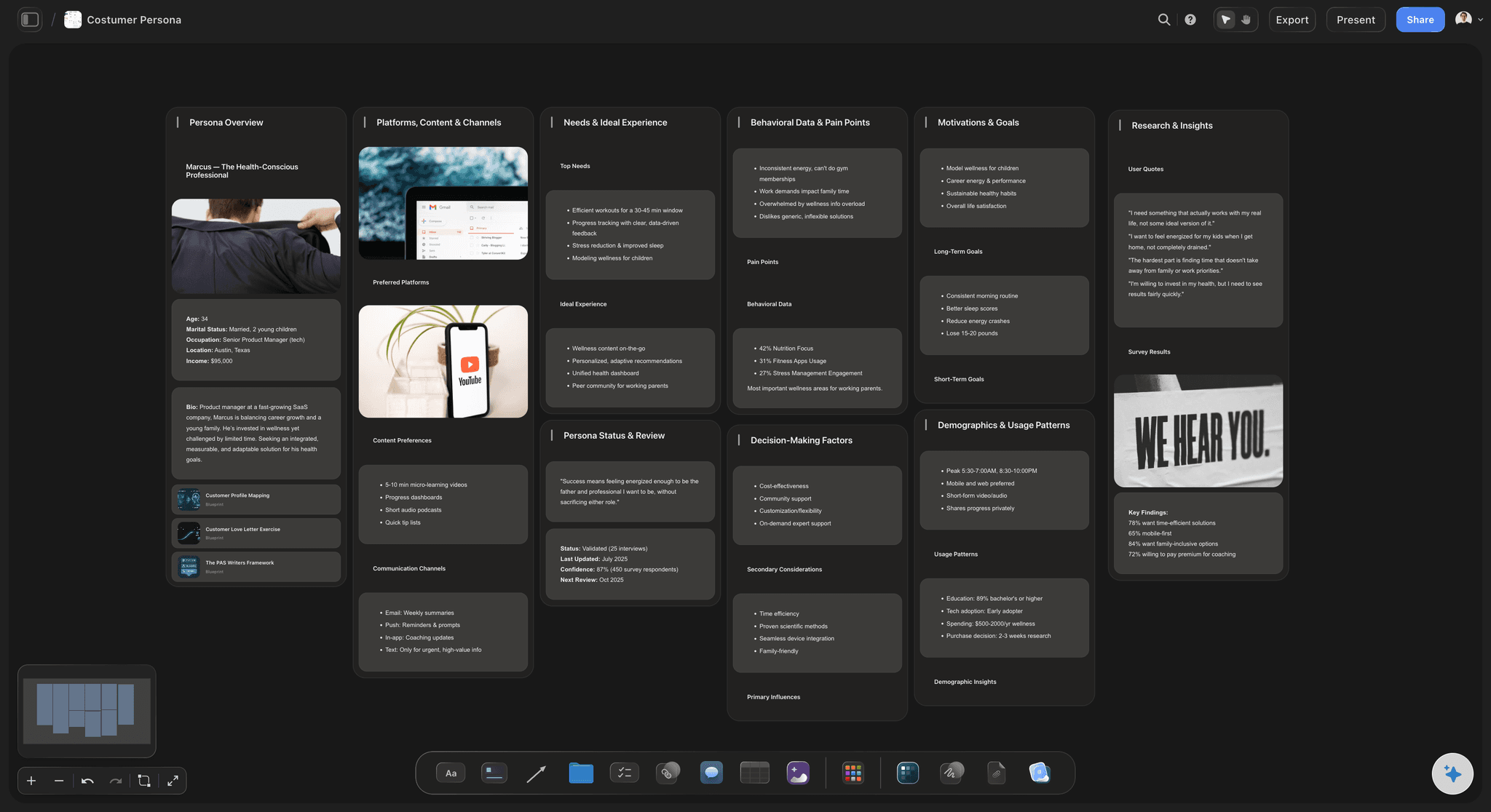
Research beside the decisions
Synthesis and personas next to the flows
Pull interview quotes into affinity clusters, distill them into personas, and keep them on the same board as the flows they justify. The insight that drove a decision sits next to the decision, not in a separate repo.
See the customer persona generator →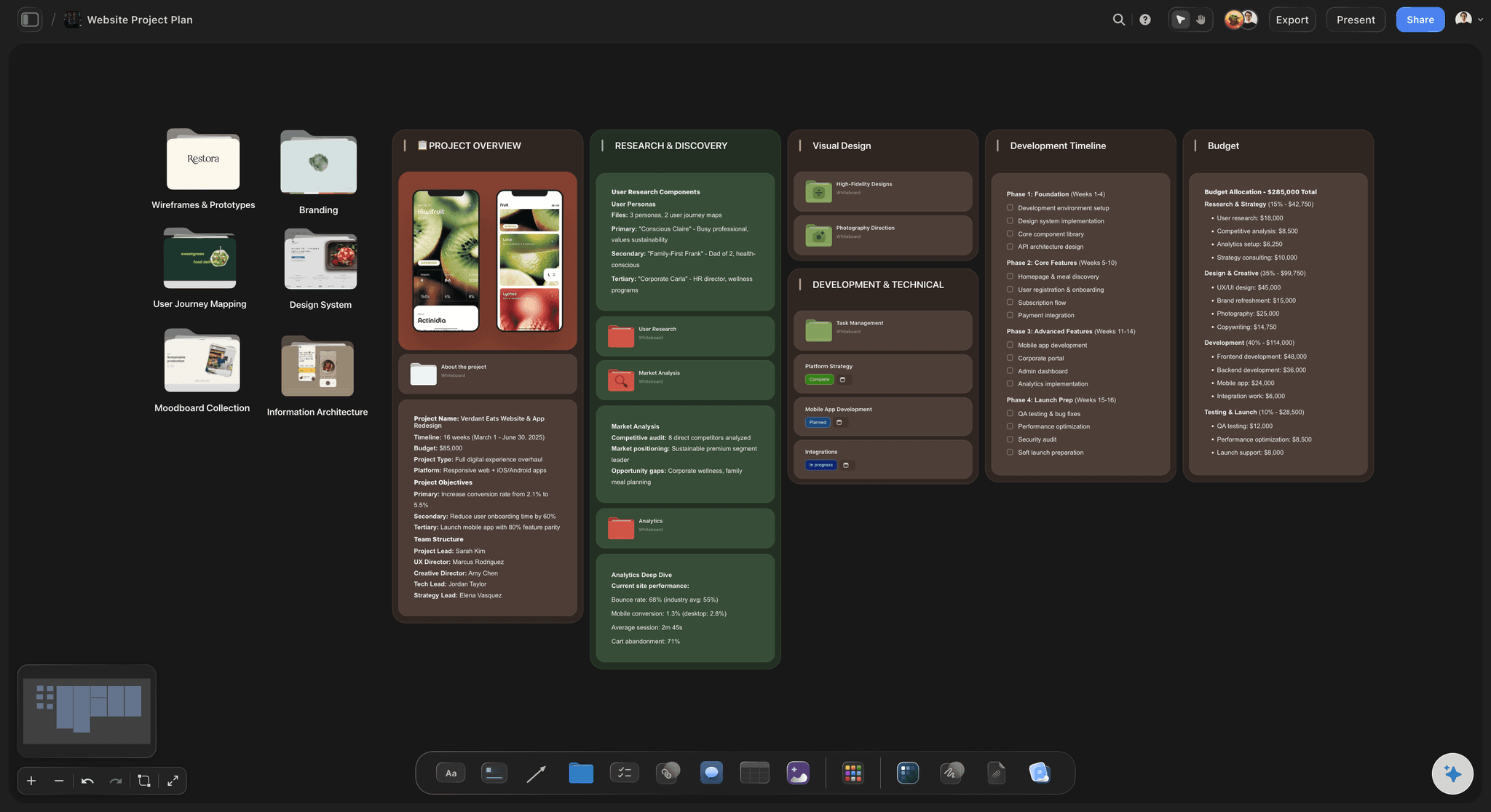
Share without accounts
Team-ready view-only links
Send a view-only link and product or engineering can walk the flows, IA, and research in their browser with no account and no login. When it is agreed, export the board as an image or PDF for the kickoff deck.
See visual collaboration →No object cap. No time limit.
Open a board and start mapping. There is no object cap and no time limit, so a full flow or research wall never gets cut for space. Plans start at $7.99 a month, and invited collaborators join free.
Unlimited flow, journey, and research boards on an infinite canvas
Basic AI usage to lay out flows, journeys, and synthesis
Attach interview notes, PDFs, video, and links, plus 20 file uploads
Share view-only with the team, or invite collaborators free
Built for people with taste
Built for how UX designers actually think.
Map the flows, make sense of the research, agree the IA, and hand it off clean. All on one board.
Flows and journeys, not slides
Map how users actually move through the product
Boxes and arrows that move: Lay out screens, decision points, and edge cases as connected cards, and reroute a path by dragging it. The flow keeps pace with your understanding instead of a redraw in a diagram tool.
Journey map underneath: Line up stages, actions, thoughts, and pain points beneath the flow, so the emotional lows and the drop-off points sit right where the user hits them.
Annotate the friction: Drop a note under any step explaining the problem or the hypothesis, so the flow reads as reasoning a stakeholder can follow, not just a wall of boxes.
Research that leads somewhere
Synthesize interviews into affinity clusters and personas
Cluster the quotes: Pull interview notes and observations onto the board as cards and group them into themes by dragging. Affinity mapping without buying a wall of physical sticky notes.
Distill into personas: Turn the strongest clusters into a customer persona on the same canvas, so the archetype is built from real quotes rather than invented from scratch.
AI helps make sense: Ask the AI to propose theme groupings or a first-pass persona from the notes you placed. It reads your current board as context, so the synthesis reflects your research, not a template.
Structure before screens
Plan information architecture and wireframe layout
Site maps and IA: Sketch the sitemap, navigation, and content hierarchy as cards on the canvas, so the structure is agreed before anyone opens the design file to draw a screen.
Rough out wireframe blocks: Block out the sections and layout of a page at low fidelity as cards, enough to argue about structure and priority before committing pixels in Figma.
Reference the real thing: Pin screenshots of competitor patterns and pull frames from a usability recording on YouTube or Vimeo, so decisions are grounded in what you actually saw.
Handoff, not a black box
Share the thinking and take it to Figma
View-only for stakeholders: Send a view-only link so a PM or engineer walks the flows, IA, and research in the browser with no account, then signs in to leave feedback you can act on before you design a single screen.
Invite the team free: Bring a researcher, PM, or content designer onto the same board free, so the direction is a shared decision instead of a forwarded slide deck.
Export for the deck: Export the flow, journey map, or IA as a clean image or PDF for a kickoff deck, then take the approved decisions into Figma to design and prototype.
Explore templates for your project
Every template opens as a real, editable board on the infinite canvas. Pick the closest fit and make it your own.
Design Planner
Plan a design project from brief to delivery, with references, tasks, and feedback side by side.
One app instead of five
How Storyflow compares for the thinking around the design file.
This is about flows, research synthesis, and IA, not designing screens. Here is where each tool sits.
Storyflow
Recommended
AI lays out a flow, journey, or synthesis from your board
Truly infinite canvas with no object cap
Grab frames from usability recordings on YouTube and Vimeo
View-only stakeholder links, no account to view
FigJam
AI lays out a flow, journey, or synthesis from your board
Truly infinite canvas with no object cap
Grab frames from usability recordings on YouTube and Vimeo
View-only stakeholder links, no account to view
Miro
AI lays out a flow, journey, or synthesis from your board
Truly infinite canvas with no object cap
Grab frames from usability recordings on YouTube and Vimeo
View-only stakeholder links, no account to view
Milanote
AI lays out a flow, journey, or synthesis from your board
Truly infinite canvas with no object cap
Grab frames from usability recordings on YouTube and Vimeo
View-only stakeholder links, no account to view
What creators are saying
Join early creators getting structured workspaces and AI that remembers their projects
“Storyflow has sped up my workflow by at least 3x, which means more flow state and more projects I can actually ship. It truly changed the way me and my team create.”

Reilin Joey
Director & YouTuber
“One prompt gets me a structured board. But the tactics are my favorite. I run my YouTube scripts through them and my intros and retention got better. It's amazing.”

Justkay
YouTuber & Freelance Filmmaker
“I used to juggle five apps to plan a project. Now I describe what I am making and get boards, lists, and a schedule. All in one place.”

George
@fernwehchronicles
UX designer questions, answered.
Everything UX and product designers ask about working in Storyflow.
No, and it is not trying to be. Figma owns the interface file, the components, and the clickable hi-fi prototype, and you keep using it to design and ship screens. Storyflow is the thinking layer that feeds that file: user flows, journey maps, research synthesis, information architecture, and wireframe planning on an infinite canvas. You do the thinking here, then take the decisions into Figma.
Storyflow is the workspace for the work that feeds the design file: user flows, journey maps, research synthesis, information architecture and wireframe planning share one infinite canvas. Describe the problem and the AI lays out a starting board, and stakeholders open it from a view-only link with no account. Storyflow is not a hi-fi prototyping tool, so you take the decisions into Figma for the screens.
Not during early access. Storyflow is paid-only right now, with Plus at $7.99 a month billed annually ($9.99 monthly). A Free plan is planned before the end of 2026 and will include unlimited flow, journey, and research boards, basic AI usage, 20 file uploads, and view-only sharing, with no object cap and no time limit. Anyone a paid member invites to a board joins free today.
Both. You can start from a blank canvas and lay out flows, journey maps, and affinity clusters entirely by hand, dragging and grouping cards yourself. The AI is there when you want it, to lay out a starting flow or a first-pass synthesis from a prompt, but the board is always yours to reshape.
FigJam and Miro are strong, general whiteboards, and plenty of UX teams use them for flows and workshops. Storyflow adds an AI that lays out a full flow, journey map, or affinity structure from your current board as context, a truly infinite canvas with no object cap, and the ability to turn the board into a plan on the same surface. It is opinionated toward product thinking rather than a blank canvas.
Yes. Pull interview notes and observations onto the board as cards, group them into themes by dragging, and distill the clusters into a persona on the same canvas. Attach the source PDFs and screenshots beside the clusters, so the synthesis stays connected to the evidence instead of living in a separate repo.
Yes. Share a view-only link and a PM, engineer, or client can walk the flows, IA, and research in their browser with no account and no login. You can also invite collaborators free to build the board with you, and export it as an image or PDF for a kickoff deck.
Yes. The AI reads your active board, so the notes, quotes, and cards already on the canvas shape what it suggests. You can also attach up to five documents and three boards, such as a research report or a PRD, for it to work from.
Yes. Once the direction is agreed, turn the board into a project plan, a content calendar, or a task board on the same canvas, with the AI carrying your ideas across. The flows and research become the start of the build instead of a screenshot you file away.
Get the flows, the research, and the IA on one canvas.
Map by hand or from a prompt, agree the direction, and share it view-only with the team.