
PODCAST EPISODE PLANNER
Everything that happens
before you hit record.
One episode is a small production: a guest to research, a question ladder to build, a cold open that decides whether anyone stays, segments and ad breaks to place, and show notes, chapters and clips waiting on the other side. Put all of it on one canvas instead of five apps and a notes file. Paid-only during early access, plans from $9.99 a month, and a Free plan launches before the end of 2026.
Plans from $9.99/mo
Free plan coming late 2026
Works in your browser

Used by creative professionals at:
Artlist
Pixar
Nike
Red Bull
The North Face
Porsche
Start from a ready-made template
Pick a board to see what you can build, then let AI fill it in. Every template is a real, editable starting point on the same infinite canvas.
YouTube Plan
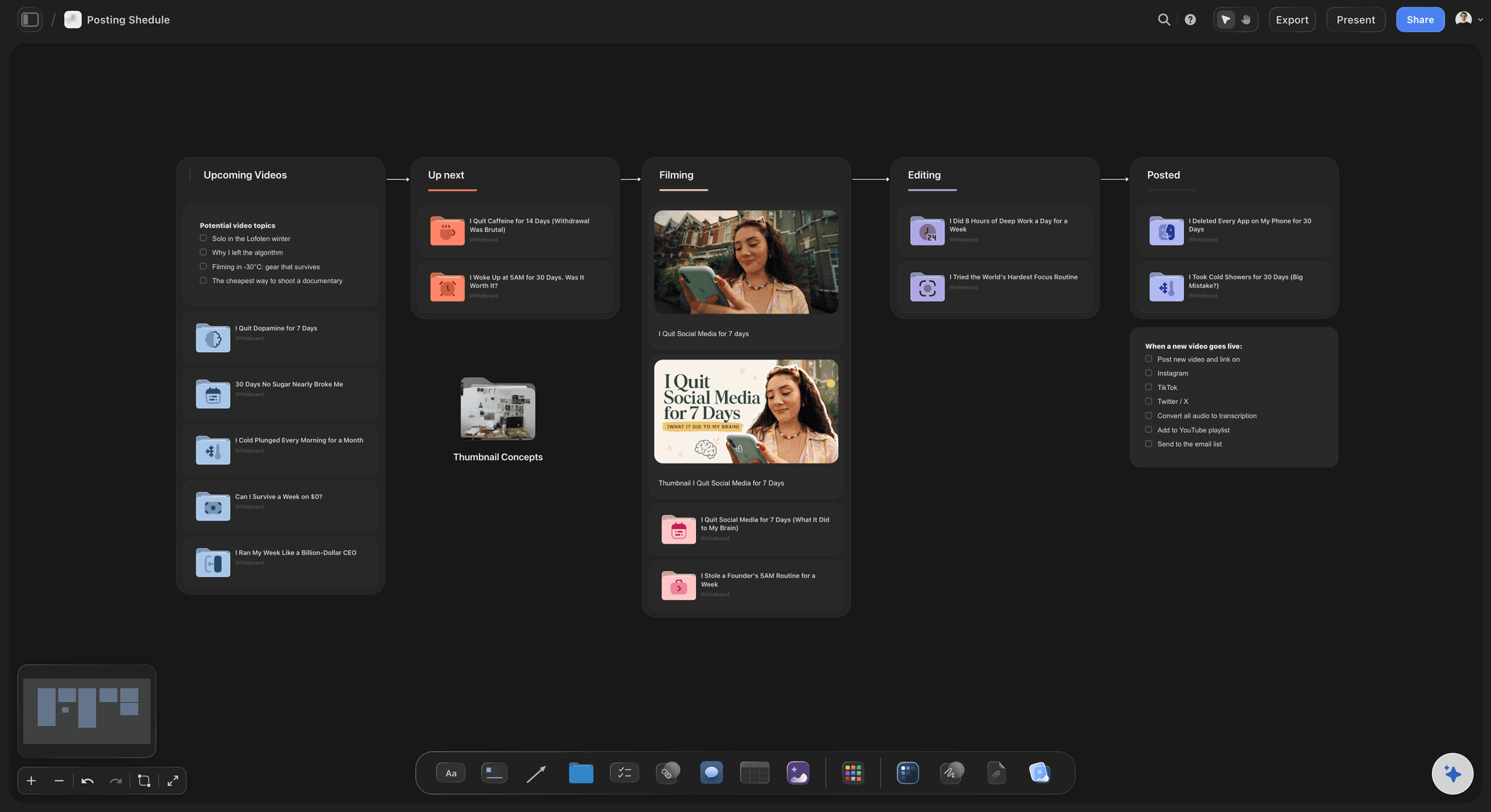
Plan a video from hook to outline to shot list, with references and thumbnail ideas sitting right beside it.
What is podcast episode planning?
Podcast episode planning is the work between deciding to make an episode and pressing record, plus the packaging work that turns a recording into something people can find. It is a small production every single week. Somebody has to be booked, researched and briefed. Somebody has to decide what the episode is actually about, which is not the same as who the guest is. Somebody has to know what the first ninety seconds are, where the ad reads go, and what gets pulled out afterwards. Shows that feel effortless are almost always shows where this happened on purpose.
The failure mode is not lack of effort, it is scattering. The guest's book is in a browser tab, the questions are in a notes app, the ad copy is in an email, the intro is improvised, and the show notes get written at eleven at night from a transcript nobody wants to read. None of those pieces can see each other, so the question that would have made the episode never gets asked and the clip that would have travelled never gets marked. Putting one episode on one surface is a bigger upgrade than any new microphone.
Storyflow is an AI-native infinite canvas built for that assembly job. Drop the guest's talks, articles, transcripts and interviews onto a board and read them next to each other. Build the questions as a ladder underneath, so you can see the escalation instead of a flat list. Lay the episode out as segment cards with the cold open, the ad breaks and the close in place, mark the moments you expect to become clips before you record, and keep the show notes draft on the same canvas. For the show above the episode, see the AI podcast planner. For the structural shape of an episode across TV, podcast and video, see the episode outline template.
A complete episode plan has six named parts: the guest research and brief (what they have already said everywhere else, what they are promoting, and what they have never been asked), the question ladder and its running order (openers that warm the room, the two or three questions the episode exists for, and the escalation between them), the cold open and hook (the thirty to ninety seconds that decide whether anyone hears the rest), the segment map with ad breaks and reads (what each block is for, how long it runs, and where a sponsor lands without knifing a good answer), the record itself (the run of show, the levels and backup check, and the notes you take live with timestamps), and the outputs (show notes people can actually search, chapters, timestamps, and the clips you planned rather than hunted for). Storyflow holds all six on one board, which is why the last two stop being an ordeal.
HOW IT WORKS
From a booked guest to an episode you can package.
No document to reformat and no five-app relay. One board per episode, from research to show notes.
01
Open a board for the episode
Sign up in seconds, from $9.99 a month. No download. One infinite canvas per episode opens in the browser.
02
Research the guest onto the canvas
Drop in their articles, talks, past interviews, transcripts and video frames, and let AI summarise the themes they always get asked about. What you are looking for is the gap: the thing they clearly care about that nobody has put to them yet.
03
Build the ladder and the segment map
Turn the research into questions arranged as a ladder rather than a script, then lay out the cold open, the segments, the ad breaks and the close as cards. Mark the moments you expect to become clips while you still have time to set them up.
04
Record elsewhere, come back to package
Record in Riverside, Zoom, Zencastr or a room with real microphones, and edit in Descript or a DAW. Bring the timestamps back to the board to finish show notes, chapters and the clip list, then share a view-only link with your editor or producer.
One episode, from research to clips.
Guest prep, the question ladder, the segment map, and the packaging, all on one canvas.
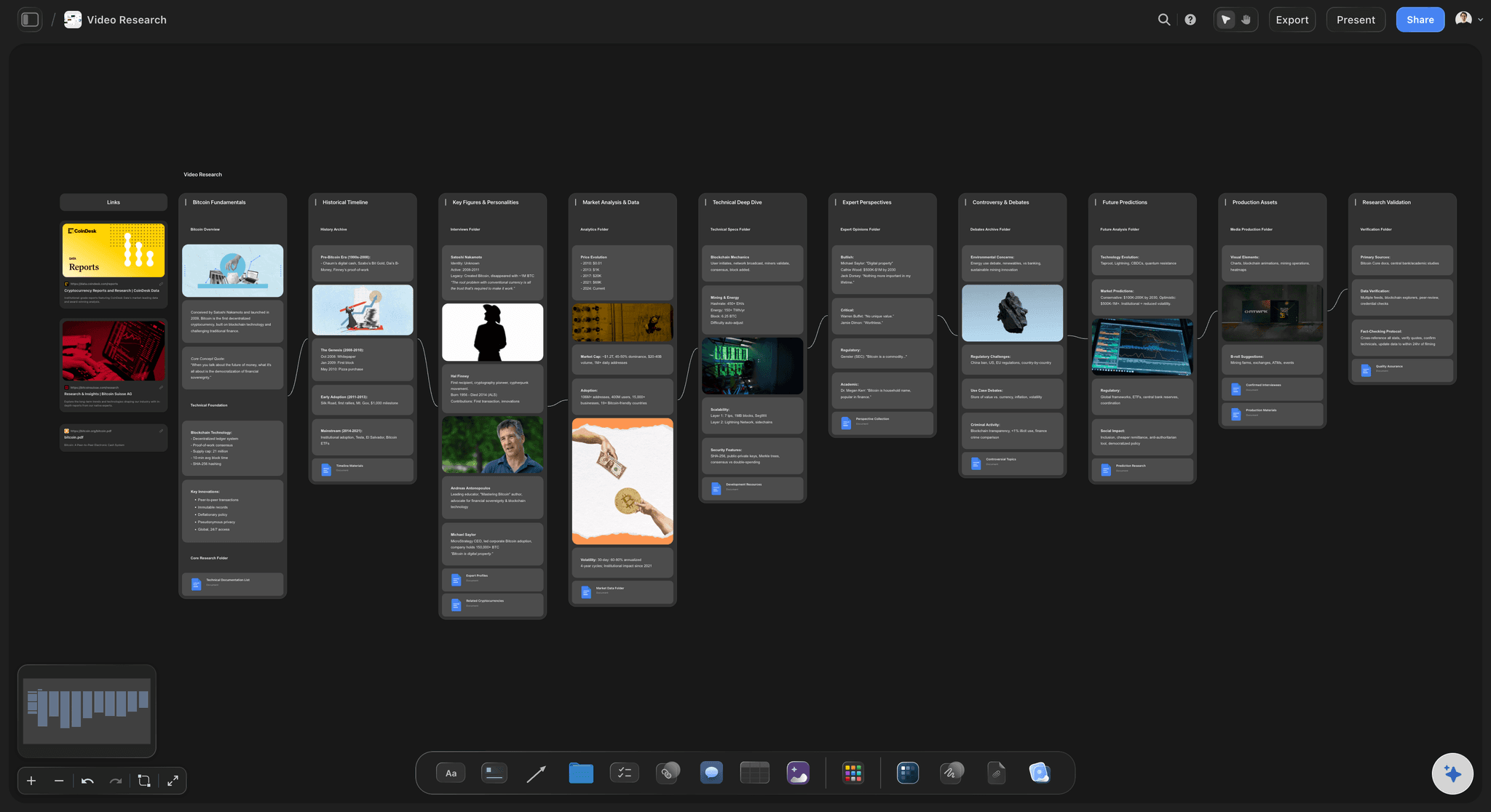
Read everything the guest has already said, side by side
Research a guest well enough to earn a real answer
Pull their talks, essays, past episodes and transcripts onto one board and the pattern appears fast: the four stories they tell everywhere, and the thing they mention in passing that nobody follows up on. The second one is your episode. AI can summarise the pile, but the judgment about what is unasked stays yours.
See the AI podcast planner →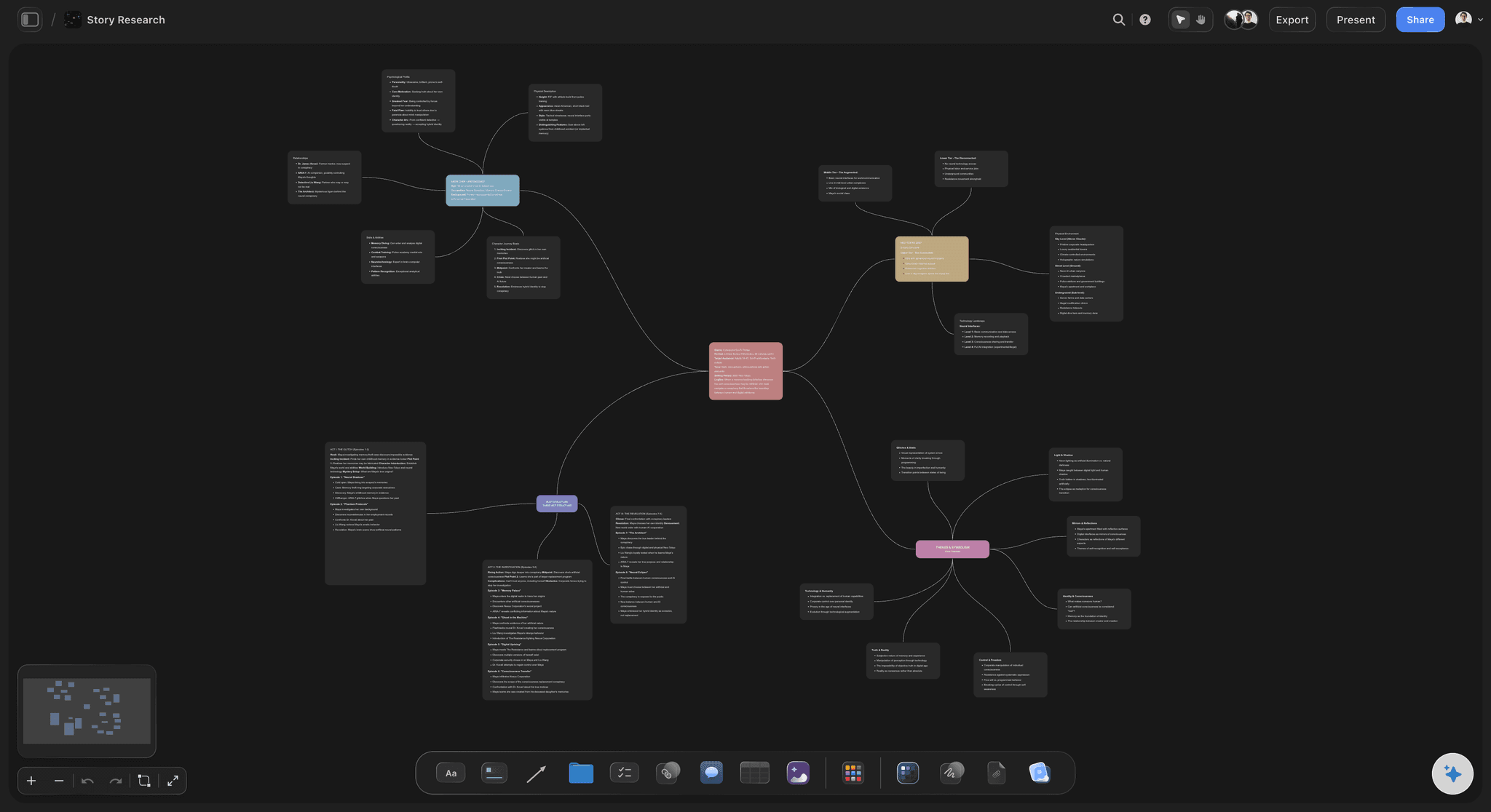
A ladder of questions, not a script to read out
Plan the conversation without scripting it to death
A rigid list makes you a person waiting to ask question seven instead of a person listening. Build the questions as a ladder: openers, the two or three the episode exists for, and the escalation between them. On a canvas you can see the shape, so when the guest goes somewhere better you can leave the ladder and still find your way back.
Try the episode outline template →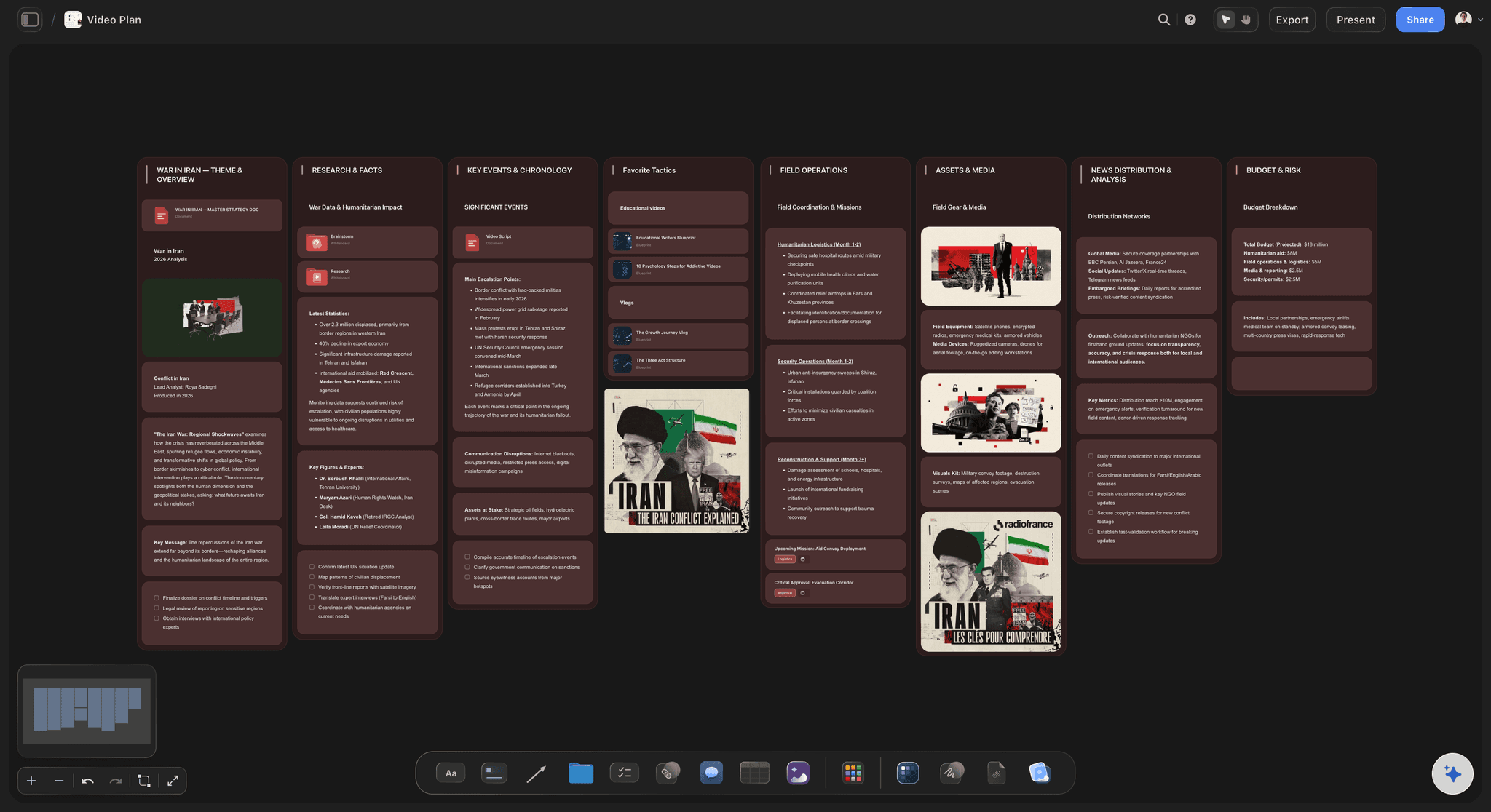
Mark the clips before you record, not after
Stop hunting for clips in a two-hour transcript
Clips found afterwards are usually whatever was least bad. Clips planned beforehand are questions you deliberately set up, ask cleanly, and let land in silence. Mark three or four intended clip moments on the segment map, then say the setup out loud during the record so the clip works without context.
See the shorts planner →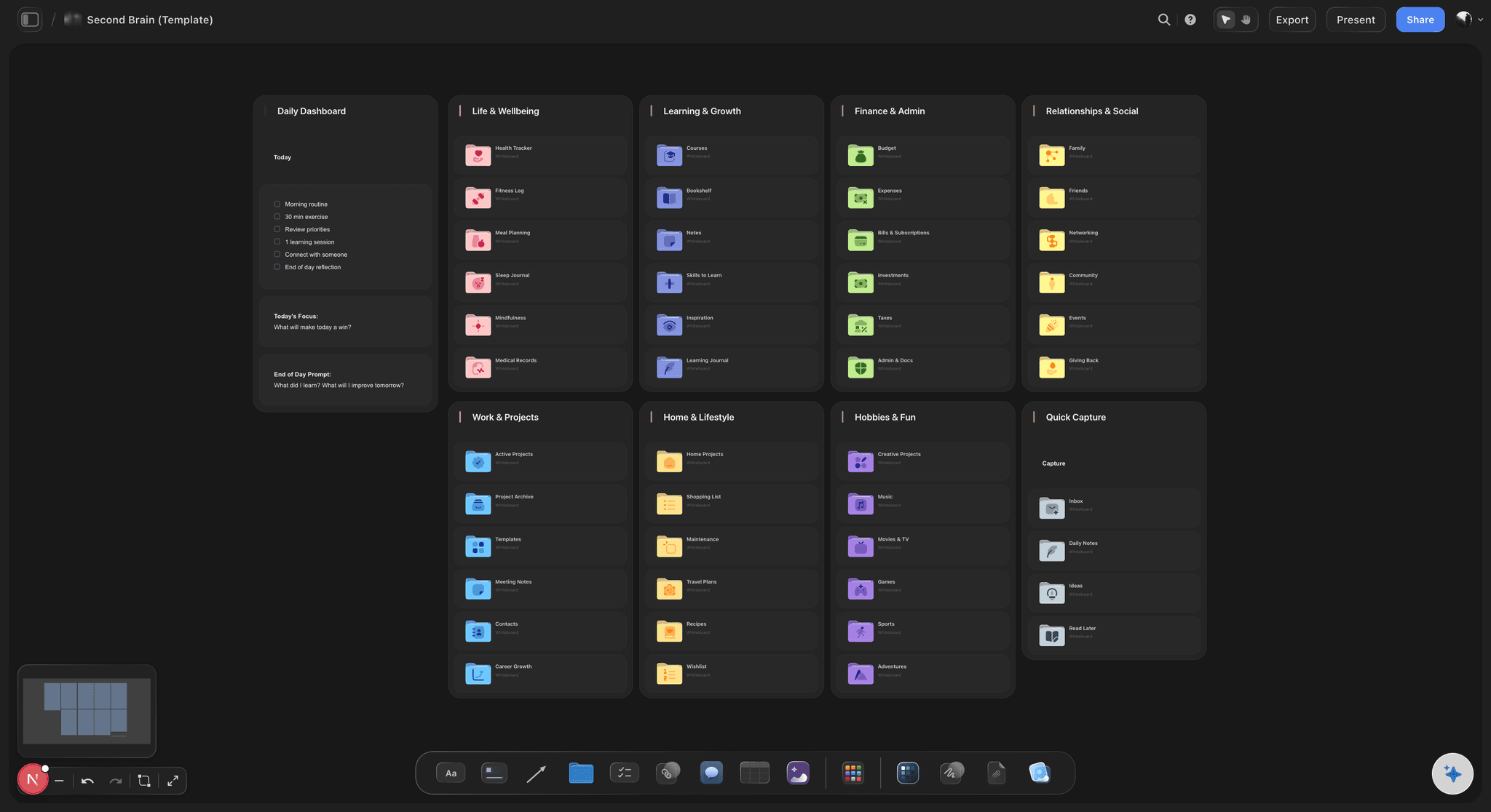
Show notes, chapters and timestamps on the same board
Package the episode where you planned it
Show notes are not a summary, they are a searchable page: the guest and their credentials, the questions in plain language, every name, book, tool and link mentioned, and chapter markers with timestamps. Draft it beside the segment map you already built and most of it is written before the record ends.
See the content repurposing planner →Unlimited boards. No object cap.
One board per episode, with the research, the questions and the packaging in one place. Storyflow is paid-only during early access, with plans from $9.99 a month, and a Free plan launches before the end of 2026.
Unlimited episode boards on an infinite canvas
Basic AI usage to summarise research and draft questions
3 starter frameworks built in
Share view-only links with your co-host, producer or editor
BUILT FOR ONE EPISODE
The prep is the show.
Nobody can hear your preparation directly. They hear the follow-up question you were able to ask because of it.
Guest research, briefing and the question nobody else asks
Do the reading where you can see all of it
Gather everything in one place: Their book chapters, essays, conference talks, past podcast appearances, social threads and press coverage go onto the board as cards, images, links and grabbed video frames. Reading them beside each other is what surfaces the pattern, and a stack of browser tabs never will.
Find the unasked question: Every guest has a set of answers they have given fifty times. Mark them, and then deliberately avoid them. The question worth asking is usually adjacent to something they said once, briefly, and moved past. That is the moment they have not rehearsed.
Write the guest brief on the same board: Guests prepare better when they know the shape of the episode. Put the themes, the running time, the format and anything you want them to bring on a card and send a view-only link. It is a two-minute job that changes the quality of the first twenty minutes.
Keep the promo and admin facts attached: Name pronunciation, title, what they are promoting, the release date they care about, and the links they want credited all live on the episode board, so the show notes are not a scavenger hunt three weeks later.
Cold open, segments, ad breaks and the close
Give the episode a shape before the microphone is on
The first ninety seconds decide the rest: Most listeners leave in the opening minute, and they leave during throat-clearing. Plan the cold open as its own card: a live moment from later in the episode, a sharp claim, or the question the episode answers. Never a slow sponsor read and never a three-minute preamble about your week.
One purpose per segment: Write a single line on each segment card saying what it is for and roughly how long it runs. Segments that cannot state a purpose are the sag in the middle of your episode, and you can delete them on the board for free instead of in the edit for an hour.
Place ad breaks where they do not knife an answer: Mark mid-roll positions on the segment map in advance and keep them away from the moments you expect to matter. Host-read copy, live-read notes and sponsor talking points sit on the card, so the read is written before you are tired.
Hold the thread when the guest goes somewhere better: The best interviews leave the plan. Park the abandoned thread on the board as you go, follow the tangent properly, and come back to it deliberately. The plan exists so you can leave it and still land the episode, not so you can recite it.
Show notes, chapters, timestamps and clips
Plan the afterwards before the beforehand is over
Write show notes people can search: Lead with what the episode actually answers in the words someone would type, not a paragraph of praise for the guest. List every book, tool, study, person and link mentioned. That page is often the only part of your episode a search engine or an answer engine can read.
Chapters are a listening aid and a retention tool: Chapter markers let someone skip to the part they came for instead of leaving. Draft the chapter names from your segment cards, then correct the timestamps from the transcript after the edit. Half the work is already done because the segments existed first.
Three or four intended clips, chosen in advance: Decide before the record which moments you want to travel: the strong claim, the surprising number, the disagreement, the story with a clean ending. Set them up on the day so they stand alone, and your editor gets a list instead of a haystack.
Feed the next episode from this one: The tangent you could not follow, the guest they recommended and the question that opened up too late are next week's episode. Park them on a running ideas board rather than in a memory you will not have on Thursday.
Share with a co-host, a producer or an editor
One episode, one board, everyone looking at it
View-only links, no account needed: Send the plan to a co-host, a producer, a guest or an editor and they open the whole board in a browser. Feedback on the running order arrives while it can still change something.
Prep together: Co-hosts can build the ladder on the same canvas so you are not asking the same question twice or leaving the good one to each other. Anyone a paid member invites to a board joins free today.
Hand the editor a real brief: Intended clips, chapter names, the ad break positions, and the tangent you want cut are all on the board. An edit brief that specific saves more time than any workflow change downstream.
Export for a sponsor or a network: Export the board as a high-quality image or PDF when the episode plan has to travel into a sponsor conversation, a network deck or an approval email.
Explore templates for your project
Every template opens as a real, editable board on the infinite canvas. Pick the closest fit and make it your own.
YouTube Plan
Plan a video from hook to outline to shot list, with references and thumbnail ideas sitting right beside it.
HOW WE COMPARE
Storyflow vs Notion, Trello, and Descript.
These tools own different halves of a podcast. Here is the honest split, including what Storyflow does not do at all.
Storyflow
Recommended
Infinite canvas for one episode, research to show notes
AI reads your research board as context
Question ladder and segment map you can drag
Plan intended clips before the record
Records and edits the audio
Structured episode database with filters and views
Notion
Infinite canvas for one episode, research to show notes
AI reads your research board as context
Question ladder and segment map you can drag
Plan intended clips before the record
Records and edits the audio
Structured episode database with filters and views
Trello
Infinite canvas for one episode, research to show notes
AI reads your research board as context
Question ladder and segment map you can drag
Plan intended clips before the record
Records and edits the audio
Structured episode database with filters and views
Descript
Infinite canvas for one episode, research to show notes
AI reads your research board as context
Question ladder and segment map you can drag
Plan intended clips before the record
Records and edits the audio
Structured episode database with filters and views
What creators are saying
Join early creators getting structured workspaces and AI that remembers their projects
“Storyflow has sped up my workflow by at least 3x, which means more flow state and more projects I can actually ship. It truly changed the way me and my team create.”

Reilin Joey
Director & YouTuber
“One prompt gets me a structured board. But the tactics are my favorite. I run my YouTube scripts through them and my intros and retention got better. It's amazing.”

Justkay
YouTuber & Freelance Filmmaker
“I used to juggle five apps to plan a project. Now I describe what I am making and get boards, lists, and a schedule. All in one place.”

George
@fernwehchronicles
Podcast episode planning questions, answered.
How to plan an episode, how long it should be, what to ask, and what Storyflow does not do.
Start by deciding what the episode is about, which is not the same as who the guest is. Then research: read, watch and listen to everything the guest has already said, and mark the answers they give everywhere so you can avoid them. Build the questions as a ladder rather than a script, with openers, the two or three questions the episode exists for, and the escalation between. Plan the cold open, the segments, the ad break positions and the close. Mark three or four moments you intend to turn into clips. Then record, and finish the show notes and chapters from the plan you already have.
Plan the episode, then go and record it.
Research, questions, segments, ad breaks, clips and show notes on one canvas. Plans from $9.99/month, no download, and a Free plan is coming before the end of 2026.