
Extremely simple, seriously capable
Ideas do not die from
being bad. They die from being lost.
Most idea management is a list that grows until nobody reads it. Storyflow keeps ideas on a canvas with the image, link or note that caused each one still attached, grouped into themes you can actually scan, and promotes the ones worth doing into a plan on the same board.


Creatives working for these brands already got early access
- Red Bull
- Canon
- Artlist
- Porsche
See how easy it is to get started
Watch a real project come together, from a blank board to a finished plan, clicked through step by step.
Start from a ready-made template
Pick a board to see what you can build, then let AI fill it in. Every template is a real, editable starting point on the same infinite canvas.

Mind Map
Branch one central idea out into themes and sub-points, then drag the connections around until the structure makes sense.
What is idea management?
Idea management is the practice of capturing ideas as they occur, keeping them somewhere they can be found again, and having a way to decide which ones become work. Storyflow is an AI visual workspace that keeps your team's ideas findable on one infinite canvas: each idea with the image, link or note that caused it, themes you can scan, and the ideas worth doing promoted into a plan. For a creative team that means campaign angles, story premises, video concepts and product directions. For an individual it is the same problem at smaller scale and with less forgiveness, because there is nobody else who remembers the idea.
Capture is the part everyone solves and it is not the bottleneck. The bottleneck is retrieval and judgement. An idea recorded as one line in a list is nearly worthless three months later, because the thing that made it good was usually the context: the image you saw, the sentence a customer said, the specific problem it solved. Strip that away and you are left with a title you no longer trust.
The second failure is that lists have no shape. Two hundred ideas in a document cannot be scanned, compared or grouped, so in practice teams work from the ten most recent and the rest is an archive nobody opens. The backlog becomes a place ideas go to be politely forgotten.
Storyflow treats ideas as objects on a canvas. The reference that caused an idea stays attached to it, related ideas sit physically together as themes, and a promising one grows into a brief and a plan in place, without being retyped into another tool. Storyflow is not an innovation-management platform: there is no submission portal, voting workflow, stage-gate pipeline or scoring model. It is a working surface, not a governance process.
Ultra fast from brief to board
Capture, cluster, choose, build.
One board, so choosing an idea does not mean rebuilding its context.
01
Capture with the context attached
Drop the idea onto the board along with the image, link, screenshot or quote that caused it. The context is the part you will need later.
02
Let them accumulate loosely
Do not file as you go. An infinite canvas means a half-formed idea can sit next to a finished one without anyone having to categorise it first.
03
Cluster into themes
Drag related ideas together and name the group, or ask the AI to propose clusters once there is more on the board than you can read.
04
Promote the ones worth doing
Grow a chosen idea into a brief, an outline or a plan on the same board, keeping its original reference attached as evidence.
The value is in what you can find again.
Every feature here is about the idea being useful months after you had it.
Context survives
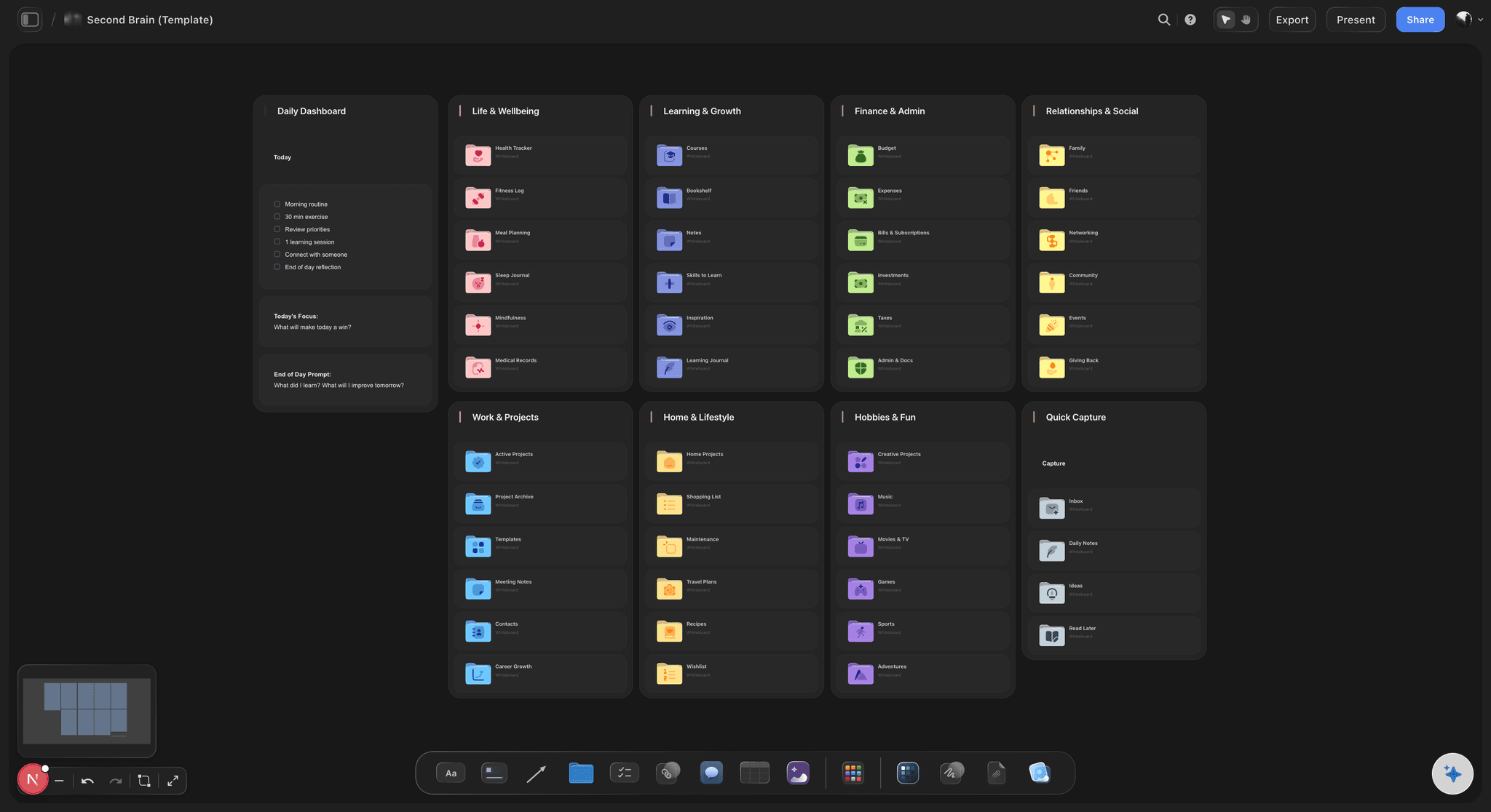
The reference stays with the idea
The image, article or quote that sparked an idea sits attached to it, so you can judge the idea later rather than just reading its title.
See the idea board →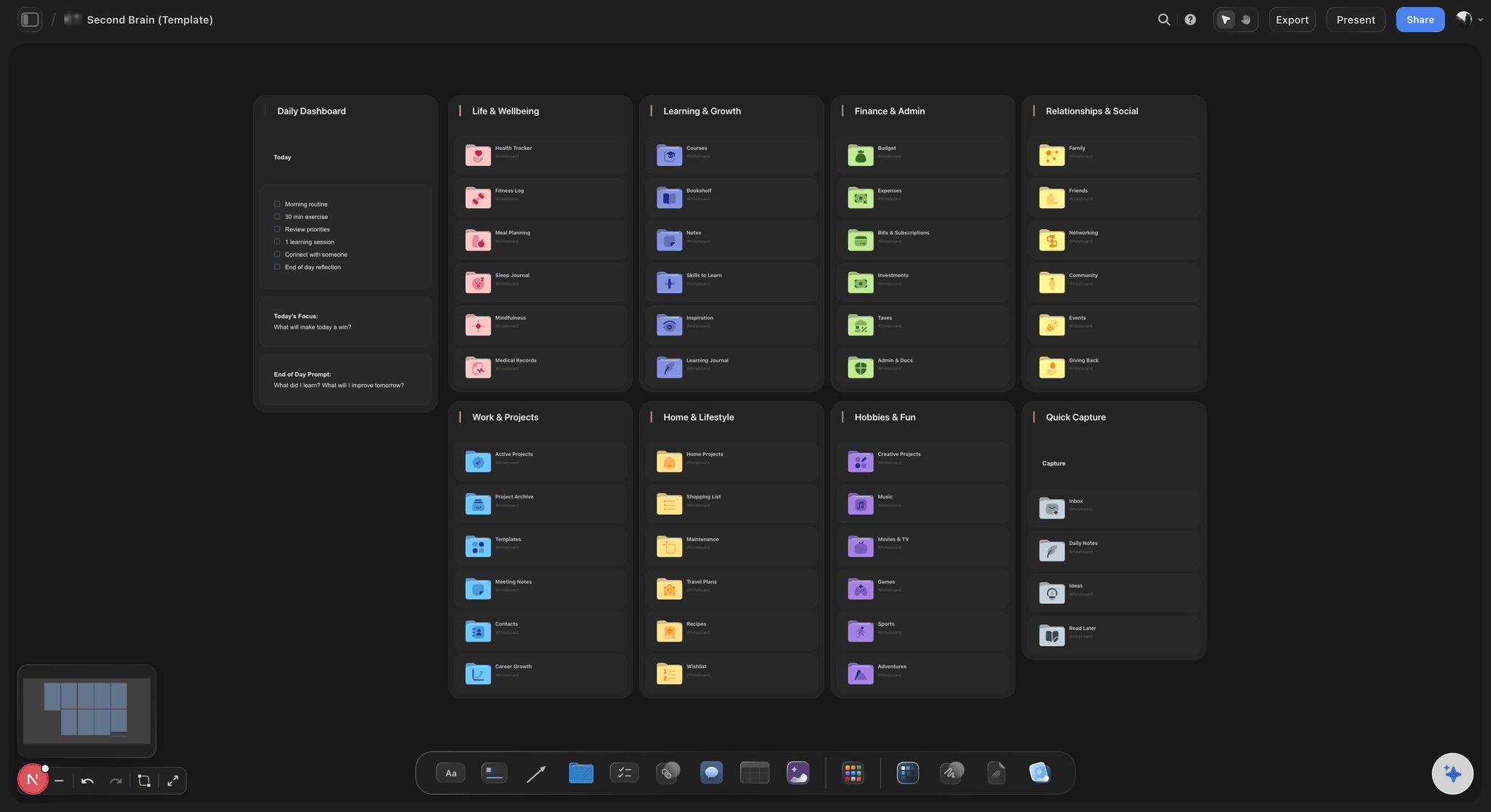
Shape instead of a list
Themes you can see at a glance
Related ideas sit physically together and clusters are named, so a hundred ideas can be scanned in a minute rather than scrolled past.
See the ideation tool →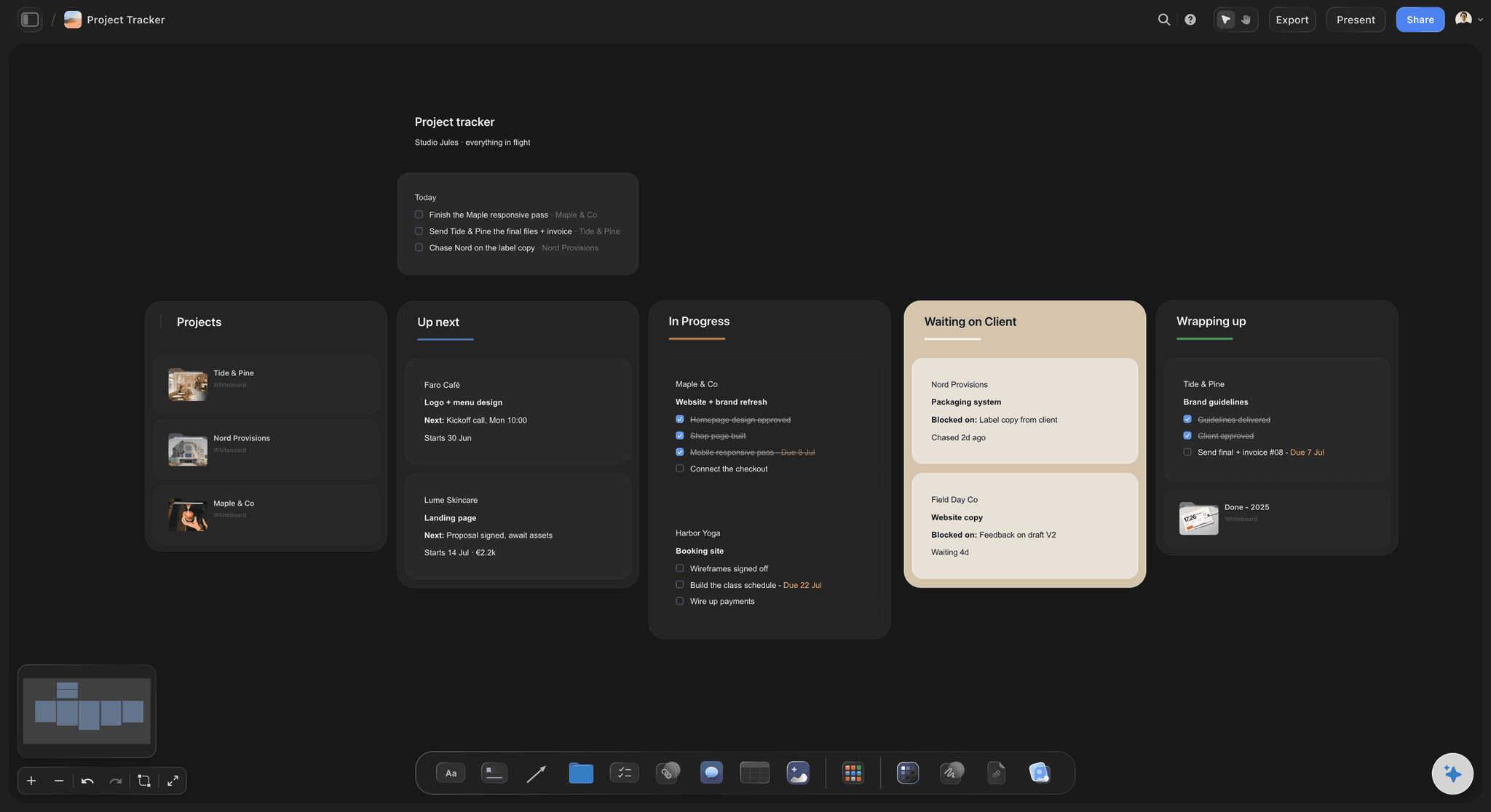
No retyping
An idea grows into a project in place
The chosen idea becomes a brief, an outline and a task list on the same board, so nothing is lost in the handoff between deciding and doing.
See mind map to project plan →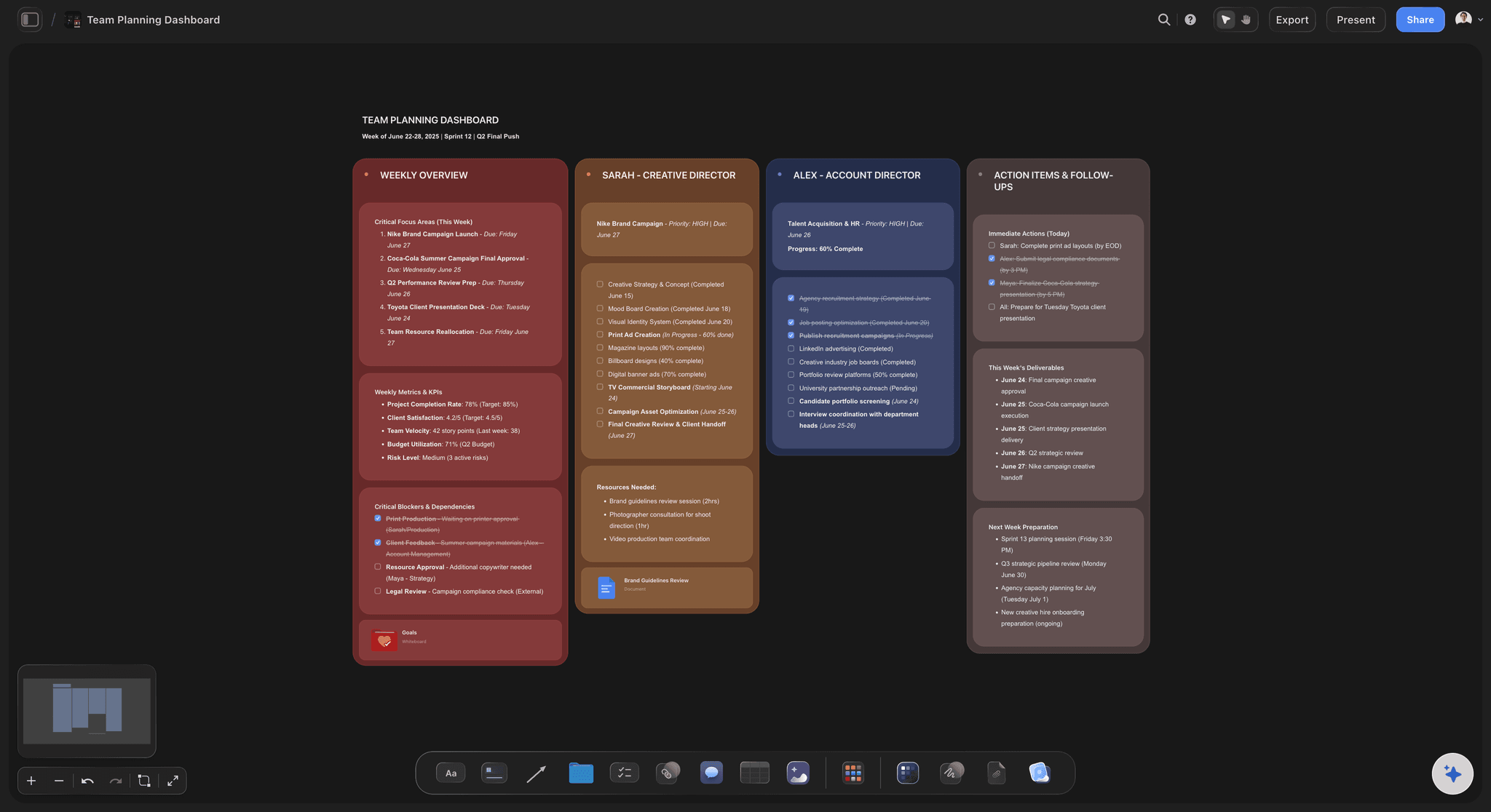
A shared backlog
Ideas the team can add to
Everyone contributes to the same board and readers open a link with no account, so ideas do not sit unread in individual notes apps.
See the second brain →Plans from $7.99/month annual. Invited collaborators join free.
Storyflow is paid-only during early access, and anyone a paid member invites to a board joins free, so the whole team can add to the idea board.
The team reads the idea board with no account
Unlimited boards, so ideas can live by theme or by year
Export the board as an image or PDF
Unlimited file uploads on every paid plan
Built for people with taste
A backlog is where ideas go to be politely forgotten.
The problem was never storage. It is that a list gives you no way to compare two hundred things.
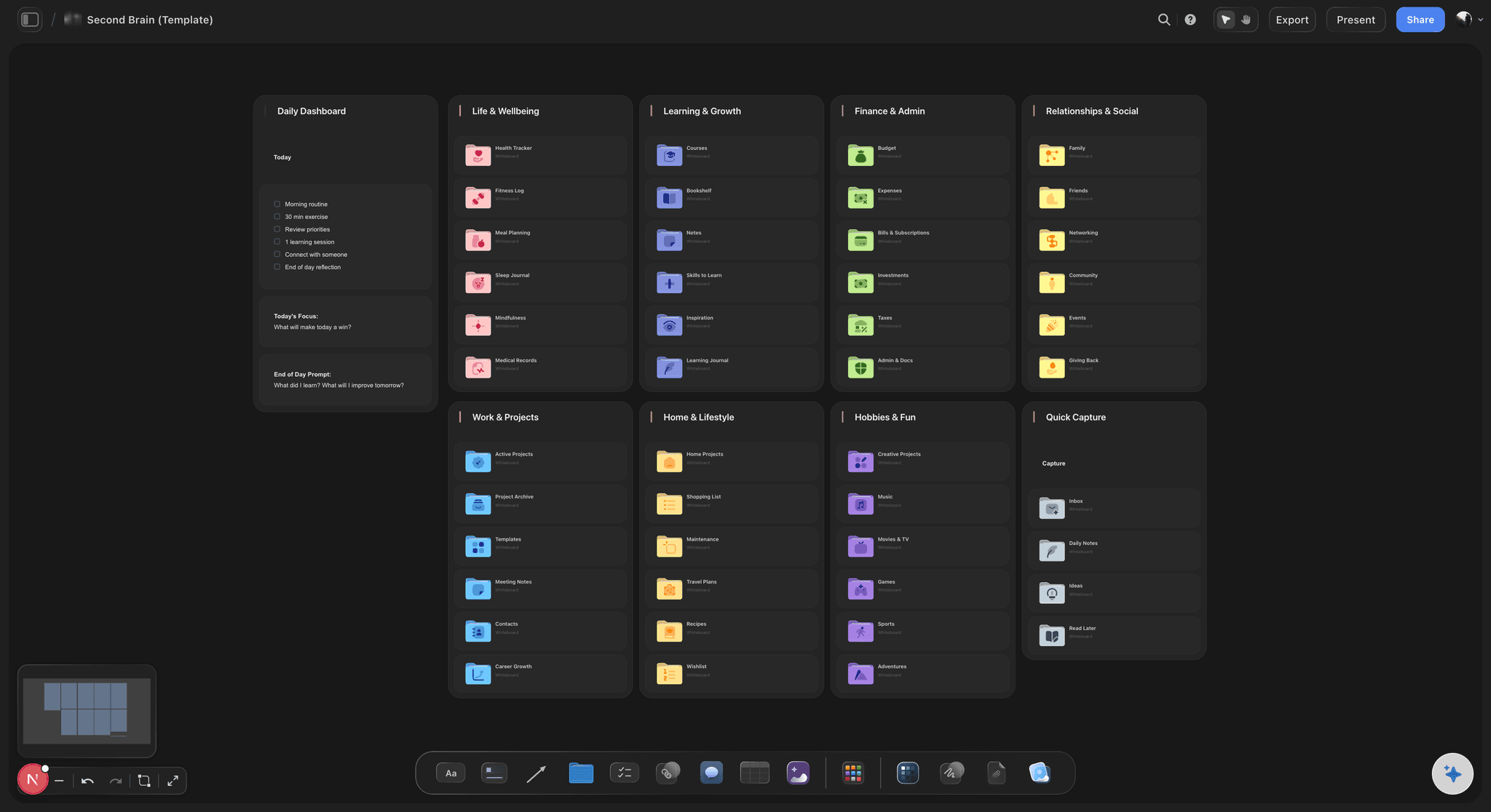
Retrieval
Find the idea you half remember
Spatial memory works: People remember roughly where they put something on a board far better than they remember what they titled it in a list.
The picture is the index: For visual work the reference image is a better handle than a title, and on a canvas it is the thing you actually see when scanning.
Nothing needs filing to be kept: Ideas can pile up unsorted and stay findable, which is what makes capture cheap enough that people keep doing it.
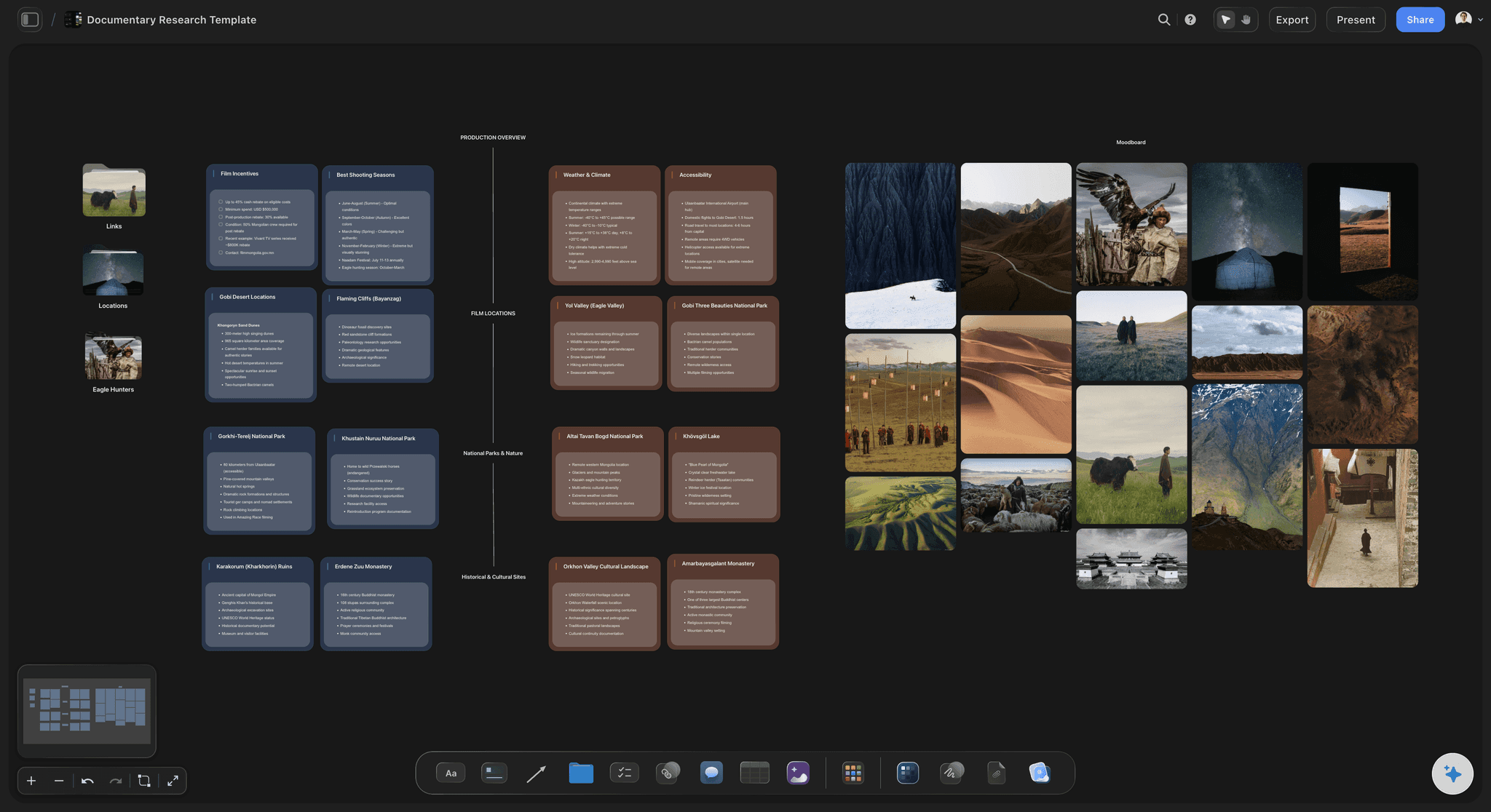
The AI reads the board
Make sense of a board you stopped reading
Canvas-aware AI: Storyflow's AI reads the whole active board, so it can propose themes, point out the same idea captured three times, and summarise what is sitting there.
Bring in outside material: Attach up to five documents and three boards so research, the current strategy and last year's ideas inform the grouping.
It proposes, you decide: Suggested clusters and expansions arrive as ordinary editable cards. The AI reduces the reading; it does not pick which idea you back.
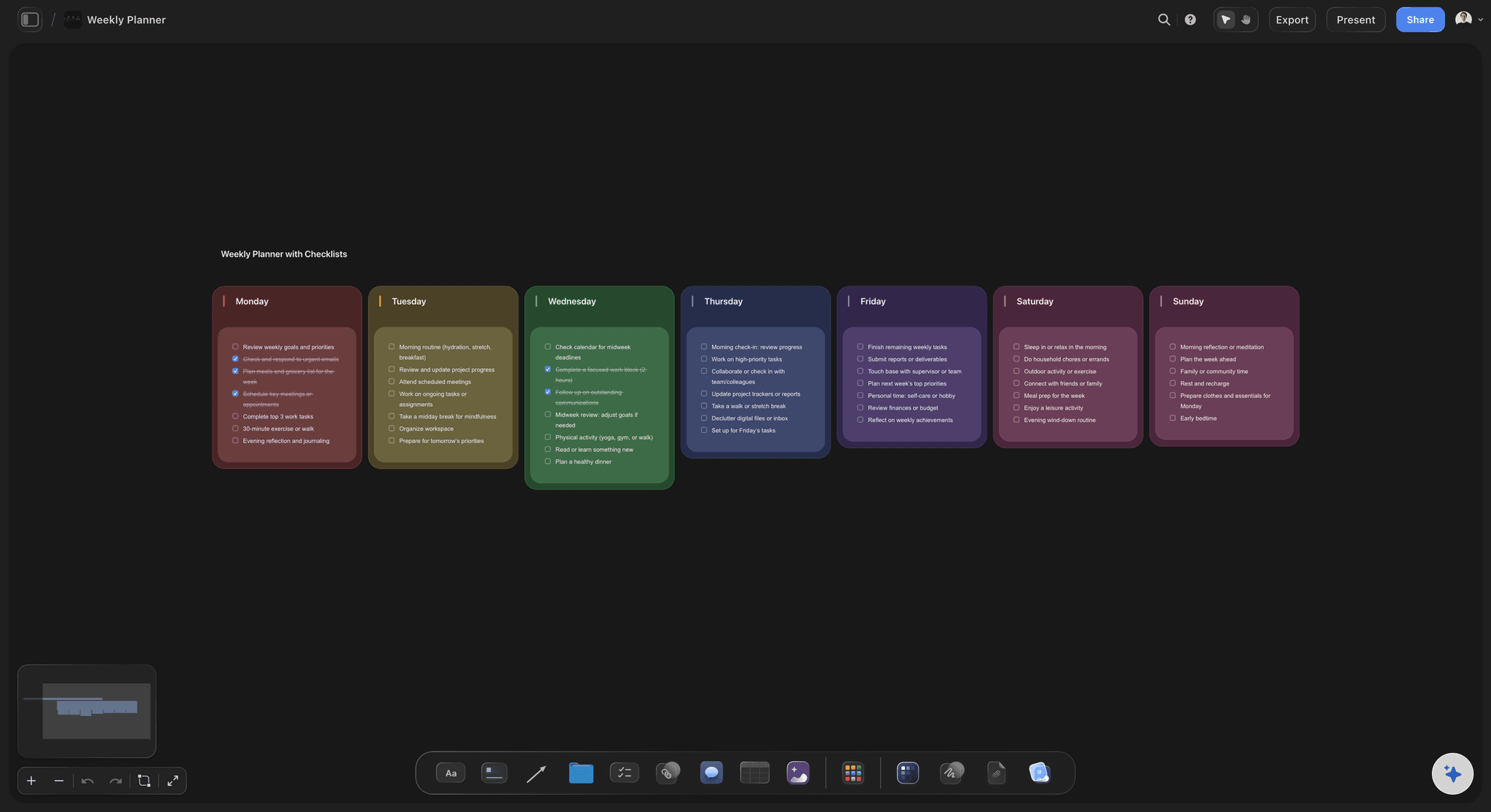
Honest limits
What this is not
No submission or voting workflow: There is no idea portal, employee submission form, voting round or reviewer assignment. This is a working canvas, not a governance process.
No scoring or stage gates: Storyflow does not score ideas on impact and effort or move them through approval stages. Prioritising is done by moving and marking cards.
Not a task tracker: Once an idea becomes a shipping project with dependencies and assignees, most teams move it into their delivery tool. This covers the stage before that.
Explore templates for your project
Every template opens as a real, editable board on the infinite canvas. Pick the closest fit and make it your own.
Mind Map
Branch one central idea out into themes and sub-points, then drag the connections around until the structure makes sense.
What creators are saying
Join early creators getting structured workspaces and AI that remembers their projects
“Storyflow has sped up my workflow by at least 3x, which means more flow state and more projects I can actually ship. It truly changed the way me and my team create.”

Reilin Joey
Director & YouTuber
“One prompt gets me a structured board. But the tactics are my favorite. I run my YouTube scripts through them and my intros and retention got better. It's amazing.”

Justkay
YouTuber & Freelance Filmmaker
“I used to juggle five apps to plan a project. Now I describe what I am making and get boards, lists, and a schedule. All in one place.”

George
@fernwehchronicles
Idea management, answered.
What teams ask before choosing where ideas live.
It is capturing ideas as they occur, keeping them somewhere they can be found again, and having a way to decide which become work. Capture is the easy part. The real problems are retrieval, because an idea stripped of its context is a title you no longer trust, and judgement, because a long list gives you no way to compare things.
Storyflow keeps ideas with their context: every idea stays attached to the image, link or note that caused it, and ideas sit in themes you can scan at a glance on an infinite canvas. The whole team can add to the board. When an idea is worth doing, it grows into a project plan in place, on the same board, so nothing is copied into another app.
Lists work up to about thirty items and then stop being read, because they cannot be scanned or grouped and everything looks the same weight. A canvas keeps related ideas physically together and keeps the image or quote that caused each one visible, which is usually the thing that lets you judge it later.
No, and the difference matters. There is no submission portal, voting round, reviewer assignment, scoring model or stage-gate pipeline. Storyflow is a working surface for a team that thinks visually, not a governance process for collecting ideas across a large organisation.
In place. A chosen idea grows into a brief, an outline or a task list on the same board, keeping its original reference attached as evidence for the decision. That is the step where most systems lose everything, because it usually means retyping the idea into a different tool.
Yes, that is where it earns its place. The AI reads the whole active board and can propose themes, flag the same idea captured three separate times, and summarise what is sitting there. It reduces the reading; you still decide which idea gets backed.
Yes. Everyone contributes to the same board, readers open a view-only link with no account, and anyone a paid member invites to a board joins free.
Park them on the same board with a note on why. A rejected idea with the reason attached is genuinely useful later, either because circumstances changed or because it stops the team relitigating the same question next quarter.
Yes. Group them spatially into named clusters, and use separate boards where a hard split helps, such as one per year or one per client. There is no project limit, so splitting is free.
Plans start at $7.99 per month billed annually, or $9.99 monthly. Storyflow is paid-only during early access, with a free plan launching before the end of 2026. Collaborators invited by a paid member can join free today.
Keep the ideas you will actually use.
Capture with the context attached, group them into themes you can scan, and grow the best ones into a plan in place.