
The calmest place to shape your story
Map your story's beats
onto the Hero's Journey.
Most Hero's Journey templates are a worksheet with twelve boxes, which is the least useful form the structure can take. In Storyflow the stages are cards you lay over your own beats on an infinite canvas, by hand or by asking the AI, so you can see which ones your story actually performs and which are missing.


Creatives working for these brands already got early access
- Red Bull
- Canon
- Artlist
- Porsche
See how easy it is to get started
Watch a real project come together, from a blank board to a finished plan, clicked through step by step.
Start from a ready-made template
Pick a board to see what you can build, then let AI fill it in. Every template is a real, editable starting point on the same infinite canvas.

Story Plan
Outline your plot, characters, and world in one connected view, then expand each thread as the story grows.
What is the Hero's Journey?
The Hero's Journey is Joseph Campbell's monomyth, the pattern he argued underlies myths across cultures, later condensed by Christopher Vogler into twelve stages for screenwriters: the Ordinary World, the Call to Adventure, Refusal of the Call, Meeting the Mentor, Crossing the Threshold, Tests and Allies and Enemies, Approach to the Inmost Cave, the Ordeal, the Reward, the Road Back, the Resurrection, and the Return with the Elixir. Storyflow is an AI visual workspace that maps your story's beats onto the Hero's Journey on one infinite canvas: the twelve stages as movable cards, your own beats laid beneath them, and characters, research and references on the same board.
Its real subject is transformation rather than plot. Each stage names a function in a change: what the character is before, what disturbs it, what they resist, what they lose, and what they bring back. Read as a plot template it produces one story repeatedly. Read as a set of questions about what a character gives up, it stays useful long after the shape has become familiar.
The criticisms are worth taking seriously rather than waving off. It is descriptive of a particular tradition rather than universal, Campbell's cross-cultural claims are contested by folklorists, and it fits stories about a lone protagonist far better than ensembles, communities, or stories where the point is that nothing changes. Applied mechanically it flattens exactly the stories that most needed to be strange.
So use it as a lens on a draft. In Storyflow the twelve stages sit as a layer of cards over your own beats rather than a form to fill in, on a canvas that also holds the characters, research and references. Being clear about the limit: Storyflow has Docs for notes and scene drafts, but it does not format screenplays, has no manuscript binder or compile, and does not export to Final Draft. The finished script or book gets written elsewhere.
Ultra fast from brief to board
Lay the stages over the story you have.
Every structure is a diagnostic when it comes second and a formula when it comes first.
01
Put your beats down first
One card per beat you already have. Doing this before you look at the twelve stages is what keeps the structure a test rather than a template.
02
Lay the twelve stages over them
Ask the AI to lay the twelve stages out as cards beside your beats, or add them yourself, then map which of yours performs which function.
03
Read the gaps and the pile-ups
Stages with nothing under them and stages with five beats are both signals. An Ordeal with no real loss is the commonest empty stage in a draft.
04
Keep what the structure disagrees with
Some mismatches are defects and some are the reason your story is worth telling. The template tells you where to look, never what to do.
Four questions the twelve stages are really asking.
All of them about what the character gives up rather than what happens next.
Stages 1 to 3
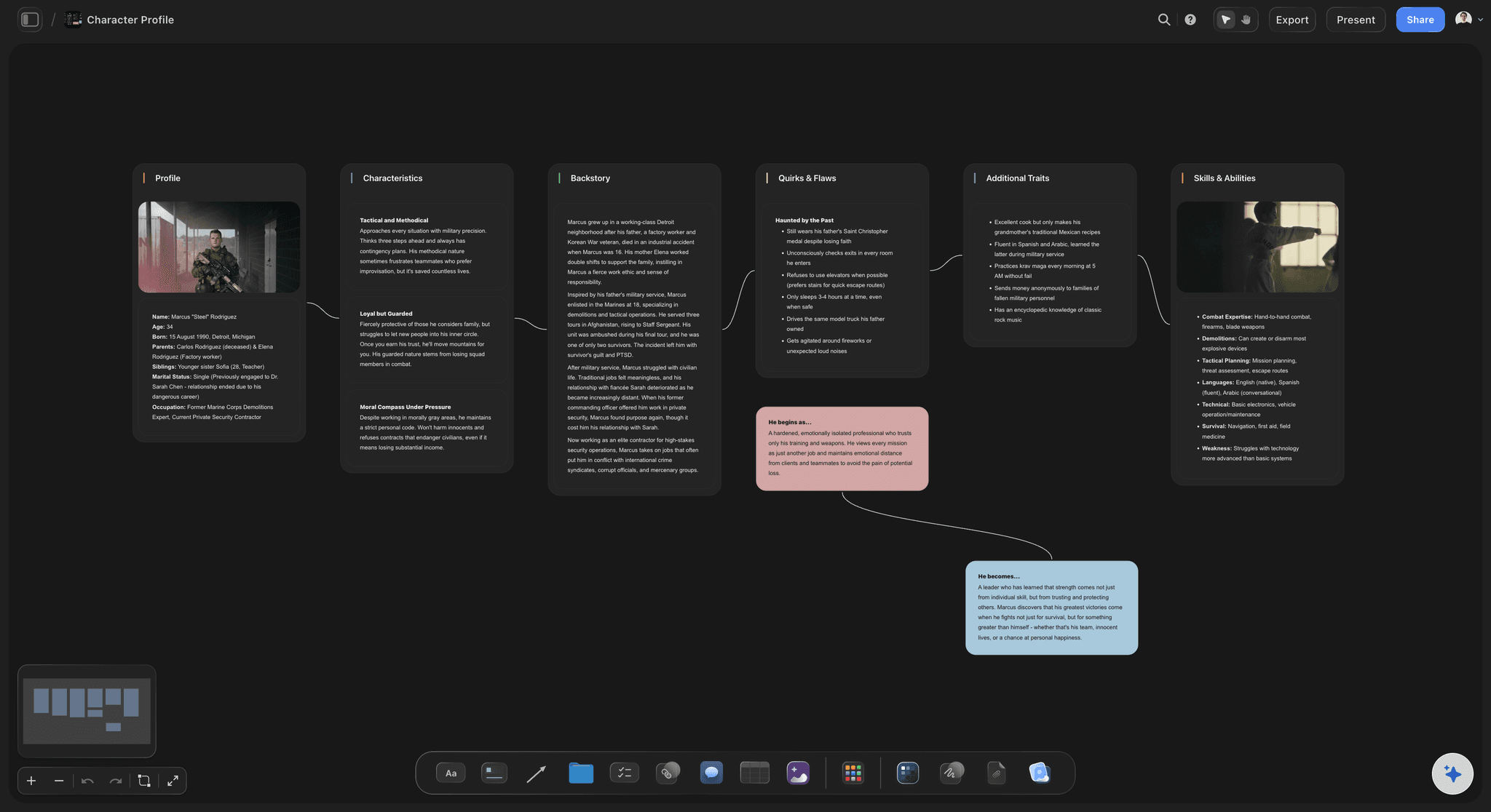
What is the character protecting?
The Ordinary World and the Refusal exist to establish what is at risk. A protagonist who accepts the call immediately has told you nothing about what they value.
See the character profile generator →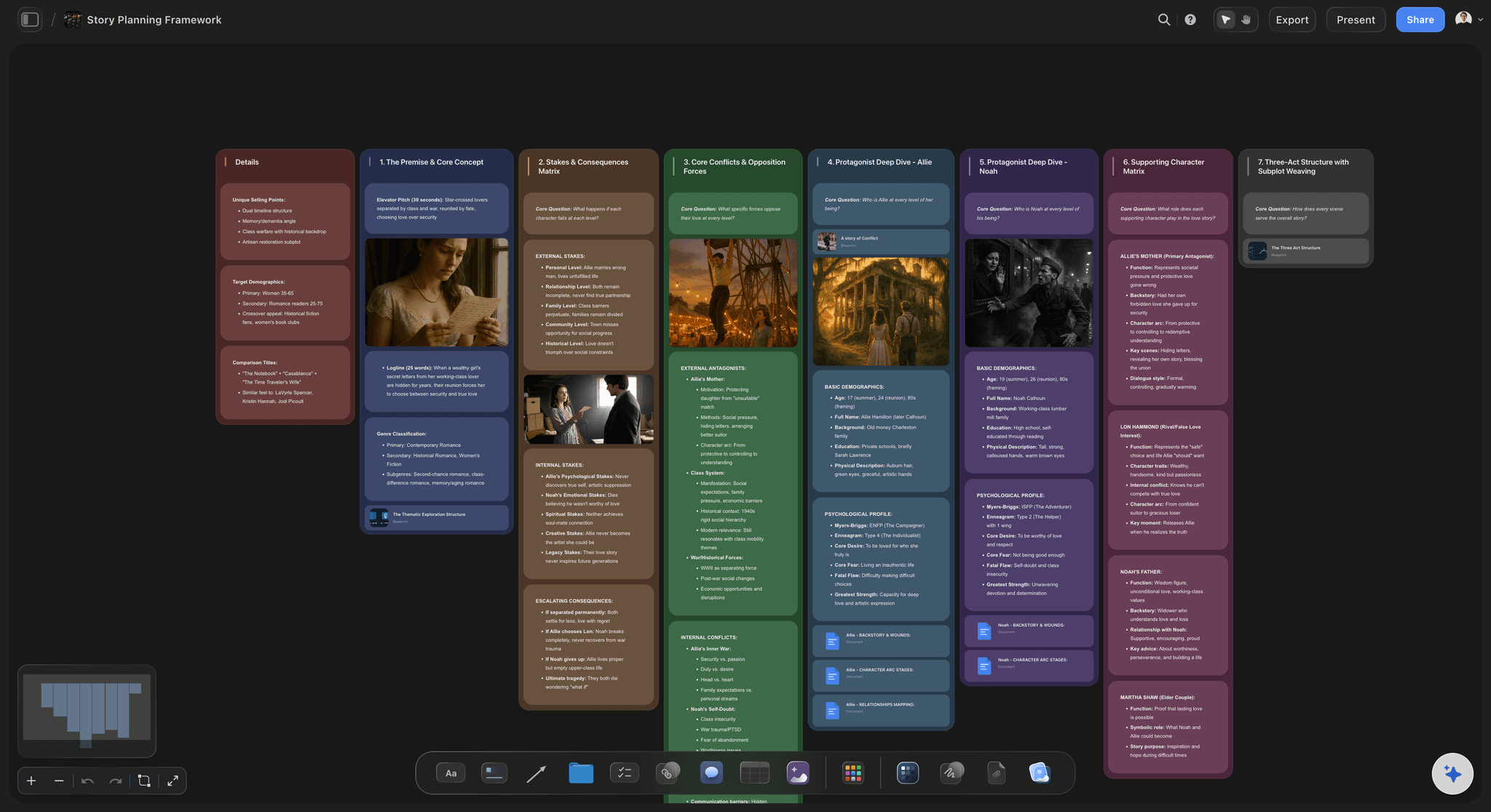
Stages 4 to 6
Does crossing actually cost something?
If the character can handle the new world with what they already had, the threshold was decorative and the middle will sag no matter how eventful it is.
See the beat board →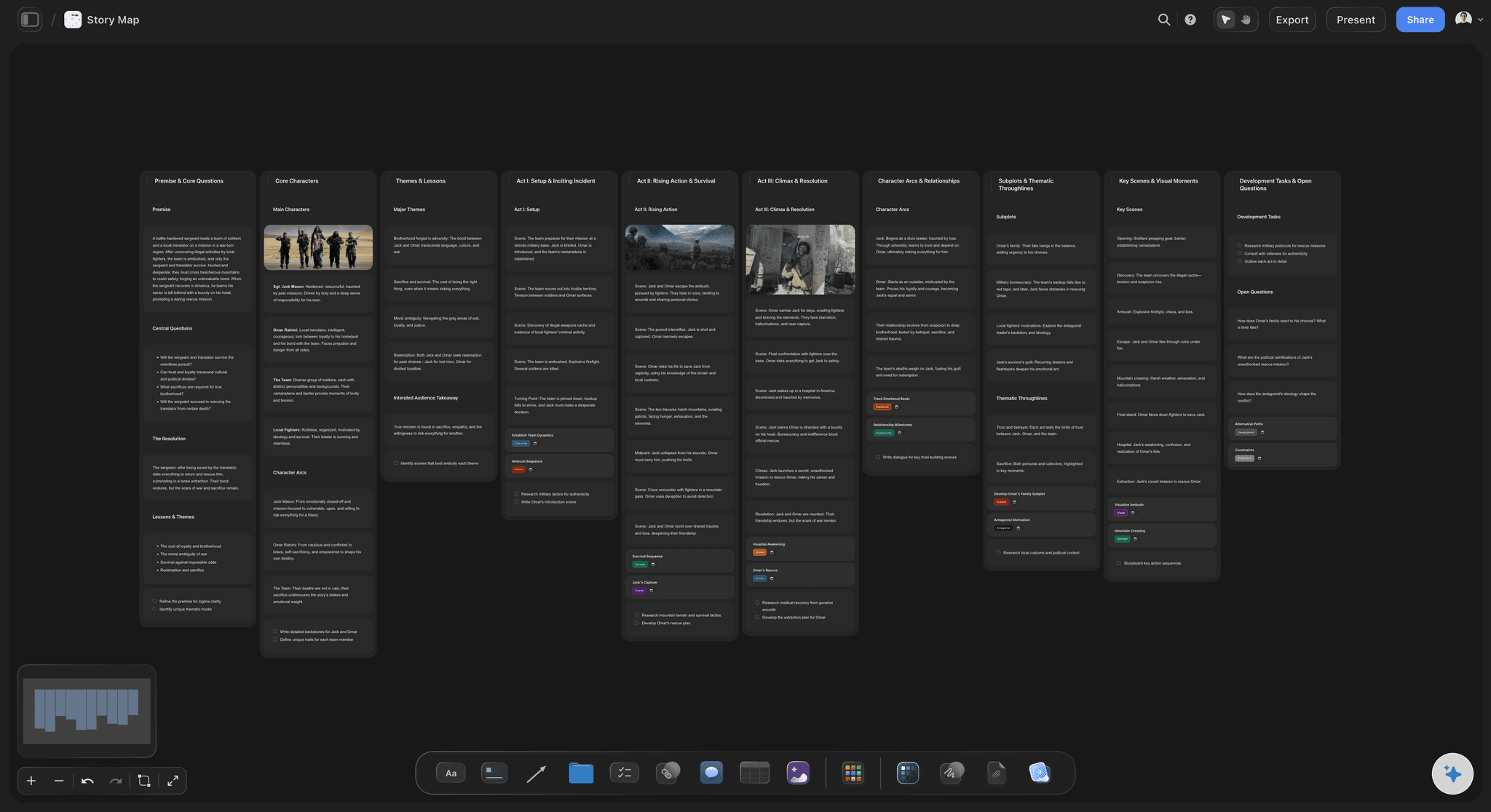
Stages 7 to 9
What is lost in the Ordeal?
The Ordeal is where drafts most often go hollow. If nothing is genuinely surrendered, the Reward is unearned and readers feel it without being able to name it.
See the story planning tool →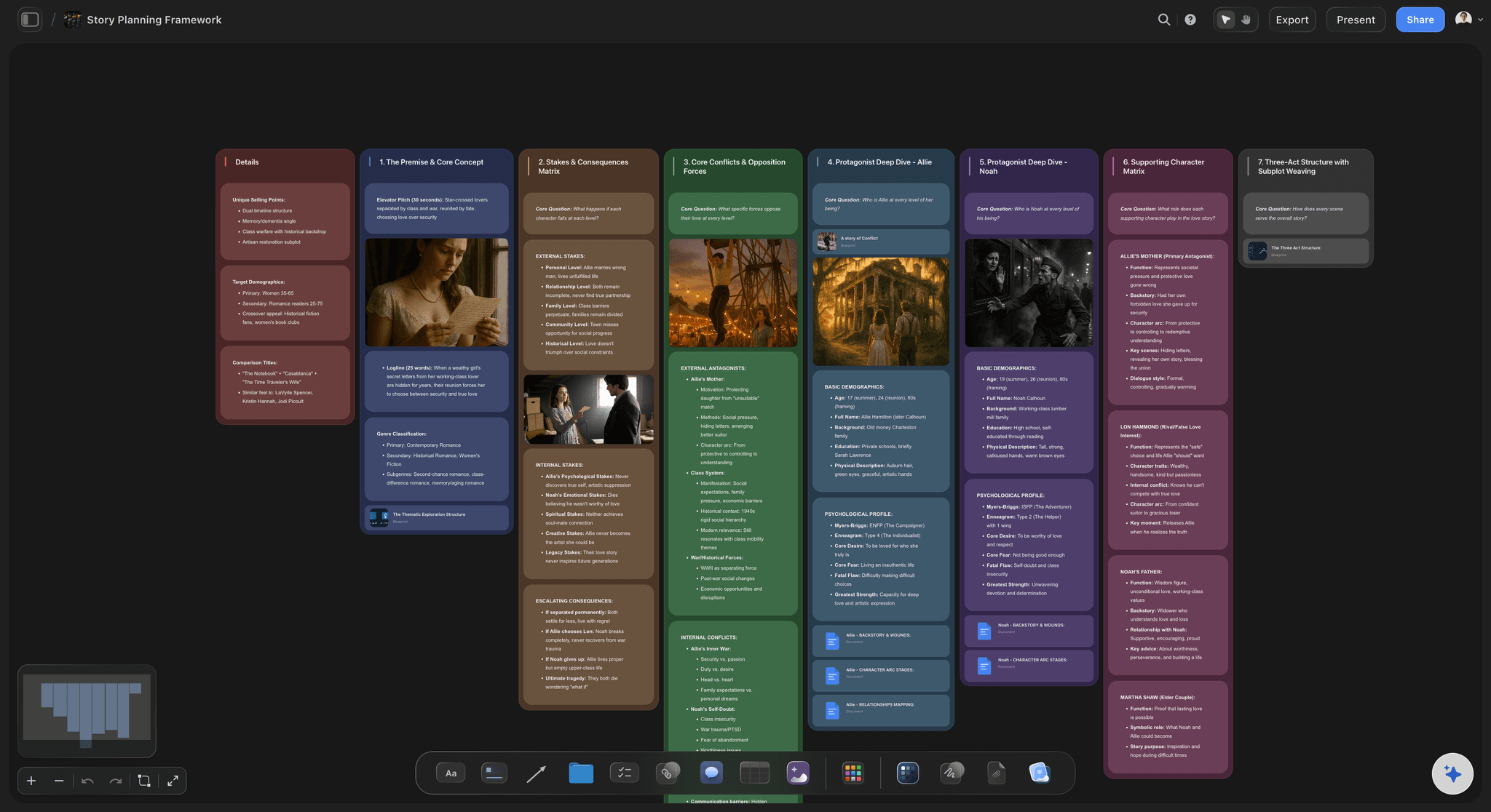
Stages 10 to 12
What comes back with them?
The Return with the Elixir is the test of whether the journey mattered. A hero who returns with nothing the ordinary world needed has been on a detour.
See the character arc tracker →Plans from $7.99/month annual. Free plan coming late 2026.
Storyflow is paid-only during early access, with plans from $7.99 a month billed annually ($9.99 monthly). A free plan launches before the end of 2026, and anyone a paid member invites to a board joins free, including a writing partner or a class.
Anyone with the view-only link reads the board without an account
Every project gets its own board, with no project limit
Export the journey as a high-quality image or PDF
Anyone a paid member invites to a board joins free
Built for people with taste
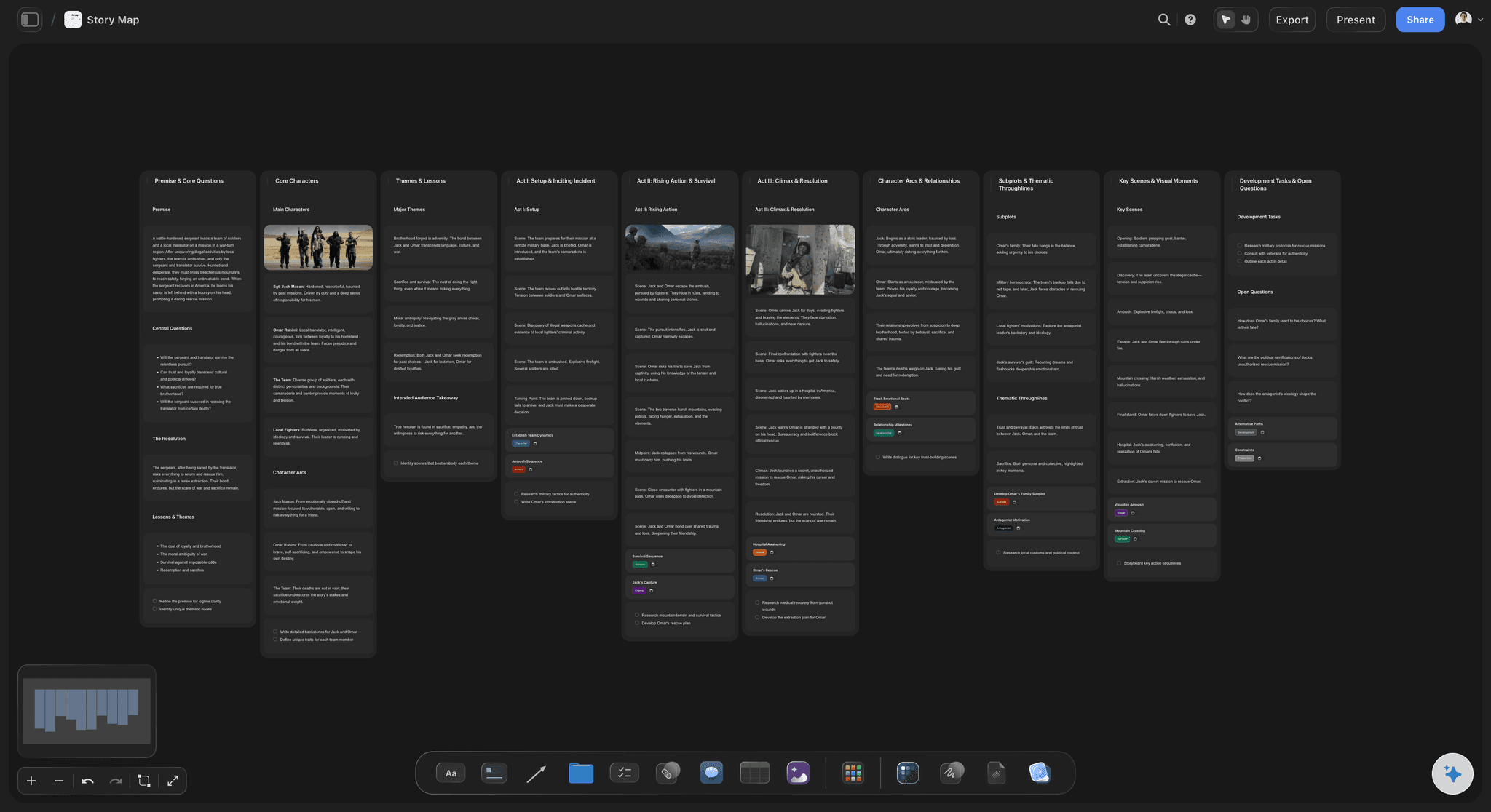
Twelve boxes on a worksheet teach the names, not the shape.
The structure is a journey out and back, and a vertical list is the one layout that hides that.
Shape it like a journey
Out, down and back
Lay it as an arc, not a list: Ordinary world on one side, return on the other, the Ordeal at the bottom. The geometry is doing the teaching.
Compare the halves: Eight beats before the Ordeal and one after is a visible imbalance, and it is the most common pacing failure in a first draft.
Keep the ensemble visible: The structure assumes a lone protagonist. Putting the other characters' threads on the same canvas is how you notice when it stops fitting.
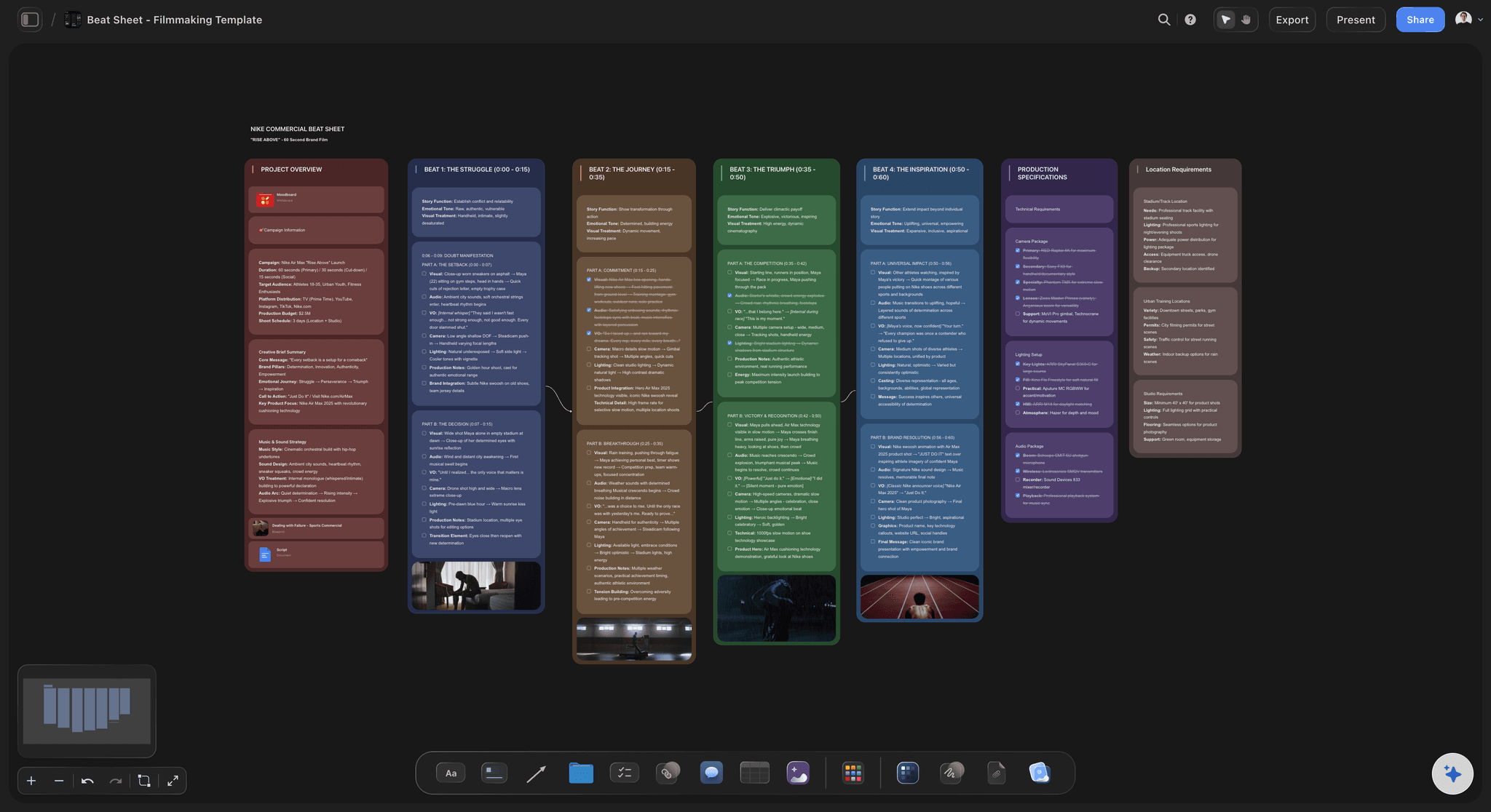
The AI reads the board
Ask what the Ordeal actually costs
Canvas-aware AI: Storyflow's AI reads the whole active board, so your beats, the twelve stages and the character notes are all in front of it at once.
Find the hollow stage: Ask what the protagonist surrenders at the Ordeal. If the honest answer is nothing, that is the note the whole draft has been circling.
Try a shorter lens: Ask the AI to lay the eight-step Story Circle or Save the Cat's fifteen beats over the same cards. The circle is sharper about cost; the fifteen beats are sharper about pacing.
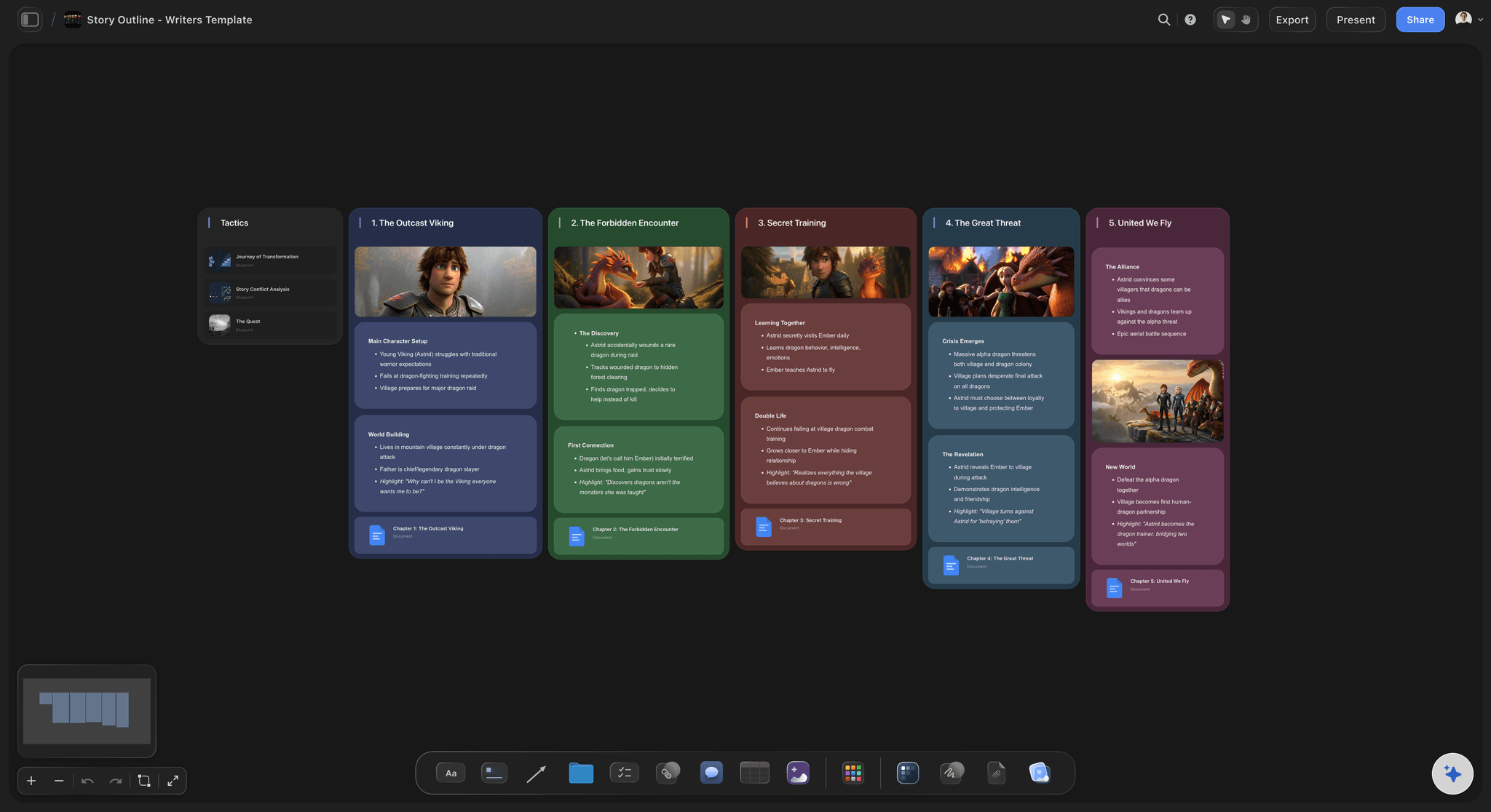
What it is not
Honest about the ceiling
Not a screenwriting or manuscript app: Docs hold notes and scene drafts with Word and PDF export, but there is no screenplay formatting, no compile and no Final Draft export. Write the draft in Final Draft, Scrivener, Highland or Word.
Not universal: The monomyth's cross-cultural claims are contested, and it fits lone-protagonist stories far better than ensembles or stories about a community.
Where it wins: Holding the stages, the beats, the characters and the research in one space while the shape of the story is still moving.
Explore templates for your project
Every template opens as a real, editable board on the infinite canvas. Pick the closest fit and make it your own.
Story Plan
Outline your plot, characters, and world in one connected view, then expand each thread as the story grows.
What creators are saying
Join early creators getting structured workspaces and AI that remembers their projects
“Storyflow has sped up my workflow by at least 3x, which means more flow state and more projects I can actually ship. It truly changed the way me and my team create.”

Reilin Joey
Director & YouTuber
“One prompt gets me a structured board. But the tactics are my favorite. I run my YouTube scripts through them and my intros and retention got better. It's amazing.”

Justkay
YouTuber & Freelance Filmmaker
“I used to juggle five apps to plan a project. Now I describe what I am making and get boards, lists, and a schedule. All in one place.”

George
@fernwehchronicles
The Hero's Journey, answered.
What writers ask before laying the twelve stages over a draft.
In Christopher Vogler's screenwriting version: the Ordinary World, the Call to Adventure, Refusal of the Call, Meeting the Mentor, Crossing the Threshold, Tests and Allies and Enemies, Approach to the Inmost Cave, the Ordeal, the Reward, the Road Back, the Resurrection, and the Return with the Elixir. Campbell's original monomyth has seventeen stages; the twelve are the condensed working version writers actually use.
Storyflow turns the twelve stages into cards: you lay them over your own story beats on an infinite canvas, by hand or by asking the AI. That shows which stages your story actually performs and which are missing. Characters, research and references sit on the same board, so the structure stays next to the material it describes.
The Story Circle is the same shape in eight steps, built by Dan Harmon for television where a full arc has to close inside an episode. The circle is sharper about cost and change; the twelve stages give you more granularity in the middle. Many writers use the circle to diagnose and the twelve stages to talk about the result with other people.
Test against it. Applied as a template it produces the story everyone has already seen, which is the fair version of the criticism it attracts. Write your story, lay the stages over the beats, and look at which functions nothing performs. The empty stage is usually the note.
No, and it is worth saying so plainly. Campbell's cross-cultural claims are contested by folklorists, the pattern is drawn from a particular tradition, and it fits stories about a lone protagonist far better than ensembles, communities, or stories where the point is that nothing changes. It is a useful lens on many stories rather than a law about all of them.
Most good ones do. The useful question is not whether a stage is present but whether the function it names is performed by something. A story with no Mentor may hand that function to a book, a memory or a rival. A story with no Ordeal is usually a real problem, because nothing has been surrendered.
Poorly, as a whole-story structure. What often does work is running a short arc per character on the same canvas and looking at where they intersect, rather than forcing one protagonist to carry twelve stages the story never intended.
Not the finished script or book. Storyflow has Docs for notes and scene drafts, with Word and PDF export, but no screenplay formatting, no manuscript binder or compile, and no Final Draft export. Work the structure out on the board, then write in Final Draft, Scrivener, Highland or Word with the board open beside it.
Yes. It reads the whole board, so it can propose which of your beats performs each function and flag the stages with nothing against them. Treat the mapping as a first opinion worth arguing with, especially where it disagrees with you.
Yes, and it is the most useful thing a canvas adds. Lay the eight-step circle or Save the Cat's fifteen beats over the same cards and see what each catches. Different frameworks foreground different failures and none of them is authoritative.
Storyflow is paid-only during early access, with plans from $7.99 a month billed annually ($9.99 monthly). A free plan launches before the end of 2026, and anyone a paid member invites to a board joins free.
Lay the twelve stages over your draft.
The structure as a movable layer on your own beats, with characters and research beside it.