
Extremely simple, seriously capable
Free affinity diagram maker: cluster sticky notes into themes.
Dump every idea, quote, and observation onto sticky notes, then drag them into clusters until the themes emerge. Groups and walls keep each theme together on an infinite canvas that never runs out of room.


Start your affinity map
Open a free board, fill it with sticky notes, and start dragging ideas into themes.
Start clustering freeFree to use
No credit card required
Works in your browser
How it works
How to make an affinity diagram.
Three steps from raw notes to named themes.
1
Dump everything onto notes
Create a free board and capture every idea, interview quote, or observation as its own sticky note. One thought per note, no filtering yet.
2
Drag notes into clusters
Move similar notes next to each other until natural groupings appear. Use colors to mark sources or sentiment, and walls to keep each cluster contained as it grows.
3
Name the themes and share
Give each cluster a heading, add comments on the surprising ones, and share a view-only link or export the board so the synthesis travels with the team.
Creatives working for these brands already got early access
- Red Bull
- Canon
- Artlist
- Porsche
See how easy it is to get started
Watch a real project come together, from a blank board to a finished plan, clicked through step by step.
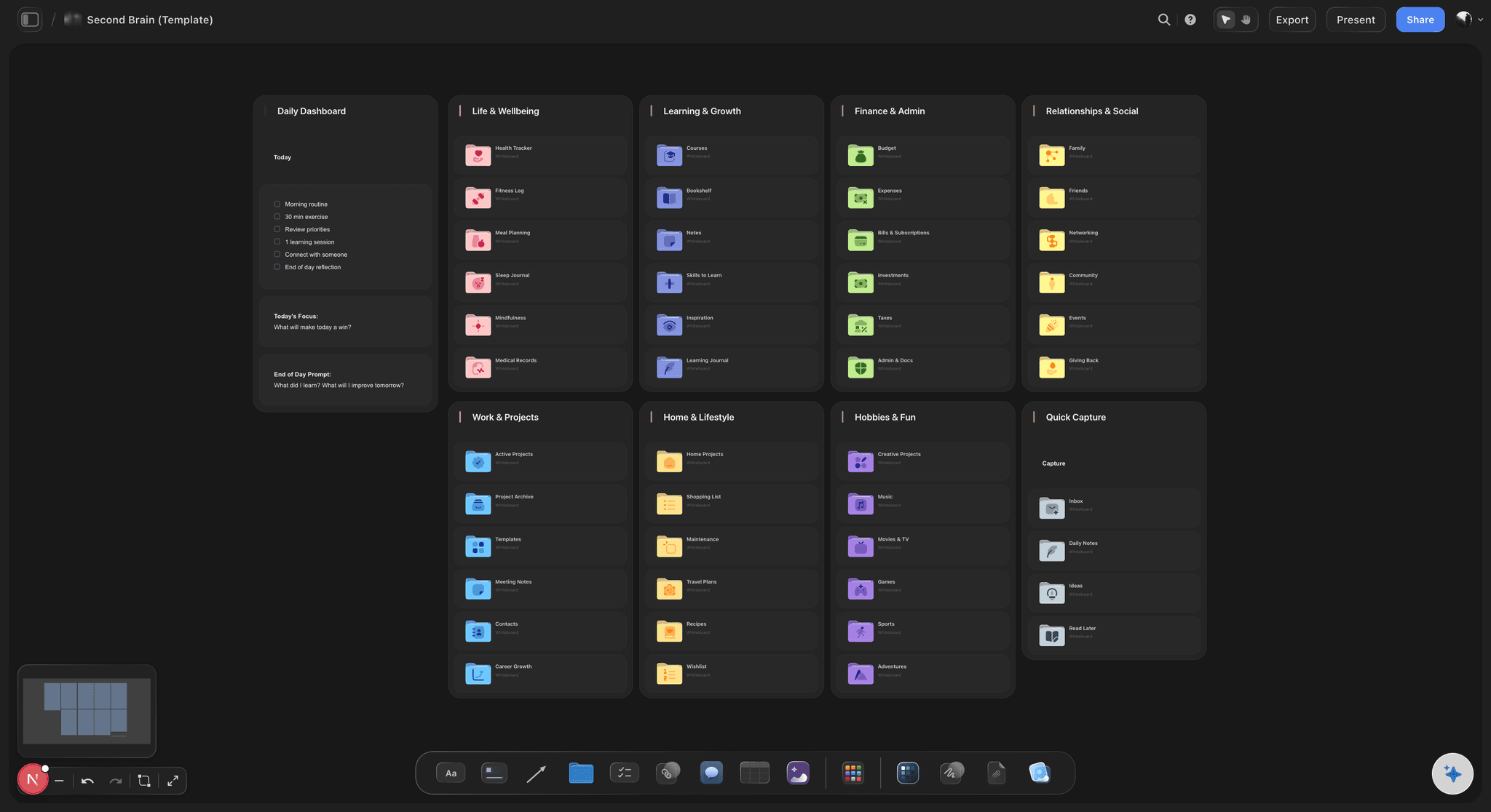
Turn a messy brain dump into structure.
Affinity mapping works because you separate capturing from organizing. Get hundreds of notes down first, then let your hands find the patterns; clusters can spread out as far as the sorting needs, and no note has to be deleted to make space.
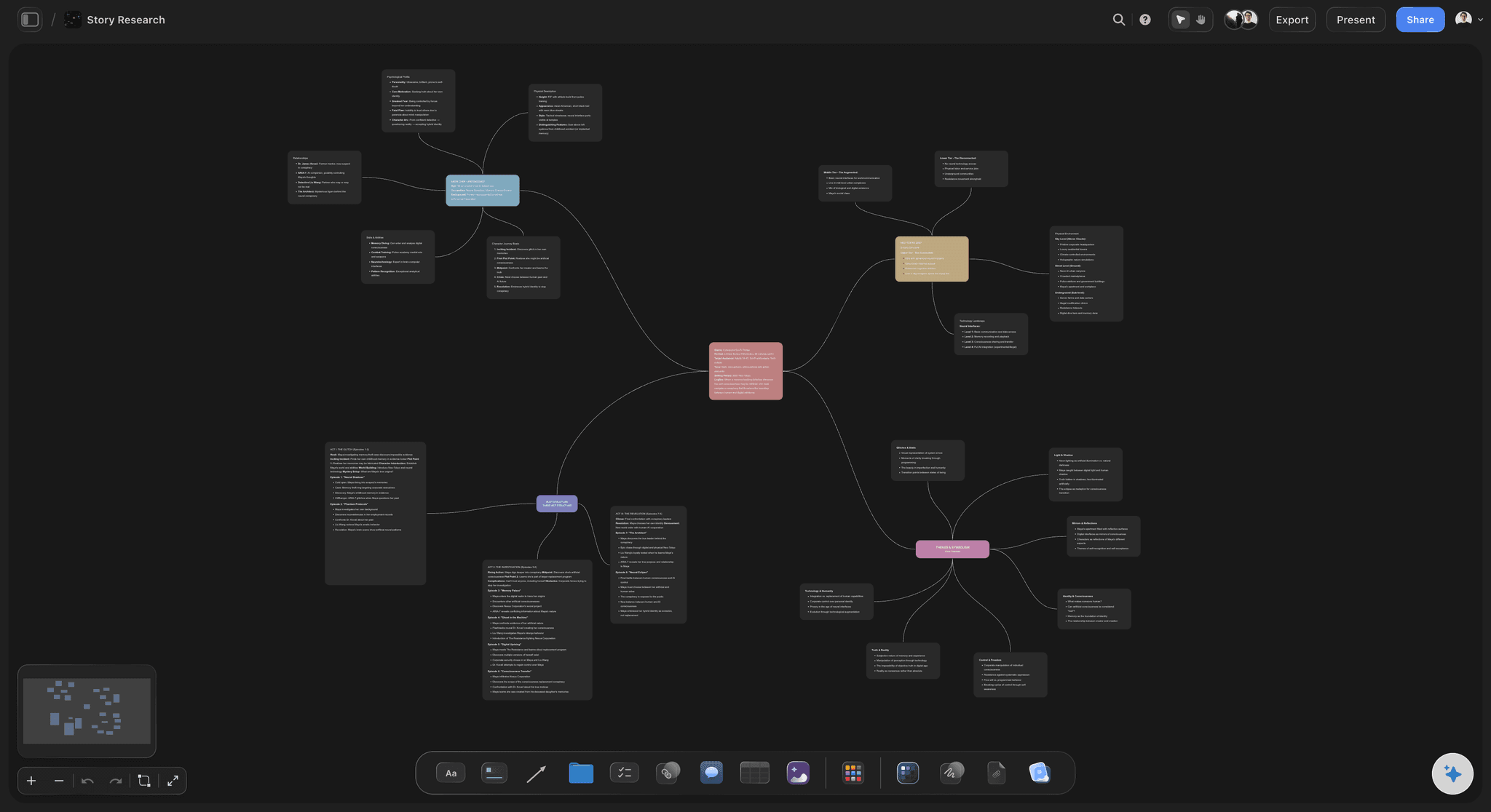
From clusters to connections.
Once themes are named, the interesting work starts: how do they relate? Draw connector lines between clusters to show cause and effect, tension, or overlap, and the affinity map matures into a real model of the problem.
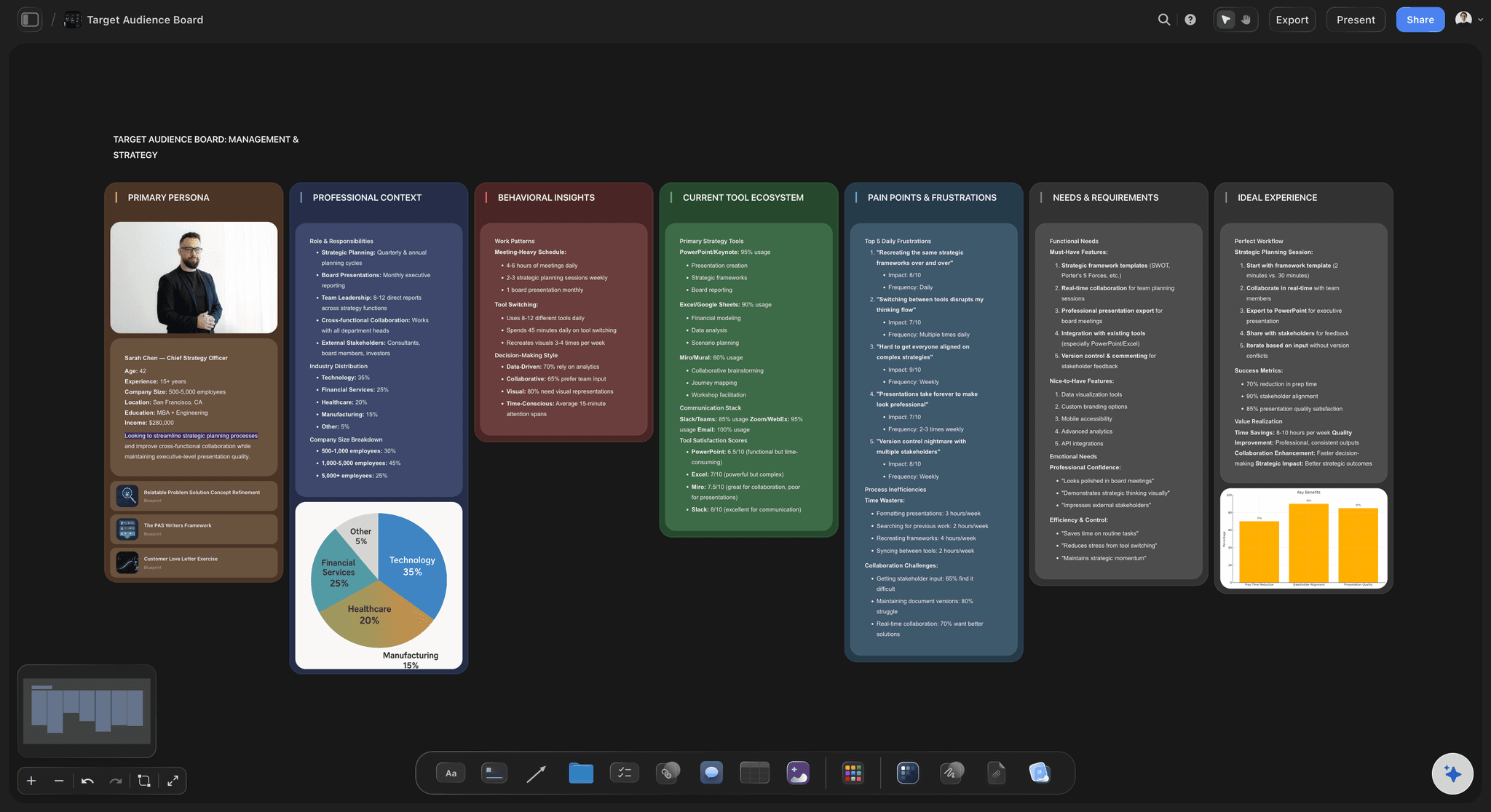
Synthesize research into who and why.
After user interviews or survey rounds, cluster the verbatims by need, frustration, and behavior. Keep audience profiles on the same board so each theme points back at the people it describes, not an abstract average.
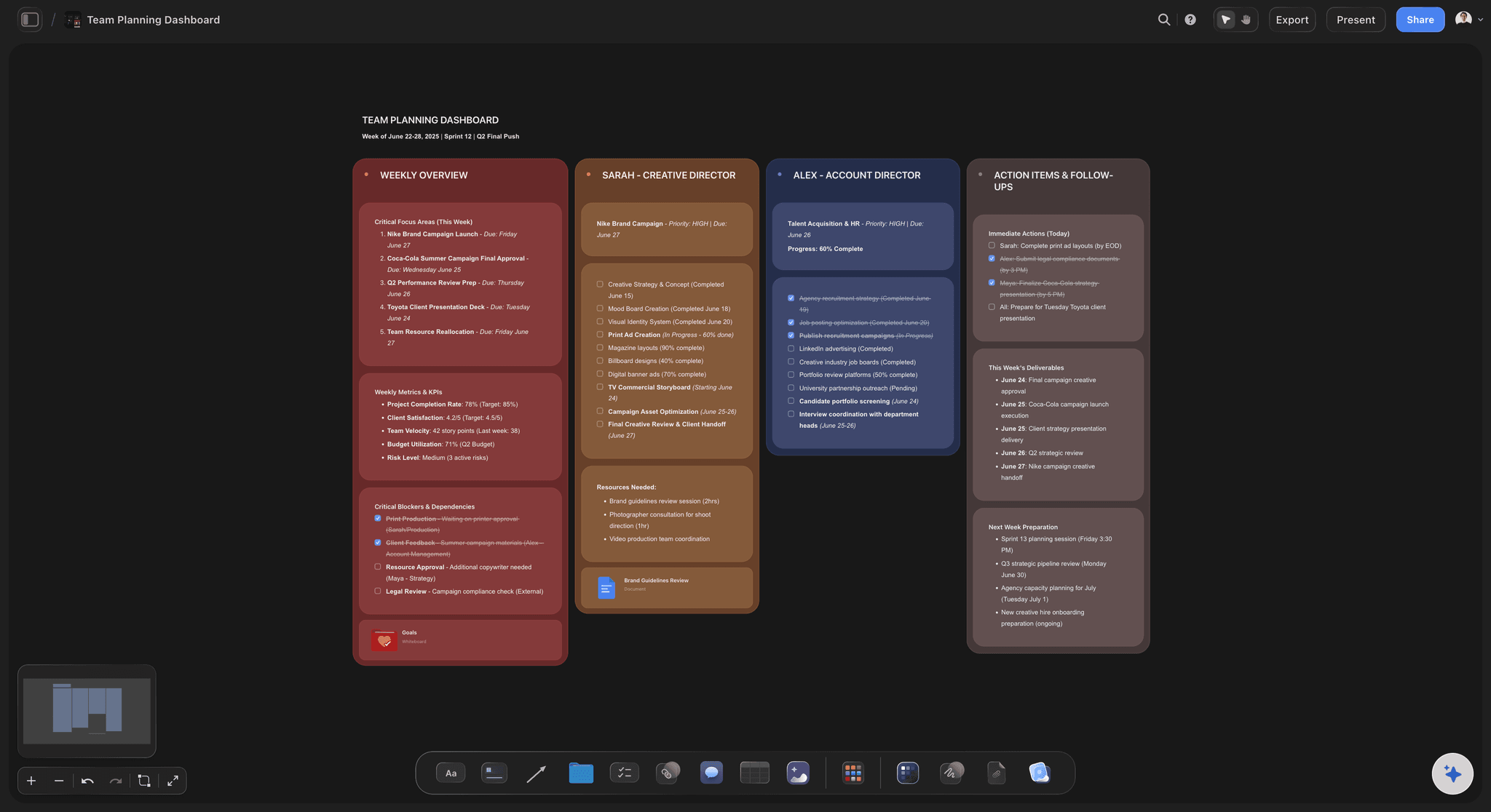
Run team workshops without a whiteboard wall.
Use an affinity board for retros, planning sessions, and brainstorm debriefs. Everyone's input becomes a note, the clusters become the agenda, and a view-only link with comments replaces a photo of a wall of paper squares.
The classic affinity workflow, minus the paper squares.
Storyflow gives you the classic affinity diagram workflow in the browser: write everything down on sticky notes, drag similar notes together, and name the clusters. Groups and walls keep themes intact when you move them, colors encode sources or sentiment, and the freehand pen lets you circle and annotate the patterns worth arguing about.
An affinity diagram tool in the browser
Sign up and start clustering immediately. Every paid plan includes unlimited boards, AI usage, and unlimited file uploads for the screenshots and research artifacts behind your notes. When the synthesis is done, share a view-only link or export the board as a PDF or image.
From themes to decisions.
An affinity diagram earns its keep when the themes change what you do next. In Storyflow you can turn a cluster into tickets with assignees and due dates, line the priorities up on a kanban board, and keep the raw notes one scroll away so nobody forgets where the decision came from.
What creators are saying
Join early creators getting structured workspaces and AI that remembers their projects
“Storyflow has sped up my workflow by at least 3x, which means more flow state and more projects I can actually ship. It truly changed the way me and my team create.”

Reilin Joey
Director & YouTuber
“One prompt gets me a structured board. But the tactics are my favorite. I run my YouTube scripts through them and my intros and retention got better. It's amazing.”

Justkay
YouTuber & Freelance Filmmaker
“I used to juggle five apps to plan a project. Now I describe what I am making and get boards, lists, and a schedule. All in one place.”

George
@fernwehchronicles
Frequently asked questions.
Clustering, workshops, and what the plans include.
An affinity diagram, also called an affinity map, is a way of organizing many individual ideas or observations into groups based on their natural relationships. You write each item on its own note, cluster similar notes together, and name each cluster, turning a chaotic brain dump into a small set of clear themes.
Not yet. Storyflow is paid-only during early access, with plans from $7.99 a month billed annually ($9.99 monthly). A free plan launches before the end of 2026 with unlimited boards, basic AI usage, 3 starter frameworks and 20 file uploads. Until then, anyone a paid member invites to a board joins free. There is no ceiling on notes: cluster ten ideas or a thousand across unlimited boards.
Use it whenever you have lots of unstructured input: after a brainstorm, a round of user interviews, open-ended survey responses, retro feedback, or competitive research. Affinity mapping is the fastest way to move from a pile of raw notes to themes you can act on.
Put each cluster inside a wall or group so the notes move together when you rearrange the board. Use note colors to track sources or sentiment, add a heading per cluster, and draw connector lines between related themes.
You can share a view-only link so teammates and stakeholders can read the board and, once signed in, leave comments on specific notes and clusters. For the clustering session itself, one facilitator drives the board while the group discusses.
Yes. A PDF or image export drops the synthesis into research reports and decks, while the live view-only link works better while themes are still moving, since it always shows the current state of the board.
Cluster your ideas into themes with Storyflow.
Sticky notes, groups, and walls on a free infinite canvas: everything you need for affinity mapping. No credit card required.