
STORYFLOW FOR STORYBOARD ARTISTS
You draw somewhere else.
Everything else lives here.
Storyflow is not a drawing tool. There is no brush engine, no pressure sensitivity, no layers, no onion skinning, and no animation timeline. Storyboard Pro, Procreate, Photoshop, and Clip Studio Paint are where the frames get drawn, and nothing here replaces them. Storyflow holds the rest of the job: the script broken down into shots, the thumbnail pass, the director references sitting beside the frames they answer, every version of a sequence still visible, and a link the director opens to leave notes. Paid-only during early access, with a free plan launching before the end of 2026.
Not a drawing app
Paid-only early access
Free plan in late 2026

Used by creative professionals at:
Artlist
Pixar
Nike
Red Bull
The North Face
Porsche
Start from a ready-made template
Pick a board to see what you can build, then let AI fill it in. Every template is a real, editable starting point on the same infinite canvas.
Storyboard
Lay out your shots frame by frame with images and notes, then reorder them until the sequence reads like the finished cut.
What does a storyboard artist actually spend the day doing?
A storyboard artist is a visual problem solver working to somebody else's vision under a deadline, not an illustrator making pretty frames. The drawing is the smallest honest part of the job. The work is reading a script and finding the shots inside it, taking a director note that is often vague and turning it into staging that reads, thumbnailing fast and loose before anything gets committed, protecting screen direction and eyelines across a cut, and then surviving the revision rounds where a sequence you finished on Thursday is gone by Monday. Storyflow is the workspace for that part, and it does not touch the part where you draw.
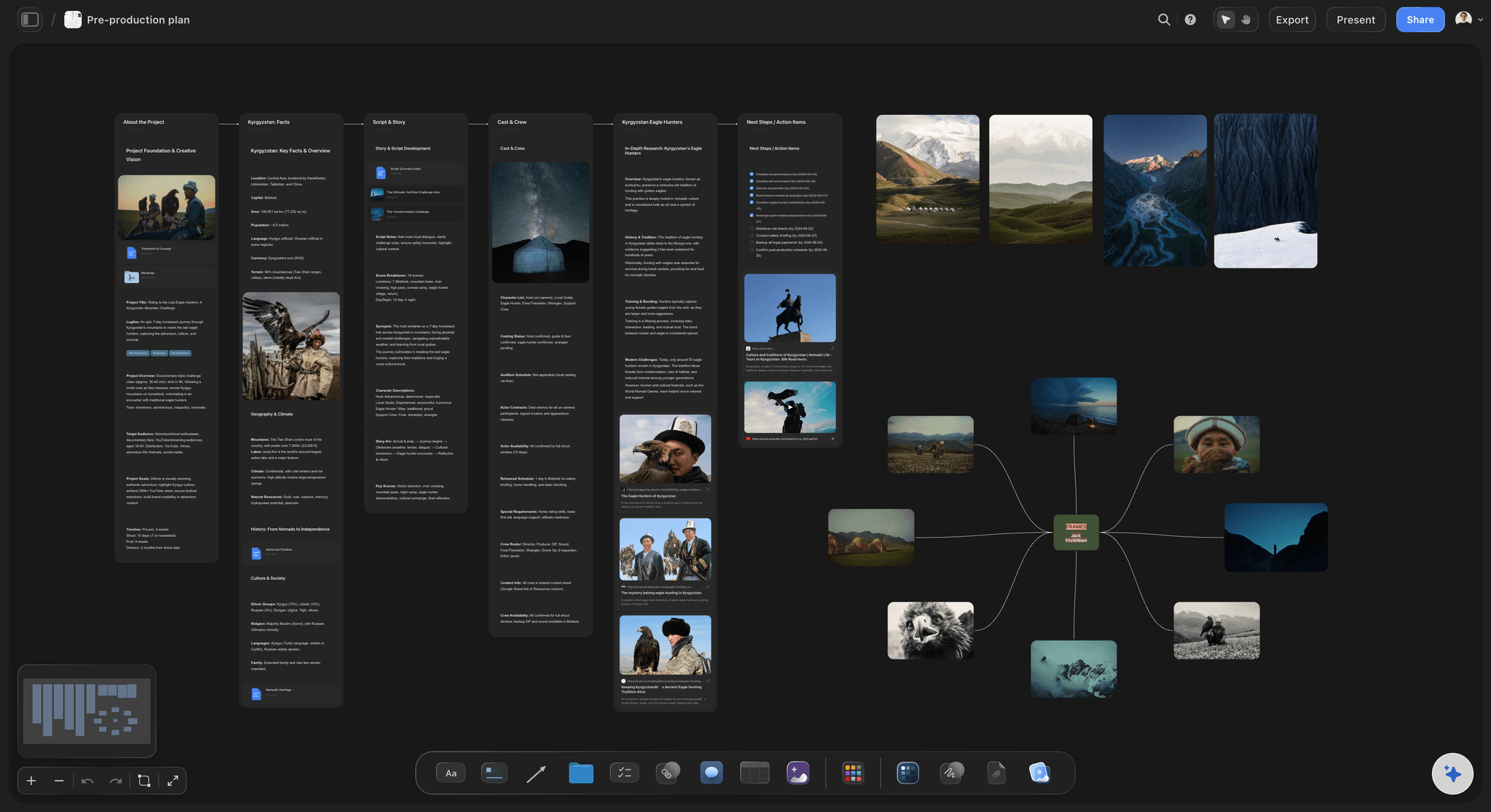
The canvas is where the script stops being prose. Drop the pages in, pull the beats out as cards, and the sequence starts to exist as objects you can move rather than paragraphs you have to hold in your head. Thumbnails go up as small, ugly, fast passes in a row, and because there is no object cap you can put three staging options for the same beat side by side instead of choosing before you have seen them. The director reference, the location photo, the film still they mentioned in the call, the frame grab you pulled from a YouTube clip, all of it sits next to the shot it belongs to rather than in a downloads folder nobody can search.
Continuity is the thing that gets caught on a wall and missed in a stack. Lay a sequence out in reading order and screen direction becomes visible: who is looking left, who crossed the line, whether the eyeline in shot 14 still matches the reverse in shot 15. Put the finished panels back on the same board as the thumbnails they came from and the reasoning survives the handoff. When the director asks why a shot is staged that way, the answer is on the board with the reference and the note that produced it, which is a faster answer than memory and a much better one in a room.
In practice the job runs through six named stages, and Storyflow is built to hold all six on one canvas: reading and breaking down the script into shots, thumbnailing the sequence fast and loose, staging and continuity across the cut, the revision rounds where whole sequences get cut and replaced, versioning so every pass stays findable, and delivery in the format the production actually needs, with the client or director review running across all of it.
HOW IT WORKS
From script pages to an approved sequence in four steps.
The drawing happens in Storyboard Pro, Procreate, Photoshop, or Clip Studio. Everything around it happens here.
01
Open a board for the sequence
Start in the browser with a Storyflow account. Nothing to install, and an infinite canvas ready for the script pages and the first thumbnails.
02
Break the script into shots
Drop the pages in, pull each beat out as its own card, and lay the shots in reading order so the sequence exists as objects you can reorder rather than prose you have to re-read.
03
Thumbnail and gather the references
Put loose thumbnail passes up beside the shot cards, pin the director references and film stills next to the beat they answer, and pull frames out of a reference clip on YouTube or Vimeo when a still cannot show the move.
04
Send it for notes and version the result
Share a view-only link the director or client opens in a browser with no account, collect notes in place, then keep the previous pass on the board so version three never overwrites the reason version two existed.
The workspace around the frames, not the frames themselves.
Storyboard Pro, Procreate, Photoshop, and Clip Studio keep the drawing. Storyflow keeps the script, the thumbnails, the references, the versions, and the review.
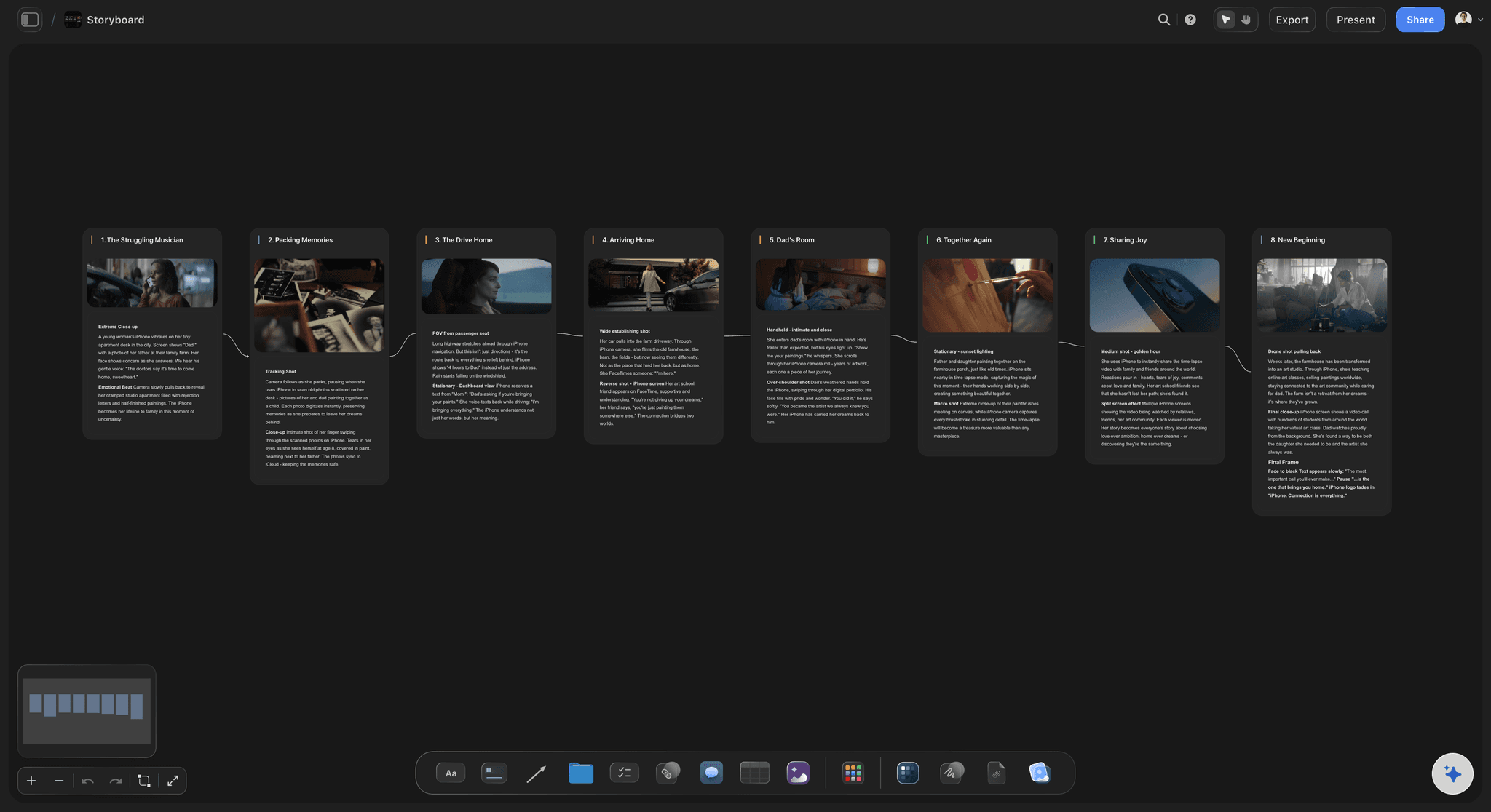
Script to shots
Break the script down where you can see the whole sequence
Pull the beats out of the pages as cards, set them in reading order, and split or merge shots by dragging rather than renumbering a spreadsheet. The breakdown lives on the same surface as the boards it becomes.
See the storyboard maker →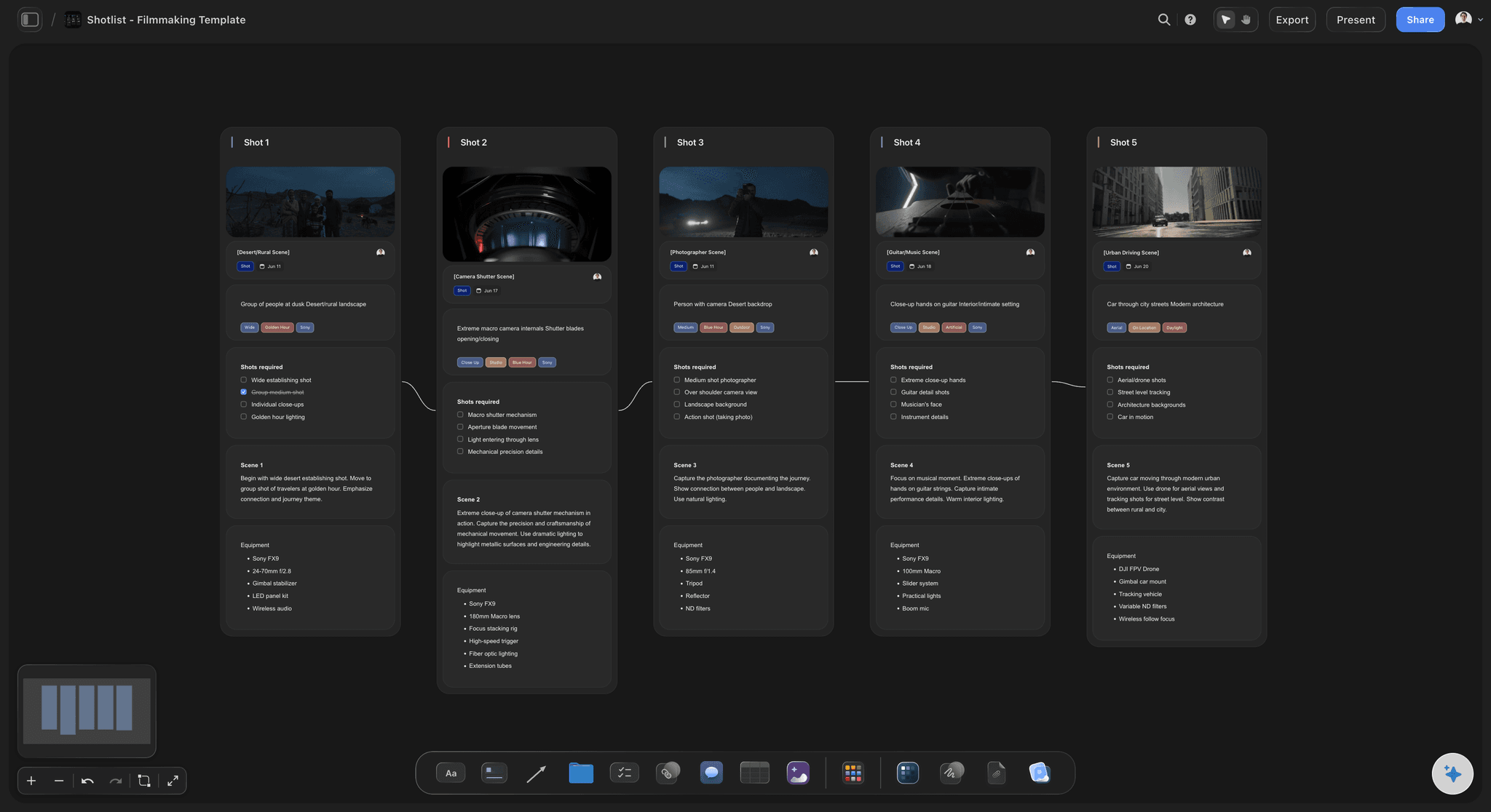
Fast and loose first
Thumbnail passes side by side instead of one at a time
Put three staging options for the same beat next to each other and pick after you have seen them, not before. There is no object cap, so an entire sequence of rough passes stays on one board.
See storyboarding →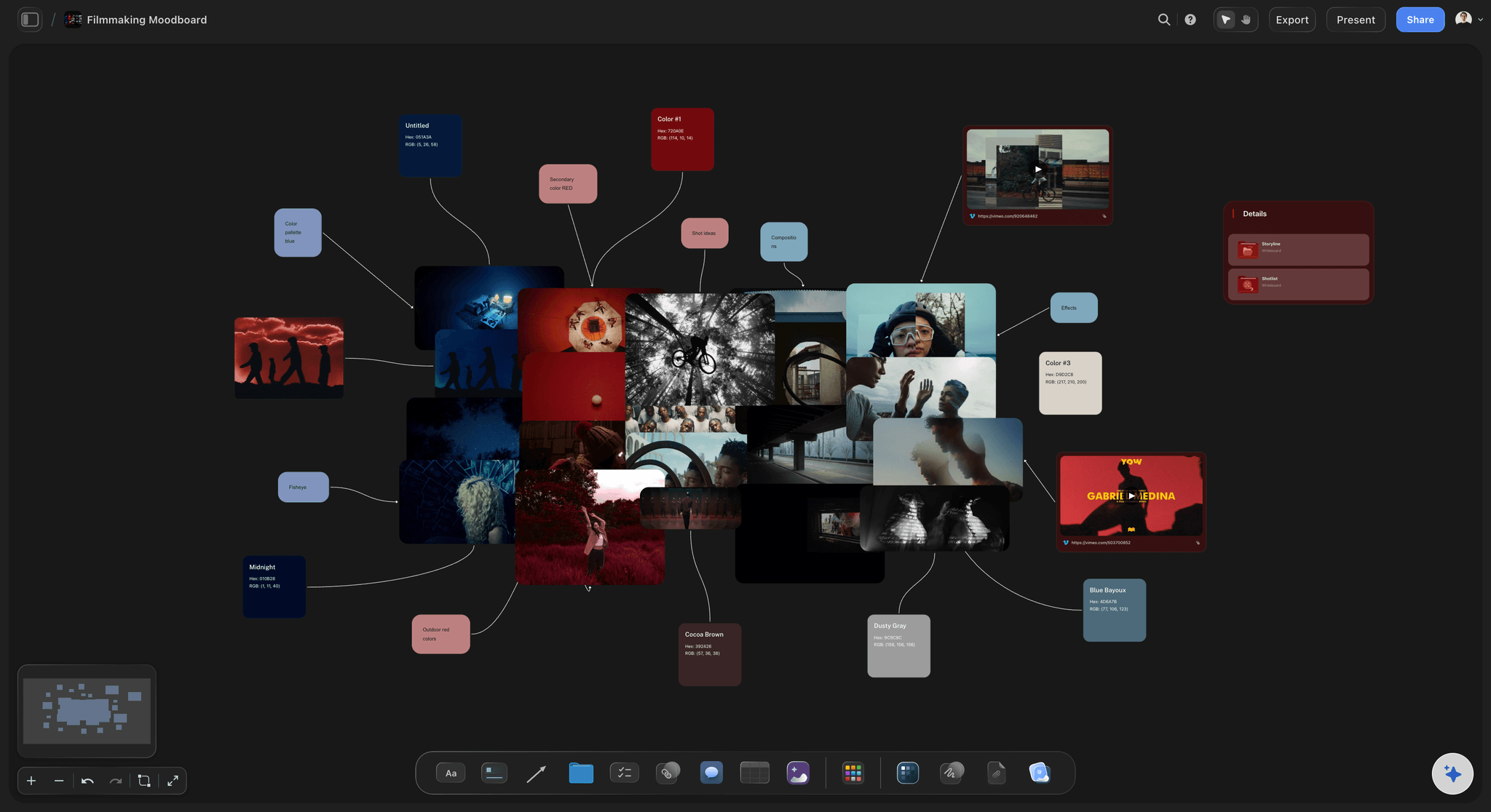
The note and the reference together
Director references beside the shot they answer
Pin the film still, the location photo, the lens note, and the frame you grabbed from a reference clip to the panel it belongs with, so the vague note in the call becomes a specific image on the board.
See the film storyboard board →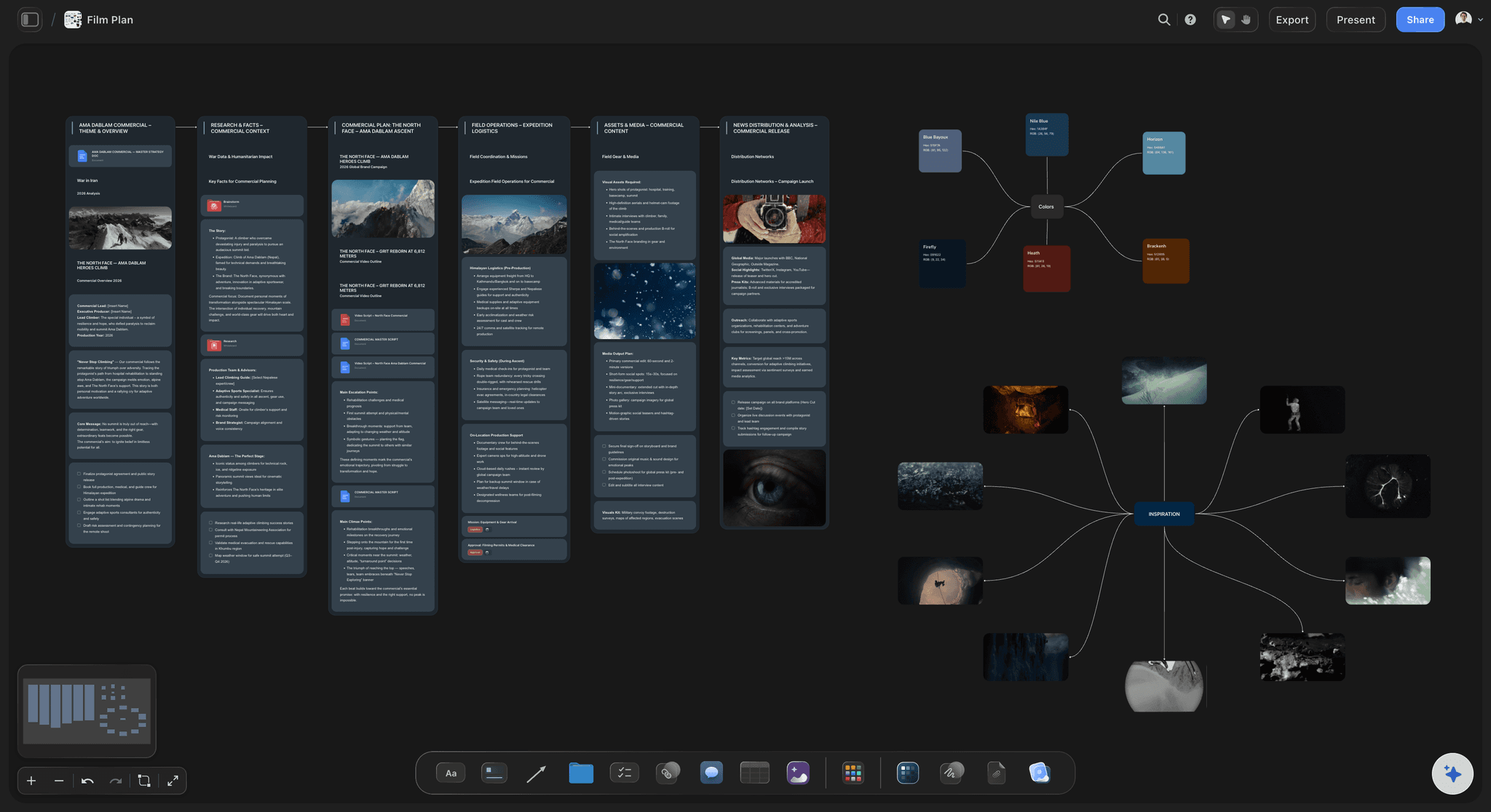
Revisions without archaeology
Every pass of a sequence stays visible
Keep pass one in a side cluster with a line saying what changed and why, so when the cut sequence comes back in round four you rebuild from the board instead of from a folder of files named final_v3b.
See the shot list generator →A free plan is coming. No object cap on paid plans.
Open a board and start with the script pages. Storyflow is paid-only during early access, with a free plan launching before the end of 2026, and every plan has no object cap and no time limit, so a feature-length breakdown never asks you to upgrade halfway through a delivery week.
Unlimited breakdown, thumbnail, sequence, and reference boards on an infinite canvas
Basic AI usage to draft shot lists, beat cards, and sequence structure
Attach images, PDFs, video, and links, plus 20 file uploads
Share view-only with a director or client, or invite collaborators free
AROUND THE DRAWING
Built for the parts of boarding that are not brushwork.
Find the shots in the script, stage them so they cut, keep the versions straight, and get the notes back in a form you can act on.
Reading the script for shots
The breakdown happens where the boards will live
Beats become cards you can move: Pull each beat out of the pages as its own card and reorder by dragging, so splitting one action into three shots takes a second instead of a renumbering pass across a document.
Keep the page beside the panel: Attach the script excerpt, the action line, and the dialogue to the shot they produced, so the intent is still readable when the sequence comes back for revision six weeks later.
AI drafts the first shot pass: Describe the scene once and the AI lays out a starting set of shot cards and coverage suggestions as real objects you rewrite and delete. It reads your current canvas as context rather than a generic template.
Staging and continuity
See the cut, not just the frames
Screen direction visible in one look: Lay the sequence out in reading order and the direction of travel reads across the whole row, which is how a crossed line gets caught on the board instead of in the edit.
Eyelines checked across the cut: Set a shot beside its reverse on the same canvas and confirm the eyeline matches before the panel gets cleaned up, rather than discovering it after the sequence is finalled.
Coverage laid out as a plan: Group the wide, the coverage, and the inserts under the beat they serve so the sequence reads as deliberate coverage rather than a list of nice frames.
Room for the whole sequence: The canvas is genuinely infinite with no object cap, so a long action sequence stays in one continuous row instead of being cut into pages that hide the geography.
Revision rounds and versions
The pass you deleted is the pass they ask for
Old passes stay on the board: Keep each version in its own cluster with a one line note on what the change was and who asked for it, so a reversal in round four is a drag back rather than a redraw.
Cut sequences are parked, not lost: When a whole sequence gets cut, move it to a side cluster instead of deleting it. Productions reinstate cut sequences often enough that this alone pays for the board.
A visible record of what was asked: Comments sit on the panel they refer to, so the request that produced a change is attached to the change, which is the evidence that turns a disputed revision into an agreed one.
Clients, directors, and freelance reality
One board per job, and the director can open it
View-only links with no account to open: Send a link and the director, producer, or agency client explores the sequence in a browser without signing up, which is the difference between notes on Tuesday and silence until Friday.
Invited collaborators join free: Anyone a paid member invites to a board joins free, so bringing a director or a client onto the board costs you nothing and keeps the conversation on the panels instead of in an email chain.
Every client stays in its own board: Run each production as its own board so three simultaneous freelance jobs do not merge into one folder tree, and so handing a project over means sharing one link.
Export for the delivery the production wants: Export the board or a sequence as clean images or a PDF for the shot list, the pitch, or the production folder, then keep the live canvas as the working copy.
Explore templates for your project
Every template opens as a real, editable board on the infinite canvas. Pick the closest fit and make it your own.
Storyboard
Lay out your shots frame by frame with images and notes, then reorder them until the sequence reads like the finished cut.
COMPARED
How Storyflow compares for storyboard work.
This table is about the workspace around the drawing. Where a competitor genuinely owns the job, it says so: Storyboard Pro and Boords own drawing and animatic playback, and Storyflow does neither.
Storyflow
Recommended
Drawing engine with pressure sensitivity, layers, and onion skinning
Animatic playback with shot timing and audio
Infinite canvas holding script, references, thumbnails, and panels together
AI drafts a shot breakdown reading your current canvas as context
View-only link a director or client opens with no account
Numbered client-facing panel PDF built specifically for board delivery
Storyboard Pro
Drawing engine with pressure sensitivity, layers, and onion skinning
Animatic playback with shot timing and audio
Infinite canvas holding script, references, thumbnails, and panels together
AI drafts a shot breakdown reading your current canvas as context
View-only link a director or client opens with no account
Numbered client-facing panel PDF built specifically for board delivery
Boords
Drawing engine with pressure sensitivity, layers, and onion skinning
Animatic playback with shot timing and audio
Infinite canvas holding script, references, thumbnails, and panels together
AI drafts a shot breakdown reading your current canvas as context
View-only link a director or client opens with no account
Numbered client-facing panel PDF built specifically for board delivery
Milanote
Drawing engine with pressure sensitivity, layers, and onion skinning
Animatic playback with shot timing and audio
Infinite canvas holding script, references, thumbnails, and panels together
AI drafts a shot breakdown reading your current canvas as context
View-only link a director or client opens with no account
Numbered client-facing panel PDF built specifically for board delivery
What creators are saying
Join early creators getting structured workspaces and AI that remembers their projects
“Storyflow has sped up my workflow by at least 3x, which means more flow state and more projects I can actually ship. It truly changed the way me and my team create.”

Reilin Joey
Director & YouTuber
“One prompt gets me a structured board. But the tactics are my favorite. I run my YouTube scripts through them and my intros and retention got better. It's amazing.”

Justkay
YouTuber & Freelance Filmmaker
“I used to juggle five apps to plan a project. Now I describe what I am making and get boards, lists, and a schedule. All in one place.”

George
@fernwehchronicles
Storyboard artist questions, answered.
The honest answers, including the ones where another tool wins.
No. Flatly no. Storyflow has no brush engine, no pressure sensitivity, no layers, no onion skinning, no perspective guides, and no animation timeline. It is not a drawing application and it is not going to pretend to be one. Draw in Storyboard Pro, Procreate, Photoshop, or Clip Studio Paint, then bring the exported frames onto the board where the script, the references, the previous passes, and the director notes already live. Storyflow is the workspace around the drawing, which is most of the job and almost none of the software you already own.
Keep drawing where you draw. Put the rest of the job on one canvas.
Script breakdown, thumbnails, references, versions, and director notes in one place. Paid-only during early access; free plan launches late 2026.