
ANIMATIC SOFTWARE
A board that reads fine at rest
can still die at 24 frames a second.
The honest version first. Storyflow does not play back a timed edit, does not sync audio, has no timeline scrubber, and does not export video. After Effects, Premiere, Resolve, Boords, and Toon Boom own that step, and you should use one of them. Storyflow owns everything before it: building and sequencing the frames, holding the script and the scratch VO beside them, writing the intended duration on every panel, and getting the boards signed off before anyone starts cutting. Paid-only during early access, plans from $9.99 a month, and a Free plan launches before the end of 2026.
Plans from $9.99/mo
Free plan coming late 2026
Works in your browser

Used by creative professionals at:
Artlist
Pixar
Nike
Red Bull
The North Face
Porsche
Start from a ready-made template
Pick a board to see what you can build, then let AI fill it in. Every template is a real, editable starting point on the same infinite canvas.
Storyboard
Lay out your shots frame by frame with images and notes, then reorder them until the sequence reads like the finished cut.
What is animatic software, and what does an animatic actually do?
An animatic is a storyboard cut to time against scratch audio, so you can find out whether a sequence works before anyone animates or shoots it. Animatic software is any tool that lets you place those frames on a timeline, hold each one for its intended duration, lay scratch voiceover and temp music underneath, and watch the result back. That last verb is the whole category. An animatic is the first moment a piece has a duration, and duration is where most sequences quietly fail.
Timing is the entire point, and it is why an animatic is not just a nicer storyboard. A board reads at your pace. You linger on the complex frame, skim the establishing shot, and mentally supply the beat between panels, so a sequence with a badly judged rhythm still feels fine on the wall. Play the same frames at 24 frames a second and the truth arrives immediately: the joke lands two beats too late, the reveal has no room to breathe, the product shot flashes past before the eye can read the label, and the whole thing runs eleven seconds over. None of that is visible until the frames have durations attached to them.
The scratch track is the spine you hang the frames on. Scratch VO, recorded on a phone by whoever is nearest, sets the real pace of a commercial or an explainer far more accurately than a stopwatch does, because copy takes the time it takes to say. Temp music sets the energy and tells you where the cut wants to fall. From there the craft is in two decisions, repeated: how long to hold on a frame, and when to cut instead of holding. A useful rule is that a complex frame needs about two seconds before a viewer has read it, so if a panel carries a new location, a new character, and a line of text at once, either give it the room or split it into two frames. And then the last thing worth knowing about an animatic is that it exists to be thrown away. It is a disposable test, not a deliverable, and the moment it has told you what you needed to know, its job is done.
Getting there is six connected jobs: writing or importing the script, drawing or generating the frames, sequencing them into the order the piece will actually play, recording and pinning a scratch VO track beside them, marking the intended hold on every panel, and getting sign-off on the boards before a single frame gets cut to time. Storyflow does the first five and the sign-off. The cut itself belongs in an editor.
HOW IT WORKS
Get the boards and the timings right, then hand them to the tool that cuts.
Storyflow is the stage before playback. Everything here is aimed at handing an editor a sequence that is already in the right order with the right durations written on it.
01
Put the script and the scratch VO on the canvas
Paste the script into a document that sits on the same board as the frames. Pin the scratch VO recording beside it. The words and their pace are the spine of the timing, so they belong in view rather than in a separate file nobody opens.
02
Build the frames
Describe a sequence and the AI lays out a board of panels you can rewrite and rearrange, or drop in your own drawings, screenshots, and reference. If you want the full breakdown of this step, the storyboard maker page covers it properly.
03
Sequence them and write the holds
Drag panels into the order the piece will actually play. On every frame, note the intended duration and what it is doing: hold two seconds to read the label, cut hard on the downbeat, hang on the reaction. That annotation is the brief for the edit.
04
Get sign-off, export the frames, cut elsewhere
Share a view-only link so the client or director signs off on the boards while changes are still cheap. Then export the frames and bring them into After Effects, Premiere, Resolve, Boords, or Toon Boom, which is where the timed playback actually happens.
The part of an animatic that is not the timeline.
Every animatic tool sells you playback. Almost none of them are any good at the frame building, the reference, and the approval that has to happen first.
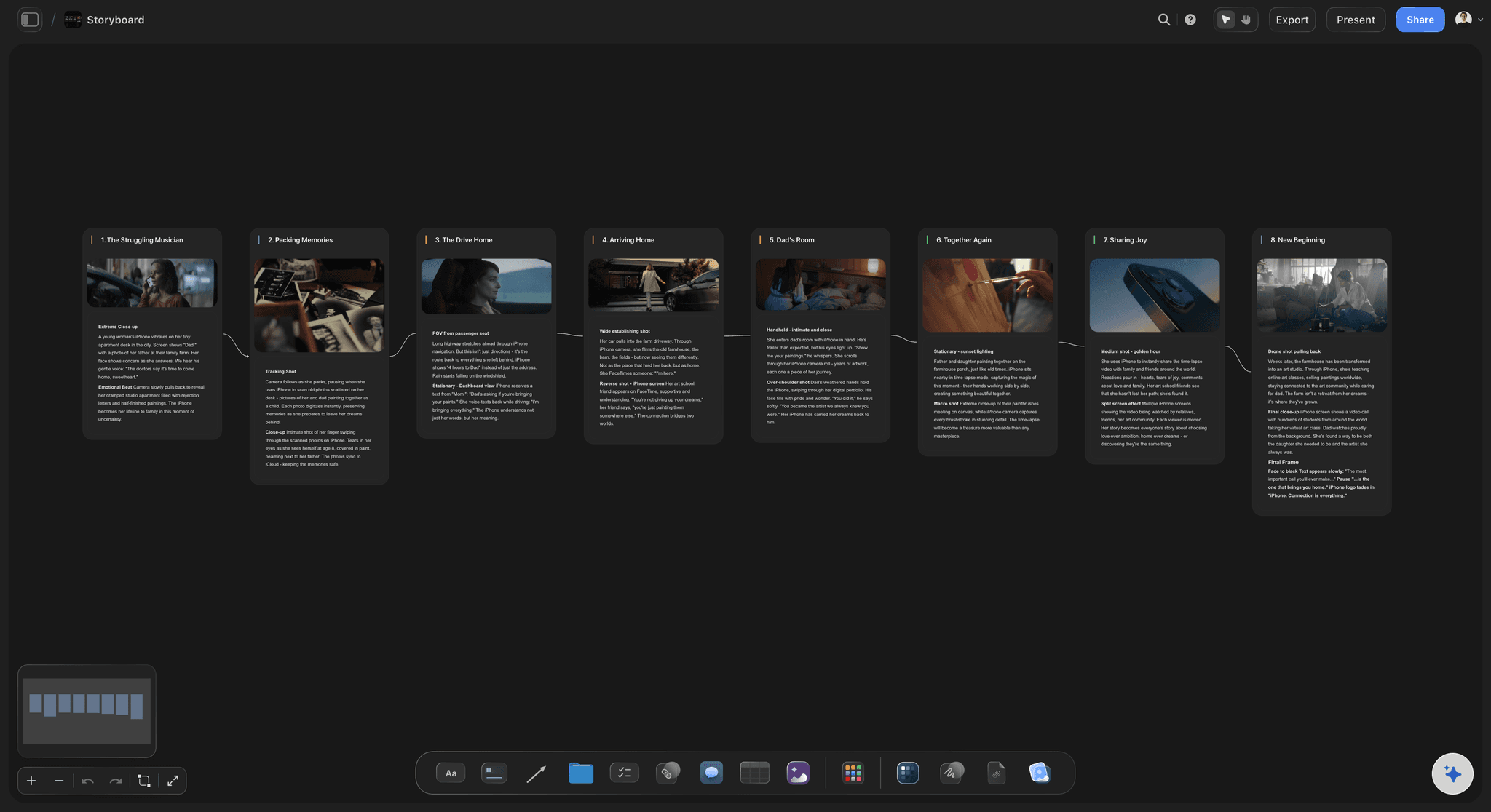
Frames first, in the order they will play
Sequence on a canvas instead of a narrow strip
A timeline shows you a sliver of the sequence at a time, which is a strange way to judge structure. On an infinite canvas the whole spot sits in front of you at once, so you can see that three consecutive frames are all mid shots, or that the entire second half is one long held beat, and fix the sequence before it costs you a render.
See the storyboard maker →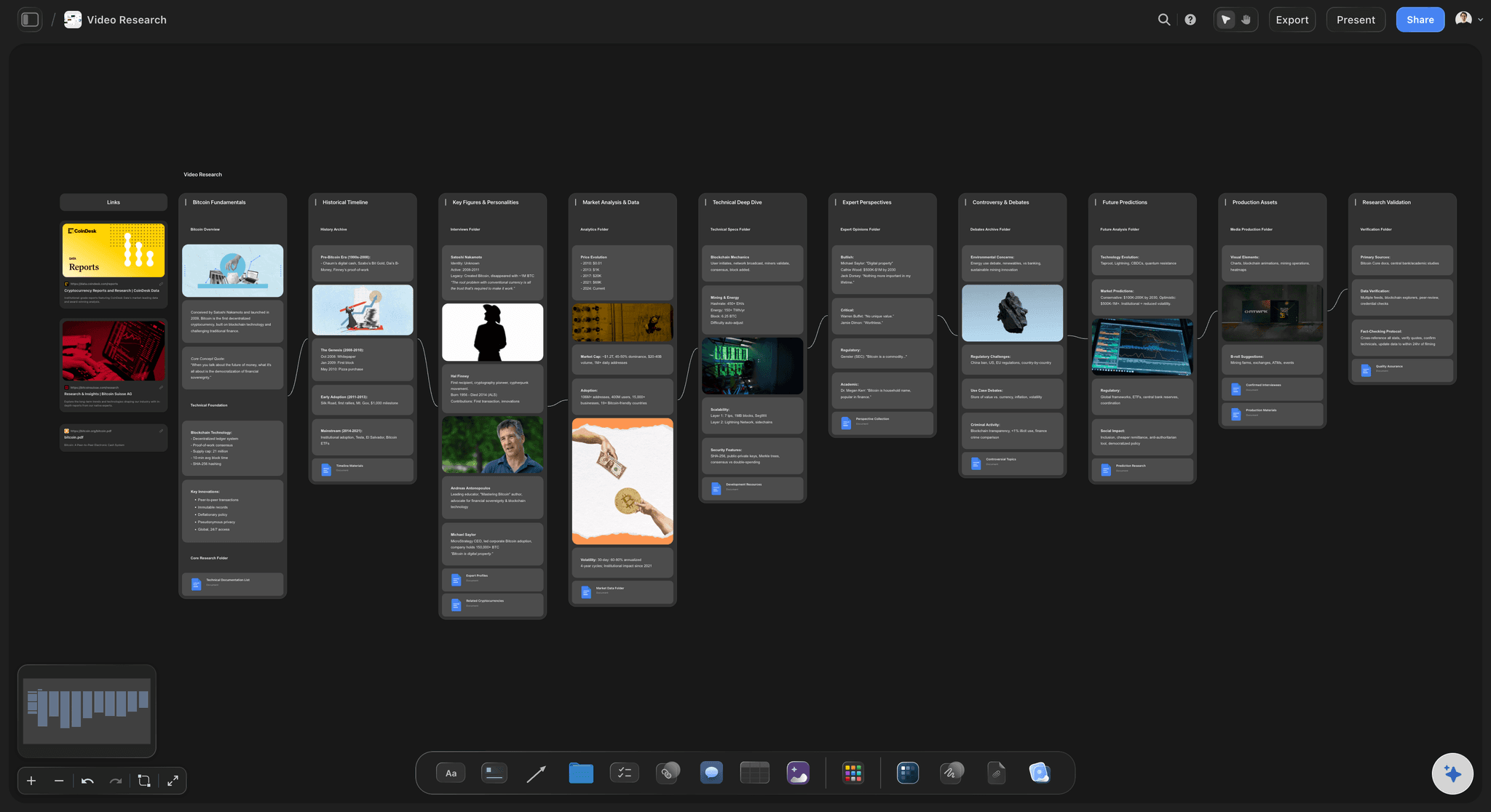
A first pass of panels from a prompt
Generate the frames you are going to time
Describe the spot, the scene, or the explainer and the AI lays out a board of panels with shot descriptions and action already written, so the first version exists in a minute rather than a morning. You then rewrite, redraw, and reorder it, which is the only way an animatic ever gets good.
Try the AI storyboard generator →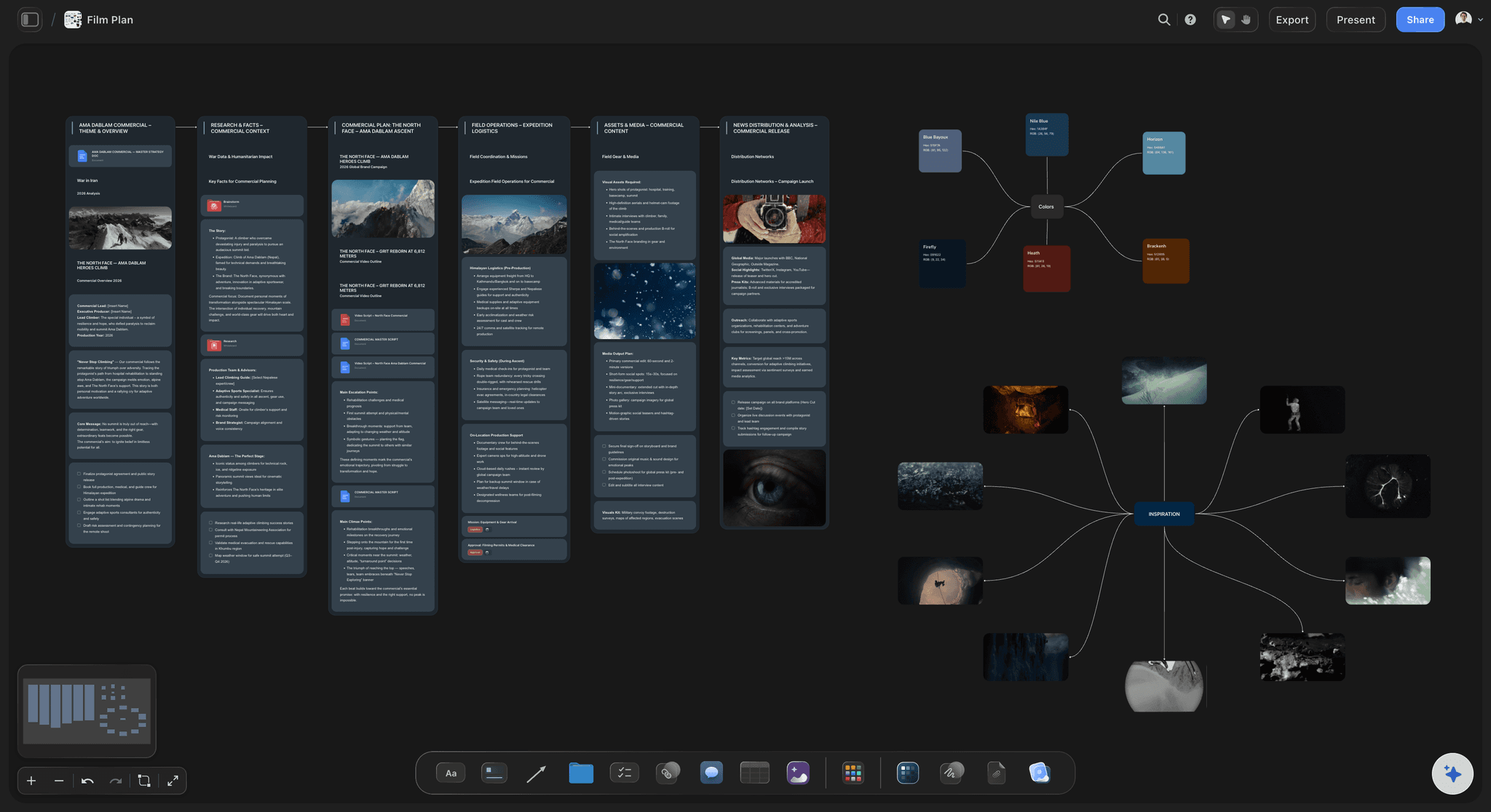
Script, scratch track, and reference in one view
Keep the audio spine beside the frames
The scratch VO, the temp music reference, the copy deck, and the frames it all has to fit are on one board rather than in four places. When the line is three words too long for the hold, you can see both things at the same time, which is when the fix is obvious.
Explore animation pre-production →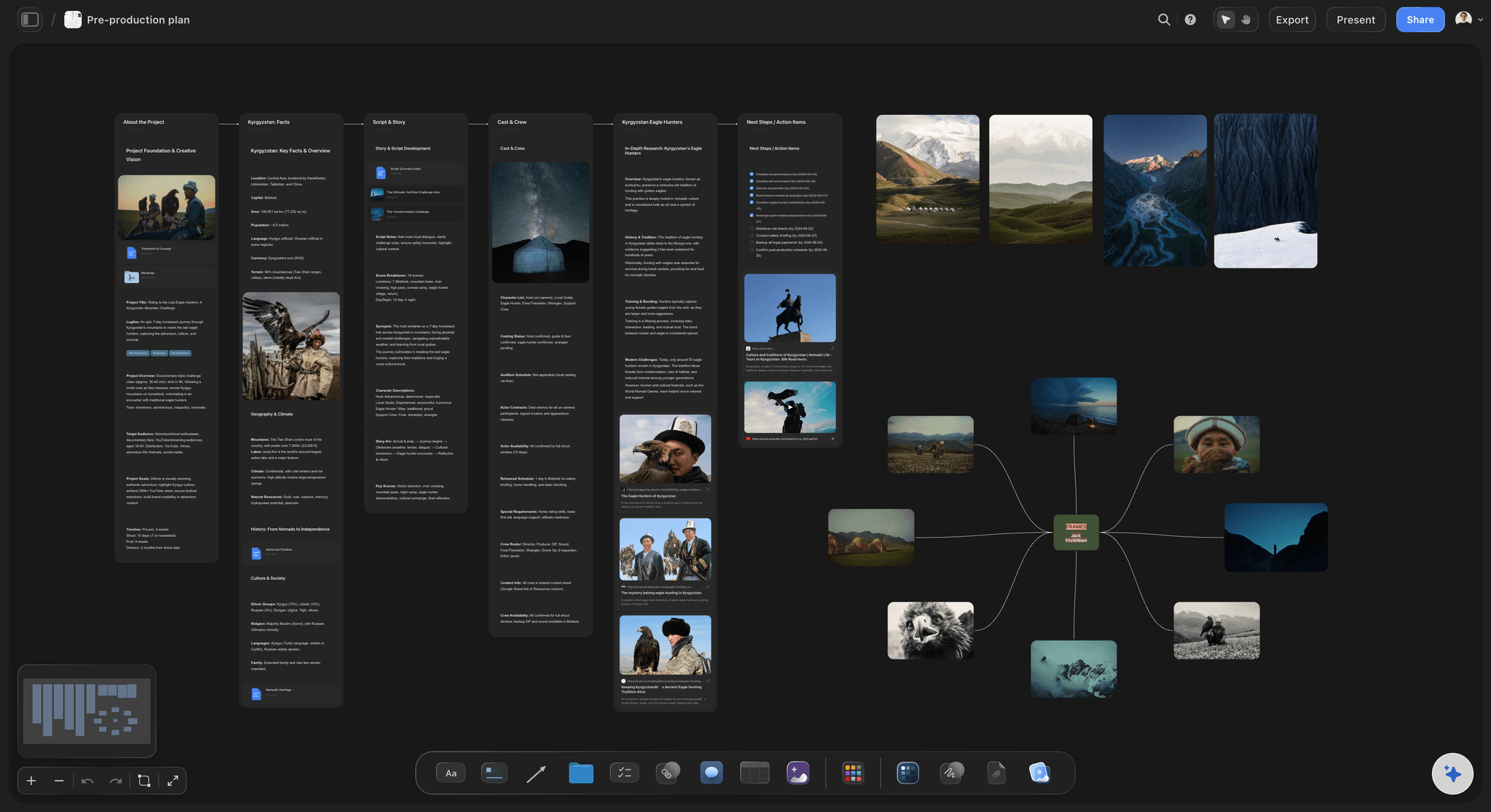
Approval before the expensive part
Sign off the boards, not the render
Send a view-only link and the client, director, or agency reads the whole sequence in a browser with no account. Notes land on the boards while a frame is still a frame, rather than after somebody has spent two days cutting an animatic around a structure that was never agreed.
See the trailer storyboard page →Unlimited boards. No panel cap.
Open a canvas, build the sequence, and mark the timings. Storyflow is paid-only during early access, with plans from $9.99 a month, and a Free plan launches before the end of 2026. Anyone a paid member invites to a board joins free today.
Unlimited storyboard sequences on an infinite canvas
Basic AI usage to generate panels from a prompt
Script, scratch audio, and reference on the same board
Share view-only links with anyone, no account needed
BUILT FOR THE PRE-CUT STAGE
Everything an animatic needs before it has a duration.
Not a lighter editor. The stage upstream of the editor, where the frames, the order, the audio spine, and the intended timings get decided.
Order, rhythm, and shape you can see at once
Judge the sequence before it has been cut
The whole piece in one view: Thirty panels on a canvas show you the structure of a sixty second spot in a glance. Repetition, missing coverage, and a saggy middle are visible spatially, which is exactly what a timeline hides by only ever showing you a few seconds of it.
Reorder by dragging: Trying a different structure is a thirty second experiment rather than a re-render. Move the reveal earlier, swap two beats, cut the third example entirely, and look at what that does to the shape before you commit anyone's time to it.
Split the frame that is doing too much: A panel carrying a new location, a new character, and a line of on-screen text will not read in the time you have. On a canvas you see that overload and split it into two frames now, instead of discovering it in a playback review.
Mark the holds on the panels themselves: Write the intended duration and the intent on each frame. Two seconds to read the pack shot. Cut hard on the downbeat. Hang on the reaction until it is uncomfortable. That is the note the editor actually needs.
The audio spine, in view
Keep the scratch track beside the frames
Script and copy on the same board: Paste the script into a document that lives on the canvas next to the panels it maps onto. Copy takes the time it takes to say, so seeing the words beside the frame is how you catch a line that will never fit the hold you planned.
Pin the scratch VO and the temp track: Drop the phone recording of the scratch read and the temp music reference onto the board. They set the pace and the energy that every timing decision downstream is measured against, so they belong with the frames rather than in a shared drive.
Reference the rhythm you are chasing: Grab frames from YouTube or Vimeo directly onto the canvas when the thing you are trying to explain is a cut in somebody else's spot. Showing the reference beats describing it in a call every single time.
AI that has read your board
Get a first pass to argue with
Panels from one prompt: Describe the spot or the scene and the AI lays out frames with shot descriptions and action already written. Starting from a draft you disagree with is much faster than starting from an empty sequence and a blinking cursor.
It reads the whole canvas as context: Ask what the sequence is missing, where the structure sags, or how to cover a transition, and it answers against the board you have built rather than a generic template. The judgment stays yours, which is the only arrangement that produces a sequence worth timing.
Iterate without losing your work: Re-prompt as often as you like. Panels you have written, drawn, or placed stay exactly where they are while the AI builds around them.
Sign-off, then hand over
Approve the boards and export them to the editor
View-only links for the people who approve: Clients, directors, and agency producers open the whole sequence in a browser with no account and no login. They read it at their own pace, which is genuinely the right way to review structure even though it is the wrong way to review timing.
Guests join free: Anyone a paid member invites to a board joins free today, so bringing in an animator, an editor, or a client is not a seat decision every time the sequence changes.
Export the frames: Export the board as a high quality image or PDF for the deck, and take the frames into After Effects, Premiere, Resolve, Boords, or Toon Boom for the cut. Storyflow deliberately stops at the point the timeline starts.
The board survives the animatic: An animatic is disposable by design. The board it came from is not. It stays as the reference for what each frame was meant to do long after the test cut has been replaced by real animation.
Explore templates for your project
Every template opens as a real, editable board on the infinite canvas. Pick the closest fit and make it your own.
Storyboard
Lay out your shots frame by frame with images and notes, then reorder them until the sequence reads like the finished cut.
HOW WE COMPARE
Storyflow vs Boords, After Effects, and Toon Boom.
This is a map of a workflow, not a scoreboard. Every row about playback, sound, and timing goes to the other three, because they are the tools that do it.
Storyflow
Recommended
Infinite canvas for sequencing and rearranging frames
Timeline playback of the boards against audio
Scratch VO and temp music synced to the cut
Video export of the finished animatic
Script, research, and reference beside the frames
Frame-by-frame animation and full production pipeline
Boords
Infinite canvas for sequencing and rearranging frames
Timeline playback of the boards against audio
Scratch VO and temp music synced to the cut
Video export of the finished animatic
Script, research, and reference beside the frames
Frame-by-frame animation and full production pipeline
After Effects
Infinite canvas for sequencing and rearranging frames
Timeline playback of the boards against audio
Scratch VO and temp music synced to the cut
Video export of the finished animatic
Script, research, and reference beside the frames
Frame-by-frame animation and full production pipeline
Toon Boom
Infinite canvas for sequencing and rearranging frames
Timeline playback of the boards against audio
Scratch VO and temp music synced to the cut
Video export of the finished animatic
Script, research, and reference beside the frames
Frame-by-frame animation and full production pipeline
What creators are saying
Join early creators getting structured workspaces and AI that remembers their projects
“Storyflow has sped up my workflow by at least 3x, which means more flow state and more projects I can actually ship. It truly changed the way me and my team create.”

Reilin Joey
Director & YouTuber
“One prompt gets me a structured board. But the tactics are my favorite. I run my YouTube scripts through them and my intros and retention got better. It's amazing.”

Justkay
YouTuber & Freelance Filmmaker
“I used to juggle five apps to plan a project. Now I describe what I am making and get boards, lists, and a schedule. All in one place.”

George
@fernwehchronicles
Animatic questions, answered honestly.
Including the one where the answer is that you need a different tool for the actual cut.
An animatic is a storyboard cut to time against scratch audio. The frames are placed in order, each one is held for its intended duration, and scratch voiceover and temp music run underneath, so the whole thing plays back at real speed. It is the first version of a piece that has a duration, which makes it the first honest test of whether the sequence works. Animatics are made before animation or shooting, precisely because they are cheap to be wrong in and everything after them is not.
Get the frames and the timings right. Then cut.
Open a canvas, describe the sequence, and let AI lay out the first pass of panels. Plans from $9.99/month, nothing to install, and a Free plan is coming before the end of 2026.