
CONCEPTBOARD ALTERNATIVE
If you need EU hosting, keep Conceptboard.
If you need a creative canvas, read on.
Let us get the honest part out of the way first. Conceptboard's real strength is not its sticky notes, it is where the data lives. German and EU hosting, an on-premise option, and a compliance posture built for regulated buyers. Storyflow has none of that and will not pretend otherwise. What Storyflow has instead is a canvas built for creative work, moodboards, storyboards, story structure, and campaign boards, with AI that reads the whole board rather than sitting in a panel beside it. Paid-only during early access, plans from $9.99 a month, Free plan before the end of 2026.
Plans from $9.99/mo
Free plan before end of 2026
Nothing to install

Used by creative professionals at:
Artlist
Pixar
Nike
Red Bull
The North Face
Porsche
Start from a ready-made template
Pick a board to see what you can build, then let AI fill it in. Every template is a real, editable starting point on the same infinite canvas.

Mind Map
Branch one central idea out into themes and sub-points, then drag the connections around until the structure makes sense.
What is a Conceptboard alternative actually being asked to do?
Conceptboard occupies a specific and defensible position in the online whiteboard market, and it is worth stating plainly rather than glossing over. It is a competent infinite canvas with sticky notes, shapes, documents, live cursors, and moderated sessions, but the reason organisations choose it over the louder names is where the data sits. Hosting in Germany and the EU, an on-premise deployment path, and a privacy and compliance story that survives a procurement review are the product. For a bank, a public authority, an insurer, or a hospital group, that is not a feature list, it is the entire buying criterion.
So the first thing this page should do is disqualify itself where it deserves to be disqualified. If your legal team has written EU data residency into the requirements, or your security review needs the board running inside your own infrastructure, Conceptboard wins and Storyflow is not a candidate. Nothing about AI quality, canvas feel, or price changes an answer that a compliance officer has already decided. We would rather you knew that in the first thirty seconds than after a trial.
The people who do go looking for an alternative are usually asking a different question. They are creative teams, agencies, studios, marketing groups, and individual makers who ended up on a corporate whiteboard because it was the tool the company had, and who found that the canvas was designed around a workshop rather than around their craft. Their work is not a retrospective grid or a stakeholder map. It is a moodboard where the images need to be big and arranged with care, a storyboard where the frames run in sequence, a story or campaign structure that has to hold together, and a pile of references that has to stay next to the decision it explains. On a generic whiteboard all of that is possible and none of it is native, so it comes out looking like sticky notes with pictures attached.
People look for a Conceptboard alternative for six recurring reasons: the canvas is built for facilitated meetings rather than for creative craft so moodboards and storyboards feel improvised, AI assistance is either absent or bolted on as a side panel with no view of the board, the price and seat model is aimed at enterprise rollouts rather than at a small studio or a solo creator, the compliance and hosting strengths they are paying for are irrelevant to their own work, there is nowhere to write long-form copy or a treatment beside the visuals without switching apps, and boards that started as a workshop have to be rebuilt from scratch when the project becomes production work.
HOW IT WORKS
Start from the idea, not from an empty grid.
The same four steps whether you are building a moodboard, a storyboard, a campaign board, or a story structure.
01
Describe the project
Sign up in seconds, from $9.99 a month, nothing to install. Type what you are making and the AI lays out a first board with the right sections already in place, so you start by editing rather than by staring at blank space.
02
Bring the references onto the canvas
Drag in images, screenshots, PDFs, links, and video frames, and place them where they belong. Visual reference is content on this canvas, not an attachment clipped to a note.
03
Write beside what you are looking at
Open a document on the same board for the treatment, the copy, the script, or the rationale, with the visuals still in view. The words and the pictures stop living in separate tools.
04
Turn the thinking into the plan
Lay the same board out as phases, sequences, or tasks when the project becomes real work, and share a view-only link so a client can see it without an account.
Four things a corporate whiteboard was never designed to do.
Conceptboard is a good canvas for a meeting. These are the four gaps creative teams keep hitting in week two.
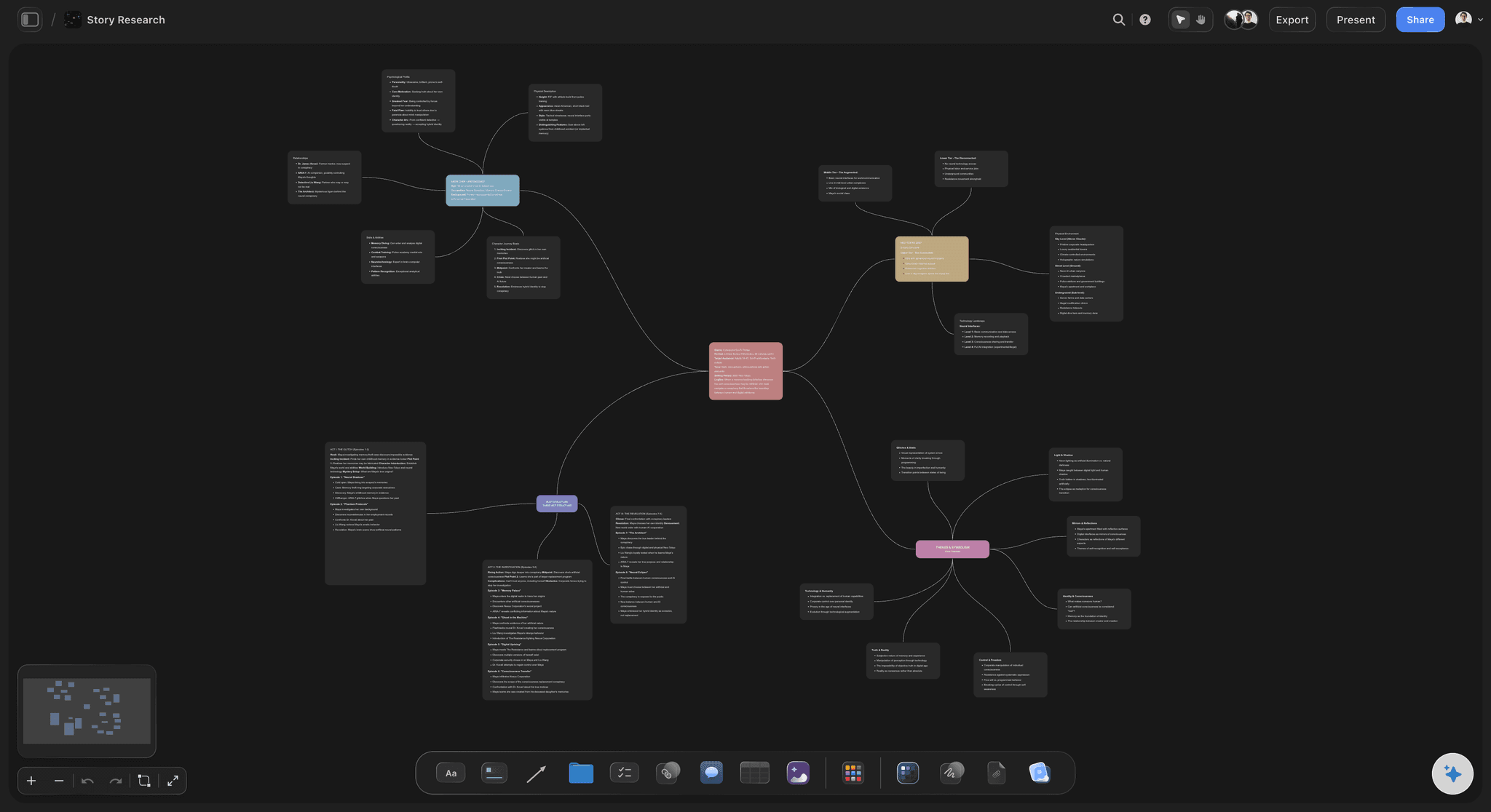
AI on the canvas, not in a sidebar
Ask questions about the board you are actually looking at
Most whiteboards added a chat panel that cannot see your work, so every prompt starts with you re-describing the project. Storyflow's AI reads the whole canvas, the notes, the images, the documents, and the structure, so you can ask it to expand a section, spot what is missing, or draft the copy for a frame and get an answer about your material.
See the AI whiteboard →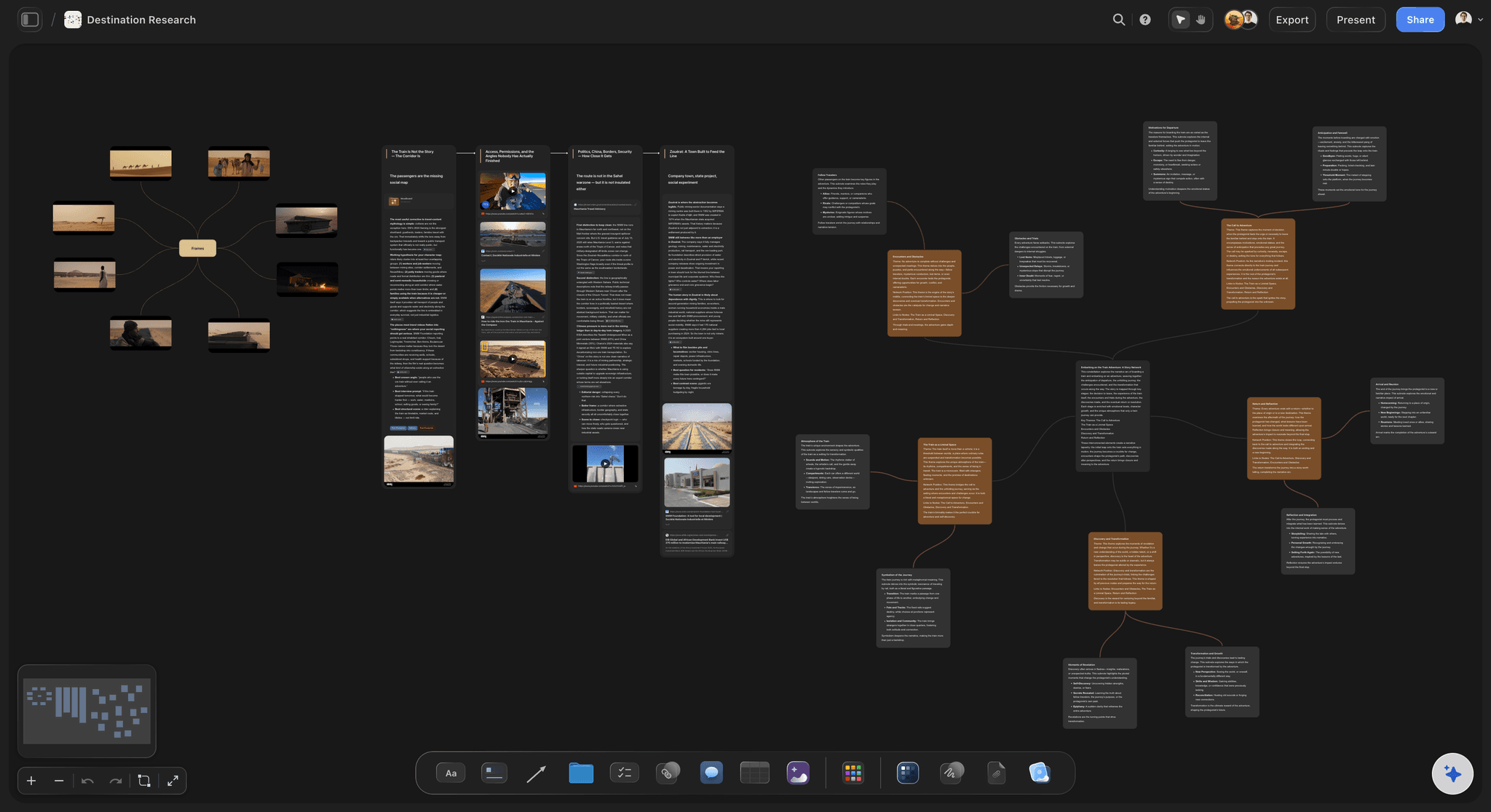
Images treated as the work
Moodboards that look like moodboards
On a generic whiteboard an image is a file you dropped on a grid. Here reference is first-class: crop it, size it, group it, put swatches and typography beside it, and arrange the board the way a creative would present it rather than the way a meeting tool defaults to.
Build a moodboard →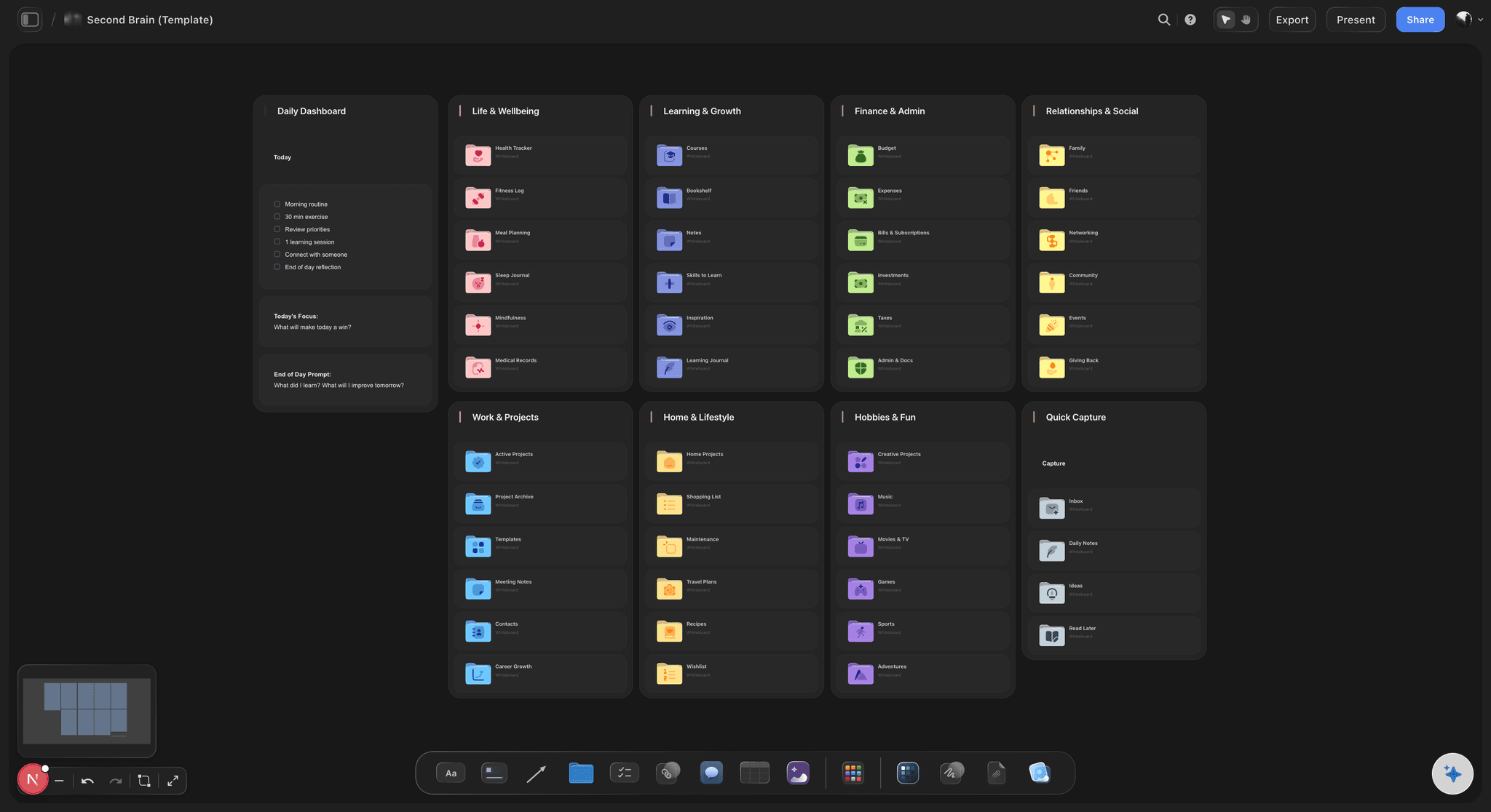
Sequence, not a wall of squares
Storyboards and story structure as native shapes
Frames that run in order, beats that build to something, acts that have to balance. This canvas understands work that has a sequence, so a storyboard or a narrative structure is a shape the tool supports rather than a layout you maintain by hand every time something moves.
Make a storyboard →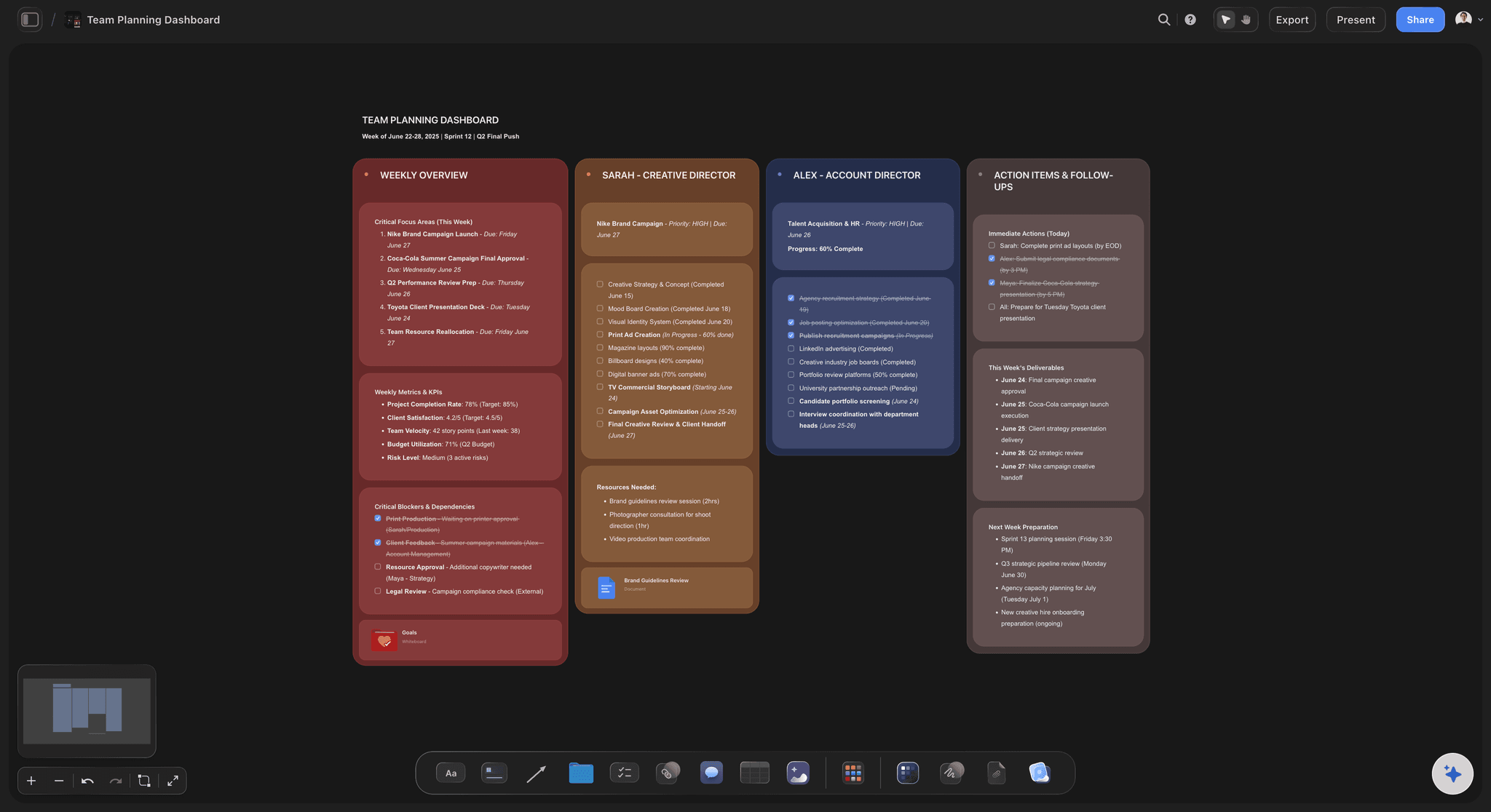
One surface for the whole project
The board does not end when the workshop does
A concept board, the research behind it, the written treatment, and the production plan usually live in four tools. On an infinite canvas they live at four zoom levels of the same board, so the reasoning survives into the phase where people actually build the thing.
Explore the infinite canvas →Unlimited boards. No object limit.
Storyflow is paid-only during early access, with plans from $9.99 a month, and a Free plan launches before the end of 2026. Anyone a paid member invites to a board joins free today, so a small studio or a client-side stakeholder can work on the canvas without buying a seat.
Unlimited boards on an infinite canvas
AI that reads your whole board as context
Images, PDFs, and video frames as first-class content
Share a view-only link with anyone, no account needed
FOR CREATIVE WORK
Built around the craft, not around the meeting.
Conceptboard, Miro, and Mural are all excellent at running a session. This canvas is aimed at what happens between the sessions.
The canvas itself
An infinite surface that stays usable when it gets big
Zoom levels that carry meaning: Keep the overview, the section, and the individual frame on the same board and move between them, instead of splitting a project across a dozen separate files that lose their relationship to each other.
Position as information: Cluster what belongs together, park what you are unsure about at the edge, and let arrangement do work that a folder structure cannot. Spatial memory is most of the reason visual people use a canvas.
No object ceiling on a board: A creative project accumulates hundreds of references and frames. The board should keep taking them rather than pushing you into a second file halfway through the project.
Nothing to install: It runs in the browser on a laptop or a tablet, so a collaborator can open the canvas without an IT ticket or a download.
Reference material
Everything the idea is made of, on the board
Images, crops, and swatches: Drop in photography, stills, and screenshots, crop them on the canvas, and pull colour and type reference alongside so the board reads as a considered piece rather than a dumping ground.
PDFs and documents in place: Put the brief, the deck, or the research paper next to the section it drives, so nobody has to go hunting through a shared drive to understand why a decision was made.
Video frames straight from a link: Grab a specific frame from YouTube or Vimeo onto the canvas when the reference is one moment rather than a whole film someone will never rewatch.
AI with the board in view
An assistant that has read the project
Generate a first board from a prompt: Describe the campaign, the film, or the concept and get a structured board to react to. Disagreeing with a draft is much faster than producing one from nothing.
Ask what the board is missing: The most useful review question is what is not here. An assistant that can see the whole canvas can answer it, where a chat window with no context can only guess.
Draft the words for what you are looking at: Turn a section into a treatment, a caption, a script beat, or a rationale, using the surrounding visuals and notes as the brief, then rewrite it in your own voice.
Getting it out of the building
From concept board to something you can send
Lay the same board out as a plan: Phases, sequences, and next steps sit on the canvas that produced them, so the plan keeps the reasoning attached instead of arriving in a task list stripped of context.
Share a view-only link: A client, a producer, or a stakeholder opens the whole board in a browser with no sign-up and nothing to install, which is usually what you want from someone who will never adopt your tools.
Export a high-quality image or PDF: When the board has to become a deck slide, a printed reference, or an email attachment, export it without rebuilding the layout somewhere else.
Invite collaborators as guests: Anyone a paid member invites joins free today, so a freelancer or a client-side reviewer can work on the board without their own subscription.
Explore templates for your project
Every template opens as a real, editable board on the infinite canvas. Pick the closest fit and make it your own.
Mind Map
Branch one central idea out into themes and sub-points, then drag the connections around until the structure makes sense.
HOW WE COMPARE
Storyflow vs Conceptboard, Miro, and Mural.
Conceptboard takes the hosting and compliance row outright, and that row decides the whole question for a lot of buyers.
Storyflow
Recommended
EU and German hosting with on-premise options
Enterprise admin, procurement, and compliance programme
Large template library and live workshop facilitation
AI that reads the entire board as context
Built for creative craft: moodboards, storyboards, structure
Long-form documents on the same canvas as the visuals
Conceptboard
EU and German hosting with on-premise options
Enterprise admin, procurement, and compliance programme
Large template library and live workshop facilitation
AI that reads the entire board as context
Built for creative craft: moodboards, storyboards, structure
Long-form documents on the same canvas as the visuals
Miro
EU and German hosting with on-premise options
Enterprise admin, procurement, and compliance programme
Large template library and live workshop facilitation
AI that reads the entire board as context
Built for creative craft: moodboards, storyboards, structure
Long-form documents on the same canvas as the visuals
Mural
EU and German hosting with on-premise options
Enterprise admin, procurement, and compliance programme
Large template library and live workshop facilitation
AI that reads the entire board as context
Built for creative craft: moodboards, storyboards, structure
Long-form documents on the same canvas as the visuals
What creators are saying
Join early creators getting structured workspaces and AI that remembers their projects
“Storyflow has sped up my workflow by at least 3x, which means more flow state and more projects I can actually ship. It truly changed the way me and my team create.”

Reilin Joey
Director & YouTuber
“One prompt gets me a structured board. But the tactics are my favorite. I run my YouTube scripts through them and my intros and retention got better. It's amazing.”

Justkay
YouTuber & Freelance Filmmaker
“I used to juggle five apps to plan a project. Now I describe what I am making and get boards, lists, and a schedule. All in one place.”

George
@fernwehchronicles
Conceptboard alternative questions, answered straight.
Including the one where the honest answer is that you should stay put.
When data location is part of the requirement. Conceptboard's EU and German hosting, its on-premise deployment path, and its compliance posture are the reasons most of its customers chose it, and Storyflow does not offer any of those things. If your legal or security team has specified where the data must sit, or your sector makes that non-negotiable, the decision is already made and no comparison of canvas features should change it. Stay on Conceptboard, and treat the rest of this page as irrelevant to your situation.
A canvas that knows what you are making.
Bring the references, the writing, and the plan onto one board, with AI that has read all of it. Plans from $9.99/month, nothing to install, and a Free plan before the end of 2026.