
Extremely clear strategy, zero busywork
Generate a SWOT analysis with AI
in four quadrants, in one pass.
Describe your company or project in a line and Storyflow's AI drafts the SWOT: strengths, weaknesses, opportunities, and threats, plus a synthesis that says what to do about them. Refine any card on one board, then turn it into a strategy.


Creatives working for these brands already got early access
- Red Bull
- Canon
- Artlist
- Porsche
See how easy it is to get started
Watch a real project come together, from a blank board to a finished plan, clicked through step by step.
Start from a ready-made template
Pick a board to see what you can build, then let AI fill it in. Every template is a real, editable starting point on the same infinite canvas.

Marketing Plan
Lay out your goals, channels, and initiatives for the quarter on one board.
What is an AI SWOT analysis generator?
A SWOT analysis is a simple way to size up where a company or project stands before deciding what to do next. It sorts the picture into four quadrants: strengths and weaknesses, which are internal and inside your control, and opportunities and threats, which are external and shaped by the market. Laid out side by side, the four quadrants surface the trade-offs that a paragraph of notes hides, which is why it is the first thing many strategists and founders reach for.
The trouble with a blank SWOT is the blank itself. Staring at four empty boxes, it is easy to list a couple of obvious strengths, run dry, and call it done, missing the weaknesses you do not want to write down and the threats you have not thought about yet.
An AI SWOT analysis generator takes the first pass off your hands. Describe your company or project in one line, and the AI drafts each of the four quadrants with reasoned points, then writes a synthesis that ties them together into what to actually do. The points are a starting position to argue with, which is exactly what you want, far faster than inventing every entry yourself. Every point is an editable card on a board, so you cut what does not fit, add what the AI missed, and then ask it to turn the SWOT into a strategy or a competitor analysis on the same canvas.
Ultra fast from brief to board
Generate a SWOT analysis with AI in four steps.
You describe the company. The AI drafts the four quadrants, so you start by refining points instead of filling empty boxes.
01
Open a canvas
No app to install, just an empty board ready for the SWOT.
02
Describe your company or project
A sentence is enough: what you do, who you serve, and the market you are in. Add your goal and the AI frames the SWOT around it.
03
AI generates the SWOT
The AI drafts the strengths, weaknesses, opportunities, and threats as cards, then writes a synthesis that ties the four quadrants together.
04
Refine it, then build the strategy
Edit any point, add what the AI missed, then ask it to turn the SWOT into a strategy or a competitor analysis. Share view-only or export to PDF.
A SWOT board that gives you four filled quadrants to argue with, fast.
Most templates are four empty boxes. This one drafts the points, writes the synthesis, and becomes a strategy.
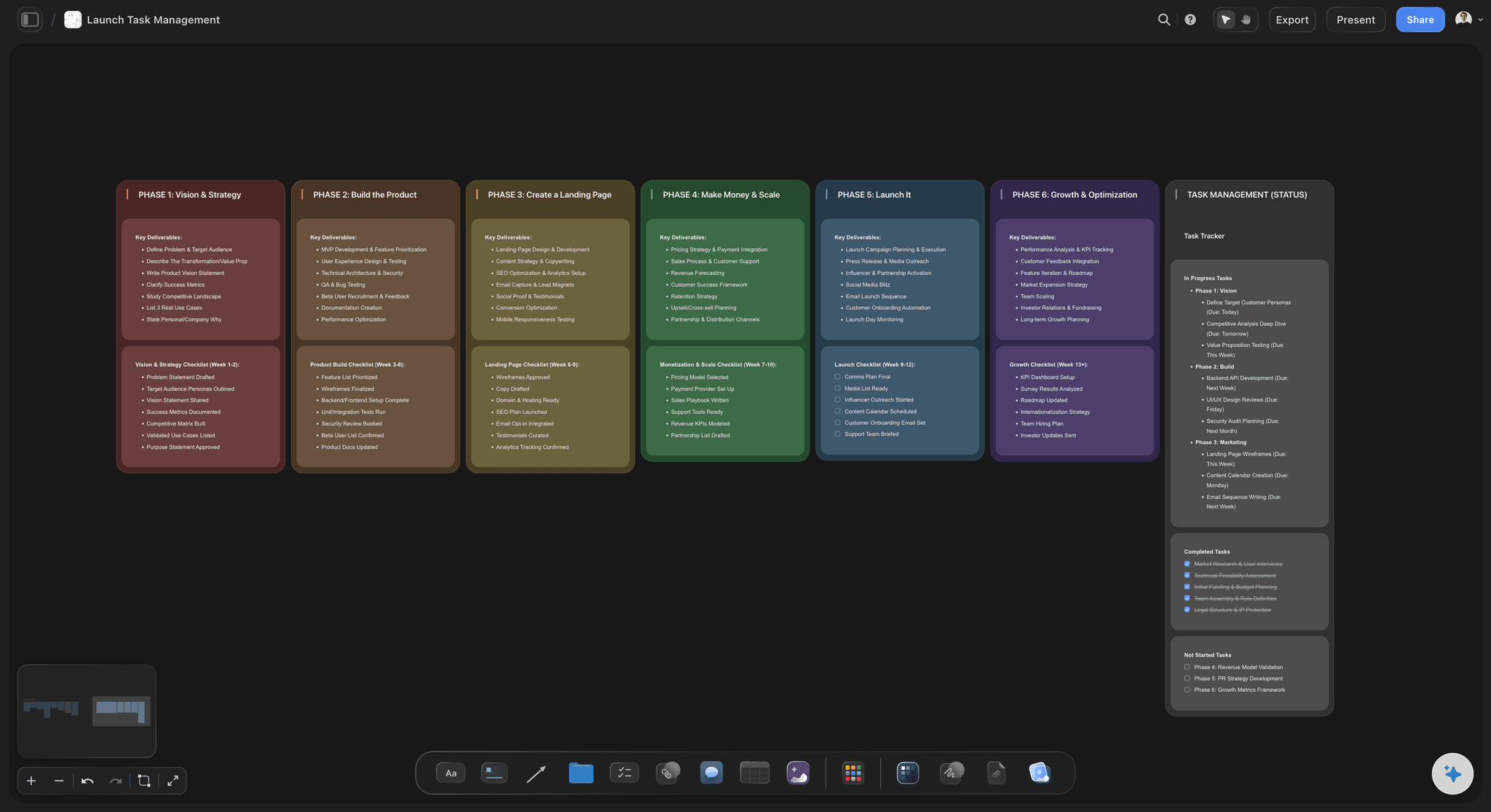
Four quadrants, drafted
Strengths, weaknesses, opportunities, threats
Describe the company and the AI drafts reasoned points in each quadrant, so you start by editing a real analysis instead of filling four blank boxes row by row.
See the AI competitor analysis generator →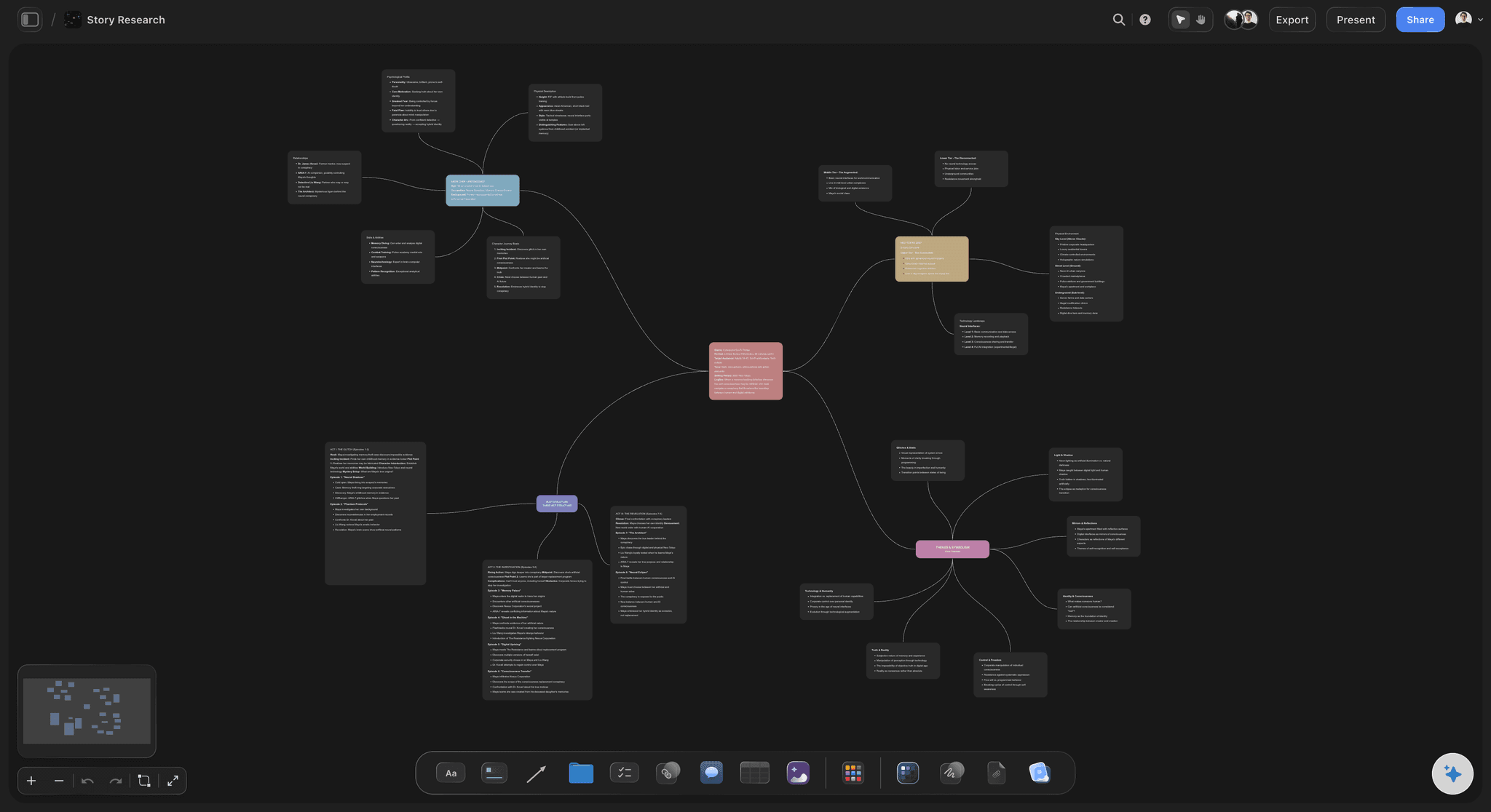
A conclusion, not just a list
A synthesis that ties it together
The AI writes a synthesis under the four quadrants, so the analysis ends with what the strengths, weaknesses, opportunities, and threats mean together, instead of four disconnected lists.
See the AI mind map generator →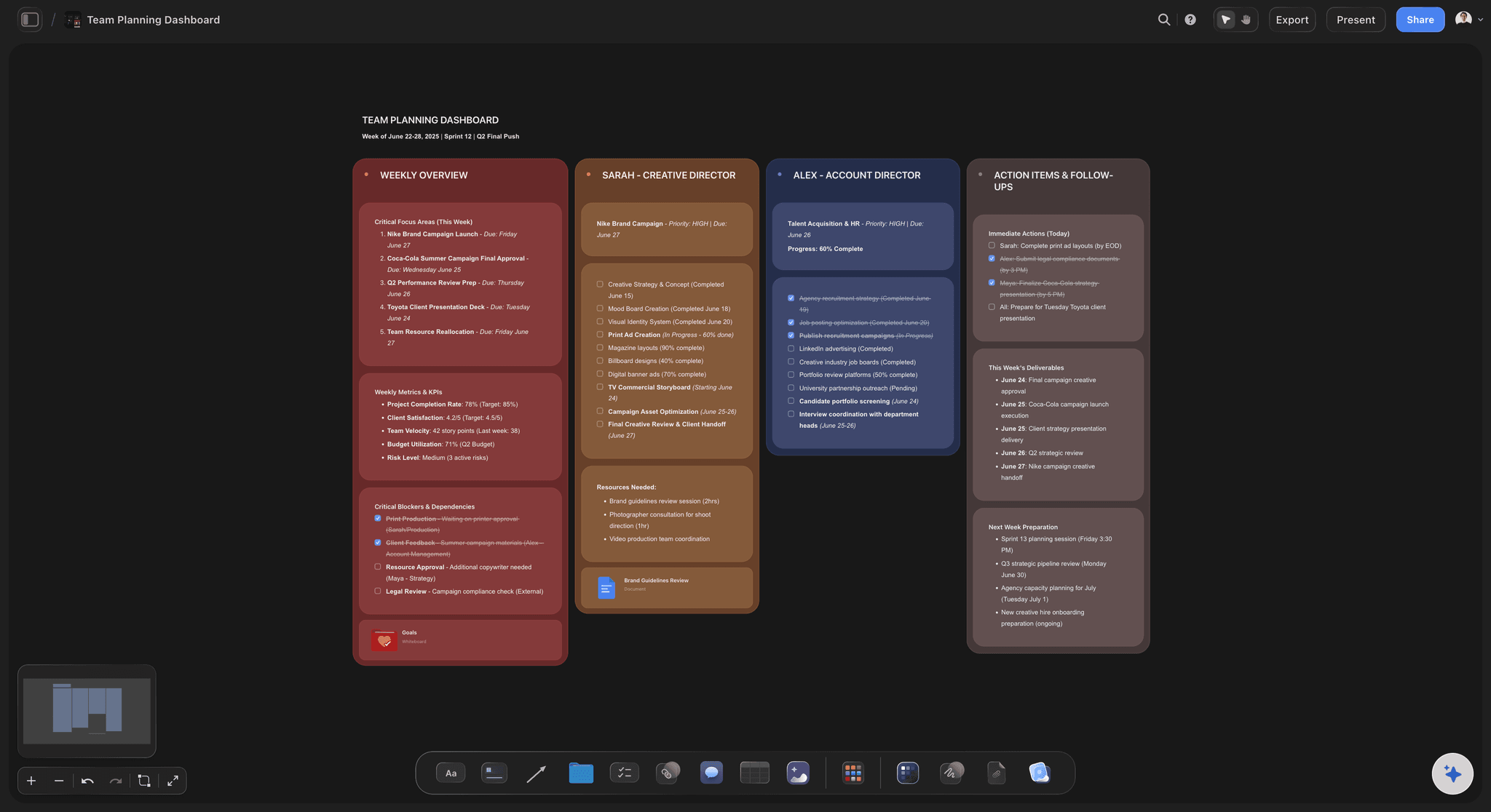
Decide together
A transparent board the team can see
Because every point is a card on a shared board, the team can challenge a strength or add a threat in the open, which is how a SWOT is meant to work, instead of a hidden doc only one person edits.
See the AI value proposition generator →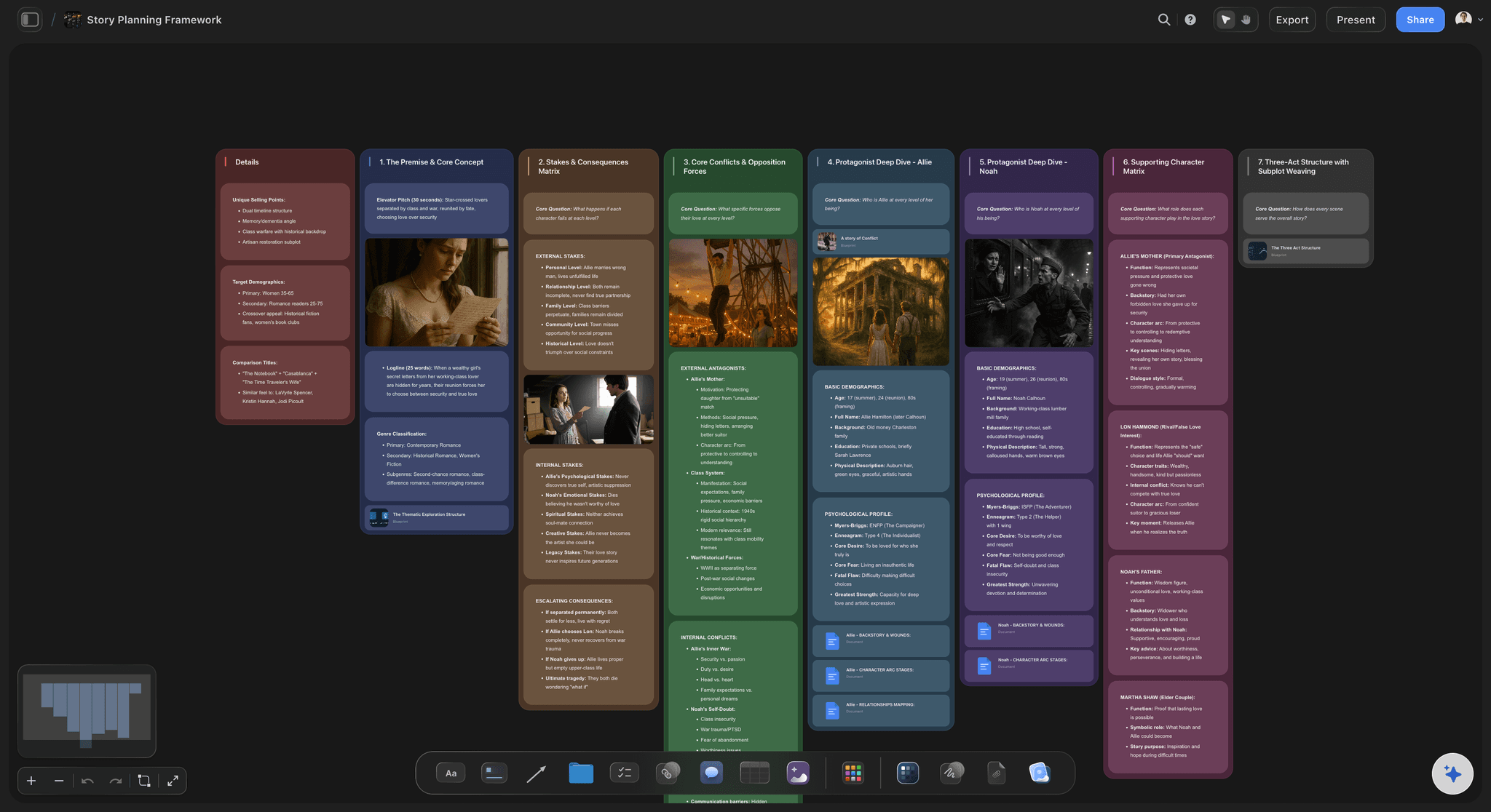
From SWOT to a plan
Turn the analysis into a strategy
Once the four quadrants are set, ask the AI to turn the SWOT into a strategy, playing strengths into opportunities and shoring up weaknesses against threats, all on the same board.
See the AI marketing strategy generator →Paid-only during early access.
Open a canvas, describe the company, and watch the four quadrants draft themselves. Plans start at $9.99 per month, no time limit.
Unlimited SWOT boards, with room for every point
Basic AI usage to draft and refine the four quadrants
Attach research, screenshots, and links to any point
Share the board view-only, or invite collaborators free
Built for people with taste
Made for the way a SWOT actually gets used.
Draft the four quadrants, write the synthesis, debate it as a team, and turn the result into a strategy.
A SWOT that drafts itself
Four quadrants, then yours to refine
A reasoned first pass: The AI drafts strengths, weaknesses, opportunities, and threats with its reasoning, so you start from real points instead of four blank boxes.
Edit and rebalance: Move a point between quadrants, cut the weak ones, and add what the AI missed, so the analysis matches what you actually know.
Any subject: A company, a product, a campaign, or a personal decision: describe it and the AI shapes the SWOT to fit.
A view the team owns
Transparent quadrants everyone can see
Challenge any point: Every entry is a card on a shared board, so anyone can question a claimed strength or add a real threat in the open.
Attach your inputs: Bring in up to five documents and three boards, such as a research report, customer feedback, or a competitor brief, and the AI drafts the SWOT against them.
Pin the evidence: Drop the data behind a strength or a threat onto the point, so the analysis is grounded, not guessed.
The SWOT becomes the strategy
From four quadrants to a plan
Build the strategy: Turn the SWOT into a strategy on the same canvas, with the AI matching strengths to opportunities and weaknesses to threats.
Spin out a competitor analysis: Ask the AI to take the threats and opportunities into a full competitor analysis, kept right beside the SWOT.
Share and align: Send a view-only link so stakeholders see the analysis and the logic, or export a clean PDF for a review.
Explore templates for your project
Every template opens as a real, editable board on the infinite canvas. Pick the closest fit and make it your own.
Marketing Plan
Lay out your goals, channels, and initiatives for the quarter on one board.
One app instead of five
How Storyflow compares to other SWOT tools.
Most options are a blank template or a static grid. The question is whether the AI fills the quadrants and they become a plan.
Storyflow
Recommended
AI drafts the four quadrants and a synthesis
SWOT becomes a strategy or competitor analysis on one canvas
A shared visual board with editable, movable cards
A free plan without board or card caps
Canva
AI drafts the four quadrants and a synthesis
SWOT becomes a strategy or competitor analysis on one canvas
A shared visual board with editable, movable cards
A free plan without board or card caps
Miro
AI drafts the four quadrants and a synthesis
SWOT becomes a strategy or competitor analysis on one canvas
A shared visual board with editable, movable cards
A free plan without board or card caps
ChatGPT
AI drafts the four quadrants and a synthesis
SWOT becomes a strategy or competitor analysis on one canvas
A shared visual board with editable, movable cards
A free plan without board or card caps
SmartDraw
AI drafts the four quadrants and a synthesis
SWOT becomes a strategy or competitor analysis on one canvas
A shared visual board with editable, movable cards
A free plan without board or card caps
What creators are saying
Join early creators getting structured workspaces and AI that remembers their projects
“Storyflow has sped up my workflow by at least 3x, which means more flow state and more projects I can actually ship. It truly changed the way me and my team create.”

Reilin Joey
Director & YouTuber
“One prompt gets me a structured board. But the tactics are my favorite. I run my YouTube scripts through them and my intros and retention got better. It's amazing.”

Justkay
YouTuber & Freelance Filmmaker
“I used to juggle five apps to plan a project. Now I describe what I am making and get boards, lists, and a schedule. All in one place.”

George
@fernwehchronicles
AI SWOT analysis questions, answered.
Everything people ask about generating a SWOT analysis with AI in Storyflow.
An AI SWOT analysis generator turns a one-line description of your company or project into a filled four-quadrant analysis: strengths and weaknesses (internal), opportunities and threats (external), plus a synthesis that ties them together. In Storyflow the AI drafts every quadrant as editable cards on an infinite canvas, so you start by refining a real analysis instead of staring at four empty boxes.
A SWOT has four quadrants. Strengths and weaknesses are internal factors you control, such as your team, product, or brand. Opportunities and threats are external factors in the market, such as a new segment or a rising competitor. The point of laying them side by side is to match strengths to opportunities and defend weaknesses against threats. Storyflow drafts all four and writes a synthesis underneath.
Describe your company or project in the AI chat, and the AI drafts reasoned points in each of the four quadrants, then writes a synthesis tying them together, all as cards on the canvas. Every card is editable, so you can move a point between quadrants, cut what does not fit, add what the AI missed, and ask it to rework the analysis.
Not during early access. Storyflow is paid-only right now, with plans starting at $9.99 per month that include basic AI usage to draft and refine the quadrants, unlimited boards, 20 file uploads for research and screenshots, and view-only sharing, with no time limit. A Free plan is planned before the end of 2026.
Yes, and that is the reason to generate it here. Once the four quadrants are set, ask the AI to turn the SWOT into a strategy, matching strengths to opportunities and weaknesses to threats, on the same canvas. The analysis becomes the plan instead of a static grid that gets forgotten.
Yes. Ask the AI to take the threats and opportunities from your SWOT into a full competitor analysis, kept right beside it on the same board. Because everything is a card on an infinite canvas, the SWOT, the strategy, and the competitor work all stay connected.
Treat them as a fast first pass, not a verdict. The value of a SWOT is the honest debate, and a drafted set of points gets that conversation started far quicker than empty boxes. Edit every point with your own knowledge, move what sits in the wrong quadrant, and pin the evidence behind a strength or a threat onto the board.
Stop staring at four empty boxes. Get a filled SWOT to decide from.
Describe the company once, watch the AI draft the quadrants, and turn the analysis into a strategy.