
An ultra-fast canvas that stays calm
Not everything
belongs in a list.
Put text, images, screenshots, sketches, and links anywhere on an infinite canvas and draw the connections yourself, instead of flattening every idea into a document that only runs one direction.


Creatives working for these brands already got early access
- Red Bull
- Canon
- Artlist
- Porsche
See how easy it is to get started
Watch a real project come together, from a blank board to a finished plan, clicked through step by step.
Start from a ready-made template
Pick a board to see what you can build, then let AI fill it in. Every template is a real, editable starting point on the same infinite canvas.

Mind Map
Branch one central idea out into themes and sub-points, then drag the connections around until the structure makes sense.
What is visual note taking?
Visual note taking means capturing what you are thinking using position, connection, and image as well as text. Storyflow is an AI visual workspace that keeps your notes on one infinite canvas: text, screenshots, sketches and links placed anywhere, connections you draw yourself, and an AI that lays out a structure from a prompt. A note can be a paragraph, a screenshot with an arrow pointing at the part that matters, a rough sketch, a cluster of five related fragments sitting near each other because they belong together, or a line drawn between two ideas that turned out to be the same idea. The organizing principle is space rather than sequence, which is why the same material often makes more sense on a canvas than it ever did in a file.
Linear notes are excellent for anything that genuinely has an order: meeting minutes, instructions, a chronology. They are actively bad for the kind of thinking most knowledge work involves, where you are holding six half-formed ideas and trying to work out how they relate. A document forces you to commit to a sequence before you know what the structure is, and once something is on line forty it is effectively invisible. Nested bullets are the usual workaround, and they impose a hierarchy that is almost always wrong, because the interesting relationships in a messy problem are lateral rather than parental.
Storyflow is an AI-native infinite canvas built for exactly this way of working. Describe a topic in a prompt and the AI lays out a starting structure you can fill and rearrange. Then you work spatially: drop text notes anywhere, paste screenshots and annotate them directly, sketch with the freehand tool when a diagram is faster than a sentence, pull in images and links, and open any note into a full document editor when a fragment turns into something that needs real writing. Nothing has to be filed before you know where it belongs.
The practical benefit shows up when you come back. A document is read top to bottom, so returning to it means scrolling and remembering. A canvas is read by looking, so returning means recognizing: this cluster was the argument, that corner was the stuff I never resolved, this line connects two things I had forgotten were connected. Spatial memory is doing work that a file tree cannot, and it is why people who think this way tend to find canvas notes stick where their document notes quietly rotted.
Ultra fast from brief to board
From scattered thinking to something you can see.
No folder to choose before you start, no hierarchy imposed on ideas that do not have one.
01
Open a canvas
Sign up in seconds. No download. Your infinite notebook opens in the browser.
02
Capture without filing
Drop text, screenshots, sketches, and links anywhere. Put related things near each other and leave the rest loose until you know what it is.
03
Connect and cluster
Draw lines between ideas that belong together and group the fragments that turned out to be one thought. The structure emerges from the material rather than being chosen up front.
04
Write it up when it is ready
Open any note into the built-in document editor when a fragment becomes something worth writing properly, with the rest of the canvas still in view beside it.
Text, images, sketches, and links on one surface.
Capture anything, connect it later.
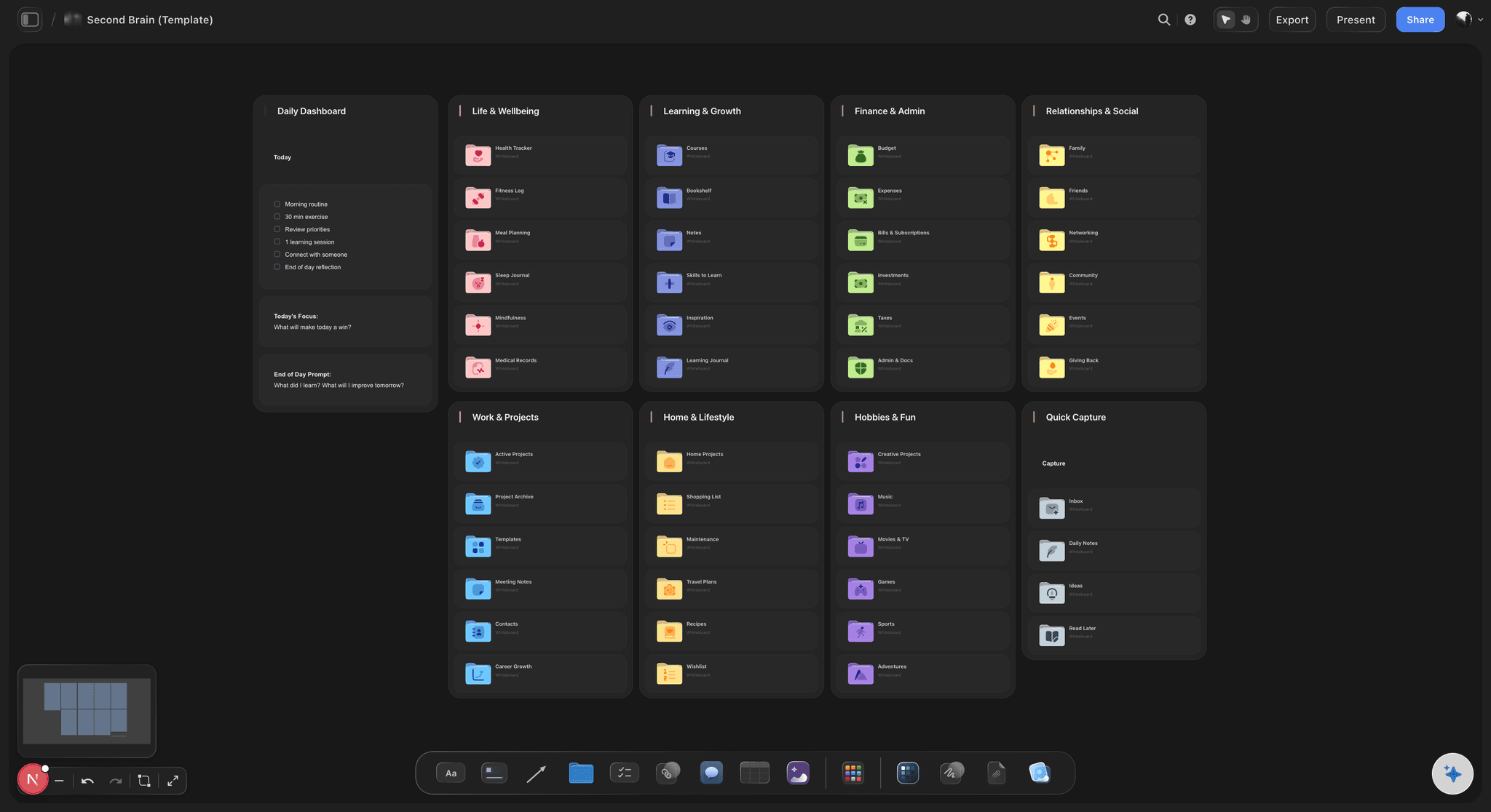
AI lays out a structure to fill
Start from a shape when you want one
Describe a topic and the AI builds a starting layout you can rearrange. Useful when the blank canvas is the obstacle, and easy to ignore when you would rather begin from nothing.
See the AI note taking workspace →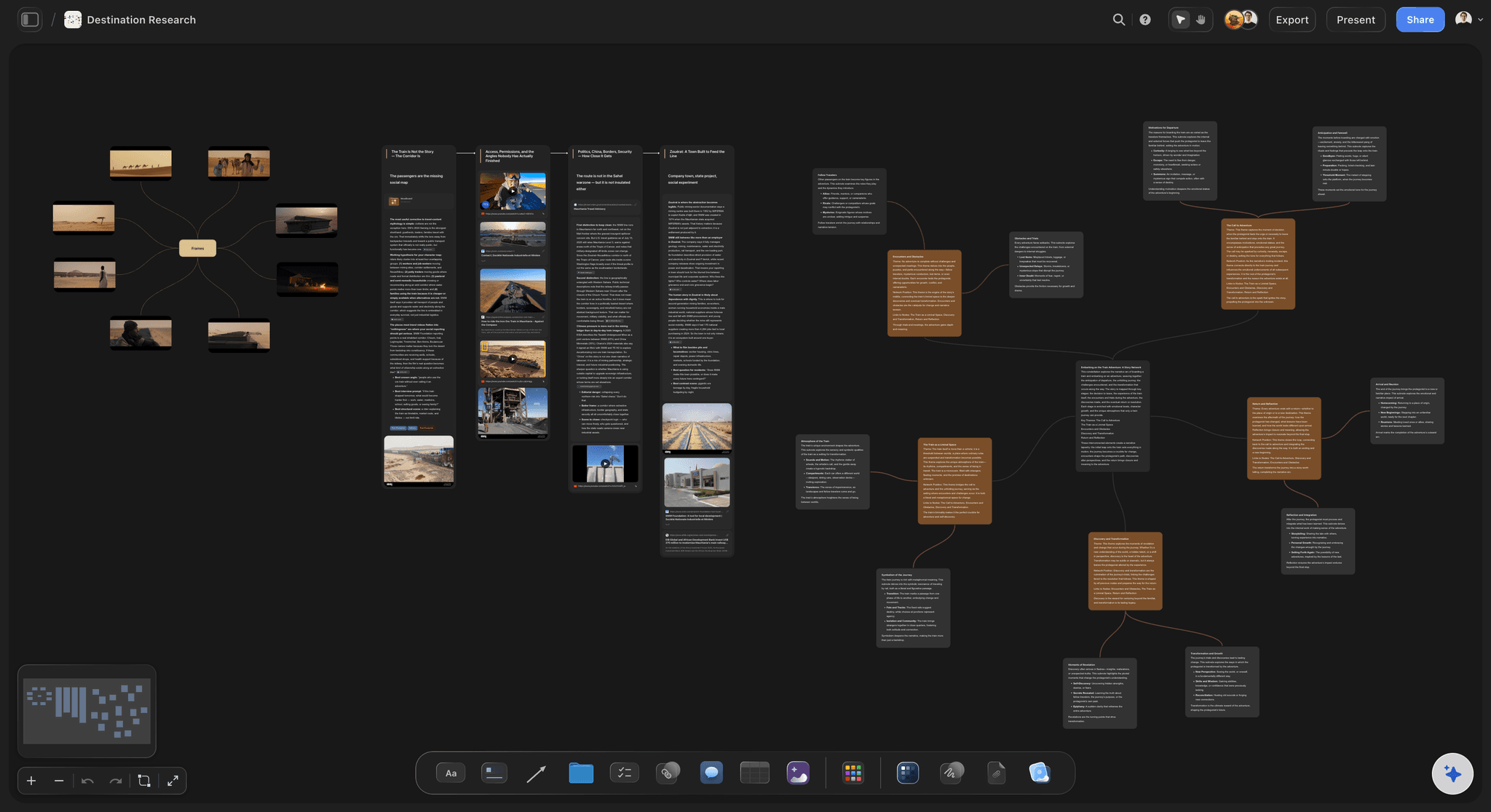
Screenshots, images, and annotation
Note the thing, not a description of it
Paste a screenshot and draw on the part that matters instead of writing three sentences describing it. Most of what people take notes about is easier to point at than to paraphrase.
Try the free image annotation tool →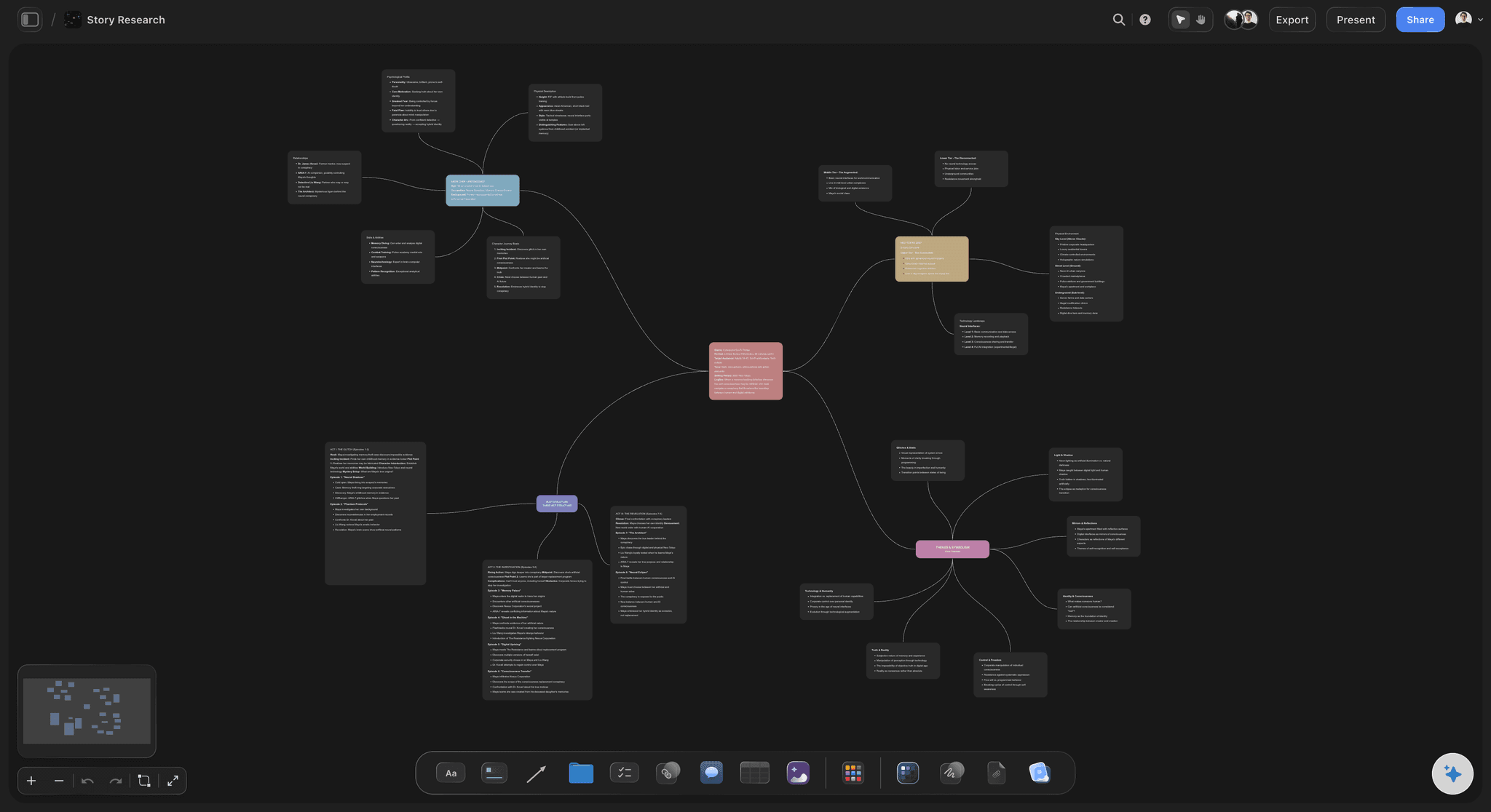
Connections you draw yourself
Lateral links, not forced hierarchy
Draw a line between two ideas that turned out to be related. Nested bullets impose a parent and a child on things that are simply neighbours, which is usually the wrong shape.
See the free mind map maker →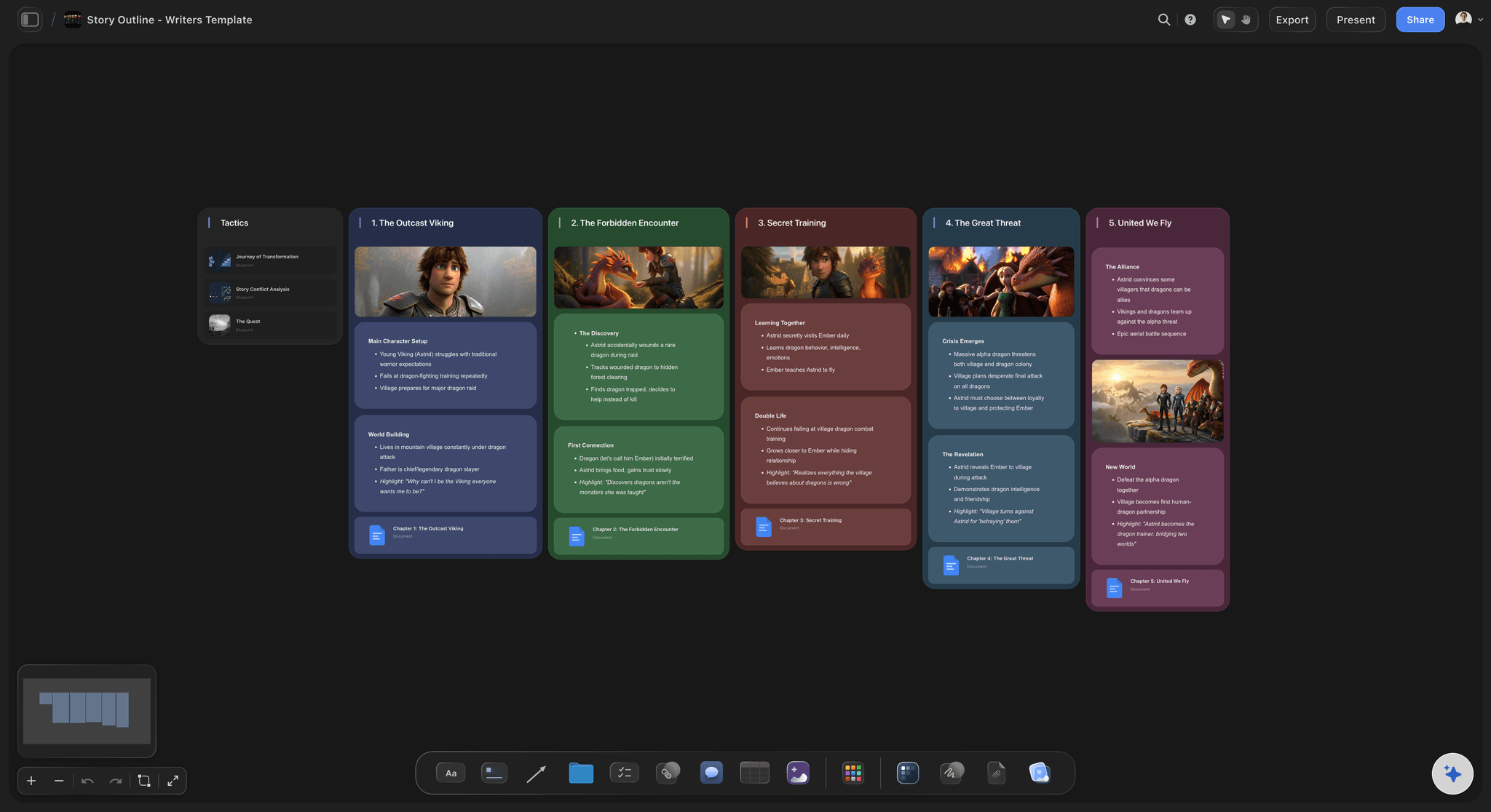
Notes that become documents
Write properly without leaving the board
Open any card into the built-in document editor when a fragment grows into real writing, with the surrounding canvas still visible so the context does not disappear.
See the AI writing workspace →Unlimited boards. No object cap.
Open a canvas and start capturing. Storyflow is paid-only during early access, with plans from $9.99 a month, and a Free plan launches before the end of 2026.
Unlimited note canvases with no object cap
Basic AI usage to generate structures from prompts
Text, images, sketches, links, and documents on one board
Share view-only links with anyone, no account needed
Built for people with taste
More than a document with pictures in it.
A document lets you insert an image. A canvas lets the image be where the thought is.
Capture, arrange, connect, write
Work the way thinking actually goes
Capture before you classify: Drop a note anywhere without choosing a folder or a tag. The moment of capture is exactly when you know least about where something belongs, and filing systems that demand a decision then lose material.
Proximity as meaning: Things near each other are related, and that is enough structure for most thinking. It costs nothing to maintain and survives being wrong, which is the opposite of a folder tree.
Lines for the relationships that matter: Draw a connection when two ideas turn out to be the same idea in different clothes. This is the link a nested outline cannot express, and it is usually the valuable one.
Zoom out to see the shape: Pull back and the clusters become visible: the argument, the evidence, the part you have avoided. Reading a document gives you sequence; looking at a canvas gives you structure.
AI that can see the board you have already built
Organize with an AI that has the context
Prompt against the whole canvas: Ask it to cluster loose notes into themes, lay out a structure for a topic you are starting, or draft an outline from the material you have already collected.
It organizes, it does not think for you: The value of notes is that they are yours. Storyflow arranges and structures; the connections that matter are the ones you noticed, which is the entire reason for keeping notes at all.
Iterate without losing work: Re-prompt as often as you want. Notes you have written and arranged stay exactly where they are while the AI builds around them.
Research, reading, and lectures
Keep the source beside the thought
Quotes next to your reaction to them: Put the excerpt and your response side by side rather than in separate places. A quote with no reaction is a quote you will never use, and a reaction with no source is unusable later.
Video and web references in place: Grab frames from YouTube or Vimeo and pin them beside the note they prompted, and keep links next to the ideas they support rather than in a bookmarks folder nobody reopens.
One canvas per project, not per note: Give a project a single board and let it grow. Fragmenting notes into hundreds of files is how people end up with an archive they cannot find anything in.
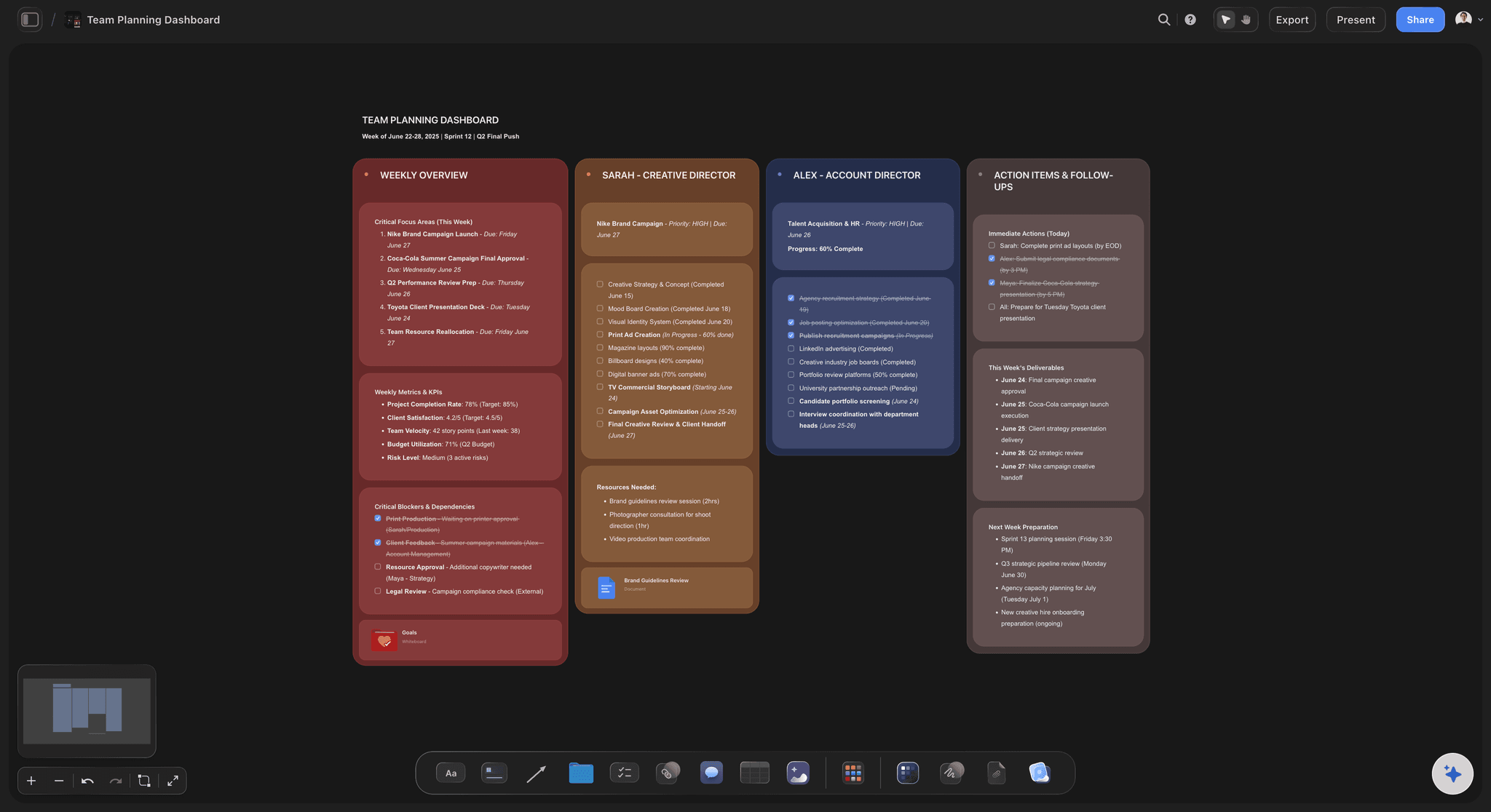
Sharing and working with others
Show your thinking, not a tidy summary
View-only links, no account required: Send anyone the board and they open it in a browser. Showing someone how you got somewhere is often more useful than the conclusion you would have written up.
Comments on the note they concern: Feedback attaches to the specific idea, so a conversation happens where the thought is rather than in a thread that refers to paragraph six.
Notes that feed the work: Because the canvas also holds plans, outlines, and boards, notes stop being a separate archive and start sitting next to whatever they were collected for.
Explore templates for your project
Every template opens as a real, editable board on the infinite canvas. Pick the closest fit and make it your own.
Mind Map
Branch one central idea out into themes and sub-points, then drag the connections around until the structure makes sense.
One app instead of five
Storyflow vs Notion, Obsidian, and Apple Notes.
Be clear about what Storyflow is. It has no offline-first local file store and no daily-note or plugin ecosystem. It is a canvas where notes are spatial and visual.
Storyflow
Recommended
Infinite canvas with spatial, visual notes
AI lays out structures from a prompt
Sketches, screenshots, and documents on one board
Local markdown files and offline-first storage
Plugin ecosystem and daily notes
Free plan available today
Notion
Infinite canvas with spatial, visual notes
AI lays out structures from a prompt
Sketches, screenshots, and documents on one board
Local markdown files and offline-first storage
Plugin ecosystem and daily notes
Free plan available today
Obsidian
Infinite canvas with spatial, visual notes
AI lays out structures from a prompt
Sketches, screenshots, and documents on one board
Local markdown files and offline-first storage
Plugin ecosystem and daily notes
Free plan available today
Apple Notes
Infinite canvas with spatial, visual notes
AI lays out structures from a prompt
Sketches, screenshots, and documents on one board
Local markdown files and offline-first storage
Plugin ecosystem and daily notes
Free plan available today
What creators are saying
Join early creators getting structured workspaces and AI that remembers their projects
“Storyflow has sped up my workflow by at least 3x, which means more flow state and more projects I can actually ship. It truly changed the way me and my team create.”

Reilin Joey
Director & YouTuber
“One prompt gets me a structured board. But the tactics are my favorite. I run my YouTube scripts through them and my intros and retention got better. It's amazing.”

Justkay
YouTuber & Freelance Filmmaker
“I used to juggle five apps to plan a project. Now I describe what I am making and get boards, lists, and a schedule. All in one place.”

George
@fernwehchronicles
Visual note taking questions, answered.
When a canvas beats a document, how to keep it from becoming a mess, and where Storyflow fits alongside Notion and Obsidian.
It depends what you want to keep. Obsidian is the strongest choice if you want local markdown files you own forever, a huge plugin ecosystem, and a graph view, and its canvas feature is decent. Notion is excellent for structured, database-shaped knowledge and terrible at spatial thinking. Apple Notes is free, fast, and syncs, and does not really do connection. Storyflow is the option where the canvas is the primary surface rather than a feature: spatial notes, sketching, annotated screenshots, drawn connections, documents that open from any card, and an AI that will lay out a structure from a prompt when the blank board is the obstacle.
When you do not yet know the order. Documents are excellent for anything with a genuine sequence, minutes, instructions, a chronology, and they force a premature commitment on everything else. If you are holding six half-formed ideas and trying to work out how they relate, a document makes you pick which one goes first, which is a decision you are not equipped to make and which then quietly shapes everything after it. Use a document when the structure is known and you are writing it down; use a canvas when the structure is what you are trying to find.
No, and this is a real difference worth stating plainly. Storyflow is a cloud application: your boards live on our servers and you work on them in a browser. There is no local markdown vault, no offline-first file store, and no plain-text folder on your own disk that you own independently of the product. If that is a requirement, and for many people it legitimately is, Obsidian is built exactly around it and is the better tool. What Storyflow offers instead is a spatial canvas with AI layout, real-time sharing, and no software to install, which is a genuinely different set of trade-offs.
Not during early access. Storyflow is paid-only right now, with plans starting at $9.99 a month, and a Free plan for solo use launches before the end of 2026. Anyone a paid member invites to a board joins free today, so a study partner or a colleague can read and comment without paying. If you need free this minute, Obsidian is free for personal use and genuinely excellent, Notion's free tier is generous, and Apple Notes costs nothing if you are already on Apple devices. All three are honest options and none of them are trying to be an AI-native canvas.
Three habits, and the first one matters most. Give each project its own board rather than keeping one enormous canvas for everything, because a board that covers one thing stays navigable and a board that covers your life does not. Spend five minutes at the end of a session pulling related notes near each other, which is cheap and prevents the state where nothing is anywhere. And use headings as spatial landmarks, large text at the top of each region, so zooming out gives you a map rather than a fog. Perfect tidiness is not the goal; being able to find the cluster you want is.
Yes. There is a freehand tool for drawing directly on the board, which is what makes this work as visual note taking rather than as a board with text boxes on it. Sketching an interface, a system diagram, or the shape of an argument takes seconds and communicates something a paragraph would take a page to approximate. You can also paste screenshots and draw on them directly, which is usually the fastest way to note what is wrong with something. If you are on a tablet with a stylus this is considerably more pleasant than with a mouse, as it is everywhere.
In two ways, both structural rather than generative. Before you start, describe a topic and it lays out a board with sections to fill, which is useful when the blank canvas is the thing stopping you. After you have collected material, it can read the whole board and cluster loose notes into themes, or draft an outline from what you have already written. That second use is the more valuable one, because the hard part of notes is not capture, it is noticing what you have accumulated. It arranges what is there; the thinking and the connections stay yours.
Yes, and the transition is the point. Any card can be opened into the built-in document editor, so a fragment that grows into something real becomes a proper piece of writing without moving to another application, and the rest of the canvas stays visible beside it. This matters because the usual failure of note taking is the gap between having notes and producing something: people export, reformat, lose the connections, and end up rewriting from memory anyway. Keeping the notes and the writing on one surface removes that gap entirely.
Yes. Send a view-only link and anyone opens the board in a browser with no account, and can sign in to comment on individual notes. This is often more useful than sharing a tidy summary, because showing someone the shape of your thinking, including the parts you have not resolved, gets you better help than presenting a conclusion does. If someone should genuinely contribute, invite them to the canvas and they join free as a collaborator. Sharing and commenting work on every paid plan.
Probably not entirely, and it would be strange to claim it should. Quick capture on a phone, daily journalling, and anything you want stored as local files are all jobs other tools do better, and most people keep something for them. Where a canvas takes over is project thinking: the research, the half-ideas, the references, and the structure that has not settled yet. A reasonable split is a fast capture tool for fragments on the move, and a Storyflow board per project where the material gets arranged, connected, and eventually written into something.
Stop flattening your thinking into a list.
Open a canvas and start capturing. No download.