
An ultra-fast canvas that stays calm
A Lucidchart alternative for
thinking, not just diagramming.
Lucidchart is built to draw precise, structured diagrams. Storyflow is a freeform AI visual canvas where a diagram is one thing you make, not the whole point. Sketch a flow, let AI fill the board from a prompt, then turn it into a mind map, storyboard, or plan on the same infinite canvas.


Creatives working for these brands already got early access
- Red Bull
- Canon
- Artlist
- Porsche
See how easy it is to get started
Watch a real project come together, from a blank board to a finished plan, clicked through step by step.
Start from a ready-made template
Pick a board to see what you can build, then let AI fill it in. Every template is a real, editable starting point on the same infinite canvas.

Mind Map
Branch one central idea out into themes and sub-points, then drag the connections around until the structure makes sense.
What is a good Lucidchart alternative, and when should you switch?
Lucidchart is genuinely excellent at what it is built for: formal, engineering-grade diagramming. It has deep shape libraries for flowcharts, org charts, entity-relationship diagrams, network diagrams, and UML, precise connectors that snap and stay tidy, and the ability to link diagrams to live data so a chart reflects a real dataset. If your job is to produce an accurate, standards-based technical diagram that a team will read as documentation, Lucidchart does that job very well, and this page is not going to pretend otherwise.
Storyflow is a different kind of tool. It is a freeform AI visual canvas for thinking, planning, and creative work, where a diagram is just one of many things you might lay out. Instead of picking a shape stencil and wiring up a formal schema, you describe what you are working on in the AI chat and a full board of cards appears on the canvas for you to arrange. Every node is a real card you drag, recolor, edit, and group, so the board bends to how you think rather than snapping to a diagramming standard.
The reason to switch is scope, not diagram precision. In Lucidchart the diagram is usually the deliverable. In Storyflow the board does not have to stay a diagram: turn a flow into a mind map, a moodboard into a storyboard, or a rough map into a launch plan or content calendar on the same infinite canvas. You can attach images, PDFs, video, and links to any node, grab frames straight from YouTube and Vimeo, and share a view-only link with no account needed. For visual thinking, AI-assisted layout, and creative workflows, that range is the point. For a formal ERD or network diagram, Lucidchart is still the better choice.
Ultra fast from brief to board
From a blank stencil to a filled canvas in four steps.
You bring the idea. The AI lays out the first board, so you start by arranging instead of drawing every shape.
01
Open a canvas
Start in the browser. Nothing to install, just an infinite canvas ready for your first idea.
02
Describe what you are mapping
One sentence is enough: a project plan for a launch, a mind map of a strategy, a flow for an onboarding, a storyboard for a video.
03
AI fills the board
The AI lays out cards on the canvas, grouped and labeled, reading your current board as context. You get a real starting layout instead of an empty diagram grid.
04
Arrange, add media, turn into plans
Drag and recolor cards, drop in images and PDFs, grab frames from video, then turn the board into a plan or storyboard, share a view-only link, or export as image or PDF.
A canvas for thinking, where a diagram is just the start.
Keep the freedom to lay ideas out visually. Skip the formal stencil workflow when the goal is thinking and planning, not documentation.
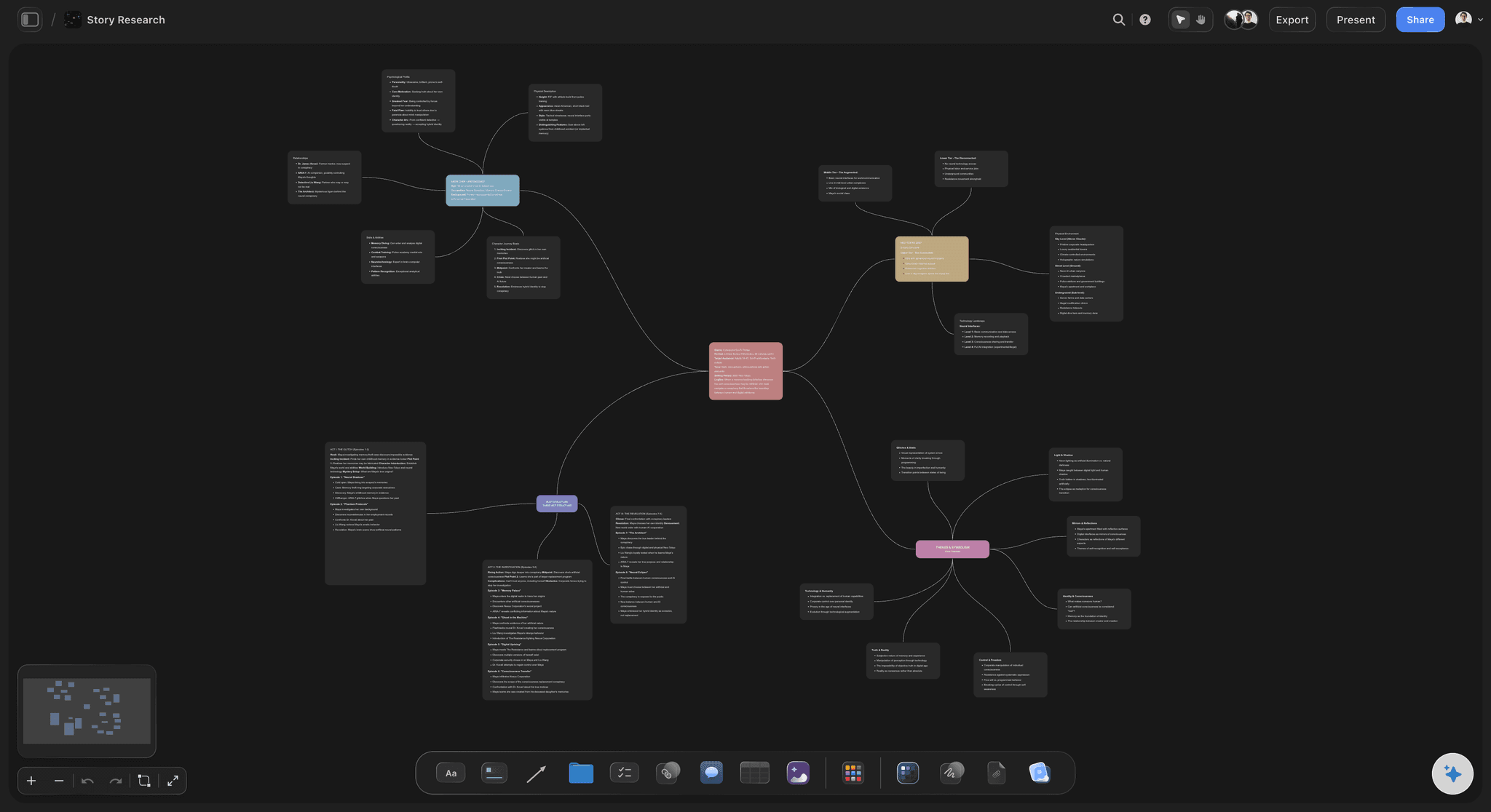
A full board from a single prompt
The AI fills the board, you arrange
A Lucidchart diagram starts as an empty grid you populate shape by shape. Describe your project and Storyflow's AI lays out a board of labeled cards to arrange from, so you begin with structure on the canvas instead of a blank page.
See the AI whiteboard →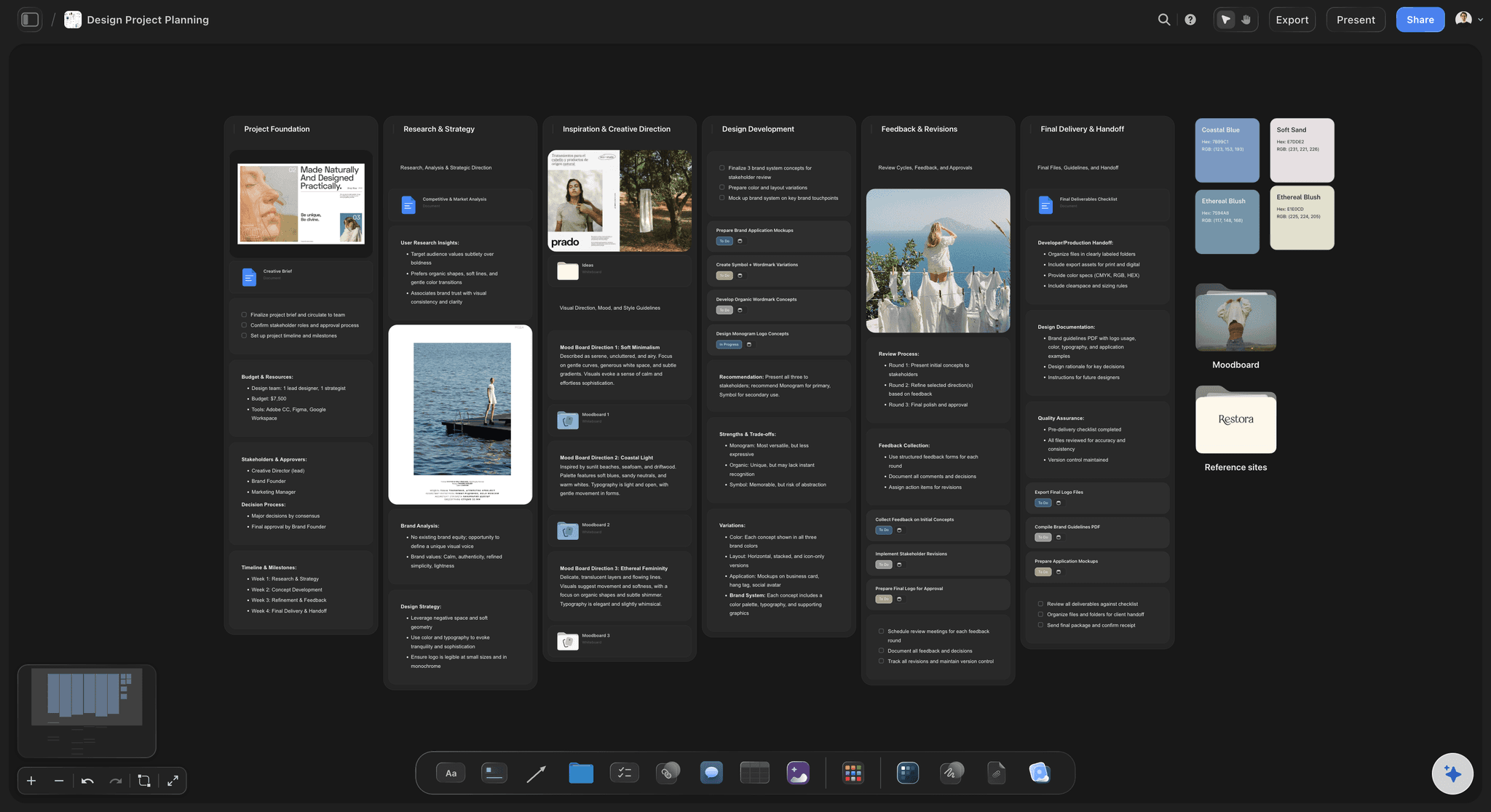
Nodes are real, editable cards
A freeform canvas, not a fixed diagram
Every card is something you drag, recolor, resize, and group without fighting a connector schema. The board matches how you think, so reshaping a plan is a move, not a redraw of a structured diagram.
See the infinite canvas →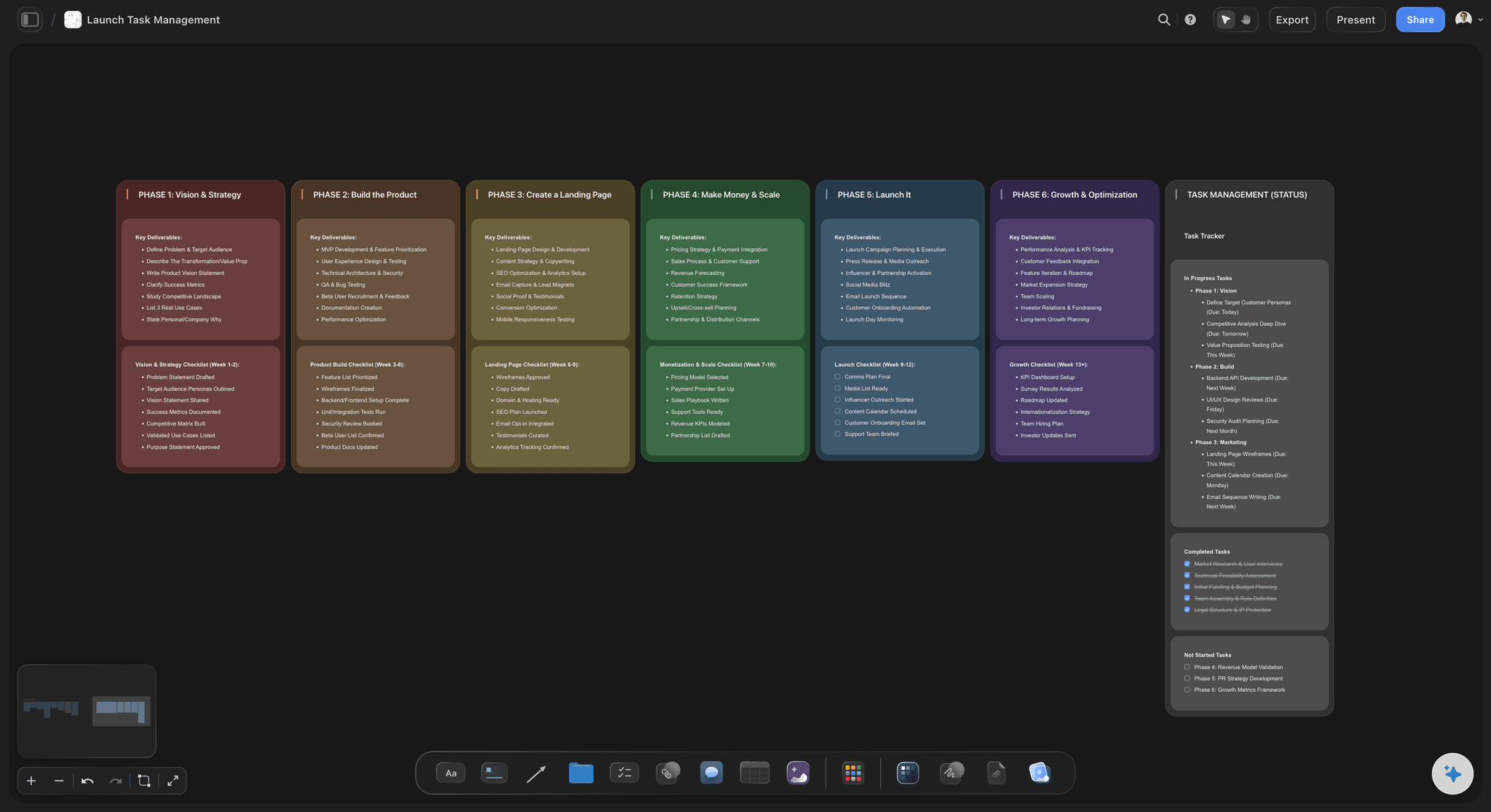
Frames and media, onto the board
Grab stills from YouTube and Vimeo
A thinking board often needs visual references, not just boxes and arrows. Paste a YouTube or Vimeo link and grab frames straight onto the canvas, and attach images, PDFs, and links beside the cards they support.
See the mind mapping tool →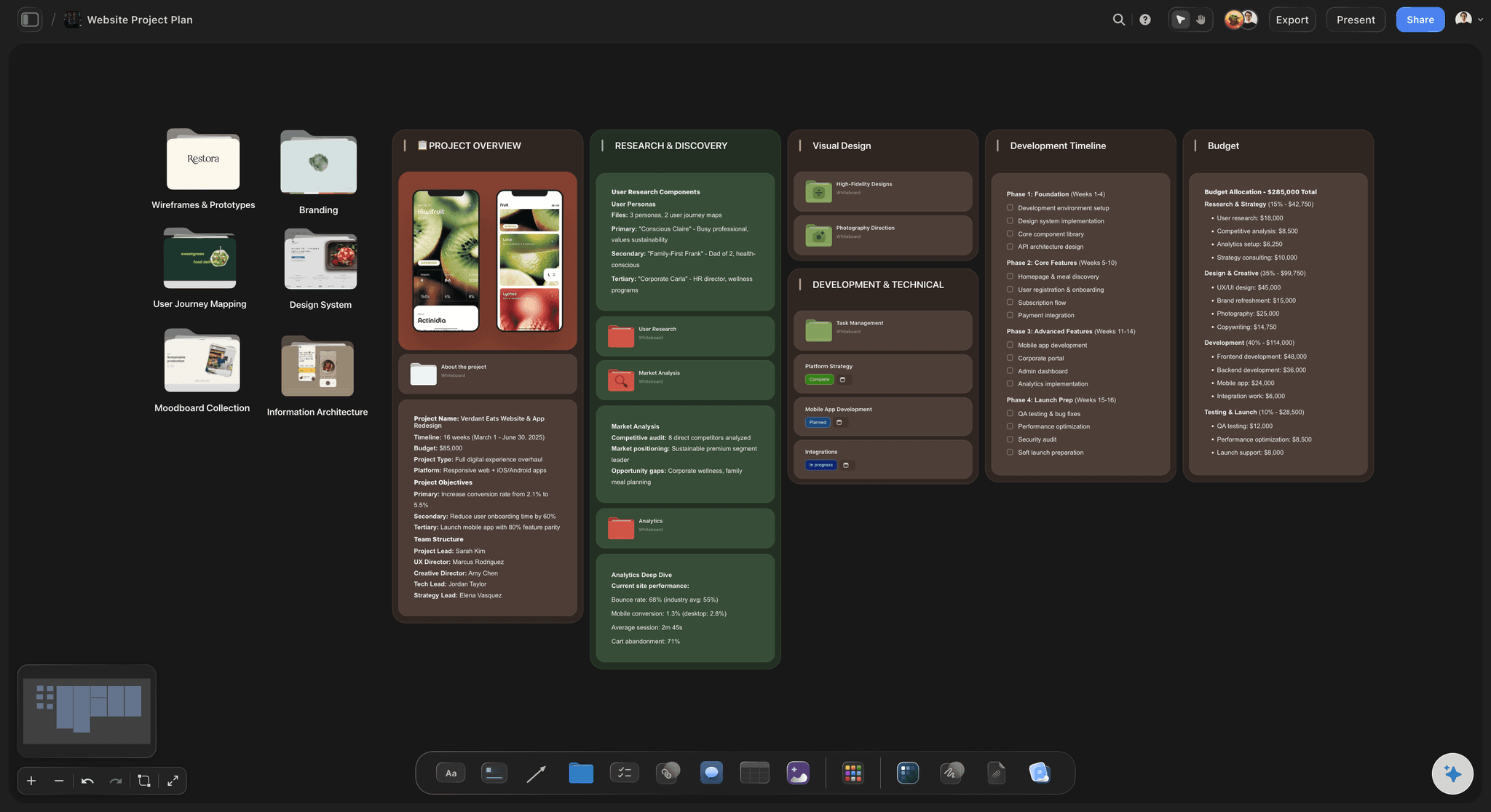
The board becomes the project
From diagram to plan and storyboard
In Lucidchart the diagram is the deliverable. In Storyflow the board is step one: ask the AI to turn a flow or mind map into a project plan, a content calendar, or a storyboard on the same canvas the diagram lives on.
See the diagram maker →No object cap, on any plan.
Open a canvas and start laying ideas out. There's no object cap and no time limit, so a real board never pushes you to upgrade mid-thought. A Free plan is launching before the end of 2026; until then, plans start at $7.99 a month billed annually.
Unlimited boards on an infinite canvas, no object cap
Basic AI usage to fill and expand boards from a prompt
Attach images, PDFs, video, and links, plus 20 file uploads
Share boards view-only, or invite collaborators free
Built for people with taste
Made for the way people plan and think out loud.
Lay ideas out in space, keep everything visible, and move from a rough map to a real plan without changing tools.
Cards you arrange, the AI proposes
A visual board you fully control
Cards, notes, and connections: Lay out boxes, notes, and links as cards you drag, recolor, resize, and group, without wiring up a formal connector schema first.
AI lays out the first pass: Instead of a blank diagram grid, the AI proposes a full layout from your prompt. Keep what fits, delete the rest, add your own.
Arrange without limits: No object cap on any plan means a sprawling map, plan, or brainstorm keeps every card, instead of being trimmed to fit a page.
Context from the board you are working on
AI that builds on what is already there
Reads your active board: The AI uses what is on the board you have open, so new cards match the direction you have already set on the canvas.
Attach your sources: Add up to five documents and three boards as context: a brief, a spec, or research the board should grow from.
Re-prompt to refine: Ask for more detail on one area, a tighter layout, or a different angle. The AI reworks the board while keeping your edits.
More than boxes and arrows
Media-rich cards beside every idea
Drop in anything: Images, video, GIFs, PDFs, and links sit on the canvas next to the cards they support, so a plan carries its references instead of pointing away to them.
Frame grabs from video: Capture stills from YouTube and Vimeo straight onto the board when a reference clip explains an idea better than a shape.
Notes where you need them: Longer thinking lives as documents on the same canvas, so the board stays scannable and the detail stays one click away.
The board is step one, not the deliverable
From rough map to finished plan
Turn boards into real work: Ask the AI to convert a flow or mind map into a project plan, a content calendar, or a storyboard on the same canvas, with the ideas carried over.
Share the board: Invite collaborators free, or send a view-only link so a client or teammate can explore the board without an account.
Export as image or PDF: Need the board in a deck or a doc? Export it as a clean image or PDF in one step.
Explore templates for your project
Every template opens as a real, editable board on the infinite canvas. Pick the closest fit and make it your own.
Mind Map
Branch one central idea out into themes and sub-points, then drag the connections around until the structure makes sense.
One app instead of five
Storyflow vs Lucidchart, Miro, and Whimsical.
Each tool is strong at something. The question is whether you want precise diagrams, or a freeform canvas that fills itself and turns into the next step.
Storyflow
Recommended
An AI that fills the board from a prompt
A freeform canvas where boards become plans
Precise diagrams with rich shape libraries
A free plan with no object cap
Lucidchart
An AI that fills the board from a prompt
A freeform canvas where boards become plans
Precise diagrams with rich shape libraries
A free plan with no object cap
Miro
An AI that fills the board from a prompt
A freeform canvas where boards become plans
Precise diagrams with rich shape libraries
A free plan with no object cap
Whimsical
An AI that fills the board from a prompt
A freeform canvas where boards become plans
Precise diagrams with rich shape libraries
A free plan with no object cap
What creators are saying
Join early creators getting structured workspaces and AI that remembers their projects
“Storyflow has sped up my workflow by at least 3x, which means more flow state and more projects I can actually ship. It truly changed the way me and my team create.”

Reilin Joey
Director & YouTuber
“One prompt gets me a structured board. But the tactics are my favorite. I run my YouTube scripts through them and my intros and retention got better. It's amazing.”

Justkay
YouTuber & Freelance Filmmaker
“I used to juggle five apps to plan a project. Now I describe what I am making and get boards, lists, and a schedule. All in one place.”

George
@fernwehchronicles
Lucidchart alternative questions, answered.
Everything people ask when comparing Storyflow with Lucidchart.
It depends on what you need. If you need formal, precise diagrams with deep shape libraries and data linking, Lucidchart is hard to beat and you should stay with it. If you want a freeform visual canvas for thinking, planning, and creative work, where an AI fills the board from a prompt and a diagram turns into a mind map, storyboard, or plan, Storyflow is a strong fit. It is a different tool for a different job.
Lucidchart is built for structured diagramming: you pick shapes from stencils, wire up precise connectors, and often link the diagram to live data, and the diagram is the deliverable. Storyflow is a freeform AI canvas where every node is an editable card, the AI can lay out the first board from a prompt, and the board does not have to stay a diagram. You can turn it into a plan, a storyboard, or a content calendar on the same infinite canvas.
Not during early access. Storyflow's Free plan launches before the end of 2026 with no object cap and no time limit, basic AI usage to fill and expand boards, unlimited boards on an infinite canvas, 20 file uploads, view-only sharing, and unlimited collaborators. Right now, plans start at $7.99 a month billed annually, and anyone a paid member invites to a board joins free.
Be honest about the fit: if you need engineering-grade diagrams, flowcharts, org charts, entity-relationship diagrams, network diagrams, or UML with rich shape libraries and precise, standards-based connectors, or you need to link a diagram to a live dataset, Lucidchart is the better tool and Storyflow is not trying to replace it there. Storyflow wins when the goal is visual thinking, AI-assisted layout, and creative workflows rather than formal documentation.
Yes, freeform ones. You can lay out a flowchart or diagram as cards on the canvas, connect and group them, and even ask the AI to draft the first version from a prompt. It is great for thinking through a flow or explaining an idea. It is not built to replace Lucidchart's precise, stencil-based, data-linked technical diagrams, so for those, use Lucidchart.
Yes, and that is a core reason to switch. Ask the AI to turn a flow or mind map into a project plan, a content calendar, or a storyboard, and it builds the new board on the same canvas using what you already laid out. In Lucidchart the diagram is usually the end product, while in Storyflow it is the first step toward the finished work.
Yes. The AI reads your active board, so cards and notes already on the canvas shape what it generates. You can also attach up to five documents and three boards, such as a brief or a spec, for the AI to build from. It works from the board you have open, not from all your boards at once.
Yes. Share a view-only link so anyone can explore the full board in their browser without an account, invite collaborators to build it with you, or export the board as a high-quality image or PDF for decks and documents.
Keep the visual thinking. Skip the formal stencil.
Describe your idea, watch the board lay itself out, and turn it into a plan on an infinite canvas with no object cap.