
FOR INSTRUCTIONAL DESIGNERS
The design work happens
before you open Storyline.
Needs analysis, objectives, sequencing, storyboards, assessment, and the pilot loop on one canvas, so the decisions are made and agreed before a single slide gets built. Storyflow is paid-only during early access, with plans from $9.99 a month, and a Free plan launches before the end of 2026.
Plans from $9.99/mo
Free plan coming late 2026
Works in your browser

Used by creative professionals at:
Artlist
Pixar
Nike
Red Bull
The North Face
Porsche
Start from a ready-made template
Pick a board to see what you can build, then let AI fill it in. Every template is a real, editable starting point on the same infinite canvas.
Mind Map
Branch one central idea out into themes and sub-points, then drag the connections around until the structure makes sense.
What instructional design actually involves
Instructional design is the practice of working out what people need to be able to do, then designing the experience, practice, and assessment that gets them there and proves it worked. It is a design discipline, not a content production job. The output that matters is not a deck or a module, it is a measurable change in what someone can do at work on Tuesday. That distinction is the whole profession, and it is the thing that gets lost the moment a project is described as making a course.
The failure case is familiar to everyone who has done this job. A subject matter expert sends a 90 slide deck and asks you to make it into a course. The deck is everything they know, ordered the way they learned it, and it answers no question about what the learner needs to do differently. Turning it into a course means narrating 90 slides and appending a ten question quiz, and everyone involved can feel that it will not work. The actual job at that moment is to politely refuse the request as stated, and to ask instead what a person should be able to do after this that they cannot do now, and how anyone would know. That conversation is uncomfortable, it takes about forty minutes, and it is the highest value work in the entire project.
Needs analysis is where that conversation gets structured, and it frequently ends with the finding that training will not fix the problem. If people already know what to do and are not doing it, the cause is usually process, tooling, incentives, workload, or a manager who rewards the opposite behaviour. Building a course against a non training problem produces a course that gets completed and changes nothing, and it is the single most common way instructional design budget disappears. A designer who can say plainly that the requested training is not the intervention, and show the analysis that led there, is worth more than one who ships faster. Storyflow is where that analysis lives as something visible you can hand to a stakeholder, not as a memo they will not read.
A full instructional design project runs through six connected phases: needs and audience analysis (the performance gap, the real cause, the learners and their context, and whether training is the right intervention at all), learning objectives (written as observable and measurable behaviours with conditions and criteria, using Bloom's taxonomy to pick a verb that matches the level of thinking actually required), design and sequencing (module structure, chunking against cognitive load, the practice to content ratio, and where the difficulty steps up), storyboarding (every screen, interaction, on screen text, narration, and branching mapped before anyone opens an authoring tool), assessment design (checks that measure the objective rather than recall of the narration, aligned so nothing is assessed that was not practised), and evaluation and revision (piloting with real learners, watching where they stall, and running Kirkpatrick's levels far enough to say something about behaviour rather than smile sheets). Storyflow holds all six on one canvas, which is why a sequencing problem is visible in week one rather than in the pilot.
HOW IT WORKS
From a vague training request to a design you can defend.
Start with the performance problem, end with a storyboard that is ready to build.
01
Open a canvas
Sign up in seconds, from $9.99 a month. No download. Your infinite planning canvas opens in the browser, ready for the intake conversation.
02
Run the analysis in the open
Put the requested training, the actual performance gap, the audience, and the constraints on the board as cards. Draw the line from symptom to suspected cause. If the cause turns out to be process or incentives, that conclusion is now visible rather than buried in your notes.
03
Write objectives, then design backwards from them
Turn the gap into observable objectives with conditions and criteria. Place them across the top of the canvas and build the module sequence, the practice, and the assessment beneath each one, so every piece of content traces to something a learner must be able to do.
04
Storyboard, review, and hand off
Lay out every screen with its interaction, on screen text, and narration. Share a view-only link so the SME and the sponsor can review before development. Then export the board, or build in Storyline, Rise, or Captivate from an approved design.
The whole design, visible before development starts.
Analysis, objectives, sequence, storyboard, and assessment on one canvas instead of five documents in three folders.
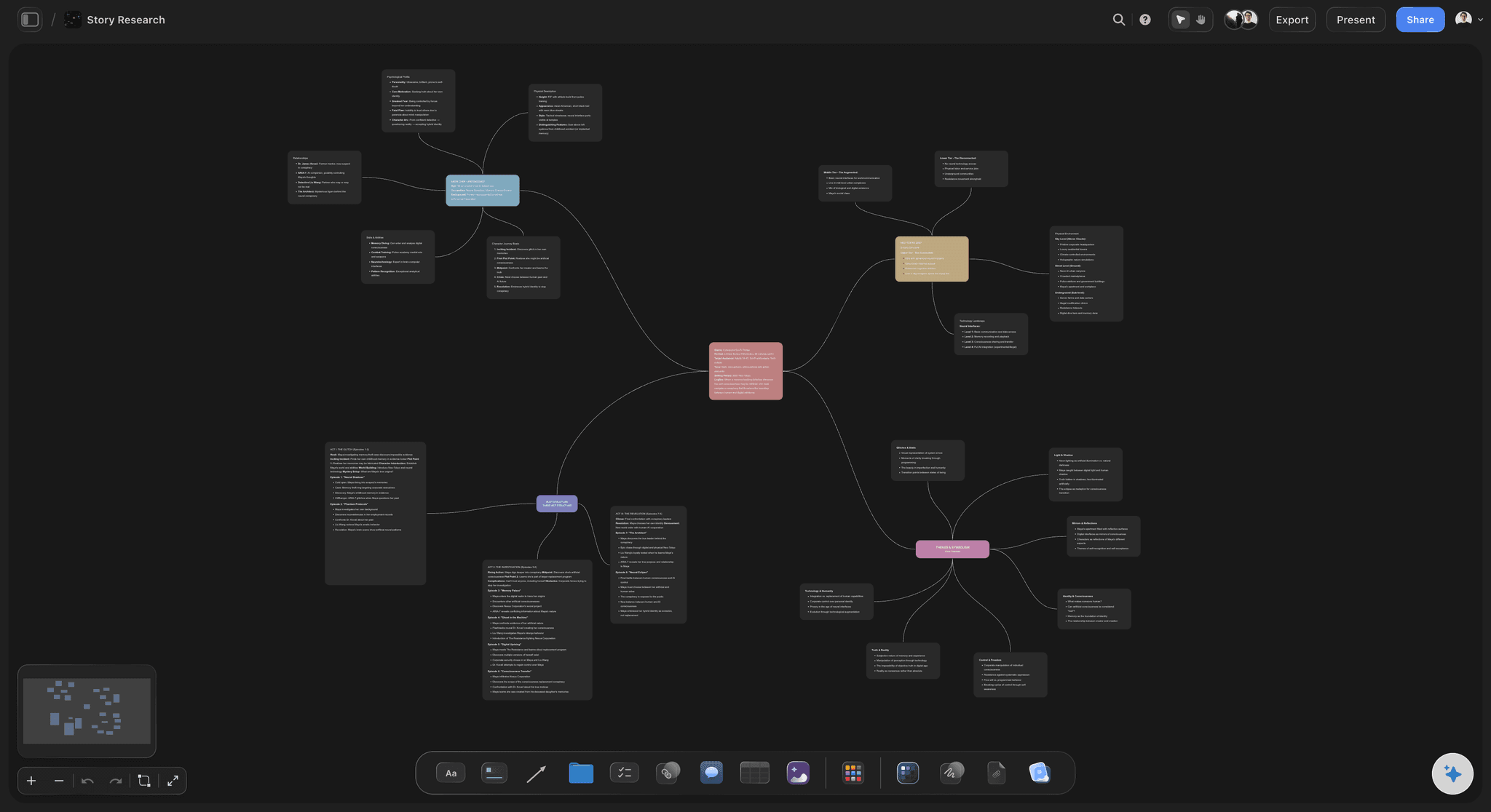
Performance gap, causes, and audience mapped as connected cards
Make the needs analysis something people can see
Put the requested training next to the actual gap, then draw the suspected causes underneath. When the arrows lead to a broken approval process rather than a knowledge gap, you have a picture a sponsor can argue with, which works far better than a memo saying training will not fix this.
Explore the mind mapping tool →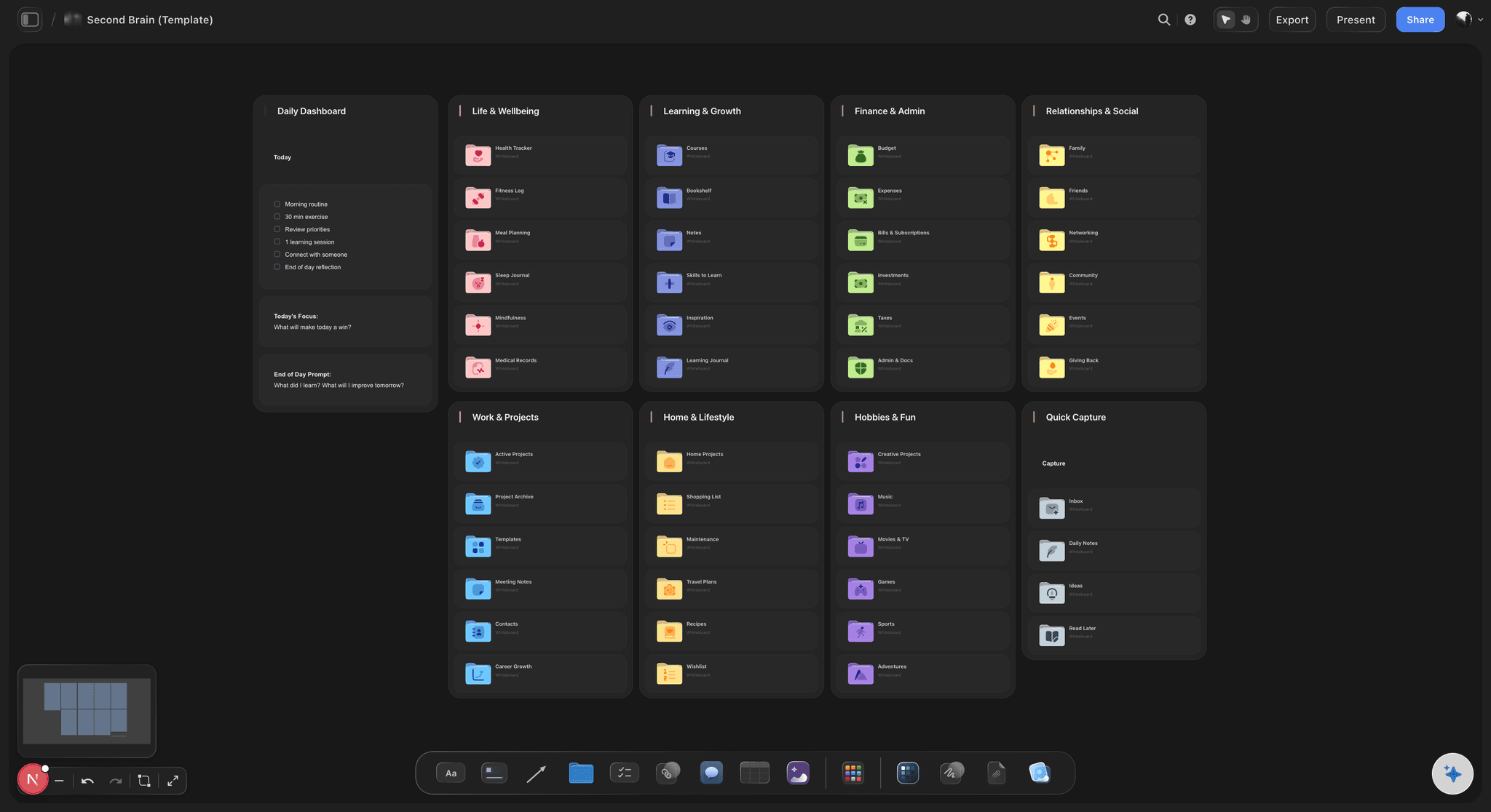
Objectives across the top, everything else traced back to them
Design backwards from observable objectives
Write each objective as a behaviour with a condition and a criterion, then build the content, the practice, and the assessment underneath it. Content that traces to no objective and objectives nothing practises both become visible as gaps in the layout rather than problems found in the pilot.
Generate a course outline →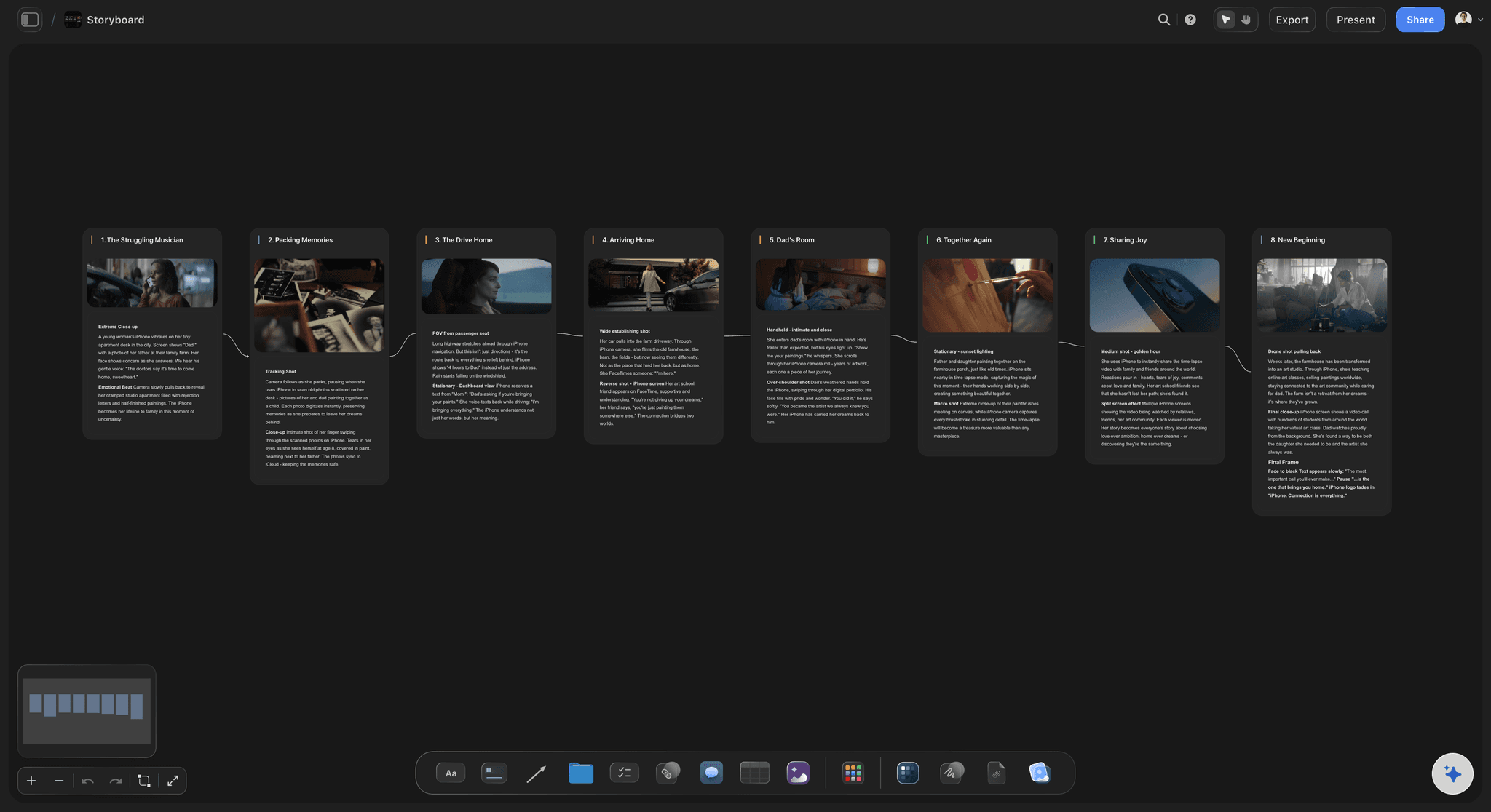
Screen by screen, with interaction and narration on every panel
Storyboard the module before anyone builds it
Lay out each screen as a panel with its visual, on screen text, narration, interaction, and branching. A storyboard review costs an afternoon. Rebuilding a published module after the sponsor sees it for the first time costs a fortnight, and it is the same conversation either way.
See the storyboard maker →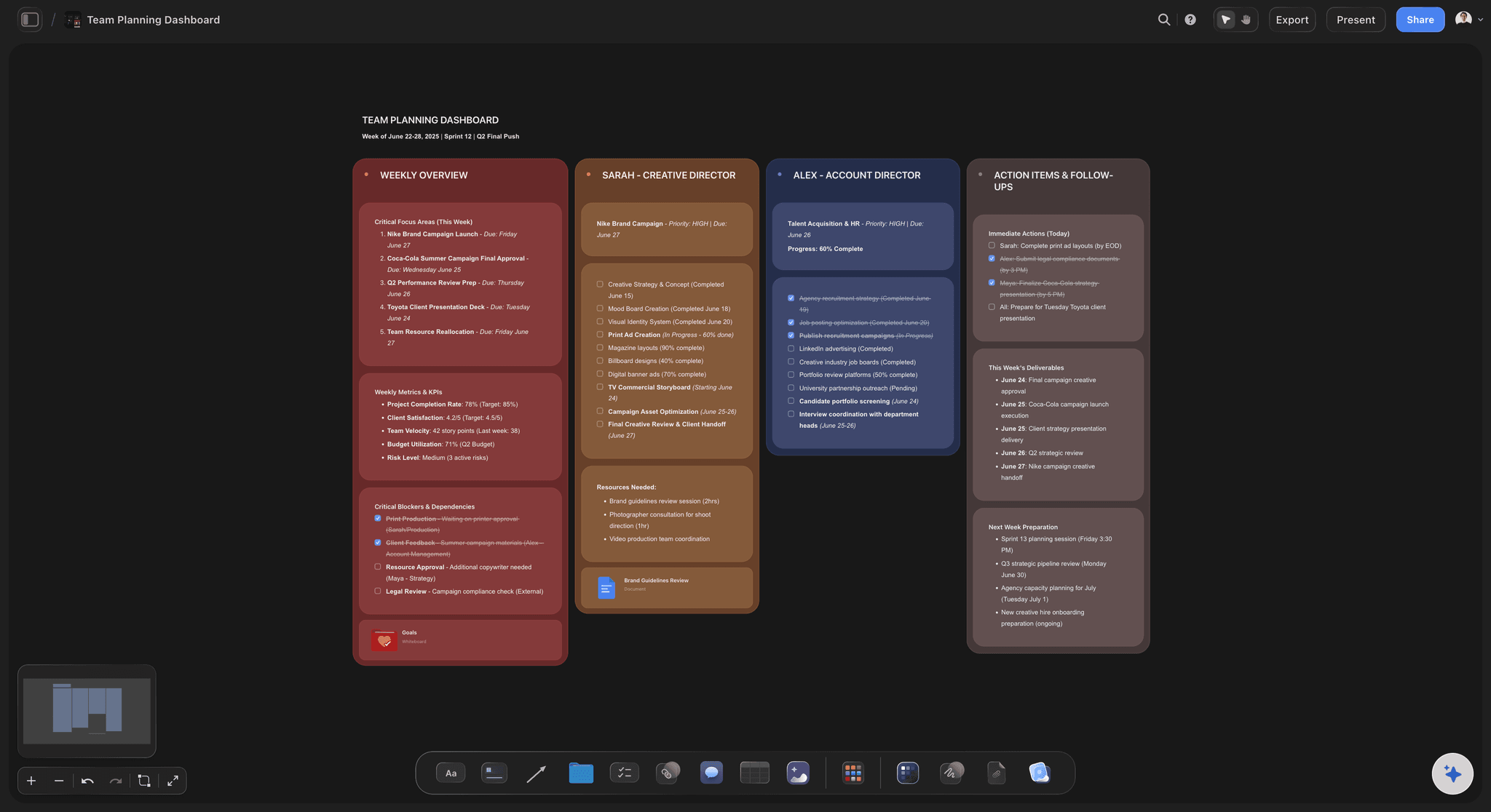
Pilot findings pinned next to the screens that caused them
Close the loop with pilot notes on the design
Run the pilot, then pin what you observed to the exact screen or activity where learners stalled. The revision list stops being a spreadsheet of comments detached from the design and becomes a set of notes sitting on the thing that needs to change.
See the team planning board →Unlimited boards. No object cap.
Open a canvas, run the analysis, and design the course. Storyflow is paid-only during early access, with plans from $9.99 a month, and a Free plan launches before the end of 2026. Anyone a paid member invites joins free today, which is how an SME or a sponsor reviews a storyboard without buying a seat.
Unlimited course design and storyboard boards
Basic AI usage to draft objectives and module sequences
3 starter frameworks built in
Share view-only links with SMEs and sponsors
BUILT FOR THE DESIGN PHASE
The part of the job that is not authoring.
Storyline builds the module. Storyflow is where you decide what the module should be, and prove it should exist.
Analysis, and the courage to say training is not the fix
Start with the performance problem, not the deck
Separate the requested training from the actual gap: Put the request on one card and the observed performance problem on another, then look at the distance between them. Most intake conversations arrive as a solution already chosen, and the first useful act of design is to reopen the question of what problem is being solved.
Map the causes before you accept the brief: Draw the suspected causes under the gap: knowledge, skill, process, tooling, incentives, workload, feedback, or a manager rewarding the opposite. Only the first two are training problems. When the arrows land somewhere else, you have the evidence for a conversation that saves the budget.
Profile the learners and their real conditions: Prior knowledge, job context, how much uninterrupted time they genuinely have, what device they are on, and what happens if they get it wrong at work. A module designed for forty focused minutes fails when the audience gets seven minutes between calls, and that constraint belongs on the board early.
Write the finding down where the sponsor can see it: A needs analysis that lives in your head is a hunch. The same analysis on a shared canvas, with the causes drawn, is a design argument. Share a view-only link and let the sponsor follow the reasoning rather than take your word for the conclusion.
Observable verbs, conditions, criteria, and alignment
Objectives that can actually be assessed
Use a verb you can observe: Understand, know, be aware of, and appreciate cannot be seen and therefore cannot be measured. Identify, classify, calculate, troubleshoot, and demonstrate can. Bloom's taxonomy is useful here as a verb ladder: pick the level of thinking the job actually requires rather than defaulting to recall because recall is easy to quiz.
Add the condition and the criterion: A complete objective says what the learner will do, under what conditions, and to what standard. Given a customer complaint and the refund policy, decide whether a refund applies, correctly in eight of ten cases. That sentence tells you what to teach, what to practise, and what the assessment must look like.
Align objectives, practice, and assessment as a single row: Put each objective at the top of a column with its practice and its assessment beneath it. Misalignment is the most common design defect in corporate e-learning: a module that teaches judgement and assesses recall of the policy text. On a canvas the mismatch is visible in the layout.
Cut the objectives that serve nobody: Every objective costs learner time. If nothing changes at work when it is met, it is content that survived because someone senior likes it. Marking those on the board makes the scope conversation a shared one instead of a private compromise.
Chunking, cognitive load, and practice over passive content
Sequence for a working memory that has limits
Chunk against cognitive load, not against slide count: Working memory holds very little at once. Intrinsic load comes from the difficulty of the material, extraneous load comes from how you present it, and only the second is under your control. Splitting a dense module into shorter segments with a practice point in each one reduces the load that comes from your design.
Design practice first and content second: The reliable finding in the field is that retrieval beats review. A learner who attempts a scenario and gets feedback remembers more than one who watched a better explanation. Sketch the practice activities before the content, then add only the content the practice requires.
Step the difficulty on purpose: Worked examples early, partially completed problems next, independent practice last. Dropping learners into an unscaffolded scenario in module one produces failure that teaches nothing. On the canvas you can see whether the difficulty curve exists or whether everything is flat.
Decide what the module deliberately excludes: Scope creep in e-learning arrives as one more thing they should probably know. Writing the exclusions on the board turns each addition into a visible trade against learner time rather than a silent extension of the runtime.
AI that reads the whole design, not one prompt at a time
Draft and stress-test with AI that sees the board
Turn a rough gap statement into draft objectives: Describe the performance problem and the audience and the AI proposes observable objectives with conditions and criteria. They will need editing, and editing a draft is a great deal faster than facing an empty objectives document at the start of a project.
Ask it to find the alignment holes: Because the AI has the entire canvas as context, you can ask which objectives have no practice, which assessment items test something never taught, and where a module is content heavy with no retrieval. Those are exactly the defects a pilot would surface three weeks later.
Reshape the sequence without rebuilding it: Move a module and its storyboard panels, notes, and assessment move with it. Trying a different structure costs a drag rather than a rewrite, which is what makes it realistic to test two sequences instead of defending the first one.
Explore templates for your project
Every template opens as a real, editable board on the infinite canvas. Pick the closest fit and make it your own.
Mind Map
Branch one central idea out into themes and sub-points, then drag the connections around until the structure makes sense.
HOW WE COMPARE
Storyflow vs Articulate, Miro, and Notion.
Storyflow covers the design phase. Articulate owns authoring and publishing, and we are not pretending otherwise.
Storyflow
Recommended
Whole course design visible on one infinite canvas
AI drafts objectives and sequence using the whole board as context
Storyboard panels beside the analysis and objectives
Builds and publishes SCORM or xAPI e-learning
Tracks learner completion and scores
Structured course database with properties and filters
Articulate
Whole course design visible on one infinite canvas
AI drafts objectives and sequence using the whole board as context
Storyboard panels beside the analysis and objectives
Builds and publishes SCORM or xAPI e-learning
Tracks learner completion and scores
Structured course database with properties and filters
Miro
Whole course design visible on one infinite canvas
AI drafts objectives and sequence using the whole board as context
Storyboard panels beside the analysis and objectives
Builds and publishes SCORM or xAPI e-learning
Tracks learner completion and scores
Structured course database with properties and filters
Notion
Whole course design visible on one infinite canvas
AI drafts objectives and sequence using the whole board as context
Storyboard panels beside the analysis and objectives
Builds and publishes SCORM or xAPI e-learning
Tracks learner completion and scores
Structured course database with properties and filters
What creators are saying
Join early creators getting structured workspaces and AI that remembers their projects
“Storyflow has sped up my workflow by at least 3x, which means more flow state and more projects I can actually ship. It truly changed the way me and my team create.”

Reilin Joey
Director & YouTuber
“One prompt gets me a structured board. But the tactics are my favorite. I run my YouTube scripts through them and my intros and retention got better. It's amazing.”

Justkay
YouTuber & Freelance Filmmaker
“I used to juggle five apps to plan a project. Now I describe what I am making and get boards, lists, and a schedule. All in one place.”

George
@fernwehchronicles
Instructional design questions, answered.
The models, the vocabulary, and what Storyflow honestly does and does not do.
Instructional design is the practice of analysing what people need to be able to do, then designing the learning experience, the practice, and the assessment that gets them there and demonstrates it worked. It is a design discipline rather than a content production role. The deliverable that matters is a measurable change in performance, not a module. In practice the work spans needs analysis, writing learning objectives, sequencing and chunking material, storyboarding, designing assessment that matches the objectives, and evaluating and revising after a pilot. The production tools come at the end of that chain, not the start.
Design the course before you build it.
Open a canvas, run the analysis, write the objectives, and storyboard the module. Plans from $9.99/month, no download, and a Free plan is coming before the end of 2026.