
DOCUMENTARY RESEARCH TOOL
Documentary research is two jobs
at once. Hold both on one board.
You are establishing what is true and finding the story inside it, and those two jobs pull against each other. Put the chronology, the contributors, the archive, the records, and the emerging structure on one canvas so you can see them fight. Storyflow is paid-only during early access, with plans from $9.99 a month, and a Free plan launches before the end of 2026.
Plans from $9.99/mo
Free plan coming late 2026
Works in your browser

Used by creative professionals at:
Artlist
Pixar
Nike
Red Bull
The North Face
Porsche
Start from a ready-made template
Pick a board to see what you can build, then let AI fill it in. Every template is a real, editable starting point on the same infinite canvas.

Mind Map
Branch one central idea out into themes and sub-points, then drag the connections around until the structure makes sense.
What is documentary research?
Documentary research is the work of establishing what actually happened and, at the same time, finding the story that can be told about it on screen. It is journalism and story development running in parallel, on the same material, usually by the same person. One half of the job asks whether a claim can be stood behind, who says so, and what the record shows. The other half asks whether a sequence will hold an audience, who can carry it, and where the film turns. Both halves are legitimate, and they pull against each other constantly, because the most cinematic version of an event is rarely the most defensible one.
That tension is the whole craft, and it is why documentary research does not feel like research in other fields. A market researcher who finds a contradiction has found a problem to resolve. A documentary researcher who finds a contradiction may have just found the film. A historian can leave a question open in a footnote. You have to decide whether an unresolved question goes in the film as a mystery, gets cut because it cannot be supported, or becomes the reason to shoot another interview. Every research decision is simultaneously an editorial decision, and pretending otherwise is how films end up either unwatchable or indefensible.
The practical consequence is that documentary research cannot be filed away in one shape. A folder structure organised by source will not show you the sequence. A timeline alone will not show you who can speak to each moment. A contributor spreadsheet will not tell you whether the archive to cover their story exists or costs more than your whole post budget. The material has to be held in several arrangements at once, and it has to stay connected, so that moving a date changes what you know about a sequence, and losing a contributor immediately shows you which part of the story just went quiet.
A documentary research process runs through six strands that all stay live at the same time: the chronology, meaning a dated sequence of events you can defend line by line before you structure anything on top of it; contributor and character research, meaning who can carry the story, who will actually talk, and who has never been asked; archive research, meaning what footage and stills exist, who owns them, and what they are likely to cost, which quietly decides what film you can afford to make; document and records research, meaning the court files, the reports, the letters, the datasets, and the local press that turn recollection into evidence; pre-interviews, meaning the conversations that tell you whether someone is a contributor who belongs on camera or a source who belongs in your notes; and the constant re-evaluation, meaning the honest recognition that the story is turning out not to be the one you pitched. Storyflow holds all six on one canvas so you can see how each one moves the others.
HOW IT WORKS
From scattered leads to a story you can defend.
Build the chronology first, hang everything off it, then let the structure show itself.
01
Build the chronology before anything else
Lay out every event you can date on one line across the board, with the source for each one attached. Where two accounts disagree on a date, put both up and mark the conflict. You cannot structure a story on a timeline you cannot defend.
02
Map the people against the timeline
One card per contributor, carrying what they can speak to, which part of the chronology they were present for, how you reach them, and where the access stands. The gaps show up as stretches of timeline with nobody standing next to them.
03
Log archive and records with what they cost you
Every piece of footage, stills, audio, and paperwork gets a card with the rights holder, the reference, and the likely licence cost. A sequence you cannot afford to cover is a sequence you need to know about now, not in the edit.
04
Let the structure come out of the material
With the chronology, the people, and the archive all visible, start moving cards into the order the film wants rather than the order events happened. Most documentaries only find their shape once the research is laid out flat.
Everything the film knows, in one field of view.
Chronology, contributors, archive, records, and the emerging structure on one infinite canvas instead of six folders and a fading memory of where you saw that.
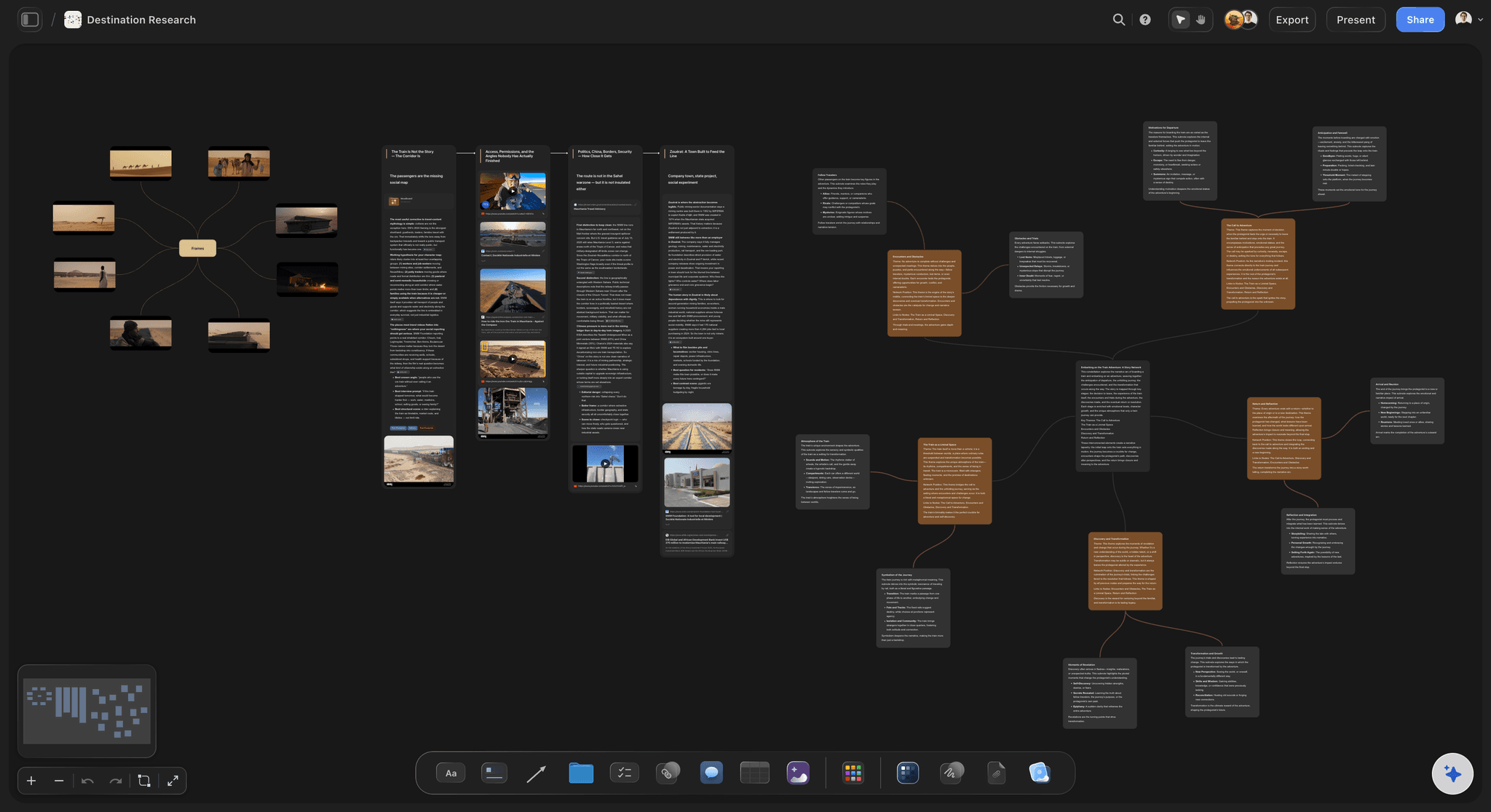
A dated spine you can point at and defend
The chronology comes first
Nothing in documentary research is structural until the timeline is solid. Put each dated event on the board with its source attached, mark the places two accounts disagree, and leave the unverified events visibly marked as unverified. Everything else in the film hangs off this line.
See the timeline maker →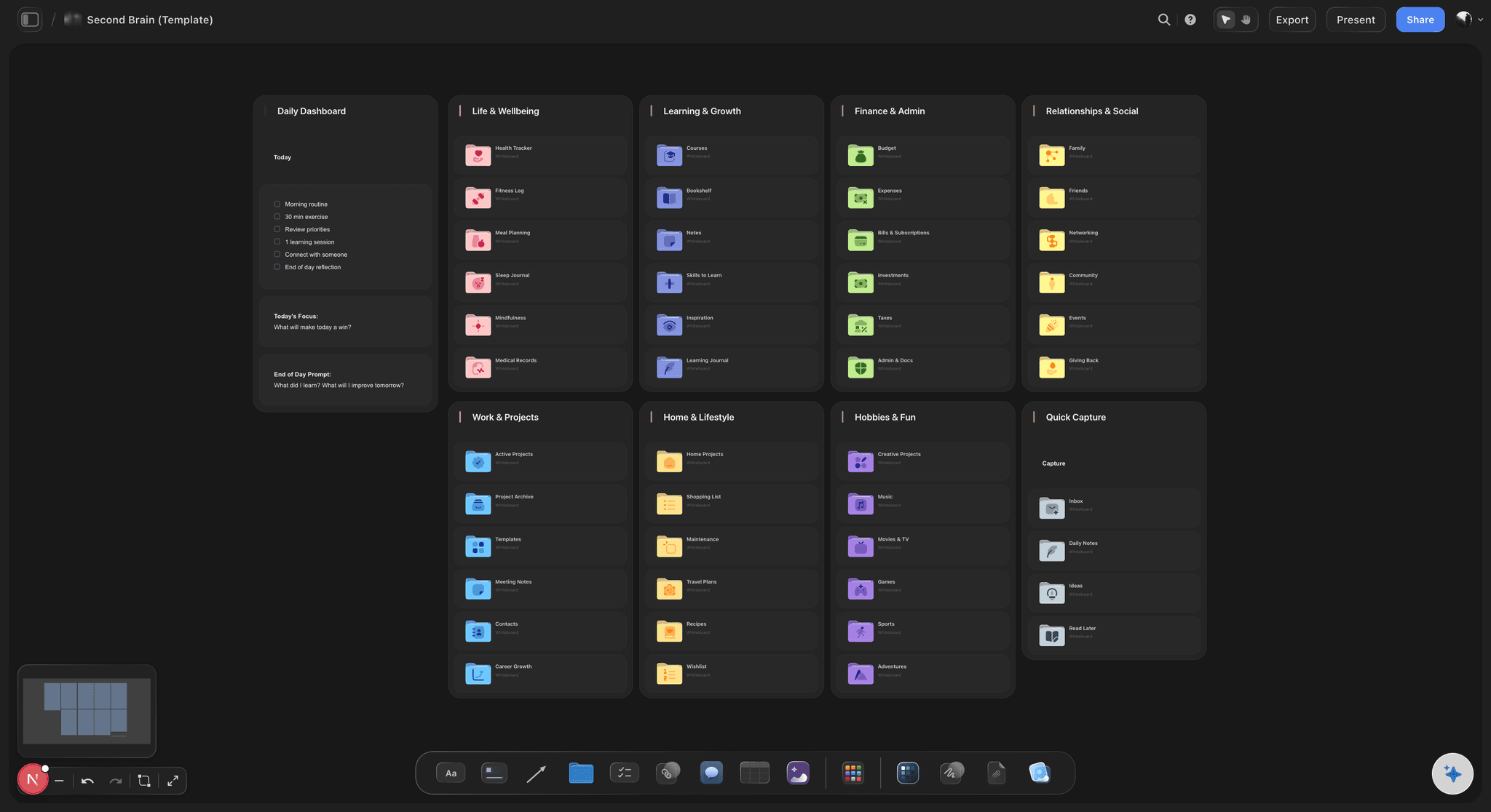
Who can carry it, who will talk, who has never been asked
Contributor research is access research
A contributor card holds what they were present for, what they can actually say, how you got to them, and whether the answer so far is yes, no, or silence. Access is the real currency in documentary, and seeing it as a board makes it obvious which parts of the story currently have nobody to tell them.
Plan the interviews →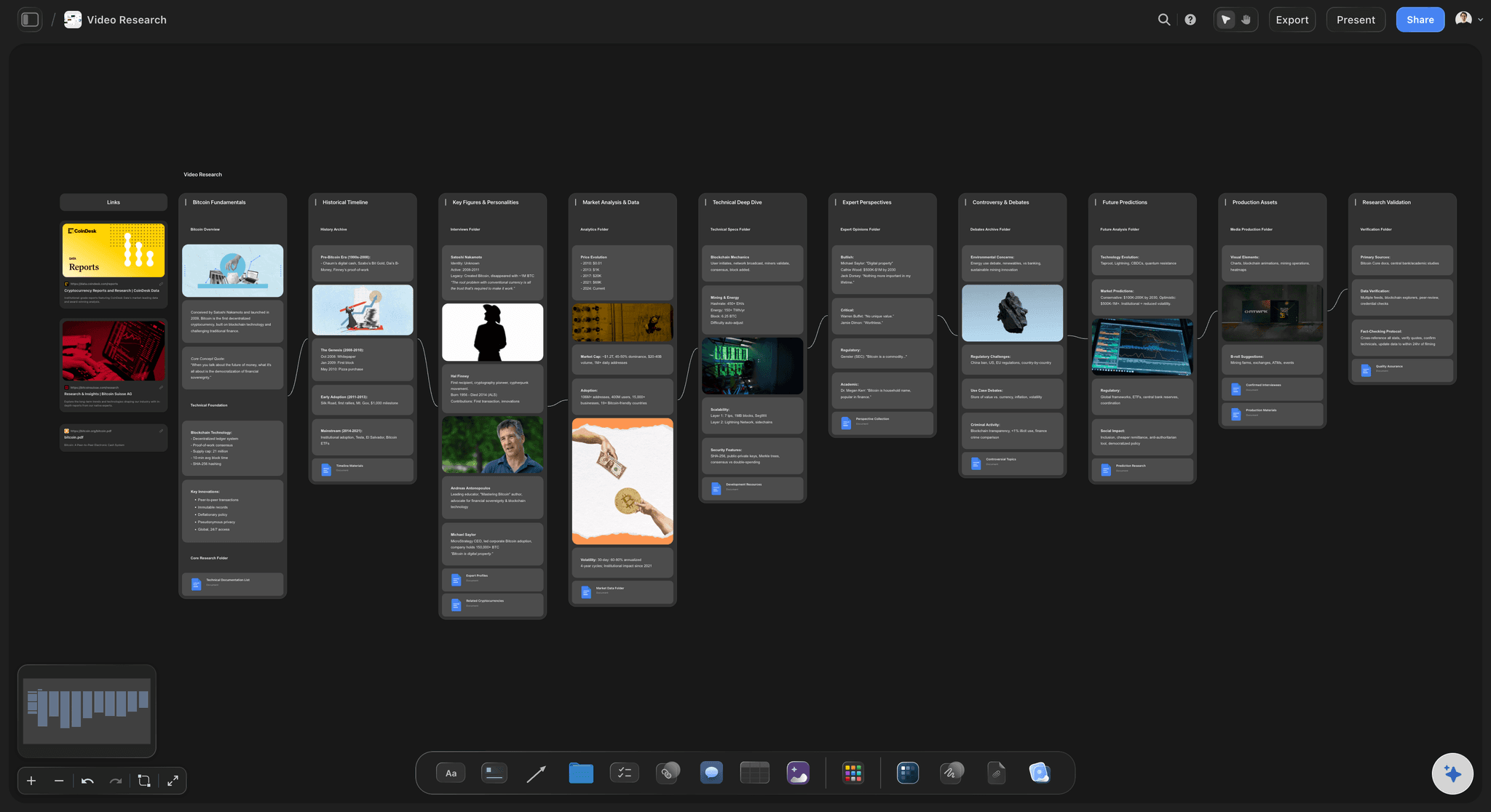
Rights holder, reference, and likely cost on every asset card
Archive decides what film you can afford
Footage and stills are where documentary budgets quietly die. Log each asset with who owns it and what a licence is likely to run, so a sequence built on expensive material gets flagged during research rather than in the edit, when changing it costs weeks instead of an afternoon.
Explore the research canvas →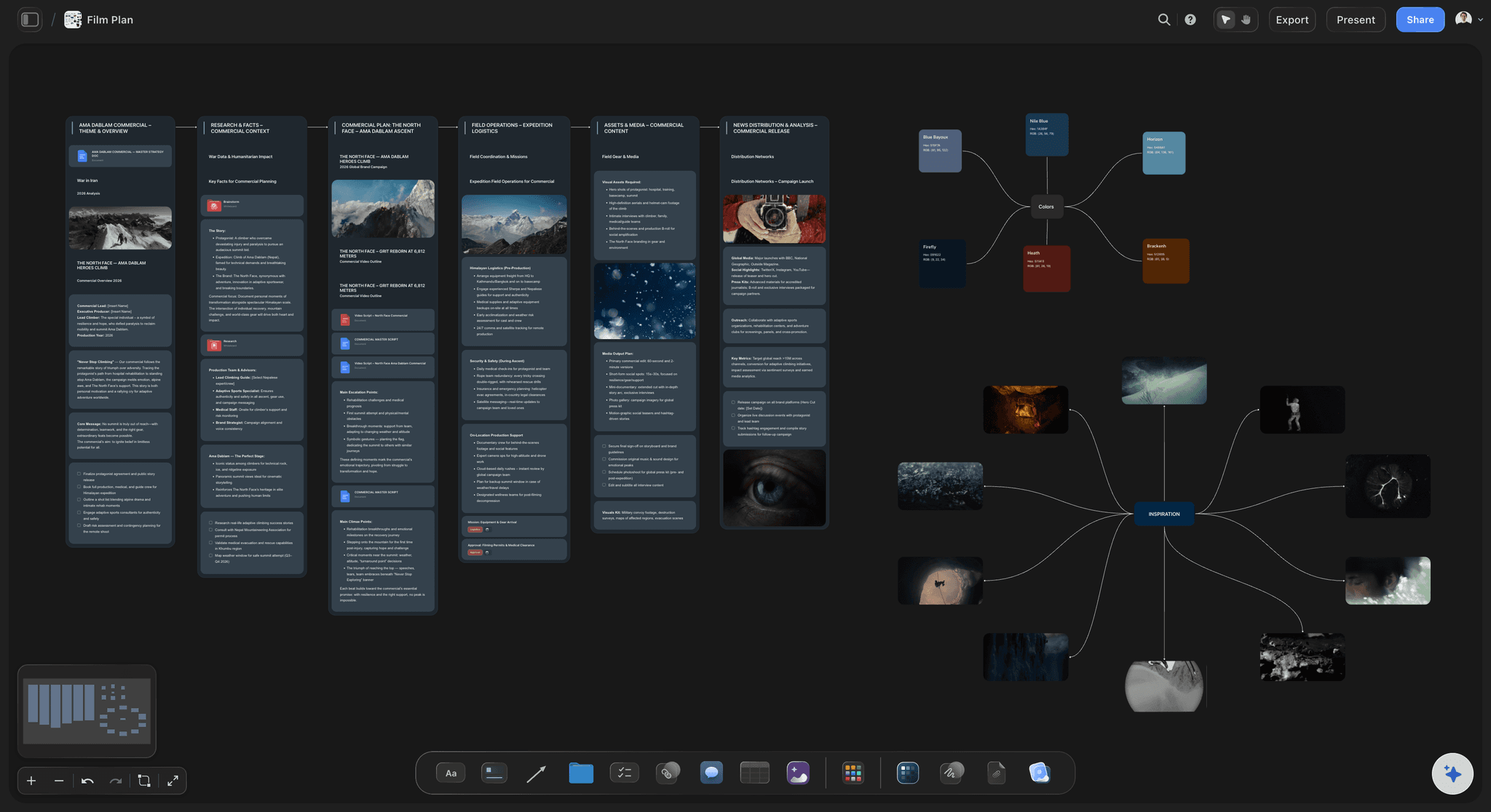
The structure grows out of the evidence, on the same surface
Find the film in what you found
When the chronology, the people, and the archive are all laid out, you can start pushing cards into the order the film wants. Building the sequence beside the research keeps every beat attached to the material that earns it, so nobody has to ask later where a claim came from.
See documentary pre-production →Unlimited boards. No object cap.
Open a board, start the chronology, and hang the rest of the research off it. Storyflow is paid-only during early access, with plans from $9.99 a month, and a Free plan launches before the end of 2026.
Unlimited documentary research boards on an infinite canvas
Basic AI usage to help structure and cluster what you put on the board
3 starter frameworks built in
Share view-only links with your director, producer, or commissioner
BUILT FOR NONFICTION
The parts of the job nothing else holds together.
A notes app can store what you found. It cannot show you that your strongest sequence rests on one unverified date and archive you cannot license.
Establish the sequence before you dramatise it
A chronology you can stand behind
Date every event, and source every date: One card per event with the date, what happened, and where that comes from. A chronology assembled from memory and secondary articles feels solid until a commissioner or a lawyer asks a simple question about one line in it. Attach the record to the event and the question is already answered.
Put both versions up when accounts disagree: Two people remembering the same week differently is normal, not a failure. Keep both cards, connect them, and note what differs: who was present, how long after the fact they spoke, what they had at stake. Very often that difference is the most interesting thing you will find all month.
Mark what is verified and what is still claimed: Label each event as documented, corroborated by two accounts, or single-source and unverified. When you start structuring, that labelling tells you instantly whether the beat you want to open on is something you can actually assert or something you have to attribute.
Keep the timeline separate from the story order: Events happened in one order and the film will tell them in another. Holding both on the same board, as two arrangements of the same cards, is what stops a clever structure from quietly misrepresenting the sequence it was built from.
People, access, and the pre-interview
Who can carry this, and who will talk
Separate the contributor from the source: Some people belong on camera and some are the reason you knew where to look. A pre-interview is largely how you find out which is which. Keep both kinds on the board with that distinction written on the card, because treating a nervous expert source as a lead contributor costs you a shoot day and their trust.
Track access honestly, including the silence: Approached, responded, warm, pre-interviewed, agreed, declined, gone quiet. Access is the real currency of documentary and it moves slowly, so a board that shows the current state of every approach is worth more than a director's optimistic summary of it.
Look for who has never been asked: The person every previous piece interviewed will give you the answers every previous piece got. Keep a running region for the people adjacent to the story who nobody has approached: the junior colleague, the neighbour, the clerk, the family that stopped talking to press in 2009. That is usually where a new film is.
Note what each person can actually speak to: Write the specific moments a contributor was present for on their card and connect it to those points on the chronology. Then the holes are visible as stretches of timeline with nobody next to them, which is a much more useful brief for the next month than a general wish for more interviews.
Archive, records, and what they will cost you
The evidence that also has a price tag
Log the rights holder at the moment you find the asset: Write down the archive, the reference number, and who controls it while you are looking at it. Rediscovering the provenance of a clip six months later, when the edit is locked and someone needs a licence, is one of the most avoidable and most common time sinks in nonfiction production.
Put an estimated licence cost on the card: Archive pricing can be the difference between a sequence and no sequence, and it varies enormously by source and by how you intend to use it. A rough figure on each card, marked as a guess where it is one, means the film's structure is being built against a budget instead of against a hope.
Keep records with the claim they support: Court files, inspection reports, letters, minutes, datasets, and the local paper that covered it at the time. Attach the document to the chronology event it evidences rather than filing it by type, so the paperwork is sitting next to the moment it proves when someone questions that moment.
Flag the sequences that depend on one asset: If a whole act rests on footage from a single holder, that is a structural risk, not an archive detail. Marking it on the board during research gives you months to find an alternative, which is the difference between a redesign and an emergency.
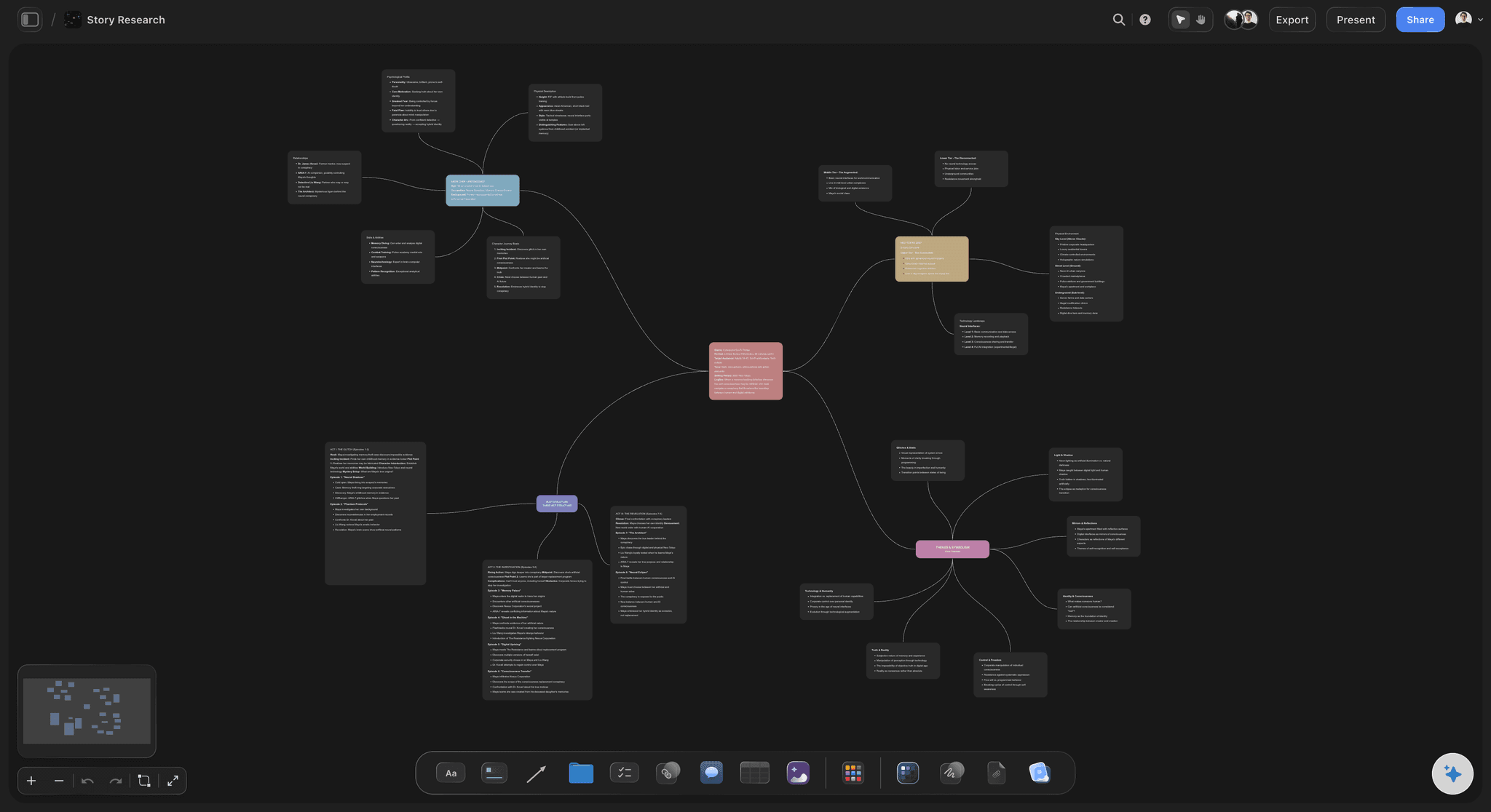
AI that can see the board, and the things it will not do
Structural help, with clear limits
It works from the board as context: Because the AI can see the whole canvas, you can ask it to group your research cards by which part of the chronology they support, to draft candidate act structures from what is there, or to point at cards whose dates or claims look like they conflict. It reasons over what you wrote, so the quality follows your notes.
It does not search archives or find footage: Storyflow has no archive search, no rights or licensing database, and no connection to any footage library. It does not tell you what exists, who owns it, or what it costs. You do that work with the archives themselves and with a researcher, and the board is where you record what you learned.
It does not transcribe, and it does not handle clearances: There is no interview transcription, no release form management, and no legal clearance workflow here. Keep using your transcription service and your production's paperwork system. Storyflow holds the thinking, not the compliance.
Restructure without losing the evidence: Move a card into a different act and everything on it comes along, including the source, the verification label, the rights holder, and the attached file. Trying a completely different shape for the film costs a few drags rather than a rebuild, which is what makes it cheap to keep re-evaluating.
Explore templates for your project
Every template opens as a real, editable board on the infinite canvas. Pick the closest fit and make it your own.
Mind Map
Branch one central idea out into themes and sub-points, then drag the connections around until the structure makes sense.
HOW WE COMPARE
Storyflow vs Notion, Airtable, and Milanote.
Two of these hold structured production data better than we do, and we are not pretending otherwise. Here is the honest split.
Storyflow
Recommended
Whole research corpus visible on one infinite canvas
Chronology and emerging story structure built beside the evidence
AI that reads your whole board as context
Structured, filterable database for archive assets and rights status
Linked records, formulas, and automations across tables
Long-form docs, wikis, and nested pages in the same workspace
Notion
Whole research corpus visible on one infinite canvas
Chronology and emerging story structure built beside the evidence
AI that reads your whole board as context
Structured, filterable database for archive assets and rights status
Linked records, formulas, and automations across tables
Long-form docs, wikis, and nested pages in the same workspace
Airtable
Whole research corpus visible on one infinite canvas
Chronology and emerging story structure built beside the evidence
AI that reads your whole board as context
Structured, filterable database for archive assets and rights status
Linked records, formulas, and automations across tables
Long-form docs, wikis, and nested pages in the same workspace
Milanote
Whole research corpus visible on one infinite canvas
Chronology and emerging story structure built beside the evidence
AI that reads your whole board as context
Structured, filterable database for archive assets and rights status
Linked records, formulas, and automations across tables
Long-form docs, wikis, and nested pages in the same workspace
What creators are saying
Join early creators getting structured workspaces and AI that remembers their projects
“Storyflow has sped up my workflow by at least 3x, which means more flow state and more projects I can actually ship. It truly changed the way me and my team create.”

Reilin Joey
Director & YouTuber
“One prompt gets me a structured board. But the tactics are my favorite. I run my YouTube scripts through them and my intros and retention got better. It's amazing.”

Justkay
YouTuber & Freelance Filmmaker
“I used to juggle five apps to plan a project. Now I describe what I am making and get boards, lists, and a schedule. All in one place.”

George
@fernwehchronicles
Documentary research questions, answered.
Chronology, access, archive, and what Storyflow honestly does and does not do for nonfiction work.
Start by writing the question the film is asking, then build a dated chronology of everything you can establish, sourcing each event as you go. Hang the people off that timeline: who was present, who can speak to it, who has never been asked. Log the archive and records that evidence each moment, with the rights holder and likely cost on every asset. Run pre-interviews to learn who is a contributor and who is a source. Then start moving the material into the order the film wants, and expect the story to change as you go.
Establish what is true. Then find the film in it.
Open a board, build the chronology, and hang the people, the archive, and the records off it until the story shows itself. Plans from $9.99/month, no download, and a Free plan is coming before the end of 2026.