
PREVIS SOFTWARE
Make the expensive decisions
while they are still cheap.
Say it plainly before you read any further: Storyflow is not 3D previs. There is no 3D scene, no virtual camera, no lens simulation, no set modelling, and no animation. FrameForge, Cine Tracer, Blender, and Unreal own that work. Storyflow is 2D previs and the planning around it: overhead blocking diagrams drawn on an infinite canvas, reference frames pulled from other films, annotated stills from the scout, and all of it sitting beside the shot list and the schedule. Paid-only during early access, with plans from $9.99 a month, and a Free plan launches before the end of 2026.
Plans from $9.99/mo
Free plan coming late 2026
Works in your browser

Used by creative professionals at:
Artlist
Pixar
Nike
Red Bull
The North Face
Porsche
Start from a ready-made template
Pick a board to see what you can build, then let AI fill it in. Every template is a real, editable starting point on the same infinite canvas.
Pre-Production
Pull the brief, script, shot list, and moodboard into one pre-production hub so the whole shoot is planned in one place.
What is previs, and what is it actually for?
Previs, short for previsualization, is the work of deciding camera, blocking, and coverage before the shoot day, so the expensive decisions get made while they are still cheap. A lens change on a laptop costs nothing. The same lens change at 6pm on a location day costs the light, the crew's patience, and usually a setup you will not get back. Previs is not about producing pretty pictures. It is about arriving on set having already had the argument, so the day is execution rather than discovery.
The craft is concrete, and it starts with the lens. A 24mm puts the room around the actor and stretches the distance between foreground and background, so a small set reads as bigger and a walk toward camera feels fast and aggressive. An 85mm compresses that same space until the background sits right behind the head, which flatters a face and kills a room. Choosing the lens is choosing what the space means, which is why it is a decision worth making before the truck is loaded. Camera position follows: how high, how far back, whether the camera is on sticks, on a dolly, or handheld, and what the move is doing dramatically rather than just how it looks. Then blocking, which is where the actors are and where they go, because blocking is the thing that determines whether your coverage is possible at all.
Coverage and eyelines are where previs earns its keep. Draw the scene from overhead, put the camera somewhere, put two actors somewhere, and the line between them is suddenly visible as a real constraint rather than a rule you half remember. Cross it and the reverse will not cut. That is the ordinary way a technically impossible shot gets found in previs instead of on the day: the wide and the reverse cannot both exist from that camera position, or the dolly move needs three metres of floor the location does not have, or the window that makes the wide beautiful puts a hard backlight through every single of the actor facing it. Each of those, found on a laptop, is a five minute conversation. Found on set, it is an hour of standing around while the AD watches the schedule slide.
It also helps to be clear about the two different things people mean by previs. Full 3D previs is a VFX-scale discipline: artists build the set in 3D, animate the action, run a virtual camera with real lens and sensor values, and cut the result into a moving sequence that a stunt team, a VFX supervisor, and a studio all sign off on. It is genuinely essential on a film with a creature, a big stunt, or a set that does not exist yet, and it is expensive because it is a craft with its own crew. The previs most productions actually do is 2D: overhead blocking diagrams, reference frames pulled from other films, annotated stills from the location scout, floor plans marked with camera positions, and a shot list that reflects all of it. The full job across both, in one line, is lens choice, camera position and movement, actor blocking, coverage and eyelines, the location's real constraints, and the shot list and schedule that everything eventually has to fit inside.
HOW IT WORKS
Build the 2D previs on one canvas, then shoot from it.
Reference, blocking, coverage, and the shot list in one view, so nothing on the day depends on a file somebody forgot to send.
01
Open a canvas for the scene
Sign up in seconds, from $9.99 a month. An infinite canvas opens in the browser. Start a board per scene or per location, whichever matches how you are going to shoot it.
02
Pull in reference and scout stills
Drag in frames from films that already solved this problem, plus the photos from the location scout. Grab frames straight off YouTube or Vimeo when the reference is a moment rather than a still.
03
Draw the blocking overhead
Sketch the space from above, mark where the actors stand and move, place the camera positions, and note the lens on each one. The eyeline problem shows up the moment the geometry is on the page.
04
Turn it into a shot list
Every camera position on the diagram becomes a shot. Build the list beside the previs so the reasoning stays attached to it, then share a view-only link with the crew or export the board as a PDF.
The 2D previs work, on one surface.
No virtual camera and no 3D set. Reference, geometry, coverage, and the list they produce, all in one place.
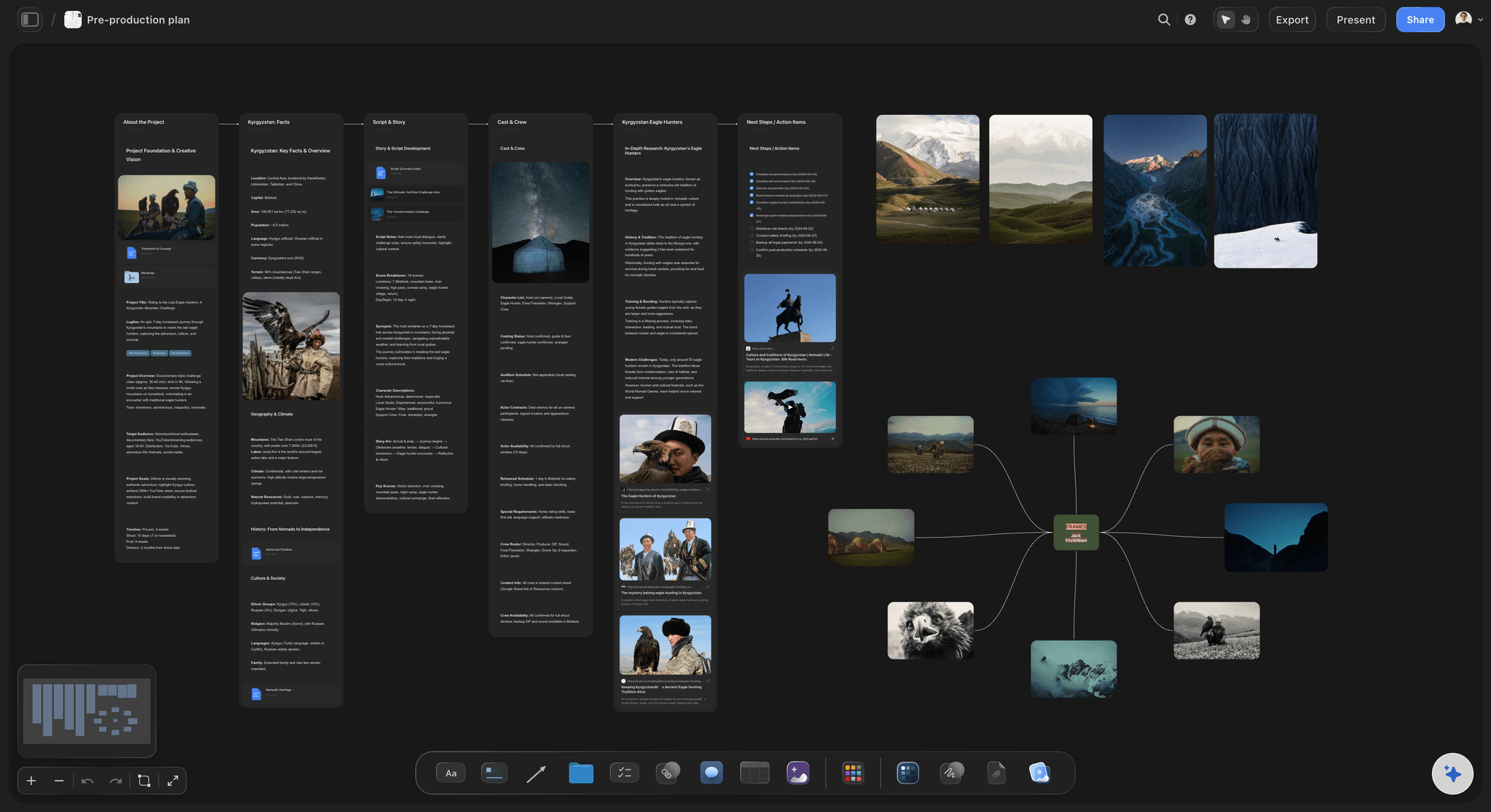
Overhead diagrams and reference in one view
Draw the blocking where the reference already lives
Sketch the room from above, mark actor positions and movement, and place camera setups with the lens written on each one. The reference frames and scout photos that justify those choices sit on the same board, so the diagram is never separated from the look it is chasing.
See the pre-production workflow →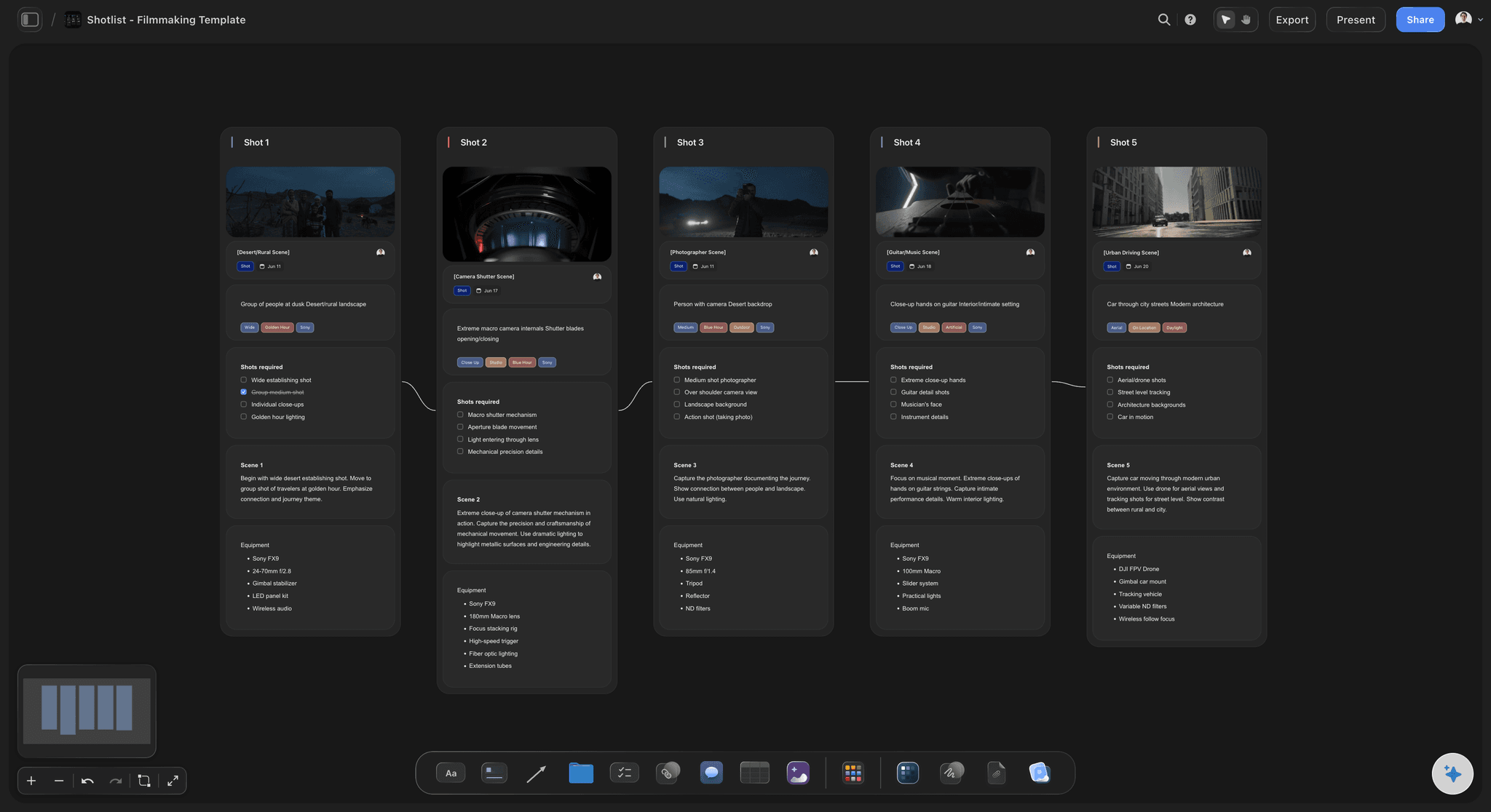
Every camera position becomes a line on the list
Previs that produces the shot list, not a second document
A previs diagram that lives in a different tool from the shot list drifts within a week. Here the setups you drew and the shots you are going to call are on the same canvas, so when a camera position moves, the list next to it is the thing you edit.
Build the shot list →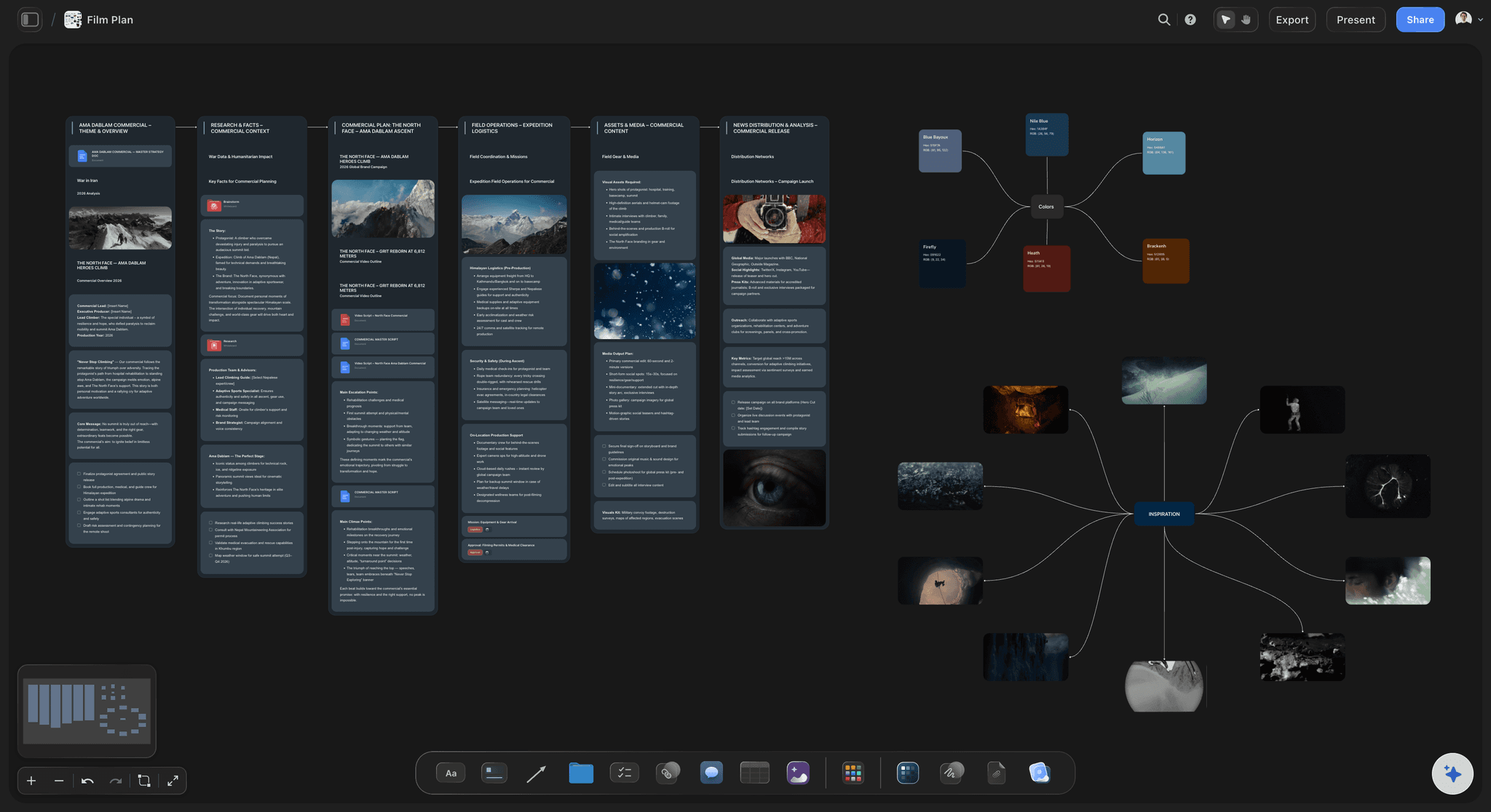
The real room, with its real constraints
Annotate the location stills you actually shot
Drop the scout photos onto the canvas and mark them up: where the camera goes, which wall has to float, where the sun is at 4pm, how much floor the dolly move really needs. Previs against the true room catches the impossible shot better than any idealised diagram.
Organise the scout →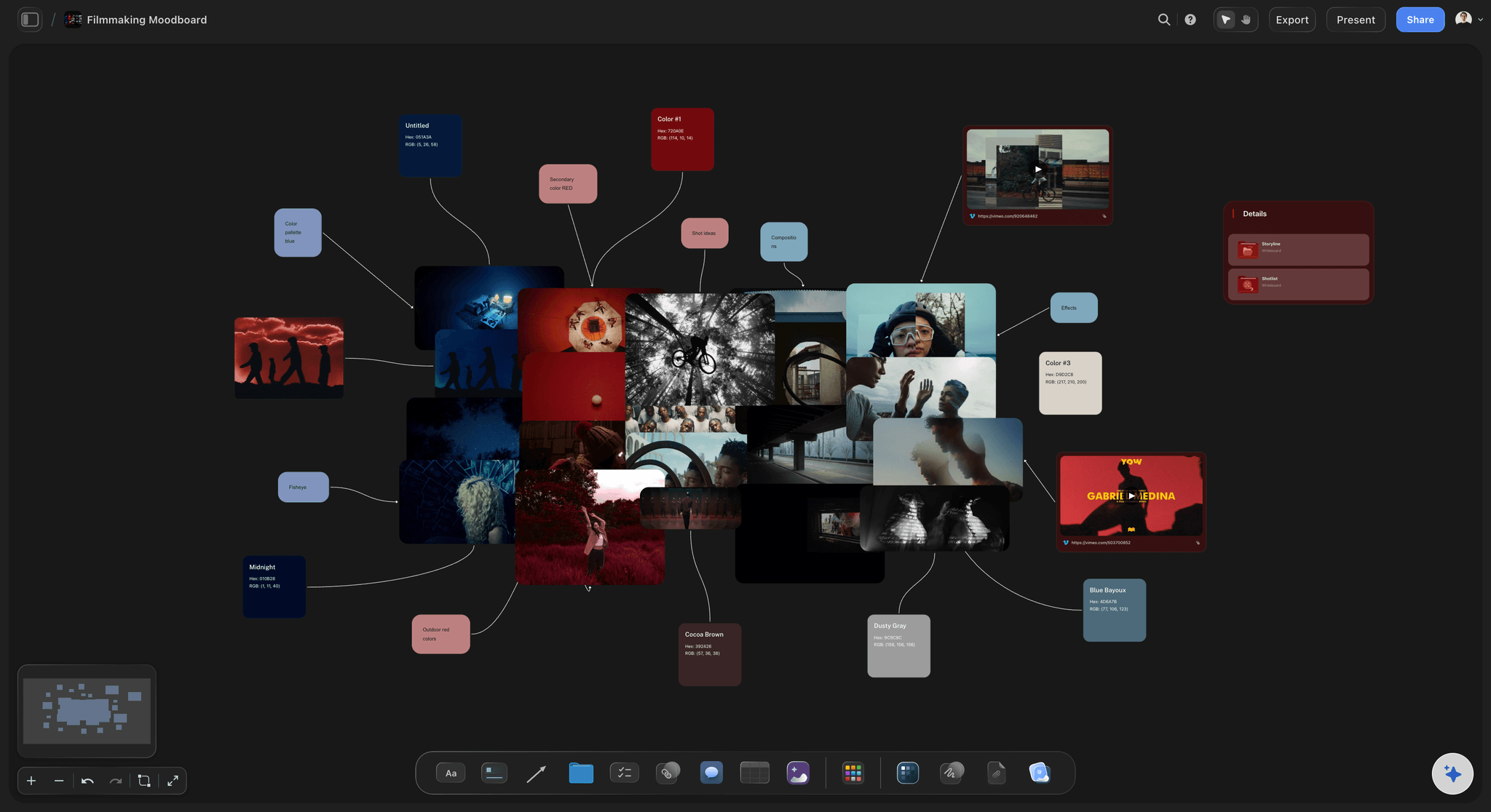
Reference frames that explain the intent
Show the crew the frame you have in your head
Pull frames from films that already solved the problem and put them beside your own diagram. A DP, a gaffer, and a producer read a reference frame instantly, and a paragraph describing the same idea gets read three different ways.
Build the lookbook →Unlimited boards. One canvas per scene.
Open a canvas, drop in the scout stills, and start drawing the blocking. Storyflow is paid-only during early access, with plans from $9.99 a month, and a Free plan launches before the end of 2026. Anyone a paid member invites to a board joins free today.
Unlimited previs boards on an infinite canvas
Reference frames, scout stills, and PDFs on the same board
Basic AI usage to draft coverage and shot lists from a prompt
Share view-only links with the crew, no account needed
BUILT FOR 2D PREVIS
The previs most productions actually do.
Overhead geometry, reference, scout stills, and coverage, held together instead of scattered across a drive, a chat thread, and somebody's notebook.
Camera, blocking, and the geometry between them
Work out the coverage before the day
Draw the space from above: An overhead diagram is the cheapest previs there is and it answers the hardest questions. Where the walls are, where the actors stand, where the camera sits, and whether the move you want has anywhere to go.
Mark the camera positions and the lens: Write the focal length on each setup. A 24mm and an 85mm from the same position are two different scenes, and putting that on the diagram forces the decision now instead of at the monitor.
See the eyeline as geometry: Once two actors and a camera are on the page, the line between them is visible. Crossing it stops being a rule to remember and becomes something you can see, which is how the reverse that will not cut gets caught in previs.
Find the impossible shot early: The dolly move that needs floor the room does not have, the wide and the reverse that cannot share a camera position, the window that backlights every single. Five minutes on a canvas, or an hour of the crew waiting.
Reference and scout material as first-class board objects
Previs against the real room and a real look
Scout stills you can draw on: Put the location photos on the board and annotate them directly. Camera positions, sun path, the wall that has to come out, the corner you cannot light. Previs on the actual room beats previs on an imagined one every time.
Reference frames from other films: Drag in images, or grab frames straight from YouTube and Vimeo when the reference is a moment in a shot rather than a still. Intent gets communicated in a second instead of a paragraph.
Documents where they belong: Pin the script pages, the floor plan PDF, the equipment list, and the notes from the tech recce beside the diagrams they relate to, so nobody is searching a thread for the version that matters.
AI that can read the board you have already built
Draft the coverage, then argue with it
A first pass from a prompt: Describe the scene and the AI lays out a starting set of cards: the beats, a candidate coverage pattern, and the open questions. A draft you disagree with gets you further in ten minutes than a blank canvas does in an hour.
It sees the whole canvas: Because it reads the board as context, you can ask what coverage this scene is missing or which setups could be combined and get an answer about your scene rather than a generic checklist.
Your work stays put: Re-prompt as often as you want. The diagrams you drew, the cards you wrote, and the images you placed stay exactly where they are while the AI builds around them.
Everyone on the day reading the same board
Get the previs into the crew's hands
View-only links for the crew: Send a link and the DP, the AD, the gaffer, and the producer open the whole board in a browser with no account and no login. The previs is available on a phone at the location instead of on a laptop at the office.
Guests join free: Anyone a paid member invites to a board joins free today, so bringing in a freelance DP or a production designer for a week is not a seat decision.
Export for the folder: Export the board as a high-quality image or PDF when the previs has to travel into a director's package, a client review, or the pre-production folder everyone actually opens.
One board per scene: Keep a canvas per scene or per location so the previs matches the way the day is scheduled, rather than one enormous document nobody can navigate at 6am.
Explore templates for your project
Every template opens as a real, editable board on the infinite canvas. Pick the closest fit and make it your own.
Pre-Production
Pull the brief, script, shot list, and moodboard into one pre-production hub so the whole shoot is planned in one place.
HOW WE COMPARE
Storyflow vs FrameForge, Boords, and Milanote.
We give 3D previs away entirely. FrameForge owns the virtual camera, Boords owns the client-facing panel, and this table says so.
Storyflow
Recommended
3D previs with a virtual camera, lenses, and set models
Numbered, client-ready storyboard panels
Animatics with timing and audio
Previs, shot list, and schedule on one board
Infinite canvas for reference frames and scout stills
AI that reads the whole board as context
FrameForge
3D previs with a virtual camera, lenses, and set models
Numbered, client-ready storyboard panels
Animatics with timing and audio
Previs, shot list, and schedule on one board
Infinite canvas for reference frames and scout stills
AI that reads the whole board as context
Boords
3D previs with a virtual camera, lenses, and set models
Numbered, client-ready storyboard panels
Animatics with timing and audio
Previs, shot list, and schedule on one board
Infinite canvas for reference frames and scout stills
AI that reads the whole board as context
Milanote
3D previs with a virtual camera, lenses, and set models
Numbered, client-ready storyboard panels
Animatics with timing and audio
Previs, shot list, and schedule on one board
Infinite canvas for reference frames and scout stills
AI that reads the whole board as context
What creators are saying
Join early creators getting structured workspaces and AI that remembers their projects
“Storyflow has sped up my workflow by at least 3x, which means more flow state and more projects I can actually ship. It truly changed the way me and my team create.”

Reilin Joey
Director & YouTuber
“One prompt gets me a structured board. But the tactics are my favorite. I run my YouTube scripts through them and my intros and retention got better. It's amazing.”

Justkay
YouTuber & Freelance Filmmaker
“I used to juggle five apps to plan a project. Now I describe what I am making and get boards, lists, and a schedule. All in one place.”

George
@fernwehchronicles
Previs questions, answered honestly.
Including the one where the answer is that you need a different tool than this one.
Previs, short for previsualization, is working out camera, blocking, and coverage before the shoot day, so the expensive decisions get made while they are still cheap. It covers lens choice and what it does to the space, camera position and movement, where the actors stand and go, and whether the coverage cuts together. The point is not to produce artwork. It is to arrive on set having already found the shot that does not work, because finding it on a laptop costs five minutes and finding it on the day costs a setup.
Have the argument before the truck is loaded.
Open a canvas, drop in the scout stills, and draw the blocking. Plans from $9.99/month, nothing to install, and a Free plan is coming before the end of 2026.