
All Collections
Getting Started
Importing from Notion, Miro, Figma & More
Last updated: May 2026
Storyflow doesn't have native one-click importers for Notion, Miro, Figma, or other tools yet — but you can still get content across with a few practical workflows.
From Notion
- Pages: Copy the page contents and paste into a Storyflow Document — markdown formatting is preserved (headings, lists, bold, links)
- Databases: Export as CSV, then attach to AI chat and ask the AI to lay it out as a kanban or table
- Embedded media: Copy image links — Storyflow generates link previews automatically
From Miro / FigJam / Mural
- Sticky notes & text: Copy and paste — text comes across; arrange manually on the canvas
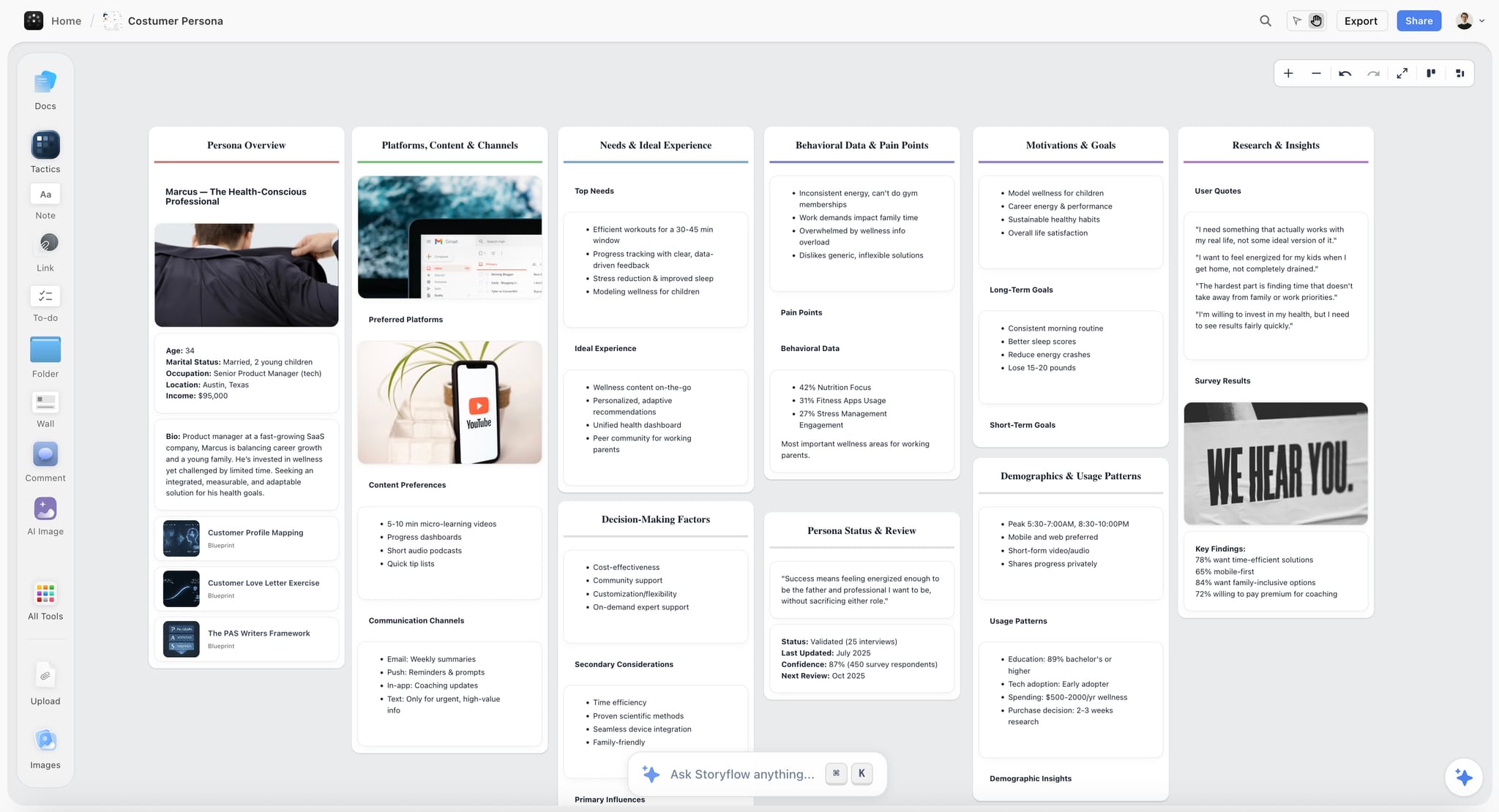
- Whole boards: Export as PNG/PDF, then drop the image onto a Storyflow board as a reference
- Templates: Recreate using Storyflow Tactics — you'll often find a built-in equivalent
From Figma
- Frames & flows: Export frames as PNG/SVG and drop onto the canvas as image elements
- Design references: Copy a Figma share link and paste — Storyflow shows it as a link card
From Google Docs / Word
- Copy the document text and paste into a Storyflow Document — formatting comes across cleanly
- Or upload the .docx file as an attachment for reference
From ChatGPT / Other AI Tools
Copy the markdown output from any AI tool and paste into a Storyflow note, document, or Tactic — markdown is preserved so headings, lists, and bold come across.
The AI Approach
For larger imports, paste the raw content into AI chat with a prompt like "lay this out as a kanban board" or "build a moodboard from these references." The AI will structure your content into the right Storyflow elements automatically.
Tips
- For complex Notion databases, export each as CSV and bring them in one at a time
- Use AI Workspace Generation to scaffold a Storyflow project that mirrors a structure you already use elsewhere
- Drop reference images of your old workspace onto a board so you have visual context while rebuilding
Was this article helpful?
Related Articles
Pasting Markdown into Notes & Documents
Generating Workspace Structures with AI
Attachments & Files in AI Chat