
COGGLE ALTERNATIVE
Coggle nails the first ten minutes.
This is about the other ninety.
Credit where it is due. Coggle is free, opens instantly, and turns a tangle of thoughts into a clean branching map faster than almost anything else. For that one job it is genuinely hard to beat, and we are not going to pretend we beat it. Storyflow is answering a different question: what happens once the map is done. A mind map is the opening move of a project, and Storyflow is the canvas that also holds the notes, the sources, the documents, and the plan it becomes, with AI that can see all of it at once. Paid-only during early access, plans from $9.99 a month, Free plan before the end of 2026.
Plans from $9.99/mo
Free plan before end of 2026
Nothing to install

Used by creative professionals at:
Artlist
Pixar
Nike
Red Bull
The North Face
Porsche
Start from a ready-made template
Pick a board to see what you can build, then let AI fill it in. Every template is a real, editable starting point on the same infinite canvas.
Mind Map
Branch one central idea out into themes and sub-points, then drag the connections around until the structure makes sense.
What are people looking for when Coggle stops being enough?
Start by giving Coggle its due, because most comparison pages skip this part and it is the most important thing on the page. Coggle is free, it loads in a second, and it does one thing beautifully: you type, you press a key, a branch appears, and within a few minutes an unstructured mess of thoughts has a shape. There is no project setup, no template picker, no onboarding tour, and no decision to make before you can start. For a single mind map made in one sitting, that simplicity is the whole product, and nothing here is going to be simpler.
The trouble is what a mind map actually is. It is a thinking tool for the earliest stage of a piece of work, the part where you are still finding out what the work even is. Almost nobody makes a mind map as the final deliverable. You make one because you are planning an essay, structuring a talk, scoping a project, revising for an exam, mapping a research area, or trying to figure out what a business idea consists of. The map is the first ten minutes. Then the project carries on for weeks, and the map has nowhere to go with it.
That gap is where the search for an alternative usually begins. You export the map as an image, paste it into a document, and it immediately goes stale. The sources you found live in browser tabs. The notes live in a different app. The draft lives somewhere else again. The plan lives in a to-do list that has lost all connection to the thinking that produced it. Storyflow puts all of it on one infinite canvas: the mind map, the reference material, the documents you write beside it, and the project board it turns into. Because the AI reads the whole canvas as context, you can ask it to expand a branch, draft the section under it, or tell you which part of your thinking is thin, and get an answer about your actual material.
People outgrow Coggle for six recurring reasons: the map is the only artefact the tool can hold and everything downstream has to move somewhere else, there is nowhere to keep sources, images, screenshots, or PDFs beside the branch they belong to, there is no place to write the long-form text the map is a plan for, the branching diagram format cannot become a board, a timeline, or an outline without being rebuilt from scratch, AI assistance is not part of the thinking loop, and one map per idea eventually turns into forty maps with no way to see how they relate to each other.
HOW IT WORKS
Map it, then keep going in the same place.
The point is not that the mapping step is better. The point is that you never have to leave to do the next thing.
01
Open a canvas and map the idea
Sign up in seconds, from $9.99 a month, nothing to install. Start with a central idea and branch outward exactly as you would anywhere else, or describe the topic and let the AI lay the first map out for you.
02
Pull in what the branches are about
Drop sources, screenshots, PDFs, images, and links straight onto the canvas next to the branch they support, so the evidence sits beside the idea instead of in a folder you will not reopen.
03
Write beside the map
Open a document on the same canvas and draft the essay, the script, the proposal, or the notes with the map still visible next to it, so the structure and the writing never drift apart.
04
Turn it into the plan
Lay the branches out as a board, a sequence, or a set of phases. The map does not get thrown away when the work becomes concrete, it becomes the thing you work from.
Everything that happens after the mind map is finished.
Coggle owns the ten minutes. These are the four things people go looking for in week two.
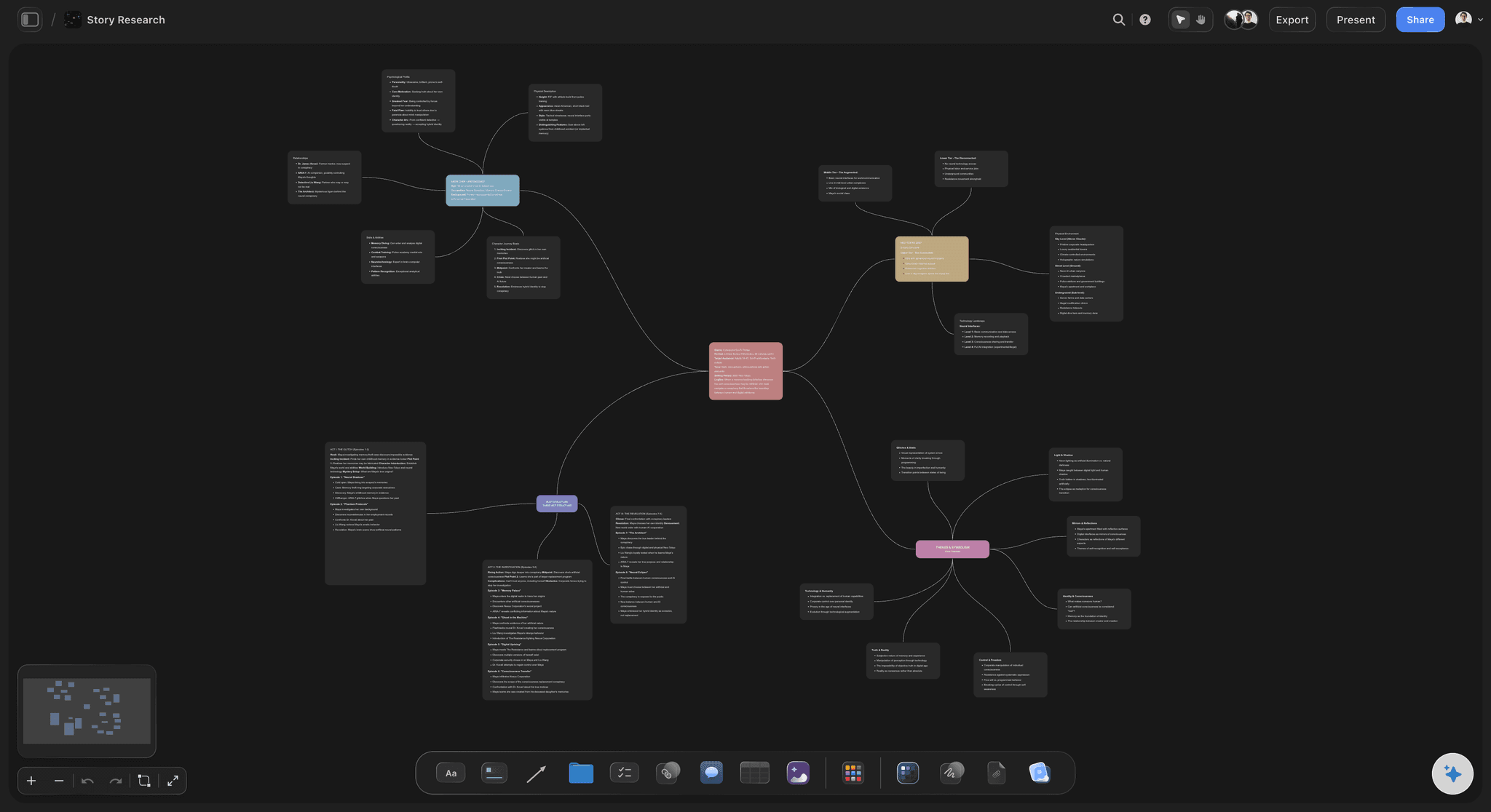
A first map without the blank centre
AI that maps the topic, then keeps thinking with you
Type the subject and the AI lays out a branching map you can immediately prune and rewrite. Because it reads the whole canvas, you can then ask it to go deeper on one branch, find what you have missed, or turn a section into an outline, and it answers about your material.
Try the AI mind map generator →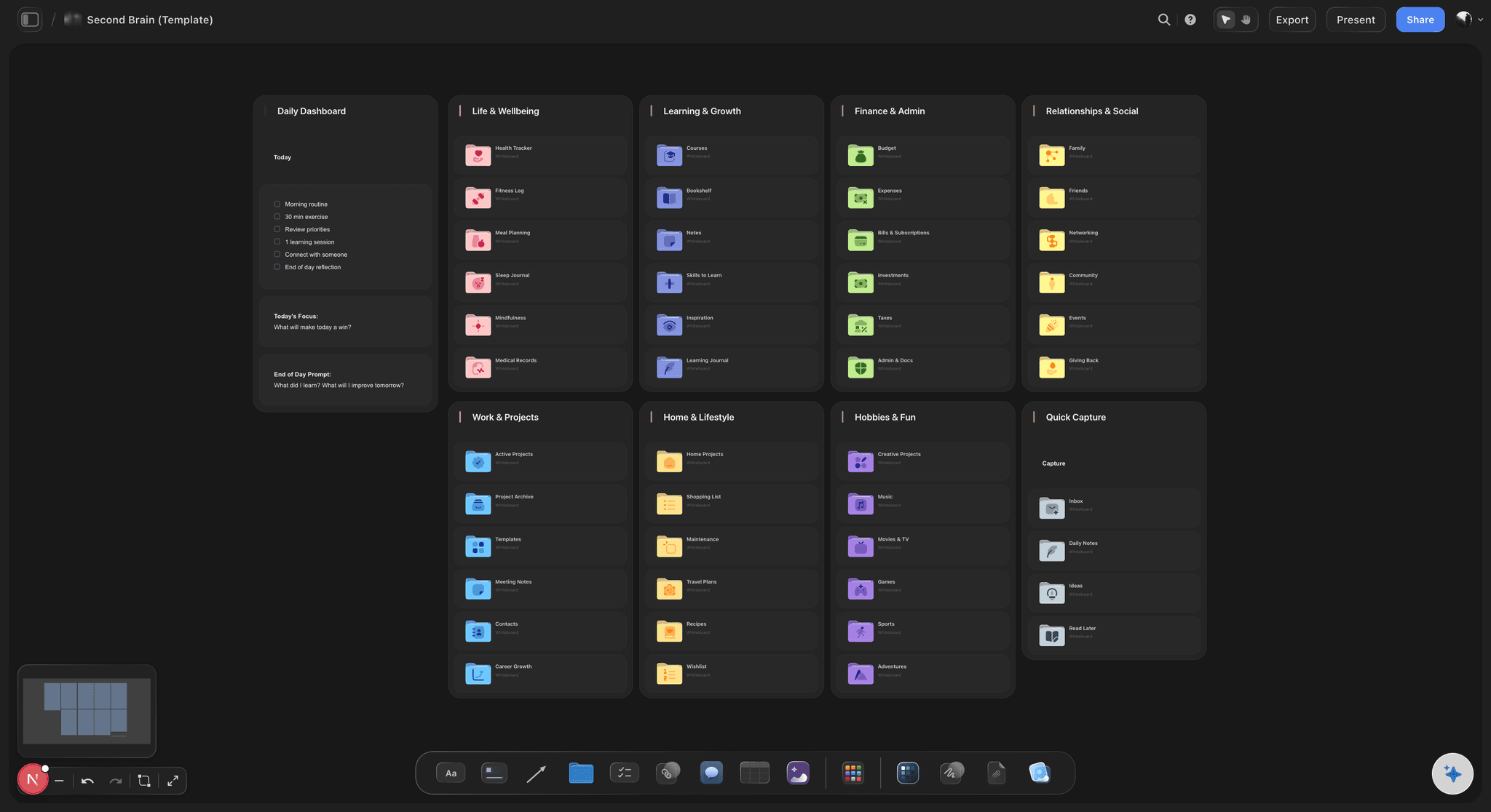
The sources go on the board
Research sits next to the branch it belongs to
A branch that says check the 2019 study is useless six weeks later. Pin the PDF, the screenshot, the article, or the image directly beside it and the map stops being a set of reminders and starts being the actual working surface for the material.
Build a second brain →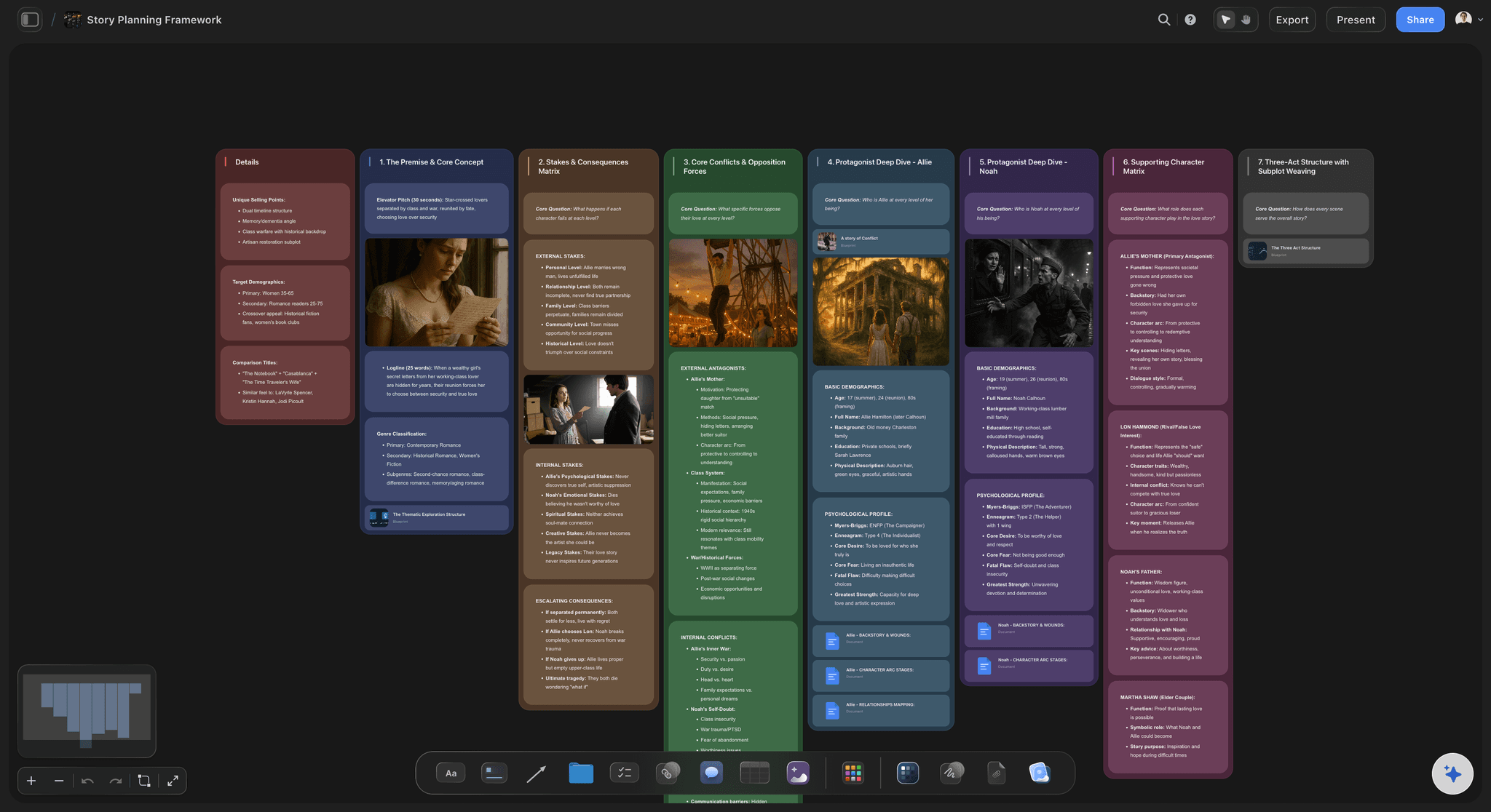
The map was always a plan for something
Write the thing the map was for, on the same canvas
Essays, scripts, proposals, and chapters all start as a structure. Opening a document on the canvas next to the map means the outline stays visible while you draft, instead of being reduced to an exported PNG you glance at once and then forget.
See the free mind map maker →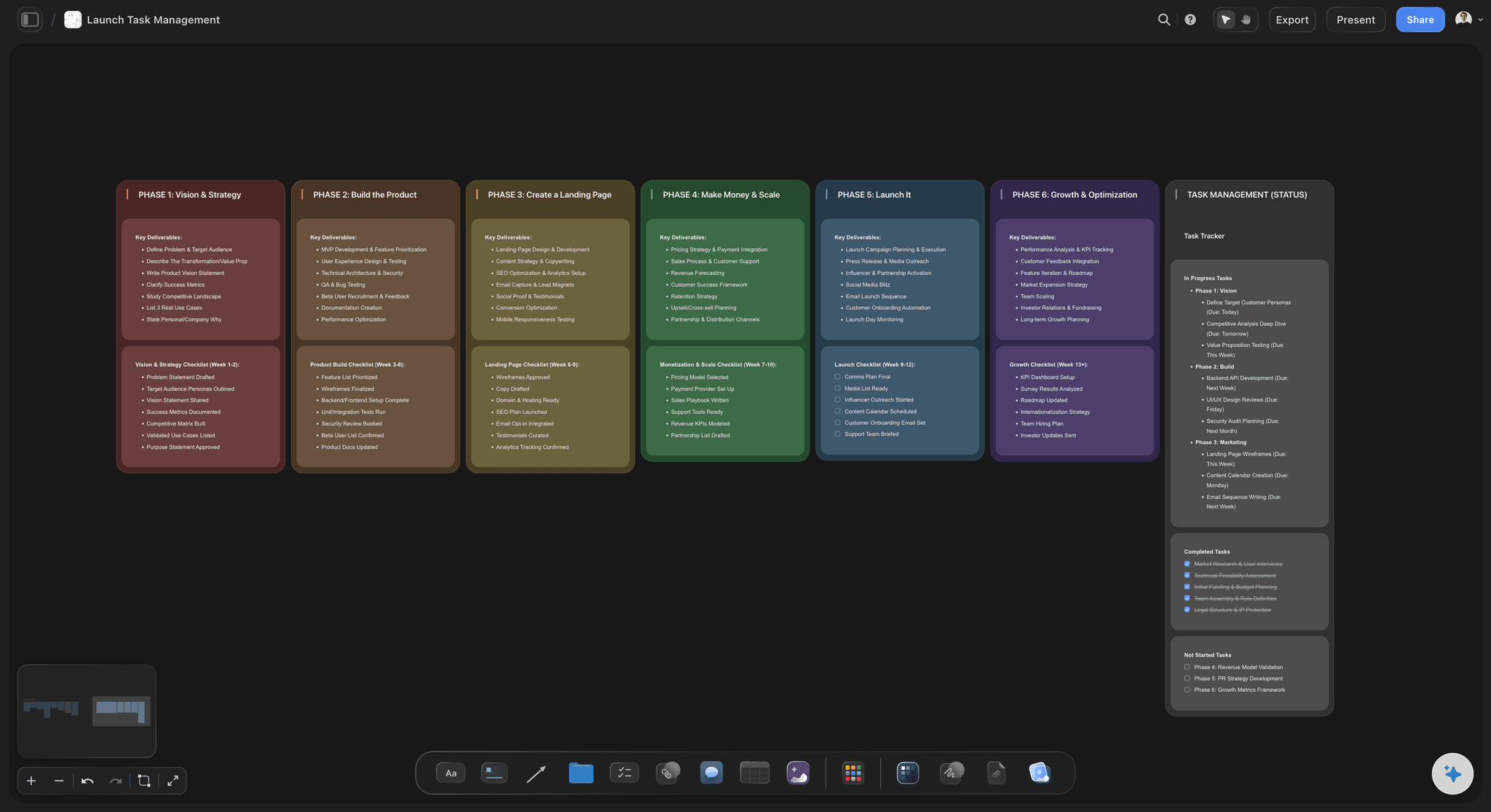
One shape becomes another
A map becomes a board without being rebuilt
Branches are how you find the structure. Cards, phases, and sequences are how you execute it. On an infinite canvas the same thinking takes whichever shape the stage needs, so nothing has to be retyped just to change format.
Explore concept mapping →Unlimited canvases. No branch limit.
Storyflow is paid-only during early access, with plans from $9.99 a month, and a Free plan launches before the end of 2026. Anyone a paid member invites to a board joins free today, so a study group or a project team can work on one canvas without everyone paying.
Unlimited maps and boards on an infinite canvas
AI that reads your whole canvas as context
Sources, images, and PDFs pinned beside the branches
Share a view-only link with anyone, no account needed
FOR THE WHOLE PROJECT
Built for the thinker, not for the diagram.
A mind map tool ends where the map ends. A canvas carries on to wherever the thinking goes next.
Mapping that behaves the way you expect
The mapping part still has to feel fast
Branch and rearrange by dragging: Add a node, move a subtree, split a branch in two. Restructuring should take a second, because the whole value of mapping is that trying a different arrangement is cheap enough to actually try.
Start from a prompt when you are stuck: A blank centre is the worst part of mind mapping. Describe the topic and the AI puts a first structure on the canvas, which is far easier to disagree with than nothing.
No limit on how far it grows: The canvas is infinite, so a map that keeps expanding does not run into a page edge or force you to start a second file that loses its connection to the first.
Colour, grouping, and space that mean something: Cluster related branches, separate the ones you are unsure about, and use position as information. Spatial memory is most of why visual thinkers map in the first place.
The material the map is about
Keep the evidence attached to the idea
PDFs, articles, and screenshots on the canvas: Pin the source next to the branch that came from it, so months later the answer to why did I think this is one glance away rather than a search through your browser history.
Images and visual reference: Some ideas are visual and a text node cannot carry them. Put the image on the board where the idea is, at the size it needs to be read at.
Video frames too: Grab a frame from YouTube or Vimeo straight onto the canvas when the reference is a specific moment rather than a link you will have to scrub through again.
AI in the loop, not in another tab
Think with something that can see your canvas
Expand a branch that is thin: Point at the part of the map you have not thought hard enough about and ask for options. The suggestions come from the surrounding structure, not from a generic template.
Turn structure into prose: Ask the AI to draft the section a branch describes, using the neighbouring nodes and the sources you have pinned as the brief, then rewrite it in your own voice.
Ask what is missing: The most useful question you can put to a map is what is not on it. An assistant that has read the whole canvas can answer that in a way a chat window with no context cannot.
From thinking to doing
The map turns into the work
Branches become cards: When the thinking settles, the same nodes lay out as a board with phases and next steps, so the plan is the map grown up rather than a fresh document that loses the reasoning.
Draft on the same surface: Write the essay, chapter, script, or proposal in a document on the canvas with the structure still visible beside it, which is the whole reason you made the map.
Share without an account: Send a view-only link and a tutor, a client, a co-author, or a teammate opens the entire canvas in a browser with nothing to sign up for.
Export when you need a file: Export the board as a high-quality image or PDF when the map has to be submitted, printed, or dropped into a deck.
Explore templates for your project
Every template opens as a real, editable board on the infinite canvas. Pick the closest fit and make it your own.
Mind Map
Branch one central idea out into themes and sub-points, then drag the connections around until the structure makes sense.
HOW WE COMPARE
Storyflow vs Coggle, MindMeister, and XMind.
Coggle wins the two rows it deserves to win, and they are the two most people care about most days.
Storyflow
Recommended
Free plan available today
Fastest route to one quick mind map
Holds the whole project, not just the map
AI that reads your entire canvas as context
Offline desktop app with deep export formats
Sources, images, and documents on the same surface
Coggle
Free plan available today
Fastest route to one quick mind map
Holds the whole project, not just the map
AI that reads your entire canvas as context
Offline desktop app with deep export formats
Sources, images, and documents on the same surface
MindMeister
Free plan available today
Fastest route to one quick mind map
Holds the whole project, not just the map
AI that reads your entire canvas as context
Offline desktop app with deep export formats
Sources, images, and documents on the same surface
XMind
Free plan available today
Fastest route to one quick mind map
Holds the whole project, not just the map
AI that reads your entire canvas as context
Offline desktop app with deep export formats
Sources, images, and documents on the same surface
What creators are saying
Join early creators getting structured workspaces and AI that remembers their projects
“Storyflow has sped up my workflow by at least 3x, which means more flow state and more projects I can actually ship. It truly changed the way me and my team create.”

Reilin Joey
Director & YouTuber
“One prompt gets me a structured board. But the tactics are my favorite. I run my YouTube scripts through them and my intros and retention got better. It's amazing.”

Justkay
YouTuber & Freelance Filmmaker
“I used to juggle five apps to plan a project. Now I describe what I am making and get boards, lists, and a schedule. All in one place.”

George
@fernwehchronicles
Coggle alternative questions, answered without the sales pitch.
Starting with the awkward one about price, because dodging it would be insulting.
Probably not, if what you do is make an occasional mind map. Coggle is free, it opens instantly, and for a single map in a single sitting the simplicity is the feature. Nothing on this page changes that. The reason to look elsewhere is when the map is consistently the beginning of something longer: an essay you then have to write, a research area you keep adding to, a project you have to plan and run. That is a different job, and it is the one Storyflow was built for.
Keep mapping. Just stop stopping there.
Open a canvas, map the idea, and keep the sources, the writing, and the plan on the same surface. Plans from $9.99/month, nothing to install, and a Free plan before the end of 2026.