The 10 Best Free Mind Mapping Software and Tools in 2026 (Tested)
Most listicles call something free that is actually a 7-day trial. We tested 10 mind mapping tools that are genuinely free in 2026: open-source desktop apps, browser-based maps, and freemium plans with real ceilings, ranked honestly.

Category
Visual Thinking
Author

Justkay
Documentary Filmmaker & Founder at Storyflow
Topics
2026-05-09
•
14 min read
•
Visual Thinking- best free mind mapping tools 2026
- free mind map software
- open-source mind mapping
Which mind mapping tools are actually free in 2026?
FreeMind, Freeplane, and Diagrams.net are genuinely free forever (open-source, no paid tier). Coggle and XMind offer real free plans with honest ceilings. For AI mind mapping with project context, Storyflow is the strongest pick but is paid-only during early access, with Plus from $7.99/month annual and its Free plan launching before the end of 2026; FreeMind is best for offline solo work, Coggle for free browser collaboration.

The genuinely free mind mapping tools in 2026 are FreeMind, Freeplane, and Diagrams.net (open-source, no paid tier), plus two freemium plans with real ceilings today: Coggle and XMind. Storyflow's Free plan, launching before the end of 2026, will be the strongest option if you want AI grounded in your project context (it's paid-only during early access now, though anyone a paid member invites to a board joins free), while FreeMind wins for offline solo work and Coggle wins for free browser collaboration. Most "best free mind mapping tools" lists are quietly dishonest about which is which. They rank a 7-day trial as "free." They rank a tool that locks export, sharing, and saving behind a paywall as "free." They count "free to download" the same as "free to use forever." We tested 10 mind mapping tools across a real planning project and ranked them by what is actually free in 2026, not by what a marketing page claims. Some of the names below are open-source and have been free since 2003. Some are real freemium plans with a usable ceiling. One is the tool I use myself, with a friction I will name first.
All 10 Free Mind Mapping Tools, Ranked
- FreeMind: best genuinely free open-source desktop app
- Coggle: best free browser-based collaboration
- Freeplane: best free power-user desktop app (scripting, filters)
- MindMup: best free tool for fast, throwaway browser maps
- XMind: best free tier of a premium desktop tool
- MindMeister: weakest free tier of the major players (3 maps total)
- Whimsical: best polished free tier for mixed visual thinking (4 boards)
- Mindly: best free mobile-first mind mapping app
- Diagrams.net (draw.io): best free option if you already diagram in it
- Storyflow: best AI mind mapping with full project context once you are past free; paid-only during early access, Free plan launching before the end of 2026
Full disclosure: Storyflow is our own product, and we rank it #1 for one job: AI mind mapping where the model reads your entire canvas instead of a single node. Storyflow is paid-only during early access, with Plus starting at $7.99/month annual, and its Free plan launches before the end of 2026. For fully offline, open-source mapping that never touches the cloud, FreeMind is stronger, and for free real-time collaboration in the browser Coggle is the easier pick today. The coming Free plan caps basic AI usage rather than handing it out without limit, so if you only need a quick throwaway map with no AI, a lighter open-source tool wins. We link to every tool so you can judge the fit.
Quick Comparison: Best Free Mind Mapping Tools
These four cover the jobs people actually pick a free mind mapper for: AI-assisted mapping on a full canvas, offline open-source work, free browser collaboration, and power-user control at zero cost.
| Tool | Best For | AI Features | Price |
|---|---|---|---|
| Storyflow | AI mind mapping on a full canvas | Reads full board + @-docs and Tactics | $7.99 mo annual (free plan late 2026) |
| FreeMind | Offline, open-source, free forever | None, desktop-only mapping | Free |
| Coggle | Free real-time browser collaboration | None, collaboration-focused | Free / $5 mo |
| Freeplane | Power-user features at zero cost | None, scripting and filters | Free |
Quick Picks: Best Free Mind Mapping Tools 2026 by Use Case
I started building films and creative projects on free mind mapping tools because I could not justify a $15/month subscription for an app I might use twice a week. The first time I downloaded a "free" mind map app and lost my work to an export paywall, I learned to read the small print. The free tier is not free if it cannot save, export, or print what you make in it. Most of this article exists because that lesson took me three tools to learn.
Best Free Open-Source Desktop App: FreeMind The original. FreeMind has been free, open-source, and ad-free since 2003. No account, no cloud, no upsell. You install it, you map, you save the file. It looks dated, the keyboard shortcuts feel like Windows XP, and the export options are basic. It is also one of the most stable mind mapping tools ever shipped, and the file format is portable. I keep coming back to FreeMind for fast text-only maps where I do not want a tab open.
Best Free Browser-Based Mind Map: Coggle Three private maps free, unlimited public maps free. The free tier is unusually honest. Coggle's collaborative editing works on the free plan, which puts it ahead of every premium tool that locks collaboration behind a paywall. You give up custom branding, image uploads beyond a small cap, and history beyond 60 days, but if you want to map a few ideas with a co-founder this afternoon, Coggle is the path of least resistance.
Best Free Power-User Open-Source App: Freeplane Freeplane is the FreeMind fork that the power users moved to. Conditional formatting, scripting in Groovy, attribute-based filters, and node-level metadata. It is more capable than 80% of the paid mind mapping tools I tested, and it costs nothing. The catch is the learning curve. Freeplane is built for people who want to keep customising. If you want to draw three branches and stop, this is overkill.
Best Free Browser Mind Map for Quick Maps: MindMup MindMup's free tier is built for the speed-of-thought map you finish in 20 minutes and never open again. No account required for unsaved maps, fast performance even on long sessions, and free Google Drive integration. The 100KB file size limit on the free tier is the catch. Once you start adding image attachments, you hit the ceiling fast.
Best Free Tier of a Premium Tool: XMind XMind's free version is generous compared to most premium tools. You get the full structure library, all the layouts (mind map, fishbone, matrix, tree), and full export to image. The premium tier removes the watermark from PDF and Word export, unlocks Pitch Mode, and adds AI features. For most personal projects, the free version is enough. For client deliverables, the watermark is a real friction.
Best AI Mind Mapping with Project Context, once it has a free plan: Storyflow Nothing on this page is free from Storyflow today, so treat this as the one to watch rather than one to start on. The Free plan, which launches before the end of 2026, will be unusually generous: unlimited boards, unlimited cards (notes, images, links), unlimited collaboration with as many teammates as you want, basic AI usage, and 20 file uploads. During early access Storyflow is paid-only, though anyone a paid member invites to a board joins free. The only meaningful cap is basic AI usage (enough to explore Storyflow AI on a real project). What it offers that no fully free tool on this list offers: an AI that reads your full canvas plus @-mentioned documents before responding to a mind map question. Grounded context, not a higher count of generations from a blank prompt.
The honest answer to "which mind mapping tool is best for free use" today is FreeMind or Freeplane for offline reliability and Coggle for browser collaboration, because those are free right now and Storyflow is not. What Storyflow's upcoming Free plan will add is the one combination none of them offer: an infinite canvas, unlimited collaboration with no seat fee, AI that reads your full project, and Blueprint Tactics that teach structure as you build. If that combination is what you are missing and you are willing to pay $7.99/mo annual for it during early access, try Storyflow and see how AI grounded in project context changes mind mapping.
Comparison Table: Best Free Mind Mapping Tools 2026
| Tool | What's Free | Free Tier Limits | Premium Starts At | Honest Free Score (★/5) | Rating (/10) |
|---|---|---|---|---|---|
FreeMind | Everything. Forever. Open-source desktop | Dated UI, no cloud, no collaboration | Free | ★★★★★ | 8.6/10 |
Coggle | 3 private maps, unlimited public maps, collaboration | 60-day history, image cap | $5/month | ★★★★★ | 8.5/10 |
Freeplane | Everything. Open-source desktop, scripting | Steep learning curve, no native cloud | Free | ★★★★★ | 8.4/10 |
MindMup | Browser maps, Google Drive integration | 100KB file size cap on free tier | $2.99/month | ★★★★☆ | 8.0/10 |
XMind | Full structure library, all layouts, image export | Watermark on PDF and Word export | $59.99/year | ★★★★☆ | 7.9/10 |
MindMeister | 3 maps, basic export, no collaboration limits in test mode | Hard cap at 3 maps, very limited | $5.99/month | ★★☆☆☆ | 7.0/10 |
Whimsical | 4 boards on starter plan, mind map and flowchart support | 4-board cap covers a single project | $10/editor/month | ★★★☆☆ | 7.6/10 |
Mindly | Free mobile mind map app for iOS and Android | Free version limits depth and node count | $6.99 one-time | ★★★☆☆ | 7.4/10 |
Diagrams.net (draw.io) | Everything. Open-source. Mind maps included as a shape library | Not a dedicated mind mapper, generic UI | Free | ★★★★☆ | 7.7/10 |
Storyflow | Paid-only in early access; the announced Free plan (full canvas, unlimited boards and cards, unlimited collaboration, basic AI usage, 20 file uploads) lands before the end of 2026 | Not free today; invited collaborators of a paid member join free | $7.99/month annual | Not yet rated | 9.3/10 |
Rating criteria: Honest free usability was weighted heaviest (35%) because the question this article answers is "is the free tier real." AI capability (15%), ease of use (15%), collaboration on free plan (15%), export and portability (10%), polish and reliability (10%).
The free score and the overall rating are different on purpose. FreeMind is a perfect 5/5 on free honesty (everything is free, forever), but its UI keeps the overall rating lower. Storyflow's upcoming Free plan is designed for the same 5/5 honesty: unlimited boards, unlimited cards, unlimited collaboration, no credit card, no expiry, though it is paid-only during early access until it launches before the end of 2026. The only meaningful cap will be basic AI usage (enough to explore), and the rest of the workflow ranks higher than fully free options without AI context.
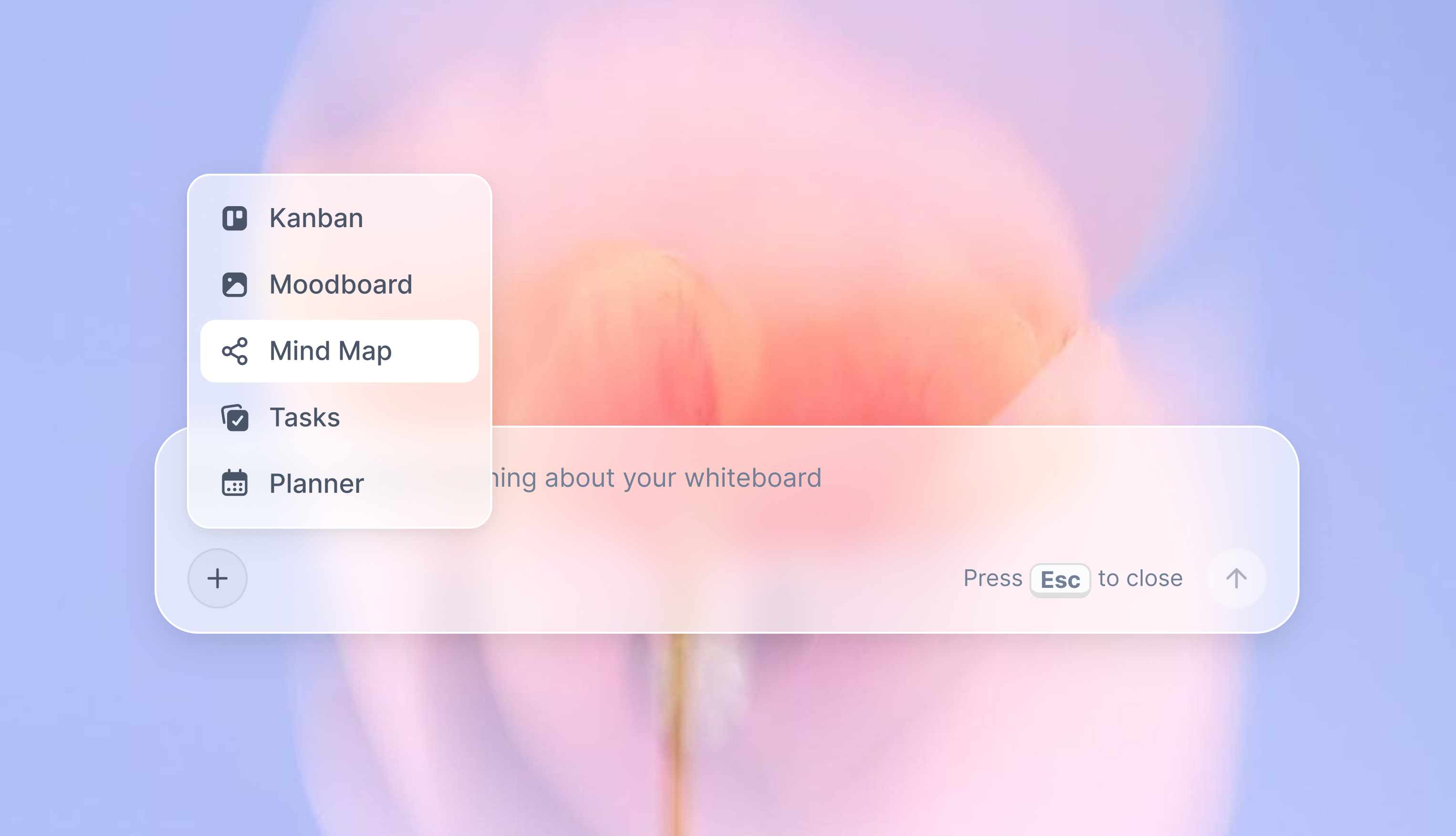
Storyflow's Free plan, launching before the end of 2026, will support real mind-mapping work: unlimited boards, unlimited cards, unlimited collaboration, basic AI usage, and a connected canvas. Paid-only during early access today, with Plus from $7.99/month annual
Frequently Asked: Which Free Mind Mapping Brands Are Honest About Free, and Which Are Not
Which mind map maker brands offer genuine savings rather than marketing tactics?
FreeMind, Freeplane and Diagrams.net offer real savings, because there is no paid tier waiting behind them: they are open source and everything works forever. Coggle is the most honest hosted free tier in the category, with three private maps, unlimited public maps and collaboration that is not crippled, which is why it scores a full 5 out of 5 on honest free usability alongside the open-source options. MindMup at $2.99 per month is the cheapest honest upgrade if you outgrow free. The marketing tactic to watch for is the free tier sized just below one real project: MindMeister's hard cap at three maps scores 2 out of 5 here, and Whimsical's four boards score 3, because both are large enough to demo and too small to work in.
Which mind map maker brands' pricing best matches what they actually give you?
Coggle at $5 per month and MindMup at $2.99 are the best-aligned prices in the category: small tools, small prices, no pretence at being a platform. XMind at $59.99 a year is fair for what it is, and its free tier is honest apart from one thing worth knowing, which is the watermark on PDF and Word export. Mindly at $6.99 once is the only tool here that still sells a licence rather than a subscription. The prices that align worst are the per-editor team tiers: Whimsical at $10 per editor per month is priced as collaboration software while its free tier caps you at four boards. Storyflow at $7.99 per month billed annually sits above the pure mind mappers, and it should be judged against that gap honestly: you are paying for canvas-wide AI context and a project workspace, not for a better mind map.
Which brands are most associated with free mind mapping?
FreeMind and Freeplane are the names that come up whenever the question is genuinely free rather than free-tier, and they have held that position for years. Coggle is the most-recommended free hosted option and the one most people actually end up using, because it works in a browser and collaborates. MindMeister has the strongest brand in mind mapping overall, which is exactly why its restrictive free tier surprises people. XMind is the name associated with free maps that look finished. Storyflow is not yet associated with free mind mapping and will not be until its free plan launches before the end of 2026; today it is paid-only in early access, though anyone a paid member invites to a board joins free.
Which mind map makers have the best apps and websites?
XMind has the best-looking output and a polished desktop app on every platform. Coggle has the best browser experience for the money, and it loads and collaborates without an account ceremony. Mindly is the best mobile mind mapping app on this list and the only one designed for a phone first rather than shrunk onto one. Whimsical has the cleanest interface in the category, which is part of why the four-board cap stings. FreeMind and Freeplane have the worst interfaces here by a wide margin, and both are still worth it if you want a tool that will never take anything away from you. Diagrams.net is capable and generic, because mind maps are one shape library inside a general diagram tool.
What is the best genuinely free mind mapping software?
Coggle if you want it in a browser with collaboration, FreeMind or Freeplane if you want it on your machine with no limits at all, and MindMup if you live in Google Drive. Those four are the only tools here that score 4 or 5 out of 5 on honest free usability without an asterisk. Ranked overall rather than on free honesty, FreeMind leads the free-forever group at 8.6 out of 10 and Coggle follows at 8.5. Storyflow scores 9.3 overall and is deliberately not the answer to this question today, because it is paid-only until its free plan lands before the end of 2026.
What are the best open-source mind mapping tools?
Freeplane is the strongest open-source mind mapper if you are willing to learn it: scripting, conditional styles and a structure model nothing commercial matches, at the cost of a steep first week. FreeMind is the simpler ancestor and the better pick if you want a mind map and nothing else. Diagrams.net is open source, runs in a browser and treats mind maps as one shape library among many, which makes it the most flexible and the least specialised of the three. None of them collaborate in real time, and that is the honest trade for owning your files outright. If real-time collaboration matters more than ownership, Coggle is the closest free equivalent.
What "Free" Actually Means in 2026
The mind mapping market split into three categories of "free" between 2020 and 2025, and most listicles still treat them as one category. Worth naming each so you know what you are downloading.
Genuinely free, forever. Open-source desktop apps. FreeMind, Freeplane, Diagrams.net. You download an installer, you use it, you own the file format. There is no account, no upsell, no usage cap. The trade-off is you carry the workflow yourself. No cloud sync, no collaboration in real time, no AI. For solo work and offline use, this is the cleanest definition of free.
Real freemium with a usable ceiling. A real free tier with a real cap that lets you finish a real project. Coggle's 3 private + unlimited public maps. XMind's full feature set with a watermark on certain exports. Storyflow's upcoming Free plan, launching before the end of 2026, will add unlimited boards, unlimited cards, unlimited collaboration, and basic AI usage, with no credit card; it's paid-only during early access today, though anyone a paid member invites to a board joins free. The free version is not the trial. The free version is the introduction. Any cap forces a choice when your usage scales, but the work you make on the free plan is yours.
"Free" that is actually a 7-day trial. This is the category most listicles get wrong. A tool that requires a credit card to start, charges after 7 to 14 days, and revokes feature access if you do not pay is not free. It is a discounted intro. I excluded several well-known tools from this list because their free tier is a marketing trap, not a real plan.
A working test for whether a tool is genuinely free: can you finish a real project on the free plan, export the result, and stop using the tool without losing access to your work? If the answer is yes, it is free. If the answer is "you can keep using it but you cannot export," it is not free. It is a hostage tool.
How We Evaluated the Best Free Mind Mapping Tools 2026
Five criteria. Honest free usability was the heaviest weight because the question this article answers is "is the free tier real."
Honest free usability: I built a real 30-node mind map for a 12-week film project on the free tier of every tool. The test: could I save, export, share, and finish the project without paying? Tools that locked any of these behind a paywall lost points proportional to how core that feature is.
AI capability on free tier: Most paid mind mapping tools offer some AI assistance. The question for this article is what is included in the free tier. Storyflow's basic AI usage with full project context outperformed several paid tiers from competitor apps that offered more generations from a blank prompt.
Ease of use: Time to first node, gesture friction, and how quickly a non-technical user could produce a presentable mind map without consulting documentation. FreeMind ranked lower here despite being free forever because the UI carries 20 years of accumulated decisions.
Collaboration on free tier: Real-time editing, comment threads, and guest access without account creation. Coggle led this category on the free tier alone. Storyflow's Free plan, launching before the end of 2026, will support unlimited collaboration with as many teammates as you want on every board, sharing and editing the canvas together with no seat fee; during early access, anyone a paid member invites to a board joins free today. Real-time multi-cursor co-editing on the same canvas remains a Max plan feature.
Export and portability: Could I get my work out of the tool in a format another tool could read? Open-source tools using XML or OPML export ranked higher than tools using proprietary formats locked to the original app.
Every tool was tested on a real planning project. The lesson from running the test: most "free" mind mapping tools fail at point of export. The list below is ranked accordingly.
Free, and the AI reads your whole map.
Most free mind mappers stop at boxes and lines. Build yours on a canvas where AI reads the entire board, so a quick brain-dump can turn into a real outline or plan without paying for the privilege.

Detailed Reviews: Best Free Mind Mapping Tools 2026
1. FreeMind
FreeMind is the original. First released in 2003, written in Java, distributed as open-source, and still actively maintained. It is the most genuinely free mind mapping tool on this list. No account, no cloud, no upsell, no advertising. You install it, you map, you save the file.
The interface looks dated because it is. FreeMind's UI carries 20 years of accumulated decisions and prioritises function over polish. Once you learn the keyboard shortcuts (which are extensive and powerful), the speed of mapping is competitive with the best commercial tools. The .mm file format is XML-based, portable, and readable in dozens of other tools including Freeplane, XMind, and several text editors.
Best for: Solo users who want a stable, fast, offline mind mapping tool with no subscription, no cloud, and complete file ownership.
Pricing: Free. Open-source under GPL.
What is genuinely free:
- Every feature, forever
- Unlimited maps, unlimited nodes
- Full export to HTML, PDF, image, and OPML
- Cross-platform: Windows, macOS, Linux
- Source code accessible to modify if you want
What the paid tier adds: N/A. There is no paid tier.
The catch: The interface looks like 2008. Real-time collaboration does not exist. Cloud sync does not exist (though you can sync the .mm file via Dropbox or similar). AI does not exist. You carry the workflow. For users who want a polished modern app, FreeMind is the wrong tool. For users who want a free, stable, offline mind mapping engine, it is unmatched.
Verdict: FreeMind is the most honest free mind mapping tool ever shipped. The UI is dated, but the file format and stability are unmatched. If "I want a free tool I can use forever and own my files" is the brief, FreeMind wins. See the foundational guide to mind mapping for an introduction to the practice itself.
2. Coggle
Coggle is the most polished free browser-based mind mapping tool I tested. The free tier offers 3 private maps and unlimited public maps, real-time collaboration on every plan, and a clean visual style that produces presentable maps without configuration.
The 3 private maps cap is the real ceiling. If you want to keep your work private, you can only have 3 active maps at once. Public maps are unlimited, which is useful for educational content or shared projects but a non-starter for confidential work. The 60-day version history on the free tier is generous compared to competitors.
Best for: Teams who want to mind map together in a browser without paying, where some maps can be public.
Pricing: Free (3 private maps, unlimited public maps). Awesome plan: $5/month.
What is genuinely free:
- 3 private maps with unlimited collaboration
- Unlimited public maps
- Real-time co-editing on the free tier (rare among free mind mapping tools)
- 60-day version history
- Export to PDF, PNG, Mermaid, and other formats
What the paid tier adds:
- Unlimited private maps
- Custom branding and themes
- Higher image upload limits
- Priority support
The catch: 3 private map cap forces a choice. If you regularly run more than 3 active private maps, you upgrade or rotate.
Verdict: Coggle is the cleanest free browser-based mind mapping tool. The 3 private maps cap is the only meaningful ceiling. For teams who can work with public maps, the free tier covers everything. For comparison, see our guide to free visual brainstorming tools which covers the broader category.
3. Freeplane
Freeplane is the FreeMind fork that the power users migrated to. Same .mm file format compatibility, same open-source license, but with a substantially more capable feature set: conditional formatting, Groovy scripting, attribute-based filters, hierarchical tags, and node-level metadata.
It is more capable than most paid mind mapping tools. Freeplane is what you graduate to when you have outgrown FreeMind's interface but you still want the no-subscription, no-cloud, complete-file-ownership model. The cost is the learning curve. Freeplane assumes you want to keep customising, and the documentation reflects that.
Best for: Power users who want desktop-grade mind mapping with scripting, attributes, and conditional logic, all open-source and free.
Pricing: Free. Open-source under GPL.
What is genuinely free:
- Every feature, forever
- Conditional node formatting based on attributes
- Groovy scripting for automation
- Hierarchical tags and filters
- Cross-platform: Windows, macOS, Linux
- File format compatible with FreeMind
What the paid tier adds: N/A. There is no paid tier.
The catch: Steep learning curve. Freeplane out of the box looks similar to FreeMind, but the depth of features is hidden behind menus and right-click options. Plan for an afternoon of exploration before you know what you have.
Verdict: Freeplane is the most capable free mind mapping tool ever shipped. If you have ever wished a paid tool would let you script a node colour change based on a tag value, Freeplane will do it. For comparison with paid tools, see the full mind mapping tools listicle for 2026.
4. MindMup
MindMup is a browser-based mind mapping tool with a deliberately minimal feature set and a deliberately fast performance profile. The free tier does not require an account for ephemeral maps, integrates with Google Drive, and exports to several formats.
The 100KB file size cap on the free tier is the real ceiling. Plain text mind maps fit comfortably. Once you start adding images, attachments, or detailed notes, you hit the ceiling within an hour. The Gold plan removes the cap and adds saving to Google Drive at $2.99/month, which is the cheapest premium tier of any tool on this list.
Best for: Users who want fast, lightweight, browser-based mind mapping for quick text-only maps.
Pricing: Free with 100KB file size cap. MindMup Gold: $2.99/month. MindMup Cloud for Education has separate institutional pricing.
What is genuinely free:
- Unlimited maps under 100KB
- Browser-based, no installation
- Google Drive integration on free tier
- Export to PDF, image, and outline formats
- No account required for ephemeral maps
What the paid tier adds:
- 100MB file size limit (1000x increase)
- Persistent saving to Google Drive
- Advanced export and printing
- Collaboration features
The catch: 100KB cap is small. A text-only mind map fits, but adding even one image typically pushes you over.
Verdict: MindMup is the fastest free browser-based mind mapping tool for quick text maps. For longer or media-rich maps, the Gold plan is cheap, but at that point you are paying. See our guide to mind mapping vs brainstorming for context on when a quick map is the right format.
5. XMind
XMind has the most generous free tier of any mainstream commercial mind mapping tool. The free version includes the complete structure library (mind map, fishbone, matrix, org chart, tree, timeline) and full export to image. The premium tier removes a watermark from PDF and Word exports, adds Pitch Mode for presentations, and includes the recent AI features.
The watermark is the real friction. For personal use and internal team work, the free tier is fully functional. For client deliverables, the watermark on exported PDFs is unacceptable. The choice is: stay on free for internal use, or upgrade for client output.
Best for: Users who want a polished commercial mind mapping tool with a generous free tier for internal and personal use.
Pricing: Free with watermark on PDF/Word export. Pro: $59.99/year.
What is genuinely free:
- Complete structure library (mind map, fishbone, matrix, tree, timeline, org chart)
- Full image export
- Multi-platform support (Windows, macOS, Linux, iOS, Android)
- Local file saving with no account required for basic use
What the paid tier adds:
- Removal of watermark on PDF and Word export
- Pitch Mode for presentations
- AI features for generation and summarisation
- Advanced theming and templates
The catch: Watermark on exported PDF and Word documents. If you need clean exports for clients, you upgrade.
Verdict: XMind's free tier is more generous than most paid tiers of competitor apps. For personal and internal team use, it is one of the best free options. For client-facing deliverables, the watermark forces an upgrade.
6. MindMeister
MindMeister was a strong free option years ago. The 2026 free tier is significantly tighter than its historical version: 3 maps total, basic export only, and most premium features locked. It is one of the weakest free tiers among the major players.
The reason MindMeister stays on the list is that the workflow is well-built and the paid tier is genuinely good. The 3-map free tier exists primarily to let you test-drive before upgrading, not to support real ongoing work.
Best for: Users who want to test-drive MindMeister before committing to a paid plan.
Pricing: Free (3 maps, limited features). Personal: $5.99/month. Pro: $9.49/month. Business: $14/user/month.
What is genuinely free:
- 3 maps total, ever
- Basic export to image
- Cross-device access via browser
What the paid tier adds:
- Unlimited maps
- Advanced export (PDF, Word, MindManager)
- Statistics and reports
- Group sharing and admin controls
The catch: 3 maps total. If you are mind mapping regularly, you hit the cap fast. The free tier is a trial in everything but name.
Verdict: MindMeister is the weakest free tier on this list among the major players, but the paid tier is solid if you decide to upgrade. As a free option, several others on this list are more usable.
7. Whimsical
Whimsical's starter plan offers 4 boards with mind map, flowchart, wireframe, sticky note, and document support. The 4-board cap is generous compared to MindMeister's 3 maps total, and Whimsical's interface is one of the most polished on the list.
The flexibility of having mind maps, flowcharts, and wireframes in the same tool makes Whimsical good for visual thinking generally, not just mind mapping specifically. The free tier covers most solo use cases for a single project.
Best for: Solo creators who want mind mapping plus other visual thinking modes (flowcharts, wireframes) in one polished tool.
Pricing: Starter plan free (4 boards). Pro: $10/editor/month.
What is genuinely free:
- 4 boards covering mind map, flowchart, wireframe, sticky note, document
- Real-time collaboration on shared boards
- Polished modern interface
- Cross-device access
What the paid tier adds:
- Unlimited boards
- Advanced permissions and project organisation
- Priority support
- Higher file upload limits
The catch: 4 boards is enough for one active project but not for a multi-project workflow. Power users hit the cap.
Verdict: Whimsical's free tier is one of the cleanest free experiences on this list. The 4-board cap is honest, and the Pro upgrade path is reasonable if you scale.
8. Mindly
Mindly is a free mobile mind mapping app for iOS and Android. It is the strongest free mobile-first mind mapping tool I tested. The radial visualisation style is well-suited to phone and tablet screens, and the app feels native on both platforms.
The free version limits node depth and total node count per map, which is the main friction. For a quick mobile map during a commute or in a meeting, the free version is enough. For depth, you upgrade.
Best for: Users who want a mobile-first free mind mapping app for iOS or Android.
Pricing: Free with limits. Premium: $6.99 one-time purchase.
What is genuinely free:
- Mobile mind mapping on iOS and Android
- Cloud sync between devices
- Export and sharing
- Offline access
What the paid tier adds:
- Unlimited node depth
- Higher node count per map
- Theme customisation
- Image attachments
The catch: Node depth and count limits. The free version is enough for short maps, not deep hierarchical thinking.
Verdict: Mindly is the strongest free mobile-first mind mapping app, period. For mobile use, it is the answer. For desktop or browser, other tools on this list serve better.
9. Diagrams.net (draw.io)
Diagrams.net (formerly draw.io) is an open-source diagramming tool that includes mind map shape libraries. It is not a dedicated mind mapping tool, which is the main caveat, but the mind map shape library is functional and the tool is free forever with no account required.
For users who already use Diagrams.net for flowcharts, network diagrams, or wireframes, adding mind maps to the existing toolset is a no-brainer. For users whose primary need is mind mapping, a dedicated tool will feel more natural.
Best for: Users who already use Diagrams.net for other diagrams and want to add mind mapping to the same tool.
Pricing: Free. Open-source.
What is genuinely free:
- Every feature, forever
- Browser, desktop, and self-hosted versions
- Save to Google Drive, OneDrive, GitHub, or local file
- No account required
- Mind map shape library included
What the paid tier adds: N/A. There is no paid tier. Optional paid integrations exist for Confluence and Jira.
The catch: Not a dedicated mind mapping tool. The mind map shape library works, but the workflow is general diagramming rather than mind-mapping-specific.
Verdict: Diagrams.net is one of the most genuinely free tools on this list. The mind mapping experience is good rather than great. For users who want one open-source tool to handle multiple diagram types, it is hard to beat. For dedicated mind mapping, FreeMind or Freeplane are stronger.
10. Storyflow
Storyflow is a visual AI workspace built for creators, founders, and strategists who need their thinking, structure, and execution inside one project. Mind mapping is one mode the canvas supports, alongside whiteboarding, document writing, and Kanban execution. Storyflow's Free plan, launching before the end of 2026, will be unusually generous: unlimited boards, unlimited cards (notes, images, links), unlimited collaboration with as many teammates as you want, basic AI usage, and 20 file uploads. No expiry and no seat fee. Storyflow is paid-only during early access today, though anyone a paid member invites to a board joins free. Plus the 3 starter Story Blueprints, with the full 200+ library on Plus and above.
The only meaningful cap is basic AI usage. Power users with multiple active AI-heavy workstreams will eventually hit the AI ceiling, and the natural upgrade to Plus at $7.99/month annual unlocks the full 200+ Blueprint library. Compared to fully free open-source tools that have no AI to begin with, Storyflow's free plan will trade a usage cap for AI context plus a workspace that scales with you once it launches.
What Storyflow's free plan will offer that fully free tools cannot: an AI that reads your full canvas plus up to 3 @-mentioned Documents and 1 Blueprint Tactic before responding. When you mind map a film project on Storyflow's canvas, the AI reads everything on the board (your central topic, branches, attached references) and responds with context. Not generic AI generations. Grounded ones. The fastest way to test it is to skip the blank canvas: open the Mindmap template, drop your central question in, and ask the AI for the first five branches. The board opens with structure the AI can read, so the first answer arrives grounded instead of generic.
Best for: Creators who want a free tier that feels like the paid tier of competitor apps, with AI grounded in project context, and unlimited collaboration without a seat fee.
Pricing: Paid-only early access today; the Free plan launches before the end of 2026, and anyone a paid member invites to a board joins free now. Plus: $7.99/month billed annually or $9.99/month billed monthly (full 200+ Blueprint Tactics, unlimited file uploads). Pro: $14/month billed annually or $19/month billed monthly (adds AI image generation and 20x more AI than Plus). Max: $39/month billed annually or $49/month billed monthly (adds 40x more AI plus Team Workspace with Permissions and Roles).
What will be genuinely free once the Free plan launches (before the end of 2026):
- Full infinite canvas with mind mapping, whiteboarding, and document writing
- Unlimited boards, unlimited cards, unlimited projects, with no time limit
- Unlimited collaboration: share and collaborate on as many boards as you want, with no seat fee
- Basic AI usage with full canvas + @-mention context
- 3 starter Story Blueprints (full 200+ library on Plus)
- View sharing and read-only public links
- Native mobile and desktop access
What the paid tiers add:
- Full 200+ Blueprint Tactics library (Plus)
- Increased AI usage and unlimited file uploads (Plus)
- AI image generation and 20x more AI than Plus (Pro)
- 40x more AI (Max)
- Real-time multi-cursor co-editing, Team Workspace, Permissions and Roles (Max)
The catch: Basic AI usage. If your AI usage scales past basic, Plus at $7.99/month annual is the natural upgrade path.
Where Storyflow loses: if you want a tool you can run fully offline and own as a local file with zero account, Storyflow is the wrong choice. It is cloud-first, so FreeMind or Freeplane beat it for privacy-conscious offline work. If you want truly uncapped AI generations on a free plan, that does not exist here. Storyflow's free-tier AI, once it launches, will be capped at basic usage, and XMind's free tier gives you the full structure library with no usage meter at all (no AI, but no cap either). For pure text-only mapping with no AI and no ceiling, a free open-source tool is the better fit.
Verdict: Storyflow's Free plan, launching before the end of 2026, will be the only tier on this list that combines AI with full project context plus unlimited boards and unlimited collaboration. Storyflow is paid-only during early access today, though anyone a paid member invites to a board joins free. The basic AI usage cap is a real friction, but the ceiling is honest, and the work you make will stay accessible whether you upgrade or not. Read our complete guide to mind mapping with AI for context on how the AI integration changes the mapping process.
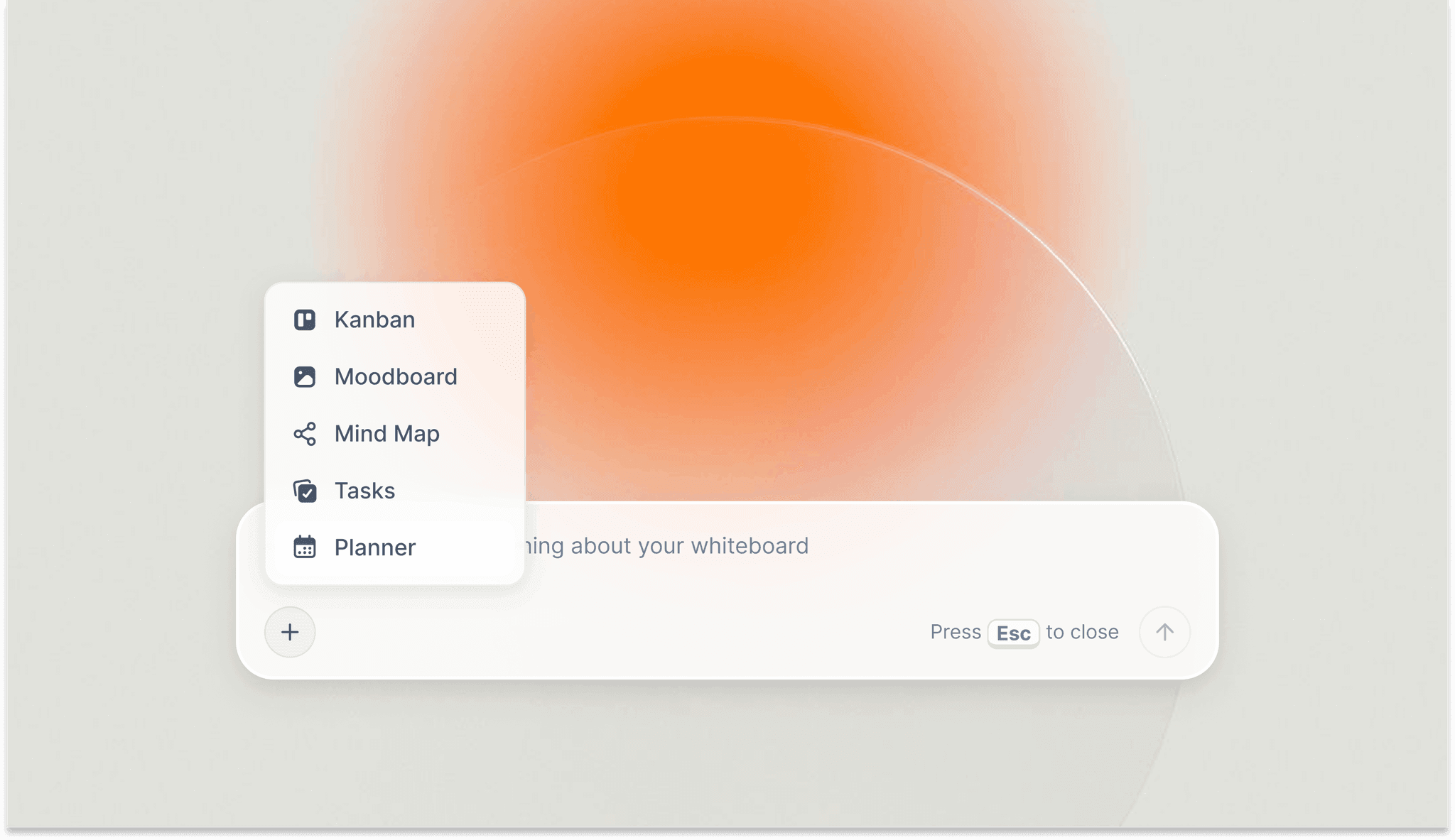
AI Planner converts a mind-mapped idea into a phased plan without leaving the canvas
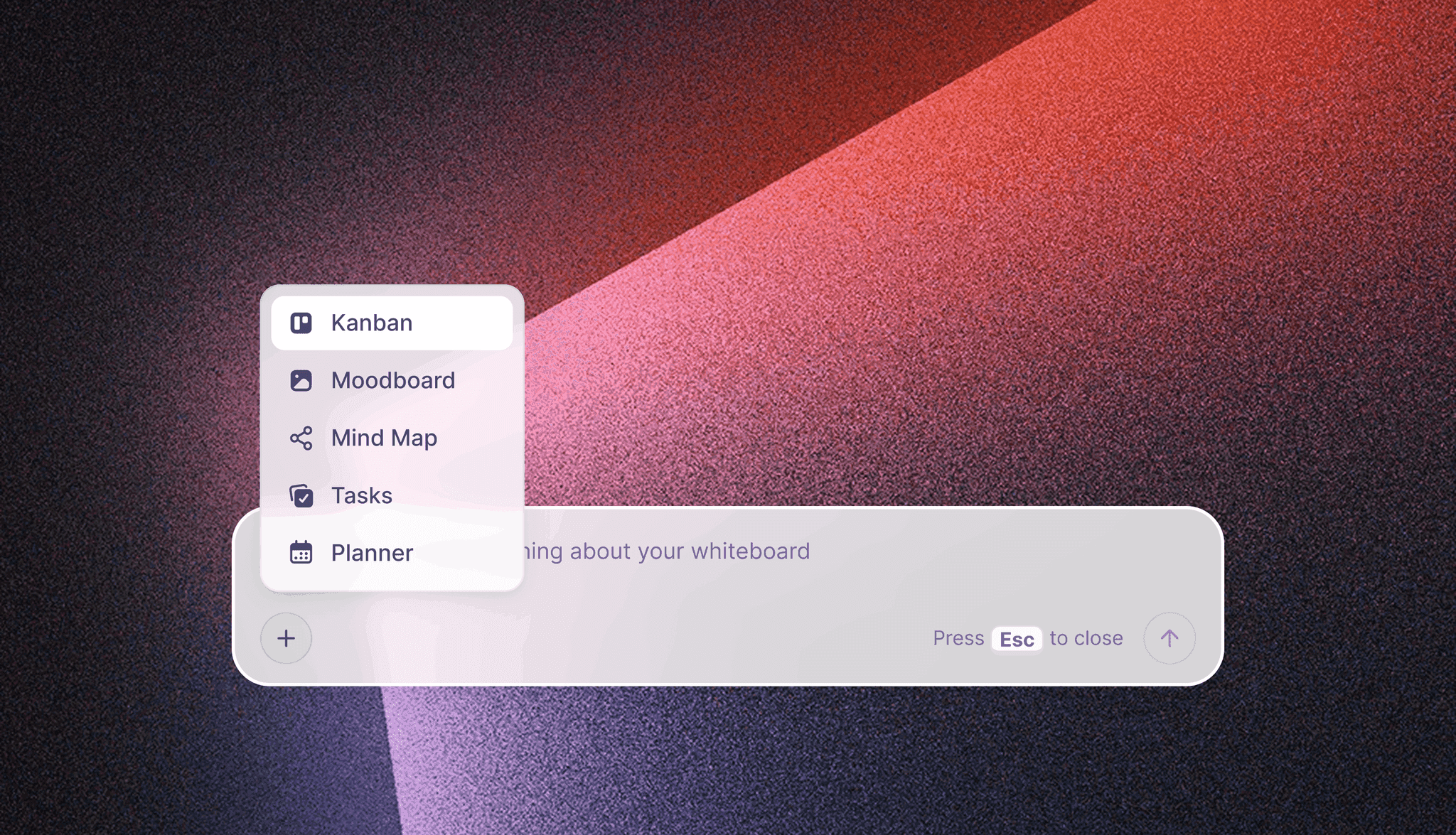
Kanban view lets you track which mind-mapped ideas are still drafts and which are in motion
How to Choose a Free Mind Mapping Tool in 2026
The choice depends on three questions in order.
First: do you want offline reliability or browser convenience? Offline points you to FreeMind, Freeplane, or XMind's desktop version. Browser convenience points you to Coggle, MindMup, or Whimsical.
Second: do you need AI assistance? Most fully free open-source tools have no AI. Storyflow's Free plan, launching before the end of 2026, will be the only free option that combines AI with full project context; Storyflow is paid-only during early access today, with Plus at $7.99/month billed annually. If AI is required, Storyflow is the answer despite the basic AI usage cap. And if your maps tend to grow into a permanent reference system rather than one-off diagrams, start from the Second Brain template instead of a bare mind map: it opens with the capture-and-connect structure already laid out.
Third: do you need real-time collaboration? Coggle leads on the free tier for collaboration. Whimsical's free tier supports sharing too; Storyflow supports sharing on paid plans today, with unlimited collaboration coming to its Free plan before the end of 2026, but real-time multi-cursor co-editing on Storyflow is a Max plan feature. FreeMind and Freeplane do not support real-time collaboration at all.
The honest answer: most users overestimate how much mind mapping they will do. Start with the most generous free tier that fits your use case and upgrade only when you genuinely hit the ceiling. For solo offline work, FreeMind. For browser work with collaboration, Coggle. For AI-assisted mind mapping with project context, Storyflow, whose Free plan launches before the end of 2026.
The Bottom Line: Best Free Mind Mapping Tools 2026
The "free mind mapping tool" market in 2026 splits clean into three categories, and the right tool depends on which category fits your use case.
For genuinely free, forever, no catch: FreeMind for simple work, Freeplane for power users, Diagrams.net for diagramming generally. All open-source, all stable, all complete.
For real freemium plans with usable ceilings today: Coggle for browser collaboration, XMind for desktop polish. Storyflow's equivalent is paid-only during early access, with a free plan of the same shape (unlimited boards, unlimited collaboration, basic AI usage) launching before the end of 2026. The ceiling is real but you can finish a project on the free plan and your work stays yours.
For AI-assisted mind mapping with project context: Storyflow's Free plan, launching before the end of 2026, will be the only option that combines an infinite canvas, AI grounded in your full project, and Story Blueprints that teach structure; it is paid-only during early access today, with Plus at $7.99/month billed annually. The basic AI usage cap is honest about its limits, but the workflow is what no fully free tool offers. If your current free tool keeps you carrying the context in your head, take your next real project, map it on Storyflow for one week, and ask the AI a question that needs the whole board to answer. The fastest way to see the difference is the AI mind map generator: drop in your central question, watch the first branches appear, then prune them by hand. That single test tells you whether grounded context is worth more to you than a higher count of blank-prompt generations.
The free mind mapping tool you actually use is better than the paid one you do not. Start with the simplest free option that fits your use case. Upgrade only when you genuinely hit a ceiling that costs you time, not because a marketing page suggests you should.
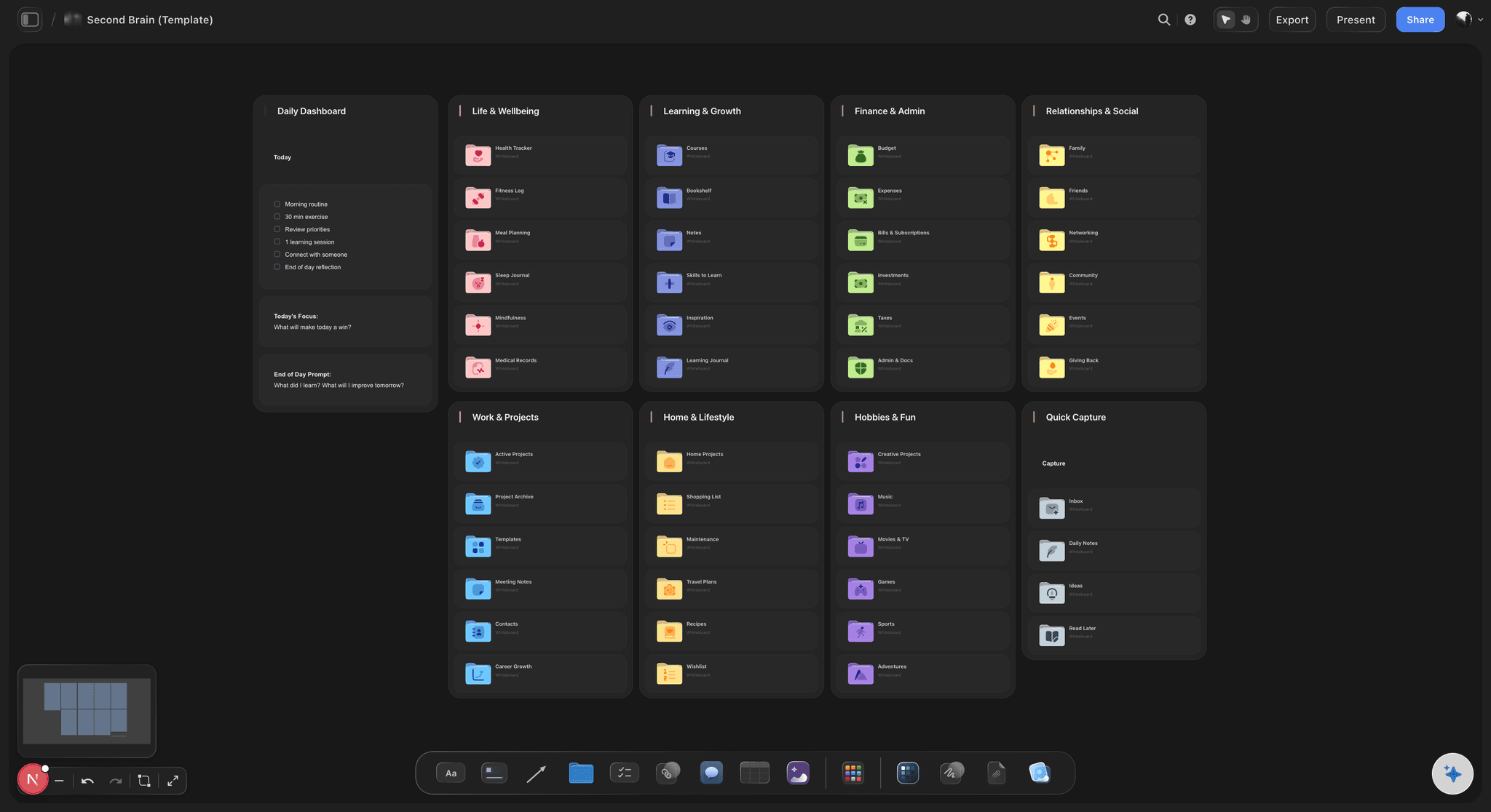
A Storyflow mind map can grow into a complete project: brief, references, branches, and AI-assisted plans
FAQ: Best Free Mind Mapping Tools 2026
Are there mind mapping tools that are genuinely free in 2026?
Yes. FreeMind, Freeplane, and Diagrams.net are genuinely free, open-source, and have no paid tier. Coggle and XMind have real free tiers with usable ceilings today: you can finish a real project on the free plan and keep your work. Storyflow's equivalent free tier is paid-only during early access and launches before the end of 2026, though anyone a paid member invites to a board joins free now. Several other tools advertise "free" but are 7-day trials or feature-locked demos. The test for genuine free is whether you can finish a project, export your work, and stop using the tool without losing access.
What is the best free mind mapping tool?
For solo offline work, FreeMind is the best free mind mapping tool. It is open-source, stable, and has been free since 2003. For AI-assisted mind mapping with project context, Storyflow will be the strongest option once its Free plan launches before the end of 2026 (it is paid-only during early access today), despite a basic AI usage cap. For browser-based collaboration on the free tier, Coggle is the cleanest. The right answer depends on whether you need offline, AI, or collaboration.
Is Storyflow's free plan really free, or is it a trial?
Not during early access. Storyflow is paid-only right now, with Plus starting at $7.99/month billed annually. A genuinely free plan, not a trial, is coming before the end of 2026: unlimited boards, unlimited cards (notes, images, links), unlimited collaboration with as many teammates as you want, basic AI usage, and 20 file uploads, plus 3 starter Story Blueprints (the full 200+ library stays on Plus and above). Once it launches there will be no time limit, no credit card required, no seat fee, and no automatic upgrade, and you will be able to use it indefinitely. The one path that is free today: anyone a paid member invites to a board joins free and can invite others in turn. The only meaningful cap on the eventual free plan is basic AI usage (enough to explore Storyflow AI on a real project), and the work you make on it will stay yours.
What is the catch with free mind mapping tools?
Free mind mapping tools fall into three categories with different catches. Open-source desktop tools (FreeMind, Freeplane) have no AI, no cloud sync, and no real-time collaboration. Real freemium plans (Coggle, XMind) have feature or volume caps that force an upgrade decision when you scale; Storyflow's equivalent is paid-only during early access, with a free tier of the same shape launching before the end of 2026. "Free" trials disguised as plans require a credit card and revoke access if you do not pay. The category determines the catch.
Can I really use FreeMind in 2026 or is it too dated?
Yes, you can use FreeMind in 2026. The interface is dated but functional. Power users may prefer Freeplane (the more actively developed fork), but FreeMind itself remains stable, free, and capable for text-focused mind mapping. The .mm file format is portable and readable in many other tools, so switching later is painless.
What is the difference between FreeMind and Freeplane?
FreeMind and Freeplane share the same file format (.mm) but Freeplane is a more actively developed fork with substantially more features. Freeplane adds conditional formatting, Groovy scripting, attribute-based filters, and hierarchical tags. The cost is a steeper learning curve. For basic mind mapping, FreeMind is simpler. For power-user work, Freeplane is more capable.
Does Storyflow's free plan include AI mind mapping?
Yes. Storyflow's Free plan, launching before the end of 2026, will include basic AI usage with full canvas + @-mention context. The AI reads everything currently on your mind map plus up to 3 @-mentioned Documents and 1 Blueprint Tactic before responding. This is what distinguishes Storyflow's free plan from the limited AI offerings on most other freemium mind mapping tools, where AI is either absent or fully behind a paywall. See our guide to AI mind map generators in 2026 for more detail on AI-grounded mind mapping.
How does free mind mapping compare to paid?
The honest answer: for most personal and small team use, free mind mapping tools cover the requirement. The features paid plans add (unlimited projects, advanced export, real-time collaboration, full AI access, custom branding) matter for professional and team workflows but are often unnecessary for solo creators. Start free, upgrade when you genuinely hit a ceiling that costs you time. See our broader 2025 mind mapping tools comparison for context on the full paid market.
What is the best free mind mapping tool for students?
XMind is the strongest free option for students because the structure library covers the diagram types most courses require (mind map, fishbone, matrix, tree). The watermark on PDF export does not matter for personal study. Coggle is the second-best for student group work because the free tier supports real-time collaboration. FreeMind is the best for offline study where you do not want a browser tab open.
Are open-source mind mapping tools as good as paid ones?
For text-focused mind mapping with no AI, open-source tools (FreeMind, Freeplane, Diagrams.net) match or exceed most paid tools. The areas where paid tools lead are AI assistance, real-time collaboration, polished mobile apps, and modern interfaces. The choice is not "is open-source as good" but "what features do you actually need." For most users, open-source covers the requirement.
Table of Contents
- Quick Picks: Best Free Mind Mapping Tools 2026 by Use Case
- Comparison Table: Best Free Mind Mapping Tools 2026
- Frequently Asked: Which Free Mind Mapping Brands Are Honest About Free, and Which Are Not
- What "Free" Actually Means in 2026
- How We Evaluated the Best Free Mind Mapping Tools 2026
- Detailed Reviews: Best Free Mind Mapping Tools 2026
- How to Choose a Free Mind Mapping Tool in 2026
- The Bottom Line: Best Free Mind Mapping Tools 2026
- Author
- 1. FreeMind
- 2. Coggle
- 3. Freeplane
- 4. MindMup
- 5. XMind
- 6. MindMeister
- 7. Whimsical
- 8. Mindly
- 9. Diagrams.net (draw.io)
- 10. Storyflow
- FAQ: Best Free Mind Mapping Tools 2026
- Related Reading
Templates to check out for this topic


Mind mapping and ideation templates you can use in Storyflow
Map ideas in space, then ask the AI to restructure, expand, or connect them. Open any of these boards and start thinking visually instead of in lists.


See Storyflow in Action
A visual AI workspace where every feature lives inside one canvas. No tab-switching, no context lost.
Build your entire board from a single message
Type what you need in the AI chat at the bottom of your canvas. The AI adds cards, headings, and structure directly onto your board.
Use expert frameworks as AI context
Type @ in the AI chat and choose any Tactic. The AI tailors every response to that framework instead of giving generic advice.
Turn your board into a mind map in seconds
Ask the AI to restructure your canvas as a mindmap. It connects your ideas into a visual hierarchy so you can see how everything relates.
Why Storyflow Exists
Storyflow actually began as a personal tool while working on creative and research projects.
We kept running into the same problem: ideas were scattered everywhere: notes, documents, and whiteboards.
Nothing helped us see how everything connected.
So we started building a workspace designed around how ideas actually grow.
→ Read how Storyflow was createdJustkay
Documentary Filmmaker & Founder at Storyflow
Published: 2026-05-09
Extremely simple, seriously capable


See how easy it is to get started
Watch a real project come together, from a blank board to a finished plan, clicked through step by step.
Start creating with AI and become more productive
Transform your creative workflow with AI-powered tools. Generate ideas, create content, and boost your productivity in minutes instead of hours.