How to Turn a Campaign Brief Into a Content Calendar
Turn a campaign brief into a content calendar by deriving the messages first, then the proof for each message, and only then the dated posts, because a calendar built straight from a brief becomes a posting schedule with no argument running through it.

Category
Marketing
Author

Justkay
Documentary Filmmaker & Founder at Storyflow
Topics
2026-08-29
•
12 min read
•
Marketing- how to turn a campaign brief into a content calendar
- campaign planning
- content calendars
- marketing
- briefs
- content strategy
- Storyflow
How do you turn a campaign brief into a content calendar?
Turn a campaign brief into a content calendar by deriving the messages first, then the proof for each message, and only then the dated posts, because a calendar built straight from a brief becomes a posting schedule with no argument running through it. The brief says what the campaign must achieve; the calendar says what goes out on Tuesday. Between them sits the layer almost everyone skips: the three or four things the campaign needs the audience to believe, and the evidence for each. Fill that in and the calendar writes itself and stays coherent. Storyflow is what I use because the brief, the messages and the dated posts stay on one canvas, so every item can still be traced to the thing it was meant to do six weeks in.
Key Takeaways
- Derive messages from the brief before you touch dates. Three or four, not ten.
- Every post exists to prove one message. A post that proves nothing is filler and it dilutes the campaign.
- Build the calendar by message coverage first, then assign dates. Date-first planning produces variety without argument.
- Sequence messages by what the audience needs to believe first. Proof of outcome before proof of mechanism, usually.
- Keep the brief attached to the calendar. By week three nobody remembers why a post is there.
- Plan roughly seventy percent and leave thirty percent open for reactive work and for what is performing.
Keep the calendar attached to the brief
A calendar detached from its brief drifts into posting for the sake of posting by week three. Storyflow keeps the campaign message and the dated posts on one canvas, so every item can still be traced to the thing it was meant to do.

Why Calendars Drift From Briefs
A brief and a calendar are different kinds of document. The brief is an argument: here is the situation, the audience, what we need them to do, and why they might. The calendar is a schedule: this goes out then.
Converting one to the other requires a middle layer, and when it is missing the conversion goes wrong in a predictable way.
What happens without the middle layer. Someone reads the brief, absorbs the general idea, and starts filling dates. Week one has three good posts drawn straight from the brief. Week two is thinner. By week three the calendar is being filled to avoid empty slots, and the criterion has quietly become "is this on brand and roughly on topic" rather than "does this advance the campaign".
Nobody notices, because each individual post is defensible. The campaign as a whole stops arguing anything, and the metrics show engagement without movement on the thing the brief actually cared about.
The second failure is unbalanced coverage. Three of the four messages get twelve posts each and the fourth gets one, usually the message that is hardest to make interesting content about, which is frequently the one that matters most.
A useful diagnostic: take your live calendar, pick six posts at random, and write which campaign message each one proves. If two or more come back as "general awareness", the middle layer is missing.
Step 1: Extract the Messages
Read the brief and write the three or four things the audience must come to believe for the campaign to succeed.
Not topics. Not pillars. Beliefs, stated as sentences someone could agree or disagree with.
Weak: "Product education." Strong: "This will not take three months to roll out."
Weak: "Thought leadership." Strong: "These people understand our industry better than the incumbent does."
Three or four is the working number. Two is usually not enough to sustain a campaign's worth of content. Six or more means the campaign is trying to say too much and the audience will retain none of it.
Derive them from the brief's obstacle, not its objective. The objective is what you want to happen. The messages come from what is currently stopping it. If the brief says the barrier is a perception that implementation is painful, that is a message: implementation is not painful. If the barrier is that nobody knows the category exists, that is a different message and a different campaign.
Step 2: Find the Proof for Each Message
For each message, list what would actually convince a sceptical person.
This is the step that generates content, and it generates good content because it is anchored in persuasion rather than in topic.
For "this will not take three months to roll out": a customer who did it in a week and will say so on camera, a written implementation timeline, a comparison against the incumbent's onboarding, a walkthrough of the setup, a support engineer explaining what actually takes time and what does not.
Notice that each of those is a piece of content and its format is implied by the proof. The customer is a video or a quote. The timeline is a graphic. The walkthrough is a demo. You are not brainstorming content ideas, you are listing evidence, and the formats fall out.
Rank the proof by strength. Customer evidence beats company assertion, specific beats general, demonstrated beats described. The strongest proof gets the most production budget and the best slot.
If a message has no strong proof, that is a finding. It means you are asking the audience to believe something you cannot currently support, and the honest options are to find proof, weaken the claim, or drop the message. Filling the gap with assertive content is what produces campaigns that talk loudly and convert nothing.
Step 3: Build for Coverage Before Dates

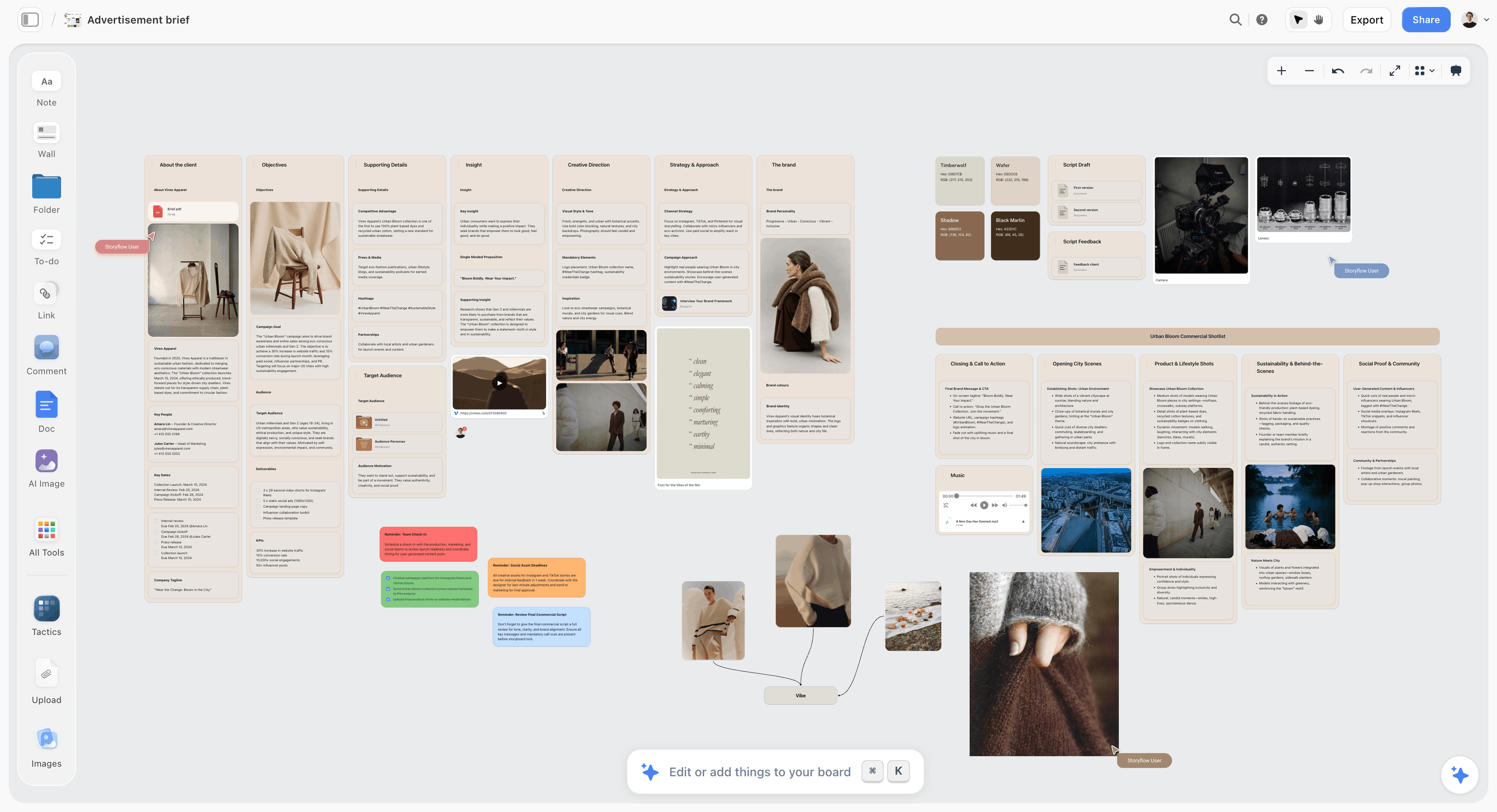
Lay the content out by message, not by date. Four columns, one per message, with the proof pieces in each.
The imbalance shows immediately. One column with nine pieces and another with two is the coverage problem made visible, and it is nearly invisible in a date-ordered calendar because the thin message's posts are scattered across weeks.
Balance does not mean equal. A message that is harder to believe needs more proof, and the primary message usually deserves the most weight. What you are looking for is deliberate weighting rather than accidental weighting.
Now sequence. Order the messages by what the audience needs to believe first. Generally this means outcome before mechanism: people need to believe the result is worth having before they care how it works. Campaigns that lead with mechanism talk to an audience that has not yet decided they want the outcome.
Then assign dates. This is now mechanical: distribute each message's pieces across the campaign period, front-loading the strongest proof.
This is where a canvas beats a spreadsheet calendar. A spreadsheet is date-first by construction, so it will not show you message coverage without a separate pivot nobody builds. On a Storyflow canvas the brief and the message columns sit above the dated row, so the calendar and the argument are visible together, and because its AI reads the whole board you can ask which message is under-covered or which posts prove nothing, which is exactly the audit you want to run in week three and never do.
| Layer | Contains | Question it answers | Failure if skipped |
|---|---|---|---|
Brief | Situation, audience, objective, obstacle | Why are we doing this? | Nothing connects to business goals |
Messages | 3 to 4 beliefs to establish | What must they come to believe? | Calendar becomes topical filler |
Proof | Evidence per message | Why would they believe it? | Assertive content that converts nothing |
Calendar | Dated pieces | What goes out when? | The whole campaign, undated |
Step 4: Leave Thirty Percent Open
Do not fill the calendar.
Plan around seventy percent of the slots. The remainder is for reactive content, for doubling down on what is working, and for the proof you discover mid-campaign that you did not know you had.
A fully planned calendar cannot respond. When week two shows one message landing far better than the others, the correct move is more of it, and there is nowhere to put it if every slot is taken. Teams then either cut planned content, which feels like failure and gets resisted, or they publish the plan regardless, which is the more common outcome and the reason so many campaigns learn nothing from their own results.
Mark the open slots explicitly as reserved rather than leaving them blank, or they will be filled by whoever is anxious about empty space.
Step 5: Keep the Brief Attached
By week three nobody on the team remembers why a specific post is in the calendar. This is not carelessness; it is normal, and it is why the calendar drifts.
Keep the brief visible next to the calendar, and record on each piece which message it proves. Two seconds per item at planning time, and it means anyone can audit the calendar at any point.
It also settles arguments. When someone proposes an addition, the question is not whether it is good content but which message it proves. That question is answerable and it resolves most debates quickly, including the ones about whether to chase an unrelated trend.
What Goes Wrong
Messages are topics. "Product education" is a category, not a belief. Nothing can prove or fail to prove it.
Too many messages. Six or more and the audience retains none, and coverage is thin everywhere.
Proof is assertion. The company saying it is not evidence. Find the customer, the number, or the demonstration.
Calendar built date-first. Produces variety with no argument, and the imbalance stays hidden.
Every slot filled. No capacity to respond to what is working.
Brief detached. By week three the criterion silently becomes "is this on brand" instead of "does this advance the campaign".
Mechanism before outcome. Explaining how it works to people who have not decided they want it.
The Bottom Line
The missing layer between a brief and a calendar is messages and their proof. Extract three or four beliefs the campaign must establish, list what would genuinely convince a sceptic of each, build the calendar by message coverage before you assign a single date, and leave a third of the slots open.
Keep the brief attached so every post can still answer what it is for. A calendar built this way argues something, and one built date-first only fills space.
FAQ: Briefs and Content Calendars
How many messages should a campaign have?
Three or four. Two rarely sustains a campaign's worth of content, and six or more means the audience remembers nothing and every message is thinly covered. If the brief seems to demand six, it is usually two campaigns.
What is the difference between a message and a content pillar?
A pillar is a topic area you post about ongoingly. A message is a specific belief this campaign needs to establish, and it can be argued with. Pillars are for always-on content; messages are for campaigns, and using pillars in a campaign is what produces the drift this article describes.
How far ahead should a content calendar be planned?
Fully derive the messages and proof for the whole campaign, but only date about seventy percent of the slots, and date them further out for produced content that needs lead time. Leaving a third open is what lets you respond to what is actually working.
What if a message has no good proof?
Treat it as a finding rather than a content problem. Either go and get the proof (a customer interview, a measurement, a demonstration), weaken the claim to something you can support, or drop the message. Filling the gap with confident assertion is how campaigns generate engagement and no movement.
Is Storyflow free for campaign planning?
Not during early access. Storyflow is paid-only right now, with Plus at $7.99 per month billed annually, and the Free plan launches before the end of 2026. Anyone a paid member invites to a board joins free, so a client or wider team can review the calendar without paying.
How do I audit a calendar that is already running?
Take twenty upcoming posts and write which message each proves. Anything that comes back as general awareness is a candidate for cutting, and any message with fewer than three posts is under-covered. That audit takes twenty minutes and usually reclaims a meaningful amount of the campaign.
Table of Contents
Templates to check out for this topic


Content and video templates you can use in Storyflow
Plan a channel, a script, and a content pipeline on the same board. Open one of these templates and let the AI build on the structure instead of starting from a blank doc.


See Storyflow in Action
A visual AI workspace where every feature lives inside one canvas. No tab-switching, no context lost.
Build your entire board from a single message
Type what you need in the AI chat at the bottom of your canvas. The AI adds cards, headings, and structure directly onto your board.
Use expert frameworks as AI context
Type @ in the AI chat and choose any Tactic. The AI tailors every response to that framework instead of giving generic advice.
Turn your board into a mind map in seconds
Ask the AI to restructure your canvas as a mindmap. It connects your ideas into a visual hierarchy so you can see how everything relates.
Why Storyflow Exists
Storyflow actually began as a personal tool while working on creative and research projects.
We kept running into the same problem: ideas were scattered everywhere: notes, documents, and whiteboards.
Nothing helped us see how everything connected.
So we started building a workspace designed around how ideas actually grow.
→ Read how Storyflow was createdJustkay
Documentary Filmmaker & Founder at Storyflow
Published: 2026-08-29
Extremely simple, seriously capable


See how easy it is to get started
Watch a real project come together, from a blank board to a finished plan, clicked through step by step.
Start creating with AI and become more productive
Transform your creative workflow with AI-powered tools. Generate ideas, create content, and boost your productivity in minutes instead of hours.