The 12 Best Roadmap Tools in 2026 (We Tested Them All)
The 12 best roadmap tools in 2026, tested by a product manager. Product roadmaps, project timelines, and strategy canvases compared honestly.

Category
Project Management
Author

Justkay
Documentary Filmmaker & Founder at Storyflow
Topics
2026-05-14
•
14 min read
•
Project Management- best roadmap tools 2026
- product roadmap software
- Productboard vs ProductPlan
- strategy roadmap tool
What are the best roadmap tools in 2026?
The best roadmap tool in 2026 depends on which shape of roadmap you are building: a feature roadmap (Productboard, ProductPlan, Roadmunk), a strategy roadmap (Storyflow, Notion), or a delivery roadmap (Linear, Jira, Aha! Develop). Productboard is the strongest dedicated feature-roadmap tool. Storyflow is the strongest when the roadmap has to sit next to the strategy that justifies it. Linear and Jira win when the roadmap is really a view of the engineering backlog. Everything else on this list is a whiteboard or database with a roadmap template bolted on, and that is fine if you already live in it. A roadmap exists to answer one question for the people who read it: where are we going, and why that and not something else. The tool's job is to make that answer cheap to keep current. The wrong tool produces a gorgeous Gantt chart that reads the same six months later because rebuilding it after a strategy shift costs an afternoon nobody has. A roadmap is only as good as the last time it was updated. I tested twelve roadmap tools across three real briefs this spring: a SaaS product manager's quarterly roadmap, a startup founder's company-strategy roadmap, and an agency's operations roadmap. The rankings sort them by what they actually did well in that work, not by what a pricing page promises.

Full disclosure: Storyflow is our own product, and we rank it below Productboard here because it is not a dedicated roadmap tool. Productboard leads this list: it pulls customer feedback into one prioritisation queue and renders stakeholder-ready roadmap views, which is what a mature product team needs. Storyflow earns second place for strategy-first roadmaps, where the objective and the bets sit on the same canvas as the roadmap cards and its AI reasons over both. It has no Gantt chart, no dependency arrows, and no customer-facing public portal, so for feature-management depth you pair it with Productboard or ProductPlan. We link to every tool so you can judge the fit.
Quick Comparison
These four cover the roadmap shapes teams actually choose between: a dedicated feature roadmap, a strategy canvas, a database roadmap, and an engineering delivery view.
| Tool | Best For | AI Features | Price |
|---|---|---|---|
| Productboard | Dedicated product roadmap | AI feedback summarisation | From $19 maker mo |
| Storyflow | Strategy plus roadmap on one canvas | Canvas AI reads the whole board | $7.99 mo annual (free plan late 2026) |
| Notion | Database roadmap in a workspace | Notion AI (Business tier) | From $10 user mo |
| Linear Cycles | Engineering-team roadmap | Lighter AI, backlog-derived | From $8 user mo |
Quick Picks: Best Roadmap Tools 2026 by Use Case
Best Dedicated Product Roadmap Tool: Productboard Productboard is the leading feature-roadmap tool, with prioritisation scoring, user-feedback intake, and stakeholder views built in. From around $19/maker/month. The friction: maker-based pricing climbs quickly as the team grows, and it assumes you already have feedback flowing in.
Best for Strategy-First Roadmaps: Storyflow Storyflow is the canvas where the strategy (the why) lives next to the roadmap (the what and when) on the same board. A Story Blueprint like Product Strategy or an OKR frame gives the strategy structure, and roadmap cards sit on a timeline beside it. The AI reads your full active board plus up to 3 @-mentioned Documents and 1 Blueprint. Plus from $7.99/month billed annually, paid-only during early access, with a genuinely usable Free plan landing before the end of 2026. The friction: no Gantt chart and no formal customer-facing portal.
Best Lightweight Roadmap Tool: Roadmunk Roadmunk is a focused roadmap tool with timeline and swimlane views and none of Productboard's feature-management weight. From around $19/user/month. Good when you want roadmap views and nothing else.
Best for Engineering Teams: Linear Cycles or Jira Roadmap Linear's Cycles turn the roadmap into a clean view of the engineering backlog. Jira's roadmap module is the enterprise default. Linear Standard from around $8/user/month, Jira Standard from around $7.75/user/month. The pick depends on team size and which tracker you already run.
Best Visual Roadmaps: Miro or FigJam Miro and FigJam handle roadmaps as whiteboard exercises. If your team already lives in one of them, adding a roadmap board is the lightest path. Miro Starter from around $8/user/month, FigJam Professional from around $3/user/month.
Best Free Roadmap Tool: Notion or Trello Notion gives you a roadmap as a database with a timeline view. Trello gives you a kanban roadmap. Both have a real free tier today; the pick depends on whether you think in databases or columns. Storyflow's canvas, which holds strategy and roadmap cards together, is paid-only during early access, with its own Free plan landing before the end of 2026.
Best for Public Roadmaps: ProductPlan or Productboard ProductPlan is purpose-built for polished, published roadmaps aimed at customers and executives. Productboard offers a public portal view. Both from around $19/user/month and up.
The honest split runs through the whole list. The right pick depends on whether your roadmap is a list of features or an argument about strategy. Feature-shaped work points to Productboard, Roadmunk, or ProductPlan. Strategy-shaped work points to Storyflow or Notion. Try Storyflow for strategy-first roadmap work.
The Three Roadmap Shapes (The Framework This List Uses)
Most roadmap-tool comparisons rank apps as if a roadmap were one thing. It is not. In the three briefs I tested, the word "roadmap" meant three different artefacts, and the tools that won each brief lost the other two. Naming the shapes is the fastest way to skip tools that were never built for your work.
The feature roadmap. A prioritised list of what you will build, ordered by impact and effort, usually tied to customer feedback and released to stakeholders. Productboard, ProductPlan, and Roadmunk are shaped for this. The unit is a feature. The reader is a stakeholder who wants to know what is shipping and when.
The strategy roadmap. An argument about where the business is going, with the reasoning visible: the objective, the bets, the sequence, and the roadmap items that fall out of them. Storyflow and Notion are shaped for this. The unit is a decision. The reader is a founder, a leadership team, or your future self trying to remember why a quarter was spent the way it was.
The delivery roadmap. A forward view of the engineering backlog: cycles, sprints, dependencies, and dates that move as work lands. Linear, Jira, and Aha! Develop are shaped for this. The unit is a ticket. The reader is the team doing the work.
Keep the three shapes in mind through the reviews below. A roadmap tool feels magical on the shape it was built for and clumsy on the other two. Every "this feels forced" complaint in the reviews is really a shape mismatch.
Comparison Table: Best Roadmap Tools 2026
| Tool | Roadmap Shape | Best For | Starting Price | Free Plan | Strategy Link | Rating (/10) |
|---|---|---|---|---|---|---|
Storyflow | Strategy | Strategy + roadmap on one canvas | $7.99/mo annual (flat) | Coming late 2026 (invited collaborators join free now) | Strongest | 8.7/10 |
Productboard | Feature | Dedicated product roadmap | ~$19/maker/mo | 15-day trial | Weak | 8.9/10 |
Notion | Strategy | Database roadmap in a wider workspace | ~$10/user/mo | Yes (individuals) | Good | 8.4/10 |
Linear Cycles | Delivery | Engineering-team roadmap | ~$8/user/mo | Yes (limited) | Weak | 8.3/10 |
Roadmunk | Feature | Lightweight focused roadmap | ~$19/user/mo | 14-day trial | Weak | 8.1/10 |
Aha! Develop | Delivery | Engineering roadmap in the Aha! suite | ~$9/user/mo | 30-day trial | Via Aha! Roadmaps | 8.0/10 |
Jira Roadmap | Delivery | Enterprise roadmap module | ~$7.75/user/mo | Yes (10 users) | Weak | 7.9/10 |
Miro | Whiteboard | Visual whiteboard roadmaps | ~$8/user/mo | Yes (3 boards) | Medium | 7.7/10 |
ProductPlan | Feature | Public stakeholder roadmaps | ~$39/user/mo | 14-day trial | Weak | 7.5/10 |
FigJam | Whiteboard | Design-team whiteboard roadmaps | ~$3/user/mo | Yes (limited) | Medium | 7.3/10 |
Trello | Kanban | Free kanban roadmap | ~$5/user/mo | Yes (unlimited) | Weak | 7.1/10 |
Airtable | Database | Roadmap with multiple views | ~$10/user/mo | Yes (limited) | Medium | 7.0/10 |
Pricing changes often. Treat the figures above as a starting point and confirm on each vendor's page before you buy. One structural note worth flagging: every tool in this table except Storyflow prices per user or per maker, so the sticker price is per seat. Storyflow's paid plans are flat per account, so the cost does not multiply when you add a collaborator.
Storyflow canvas holding strategy Tactic Blueprints alongside roadmap cards arranged on a timeline
How We Evaluated the Best Roadmap Tools 2026
Five criteria decided the rankings, in this weighting. I ran the same three briefs (product, strategy, operations) through each tool over three weeks and scored what actually happened, not what the feature matrix claimed.
Roadmap fit to shape (25%). Does the tool match one of the three roadmap shapes cleanly, and how badly does it strain on the others? A tool that nails the feature roadmap and fakes the strategy roadmap scored well only if you need the shape it fits.
Strategy-to-execution link (20%). Can a reader trace a roadmap item back to the objective that justifies it without leaving the tool? This is where feature tools consistently lost points: the strategy lives in a different app, and the connection breaks.
Update friction (20%). How long does it take to move a card, reprioritise, or reflect a strategy change? I timed a standard "the quarter shifted, update the roadmap" edit in each tool. The delivery tools (Linear, Jira) needed only seconds because the roadmap is a view of work already logged. The whiteboard tools (Miro, FigJam) needed a manual redraw. That gap is the whole reason a roadmap is only as good as the last time it was updated: the tool your team abandons is the one where updating the roadmap feels like rebuilding it.
Pricing and value (15%). Real cost at 1, 5, and 15 collaborators, including the per-seat multiplier, which is where per-user tools quietly get expensive.
AI depth (20%). What the AI actually reads before it answers. Feedback summarisation, prioritisation scoring, and canvas-aware reasoning are three different things, and I scored them on which one matched the roadmap shape.
Detailed Reviews: Best Roadmap Tools 2026
1. Storyflow (Best Strategy-First Canvas with Roadmap)
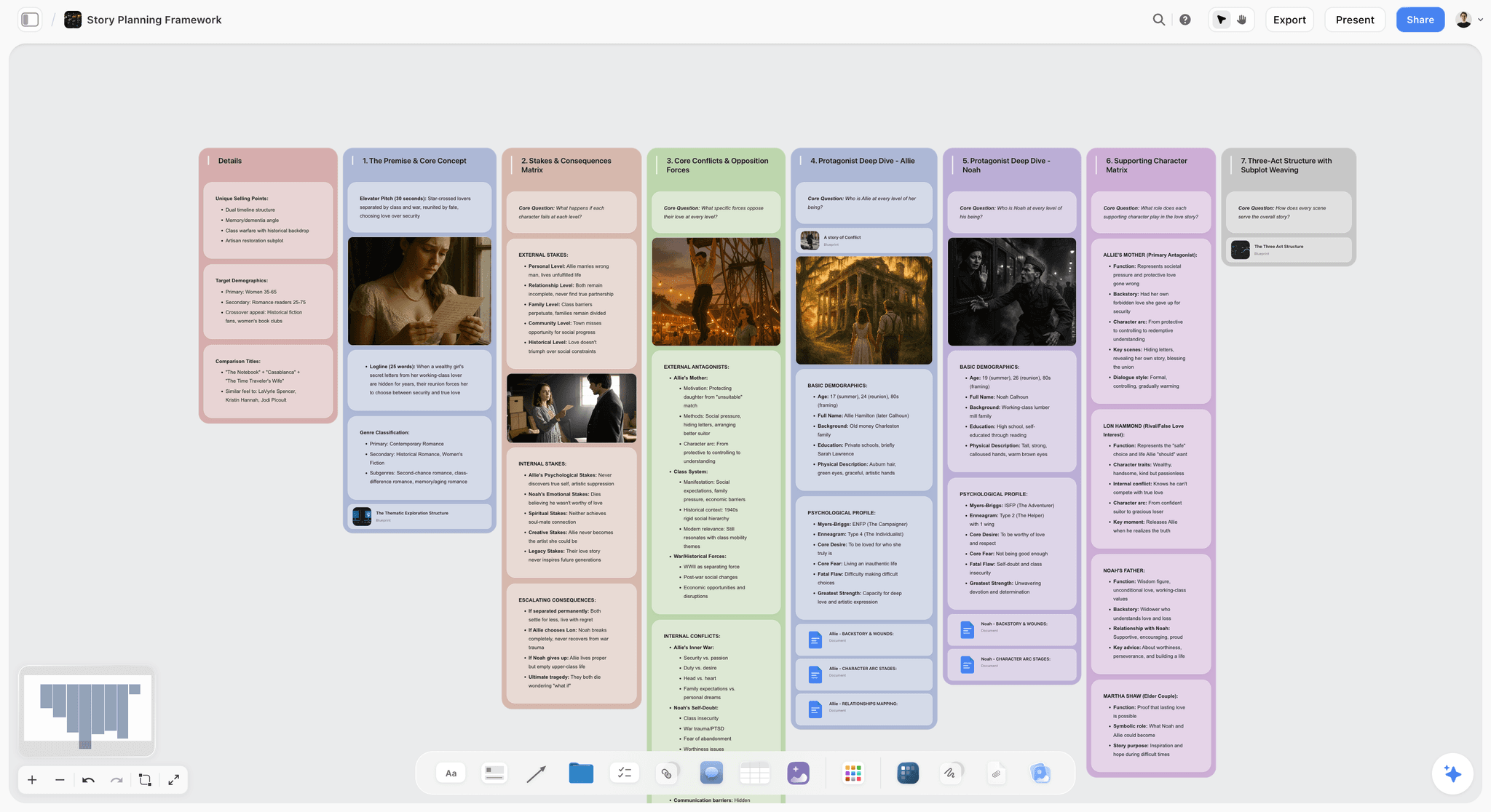
Storyflow is the canvas where the strategy roadmap and the feature list live on the same board, and it earned the strategy-shape crown by closing the gap every dedicated roadmap tool leaves open: the reasoning and the plan in one place. You open a Story Blueprint (Product Strategy, an OKR frame, or a Brand Pyramid for company-level work), lay the objective and the bets out visually, then arrange roadmap cards on a timeline right beside them. When a stakeholder asks why a feature is on the roadmap, the answer is one glance away on the same canvas, not buried in a separate strategy doc.
The part that no feature-roadmap tool matches: the AI reads your full active board plus up to 3 @-mentioned Documents and 1 Blueprint before it answers. Ask it to sanity-check the sequence and it reasons over the actual objective, bets, and cards you laid out, not a blank prompt. That is grounded reasoning about your roadmap, not generic text.
Best for: Founders and strategists who treat strategy as the primary artefact and the roadmap as one output of it. Also strong for product managers who want the roadmap built next to the strategy that drives it. Not for: Teams who need a formal Gantt chart, dependency lines, or a polished customer-facing public portal. Roadmap shape: Strategy. Pricing: Paid-only early access today; the Free plan launches before the end of 2026, and anyone a paid member invites to a board joins free now. Plus from $7.99/month billed annually ($9.99 monthly): full 200+ Story Blueprint library. Pro from $14/month annually ($19 monthly): adds AI image generation and far more AI. Max from $39/month annually ($49 monthly): 40x more AI plus a team workspace with roles and permissions. All paid tiers are flat per account, not per user.
Why it comes first. No other tool holds the strategy and the roadmap in one view, and the canvas-aware AI reasons over both at once.
Strengths:
- Strategy and roadmap share one canvas, so the why-to-what link never breaks
- Story Blueprints (Hero's Journey, AIDA, OKR frames, and 200+ more on paid tiers) give the strategy real structure
- AI reads the full board plus @-mentioned Documents and a Blueprint, so its roadmap feedback is grounded in your actual plan
- Flat per-account pricing, so adding collaborators does not multiply the bill
- A Free plan, launching before the end of 2026, generous enough to run a real roadmap on indefinitely
Limitations:
- Not a dedicated roadmap tool: no Gantt chart, no dependency arrows, no formal timeline math
- No customer-facing public roadmap portal the way ProductPlan or Productboard offer
- Cloud-only, so there is no offline or self-hosted option
- Newer platform than Jira or Productboard, with a smaller integration catalogue
- Roadmap items are canvas cards, not database rows, so bulk sorting and filtering is lighter than in Airtable or Notion
Verdict: Storyflow is the right pick when your roadmap has to defend itself, meaning the strategy sits next to it and the AI can reason over both. The familiar approach keeps the roadmap in a dedicated tool and the strategy in a separate doc, and the link between them is a manual note that rots the first time the strategy moves. Storyflow removes that seam by putting both on one canvas. Pair it with Productboard or ProductPlan if you also need feature-management depth or an external portal.
2. Productboard (Best Dedicated Feature Roadmap)
Productboard is the most complete dedicated feature-roadmap tool, and it earned the top rating by being the only app that made the product-manager brief feel effortless. Feedback flows in from support and sales, prioritisation scoring ranks it, and the roadmap view renders cleanly for stakeholders. If your roadmap is a prioritised list of features tied to real customer signal, this is the safe default.
Best for: Product managers with a feedback pipeline who want a purpose-built feature roadmap. Not for: Founders whose roadmap is really a strategy argument, or small teams with no feedback infrastructure to feed it. Roadmap shape: Feature. Pricing: Essentials from around $19/maker/month, Pro from around $59/maker/month, 15-day trial.
Why it is here. It is the only tool here where feedback intake, prioritisation, and the roadmap view are one connected workflow rather than three integrations.
Strengths:
- Best-in-class feedback aggregation from multiple channels into one prioritisation queue
- Prioritisation scoring that stakeholders actually trust
- Clean, presentable roadmap views for internal and portal sharing
- Deep integrations with Jira, Slack, and the usual delivery stack
Limitations:
- Maker-based pricing scales fast, and non-maker seats still add up
- Little to no strategy layer: the "why" lives elsewhere and the link is manual
- Overkill for a team that has not yet accumulated a feedback backlog
Verdict: Productboard is the right pick for a mature feature roadmap with real customer signal behind it.
3. Notion (Best Database-Based Roadmap)
Notion turns the roadmap into a database with timeline, board, and table views, and links it to the rest of your workspace docs. For teams already living in Notion, this is the lowest-friction way to keep a roadmap next to the specs and notes it references. It sits on the strategy side of the framework because the roadmap can live in the same workspace as the strategy docs, even if the link is a manual relation rather than a shared canvas.
Best for: Notion-native teams who want a flexible database roadmap beside their existing docs. Not for: Teams who want dedicated roadmap features like prioritisation scoring or feedback intake. Roadmap shape: Strategy (database flavour). Pricing: Free for individuals, Plus from around $10/user/month, Business from around $15/user/month with Notion AI.
Why it is here. The database model is genuinely flexible and the workspace link is real, but roadmap-specific features are things you assemble, not things you get.
Strengths:
- Mature, flexible database with timeline, board, and calendar views
- Roadmap sits alongside specs, notes, and wikis in one workspace
- Notion AI bundled at the Business tier
- Enormous template ecosystem to start from
Limitations:
- You build the roadmap schema yourself, which is setup time before value
- Per-user pricing adds up for larger teams
- Real-time editing can lag on heavy databases
Verdict: Notion is the right pick for a Notion-native team that wants a database roadmap in the same place as everything else.
4. Linear Cycles (Best Engineering Team Roadmap)
Linear's Cycles turn the roadmap into a forward view of the engineering backlog, and it is the cleanest delivery-shape tool I tested. For a team already tracking issues in Linear, the roadmap is not a separate artefact to maintain; it falls out of the work you are already logging.
Best for: Engineering teams on Linear who want the roadmap integrated with issue tracking. Not for: Non-engineering teams, or anyone whose roadmap needs to speak to non-technical stakeholders. Roadmap shape: Delivery. Pricing: Free with limits, Standard from around $8/user/month, Plus from around $14/user/month.
Why it is here. For the delivery shape it is nearly frictionless, but it is engineering-only by design.
Strengths:
- Roadmap derives from the issues the team already tracks, so update friction is near zero
- Fast, opinionated interface built for speed
- Strong cycle and project structure for forward planning
Limitations:
- Engineering-shaped: non-engineering work feels forced onto it
- Thin strategy layer, so the why lives outside the tool
- Stakeholder-facing views are basic
Verdict: Linear Cycles is the right pick for an engineering team that wants its roadmap to be a view of its backlog. See The 12 Best Linear Alternatives in 2026.
5. Roadmunk (Best Lightweight Focused Roadmap)
Roadmunk is a focused feature-roadmap tool with timeline and swimlane views and none of Productboard's feature-management weight. For a team that wants roadmap views and nothing else, it is the lighter option.
Best for: Teams who want clean roadmap views without a feedback pipeline or prioritisation engine. Not for: Teams who need feedback intake or a strategy layer. Roadmap shape: Feature (lightweight). Pricing: From around $19/user/month, 14-day trial.
Why it is here. It does the roadmap-view job well and stops there, which is exactly its appeal and its ceiling.
Strengths:
- Purpose-built roadmap views (timeline and swimlane) with little setup
- Clean, presentable output for stakeholders
- Simpler and lighter than Productboard for teams that do not need the extra machinery
Limitations:
- No feedback integration, so prioritisation is manual
- Smaller ecosystem and community than the market leaders
- No strategy layer to anchor the roadmap to objectives
Verdict: Roadmunk is the right pick for a lightweight, focused feature roadmap.
6. Aha! Develop (Best Engineering Roadmap in an Ecosystem)
Aha! Develop is the engineering-shaped tool in the Aha! suite, built to pair with Aha! Roadmaps for the strategy side. On its own it handles the delivery roadmap; its real strength shows when the product team runs Aha! Roadmaps and Develop inherits that context.
Best for: Engineering teams whose product org already uses Aha! Roadmaps. Not for: Standalone engineering teams with no Aha! footprint. Roadmap shape: Delivery. Pricing: From around $9/user/month, 30-day trial.
Why it is here. Strong in the Aha! ecosystem, but its best features assume you are already paying for the rest of the suite.
Strengths:
- Tight link to Aha! Roadmaps for strategy-to-delivery alignment
- Mature engineering workflow and reporting
- Established, stable platform
Limitations:
- Best value only when paired with Aha! Roadmaps, which is a separate and pricier product
- Engineering-only scope
- Heavier setup than lighter delivery tools
Verdict: Aha! Develop is the right pick for an engineering team inside the Aha! ecosystem.
7. Jira Roadmap (Best Enterprise Module)
Jira's roadmap module is the enterprise default for teams already running Jira. The roadmap is integrated with the backlog, so you add a view rather than a tool. The interface shows its age, but the integration depth and enterprise controls are the reason it stays on the list.
Best for: Enterprise teams already standardised on Jira. Not for: Small teams or anyone allergic to Jira's complexity. Roadmap shape: Delivery. Pricing: Free for 10 users, Standard from around $7.75/user/month, Premium from around $15.25/user/month.
Why it is here. Deeply capable and deeply integrated, but the friction and dated feel drag the score for anyone not already committed.
Strengths:
- Integrated with the Jira backlog, so the roadmap reflects real work
- Enterprise-grade permissions, reporting, and scale
- Vast integration and plugin ecosystem
Limitations:
- Jira's complexity is real; setup and admin overhead are high
- The interface feels older than newer competitors
- The roadmap is delivery-only, with no strategy layer
Verdict: Jira Roadmap is the right pick for an enterprise team already on Jira. See The 12 Best Jira Alternatives in 2026.
8. Miro (Best Visual Whiteboard Roadmaps)
Miro is the most mature whiteboard tool, with roadmap templates and integrations. For teams who want to sketch a roadmap collaboratively rather than manage it in a database, Miro is the established choice. It is whiteboard-shaped, so the roadmap is a picture more than a system.
Best for: Teams who want to build and discuss roadmaps visually on a whiteboard. Not for: Teams who need dedicated roadmap features or database structure. Roadmap shape: Whiteboard. Pricing: Free with 3 boards, Starter from around $8/user/month, Business from around $16/user/month.
Why it is here. Excellent for the collaborative sketch, light on the structure that keeps a roadmap current.
Strengths:
- Mature whiteboard with a large template library
- Strong real-time collaboration for workshops
- Flexible free-form layout for early-stage roadmapping
Limitations:
- Whiteboard-shaped, so dedicated roadmap features are shallow
- No native prioritisation or feedback link
- A picture of a roadmap is easy to draw and easy to leave stale
Verdict: Miro is the right pick for whiteboard-paradigm, workshop-style roadmapping. See The 12 Best Miro Alternatives in 2026.
9. ProductPlan (Best Public Stakeholder Roadmaps)
ProductPlan is purpose-built for the published, customer-facing roadmap. When the deliverable is a polished roadmap shared externally with customers or executives, ProductPlan's presentation and stakeholder views are its whole reason to exist.
Best for: Product managers who publish roadmaps to external stakeholders. Not for: Internal-only teams, where the presentation polish is wasted spend. Roadmap shape: Feature (presentation-first). Pricing: From around $39/user/month, 14-day trial.
Why it is here. Best-in-class at the published roadmap, but the price and external focus make it narrow.
Strengths:
- Polished, presentable public and stakeholder roadmap views
- Mature roadmap-sharing and communication features
- Clean output aimed at non-technical readers
Limitations:
- High per-user price
- Internal and delivery features are lighter than the presentation layer
- Little strategy integration
Verdict: ProductPlan is the right pick when publishing the roadmap externally is the main event.
10. FigJam (Best Design-Shaped Whiteboard)
FigJam is Figma's whiteboard, with roadmap templates and a design-friendly interface. For teams already in Figma, FigJam adds roadmap work without a context switch. Like Miro, it is whiteboard-shaped, so the roadmap is a collaborative sketch.
Best for: Design teams already living in Figma. Not for: Non-design teams, or anyone needing roadmap-specific structure. Roadmap shape: Whiteboard. Pricing: Free with limits, Professional from around $3/user/month.
Why it is here. Cheap and pleasant for Figma teams, but the roadmap features are the lightest here.
Strengths:
- Tight Figma integration and a familiar interface for designers
- Affordable entry price
- Good for early, visual roadmap conversations
Limitations:
- Design-shaped rather than roadmap-shaped
- Smaller template library than Miro
- No dedicated roadmap structure or prioritisation
Verdict: FigJam is the right pick for a design team that wants roadmaps inside Figma.
11. Trello (Best Free Kanban Roadmap)
Trello is the established lightweight kanban tool, with community roadmap templates. For small teams who want a free, column-shaped roadmap, Trello is the most accessible starting point. The roadmap is a set of columns, which is simple to keep current and simple to outgrow.
Best for: Small teams who want a free kanban roadmap. Not for: Teams who need timeline views or dependency tracking. Roadmap shape: Kanban. Pricing: Free with limits, Standard from around $5/user/month.
Why it is here. Genuinely simple and free, but a kanban board is a thin roadmap.
Strengths:
- Dead-simple kanban that anyone can use immediately
- Functional free tier
- Fast to set up
Limitations:
- No timeline view on the free tier
- No dedicated roadmap features or strategy layer
- Columns show status but not sequence or dependency
Verdict: Trello is the right pick for a small team that wants a free kanban roadmap. See The 12 Best Trello Alternatives in 2026.
12. Airtable (Best Database Roadmap with Views)
Airtable handles roadmaps with relational tables and multiple views (timeline, kanban, calendar, grid). For teams who think in spreadsheets and want roadmap flexibility, Airtable is the structured option. It sits between the strategy and delivery shapes: a database you can bend either way with setup effort.
Best for: Teams who want a spreadsheet-shaped roadmap with multiple views. Not for: Teams who want dedicated roadmap features out of the box. Roadmap shape: Database. Pricing: Free with limits, Team from around $10/user/month.
Why it is here. Flexible and powerful, but everything roadmap-specific is something you build.
Strengths:
- Flexible relational schema with many view types
- Strong filtering, grouping, and sorting
- Broad integration options
Limitations:
- Requires roadmap schema design before any value appears
- Per-user pricing
- No native strategy or prioritisation layer
Verdict: Airtable is the right pick for a team that wants a database-shaped roadmap with multiple views. See The 12 Best Airtable Alternatives in 2026.
Honorable Mentions and Tools to Approach Carefully
A few tools that came up in testing but did not earn a numbered slot.
Asana Timeline and Monday.com both offer roadmap-style timeline views inside their broader work-management platforms. If you already run one of them, adding a roadmap view is reasonable. As a standalone roadmap purchase, neither is worth the platform overhead.
Slides and spreadsheets as roadmaps. Plenty of teams keep the roadmap in a deck or a spreadsheet. It works right up until the strategy shifts, at which point the manual rebuild guarantees the roadmap goes stale. If you are here, you already know why. The whole point of a roadmap tool is to make the update cheap.
Any tool sold to you as "AI-powered roadmapping" that generates a roadmap from a one-line prompt. A roadmap generated with no context is a template with your product name pasted in. The useful version of roadmap AI reads your actual strategy and plan before it reasons, which is the distinction the framework above keeps returning to.
How to Choose the Right Roadmap Tool for Your Work
Start from the shape, not the feature list. Answer one question and the field narrows fast.
If your roadmap is a prioritised feature list tied to customer feedback, pick Productboard. Roadmunk if you want the lighter version, ProductPlan if the roadmap is mainly published externally.
If your roadmap is really an argument about strategy, pick Storyflow. The strategy and the roadmap live on one canvas and the AI reasons over both. Notion if you would rather work in a database and already live there.
If your roadmap is a forward view of the engineering backlog, pick Linear or Jira. Linear for speed on a modern team, Jira for enterprise scale and existing footprint. Aha! Develop if your product org already runs Aha! Roadmaps.
If your roadmap is a collaborative sketch you build in a workshop, pick Miro or FigJam. Whichever your team already opens.
If you want free and simple today, pick Trello or Notion. Kanban or database, in that order of structure. Storyflow's canvas is paid-only during early access, with a Free plan landing before the end of 2026.
For the broader planning context that sits upstream of the roadmap, see The 12 Best Product Planning Tools in 2026 and The 12 Best AI Tools for Project Management in 2026.
The Bottom Line
The best roadmap tool is the one that matches your roadmap's shape and makes updating it cheap. Decide first whether you are building a feature roadmap, a strategy roadmap, or a delivery roadmap, because the tools that win one shape are clumsy on the others.
For a feature roadmap, Productboard, with Roadmunk as the lighter option and ProductPlan for published roadmaps. For a strategy roadmap, Storyflow, where the strategy and the plan share a canvas and the AI reasons over both, with Notion as the database alternative. For a delivery roadmap, Linear or Jira. For a whiteboard sketch, Miro or FigJam.
If you are unsure, ask whether your roadmap has to defend itself. If a stakeholder could reasonably ask "why this and not that," you want the strategy visible next to the plan, which points to Storyflow or Notion. If the roadmap is a settled list of features to ship, a dedicated feature tool fits. The one move that always fails is the beautiful Gantt chart nobody updates, because the strategy kept shifting and the chart could not keep up. A roadmap is only as good as the last time it was updated, so pick for update friction first and polish second. Try Storyflow if your roadmap keeps drifting away from the strategy that justifies it.
FAQ: Best Roadmap Tools 2026
What is the best roadmap tool in 2026?
There is no single best; it depends on your roadmap's shape. For a dedicated feature roadmap, Productboard. For a strategy roadmap where the reasoning sits next to the plan, Storyflow. For an engineering delivery roadmap, Linear or Jira. For a published external roadmap, ProductPlan. Decide which of the three shapes (feature, strategy, delivery) your roadmap is, and the pick follows.
What is the best free roadmap tool?
Notion and Trello both have genuinely usable free tiers today. Notion is free for individuals and gives you a database roadmap. Trello's free tier handles a kanban roadmap. Storyflow is paid-only during early access; its Free plan, which launches before the end of 2026, will include unlimited boards, unlimited cards, unlimited collaboration, and basic AI usage, so you'll be able to run a real strategy-plus-roadmap board on it indefinitely. The pick depends on whether you think in databases, columns, or space.
What is the best product roadmap tool?
Productboard is the leading dedicated product roadmap tool, with feedback intake and prioritisation scoring built in. Roadmunk is the lighter focused alternative, and ProductPlan is strongest for roadmaps published to external stakeholders. Storyflow is the pick if the roadmap needs to sit next to the product strategy that justifies it. Choose based on whether feedback integration or strategy integration matters more to you.
What is the best roadmap tool for startups?
For most startups the roadmap is a strategy roadmap, which points to Storyflow (strategy and roadmap on one canvas, flat per-account pricing) or Notion (database roadmap in your workspace). If the team is technical and the roadmap is really the engineering backlog, Linear fits. Productboard is worth it only once you have a real feedback pipeline to feed it, which most early startups do not yet.
Does any tool combine strategy and roadmap in one place?
Storyflow is built for exactly this. A Story Blueprint (Product Strategy, an OKR frame, or a Brand Pyramid) structures the strategy, and roadmap cards sit on a timeline on the same canvas, so a reader can trace any roadmap item back to the objective behind it without switching tools. Most dedicated roadmap tools keep strategy in a separate app, which is where the connection between the why and the what tends to break.
What is the best AI roadmap tool?
It depends on what you want the AI to do. Storyflow's AI reads your full active board plus up to 3 @-mentioned Documents and 1 Blueprint, so it reasons over your actual strategy and roadmap rather than a blank prompt. Notion AI works over your database and docs. Productboard's AI summarises customer feedback to help prioritisation. Canvas-aware reasoning, database AI, and feedback summarisation are three different jobs; match the AI to your roadmap's shape.
Can I use Notion or Miro for roadmaps?
Yes to both, with caveats. Notion gives you a flexible database roadmap with timeline and board views, best if you already work in Notion. Miro gives you a whiteboard roadmap that is excellent for collaborative workshops but thin on structure, so it is easy to leave stale. Neither has dedicated roadmap features like prioritisation scoring; for those, a focused tool like Productboard is stronger.
What is the best engineering roadmap tool?
Linear Cycles is the cleanest for modern engineering teams, because the roadmap falls out of the issues you already track. Jira Roadmap is the enterprise default for teams already on Jira. Aha! Develop fits when your product org runs the wider Aha! suite. All three are delivery-shaped, so the roadmap reflects the backlog rather than the business strategy.
How much do roadmap tools cost?
Most roadmap tools price per user or per maker, so the sticker price multiplies with team size: Linear and Jira from roughly $8/user/month, Productboard from around $19/maker/month, ProductPlan around $39/user/month. Storyflow is the exception, pricing flat per account from $7.99/month annually on Plus, so adding collaborators does not raise the bill. Confirm current figures on each vendor's page before buying.
Why do roadmaps go stale, and does the tool matter?
Roadmaps go stale because updating them costs more than the update is worth, so after a strategy shift the old roadmap just sits there. The tool matters because update friction is the single biggest predictor of whether a roadmap stays current: if reflecting a change means rebuilding a chart, it will not happen. Pick the tool where moving a card or reprioritising takes seconds, and where the strategy behind the roadmap is visible enough that you know what to change when the strategy moves.
Can I export my roadmap from these tools?
Most roadmap tools support CSV, PDF, or image export. Productboard and ProductPlan have the most mature stakeholder-facing exports. Notion and Airtable export the underlying database, and Storyflow exports the board and its underlying data. Whatever you choose, export periodically for backup so your roadmap is never trapped in one vendor.
Table of Contents
- Quick Picks: Best Roadmap Tools 2026 by Use Case
- The Three Roadmap Shapes (The Framework This List Uses)
- Comparison Table: Best Roadmap Tools 2026
- How We Evaluated the Best Roadmap Tools 2026
- Detailed Reviews: Best Roadmap Tools 2026
- Honorable Mentions and Tools to Approach Carefully
- How to Choose the Right Roadmap Tool for Your Work
- The Bottom Line
- Author
- FAQ: Best Roadmap Tools 2026
- Related Reading
Templates to check out for this topic


Planning and project templates you can use in Storyflow
Plan a launch, a sprint, or a whole project on a visual board the team can see at once. Open one of these templates and start from real structure.


See Storyflow in Action
A visual AI workspace where every feature lives inside one canvas. No tab-switching, no context lost.
Build your entire board from a single message
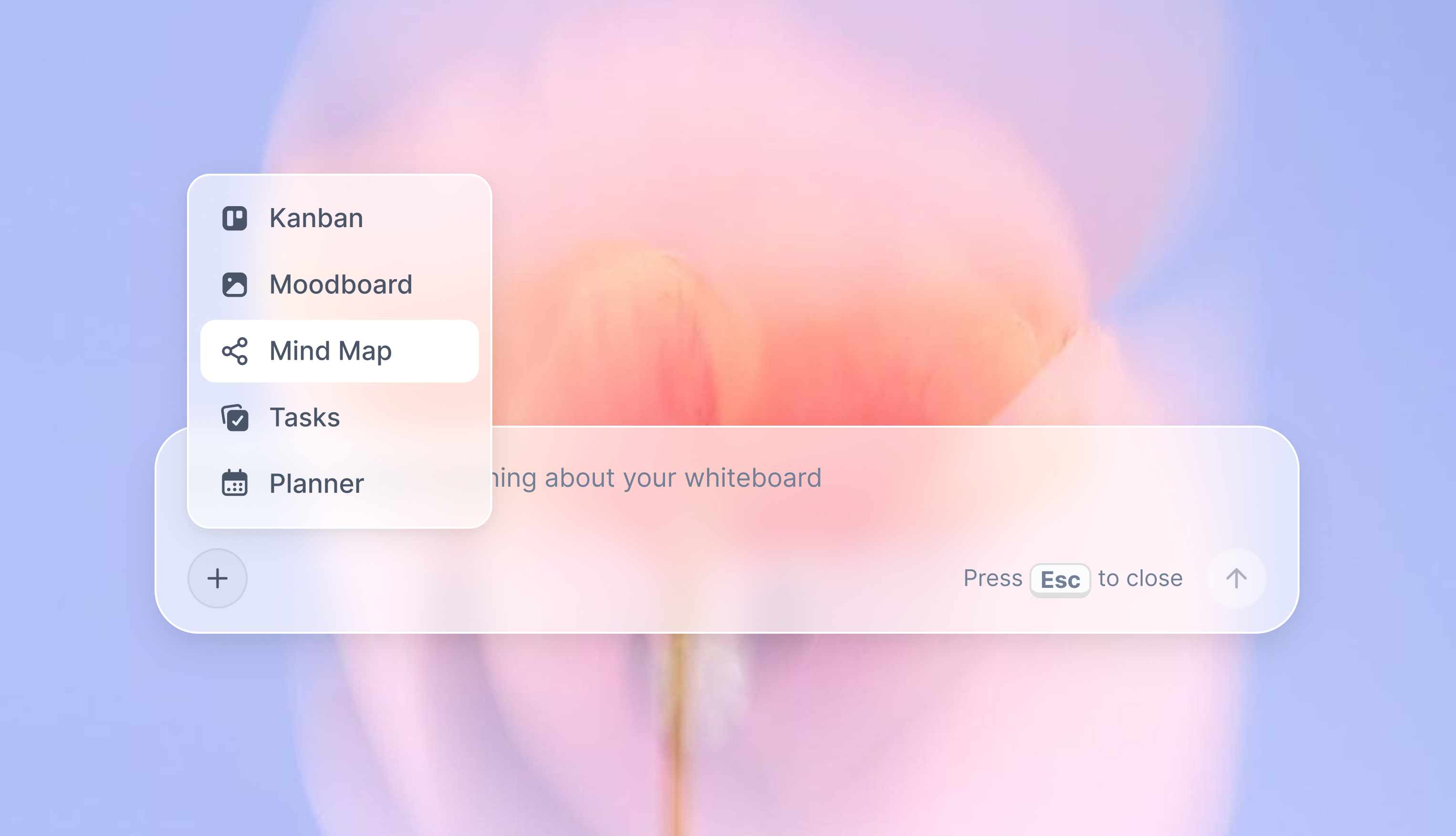
Type what you need in the AI chat at the bottom of your canvas. The AI adds cards, headings, and structure directly onto your board.
Use expert frameworks as AI context
Type @ in the AI chat and choose any Tactic. The AI tailors every response to that framework instead of giving generic advice.
Turn your board into a mind map in seconds
Ask the AI to restructure your canvas as a mindmap. It connects your ideas into a visual hierarchy so you can see how everything relates.
Why Storyflow Exists
Storyflow actually began as a personal tool while working on creative and research projects.
We kept running into the same problem: ideas were scattered everywhere: notes, documents, and whiteboards.
Nothing helped us see how everything connected.
So we started building a workspace designed around how ideas actually grow.
→ Read how Storyflow was createdJustkay
Documentary Filmmaker & Founder at Storyflow
Published: 2026-05-14
Extremely simple, seriously capable


See how easy it is to get started
Watch a real project come together, from a blank board to a finished plan, clicked through step by step.
Start creating with AI and become more productive
Transform your creative workflow with AI-powered tools. Generate ideas, create content, and boost your productivity in minutes instead of hours.