The 12 Best Jira Alternatives in 2026 (For Teams Who Want Less Friction)
Most Jira alternatives are sold on a feature checklist. We tested 12 against three real workflows: a software team, a documentary production, and an agency running concurrent client campaigns. The right Jira alternative removes your team's actual friction, not the friction in a marketing page.

Category
Project Management
Author

Justkay
Documentary Filmmaker & Founder at Storyflow
Topics
2026-05-10
•
16 min read
•
Project Management- best Jira alternatives 2026
- Jira alternative for creative teams
- Jira replacement
What is the best Jira alternative in 2026?
The best Jira alternatives in 2026 are Linear for software teams, ClickUp for power users who want one all-in-one workspace, and Storyflow for creative and documentary teams who want a project canvas with AI context instead of a ticket queue. The right choice depends on whether your team's friction with Jira is configuration weight, surface area, or a sprint cadence that never fit the work.

The best Jira alternatives in 2026 are Linear, ClickUp, and Storyflow, depending on what kind of team you actually run. Linear wins for software teams who want Jira's depth without Jira's drag. ClickUp wins for power users who want every view in one place. Storyflow wins for creative and documentary teams who do not need a formal sprint cadence and want a project canvas with AI context instead of a ticket queue. The real question is not which tool replaces Jira on a feature checklist. It is which tool removes the friction your team is actually feeling.
All 12 Jira Alternatives, Ranked
- Storyflow: best for a creative project canvas with AI context
- Linear: best for modern engineering issue tracking
- ClickUp: best for a power-user all-in-one workspace
- Asana: best for cross-functional operations
- Notion: best for lightweight doc-first tracking
- Shortcut: best for story-first engineering tracking
- YouTrack: best for a Jira-like tracker with an open free tier
- Trello: best for a lightweight kanban replacement
- Monday: best for visual project tracking
- Pivotal Tracker: best for velocity-driven engineering
- Basecamp: best for a small-team flat-rate workspace
- Hive: best for AI-augmented task management
Full disclosure: Storyflow is our own product, and we do not rank it #1 here. For software teams Linear is the stronger pick, and for all-in-one surface area ClickUp covers more. Storyflow is not a software-development issue tracker: no scrum cadence, no story-point burndown, no Bitbucket or GitHub PR linking, so engineering teams running scaled scrum should use Linear or Shortcut. Where Storyflow wins is creative, documentary, and strategic work, where the AI reads your full project canvas plus one Tactic and three Documents before it answers. We link to every tool so you can judge the fit.
Quick Comparison: Best Jira Alternatives
These four cover the frictions teams leave Jira for: engineering speed, a creative project canvas, all-in-one surface area, and cross-functional operations.
| Tool | Best For | AI Features | Price |
|---|---|---|---|
| Linear | Modern engineering issue tracking | Workflow-first; AI still maturing | Free / $8 user/mo |
| Storyflow | Creative project canvas with AI context | Reads full board + @-docs and Tactics | $7.99 mo annual (free plan late 2026) |
| ClickUp | Power-user all-in-one workspace | AI task generation and summaries | Free / $7 user/mo |
| Asana | Cross-functional operations | AI workflows and smart summaries | Free / $10.99 user/mo |
Quick Picks: Best Jira Alternatives 2026 by Team Type
Best for Software Teams: Linear The cleanest modern Jira alternative for engineering teams. Keyboard-first, fast, opinionated about issue structure. Cycles, projects, and roadmaps without configuration nightmares. Starts at $8/user/month. The trade-off is a narrower view of work than ClickUp or Asana. Linear is for teams who ship code, not teams who run brand campaigns.
Best for Creative and Documentary Teams: Storyflow Storyflow is a project canvas with AI that reads your brief, your shot list, and your narrative framework before it answers. It is not a software-development issue tracker. There is no formal scrum cadence, no story-point burndown, no Bitbucket pipeline integration. For documentary teams, agencies, and creative leads who tried to make Jira fit and lost three weeks to it, the canvas-first model is closer to how the work actually happens. Free plan: unlimited projects, basic AI usage, 20 file uploads. Plus: $7.99/month billed annually.
Best Power-User Replacement: ClickUp Every view, every field, every automation. If you want one tool to hold tasks, docs, goals, time tracking, and a chat thread, ClickUp covers more surface area than any tool on this list. Free plan available. Paid from around $7/user/month. The cost is configuration weight. ClickUp rewards teams who invest time in a custom workspace and punishes teams who do not.
Best Operations Replacement: Asana The most polished Jira alternative for cross-functional operations work. Portfolios, goals, and timelines are clean. Workflow rules are deep without being arcane. Starts around $10.99/user/month billed annually. Less developer-focused than Linear, less configurable than ClickUp, but the most readable workspace for a leadership team that needs status without a tutorial.
Best Lightweight Replacement: Notion For teams whose Jira usage was 80 percent task lists and 20 percent everything else, Notion's database structure handles task tracking inside a doc-first environment. Free plan is generous. Paid from $10/user/month. Limitation: no real sprint or backlog primitives. You build them yourself out of databases and rollups.
Best Story-First Replacement: Shortcut Engineering tracker with stories as the central unit instead of tickets. Lighter than Jira, more opinionated than Linear about narrative structure of work. Starts free, paid from around $8.50/user/month.
Best Open-Tier Jira-Like Replacement: YouTrack JetBrains' issue tracker with a free plan up to 10 users. Closest to Jira in shape, lighter in feel. Useful for teams that want Jira's structure without Atlassian's pricing curve.
Best Lightweight Visual Replacement: Trello The original kanban tool. Free plan. Paid from $5/user/month. Trello replaces Jira for teams whose actual workflow was always one board and a backlog.
Best Visual Replacement: Monday Colour-coded boards and dashboards built for teams who need to see status before reading status. Starts at $9/user/month billed annually.
Best Velocity-First Replacement: Pivotal Tracker Engineering tracker built around story points and team velocity. Less popular than it was, still the cleanest velocity-tracking tool on this list.
Best Small-Team Replacement: Basecamp Flat pricing at $99/month for unlimited users. For small teams running a few projects without a sprint cadence, Basecamp removes the per-seat math entirely.
Best AI-Augmented Replacement: Hive Project management with built-in AI for task generation, summarisation, and routing. Starts around $5/user/month.
Storyflow earns the creative slot here on a specific point. The AI reads everything currently on your board, plus one Tactic Blueprint and up to three Documents, before it answers. For a team where the brief, the script, the shot list, and the rough plan all live in the same project, that context gap matters more than another sprint board does. If your team's Jira pain is cadence mismatch rather than missing features, take your most active non-engineering project and rebuild it on a Storyflow canvas for one week. You will know by the end whether a ticket queue was ever the right shape for it.
Comparison Table: Best Jira Alternatives 2026
| Tool | Best For | Starting Price | Free Plan | vs Jira (★/5) | Rating (/10) |
|---|---|---|---|---|---|
Storyflow | Creative project canvas with AI context | $7.99/month annual | Coming late 2026 (invited collaborators join free now) | ★★★★☆ | 9.1/10 |
Linear | Modern engineering issue tracking | $8/user/month | Yes (limited) | ★★★★★ | 9.3/10 |
ClickUp | Power-user all-in-one workspace | $7/user/month | Yes | ★★★★★ | 8.9/10 |
Asana | Cross-functional operations | $10.99/user/month | Yes (limited) | ★★★★☆ | 8.6/10 |
Notion | Lightweight doc-first tracking | $10/user/month | Yes | ★★★☆☆ | 8.3/10 |
Shortcut | Story-first engineering tracking | $8.50/user/month | Yes | ★★★★☆ | 8.2/10 |
YouTrack | Jira-like with open free tier | $4.40/user/month | Yes (up to 10 users) | ★★★★☆ | 8.0/10 |
Trello | Lightweight kanban replacement | $5/user/month | Yes | ★★★☆☆ | 7.7/10 |
Monday | Visual project tracking | $9/user/month | Yes (limited) | ★★★☆☆ | 7.6/10 |
Pivotal Tracker | Velocity-driven engineering | $10/user/month | Limited | ★★★☆☆ | 7.2/10 |
Basecamp | Small-team flat-rate workspace | $99/month flat | Limited | ★★★☆☆ | 7.0/10 |
Hive | AI-augmented task management | $5/user/month | Yes (limited) | ★★★☆☆ | 7.0/10 |
Rating criteria: Workflow fit was weighted most heavily (30 percent) because the Jira pain most teams describe is workflow mismatch, not feature shortage. AI usefulness (20 percent), ease of use (20 percent), collaboration (15 percent), pricing (10 percent), integrations (5 percent).
Linear leads on engineering team fit. ClickUp leads on raw surface area. Storyflow leads on creative project context because no other tool on this list lets the AI read your brief, your script, and your rough plan in one shot before answering.
Storyflow holds briefs, plans, and Blueprint Tactics on one connected project canvas with AI context built in
Best Jira Alternatives 2026: Why Teams Are Leaving Jira
Justkay's first encounter with Jira-style project management was on a documentary production. The producer had brought in a tool the engineering side of the agency loved. Sprints, story points, two-week cycles. By week three, the field crew had stopped opening it. The shoot does not care about a sprint boundary. A scene that cuts itself together in the edit cannot be re-pointed. The tool was not wrong. It was wrong for that team.
That is the pattern. Most teams leaving Jira in 2026 are not leaving because Jira broke. They are leaving because Jira's depth was answering a question they were not asking. McKinsey's 2012 research on knowledge workers found that the average professional spends 28 percent of their week on email and 19 percent searching for information, which is roughly half the working week before any actual work begins. A heavy workflow tool adds friction on top of that. The teams that stay productive cut the configuration cost, not the tracking cost.
Cognitive load is the second pressure. Cowan's 2001 paper on working memory put the practical limit at around four items at a time. Jira's screen routinely shows more than that: epics, sprints, story points, custom fields, dependencies, swimlanes. For an engineering team trained on it, the load is absorbed. For a brand team, a documentary team, or a small founder-led team, the load shows up as avoidance. The tool sits open in a tab and the team works in Slack and a shared doc.
The third pressure is that the work has changed. AI assistants now sit inside most project workflows, and they are only as good as the context they can reason over. The teams pulling ahead in 2026 are the ones whose project tools store linked context the AI can read, not just rows the AI can summarise. Jira can be made to do that with extensions. Most of the tools on this list do it natively. One of them, Storyflow, is built around that idea entirely.
It is not a Jira-or-nothing decision. It is a question of whether your team's friction is configuration weight, cadence mismatch, surface-area mismatch, or context loss, and which alternative removes that specific friction.
How We Evaluated the Best Jira Alternatives 2026
Six criteria shaped every rating. Here is what each test specifically involved.
Workflow fit: Each tool was tested against three real workflows: a four-engineer software team running two-week cycles, a documentary production with a shoot phase and an edit phase, and a five-person agency running three concurrent client campaigns. Tools were rated on how little they bent the workflow before becoming useful.
AI usefulness: I tested whether the AI could read project context (briefs, linked docs, board state) and produce something a human had not already done. Generic summarisation scored low. Context-aware planning, draft generation, or routing scored high.
Ease of use: Time to first useful state from a blank workspace. How many configuration choices the tool forced before the team could work. Whether the default view was readable to someone who had not been onboarded.
Collaboration: Real-time editing, comment threads, guest access without seat purchase, and how the tool behaved when an external collaborator joined a project for one task.
Pricing: Total annual cost for a five-person team using the tool seriously, including any AI add-ons. Sticker prices on the website were treated as marketing copy until verified inside a real account.
Integrations: Whether the tool connected to the systems the team already had in place: GitHub or GitLab for engineering, Slack for chat, Google Drive or Notion for docs.
Every tool was tested with real project work. Feature checklists from product pages were not the basis for any rating.
Detailed Reviews: Best Jira Alternatives 2026
1. Storyflow
Storyflow is a visual AI project canvas built for creators, filmmakers, marketers, and strategists who need their brief, narrative structure, and execution plan in one project. It is not a software-development issue tracker. There is no scrum cadence, no story-point burndown, no Bitbucket pipeline integration. If your team's day starts on a sprint board and ends on a code review, Linear or Shortcut is the right answer. Storyflow is for the work next door: the documentary in development, the brand campaign, the launch plan, the longform research project, the founder running three threads at once.
What separates Storyflow from the other tools on this list is not the canvas. Other tools have canvases. It is the AI's relationship to the canvas. When you open AI chat in Storyflow, the AI reads everything currently on the board. You can @-mention up to three Documents and one Blueprint Tactic in the same conversation. That is your brief, your treatment, your shot list, and a Hero's Journey or Brand Plan framework, all in the AI's context window before it responds. For teams whose Jira pain was that the work and the thinking lived in separate apps, the context recombination is the actual feature.
Best for: Creative and documentary teams, agencies, and small founder-led teams who left Jira because the workflow shape did not fit the work.
Key features:
Project canvas with spatial structure. Storyflow's whiteboard is unlimited. You arrange briefs, references, plans, and notes by proximity and relationship instead of by row. For a team mapping a six-month documentary or a multi-channel launch, the spatial layout holds more shape than a backlog can.
Blueprint Tactics for project structure. Storyflow has 200+ Blueprint Tactics covering brand strategy, narrative arcs, video planning, marketing frameworks, and creative direction. Drop a Tactic onto your canvas and it becomes a guided structure with AI assistance built into each card. For teams replacing Jira because they had no project shape and were forced to invent one, the Tactics library does the inventing for you.
AI chat with full canvas context. AI chat reads the full current canvas, plus one Tactic Blueprint and up to three Documents you @-mention. That is the largest contextual frame in any tool on this list. Ask the AI to draft a launch plan, suggest a documentary scene structure, or sequence a campaign, and it answers from the actual project, not from a generic prompt.
Documents alongside the board. Write briefs, treatments, scripts, and notes as Documents in the same project. They live next to the canvas, not in a separate app. During AI chat they are addressable as context.
Kanban view for production stages. Switch any whiteboard into kanban view to track items through stages: Draft, In Progress, Approved, Shipped. For teams that want a board view without leaving the project canvas, the kanban view is one click.
Shared boards on every plan, team workspace on Max. Even the Free plan includes unlimited shared boards and collaboration, so a small team can work across the same project from day one. The Max plan ($39/month billed annually) adds a team workspace with permissions and roles for teams who need access control across multiple projects.
Pricing: Paid-only early access today; the Free plan (unlimited boards, basic AI usage, 20 file uploads) launches before the end of 2026, and anyone a paid member invites to a board joins free now. Plus: $7.99/month billed annually or $9.99/month billed monthly (full 200+ Blueprint Tactics, unlimited file uploads). Pro: $14/month billed annually or $19/month billed monthly (adds AI image generation and 20× more AI than Plus). Max: $39/month billed annually.
Pros:
- The only tool on this list where AI reads the full project canvas, plus one Tactic and three Documents, in one context window
- 200+ Blueprint Tactics replace the empty-board problem with a structured starting point grounded in proven frameworks
- Free plan is functional for solo creators running real projects, not a marketing trial
- Workflow shape is canvas-first, which fits documentary, brand, and creative work that does not run on engineering cycles
Cons:
- Not a software-development issue tracker. No formal scrum cadence, no story-point burndown, no developer-tooling integrations like Bitbucket pipelines or GitHub PR linking. Engineering teams running scaled scrum should use Linear or Shortcut.
- Team workspace with permissions and roles is a Max-plan feature. Free and paid lower tiers include unlimited shared boards and collaboration, but role-based access control across a team workspace requires Max ($39/month billed annually).
- The 200+ Tactics library has its own learning curve. Teams expecting a single default workflow will need to explore which Tactics fit their work before settling in.
Verdict: Storyflow is the right Jira alternative for teams whose work is creative, narrative, or strategic rather than ticketed. The AI context window is the headline feature: brief plus framework plus documents plus canvas, in one shot. For software teams running scrum, look at Linear or Shortcut. For everyone else who left Jira because the cadence and structure did not fit, Storyflow is the closest thing to a tool that bends to your work instead of bending your work to it.
2. Linear
Linear is the modern engineering issue tracker most teams reach for when they leave Jira. It is opinionated, fast, and built around how engineering teams actually run. Cycles instead of sprints, projects instead of epics, a keyboard-first interface that respects the speed at which engineers move through tickets.
Linear's strength is restraint. Where Jira lets you customise everything, Linear chose strong defaults and stuck with them. Issue types are limited. Custom fields are constrained. Workflow states are opinionated. For engineering teams, the constraint is the feature. The configuration tax that drains a quarter of every Jira rollout is not present in Linear.
Best for: Software engineering teams who want Jira's structure without Jira's configuration weight.
Pricing: Starts at $8/user/month billed annually. Free plan is available with a member cap.
Linear's AI features are improving but are not the headline. The headline is the workflow itself. For teams where the friction with Jira was speed and configuration, not context, Linear is usually the right move. For teams whose work is not engineering, Linear is the wrong shape. There is no canvas, no document model designed for narrative work, no Tactic library for creative structure.
3. ClickUp
ClickUp tries to be everything. Tasks, docs, goals, time tracking, chat, whiteboards, sprints, and dashboards live inside one workspace. For power users, the surface area is the appeal. You replace four tools with one, accept the configuration cost, and learn the system.
The cost is real. ClickUp rewards investment and punishes drive-by usage. Teams that set up custom statuses, automations, and ClickApps get an enormous return. Teams that drop in expecting to pick it up in a week typically do not.
Best for: Power-user teams who want one tool to cover most categories of work and are willing to invest in setup.
Pricing: Free plan available with reasonable limits. Paid plans start around $7/user/month billed annually.
ClickUp's AI is competent at task generation, summarisation, and writing assistance. It does not read project context with the depth of Storyflow's canvas-aware AI, but for general task and doc work, it is reliable. The right answer to "should we use ClickUp" depends almost entirely on whether the team will commit to setup. Half-committed ClickUp deployments turn into the same mess teams left Jira to escape.
4. Asana
Asana is the most polished cross-functional operations tool on this list. Portfolios, goals, timeline view, and workflow automation are clean and well-supported. Leadership teams who want status without learning a new tool every quarter find Asana readable in a way that Jira and Linear are not.
Best for: Operations and cross-functional teams who run multiple projects with shared dependencies and want a high-readability workspace.
Pricing: Starts around $10.99/user/month billed annually.
Asana is less developer-focused than Linear and less configurable than ClickUp. The middle position is the strength. For an operations team, a marketing team, or a programme manager, Asana's defaults are sensible and the visual hierarchy holds up under load. For an engineering team that wants Jira's depth, Asana feels light. For a creative team that wants narrative structure, Asana's task model still feels procedural.
5. Notion
Notion's database structure can hold a project tracker, a backlog, a sprint, and a documentation site inside one workspace. Many teams that left Jira ended up in Notion because their actual usage was 80 percent task lists, 15 percent meeting notes, and 5 percent everything else.
Best for: Doc-first teams whose project tracking can live inside a database rather than a dedicated tracker.
Pricing: Free plan is genuinely useful for small teams. Paid plans start around $10/user/month billed annually.
Notion's limitation as a Jira replacement is that it has no native sprint or backlog primitives. You build them out of databases, properties, and rollups. For a small team that wants control over the schema, this is fine. For a team that wants the system to ship sprint-ready, it is the wrong tool. Notion AI is competent for writing and summarising inside Notion content. It does not read across an entire project space the way Storyflow's canvas-aware AI does.
6. Shortcut
Shortcut, formerly Clubhouse, treats stories as the central unit of work. Less heavy than Jira, more opinionated than Linear about narrative structure of features and bugs. Engineering teams who want a story-first model rather than a ticket-first model land here.
Best for: Engineering teams who want Jira-like structure with lighter weight and a story-centric model.
Pricing: Free plan available. Paid plans start around $8.50/user/month.
Shortcut's strengths are clarity and reasonable defaults. Its weaknesses are similar to Linear's: it is built for engineering work and does not extend cleanly into operations, marketing, or creative work. For a software team that wants a Jira alternative without the Jira inheritance, Shortcut is a credible option.
7. YouTrack
YouTrack is JetBrains' issue tracker. It looks more like Jira than any other tool on this list, which is the point. Teams who want Jira's structure but cannot justify Atlassian's pricing curve often land on YouTrack. The free tier extends to 10 users, which makes it the most generous open option for small teams that genuinely need Jira-shaped tracking.
Best for: Engineering teams who want Jira's shape and structure on a more affordable price curve.
Pricing: Free for up to 10 users. Paid plans start around $4.40/user/month.
YouTrack's limitation is that it inherits Jira's complexity along with its shape. Teams whose pain with Jira was configuration weight will find similar weight in YouTrack. Teams whose pain was pricing will find genuine relief.
8. Trello
Trello is the original kanban tool. For teams whose Jira usage was always one or two boards plus a backlog, Trello replaces it cleanly. The free plan is generous. The paid plan adds automations and unlimited boards at $5/user/month.
Best for: Small teams whose actual workflow is one or two boards and a backlog, not a full project hierarchy.
Pricing: Free plan. Paid plans start at $5/user/month billed annually.
Trello's limitation is depth. There is no real concept of a project hierarchy, dependencies, or roadmap. For a team whose work is genuinely board-shaped, this is a feature. For a team whose work has structure that cards-on-columns cannot hold, it becomes a constraint.
9. Monday
Monday is the most visual project tool on this list. Colour-coded boards, dashboards, and timeline views are designed to communicate status at a glance. For teams who need to see status before they read it, Monday is fast.
Best for: Visual teams and stakeholders who want status to be obvious from a glance, not from a query.
Pricing: Starts at $9/user/month billed annually.
Monday's limitation is that the visual polish costs surface area. Engineering teams who want sprint-grade tracking will find Monday's automations and views less suited to ticket flow than Linear or Shortcut. For cross-functional and operations work, Monday holds up well.
10. Pivotal Tracker
Pivotal Tracker is a velocity-first engineering tool built around story points and team velocity. It is less popular than it was in the mid-2010s, but it is still the cleanest velocity-tracking tool on this list. For engineering teams that genuinely use velocity as a planning input, Pivotal Tracker has not been beaten on that specific axis.
Best for: Engineering teams that plan around story points and velocity in a serious way.
Pricing: Starts around $10/user/month.
The tool is narrower than the alternatives. Teams that do not use velocity should not adopt Pivotal Tracker for it. Teams that do use velocity will find it more honest than any Jira velocity dashboard.
11. Basecamp
Basecamp is the flat-rate alternative on this list. $99/month for unlimited users. For small teams running a few projects without sprint cadence, Basecamp removes the per-seat math entirely. Message boards, to-dos, schedules, and docs are all included.
Best for: Small teams who want a flat-rate workspace and do not need sprint-grade tracking.
Pricing: $99/month flat for unlimited users.
Basecamp's limitation is that it is opinionated about being lightweight. There are no dependencies, no portfolios, and no advanced workflow rules. For a 10-person consultancy running parallel client projects, this is the right model. For a 50-person organisation running structured engineering and operations, it is not.
12. Hive
Hive is a project management tool with built-in AI for task generation, routing, and summarisation. It positions itself as the AI-augmented option in the category. For teams whose Jira pain was that the tool added work instead of removing it, Hive's AI features can claw some time back.
Best for: Teams who want a Jira-style project tracker with AI assistance on top.
Pricing: Starts around $5/user/month billed annually.
Hive's AI is competent. It is not as deeply integrated into project context as Storyflow's canvas-aware AI, but for tasks, summaries, and inbox-style routing, it does the job. For teams who want a familiar project management shape with AI on top of it, Hive is a reasonable middle option.
AI Planner converts a brief into a phased project plan grounded in the canvas already in front of you
Kanban view tracks work from Draft through Shipped without leaving the project canvas
Free vs Paid: Best Jira Alternatives 2026
What free plans typically include:
- A capped number of projects, members, or boards (Storyflow: unlimited projects, basic AI usage, 20 file uploads; Trello: unlimited boards with member caps; Notion: unlimited blocks for individuals; Linear: capped members and limited features)
- Enough capacity to test the workflow on a real project before paying
- Basic sharing, comments, and async collaboration
- Limited or no AI usage
What paid plans unlock:
- Unlimited projects, members, and storage
- The full AI stack: Storyflow Pro unlocks AI image generation, 20× more AI than Plus, and the full 200+ Tactics library
- Team workspace with permissions and roles (Storyflow Max plan, from $39/month billed annually)
- Advanced views and reporting (Asana portfolios, Linear roadmaps, ClickUp dashboards)
- Workflow automation, custom fields, and admin controls
- Priority support and SSO on enterprise tiers
When free is enough: A solo founder or small team running one or two active projects can stay on free plans for a long time. Storyflow's Free plan, launching before the end of 2026, will cover unlimited projects, basic AI usage, 20 file uploads, which is enough for one creative project plus development of the next. Trello's free plan covers a small team's kanban needs. Notion's free plan covers most documentation needs.
When upgrading pays off: Teams running three or more active projects in parallel hit free plan ceilings within weeks. Storyflow Plus at $7.99/month billed annually opens the full 200+ Tactics library, and Pro at $14/month billed annually adds AI image generation and 20× more AI than Plus with full canvas and document context. For agencies running multiple client campaigns or documentary teams developing parallel productions, that single subscription replaces what would otherwise be three or four tools. For a team that needs a shared workspace with permissions and roles across multiple projects, Storyflow Max at $39/month billed annually adds team-workspace access control.
Best value for creative and project-canvas work: Storyflow. Best value for engineering: Linear. Best value for power users: ClickUp. The right answer depends on what your team's friction with Jira actually was.
Storyflow Pro unlocks 200+ Blueprint Tactics, AI image generation, and 20× more AI than Plus for creative teams running parallel projects
Final Verdict: Best Jira Alternatives 2026
It is not a question of which tool replaces Jira on a feature list. It is a question of which kind of friction your team is feeling.
If the friction is configuration weight and engineering speed, Linear is the answer. The opinionated defaults remove the configuration tax, and the keyboard-first interface respects how engineers move through work. Cycles, projects, and roadmaps are all native, and the workflow ships ready for a four-engineer team to use on day one.
If the friction is surface area and you want one tool to cover everything, ClickUp wins. Tasks, docs, goals, time tracking, and dashboards live in one workspace. The investment in setup is real, but for a team committed to a single tool, the payoff is real too.
If the friction is that your team is not an engineering team, and Jira's sprint cadence and ticket model never fit the work in the first place, Storyflow is the answer.
Storyflow is not a software-development issue tracker. It is a project canvas with AI that reads your brief, your shot list, and your narrative framework before it answers. For documentary teams, agencies, brand teams, and creative leads, the canvas-first model holds the actual work better than a ticket queue does. The AI context window, with one Tactic and up to three Documents on top of the live canvas, is the largest in any tool on this list. If that is your friction, take the project your team currently runs across Jira, Slack, and three docs and rebuild it on a single Storyflow canvas for one week. The decision will make itself.
If the friction is that you needed something lighter than Jira but Jira-shaped, YouTrack and Trello are credible options. If you needed something Jira-shaped with serious AI on top, Hive is the middle option. If you needed velocity tracking taken seriously, Pivotal Tracker still does that one thing well.
The best Jira alternative is the one whose default shape fits your work without configuration. Start with what your team's friction actually is. The tool follows from that.
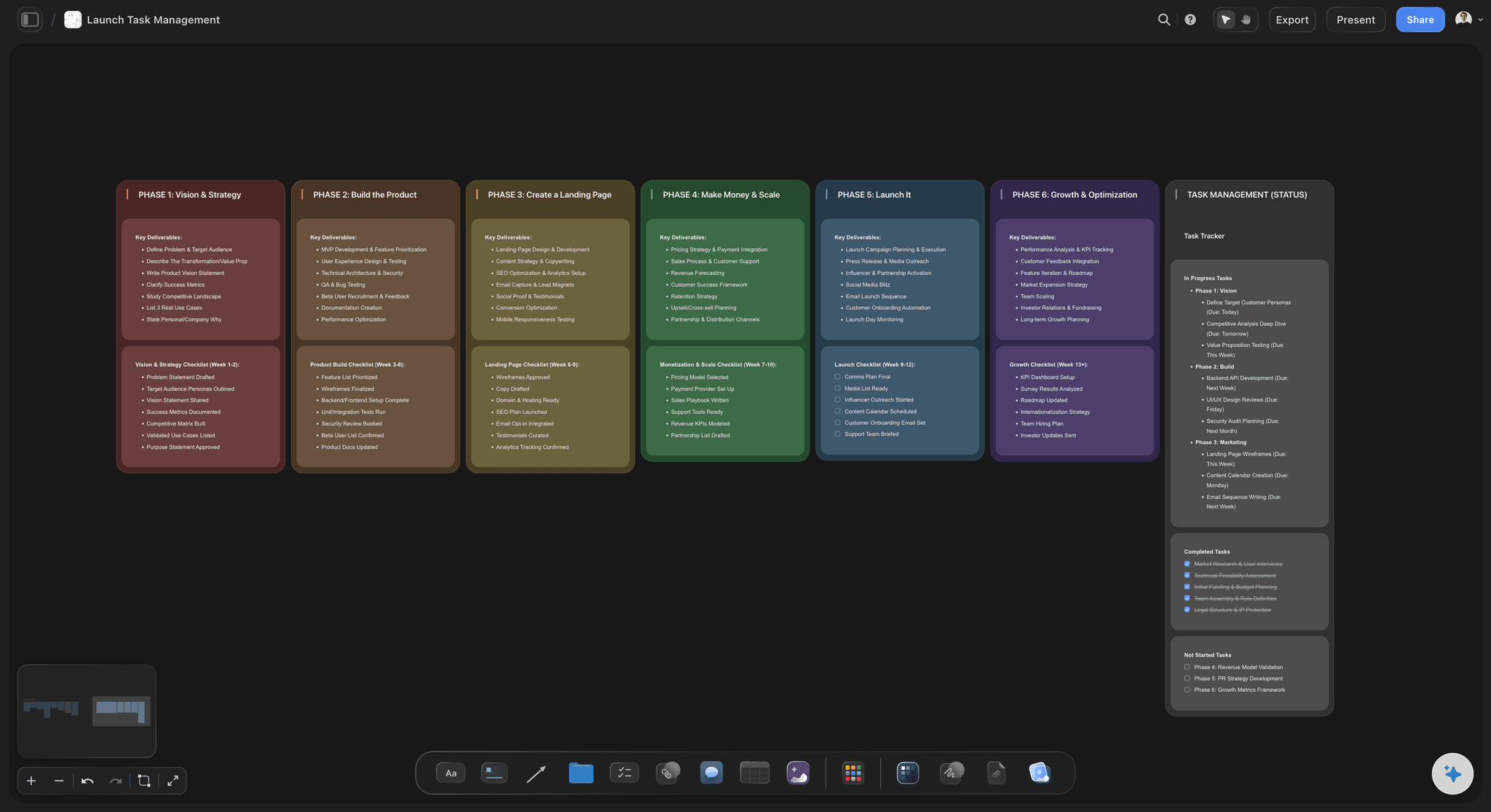
A launch tracked on the Storyflow canvas: tasks, stages, and owners held next to the brief and plan, with AI reading the full board
FAQ: Best Jira Alternatives 2026
What is the best Jira alternative in 2026?
The best Jira alternative in 2026 is Linear for software teams, ClickUp for power users, and Storyflow for creative and documentary teams. Linear is the cleanest modern tracker for engineering work. ClickUp covers the most surface area in one workspace for teams willing to invest in setup. Storyflow is the best fit for teams who do not need a sprint cadence and want a project canvas with AI context instead of a ticket queue. The right answer is whichever tool removes your team's actual friction with Jira.
Why are teams leaving Jira in 2026?
Most teams leaving Jira in 2026 are not leaving because Jira broke. They are leaving because the configuration weight, the cadence model, or the surface-area mismatch was answering a question they were not asking. Engineering teams move to Linear or Shortcut for speed. Operations teams move to Asana for readability. Creative and documentary teams move to Storyflow because they never needed sprints or story points to begin with.
Is Storyflow a Jira alternative for software teams?
No. Storyflow is not a software-development issue tracker. There is no formal scrum cadence, no story-point burndown, and no developer-tooling integrations like Bitbucket pipelines. Engineering teams running scaled scrum should use Linear, Shortcut, or YouTrack. Storyflow is built for creative team work: documentary, brand, agency, and founder-led project canvases where the brief, the structure, and the plan need to live in one project.
What is the cheapest Jira alternative?
Trello's free plan covers small teams who use one or two kanban boards. Notion's free plan covers small teams who run task tracking inside a doc-first environment. YouTrack's free tier extends to 10 users. Storyflow's Free plan, launching before the end of 2026, will cover unlimited projects, basic AI usage, 20 file uploads, which is enough for a solo creator running one active project plus development of the next.
What Jira alternative is best for documentary and creative teams?
Storyflow. The AI reads everything currently on your project canvas, plus one Blueprint Tactic and up to three Documents you @-mention. For a documentary team where the treatment, the shot list, and the narrative framework need to live in one project, the context recombination is the actual feature. Plus at $7.99/month billed annually unlocks the full 200+ Tactics library, and Pro at $14/month billed annually adds AI image generation and 20× more AI than Plus.
How does Storyflow compare to Linear?
Linear is the modern Jira alternative for engineering teams. Storyflow is a project canvas with AI for creative and strategic teams. They are not competitors. A four-engineer software team should use Linear. A four-person documentary team should use Storyflow. Some companies run both, with Linear holding the engineering work and Storyflow holding the brand, content, and creative work. The friction Linear removes is configuration weight in engineering. The friction Storyflow removes is the gap between brief, framework, and plan in creative work.
Can Notion replace Jira?
For small doc-first teams whose project tracking can live inside a database, yes. For teams running structured sprints with backlogs, dependencies, and roadmaps, Notion will work but you will build the sprint primitives yourself out of databases and rollups. Notion is the right answer when your project tracking is genuinely lightweight and your documentation needs are heavy. It is the wrong answer when your engineering team needs sprint-grade tracking out of the box.
Is ClickUp better than Jira?
For power-user teams willing to invest in setup, yes. ClickUp covers more surface area than Jira inside one workspace and the configuration tax is lower. For half-committed deployments where the team will not invest in custom statuses, automations, and ClickApps, ClickUp turns into the same mess teams left Jira to escape. The honest answer is that ClickUp rewards commitment.
What does it actually cost to leave Jira?
The migration cost is the bigger number. Tool prices are not the bottleneck. Linear at $8/user/month, ClickUp at $7/user/month, Storyflow Plus at $7.99/month billed annually, and Asana at $10.99/user/month are all in the same range. The real cost is rebuilding workflows, retraining the team, and accepting a productivity dip during the transition. Teams that switch tools quarterly pay this cost repeatedly. Teams that diagnose the actual friction first pay it once.
Which Jira alternative has the best AI?
Storyflow's AI has the largest contextual frame on this list. It reads everything currently on the project canvas, plus one Tactic Blueprint and up to three Documents you @-mention. ClickUp and Hive have competent AI for task generation and summarisation. Linear and Notion's AI features are improving but are narrower in scope. For teams whose Jira pain was that the work and the thinking lived in separate apps, Storyflow's context recombination is closer to the actual problem than another summarisation feature is.
Table of Contents
- Quick Picks: Best Jira Alternatives 2026 by Team Type
- Comparison Table: Best Jira Alternatives 2026
- Best Jira Alternatives 2026: Why Teams Are Leaving Jira
- How We Evaluated the Best Jira Alternatives 2026
- Detailed Reviews: Best Jira Alternatives 2026
- Free vs Paid: Best Jira Alternatives 2026
- Final Verdict: Best Jira Alternatives 2026
- 1. Storyflow
- 2. Linear
- 3. ClickUp
- 4. Asana
- 5. Notion
- 6. Shortcut
- 7. YouTrack
- 8. Trello
- 9. Monday
- 10. Pivotal Tracker
- 11. Basecamp
- 12. Hive
- FAQ: Best Jira Alternatives 2026
- Related Reading
Templates to check out for this topic


Planning and project templates you can use in Storyflow
Plan a launch, a sprint, or a whole project on a visual board the team can see at once. Open one of these templates and start from real structure.


See Storyflow in Action
A visual AI workspace where every feature lives inside one canvas. No tab-switching, no context lost.
Build your entire board from a single message
Type what you need in the AI chat at the bottom of your canvas. The AI adds cards, headings, and structure directly onto your board.
Use expert frameworks as AI context
Type @ in the AI chat and choose any Tactic. The AI tailors every response to that framework instead of giving generic advice.
Turn your board into a mind map in seconds
Ask the AI to restructure your canvas as a mindmap. It connects your ideas into a visual hierarchy so you can see how everything relates.
Why Storyflow Exists
Storyflow actually began as a personal tool while working on creative and research projects.
We kept running into the same problem: ideas were scattered everywhere: notes, documents, and whiteboards.
Nothing helped us see how everything connected.
So we started building a workspace designed around how ideas actually grow.
→ Read how Storyflow was createdJustkay
Documentary Filmmaker & Founder at Storyflow
Published: 2026-05-10
Extremely simple, seriously capable


See how easy it is to get started
Watch a real project come together, from a blank board to a finished plan, clicked through step by step.
Start creating with AI and become more productive
Transform your creative workflow with AI-powered tools. Generate ideas, create content, and boost your productivity in minutes instead of hours.