The 12 Best Canva Alternatives in 2026 (For Creators Who Want More Power)
The best Canva alternatives in 2026, tested for creators who want more design depth, more planning power, or a different template library. 12 tools compared on AI, workflow, and pricing.

Category
Visual Thinking
Author

Justkay
Documentary Filmmaker & Founder at Storyflow
Topics
2026-05-09
•
16 min read
•
Visual Thinking- best Canva alternatives 2026
- Canva alternatives for creators
- AI design and planning workspace
What is the best Canva alternative in 2026?
The best Canva alternative in 2026 is Storyflow if your bottleneck is the planning before the design, Figma if you need professional design depth, and VistaCreate if you want Canva-style templates at a lower price. Visme wins for business visuals. The right pick depends on which part of the workflow Canva fails you on.

The best Canva alternative in 2026 is Storyflow if your bottleneck is the planning before the design, Figma if you need professional design depth, and VistaCreate (formerly Crello) if you want Canva-style templates at a lower price. I tried using Canva for documentary pre-production last year and the gap became obvious in the first hour. Canva is brilliant for finished designs: a poster, a social tile, a quick brand template. The moment I needed to think through a project, plan visual direction across scenes, and connect a brief to references, Canva stopped being a creative tool and started being a polished output factory. The best Canva alternatives in 2026 split into three buckets. Professional design tools (Figma, Adobe Express). Creator workspaces for the thinking that happens before the design (Storyflow, Milanote). Template-driven tools that out-Canva Canva on specific use cases (Visme, PicMonkey). The right alternative depends on whether you need more design power, more planning power, or just a different template library at a lower price.
Full disclosure: Storyflow is our own product, and we rank it #1 for one job Canva does not do: the visual thinking and project planning that happen before the design, on a canvas the AI reads end to end. For professional vector design Figma is clearly stronger, VistaCreate gives you Canva-style templates for less, and Visme has the deeper business-visual and infographic library. Storyflow is honest about its limits: it has no in-tool image editor, no social-ready template library, and no brand asset manager, so it is a companion to a design tool, not a Canva replacement for finished tiles. We link to every tool so you can judge the fit.
Quick Comparison: Best Canva Alternatives
These four cover the different reasons people leave Canva: planning before the design, professional design depth, cheaper templates, and business-visual volume.
| Tool | Best For | AI Features | Price |
|---|---|---|---|
| Storyflow | Pre-design planning on an AI canvas | Canvas-wide AI + Blueprint Tactics | $7.99 mo annual (free plan late 2026) |
| Figma | Professional vector design and prototyping | AI design features and plugins | Free / $12 editor mo |
| VistaCreate | Canva-style templates for less | Generative design AI | Free / $10 mo |
| Visme | Infographics and business visuals at volume | AI for visuals and copy | Free / $12.25 mo |
All 12 Canva Alternatives, Ranked
- Storyflow - best for pre-design visual thinking and project planning with canvas-reading AI
- Figma - best professional vector design and prototyping
- Adobe Express - best template design inside the Adobe ecosystem
- Visme - best business visuals, infographics, and data visualisation
- Crello (VistaCreate) - best affordable Canva-style template design
- Milanote - best visual reference and creative planning boards
- Snappa - best lightweight social and marketing graphics
- Pixlr - best photo-first design and editing
- PicMonkey - best marketing visuals with stronger photo tools
- PosterMyWall - best poster, flyer, and event design
- Stencil - best high-volume social graphics for marketers
- FotoJet - best budget photo collages and quick edits
The detailed reviews below cover what each tool actually wins at, where it loses to Canva, and the honest pricing.
Quick Picks: Best Canva Alternatives 2026 by Use Case
Best for Pre-Design Visual Thinking: Storyflow Storyflow is not a Canva replacement for finished design. It does not have an in-tool image editor, a social-media-ready template library, or a brand asset manager. What it does is the work that happens before you open Canva: brief, narrative structure, visual references, scene planning, and AI that reads your full project canvas. For documentary pre-production, brand strategy planning, and story development, Storyflow handles the thinking. Paid-only during early access. Plus: $7.99/month billed annually. Free plan (unlimited shared boards, basic AI usage, 20 file uploads) launches before the end of 2026.
Best Professional Design Alternative: Figma Figma is the answer when your design needs more than Canva's template grid. Vector editing, design tokens, components, prototyping, and a real plugin ecosystem. For brand teams, product designers, and creators who want professional design control, Figma is the obvious move up. Free plan covers solo work. Paid plans start at $12 per editor per month billed annually.
Best Adobe-Ecosystem Alternative: Adobe Express For creators already inside the Adobe ecosystem with access to Photoshop, Illustrator, and Premiere assets. Adobe Express integrates with the rest of the Creative Cloud library, which means your fonts, photos, and brand assets are already there. Plans start at $9.99 per month for Premium.
Best Template-Heavy Alternative: Visme Visme has the deepest business-visual template library in this category. Infographics, presentations, reports, and data visualisations are stronger than Canva's equivalent templates. For marketing and communications teams producing branded business visuals at volume, Visme matches Canva on speed and beats it on output depth. Plans start at $12.25 per month billed annually.
Best Affordable Alternative: Crello (VistaCreate) Crello rebranded to VistaCreate after the Vista acquisition and remains the most affordable serious Canva alternative. The template library is large, the editor is familiar to anyone who has used Canva, and the pricing undercuts most of the category. Plans start at $10 per month.
Best Creator-Workspace Alternative for Visual Thinkers: Milanote Milanote is the closest tool to Canva for the development phase before formal design begins. Pin images, references, and notes onto a flexible board. Free plan covers 100 notes, images, or links and 10 file uploads.
For creators who want more power than Canva offers in a specific direction, the right move is not always a Canva replacement. Sometimes the answer is to keep Canva for finished tiles and add a planning tool that handles the thinking Canva was never built for. Move the planning half of your next project into Storyflow and let the AI read the whole canvas
Comparison Table: Best Canva Alternatives 2026
| Tool | Best For | Starting Price | Free Plan | vs Canva (★/5) | Rating (/10) |
|---|---|---|---|---|---|
Storyflow | Pre-design visual thinking and project planning | $7.99/month annual | Coming late 2026 (invited collaborators join free now) | ★★★★★ | 9.2/10 |
Figma | Professional vector design and prototyping | $12/editor/month | Yes (limited) | ★★★★★ | 9.0/10 |
Adobe Express | Adobe-ecosystem template design | $9.99/month | Yes (limited) | ★★★★☆ | 8.6/10 |
Visme | Business visuals and infographics | $12.25/month | Yes (limited) | ★★★★☆ | 8.3/10 |
Crello (VistaCreate) | Affordable Canva-style design | $10/month | Yes (limited) | ★★★★☆ | 8.1/10 |
Milanote | Visual reference and creative planning | $9.99/month | Yes (100 notes) | ★★★☆☆ | 8.0/10 |
Snappa | Lightweight social and marketing graphics | $10/month | Yes (3 downloads/month) | ★★★☆☆ | 7.7/10 |
Pixlr | Photo-first design and editing | $7.99/month | Yes (limited) | ★★★☆☆ | 7.6/10 |
PicMonkey | Marketing visuals with stronger photo tools | $7.99/month | No (7-day trial) | ★★★☆☆ | 7.5/10 |
PosterMyWall | Poster, flyer, and event design | $9.95/month | Yes (with watermark) | ★★★☆☆ | 7.3/10 |
Stencil | Quick social graphics for marketers | $9/month | Yes (10 images/month) | ★★☆☆☆ | 7.1/10 |
FotoJet | Photo collage and quick edits | $6.99/month | Yes (limited) | ★★☆☆☆ | 6.9/10 |
Rating criteria: design depth and output quality (25%), template breadth (20%), planning and creative workspace features (20%), AI capabilities (15%), collaboration (10%), pricing (10%). Storyflow leads because its planning depth and AI canvas context are unmatched in this list, even though it is not a finished-design tool. Figma leads on professional design control. Visme leads on business visual templates.
The honest read on this table: Canva is excellent at what it does. The question is whether what it does is what you actually need. For finished social tiles, Canva is hard to beat. For everything that comes before the finished tile, the alternatives in this list each solve a different part of the gap.
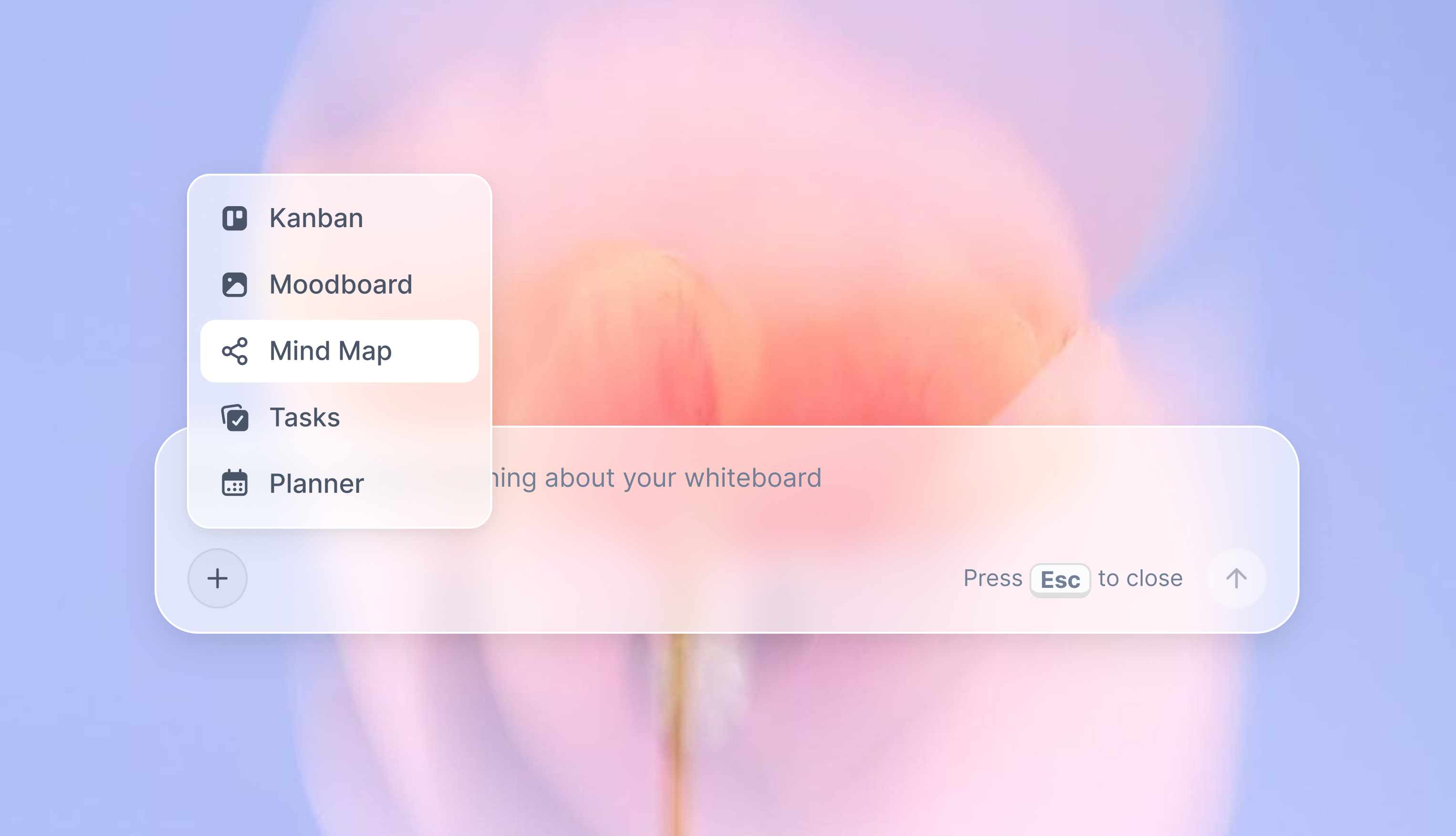
Storyflow holds the brief, visual references, and Blueprint Tactics together on one canvas, the planning layer Canva does not address
Best Canva Alternatives 2026: Market Context
The Canva market position is unusual in 2026. It is the default for non-designers producing branded visuals at speed. It is also the wrong tool for almost everything that requires either more design control or more thinking before the design. The alternative landscape splits into three categories that solve different problems.
Professional design tools (Figma, Adobe Express) are for creators who want vector control, real components, and a design system. Canva is template-first by design. Figma is component-first. The output ceiling is higher in Figma and the learning curve is steeper. For brand teams and product designers, the trade is worth it. For someone making a one-off Instagram post, it is not.
Creator workspaces (Storyflow, Milanote) solve a different problem. The friction Canva users feel is rarely "I cannot make this design look better." It is "I started designing before I knew what I was actually making." Storyflow and Milanote handle the brief, the references, the narrative structure, and the visual planning. The finished design then happens in Canva, Figma, or Adobe Express. These tools are not Canva replacements. They are the missing layer above Canva.
Template-driven tools (Visme, PicMonkey, Crello, Snappa, PosterMyWall, Stencil, FotoJet) compete with Canva directly on the template-driven design workflow. They each pick a vertical Canva is weaker in: business visuals (Visme), photo editing (Pixlr, PicMonkey), posters (PosterMyWall), social graphics speed (Stencil, Snappa), or pricing (Crello). For creators frustrated with one specific Canva limitation, switching to a tool that wins that vertical can be the right move.
McKinsey's 2012 workplace research found knowledge workers spend 28 percent of the workweek on email and another 19 percent searching for and gathering information (McKinsey, 2012). Fragmenting a creative project across disconnected tools feeds both numbers. Canva itself does not solve that problem because Canva is one of the disconnected tools. The right Canva alternative for a creator who feels overloaded is sometimes a planning workspace that holds the brief, references, and structure together, not a different design tool.
How We Evaluated the Best Canva Alternatives 2026
Five criteria determined every rating. Here is what each test specifically involved.
Design depth and output quality. I produced the same campaign concept in each tool: a hero visual, three social tiles, and a one-page brand summary. I measured how close the output came to a professional standard, how much manual control was available for typography and spacing, and whether brand consistency was easy to maintain across exports.
Template breadth and quality. I counted the available templates in three categories that matter for creators: social media, presentations, and marketing collateral. I also assessed whether templates were genuinely customisable or locked compositions with image swaps.
Planning and creative workspace features. This is the criterion most Canva-comparison articles ignore. I tested whether each tool supported the work before the design: brief, references, narrative structure, project context. Tools that handle this part scored higher because the gap between "having a design tool" and "having a creative workspace" is what separates professional output from rushed output.
AI capabilities. Canva has expanded AI image generation, copy assistance, and design suggestions in 2026. I tested whether each alternative offered meaningful AI features and whether those features had project context (reading your brief and references) or were generic (responding only to the immediate prompt).
Pricing and value. I compared what a five-person creative team pays annually across all tools. The question was not which is cheapest but which delivers the most usable output and planning capability for the cost. A $9 per month tool that produces work you redo manually is more expensive than a $15 tool that produces work you ship.
Every tool on this list was tested with real project work, not feature checklists pulled from marketing pages.
Do the thinking before the tile
Canva produces the finished design. Storyflow builds the brief, references, and visual direction that decide what the design should be, on a moodboard canvas the AI reads end to end.

Detailed Reviews: Best Canva Alternatives 2026
1. Storyflow
Storyflow is a visual AI workspace built for creators, filmmakers, marketers, and strategists who need their thinking, structure, and execution inside one project. Before I describe what Storyflow does well, the honest friction first. Storyflow is not a graphic design template tool. There is no in-tool image editor, no social-media-ready template library, and no brand asset manager. If your need is a quick Instagram tile from a template, Canva will get you there faster, and Storyflow is the place that feeds it: the concept, the brief, and the visual direction before the tile gets made.
Where Storyflow wins is the work that happens before the finished design. Documentary pre-production. Brand strategy planning. Story development. Campaign concept development. Visual research that becomes a creative brief. The infinite canvas holds your brief, references, scene plans, and narrative structure together. The AI reads everything currently on your canvas board. @-mention your script document and a Hero's Journey Blueprint Tactic in the same chat, and it has the full project context before it responds. The fastest way to test it is with a real starting point: open the Campaign Brief template for a campaign, or the Brand Moodboard template for visual direction, and let the AI work from a board that already has structure.
Best for: Creators who plan visual projects, develop brand strategy, work through narrative structure, and want AI that reads the full project before suggesting next moves.
It is not a Canva replacement for finished design. It is the missing layer above Canva.
Key features:
Infinite canvas with spatial planning. Storyflow's whiteboard handles brief notes, reference images, scene plans, and narrative frameworks in a flexible spatial layout. There is no fixed page or template. You arrange context the way the project actually thinks, not the way a template imposes. For documentary pre-production, brand strategy, or campaign concept development, this matches how creative thinking actually unfolds.
Blueprint Tactics for creative frameworks. Storyflow ships with 200+ Blueprint Tactics: Hero's Journey for narrative, AIDA for marketing copy, Brand Pyramid for positioning, and many more. Add a Tactic to your canvas and it creates a guided Blueprint with cards for each step. Each card has AI assistance that understands the framework. For creators developing strategy, story, or campaign concepts, this teaches structure while you build the actual project.
AI chat reads the full canvas plus context. When you open AI chat, the AI reads everything on the current board. @-mention up to three Documents and one Blueprint Tactic to give it complete project context. Ask it to refine your brief, draft scene structure, suggest visual direction, or pressure-test your positioning. The responses land differently when the AI has read the brief, the references, and the structure, not just the latest prompt.
Documents and Kanban view connected to the canvas. Write your brief, treatment, or strategy notes as Documents inside the project. Switch any whiteboard to Kanban view to track tasks through stages without leaving the project. The work surface and the project context never separate.
Team workspace with roles on the Max plan. The Max plan adds a team workspace with permissions and roles. Every paid plan already includes unlimited shared boards and unlimited collaboration, so solo creators on Plus or Pro can share and give view access without upgrading to Max.
Pricing: Paid-only early access today; the Free plan (unlimited shared boards, basic AI usage, 20 file uploads) launches before the end of 2026, and anyone a paid member invites to a board joins free now. Plus: $7.99 per month billed annually or $9.99 per month billed monthly (full 200+ Blueprint Tactics, unlimited file uploads). Pro: $14 per month billed annually or $19 per month billed monthly (adds AI image generation and 20× more AI than Plus). Max: $39 per month billed annually with the team workspace, permissions, and roles unlocked.
Pros:
- AI that reads the full canvas plus @-mentioned Documents and Blueprint Tactic provides project-aware responses no Canva alternative on this list offers
- 200+ Blueprint Tactics covering narrative, marketing, brand, and product frameworks teach structure inside the actual project
- Plus is genuinely useful for solo creators developing one or two projects at a time
- Infinite canvas matches how creative thinking actually works: by reference, juxtaposition, and proximity
Cons:
- No in-tool image editor for finished graphic design output. You upload images to the canvas, you do not retouch or compose them inside the tool
- No social-media-ready template library. Storyflow does not produce Instagram tiles, Pinterest pins, or Story-format graphics with one click
- No brand asset manager for fonts, logos, and colour palettes the way Canva Pro offers
- The team workspace with permissions and roles is on the Max plan. Plus and Pro give you shared boards and view access, not the role-based team workspace
Verdict: Storyflow is the right Canva alternative when your real bottleneck is project planning, narrative development, or strategic thinking, not finished design. It pairs well with Canva: do the thinking and structure in Storyflow, do the finished tiles in Canva. For creators who feel scattered across briefs, references, and tools, Storyflow is the missing planning layer.
2. Figma
Figma is the professional design tool Canva users graduate to when templates stop being enough. Vector editing, real components, design tokens, prototyping, and a deep plugin ecosystem put Figma in a different category from Canva. The output ceiling is significantly higher and the learning curve matches.
Opening a new Figma file communicates the trade-off immediately. There is no template-first home screen. There is a blank frame, a tools panel, and the assumption that you know what you are designing. For creators who want vector precision, brand consistency through components, and the ability to design something that looks like it came from a design studio rather than a template library, Figma is the answer.
Best for: Brand teams, product designers, and creators who want professional design control, components, and a real design system rather than template-driven output.
It is not a Canva alternative for non-designers. It is a step up in design depth.
Key features:
Vector editing and components. Figma's vector tools and component system mean you build a design system once and reuse it everywhere. Update a component and every instance updates. Canva templates do not have this depth.
FigJam for whiteboard planning. Figma includes FigJam for sketches, brainstorms, and planning sessions. For teams who want both planning and design inside one ecosystem, this is meaningful, though FigJam is a whiteboard, not a creative workspace with project context.
Plugin ecosystem. Hundreds of plugins extend Figma into illustration, content fill, animation, accessibility checks, and content production. The ecosystem maturity is one of the largest in any creative tool.
Real-time collaboration. Multi-user editing with live cursors is built in across all paid plans and works smoothly even on large files.
Pricing: Free plan covers solo work with up to three Figma files and three FigJam files. Professional: $12 per editor per month billed annually. Organization: $45 per editor per month billed annually.
Pros:
- Professional vector design with components and real design system support
- Plugin ecosystem extends Figma into nearly any creative or design vertical
- Strong real-time collaboration on all paid plans
- The standard tool for professional designers, which makes hiring and handoff easier
Cons:
- Steeper learning curve than Canva. Non-designers will struggle with the toolset
- Template library is smaller and less polished than Canva's
- Pricing scales quickly with team size compared to Canva or Crello
Verdict: Figma is the right Canva alternative when you want more design control and are willing to invest in learning a professional design tool. For finished social tiles produced quickly by non-designers, Canva remains faster. For brand systems and any design output where templates feel limiting, Figma wins clearly.
3. Adobe Express
Adobe Express is Adobe's answer to Canva. Template-driven design with the rest of the Adobe Creative Cloud ecosystem behind it. For creators already paying for Photoshop, Illustrator, or Premiere, Adobe Express integrates with the same fonts, stock libraries, and brand assets, which removes the duplication of maintaining brand resources in two places.
The interface is closer to Canva than to Photoshop. Templates are front and centre. Drag, drop, swap text, export. The differentiator is the Adobe asset library: Adobe Stock photography, Adobe Fonts, and the ability to open files in Photoshop or Illustrator for deeper editing when a template approach hits its ceiling.
Best for: Creators inside the Adobe Creative Cloud ecosystem who want template-driven design that connects to their existing Adobe assets and apps.
Key features:
Adobe Creative Cloud integration. Adobe Fonts, Adobe Stock photography, and Creative Cloud Libraries are available inside Adobe Express. Brand assets stored in Creative Cloud are reusable across Photoshop, Illustrator, and Adobe Express without duplication.
AI generative features. Adobe Express includes Firefly-powered generative image, generative fill, and text-to-template features that are commercial-safe by design.
Template library. A growing template library covering social media, marketing, video, and document formats. Quality is high but breadth is currently smaller than Canva's.
Pricing: Free plan with limited features. Premium: $9.99 per month billed annually.
Pros:
- The Adobe ecosystem integration is meaningful for Creative Cloud subscribers
- Firefly AI features are designed for commercial use
- Higher design polish than Canva at a similar price point
- Strong export options including video formats
Cons:
- Template library is smaller than Canva's
- Best value only emerges if you are already inside Adobe Creative Cloud
- For non-Adobe users, Canva remains a faster path to finished output
Verdict: Adobe Express is the right Canva alternative for Creative Cloud subscribers and creators who want commercial-safe AI generation. For creators outside the Adobe ecosystem, the ecosystem benefit disappears and Canva or Crello are simpler choices.
4. Visme
Visme positions itself as a business visual tool rather than a generic design platform. Where Canva is broad, Visme goes deep on infographics, presentations, reports, and data visualisations. For marketing and communications teams who need branded business visuals at volume, Visme's templates and chart-building tools beat Canva on output depth.
The editor is more complex than Canva because the use cases are deeper. Building a real infographic with data visualisations, smart shapes, and animated transitions requires more controls than Canva's simpler stack. The trade-off is that Visme produces business visuals that look like they came from a communications agency rather than a template library.
Best for: Marketing, communications, and corporate teams producing infographics, presentations, and data visualisations at volume.
Key features:
Infographic and data visualisation depth. Visme's chart and graph builder is significantly stronger than Canva's. Animated transitions, smart shapes, and interactive elements make Visme outputs presentation-ready in a way Canva templates rarely are.
Brand kit and team management. Visme's brand kit features are competitive with Canva Pro. Logos, fonts, colour palettes, and templates are centralised and shared across teams.
Presentation features. Visme produces interactive presentations with embedded video, animations, and analytics tracking. For sales and marketing presentations measured by engagement, this depth matters.
Pricing: Free plan with limited features. Starter: $12.25 per month billed annually. Pro: $24.75 per month billed annually.
Pros:
- Deepest infographic and data visualisation tools in this comparison
- Strong template library for business visuals
- Brand kit features competitive with Canva Pro
- Interactive presentation features Canva does not match
Cons:
- Steeper learning curve than Canva for the deeper features
- Social media template library is smaller than Canva's
- Pricing on higher tiers exceeds Canva for similar usage
Verdict: Visme is the right Canva alternative for business communications work where infographic and data depth matters. For a creator producing social tiles, Canva is faster. For a communications team producing branded reports and infographics, Visme is the upgrade.
5. Crello (VistaCreate)
Crello rebranded to VistaCreate after Vista (formerly Vistaprint) acquired the platform. The product remains the most affordable Canva-style design tool in this comparison and the one that competes most directly on the same template-driven workflow.
The editor is familiar to anyone who has used Canva. Templates, drag-and-drop, photo library, branded export. The differentiation is pricing and the integration with Vista's print services for creators producing physical merchandise, business cards, or print collateral alongside digital design.
Best for: Creators who want Canva-style design at a lower price point and integrated print fulfilment.
Key features:
Familiar editor and template library. The transition from Canva is painless. Templates are organised by use case and the editor flow matches Canva closely.
Vista print integration. For creators producing physical merchandise, business cards, or print collateral, Vista's integrated print services remove a step in the workflow.
Animated formats. Animated social media templates and video formats are competitive with Canva's offering at a lower price.
Pricing: Free plan with limited features. Pro: $10 per month billed annually.
Pros:
- Lower price than Canva Pro at similar feature depth
- Familiar editor for Canva users
- Vista print integration for physical output
Cons:
- Template library is smaller than Canva's
- AI features are less developed
- Brand recognition and community are smaller than Canva's
Verdict: VistaCreate is the right Canva alternative for cost-sensitive creators who want the same workflow at a lower price. The output is comparable. The price is meaningfully lower.
6. Snappa
Snappa is the lightweight, marketing-focused Canva alternative. It strips Canva's feature surface down to social media graphics, blog headers, and marketing visuals, and delivers those quickly. The free plan is generous enough for solo marketers and the paid plan removes the friction of attribution and limits.
For marketers who use Canva primarily for blog images and social tiles and find Canva's broader feature set distracting, Snappa is a focused alternative.
Best for: Solo marketers, bloggers, and small teams producing social and blog graphics regularly.
Pricing: Free plan: 3 downloads per month. Pro: $10 per month billed annually.
Key features:
Snappa includes a stock photo library, branded templates, custom dimensions for any platform, and a focused editor. The differentiator is the focus itself. Snappa does not try to be a presentation tool, a video editor, or a brand suite. It produces social and marketing graphics quickly.
Pros:
- Faster than Canva for the specific use case of social graphics
- Free plan is genuinely usable for low-volume marketers
- No upsell pressure to features outside the core use case
Cons:
- No video editing
- No presentation templates
- Smaller community and template library than Canva
Verdict: Snappa is the right Canva alternative for marketers whose use case is exclusively social and blog graphics. For broader use cases, Canva or VistaCreate are more complete.
7. Pixlr
Pixlr is the photo-first Canva alternative. Where Canva is template-first, Pixlr starts from a photo or image and treats design as photo editing extended. For creators whose work is photo-heavy, social tiles built around photography, or quick photo-driven content, Pixlr handles photo editing with more depth than Canva.
The interface includes Pixlr E (a more complete photo editor closer to Photoshop) and Pixlr X (a quick design tool closer to Canva). Both run in the browser without installation.
Best for: Creators whose design work is built around photography and quick photo edits.
Pricing: Free plan with ads and limited features. Premium: $7.99 per month billed annually.
Key features:
Pixlr E provides layered photo editing with masks, blending modes, and adjustment layers. Pixlr X provides quick template-driven design closer to Canva. AI tools include background removal, generative fill, and AI image generation. The combination of photo depth and design speed is unusual in this category.
Pros:
- Strong browser-based photo editor
- Photo-first workflow suits creators producing photo-heavy content
- Lower price than Canva Pro
Cons:
- Template library is smaller than Canva's
- The split between Pixlr E and Pixlr X can confuse new users
- Free plan includes ads
Verdict: Pixlr is the right Canva alternative for creators whose work centres on photography. For template-driven design without photo editing, Canva remains broader.
8. PicMonkey
PicMonkey is a marketing-focused design tool with stronger photo editing than Canva and a template library tuned for marketing collateral. Owned by Shutterstock since 2021, PicMonkey integrates Shutterstock's photo library directly inside the editor.
For solo marketers and small teams who need stronger photo editing inside their design tool, PicMonkey closes the gap Canva leaves between template design and real photo work.
Best for: Solo marketers and small marketing teams who want stronger photo editing inside the design tool.
Pricing: Basic: $7.99 per month billed annually. Pro: $12.99 per month billed annually. No permanent free plan, only a 7-day free trial.
Key features:
PicMonkey's photo editing includes touch-up tools, photo effects, and retouching that exceeds Canva's depth. The Shutterstock integration provides one library for stock photos, illustrations, and templates. Marketing templates are tuned for digital ads and promotional content.
Pros:
- Stronger photo editing than Canva
- Shutterstock integration for stock photography
- Marketing-focused template library
Cons:
- No permanent free plan
- Smaller community than Canva
- Pricing exceeds Canva at the higher tier
Verdict: PicMonkey is the right Canva alternative for marketing creators who need stronger photo editing alongside template design. For free-tier users and broad-use creators, Canva remains the easier choice.
9. Milanote
Milanote is the closest creator-workspace alternative to Storyflow on this list. Where Storyflow is AI-first and Tactic-driven, Milanote is a flexible visual board for the development phase of any creative project. Pin images, references, notes, and links onto a board and arrange them spatially.
Milanote is not a design tool. There is no template grid, no exported finished output, no social-format ready file. What Milanote does is the planning layer above design: research, references, mood boards, and rough creative direction. For creators who use Canva for finished tiles, Milanote handles the visual thinking before the tile.
Best for: Visual creators developing creative direction, mood boards, and project planning before finished design begins.
It is not a Canva replacement. It is the planning layer.
Pricing: Free plan: 100 notes, images, or links and 10 file uploads. Pro: $9.99 per month billed annually.
Key features:
Flexible board with pinned images, notes, web clips, and links. Column and grid layout options for more structured boards. Board-to-board linking for multi-project organisation. Simple collaboration through sharing links.
Pros:
- Best visual reference and mood board environment in this comparison
- Free plan is genuinely useful for solo creative direction work
- Spatial flexibility matches how visual development actually works
Cons:
- Not a design tool. No finished output capability
- AI features are minimal compared to Storyflow
- Collaboration is share-based and less mature than Figma or the team workspace on Storyflow Max
Verdict: Milanote is the right Canva alternative when your problem is visual development before design begins. It pairs with Canva: develop direction in Milanote, produce finished output in Canva. Storyflow plays the same role with AI canvas context and Blueprint Tactics added.
10. PosterMyWall
PosterMyWall is a Canva alternative focused on poster, flyer, and event design. The template library is heavy on real-world print formats: posters, flyers, banners, menus, certificates. For creators producing physical print collateral or event marketing, PosterMyWall's poster-first focus delivers faster than Canva's broader template grid.
Best for: Event organisers, small businesses, and community marketers producing posters, flyers, and event marketing.
Pricing: Free plan with watermark on downloads. Premium plus: $9.95 per month billed annually.
Key features:
Deep poster and flyer template library. Animation and video poster formats. Direct-to-print fulfilment integrations. Email marketing integration for distributing the produced designs.
Pros:
- Strongest poster and flyer template library in this comparison
- Direct-to-print fulfilment for physical output
- Animation and video formats included
Cons:
- Free plan adds watermarks
- Editor is less polished than Canva
- Limited use beyond the poster and flyer category
Verdict: PosterMyWall is the right Canva alternative when your specific need is poster and flyer design. Outside that vertical, Canva is broader.
11. Stencil
Stencil is the fastest tool on this list for marketers producing social media graphics. The interface is stripped down to image search, template, edit, export. For marketers producing high-volume social posts who feel Canva's broader feature set slows them down, Stencil is faster.
Best for: Marketers producing high-volume social media graphics who want speed over feature breadth.
Pricing: Free plan: 10 images per month. Pro: $9 per month billed annually.
Key features:
Massive stock image library integrated into the editor. Template library focused on social formats. Browser-based, no installation. Quick export with social-platform sizing presets.
Pros:
- Fastest workflow for social-only graphics
- Lower entry price than Canva Pro
- Strong stock image integration
Cons:
- No video, presentation, or document templates
- Free plan limit is restrictive
- Smaller community than Canva
Verdict: Stencil is the right Canva alternative for marketers whose use case is high-volume social graphics and nothing else. For broader use, Canva is more complete.
12. FotoJet
FotoJet is a photo collage and quick edit tool with design templates layered on top. Where Canva uses templates as the entry point, FotoJet starts from photo collage and extends into card design and social graphics. For creators producing photo-heavy collages, family memory cards, or photo-driven social posts, FotoJet handles the collage workflow more directly than Canva.
Best for: Casual creators producing photo collages, memory cards, and photo-driven social content.
Pricing: Free plan with limited features. Plus: $6.99 per month billed annually.
Key features:
Photo collage layouts. Card design templates. Basic photo editing. Browser-based with no installation.
Pros:
- Lowest entry price in this comparison
- Strong photo collage workflow
- No installation required
Cons:
- Smaller template library than Canva
- Limited brand and team features
- Editor is less refined than higher-tier tools
Verdict: FotoJet is the right Canva alternative for casual photo collage and memory card creators on a budget. For professional or branded design work, the other tools in this list are stronger.
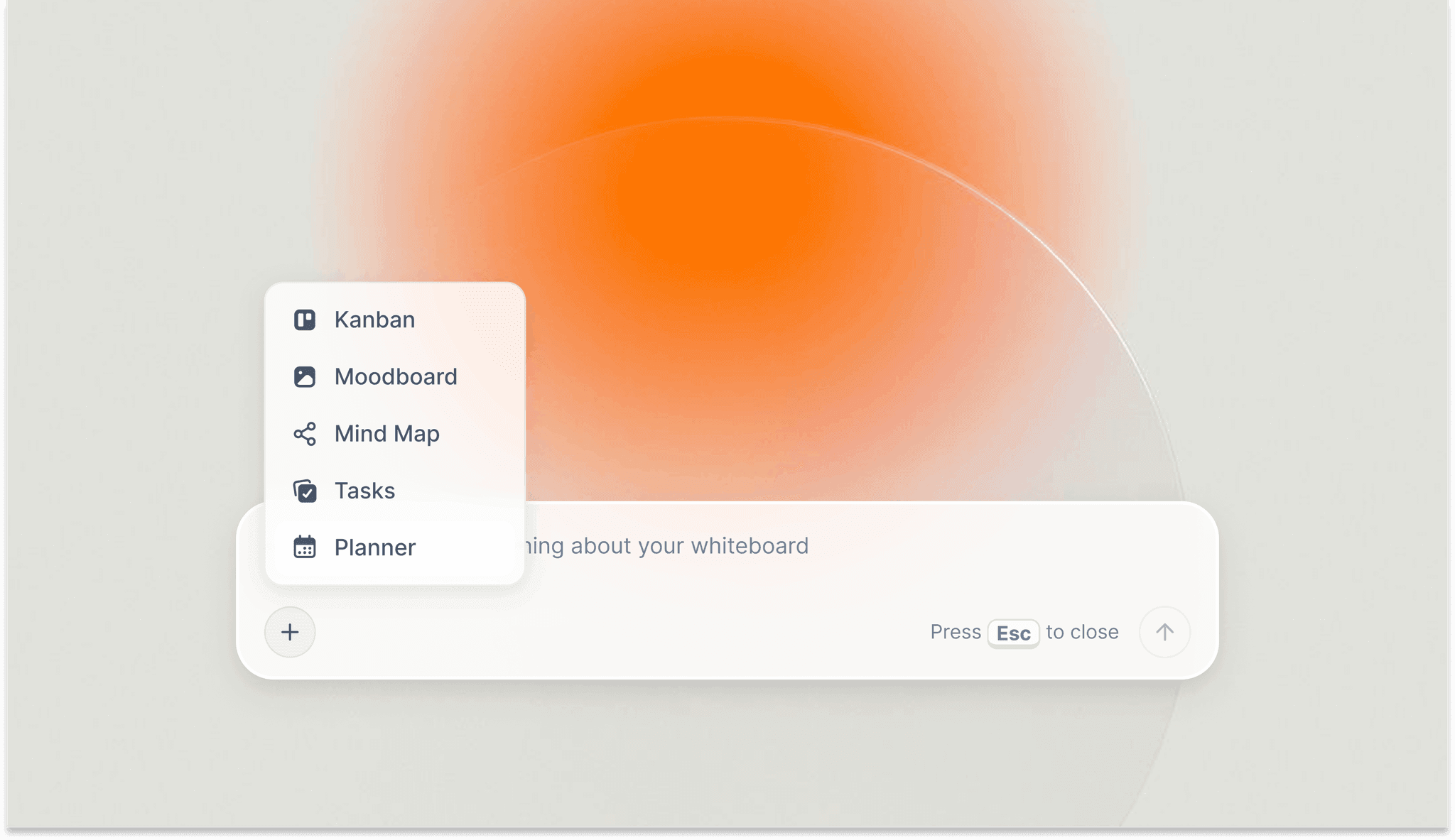
AI Planner converts a creative brief into a phased project sequence with full canvas context already loaded
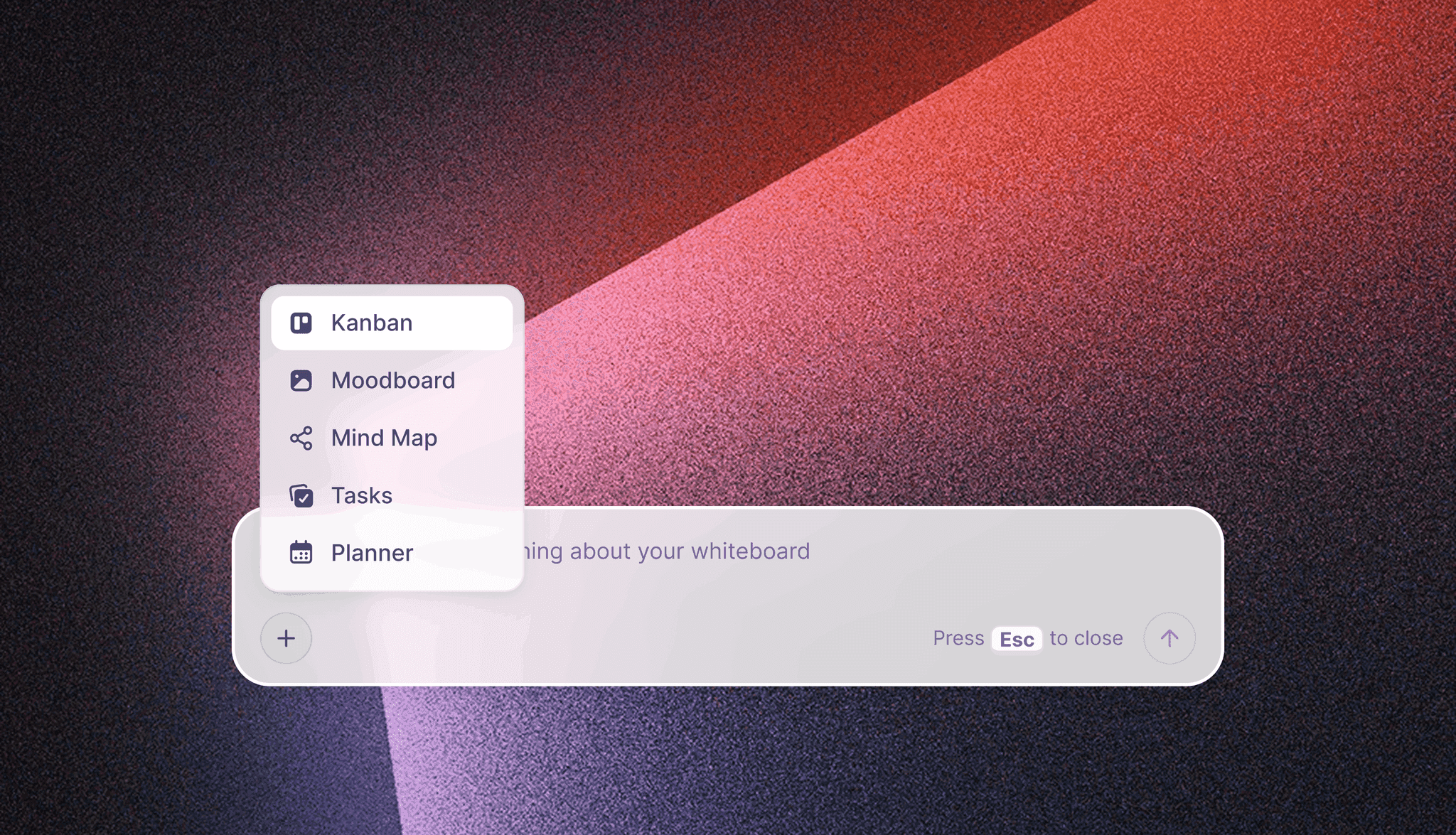
Kanban view tracks campaign tasks from Draft through Approved without leaving the project canvas
Free vs Paid: Best Canva Alternatives 2026
What free plans in this category typically include:
- A limited number of projects, downloads, or templates per month
- Basic template library access
- Watermarks on exports (PosterMyWall) or restricted downloads (Snappa, Stencil)
- Smaller stock image and font selection
- No brand kit or team management features
What paid plans unlock:
- Unlimited projects and downloads
- Full template library and stock image access
- Brand kit features for fonts, colour palettes, and logo storage
- Background remover and AI generative features
- Team management and shared assets
When free is enough: A solo creator producing a few social tiles or rough boards per month can run Milanote Free or VistaCreate Free comfortably. Milanote Free includes 100 notes and 10 uploads, which covers a single mood board or visual direction project. Storyflow is paid-only during early access; Plus at $7.99/month billed annually covers a real solo creative project from brief to plan with unlimited shared boards, basic AI usage, and unlimited file uploads, and its Free plan (3 starter blueprints, 20 file uploads) launches before the end of 2026.
When upgrading pays off: A creator producing weekly social content, running multiple projects in parallel, or working with a team hits free-tier limits within the first month. For finished design, Canva Pro, VistaCreate Pro, or Adobe Express Premium remove the project caps and unlock brand kits. For project planning and AI canvas context, Storyflow Plus at $7.99 per month billed annually unlocks the full 200+ Blueprint Tactics library; Pro at $14 per month billed annually adds AI image generation and 20× more AI than the Plus tier. Cowan's 2001 working memory research found people hold roughly four chunks of information actively at once (Cowan, 2001). When project context fragments across more tools than working memory can track, the upgrade that consolidates the work usually pays back fastest.
Best value for project planning and visual thinking: Storyflow. Best value for finished design at a Canva-replacement price: VistaCreate. Best value for professional design depth: Figma. Build your next brief and reference board in Storyflow and see how AI canvas context changes the planning side of your work
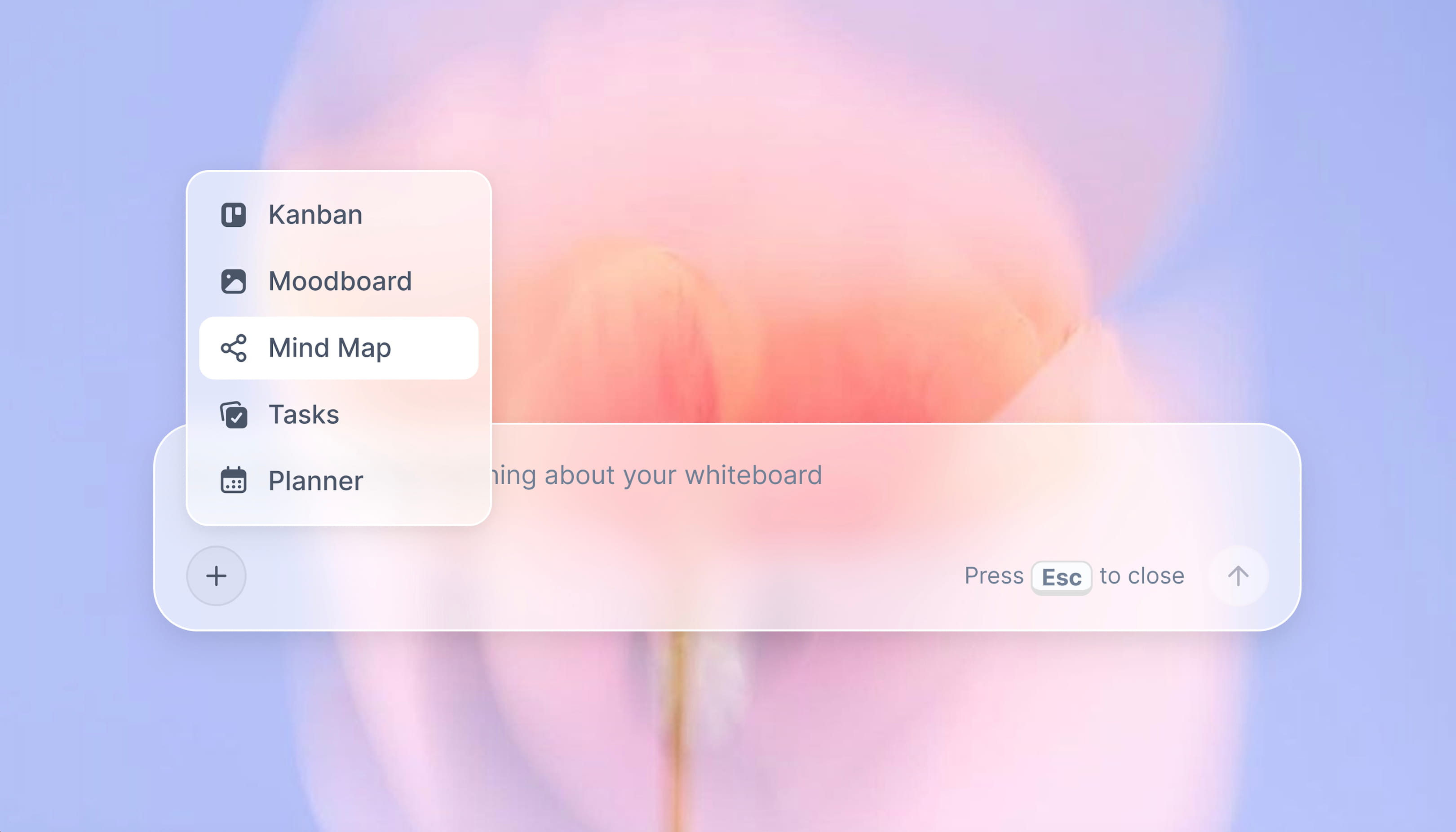
Storyflow Pro unlocks 200+ Blueprint Tactics, AI image generation, and 20× more AI than Plus for creators developing creative work across multiple projects
Final Verdict: Best Canva Alternatives 2026
If your bottleneck is project planning, narrative development, or strategic thinking, Storyflow is the answer. The infinite canvas holds your brief, references, scene plans, and structure together. The AI reads everything on the canvas plus up to three @-mentioned Documents and one Blueprint Tactic before responding. For documentary pre-production, brand strategy planning, story development, and campaign concept development, Storyflow handles the work Canva was never built for. Pair it with Canva for finished design output and the workflow becomes coherent end to end. Take the next campaign or project you would normally start in a blank Canva file and build the brief, references, and plan in Storyflow first for one week. The point where the design should start will be obvious by the end. Plan your next project in Storyflow
If your bottleneck is design depth, Figma is the right Canva alternative. Vector control, components, design tokens, and a real plugin ecosystem put Figma in a different category. For brand teams and product designers, the learning curve pays back through professional output and design system reuse.
If your bottleneck is the Adobe ecosystem, Adobe Express is the right Canva alternative. The integration with Photoshop, Illustrator, and Creative Cloud Libraries removes brand asset duplication. Firefly AI features are designed for commercial use.
If your bottleneck is business visual depth, Visme wins clearly. Infographics, data visualisations, and interactive presentations exceed Canva's templates in depth and polish.
If your bottleneck is price, VistaCreate (formerly Crello) delivers Canva-style design at a lower price. The output is comparable. The price is meaningfully lower.
If your bottleneck is visual reference development, Milanote handles the mood board phase Canva does not address. Storyflow covers the same phase with AI added: the Brand Strategy Moodboard template pairs references with positioning so the moodboard argues for a direction instead of just collecting one.
The best Canva alternative is the one that solves the part of your workflow Canva does not handle. For most creators in 2026, that part is the thinking before the design, not the design itself. Start with where your work actually breaks, not with what looks fastest in a feature tour.
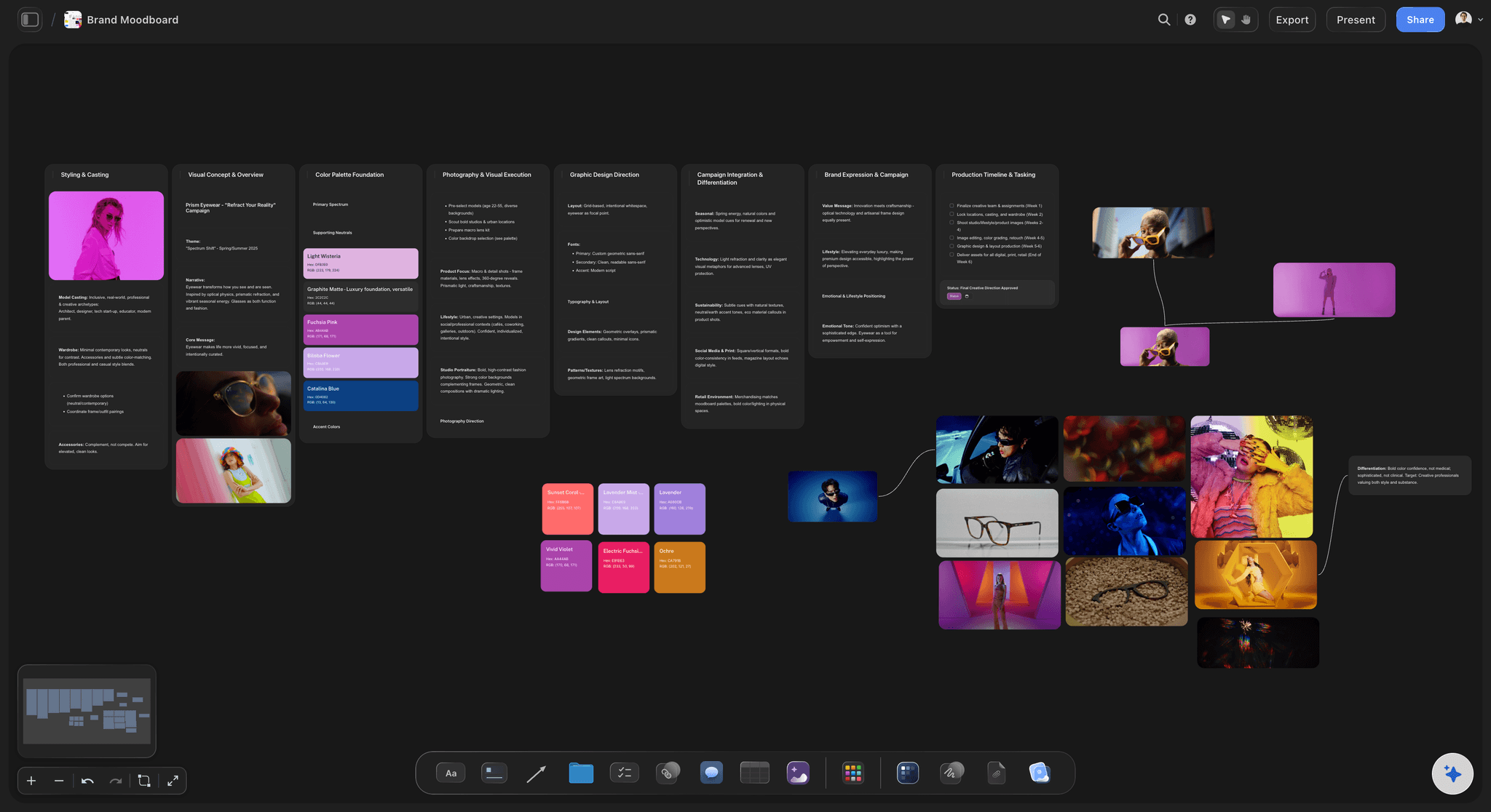
A brand moodboard in Storyflow: visual direction, references, and palette arranged on one canvas, the planning layer that decides what the finished Canva design should be
FAQ: Best Canva Alternatives 2026
What is the best Canva alternative in 2026?
The best Canva alternative in 2026 is Storyflow for pre-design planning, Figma for professional design depth, and VistaCreate (formerly Crello) for Canva-style templates at a lower price. There is no single winner because the answer depends on what part of the Canva workflow needs replacing. For pre-design visual thinking and project planning, Storyflow is the strongest option with AI that reads your full canvas plus the Story blueprints library for narrative and creative frameworks. For professional design depth, Figma wins. For a specific vertical like business visuals, Visme is the upgrade. The right answer depends on whether your bottleneck is planning, design depth, price, or a specific vertical like business visuals or photography.
Is Canva still the best free design tool in 2026?
Canva remains a strong free design tool in 2026, particularly for non-designers producing social media graphics, presentations, and basic marketing collateral from templates. The free plan is broad and the template library is large. The honest answer is that Canva is still the easiest free tool for finished template-driven design. For pre-design planning, AI canvas context, or professional vector design, alternatives like Figma Free, VistaCreate Free, or Storyflow (paid-only during early access, at $7.99/month) address gaps Canva does not.
What is the difference between Canva and Storyflow?
Canva is a finished-design tool. Templates, drag-and-drop editing, branded export. Storyflow is a visual AI workspace for the thinking before the design: brief, references, narrative structure, project planning, and AI that reads the full canvas. Canva produces the Instagram tile. Storyflow develops the campaign concept, the brand strategy, or the documentary pre-production that informs what the Instagram tile should be. The natural pairing is to plan in Storyflow and produce in Canva. For a deeper comparison see the Storyflow vs Canva comparison.
Is Figma a good Canva alternative for non-designers?
Figma is a professional design tool with a steeper learning curve than Canva. For non-designers producing social tiles or simple marketing collateral, Figma is heavier than necessary and Canva or VistaCreate are faster. For non-designers willing to invest in learning a professional tool because they want more design control, Figma rewards the investment with significantly higher output ceiling and design system features. The honest answer is that Figma is a Canva alternative for creators who want more design power, not for creators who want easier design.
Are there free Canva alternatives that are actually good?
Yes. Figma Free covers solo design work with up to three Figma files. VistaCreate Free covers Canva-style template design at no cost. Milanote Free includes 100 notes and 10 uploads for visual reference work. Storyflow is paid-only during early access, so it is not a free option today; Plus at $7.99/month billed annually covers solo creative project planning with unlimited shared boards and basic AI usage, and its Free plan (3 starter blueprints, 20 file uploads) launches before the end of 2026. The right alternative depends on whether your need is planning, design depth, template design, or visual reference. None of the free plans match Canva Free on social-template breadth, but each addresses a specific part of the workflow Canva does not.
What Canva alternative is best for solo creators?
For solo creators whose work is template-driven design, VistaCreate or Adobe Express are the closest direct replacements at a lower or similar price. For solo creators whose real bottleneck is project planning, brief development, or campaign concept work, Storyflow is the more useful tool. Many solo creators run both: Storyflow Plus at $7.99/month for the planning side, Canva or VistaCreate for finished output. The best tools for solo creators in 2026 guide covers the broader toolkit beyond design alone.
What Canva alternative is best for content creators?
For content creators producing high volumes of social graphics, VistaCreate, Snappa, or Stencil are faster than Canva on the specific social-graphic workflow. For content creators developing narrative structure, video pre-production, or content strategy, Storyflow handles the planning side that template tools do not. The honest answer is that most content creators use a stack: a planning tool like Storyflow plus a finished-design tool like Canva or VistaCreate. The best tools for content creators in 2026 guide covers the full content creator stack.
Which Canva alternative is best for visual thinkers?
Storyflow and Milanote are the strongest options for visual thinkers because both are spatial workspaces rather than template grids. Storyflow adds AI canvas context and 200+ Blueprint Tactics for narrative and creative frameworks. Milanote stays simpler and focuses on visual reference and mood board work. For broader visual thinking tools beyond design, see the best visual thinking tools in 2026 guide and the best mind mapping tools in 2026 guide.
How much does Storyflow cost compared to Canva?
Storyflow Plus starts at $7.99 per month billed annually and Pro is $14 per month billed annually, which matches Canva Pro at $14 per month billed annually. Storyflow Max is from $39 per month billed annually and adds the team workspace with permissions and roles. The honest comparison is that Storyflow and Canva are not direct competitors at the same price. They solve different problems. Storyflow handles project planning, AI canvas context, and creative frameworks. Canva handles finished template-driven design. Pairing both is the realistic budget conversation rather than choosing one.
Can Storyflow replace Canva entirely?
For most creators: no. Storyflow is not a finished-design tool. There is no in-tool image editor, no social-media-ready template library, and no brand asset manager the way Canva Pro provides. What Storyflow replaces is the planning layer Canva does not address: brief development, narrative structure, campaign concept, and project context. For creators whose bottleneck is finished-design output, keep Canva and add Storyflow for planning. For creators whose bottleneck is the thinking before design, Storyflow is the missing tool, and Canva remains useful for finished output.
Table of Contents
- All 12 Canva Alternatives, Ranked
- Quick Picks: Best Canva Alternatives 2026 by Use Case
- Comparison Table: Best Canva Alternatives 2026
- Best Canva Alternatives 2026: Market Context
- How We Evaluated the Best Canva Alternatives 2026
- Detailed Reviews: Best Canva Alternatives 2026
- Free vs Paid: Best Canva Alternatives 2026
- Final Verdict: Best Canva Alternatives 2026
- 1. Storyflow
- 2. Figma
- 3. Adobe Express
- 4. Visme
- 5. Crello (VistaCreate)
- 6. Snappa
- 7. Pixlr
- 8. PicMonkey
- 9. Milanote
- 10. PosterMyWall
- 11. Stencil
- 12. FotoJet
- FAQ: Best Canva Alternatives 2026
- Related Reading
Templates to check out for this topic


Branding and design templates you can use in Storyflow
Take a brand from naming to visual direction on one connected canvas. Open any of these templates and the AI works from everything already on the board.


See Storyflow in Action
A visual AI workspace where every feature lives inside one canvas. No tab-switching, no context lost.
Build your entire board from a single message
Type what you need in the AI chat at the bottom of your canvas. The AI adds cards, headings, and structure directly onto your board.
Use expert frameworks as AI context
Type @ in the AI chat and choose any Tactic. The AI tailors every response to that framework instead of giving generic advice.
Turn your board into a mind map in seconds
Ask the AI to restructure your canvas as a mindmap. It connects your ideas into a visual hierarchy so you can see how everything relates.
Why Storyflow Exists
Storyflow actually began as a personal tool while working on creative and research projects.
We kept running into the same problem: ideas were scattered everywhere: notes, documents, and whiteboards.
Nothing helped us see how everything connected.
So we started building a workspace designed around how ideas actually grow.
→ Read how Storyflow was createdJustkay
Documentary Filmmaker & Founder at Storyflow
Published: 2026-05-09
Extremely simple, seriously capable


See how easy it is to get started
Watch a real project come together, from a blank board to a finished plan, clicked through step by step.
Start creating with AI and become more productive
Transform your creative workflow with AI-powered tools. Generate ideas, create content, and boost your productivity in minutes instead of hours.