The 11 Best AI Tools for Twitch Streamers in 2026
A stream has three afterlives: the VOD, the clips and the community memory. The tooling market serves two of them and almost ignores the one that compounds.

Category
Content Creation
Author

Sara de Klein
Head of Product at Storyflow
Topics
2026-08-10
•
17 min read
•
Content Creation- best AI tools for Twitch streamers
- what are the best AI tools for content creators
- Opus Clip review
- turn Twitch VOD into YouTube video
- stream clip automation
- streamer content planning tool
What are the best AI tools for Twitch streamers in 2026?
The best AI tool for a Twitch streamer depends on which afterlife of the stream you are trying to rescue, and there are three. Opus Clip is the best answer to the clips afterlife and it is not close. Descript owns the VOD afterlife, turning four hours of stream into a YouTube upload without a timeline. Storyflow ranks first for the third afterlife, the one almost nobody tools for: the community memory, meaning everything you promised on stream, every bit that worked, and every idea a viewer gave you that you will otherwise lose. This ranking judges all 11 tools by which afterlife they serve, because the live hour is the only part of streaming that is already solved.

Full disclosure: Storyflow is our own product, and we rank it third here rather than first, because for most streamers Opus Clip and Descript deliver more immediate value. Storyflow does not stream, does not clip, does not caption, does not edit video, and has no Twitch or Discord integration today, so feeding it is a manual post-stream habit. It ranks first only on the community-memory afterlife: what you promised, which bits are becoming formats, and the viewer ideas you would otherwise lose. We link to every tool so you can judge the fit.
Quick Comparison
These four cover the three afterlives of a stream plus the live hour: clip selection, the long-form cut, the memory that compounds, and the broadcast itself.
| Tool | Best For | AI Features | Price |
|---|---|---|---|
| Opus Clip | Clip selection from long streams | AI moment detection | Free / from ~$9 mo |
| Descript | VOD to YouTube by transcript | Transcript AI | Free / from ~$19 mo |
| Storyflow | Promises, bits and viewer ideas | Canvas-wide context AI | $7.99 mo annual (free plan late 2026) |
| OBS Studio | Live broadcast production | None | Free |
Key Takeaways
- A stream has three afterlives: the VOD, the clips and the community memory. The tooling market serves the first two heavily and the third almost not at all.
- The community memory is where the money is. It holds what you promised, what worked, what a viewer suggested in month two that would make a great month five series, and it currently lives in nobody's system.
- Storyflow ranks first here for that third afterlife only. It does not stream, does not clip, does not caption and does not run alerts, and this post says so in the review.
- Opus Clip is the single highest return paid tool for most streamers, because clip selection is the actual bottleneck and it is a genuinely hard judgment task.
- The live production layer, OBS and StreamElements, is mature, free, and not where your next improvement comes from.
- A promise made on stream and forgotten is the most expensive small failure in streaming, because it is visible to the exact people most invested in you.
- Broken promises and repeated bits are both memory problems, and memory problems are solvable with software in a way that charisma problems are not.
Stop breaking promises you meant to keep
The viewers who notice you forgot are the ones most invested in you. Storyflow holds what you promised, which bits are becoming formats and every idea chat gave you, on one canvas the AI reads whole, so a five second check replaces remembering. Paid-only during early access; the Free plan lands before the end of 2026.

The Three Afterlives of a Stream
Streaming looks like a live performance business. Financially, it behaves like a content archive business with a live acquisition funnel attached.
The four hour stream is not the product. It is the raw material for three separate afterlives, and they have wildly different value per hour of effort.
The VOD afterlife. The full recording, sitting on Twitch for a limited window or exported to YouTube. Long tail, low value per view, high storage and low effort. Worth doing, rarely worth much.
The clips afterlife. Thirty to ninety second vertical extracts pushed to TikTok, Reels and Shorts. This is the discovery engine for almost every channel that grows, and the bottleneck is not editing. It is selection. Finding the four genuinely good moments in four hours is a judgment task, and it is the single most valuable thing AI currently does for streamers.
The community memory afterlife. Everything the stream generated that is not video. The subscriber whose question would make a great episode. The bit that landed unexpectedly and should become a recurring segment. The thing you said you would do next week. The sponsor deliverable you agreed to on camera. The running joke that started in month two and should pay off in month six.
A promise made on stream and forgotten is the most expensive small failure in streaming, because it is visible precisely to the people most invested in you, and it reads as indifference rather than as forgetfulness.
The third afterlife is almost entirely untooled. Streamers hold it in their head, in Discord scrollback, and in a notes app, and it degrades continuously. It is also the only one of the three that compounds, because a channel with memory feels like a place with history and a channel without one feels like a series of unconnected hours.
The 11 tools below are ranked by which afterlife they serve and how well.
At a Glance: The 11 Tools Compared
| Tool | Best for | Afterlife it serves | Shape |
|---|---|---|---|
Storyflow | Promises, bits, and viewer ideas that compound | Community memory | AI canvas |
Opus Clip | Finding the four good moments in four hours | Clips | AI clipping |
Descript | Turning a stream into a YouTube upload | VOD | Editor |
OBS Studio | The live production itself | None | Broadcast software |
StreamElements | Overlays, alerts and loyalty | None | Stream infrastructure |
Submagic | Captions and pacing on vertical clips | Clips | Clip finishing |
Notion | The schedule and the sponsor tracker | Community memory | Docs and databases |
Discord | Where the community actually talks | Community memory | Community platform |
Canva | Thumbnails, panels and overlays | Clips, VOD | Design |
Restream | Broadcasting to several platforms at once | None | Multistreaming |
vidIQ | Deciding what the YouTube side should be | VOD | Analytics |
How I Ranked These
I come at this from documentary rather than gaming, which means I have spent years on the specific problem of finding four usable minutes in six hours of footage, and on the discipline of not losing what somebody told you on day three. Over the past two years I have run real content cycles through every tool on this list.
Five criteria, in order.
1. Does it serve an afterlife or the live hour? The live hour is solved. OBS is free and excellent, and no amount of production polish fixes a channel that does not convert its archive.
2. Does it reduce a judgment task or just a mechanical one? Trimming a clip is mechanical and cheap. Deciding which moment is worth clipping is judgment and expensive. Tools that automate judgment are worth real money; tools that automate keystrokes usually are not.
3. Does it survive a bad week? Streaming schedules collapse under illness, burnout and life. A system requiring daily maintenance will be abandoned in week three and its data will be stale forever after.
4. What does it cost at zero revenue? Most people reading this are not yet earning meaningfully from streaming, so a stack that only makes sense at partner level income is the wrong recommendation.
5. Does it work with a solo operator's attention? There is no producer. Everything competes with the stream itself.
Pricing is as of August 2026 and changes frequently. Verify with each vendor.
Quick Picks by Job Type
- Best for what you promised on stream: Storyflow. The community memory board, on one canvas an AI can read whole.
- Best clipping: Opus Clip. Selection is the bottleneck, and this is the best selector available.
- Best VOD to YouTube: Descript. Editing by transcript is dramatically faster for talk heavy content.
- Best live production: OBS Studio. Free, and better than the paid alternatives.
- Best alerts and loyalty: StreamElements. Free and mature.
- Best captions: Submagic. Vertical clip finishing that measurably affects retention.
- Best thumbnails: Canva. Fast, and templates keep a channel visually consistent.
1. Storyflow
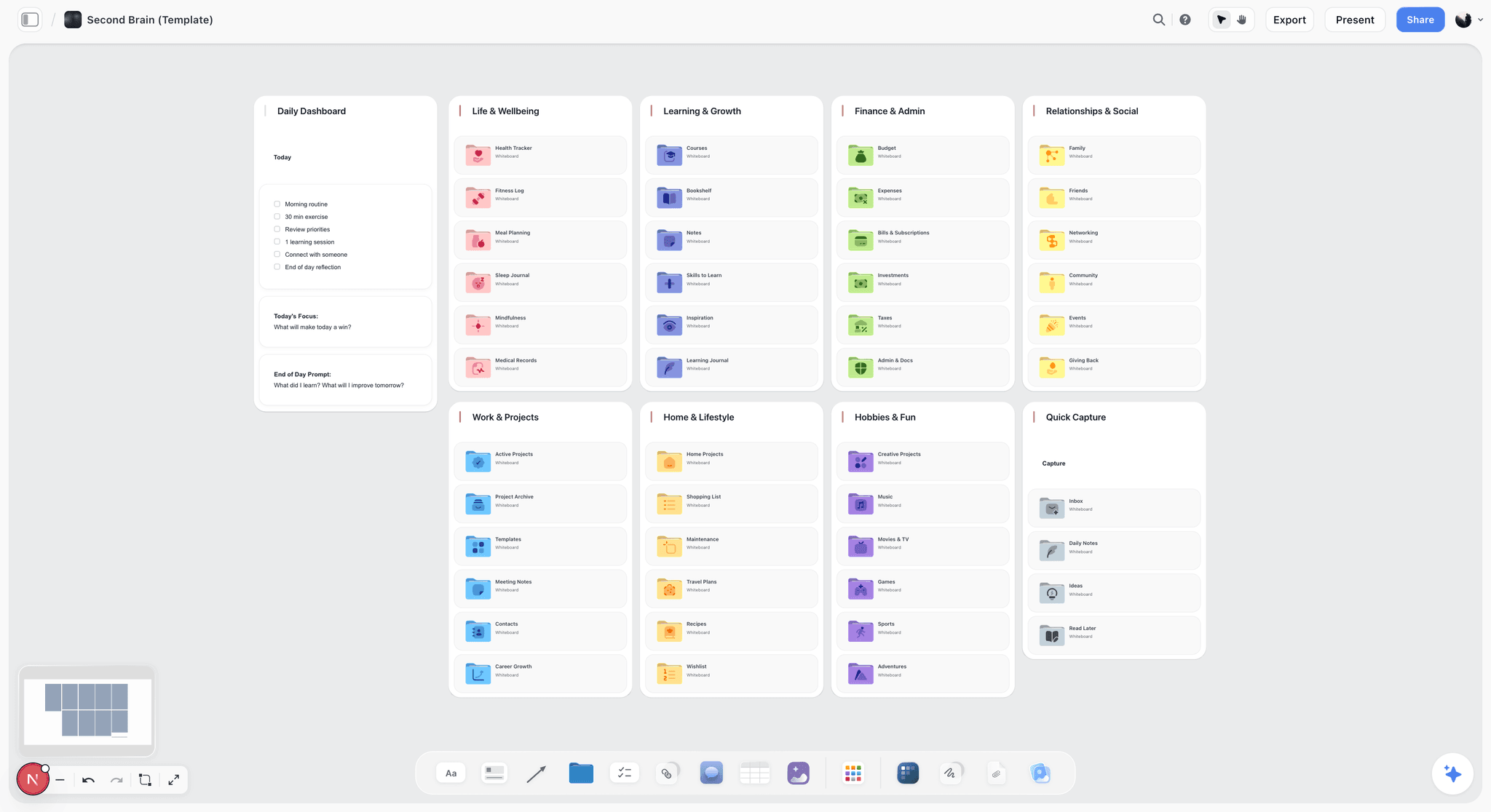
The verdict. The only tool here aimed at the afterlife that compounds, which is everything the stream produced that is not video.
Best for. Streamers who keep forgetting what they promised, and who lose good viewer ideas between months.
Pricing. Paid only early access today. Plus is $7.99 per month billed annually or $9.99 monthly, with 200 plus Blueprint Tactics and unlimited file uploads. Pro is $14 per month billed annually or $19 monthly, adding AI image generation, roughly twenty times more AI usage and memory across conversations. Max is $39 per month billed annually or $49 monthly, adding Team Workspace with permissions and roles. Pricing is flat per account rather than per seat, and anyone a paid member invites joins free. The Free plan launches before the end of 2026.
Why it ranks here. Consider what a channel's memory actually contains after a year: roughly 150 streams, several hundred promises and half promises, a few dozen bits that worked, a couple of hundred viewer suggestions, and a sponsor history. None of that is video, all of it is valuable, and almost all of it is lost.
The reason it is lost is that it is relational rather than sequential. A viewer suggestion from March connects to a bit from January and to a sponsor category you started working with in June. A notes app stores that as three unrelated lines in chronological order, which is the wrong shape.
An infinite canvas holds it correctly: a promises region with dates, a bits region where the recurring segments live and grow, an ideas region fed by community suggestions, and a series planning region where those things get combined into next month's content. Because Storyflow's AI reads your full active canvas board by default, plus up to one Tactic and up to three Documents you @-mention, you can ask the board what you have promised and not delivered, and get an answer grounded in the whole surface rather than in the one note you are looking at.
That question, asked at the start of a stream, is worth more to a growing channel than any production upgrade. It converts forgetfulness into a five second check.
The second thing that matters is planning a series rather than an episode. Channels that grow tend to run recurring formats, and formats are built by noticing that three unrelated good moments share a shape. That noticing is a spatial task, which is why it happens on whiteboards and not in lists.
Strengths.
- Holds promises, bits, viewer ideas and series plans on one queryable surface.
- Canvas wide AI can answer what was promised and not delivered.
- Spatial arrangement makes recurring formats visible before they are obvious.
- Invited collaborators join free, so a mod or editor costs nothing.
- Blueprint Tactics give structure to recurring planning work.
Limitations.
- Does not stream. OBS does that and Storyflow does not attempt to.
- No clipping, no captions, no video editing at all.
- No alerts, overlays, loyalty points or chat integration.
- No Twitch or Discord integration, so capture into it is manual today.
- Not a scheduler and does not publish anywhere.
- Newer platform, so there are no streamer specific templates yet.
The trade off. Storyflow is the memory, not the machine. A streamer runs it alongside OBS and a clipping tool, and it touches none of the live pipeline.
2. Opus Clip
The verdict. The highest return paid tool for most streamers, because it automates judgment rather than keystrokes.
Best for. Turning long streams into vertical clips without watching the whole thing back.
Pricing. Free tier with a monthly minute allowance. Paid plans start around $9 to $29 per month depending on tier and billing period, as of August 2026.
Why it ranks here. The bottleneck in the clips afterlife is selection, and selection is genuinely hard. A streamer rewatching four hours to find four moments is spending five hours to produce two minutes, which is why most streamers simply stop clipping.
Opus Clip analyses the full recording, identifies candidate moments, reframes to vertical with speaker tracking, and adds captions. Its virality scoring is imperfect and should be treated as a shortlist rather than a verdict, but a shortlist of fifteen candidates from four hours is exactly the right output. You bring the judgment; it brings the search.
The honest caveat is that its selection is noticeably better on talk heavy content than on gameplay, where the peak moments are often visual and mechanical rather than verbal.
Strengths.
- Automates the expensive part, which is finding candidate moments.
- Auto reframing with speaker tracking is reliable.
- Captions and basic finishing included.
- Free tier is enough to evaluate it honestly.
Limitations.
- Virality scores are unreliable and should not be trusted as ranking.
- Weaker on gameplay peaks than on conversation.
- Minute allowances get consumed fast by four hour streams.
- Output has a recognizable house style that can flatten a channel's identity.
The trade off. Treat it as a research assistant, not an editor. Take its fifteen candidates and pick your four.
3. Descript
The verdict. The fastest route from a long stream to a real YouTube upload.
Best for. Turning talk heavy VODs into structured long form video.
Pricing. Free tier available. Paid plans start around $19 per user per month as of August 2026.
Why it ranks here. The VOD afterlife usually fails because editing four hours on a timeline is unbearable. Descript changes the unit of work: you edit the transcript, and the video follows. Cutting the twenty minutes of technical difficulties at the start becomes selecting text and deleting it.
For a streamer producing a weekly YouTube cut, that is the difference between a sustainable habit and an abandoned one. Filler word removal and studio sound are genuinely useful on stream audio, which is rarely well recorded.
It ranks third because it is weak for gameplay heavy content where the transcript is not the structure, and because it duplicates part of what Opus Clip does for vertical output.
Strengths.
- Transcript editing is dramatically faster for talk heavy content.
- Filler word removal and audio cleanup suit stream audio well.
- Good automatic captions.
- Reasonable free tier.
Limitations.
- Poor fit where the content is visual rather than verbal.
- Another subscription alongside a clipping tool.
- Export and rendering can be slow on long files.
The trade off. Essential if your channel is conversation. Optional if it is gameplay.
4. OBS Studio
The verdict. Free, mature, and better than the paid alternatives. Nothing to decide here.
Best for. The live broadcast itself.
Pricing. Free and open source.
Why it ranks here. OBS is the standard for good reasons: it is free, it is extensible, it handles scenes, sources, filters and encoding better than anything charging money for the same job, and its plugin ecosystem covers essentially every need.
It appears fourth on a list about AI tools because the live layer is solved and is not where a streamer's next improvement comes from. Spending another weekend on scene transitions when you have not clipped a stream in a month is displacement activity.
Strengths.
- Free, open source, no feature gating.
- Deep plugin ecosystem.
- Reliable at long stream durations.
- Runs well on modest hardware with sensible settings.
Limitations.
- Initial setup is genuinely intimidating.
- No built in AI capability of note.
- Configuration is easy to break and hard to diagnose.
The trade off. Set it up once properly, then stop touching it.
5. StreamElements
The verdict. The free infrastructure layer that makes a channel feel like a channel.
Best for. Overlays, alerts, loyalty points and chat bot functions.
Pricing. Free.
Why it ranks here. Alerts, a loyalty system, chat commands and overlays are what convert an anonymous viewer into a regular, and StreamElements provides all of it at no cost with a large template library.
Its loyalty and points system has a quiet connection to the community memory afterlife: it is a record of who your regulars are, and that record is worth attention. Knowing which twelve people have been there since month one is genuinely useful information about your own channel.
Strengths.
- Comprehensive and free.
- Large overlay template library.
- Loyalty system creates a real record of regulars.
- Cloud based, so settings survive a machine change.
Limitations.
- Overlay templates make many channels look identical.
- Occasional service outages affect alerts mid stream.
- The dashboard is cluttered.
The trade off. Use it, do not overinvest time in it, and change the default overlay.
6. Submagic
The verdict. Caption styling that measurably affects retention on vertical clips.
Best for. Finishing clips for TikTok, Reels and Shorts.
Pricing. Paid plans start around $16 to $20 per month as of August 2026, with a limited free trial.
Why it ranks here. Vertical clips are watched with sound off far more often than creators assume, and caption quality is therefore a retention variable rather than an accessibility afterthought. Submagic produces animated, word level captions with the pacing conventions the platforms currently reward.
It ranks sixth because it overlaps heavily with what Opus Clip and Descript already include, and it is a third subscription for a finishing step. It is worth it only if clips are your primary growth channel and you have hit the ceiling of the built in captioning.
Strengths.
- Best caption styling and pacing of the tools here.
- Fast, purpose built, low friction.
- Templates match current platform conventions.
Limitations.
- Substantial overlap with Opus Clip and Descript.
- Subscription for one narrow step.
- Style trends date quickly, so output can look of its moment.
The trade off. Only add this once clipping is already working and you are optimizing.
7. Notion
The verdict. The schedule and the sponsor tracker. A partial answer to the memory problem.
Best for. Stream schedule, sponsor deliverables and a content backlog.
Pricing. Free personal tier. Paid from roughly $10 per user per month as of August 2026.
Why it ranks here. Sponsor obligations are the part of the community memory problem with money attached, and they are a database problem: which sponsor, which deliverables, by when, delivered yes or no. Notion handles that well and free.
A promises database with a date and a delivered checkbox is also a genuinely useful and nearly free version of the discipline this article argues for, and I would recommend it to anyone not changing their main tool.
It ranks seventh because everything relational dies in it. A viewer idea that connects to two past bits is a link soup in Notion and a spatial cluster on a canvas.
Strengths.
- Free tier is genuinely sufficient.
- Databases with dates and checkboxes make obligations trackable.
- Everyone already knows it.
Limitations.
- Poor at relational and spatial thinking.
- Requires maintenance discipline that bad weeks destroy.
- No live or video capability.
The trade off. The cheapest way to stop dropping sponsor deliverables. Start here if budget is zero.
8. Discord
The verdict. Where the community actually is, and where its memory currently rots.
Best for. The community itself, between streams.
Pricing. Free. Server boosts and Nitro are optional.
Why it ranks here. For most channels the Discord is the real community and the stream is the event. It is also where most of the community memory afterlife is generated and lost, because Discord is chronological, search is mediocre, and a great idea posted in a suggestions channel in March is functionally deleted by May.
The practical discipline is to treat Discord as an inbox rather than a store: a weekly ten minute pass moving anything worth keeping out of scrollback and into whatever holds your memory.
Strengths.
- Free and where your audience already is.
- Threads and forum channels help somewhat.
- Bots can automate parts of collection.
Limitations.
- Chronological, so old value is unreachable in practice.
- Search is weak on long histories.
- Nothing surfaces an old idea at the moment it becomes relevant.
The trade off. Excellent front door, terrible filing cabinet.
9. Canva
The verdict. Thumbnails and panels, fast enough that you will actually do them.
Best for. Thumbnails, channel panels, schedule graphics and offline screens.
Pricing. Free tier available. Pro roughly $15 per month for one person as of August 2026.
Why it ranks here. Thumbnails materially affect click through on the YouTube side, and the reason streamers ship bad ones is friction rather than taste. Canva reduces that friction to a few minutes and its brand kit keeps a channel visually coherent, which matters more for recognition than any individual thumbnail does.
Strengths.
- Fast enough to sustain as a habit.
- Brand kit produces visual consistency across formats.
- Free tier is workable.
Limitations.
- Template aesthetics are widely recognizable.
- Not a design tool for anything ambitious.
- Encourages sameness across channels.
The trade off. Use the brand kit, avoid the trending templates.
10. Restream
The verdict. Useful if you genuinely stream to several platforms, pointless otherwise.
Best for. Simultaneous broadcast to Twitch, YouTube and elsewhere.
Pricing. Free tier with limited destinations and branding. Paid plans start around $16 per month as of August 2026.
Why it ranks here. Multistreaming has a real strategic argument, which is that Twitch discovery is weak and YouTube's is strong, so putting the same hours in both places costs nothing extra in production time.
It ranks tenth because it is infrastructure with no AI value, because unified chat is genuinely helpful but not transformative, and because splitting attention across platforms can dilute a community that has not reached critical mass anywhere yet.
Strengths.
- One broadcast, several platforms.
- Unified chat across destinations.
- Reasonable free tier for evaluation.
Limitations.
- Splitting a small community across platforms can slow growth.
- No AI capability.
- Bitrate compromises when targeting several platforms.
The trade off. Worth it once you have a base somewhere. Premature before that.
11. vidIQ
The verdict. Decides what the YouTube half of your channel should be.
Best for. Title, thumbnail and topic decisions on repurposed content.
Pricing. Free tier available. Paid plans start around $10 to $39 per month as of August 2026.
Why it ranks here. Streamers repurposing to YouTube consistently make the same error, which is uploading the VOD with the stream title. YouTube is a search and recommendation platform, and it rewards a title and thumbnail written for someone who has never heard of you.
vidIQ provides the keyword and competitive data to make that decision informed rather than instinctive.
It ranks last because it is an optimization layer that only matters once the pipeline exists, and because its scores encourage chasing metrics that do not always translate into a channel worth watching.
Strengths.
- Real data behind title and topic decisions.
- Competitive analysis is genuinely useful.
- Free tier covers the basics.
Limitations.
- Scores encourage optimizing for the algorithm over the audience.
- Only relevant to the YouTube half.
- Upsell heavy interface.
The trade off. Consult it for titles. Do not let it choose your content.
What to Actually Pay For
Pay for clip selection first. If you can afford exactly one paid tool, make it Opus Clip. Clipping is the growth engine and selection is the reason it does not happen, and no other spend on this page moves growth as directly.
Do not pay for a third video tool. Opus Clip, Descript and Submagic overlap substantially. Pick the one matching your content shape: Descript if you talk, Opus Clip if you need selection, Submagic only when clips already work and you are optimizing.
Spend nothing on the live layer. OBS and StreamElements are free and better than the paid alternatives. Any money spent making the stream look more polished is money not spent on the archive, and the archive is what grows the channel.
Tools to Avoid for This Job
A notes app as the promise record. Chronological, unqueryable, and it will not surface the promise at the moment it matters, which is the start of the next stream.
Uploading the raw VOD to YouTube with the stream title. It performs badly and it trains the algorithm that your channel is low retention, which affects everything you upload afterward.
Discord scrollback as the idea store. Covered above. A suggestion from March is functionally deleted by May.
Any tool that requires updating during the stream. You are performing. Anything competing with the live hour loses, and should be a post stream habit instead.
What No Tool on This List Does
None of them will make you interesting on camera. That is the whole job and no software touches it.
None of them will fix an inconsistent schedule. Streaming growth is substantially a reliability business, and no tool on this list creates the discipline to go live when you said you would.
None of them, including Storyflow, will capture a promise you never wrote down. There is no Twitch integration today, so the community memory board is fed by a habit: five minutes after the stream, dump what you promised and what worked. That five minutes is the entire mechanism, and no amount of AI substitutes for it.
The Bottom Line
The live hour is solved. OBS is free, StreamElements is free, and no further polish there will grow your channel.
Growth comes from the afterlives. Buy Opus Clip, because clip selection is the bottleneck and it is a genuinely hard task worth automating. Use Descript if your content is conversation, and do not buy a third video tool until the first two are working.
But the afterlife that compounds is the one nobody sells you a product for: the promises, the bits and the viewer ideas that make a channel feel like a place with history rather than a series of unconnected hours. Holding that on one surface you can ask questions of is the narrow ground on which Storyflow ranks first here.
FAQ: AI Tools for Twitch Streamers
What are the best AI tools for Twitch streamers?
Opus Clip is the best AI tool for most streamers, because it automates clip selection, which is the actual bottleneck in converting long streams into growth. Descript is the best choice for turning talk heavy VODs into YouTube uploads by editing the transcript rather than a timeline. Storyflow serves the least tooled part of streaming, the community memory, meaning the promises, bits and viewer ideas that a channel loses between months.
What is the best free tool for streamers?
OBS Studio for the live production, which is free, open source and better than the paid alternatives. StreamElements for overlays, alerts and loyalty, also free. Notion's free tier will hold a sponsor tracker and a promises list. Opus Clip and Descript both have free tiers adequate for evaluating whether clipping fits your channel. A capable free stack exists and covers most of what a growing channel needs.
How do streamers keep track of what they promised on stream?
Most do not, which is why it is a recurring problem. The mechanism that works is a five minute post stream habit of writing down what you committed to, with a date, somewhere you will actually look before the next stream. Whether that is a Notion database with a delivered checkbox or a canvas region, the important part is that it is checked at the start of the next stream rather than searched when someone complains.
Is Opus Clip worth paying for?
For most streamers, yes, and it is the single highest return paid tool on this list. The value is not the editing, which is cheap, it is the selection, which is expensive: identifying the good moments in four hours would otherwise cost you most of a working day. Treat its virality scores as a shortlist rather than a ranking, and expect weaker results on gameplay peaks than on conversation.
Should I upload my Twitch VODs to YouTube?
Not raw and not with the stream title. YouTube rewards content structured for people who have never heard of you, with a title and thumbnail written for search and recommendation. A 20 to 40 minute edit of the best segment, titled independently of the stream, performs dramatically better than a four hour VOD and does not train the algorithm to treat your channel as low retention.
What is the difference between clipping tools and editing tools?
A clipping tool such as Opus Clip solves selection, scanning a long recording and proposing candidate moments. An editing tool such as Descript solves construction, letting you assemble and refine a piece efficiently. They are complementary, and the mistake is buying a second editing tool when the actual bottleneck is selection.
How do I turn viewer suggestions into content?
Move them out of Discord weekly, because Discord is chronological and a March suggestion is unreachable by May. Then group suggestions by shape rather than by date, since the valuable insight is usually that three unrelated requests are secretly the same format. That grouping is a spatial task, which is why it works better on a canvas than in a list.
Does Storyflow replace OBS or Streamlabs?
No, and there is no overlap. OBS handles the live broadcast, scenes, sources and encoding. Storyflow holds the planning and memory layer around the stream: what you promised, which bits are becoming recurring segments, what the next series is. Nothing in Storyflow touches the live pipeline, and a streamer runs both without interaction between them.
How much should a streamer spend on tools per month?
Zero is a viable starting point, because OBS, StreamElements, Notion's free tier and Canva's free tier cover the essentials. Once clipping becomes the growth strategy, roughly $10 to $30 per month for a clipping tool is the first justified spend. Adding a third video subscription before clips are consistently shipping is the most common overspend.
What should I do in the five minutes after a stream ends?
Write down three things: anything you promised, anything that landed unexpectedly well, and any idea a viewer gave you. It takes five minutes while it is fresh, it is impossible to reconstruct a day later, and it is the input that makes every planning tool on this list useful rather than empty.
Do AI captions actually affect clip performance?
Yes, because a large share of vertical clip viewing happens with sound off, so captions are the primary channel rather than an accessibility addition. Word level animated captions with pacing that matches current platform conventions measurably outperform static or absent captions. The built in captioning in Opus Clip and Descript is adequate, and a dedicated tool such as Submagic is only worth adding once clips are already working.
How do I build recurring segments for my channel?
Look for shape rather than for topic. Three good moments that felt unrelated often share a structure, such as reacting to something a viewer sent, or explaining something badly on purpose, and the format is that structure rather than the subject. Noticing it requires seeing the moments next to each other, which is why this happens on a board and not in a chronological log.
Is multistreaming to YouTube and Twitch a good idea?
It depends on whether you have a base anywhere yet. Once you have a core community on one platform, multistreaming is close to free growth because the production cost is already paid and YouTube's discovery is stronger than Twitch's. Before you have that base, splitting a small audience across platforms can make every room feel empty, which slows growth on both.
What is the biggest mistake new streamers make with tools?
Overinvesting in the live layer. Scene transitions, overlay animations and alert sounds are visible, satisfying to work on, and almost irrelevant to growth. The archive is what grows a channel, and the archive is neglected because working on it is less fun than working on the stream.
What is the single change worth making this month?
Add the five minute post stream dump, and check it at the start of the next stream. It costs nothing, requires no subscription, and it fixes the most visible failure in streaming, which is telling your most invested viewers you will do something and then not doing it.
Table of Contents
- Key Takeaways
- The Three Afterlives of a Stream
- At a Glance: The 11 Tools Compared
- How I Ranked These
- Quick Picks by Job Type
- 1. Storyflow
- 2. Opus Clip
- 3. Descript
- 4. OBS Studio
- 5. StreamElements
- 6. Submagic
- 7. Notion
- 8. Discord
- 9. Canva
- 10. Restream
- 11. vidIQ
- What to Actually Pay For
- Tools to Avoid for This Job
- What No Tool on This List Does
- The Bottom Line
- FAQ: AI Tools for Twitch Streamers
- Related Reading
Templates to check out for this topic


Templates you can use in Storyflow
Every Storyflow board starts from real structure and an AI that reads the whole canvas. Open one of these templates and make it yours.


See Storyflow in Action
A visual AI workspace where every feature lives inside one canvas. No tab-switching, no context lost.
Build your entire board from a single message
Type what you need in the AI chat at the bottom of your canvas. The AI adds cards, headings, and structure directly onto your board.
Use expert frameworks as AI context
Type @ in the AI chat and choose any Tactic. The AI tailors every response to that framework instead of giving generic advice.
Turn your board into a mind map in seconds
Ask the AI to restructure your canvas as a mindmap. It connects your ideas into a visual hierarchy so you can see how everything relates.
Why Storyflow Exists
Storyflow actually began as a personal tool while working on creative and research projects.
We kept running into the same problem: ideas were scattered everywhere: notes, documents, and whiteboards.
Nothing helped us see how everything connected.
So we started building a workspace designed around how ideas actually grow.
→ Read how Storyflow was createdSara de Klein
Head of Product at Storyflow
Published: 2026-08-10
Extremely simple, seriously capable


See how easy it is to get started
Watch a real project come together, from a blank board to a finished plan, clicked through step by step.
Start creating with AI and become more productive
Transform your creative workflow with AI-powered tools. Generate ideas, create content, and boost your productivity in minutes instead of hours.