The 12 Best AI Note Taking Apps in 2026 (Tested for Real Knowledge Work)
Most AI note taking apps solve capture but break on synthesis. We tested 12 tools against a real working project to find which ones actually work for knowledge workers in 2026: AI that reads your full context, source-grounded research, and pricing that fits real workflows.

Category
Knowledge Management
Author

Justkay
Documentary Filmmaker & Founder at Storyflow
Topics
2026-05-10
•
16 min read
•
Knowledge Management- best AI note taking apps 2026
- AI notes for knowledge work
- AI synthesis notes
What is the best AI note taking app in 2026?
Storyflow is the best AI note taking app in 2026 for synthesis and project work, because its AI reads your full active canvas plus up to one Tactic and three @-mentioned Documents before it responds. For pure quick-capture, Mem wins; for source-grounded research with citations, NotebookLM wins. The category splits into three jobs (capture, structure, synthesis) that almost no single tool does well, so the strongest setup for working knowledge workers is a two-tool stack. Read on for all 12 tools tested against a real working project, with the specific job each one wins.

I have spent the last decade documenting other people's stories. As a documentary filmmaker, my notes are the project. Interview transcripts, location scouts, treatment drafts, source docs, frame references, scribbled questions in the back of a taxi. For most of those years my notes lived in five different apps and four notebooks, and the synthesis (the part that actually makes a film) happened in my head at 2am with three browser tabs open. So I tested 12 AI note taking apps the way a working knowledge worker tests them: against a real project. The clearest finding is that "AI note taking" splits into two jobs that almost no single tool does well. Capture (fast, frictionless, voice-first, daily) and synthesis (slow, structured, project-shaped, AI reads everything). Mem and Reflect win capture. Storyflow wins synthesis. Notion AI is the best database-driven middle ground. The right answer depends entirely on which job you have today.
All 12 AI Note-Taking Apps, Ranked
- Storyflow: best for AI-context synthesis for project work
- Notion AI: best for database-driven notes with AI
- Mem: best for AI-first quick capture
- NotebookLM: best for source-grounded research notes
- Reflect: best for an encrypted daily journal with AI
- Capacities: best for object-graph AI notes
- Obsidian: best for local-first markdown with plugin AI
- Heptabase: best for card-based research notes
- Tana: best for an AI outliner with supertags
- Apple Notes (Apple Intelligence): best for macOS-native AI notes
- Google Keep: best for free lightweight AI notes
- Bear: best for Mac-native markdown notes
Full disclosure: Storyflow is our own product, and we rank it #1 for one job: synthesis, where the AI reads your entire project canvas and @-mentioned docs before turning scattered notes into a treatment, chapter, or plan. For fast quick-capture Mem is better, and for source-grounded research with citations NotebookLM is stronger. Storyflow is not a quick-capture app: there is no native voice transcription, no daily journaling UI, and no inbox to dump a stray thought into. We link to every tool so you can judge the fit.
Quick Comparison: AI Note-Taking Apps
These four cover the jobs knowledge workers decide between: AI-context synthesis, database-driven notes, fast quick-capture, and source-grounded research.
| Tool | Best For | AI Features | Price |
|---|---|---|---|
| Storyflow | AI-context synthesis for project work | Reads full canvas + @-docs | $7.99 mo annual (free plan late 2026) |
| Notion AI | Database-driven notes with AI | Notion AI over pages and databases | Free / $12 user mo |
| Mem | AI-first quick capture | Auto-tagging and surfacing | Free / $14 mo |
| NotebookLM | Source-grounded research notes | Cited answers from your sources | Free |
Quick Picks: Best AI Note Taking Apps 2026 by Use Case
Best for AI-Context Synthesis (Project Work): Storyflow Storyflow is the tool I use when scattered notes need to become a treatment, a chapter, or a launch plan. Its AI reads the entire canvas before responding, and you can @-mention up to one Tactic and three Documents to give it full project context. It is not a quick-capture app. There is no native voice transcription, no daily journaling UI, no inbox to dump a stray thought into at a traffic light. It is a project canvas with AI context. Where it earns its place: when you already have notes and need the synthesis. Free plan covers unlimited projects, basic AI usage, 20 file uploads. Plus is $7.99/month annual ($9.99 monthly), Pro is $14/month annual ($19 monthly).
Best AI-First Quick-Capture: Mem Mem treats every thought as something the AI sorts later. Type, paste, or talk into Mem and the system handles tagging, linking, and surfacing automatically. For people whose notes pile up faster than they can organise them, this is the most natural answer. The trade-off is that Mem is shallow on synthesis. It surfaces past notes well. It does not turn them into structured project work.
Best for Source-Grounded Notes: NotebookLM NotebookLM is the only app on this list where the AI is contractually grounded in your sources only. Upload PDFs, paste articles, drop YouTube transcripts, and ask questions that get answered with citations. It is not a daily note app. It is a research notebook for when accuracy matters more than capture speed.
Best for Database-Driven Notes: Notion AI Notion remains the centre of gravity for teams who want notes to live inside structured databases. Notion AI on top of those databases is genuinely useful for summarising long pages, drafting from properties, and bulk-querying note collections. Starts at $12/user/month annual.
Best Encrypted Daily Journal With AI: Reflect End-to-end encrypted, daily-note-first, with GPT-class AI as a writing partner. For people who keep a journal as a thinking tool (not just a record), Reflect is the cleanest tool I tested. The bidirectional links and daily template approach the experience of a personal Roam.
Best Object-Graph AI Notes: Capacities Capacities models notes as typed objects (people, projects, books, ideas) rather than free-form pages. The AI reads the object graph when it answers, which means notes about a person automatically pull from every meeting and project that person is tagged in.
Best Local-First With AI: Obsidian Obsidian is markdown files on your machine plus a community plugin ecosystem that has caught up to most cloud-first tools on AI features. Smart Connections, Copilot, and Text Generator plugins put GPT and Claude on top of a vault you fully own.
Storyflow's AI reads everything currently on your project canvas. Add an Outline Tactic, drop in your interview transcripts and source notes as Documents, @-mention them in the AI chat, and the model responds with the entire project loaded as context. For synthesis (the part where notes become a treatment, a chapter, a strategy doc) that context gap is the difference between AI that drafts at the level of your project and AI that drafts at the level of a single bullet. See how synthesis works on a Storyflow canvas
Comparison Table: Best AI Note Taking Apps 2026
| Tool | Best For | Starting Price | Free Plan | AI Note Depth (★/5) | Rating (/10) |
|---|---|---|---|---|---|
Storyflow | AI-context synthesis for project work | $7.99/month annual | Coming late 2026 (invited collaborators join free now) | ★★★★★ | 9.2/10 |
Notion AI | Database-driven notes with AI | $12/user/month annual | Yes (limited AI) | ★★★★☆ | 8.7/10 |
Mem | AI-first quick capture | $14/month | Yes (limited) | ★★★★☆ | 8.5/10 |
NotebookLM | Source-grounded research notes | Free (Google account) | Yes (full free) | ★★★★★ | 8.4/10 |
Reflect | Encrypted daily journal with AI | $10/month annual | No (trial only) | ★★★★☆ | 8.2/10 |
Capacities | Object-graph AI notes | $9.99/month annual | Yes (limited) | ★★★★☆ | 8.0/10 |
Obsidian | Local-first markdown with plugin AI | Free (commercial $50/year) | Yes (full free) | ★★★★☆ | 7.9/10 |
Heptabase | Card-based research notes | $8.99/month annual | No (7-day trial) | ★★★☆☆ | 7.7/10 |
Tana | AI outliner with supertags | $14/month annual | Yes (limited) | ★★★★☆ | 7.6/10 |
Apple Notes (Apple Intelligence) | macOS-native AI notes | Free (Apple device) | Yes (full free) | ★★★☆☆ | 7.3/10 |
Google Keep | Free lightweight AI notes | Free | Yes (full free) | ★★☆☆☆ | 6.8/10 |
Bear | Mac-native markdown notes | $2.99/month | Yes (no AI on free) | ★★☆☆☆ | 6.5/10 |
Rating criteria: AI note depth was weighted most heavily (30%) because that is the dividing line between "note app with AI bolted on" and "note app where AI is structurally part of the workflow." Capture speed (20%), synthesis quality (20%), collaboration (10%), pricing (10%), platform breadth (10%).
Storyflow scores highest because its AI reads the full canvas plus @-mentioned Documents and Tactics before responding, which no other tool on this list does for project-level synthesis. Notion AI is close on database-driven notes. Mem and NotebookLM each win specific jobs (capture and source-grounded research) better than any general-purpose tool.
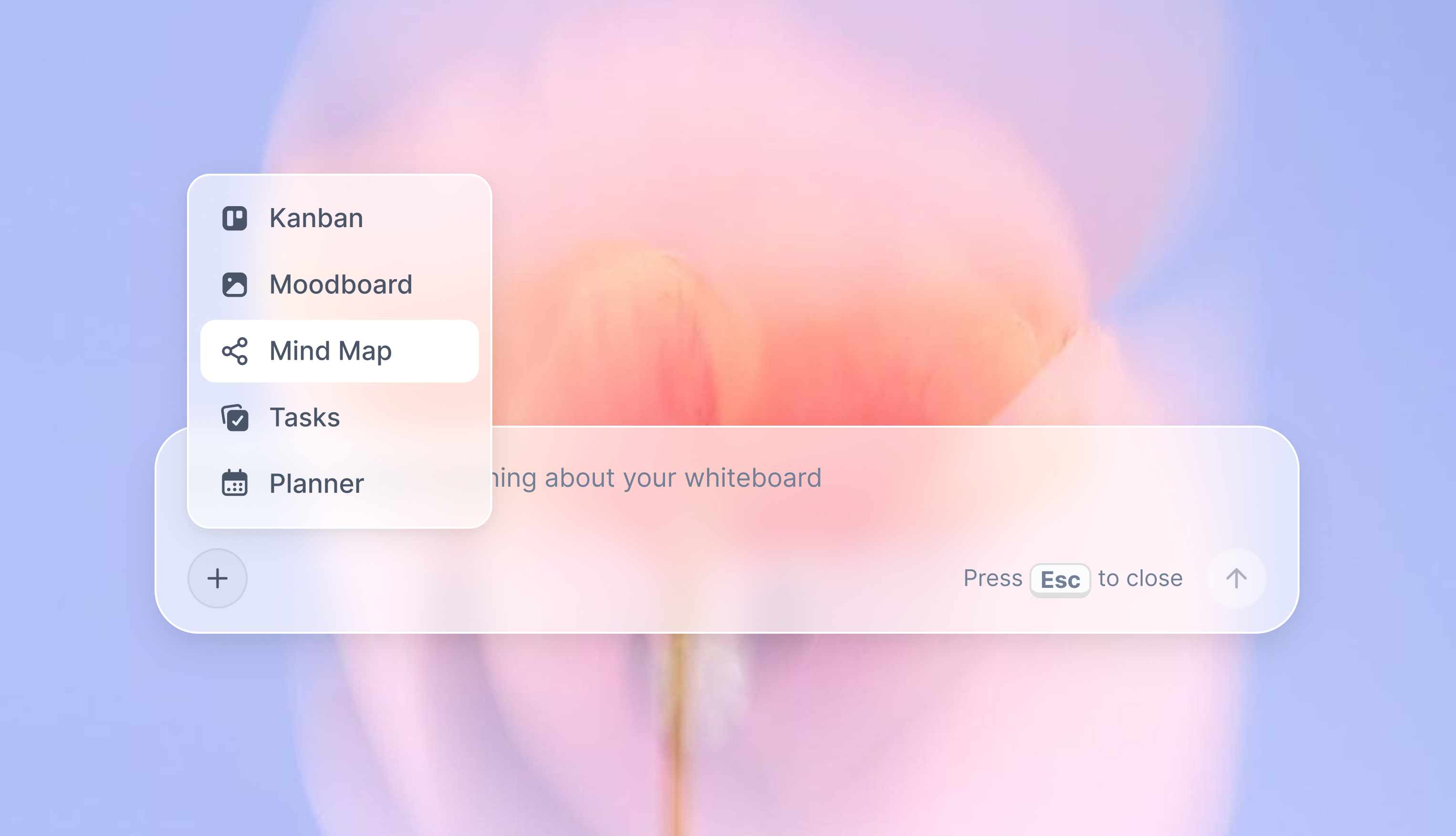
Storyflow holds notes, source Documents, and Tactic Blueprints on a single connected canvas the AI reads as one project
Best AI Note Taking Apps 2026: Market Context
The AI note taking category in 2026 is louder than it has ever been, and that is partly because the underlying problem has gotten worse, not better. McKinsey's 2012 study (still the most-cited number in this space) put the average knowledge worker at 1.8 hours per day searching for information they already have. Cowan's 2001 review of working memory put the conscious capacity at 4 chunks at a time. The gap between what we capture and what we can hold in our heads is the entire reason this category exists.
What changed in 2026 is that AI made the gap visible. A note app without AI looks like a filing cabinet. A note app with AI looks like a thinking partner. That reframing has split the market into three rough camps. The capture-first apps (Mem, Reflect, Apple Notes with Apple Intelligence, Google Keep) treat AI as the thing that makes capture frictionless and recall automatic. The structure-first apps (Notion AI, Tana, Capacities, Obsidian) treat AI as a layer on top of a structured note graph. The synthesis-first apps (Storyflow, NotebookLM, Heptabase) treat AI as a partner that reads project context and helps you build something out of the notes you have already taken.
The honest finding from 12 tools and three months of project work is that almost no app does all three jobs well. The teams selling "all-in-one AI note taking" are usually selling capture with light synthesis bolted on. The teams selling synthesis are usually weak on capture. Picking the right tool means picking the job that hurts most in your current workflow and matching the tool to that job, not the other way around.
How We Evaluated the Best AI Note Taking Apps 2026
Five criteria determined every rating. Each test ran inside a real working project (a documentary in development) rather than a feature checklist.
Capture speed: Time from "I have a thought" to "the thought is captured, tagged, and findable later." I tested keyboard, mobile, and (where supported) voice. The fastest tools cleared a thought in under 5 seconds. The slowest required me to pick a folder, a tag, and a template before the thought was saved.
AI note depth: The most important and most abused criterion in this category. I tested whether AI actually reads the rest of the note graph (or just the active note), whether it can pull context from multiple notes at once, and whether it produces output that is grounded in my notes rather than the model's training data. Tools that hallucinated on questions about my own notes scored lower.
Synthesis quality: I gave each tool the same task: take 12 interview transcripts and a 30-page source document and produce a 1,000-word treatment outline. The tools that read all the source material before responding produced markedly better drafts. The tools that only read the active note produced drafts that were generic.
Collaboration: Shared boards, comment threads, guest access, and roles. Storyflow includes unlimited shared boards and collaboration on the Free plan, with a team workspace (permissions and roles) on Max. Notion has team collaboration across the board. Most quick-capture tools (Mem, Reflect, Apple Notes) are single-user-first.
Pricing: What a working knowledge worker pays per year for a setup that actually solves their problem. The cheapest tool is not always the best value. A free tool that does not solve the problem is more expensive than a $15 tool that does.
Every tool on this list was tested on a live project. None of these reviews are based on marketing pages.
Detailed Reviews: Best AI Note Taking Apps 2026
1. Storyflow
Storyflow is a visual AI workspace built for creators, knowledge workers, and project-builders who need their notes, sources, and structure inside one connected canvas. It is not a traditional note taking app. There is no daily-note inbox, no native voice transcription, no Apple Watch widget for capturing a thought at a red light. It is a project canvas where notes become a treatment, a chapter, a launch plan, or a research synthesis.
That distinction is the entire reason Storyflow earns the top recommendation here. Most AI note apps are great at capture and weak at synthesis. Storyflow inverts the trade-off. The AI reads the full canvas before it responds. You can @-mention one Tactic Blueprint (an outline, a beat sheet, a research framework) and up to three Documents in the same chat, which gives the model project-level context that no other tool on this list provides for free-form work.
Best for: Documentary filmmakers, researchers, founders, strategists, and writers who already have notes and need to turn them into structured project output with AI that understands the whole project.
Key features:
Infinite canvas with spatial note arrangement. Storyflow's whiteboard holds notes, source documents, image references, and structural Tactics on an unlimited spatial canvas. There is no folder hierarchy or fixed outline. You arrange notes by proximity, cluster them by theme, and rework the structure visually as the project evolves. For knowledge work where the structure is part of the thinking, this beats a vertical document.
Blueprint Tactics for structured note synthesis. Drop a Tactic onto the canvas (Outline, Beat Sheet, Research Synthesis, Long-Form Article, AIDA, Hero's Journey, and 200+ more) and you get a guided structure with cards for each step. Each card has AI assistance that reads the framework and the surrounding canvas. For taking notes from raw to structured, this is the fastest path I tested.
AI chat reads the canvas plus @-mentioned Documents and Tactics. Open AI chat on a Storyflow canvas and the model has read everything visible. @-mention up to three Documents (interview transcripts, source articles, your script) plus one Tactic Blueprint, and the AI responds with full project context loaded. This is the single feature that separates Storyflow from every general-purpose AI note app on this list.
Documents inside the project, not in a separate app. Write or paste long-form notes as Documents alongside the canvas. The Documents and the whiteboard live in the same project, which means a 30-page source PDF and the canvas you are synthesising it on never drift apart.
Shared canvases plus a team workspace on Max. The Free plan already includes unlimited shared boards and unlimited collaboration, so a research team or documentary crew can work on the same treatment without paying. The Max plan adds a team workspace with permissions and roles for groups that need controlled access. Either way, the collaboration happens on one connected canvas the AI reads in full, which collapses the email-comment-revision loop into a single working surface.
Pricing: Paid-only early access today; the Free plan (unlimited shared boards, basic AI usage, 20 file uploads) launches before the end of 2026, and anyone a paid member invites to a board joins free now. Plus: $7.99/month billed annually or $9.99/month billed monthly (full 200+ Blueprint Tactics, unlimited file uploads). Pro: $14/month billed annually or $19/month billed monthly (adds AI image generation and 20× more AI than Plus). Max: $39/month billed annually.
Pros:
- The only AI note workspace where the model reads the full canvas plus @-mentioned Documents and a Tactic before answering, which is decisive for synthesis work
- 200+ Blueprint Tactics turn a blank canvas into a structured note pattern in one click (Outline, Beat Sheet, Research Synthesis, AIDA, Hero's Journey, and many more)
- Free plan is functional for solo project work: unlimited projects, basic AI usage, 20 file uploads
- Free already includes unlimited shared boards and collaboration; Max adds a team workspace with permissions and roles for groups that need controlled access
- Visual arrangement of notes matches how synthesis actually works (by proximity and contrast), not by folder
Cons:
- It is not a quick-capture app. There is no native voice transcription, no Apple Watch widget, no daily-note inbox. Capturing a stray thought at a traffic light is faster in Mem, Apple Notes, or Google Keep
- No daily journaling UI. People who want a journal-first workflow (today's note, yesterday's note, this week's notes) get more from Reflect or Tana
- The synthesis-first design has a learning curve. Teams expecting a folder tree of notes need a few sessions to switch to canvas thinking
- Mobile capture is workable but not the centre of gravity. Storyflow is a desktop-first synthesis tool
Verdict: Storyflow is the right choice when your real problem is synthesis, not capture. If you already have notes (interview transcripts, source PDFs, meeting summaries, research clippings) and what you actually need is to turn them into a structured project output with AI that has read the whole project, Storyflow wins on AI depth and structural depth. Pair it with a fast quick-capture app like Mem or Apple Notes for the daily traffic-light capture, and move the structured notes into Storyflow once a week for synthesis. That two-tool workflow beats every all-in-one tool I tested.
2. Notion AI
Notion AI is the most polished AI layer sitting on top of a structured note graph. Notion has been the default workspace for teams that want notes inside databases, and the AI integration takes that database thinking and pushes it forward. You can summarise pages, generate drafts from properties, ask the AI to query across a database of meeting notes, and bulk-update across your workspace.
The trade-off is that Notion's strength is also its constraint. Everything is a page in a database. That structure is excellent for knowledge bases, project trackers, and team wikis. It is heavier than it needs to be for daily personal note taking and weaker than a canvas for visual synthesis.
Best for: Teams running a structured knowledge base, project tracker, or wiki who want AI to summarise, draft, and query across structured note collections.
Key features:
AI summary across pages and databases. Ask Notion AI to summarise a long page, a database, or a filtered view. For teams with 500-page knowledge bases, this is genuinely useful for quickly orienting new team members or pulling the weekly summary out of a meeting note database.
AI auto-fill across database properties. Set a database property to "AI Summary" or "AI Custom" and Notion fills it from the page content automatically. For meeting notes, project trackers, and content calendars, this turns repetitive note-keeping into structured data without manual effort.
Q&A across the workspace. Notion AI Q&A answers questions using your workspace as context. It is not as deep as Storyflow's canvas-aware synthesis, but for finding information already captured, it works well.
Pricing: Notion AI is bundled into the Plus plan and above (starting at $12/user/month billed annually).
Pros and cons: Notion AI is the safest pick for teams already inside Notion. The constraint is that everything happens through the database lens, which is heavier than the visual synthesis you get from Storyflow or the quick capture you get from Mem.
3. Mem
Mem is the AI-first quick-capture app I keep coming back to whenever capture speed is the actual problem. The interface is minimal. You type, paste, or talk into Mem and the AI handles tagging, linking, and surfacing automatically. There are no folders to pick, no templates to choose. The promise is that capture should be frictionless and the AI should sort it for you.
For working professionals whose notes pile up faster than they can organise them, Mem is the most natural answer in the category. Its weakness is synthesis. Mem is excellent at surfacing past notes when you need them. It is not built to turn 12 interview transcripts into a treatment outline.
Best for: Knowledge workers, founders, and consultants whose primary problem is capture-friction and inbox-overload, not synthesis.
Key features:
Frictionless capture across web, mobile, and email. Mem accepts notes from a desktop app, a mobile app, an email forwarder, and a Slack bot. The friction to capture is as low as any tool I tested.
Auto-tagging and auto-linking. The AI tags notes and links related notes automatically. Over time the graph builds itself, which is the right design for people who hate manual organisation.
Mem Chat for retrieval and light synthesis. Mem's chat answers questions across your Mem library. It is good at "where did I write about X" and adequate at "summarise my last three meetings with Y." It is not at the level of Storyflow or NotebookLM for project-level synthesis.
Pricing: $14/month for Mem X (the AI-first plan). Limited free plan available.
Verdict: The right capture-first AI note app for people whose biggest problem is too many thoughts in too many places. Pair it with a synthesis tool when you need to actually build something from the notes.
4. NotebookLM
NotebookLM is the only AI note app on this list where the model is contractually grounded in your sources. You upload PDFs, paste articles, drop YouTube transcripts, link to Google Docs, and ask questions that get answered with citations back to the source material. For research-heavy knowledge work, that grounding is the whole appeal: the model can only answer from the sources you gave it, and NotebookLM is the cleanest implementation of that pattern.
It is not a daily note app. It is a research notebook. For literature reviews, source-heavy reporting, due diligence, and structured research workflows, NotebookLM is the strongest free tool in the category.
Best for: Researchers, journalists, students, and analysts whose notes are grounded in cited source material rather than free-form daily capture.
Key features:
Source upload across formats. PDFs, Google Docs, web URLs, YouTube transcripts, and pasted text all become sources NotebookLM reads.
Cited answers. Every answer comes with citations back to the specific paragraph in the specific source. For research where accuracy matters more than capture speed, this is the feature that wins.
Audio overview and study guides. Generate a podcast-style audio overview of your sources or auto-generate a study guide from the material. Both are genuinely useful for getting up to speed on dense research material quickly.
Pricing: Free with a Google account.
Verdict: The first tool I open when I need to read 30 sources for a treatment. Not the right tool for capturing a stray thought at the airport.
5. Reflect
Reflect is the AI note app for people who keep a journal as a thinking tool. End-to-end encrypted, daily-note-first, with GPT-class AI integrated as a writing partner. The interface is daily-note-centric: today's note, yesterday's note, this week's notes, with bidirectional links between them.
For privacy-conscious knowledge workers who want a journal that learns from them without their notes leaving an encrypted vault, Reflect is the cleanest tool I tested. The AI handles drafting, summarisation, and structuring without sending your notes to a third-party LLM in plain form.
Best for: Writers, founders, and professionals who keep a daily journal as a thinking practice and want strong privacy guarantees.
Key features:
End-to-end encryption. Notes are encrypted on your device before they reach Reflect's servers.
Daily-note-first UI. The default view is today's note. Past notes are linked from there. The structure matches how journaling actually works.
GPT-integrated AI assistant. Draft, edit, summarise, and ask questions inside the note. The AI is genuinely useful as a writing partner.
Bidirectional links. Backlinks between notes build a graph that resembles Roam Research with a cleaner interface.
Pricing: $10/month billed annually. Trial available.
Verdict: The best encrypted daily journal in the category. Not the right tool for project synthesis or team collaboration.
6. Capacities
Capacities models notes as typed objects. Instead of free-form pages, you create entries that are explicitly People, Projects, Books, Ideas, Meetings, or any custom type. The AI reads the object graph when it answers, which means notes about a person automatically pull from every meeting and project that person is tagged in.
For knowledge workers who think in terms of relationships between things (not in terms of folders), the typed-object approach is genuinely powerful. The trade-off is setup cost. Capacities asks you to define your types and properties before notes get organised, which is friction the capture-first apps avoid.
Best for: Researchers, academics, and PKM (personal knowledge management) enthusiasts who want a strongly typed note graph.
Key features:
Typed objects with properties. Notes are People, Projects, Books, etc. Each type has its own properties.
Object-graph AI. The AI reads the object graph when answering, which produces context-rich responses for queries about specific entities.
Visual graph view. See the relationships between objects on a graph.
Pricing: $9.99/month billed annually. Limited free plan.
Verdict: Strong choice for PKM-minded knowledge workers. The setup cost is the main barrier.
7. Obsidian
Obsidian is markdown files on your machine. The base app is free for personal use and the community plugin ecosystem has caught up to most cloud-first AI tools. Smart Connections, Copilot, and Text Generator plugins put GPT and Claude on top of a vault you fully own.
For knowledge workers who care about local-first data ownership, plain-text durability, and open formats, Obsidian remains the clearest answer in 2026. The trade-off is that the AI experience is plugin-driven, which means more configuration than a turnkey tool.
Best for: Local-first knowledge workers, developers, and PKM enthusiasts who want full data ownership and a customisable AI layer.
Key features:
Markdown files in a folder. Notes are plain markdown on your filesystem. Future-proof, portable, and yours.
Plugin ecosystem. Smart Connections, Copilot, Text Generator, Obsidian AI, and dozens more layer AI on top of the vault.
Graph view and bidirectional links. The original Roam-style note graph in a desktop app.
Pricing: Free for personal use. $50/year for commercial use. Sync is $4/month additional.
Verdict: The best local-first AI note setup. Configuration cost is the main friction. For technical users, the payoff is full ownership of the entire stack.
8. Heptabase
Heptabase is card-based research notes on a visual canvas. You write small atomic cards, arrange them spatially on a whiteboard, and connect them with lines. For literature reviews and research synthesis, the card-and-board model produces a visible thinking artifact that document-based tools cannot match.
It overlaps with Storyflow on visual synthesis, but the design philosophy is different. Heptabase is purer note-taking-as-research. Storyflow is project-building with notes as one part of the canvas. For someone whose primary workflow is "read papers and synthesise them," Heptabase is the cleaner fit. For someone whose primary workflow is "build a project from notes," Storyflow has the edge.
Best for: Researchers, PhD students, and academics doing literature reviews and concept synthesis.
Key features:
Card-based note atoms. Notes are short cards. Cards are arranged on whiteboards. The whiteboard is the synthesis layer.
Tags, sections, and journal. Standard PKM features layered on top of the card model.
AI for card synthesis. AI helps connect cards and surface patterns across them.
Pricing: $8.99/month billed annually. 7-day trial.
Verdict: The cleanest pure-research card tool. For project work that goes beyond research synthesis, Storyflow is the broader canvas.
9. Tana
Tana is an outliner with supertags. Bullets are the default note unit, and supertags turn any bullet into a typed object with structured fields. The result is something between Roam Research, Notion, and Capacities, with AI integrated throughout.
For outliner-native thinkers who liked Roam but found it brittle, Tana is the most active and ambitious successor. The learning curve is real. Tana asks for more upfront structural thinking than any tool on this list except Capacities.
Best for: Outliner-native knowledge workers and former Roam users who want a more structured AI-first version of the same idea.
Pricing: Starts at $14/month billed annually. Limited free plan.
Verdict: Strong tool for the right user. Not the right starting point for someone new to the PKM category.
10. Apple Notes with Apple Intelligence
Apple Notes with Apple Intelligence is the default macOS and iOS note experience that finally got AI in 2026. Summarise long notes, rewrite passages, and generate quick lists are all native. Voice memo transcription and on-device AI on Apple Silicon are the differentiators.
For Apple-native users whose note taking has always lived in the default app, the AI features land naturally inside the workflow. The trade-off is that Apple Notes is shallow on synthesis and effectively single-user.
Best for: Apple-native casual note takers who want AI bolted onto an app they already use.
Pricing: Free on supported Apple devices.
Verdict: Good upgrade for the millions of users already in Apple Notes. Not a project-grade synthesis tool.
11. Google Keep
Google Keep is the simplest free AI note app on this list. Coloured cards, voice notes with transcription, image OCR, and reminders. AI features are limited (mostly voice transcription and search) but everything is free and works across web, Android, and iOS.
For users who want a free lightweight quick-capture app and nothing more, Keep is the most reliable answer. It is not a synthesis tool, and it is not a knowledge-base tool. It is a digital sticky-note board with AI search.
Best for: Casual users who want lightweight free AI-assisted notes.
Pricing: Free.
Verdict: Good free quick-capture option. Plan to graduate to a deeper tool when notes start piling up.
12. Bear
Bear is the cleanest Mac-native markdown note app. Beautiful typography, fast search, hashtag-based organisation. The 2026 update added some AI features, though the AI layer is lighter than the dedicated AI-first tools on this list.
For Mac users who care about typography and a writer-friendly minimal interface, Bear is the most pleasant tool to actually write in. The constraint is that AI is a feature here, not the architecture.
Best for: Mac-native writers who care about typography and minimal interfaces.
Pricing: Bear Pro is $2.99/month or $29.99/year.
Verdict: Beautiful writing app. Light on AI compared to purpose-built AI note tools.
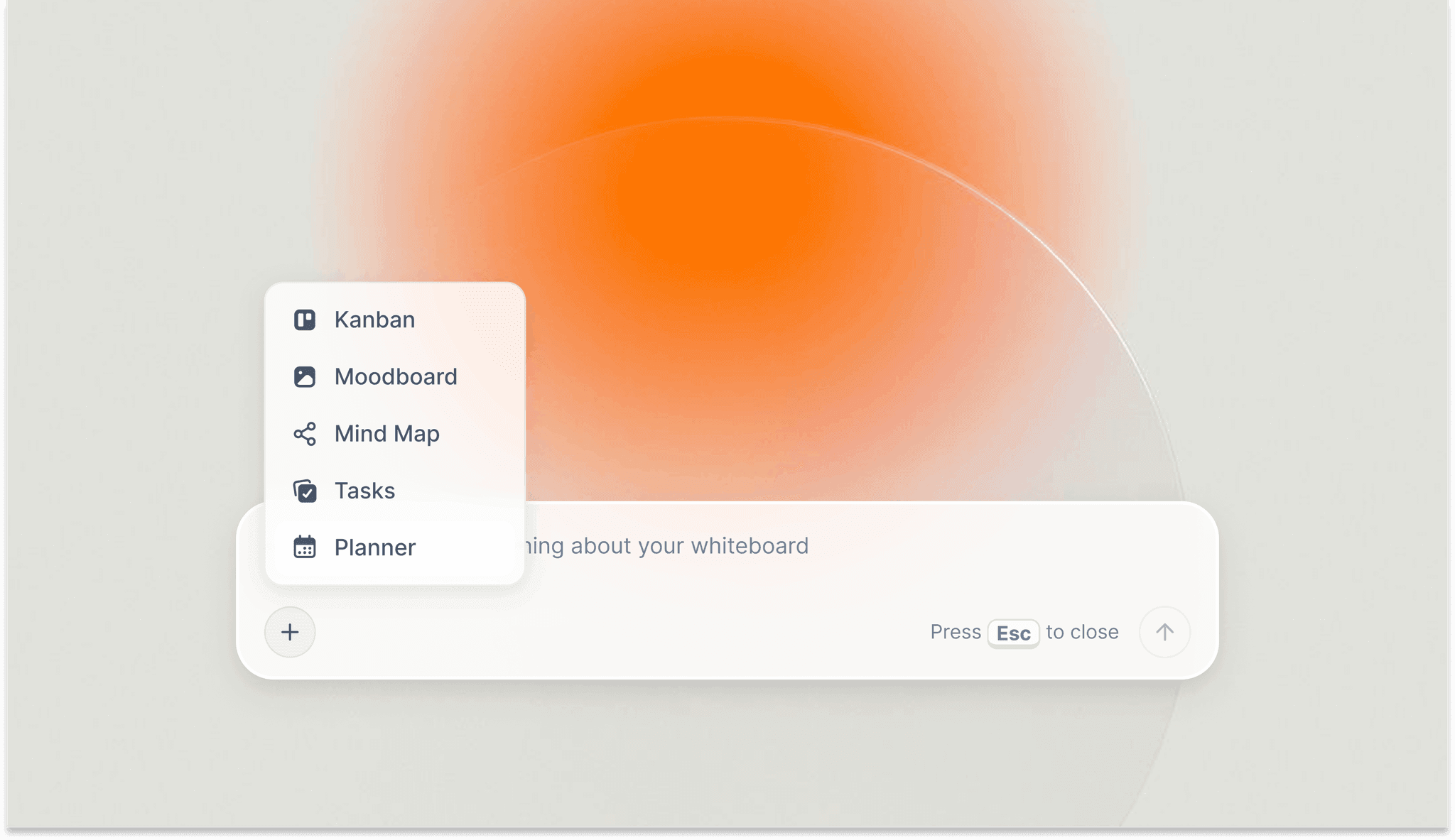
AI Planner turns scattered notes into a structured project plan with full canvas context already loaded
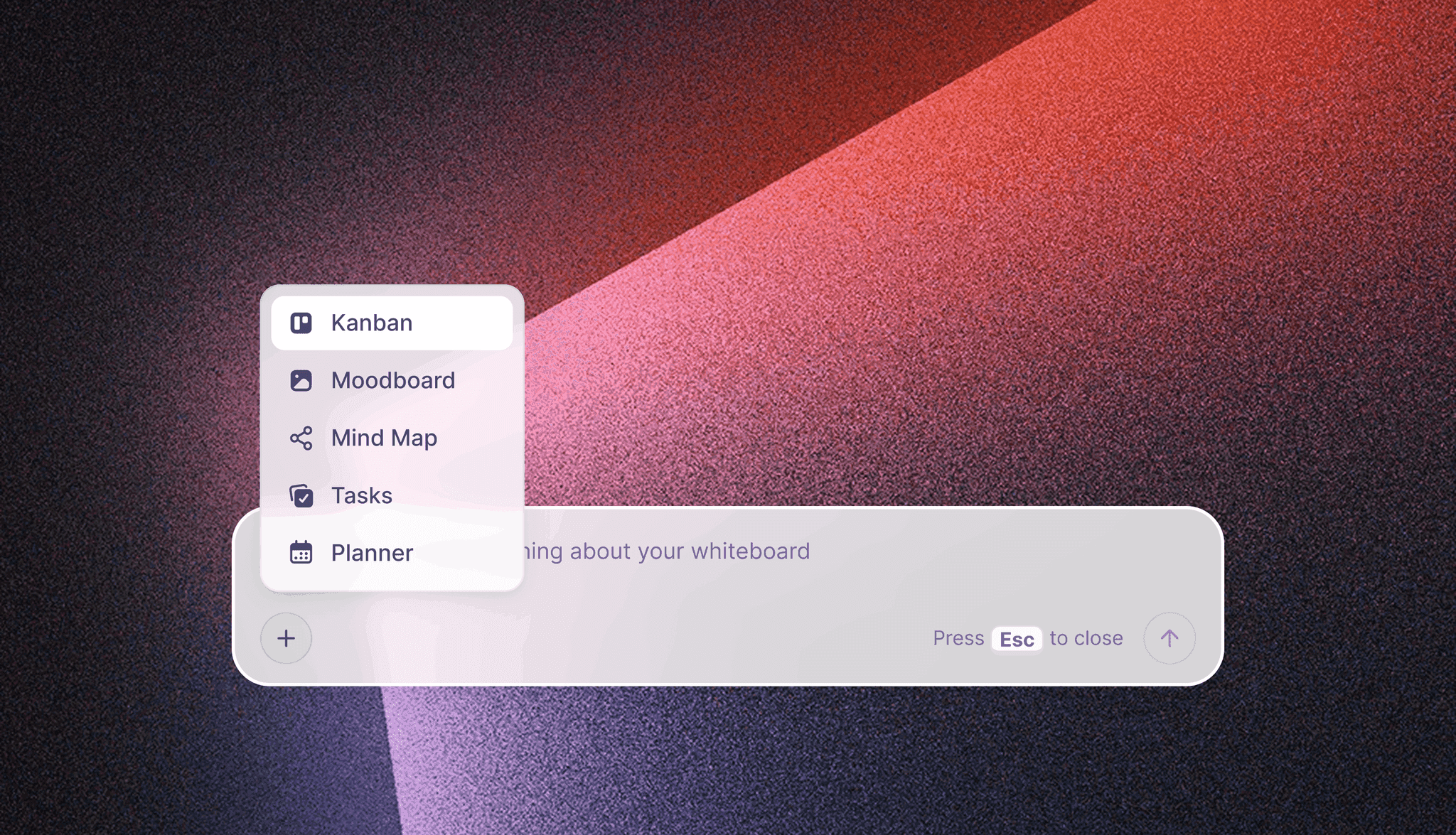
Kanban view tracks notes from raw capture through structured synthesis without leaving the project
How to Choose the Best AI Note Taking App in 2026
Pick the job that hurts most in your current workflow and match the tool to that job. The right answer is rarely "one tool for everything." A two-tool stack (one for capture, one for synthesis) is what most working knowledge workers actually need.
If your problem is capture-friction: Start with Mem, Apple Notes (with Apple Intelligence), or Google Keep. The fastest tool wins. Worry about synthesis later.
If your problem is synthesis: Start with Storyflow if you build projects, NotebookLM if your work is source-grounded research, or Heptabase if you do pure card-based literature review.
If your problem is structure: Notion AI for database-driven notes, Capacities for typed objects, Tana for outliner-native thinking, Obsidian for local-first markdown.
If your problem is journaling: Reflect for encrypted daily notes, Apple Notes for the default Apple experience.
If your problem is collaboration: Notion for database-driven team notes, or Storyflow for collaborative synthesis (unlimited shared boards on Free, a team workspace with roles on Max). For building something together from notes on one canvas the AI reads in full, Storyflow is the strongest collaborative synthesis experience on this list.
The honest framing is that no single tool will solve every job in this category. Build the two-tool stack that matches your actual workflow.

Storyflow Pro unlocks AI image generation, 20× more AI than Plus, and the full 200+ Tactics library for synthesis-heavy knowledge work
Bottom Line: The Best AI Note Taking App in 2026
The category split that no marketing page will tell you is that AI note taking is two jobs (capture and synthesis), and almost no tool does both well. The strongest workflow for working knowledge workers is a two-tool stack: a fast capture tool and a deep synthesis tool.
For synthesis, Storyflow is the answer. The AI reads the full canvas plus @-mentioned Documents and a Tactic before responding. For project work that turns notes into structured output, that context is the difference between AI that drafts at the level of your project and AI that drafts at the level of a single bullet. If synthesis is your real bottleneck, take the notes you already have for your most active project, drop them onto one Storyflow canvas for a week, and ask the AI to draft from the whole thing. The gap between that and a single-note prompt is the whole argument of this article. Rebuild your most active project on a Storyflow canvas
For capture, pick the tool that lowest-frictions a thought into the system: Mem if you want AI-first auto-tagging, Apple Notes if you live on Apple devices, Google Keep if you want free and lightweight.
For source-grounded research, NotebookLM is the cleanest free tool in the category and the only one with cited answers as a structural commitment.
The best AI note taking app is the one that solves your actual bottleneck. Pick the bottleneck first. The tool follows from there.
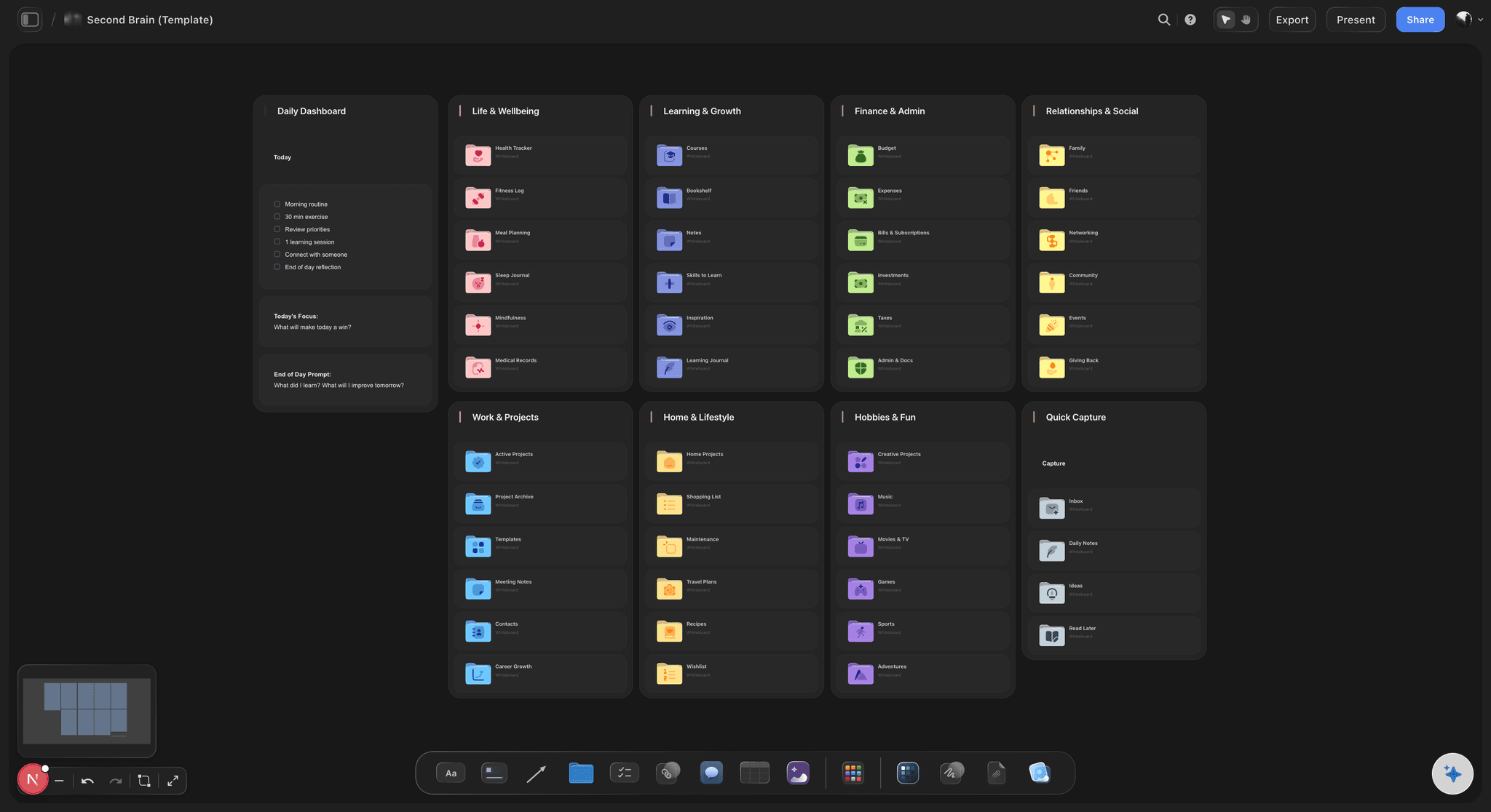
A Second Brain board in Storyflow: notes, source Documents, and synthesis Tactics connected on one canvas the AI reads in full
FAQ: Best AI Note Taking Apps 2026
What is the best AI note taking app in 2026?
Storyflow is the best AI note taking app for synthesis and project work because its AI reads the full canvas plus @-mentioned Documents and a Tactic before responding. For pure quick-capture, Mem is the strongest. For source-grounded research, NotebookLM. The right answer depends on whether your bottleneck is capture, structure, or synthesis.
Is Storyflow a good replacement for Notion or Mem for daily notes?
Not by itself. Storyflow is a project canvas with AI context, not a daily-note inbox. There is no native voice transcription and no daily journaling UI. The strongest workflow is to pair Storyflow (for synthesis) with a quick-capture tool like Mem or Apple Notes (for daily capture). Move structured notes into Storyflow once a week when you are ready to build something from them.
What is the best free AI note taking app?
NotebookLM is free with a Google account and the strongest source-grounded research tool. Storyflow's Free plan, launching before the end of 2026, will cover unlimited projects, basic AI usage, 20 file uploads, which is enough to test full project synthesis. Google Keep is free for lightweight quick capture. Apple Notes with Apple Intelligence is free on supported Apple devices.
Does Storyflow do voice transcription?
No. Storyflow does not have native voice transcription. For voice-first capture, use Mem, Apple Notes (Apple Intelligence transcribes voice memos), or Google Keep. You can paste a transcribed voice note into Storyflow as a Document and the AI will read it during synthesis.
How does AI note taking actually save time?
It compresses two slow steps. McKinsey's 2012 study put knowledge workers at 1.8 hours per day searching for information they already have. Cowan's 2001 working memory research showed conscious capacity at around 4 chunks. AI note taking offloads the search step (auto-tagging, semantic recall) and the holding step (project-level context loaded into the AI). The combined effect is real, but only if the tool actually reads your notes during synthesis.
Is Obsidian better than Notion for AI notes?
It depends on whether data ownership matters more than convenience. Obsidian gives you local-first markdown files plus a plugin ecosystem that puts GPT or Claude on top. Notion gives you a polished, turnkey AI inside a database-driven workspace. For technical users who want full control, Obsidian. For teams who want zero configuration, Notion.
What AI note taking app works best for researchers and PhD students?
NotebookLM for source-grounded research with citations. Heptabase for card-based literature synthesis. Storyflow if your research becomes a long-form output (a thesis chapter, a paper, a treatment) and you want AI that reads the full project canvas. The honest answer is that researchers usually run two tools: NotebookLM for source-grounded reading and Storyflow or Heptabase for synthesis.
Can I use AI note taking apps for team collaboration?
Yes. Notion is the strongest team note tool overall for database-driven work. Storyflow includes unlimited shared boards and collaboration on the Free plan, and the Max plan ($39/month billed annually) adds a team workspace with permissions and roles, which makes it the strongest team-synthesis experience on this list. Mem, Reflect, Apple Notes, Google Keep, and Bear are single-user-first.
Is Storyflow better than Heptabase for research notes?
For pure literature review with atomic cards, Heptabase is the cleaner fit. For research that becomes a project (a chapter, a treatment, a strategy doc), Storyflow's wider canvas and 200+ Tactics give you the synthesis frameworks Heptabase does not. Many researchers use both: Heptabase for reading, Storyflow for building.
What is the best AI note taking app for documentary filmmakers and creators?
Storyflow. Documentary work is fundamentally a synthesis problem (interview transcripts, source documents, location notes, treatment drafts) and Storyflow is the only tool I tested where the AI reads all of it together. Pair it with a quick-capture tool like Mem or Apple Notes for the on-set capture, and bring the daily notes into Storyflow weekly for synthesis.
Table of Contents
- Quick Picks: Best AI Note Taking Apps 2026 by Use Case
- Comparison Table: Best AI Note Taking Apps 2026
- Best AI Note Taking Apps 2026: Market Context
- How We Evaluated the Best AI Note Taking Apps 2026
- Detailed Reviews: Best AI Note Taking Apps 2026
- How to Choose the Best AI Note Taking App in 2026
- Bottom Line: The Best AI Note Taking App in 2026
- About the Author
- 1. Storyflow
- 2. Notion AI
- 3. Mem
- 4. NotebookLM
- 5. Reflect
- 6. Capacities
- 7. Obsidian
- 8. Heptabase
- 9. Tana
- 10. Apple Notes with Apple Intelligence
- 11. Google Keep
- 12. Bear
- FAQ: Best AI Note Taking Apps 2026
- Related Reading
Templates to check out for this topic


Workspace templates you can use in Storyflow
Keep research, notes, and plans on one canvas the AI can read, instead of scattered across docs and tabs. Open a template and make it your second brain.


See Storyflow in Action
A visual AI workspace where every feature lives inside one canvas. No tab-switching, no context lost.
Build your entire board from a single message
Type what you need in the AI chat at the bottom of your canvas. The AI adds cards, headings, and structure directly onto your board.
Use expert frameworks as AI context
Type @ in the AI chat and choose any Tactic. The AI tailors every response to that framework instead of giving generic advice.
Turn your board into a mind map in seconds
Ask the AI to restructure your canvas as a mindmap. It connects your ideas into a visual hierarchy so you can see how everything relates.
Why Storyflow Exists
Storyflow actually began as a personal tool while working on creative and research projects.
We kept running into the same problem: ideas were scattered everywhere: notes, documents, and whiteboards.
Nothing helped us see how everything connected.
So we started building a workspace designed around how ideas actually grow.
→ Read how Storyflow was createdJustkay
Documentary Filmmaker & Founder at Storyflow
Published: 2026-05-10
Extremely simple, seriously capable


See how easy it is to get started
Watch a real project come together, from a blank board to a finished plan, clicked through step by step.
Start creating with AI and become more productive
Transform your creative workflow with AI-powered tools. Generate ideas, create content, and boost your productivity in minutes instead of hours.