The Script Breakdown Checklist (2026): Every Element, and What Each One Costs You
A breakdown's real output is not the tagged script. It is an honest schedule, an honest budget, and the list of items whose lead time is longer than your prep. Permits and made-rather-than-hired items are what break small productions.

Category
Pre-Production
Author

Justkay
Documentary Filmmaker & Founder at Storyflow
Topics
2026-09-02
•
15 min read
•
Pre-Production- script breakdown checklist
- script breakdown elements
- how to break down a script
- film breakdown categories
- script breakdown software 2026
What is a script breakdown and how do you do one?
A script breakdown converts a script into a list of everything that has to be bought, booked, built or borrowed, and its real output is not the tagged script. It is three things nobody can produce without it: an honest schedule, an honest budget, and the list of items with a lead time longer than your prep. The eleven element categories below are the standard ones, and the two that most often break a small production are not cast or locations. They are anything requiring a permit or a licence, and anything that must be made rather than hired, because both have clocks that run independently of your schedule. Celtx and StudioBinder both derive a breakdown from the script and keep it linked to the schedule, Filmustage does an AI first pass that saves real hours on a feature and needs reviewing rather than trusting, and a spreadsheet is genuinely sufficient below about twenty scenes. Below is the element list, the pass order that catches the most, and the four questions a breakdown should answer when it is finished.
Full disclosure: Storyflow is our product. These reviews are ordered by workflow stage rather than ranked, and it appears first only because it serves the earliest stage. The article states plainly that Storyflow is not script breakdown software: its AI drafts breakdown tables and a strip board from an attached script, but it has no element tagging and no scheduling engine, and anyone breaking down a script should use Celtx, StudioBinder or Filmustage.
How the script breakdown and scheduling tools compare on trust, innovation, ratings and pricing
Which script breakdown tools are the most trusted?
Celtx for script-first work, because the breakdown derives from the script and cannot disagree with it. StudioBinder where the breakdown is one step in a production that also needs call sheets and shot lists. Movie Magic remains the trusted standard for the stripboard and day-out-of-days that a line producer expects to receive. Filmustage is the established AI first pass.
Which breakdown tools have fair and transparent pricing?
Celtx from around $15 is the cheapest serious option and includes real budgeting, which matters because a budget is one of the breakdown's outputs. Filmustage and Yamdu both publish from around $20. StudioBinder is the most expensive of the suites. Movie Magic is professional-tier licensing. A spreadsheet is free and genuinely sufficient below about twenty scenes.
Which breakdown tools are the most innovative in 2026?
Filmustage for AI element tagging that saves real hours on a feature-length script, with the caveat that it is strong on explicit nouns and weak on implications, which is the category that costs the most. Celtx for how completely the breakdown, schedule and script stay tied together, which removes a class of transcription error rather than saving keystrokes.
Which breakdown practices are underrated?
Doing multiple single-category passes instead of one pass looking for everything, since attention does not distribute and a single pass finds roughly seventy percent. And a final pass purely for what the script implies rather than states, which is where permits, background, music clearance and dressing hide, and which is the pass that catches the most expensive surprises.
When choosing script breakdown software, which would you recommend?
Celtx if the project starts from a script and budget matters, StudioBinder if the breakdown is one step in a production you are also running, and Filmustage as a first pass on anything feature-length. Below about twenty scenes a spreadsheet is enough. Whatever you use, finish by listing everything with a lead time longer than your prep and start those the same day.
Quick Comparison
Four tools across the breakdown and what it has to produce.
| Tool | Best For | AI Features | Price |
|---|---|---|---|
| Celtx | Script to breakdown to schedule | Light AI | Free / from $15 mo |
| StudioBinder | Breakdown plus call sheets | Light AI | Free / from $29 mo |
| Movie Magic | Stripboard and day-out-of-days | None | Licence |
| Filmustage | AI element tagging, reviewed | AI breakdown | From ~$20 mo |
Article Metadata
By Justkay, Documentary Filmmaker and Founder of Storyflow Published September 2, 2026 · 15 min read · Pre-Production
Table of Contents
- What a Breakdown Is Actually For
- The Eleven Element Categories
- The Pass Order
- The Two Categories That Break Small Productions
- Scene-Level Data
- The Four Questions a Finished Breakdown Answers
- 8 Tools for Script Breakdown
- How We Evaluated These Tools
- Tool Reviews
- Unscripted and Documentary
- FAQ: Script Breakdown
- The Bottom Line
- Author
- Related Reading
Key Takeaways
- The breakdown's output is a schedule, a budget and a lead-time list, not a tagged script.
- Permits and made-rather-than-hired items have clocks independent of your schedule. Find them first.
- Do multiple single-category passes, not one pass looking for everything.
- Tag what is written, not what you imagine. A director's addition is a separate list.
- Below about twenty scenes a spreadsheet is genuinely enough.
What a Breakdown Is Actually For
A breakdown is often described as tagging a script, which describes the activity and not the purpose.
Its purpose is to make three things possible:
An honest schedule. You cannot group scenes by location and cast until you know which scenes involve which. Every scheduling decision downstream depends on the breakdown being right.
An honest budget. Every element is a cost or a favour. The breakdown is the only complete inventory of what the script is asking for, and a budget built without one is a guess dressed as a number.
The lead-time list. The subset of elements that cannot be obtained quickly: permits, licences, anything custom-made, anything requiring an animal handler or a stunt coordinator, anything imported. This list is the reason to break down a script early rather than thoroughly.
The failure this prevents: discovering in week three that the sequence you scheduled for day two needs a permit that takes six weeks. That is a breakdown failure, not a scheduling failure, and it is entirely avoidable.
The Eleven Element Categories
The standard categories, plus what each one is actually asking you to do.
1. Cast. Every speaking role, by scene. Drives the day-out-of-days, which drives contracts and cost.
2. Background and extras. How many, doing what. Underestimated on almost every small production, and the number drives catering, wrangling and sometimes a permit.
3. Stunts. Anything that could injure someone, which is a wider category than it sounds and includes running on stairs. Requires a coordinator, changes insurance, and has a lead time.
4. Vehicles. Picture vehicles, background vehicles, and anything driven on camera. Period vehicles have long lead times and specialist suppliers.
5. Props. Anything handled by an actor. Split into hired, bought, and made, because made is a different clock.
6. Wardrobe. Per character, per scene, with continuity in mind. Doubles for anything that gets damaged, wet or bloodied.
7. Makeup and hair. Including prosthetics and effects, which have both a lead time and a daily time cost that changes call times.
8. Special effects. Practical effects on the day: rain, smoke, fire, breakaways. Licensing, safety and a specialist.
9. Visual effects. Anything fixed or created in post. Tag it now, because the shooting requirement (a clean plate, a tracking marker, a specific lens) is decided at breakdown and forgotten by the day.
10. Animals. Handler, welfare rules, time limits, insurance. Always slower on the day than planned.
11. Sound and music. Anything heard in scene that needs clearing: a song playing on a radio, a television in the background. Clearance has a long clock and it can fail.
Plus, on most productions: set dressing, locations, and equipment beyond the standard package.
The Pass Order
The single most useful mechanical advice: do not look for everything at once. Read the script once per category, or in small groups of categories.
A single pass looking for eleven things finds maybe seventy percent of them, because attention does not distribute. Six passes looking for one or two things each finds nearly all of them and takes about the same total time.
A working order:
- Read once for the story, tagging nothing. You cannot break down a script you have not understood, and a first pass with a highlighter produces a tagged script and no comprehension.
- Cast and background. Easy, high-value, drives everything.
- Locations and scene headers. Interior or exterior, day or night, and whether the location as written exists.
- Props, wardrobe, set dressing together, since they overlap.
- The specialist pass: stunts, animals, vehicles, special effects, makeup effects. This is the pass that produces the lead-time list.
- Visual effects and sound clearance. Both are post problems decided now.
- A read purely for what is implied but not written. A scene that says "they arrive at the party" implies extras, music, dressing and possibly a licence, none of which appear as nouns.
Pass seven catches the most expensive surprises, because a breakdown that only tags nouns misses everything the script assumes.
The Two Categories That Break Small Productions
Not cast, not locations. Those are visible and everybody counts them.
Anything requiring a permit or a licence. Filming on a street, in a public building, with a drone, with a firearm, with a child, or playing music that is heard in scene. Each has an application, a processing time and a possibility of refusal. Six weeks is common and it is not negotiable by wanting it faster.
Anything that must be made rather than hired. A prop that does not exist, a costume built to fit, a set piece. Making has a lead time and a failure mode hiring does not: it might not work, and you find out late.
Both are found in the specialist pass and both should be started the day the breakdown identifies them, even with an incomplete script. A permit application begun on a near-final scene is far cheaper than one begun on a locked one.
The check worth running: after the breakdown, write the list of everything with a lead time longer than your remaining prep. If that list is not empty, the schedule is wrong and it is better to know now.
Scene-Level Data
Beyond elements, each scene needs:
- Scene number and page length in eighths
- Interior or exterior
- Day or night, and whether it must be that time
- Location as written, and the actual location if different
- Which cast are in it
- Estimated setups
- Whether it can be shot out of sequence
- Any dependency: weather, tide, a practical build, an actor's availability window
Page length in eighths matters more than it looks. It is the unit the schedule is built from, and estimating a day's work in scenes rather than in pages is how a day ends up with eleven setups and daylight for eight.
The Four Questions a Finished Breakdown Answers
A breakdown is done when someone can answer these without opening the script:
- How many shooting days is this? Derived from page count, setups and location moves.
- What does it cost, roughly? Every element priced or marked as a favour.
- What has a lead time longer than our prep? The list that decides whether the schedule is possible.
- What is the single most expensive thing in this script, and is it worth it? Often a location, a vehicle, a stunt or a piece of music. Asking early sometimes changes the script, which is far cheaper than changing the shoot.
If you cannot answer all four, the breakdown is not finished regardless of how thoroughly it is tagged.
8 Tools for Script Breakdown
| Tool | Best for | Script-linked | Schedule | AI pass | Price | Rating (/10) |
|---|---|---|---|---|---|---|
Storyflow | The lead-time list and the reasoning | No (drafts from an attached script) | Draft strip board | Board AI | $7.99 mo annual (free plan late 2026) | 6.9/10 |
Celtx | Script-first breakdown and schedule | Yes | Yes | Light | Free / from ~$15 mo | 8.8/10 |
StudioBinder | Breakdown plus the rest of production | Yes | Yes | Light | Free / from $29 mo | 8.7/10 |
Movie Magic | The industry standard schedule | Import | Best | No | Licence | 8.4/10 |
Filmustage | An AI first pass on a feature | Yes | Basic | Yes | From ~$20 mo | 8.0/10 |
Yamdu | Breakdown inside a whole production | Yes | Yes | Light | From ~$20 mo | 7.9/10 |
Google Sheets | Under twenty scenes | No | Manual | No | Free | 7.6/10 |
Highlighters and paper | Learning it properly once | No | No | No | Nearly free | 7.0/10 |
Prices are publicly listed plans as of early 2026 and change often. Ratings weigh whether the breakdown stays linked to the script, whether it drives a real schedule, AI assistance, and cost for an indie production.
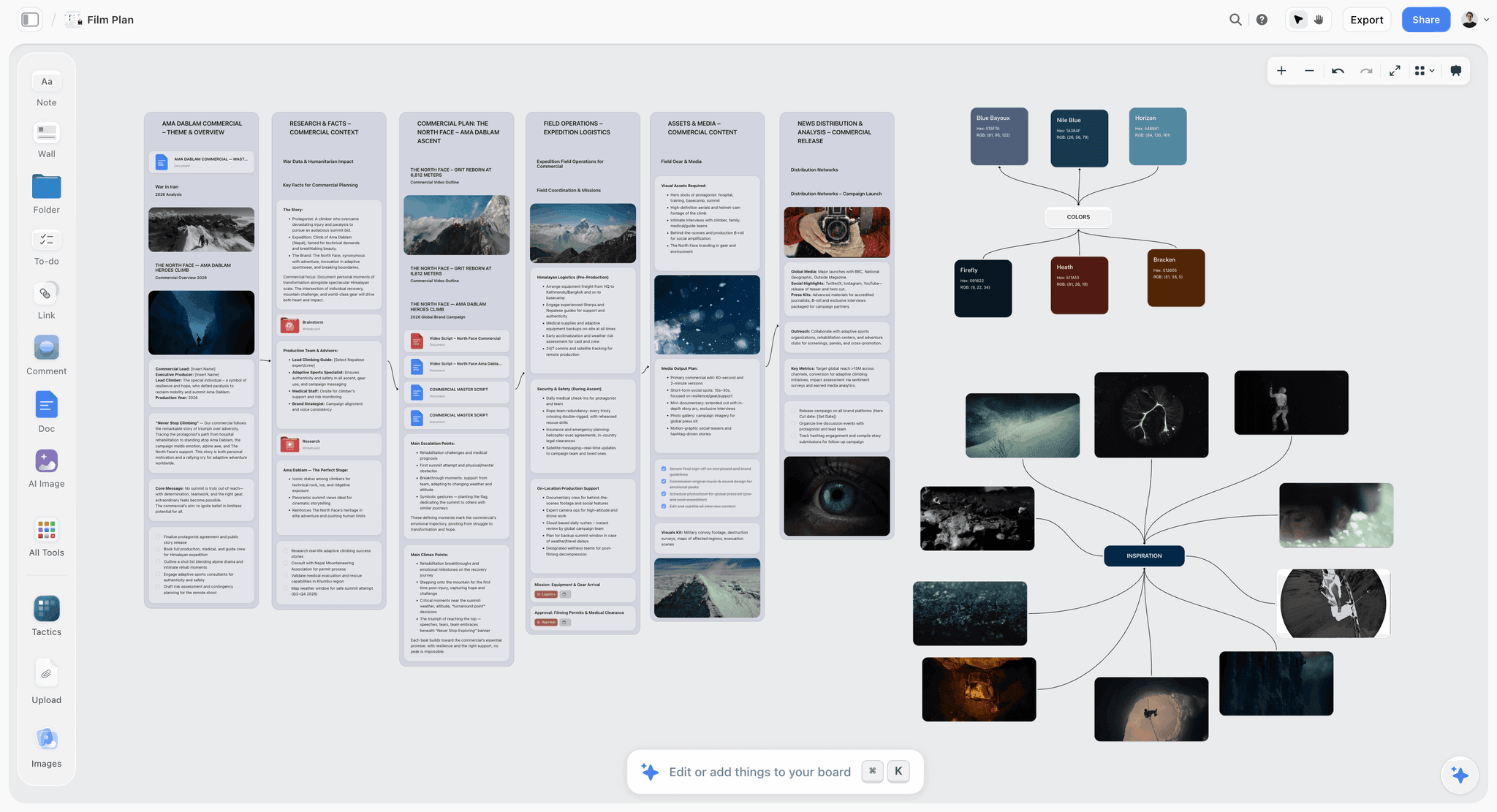
The lead-time list and the reasoning behind script changes, held where the production can find them
Do a pass purely for what the script implies
A scene reading "they arrive at the party" implies extras, dressing, music that may need clearing and possibly a licence. None of it appears as a noun, and a breakdown that only tags nouns misses the most expensive surprises.

How We Evaluated These Tools
Four criteria:
- Script linkage. Whether the breakdown derives from the script and stays tied to it, since that removes a whole class of transcription error.
- Does it drive a schedule? A breakdown that does not become a stripboard has done half its job.
- AI first pass quality, measured by how much of it survived review.
- Cost against an indie production, meaning a short or a low-budget feature with no dedicated scheduler.
Tool Reviews
1. Storyflow

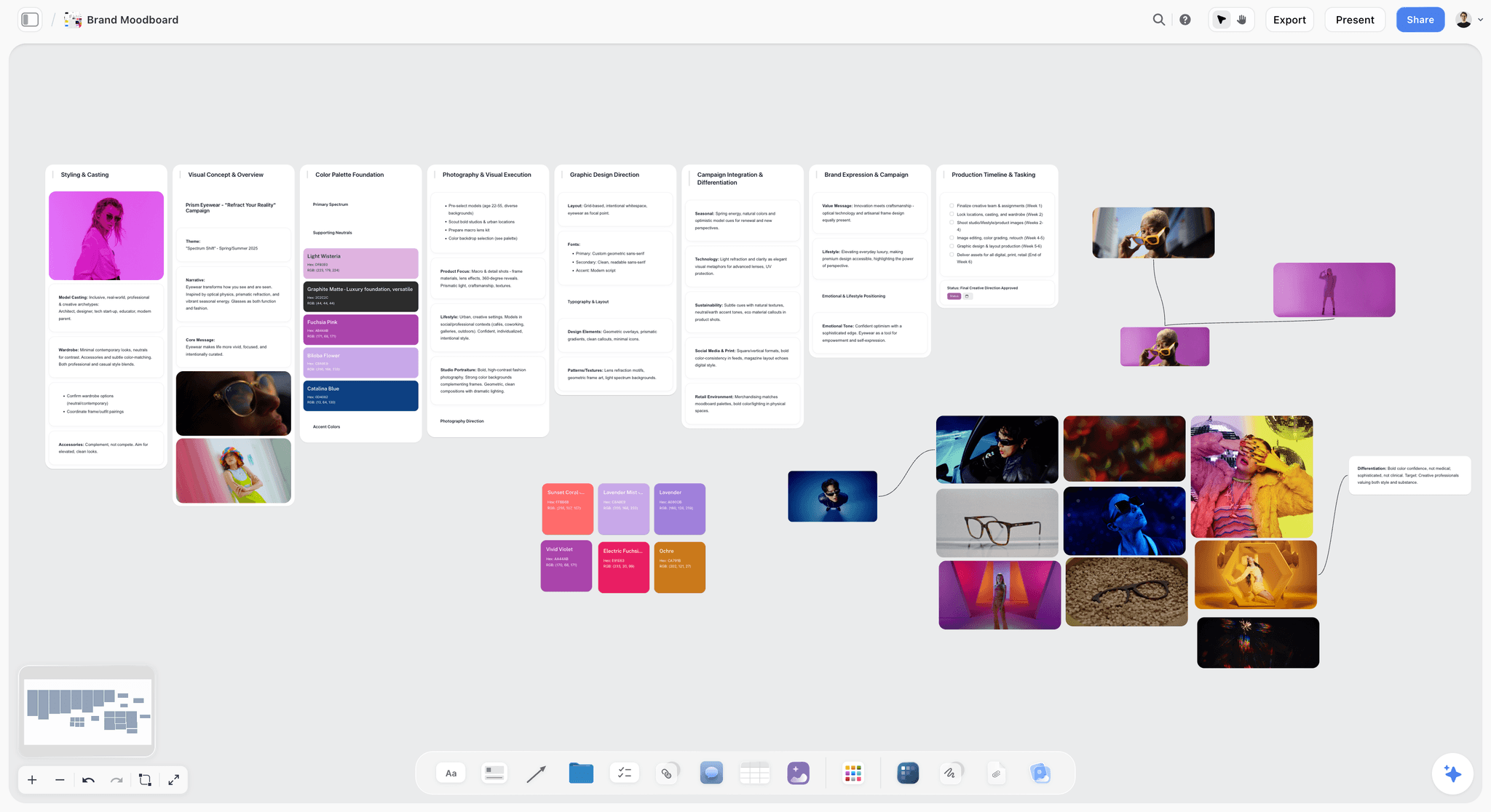
Storyflow is our product. These entries run in workflow order rather than by rank, and it comes first only because it serves the earliest stage. It is not script breakdown software: its AI can build a scene index and breakdown tables (cast, props, wardrobe, vehicles, SFX per scene) and a draft strip board from an attached script, but there is no element tagging inside the script and no scheduling engine, and anyone whose task is breaking down a script should use Celtx, StudioBinder or Filmustage.
Its narrow relevance is the output rather than the process. The lead-time list, the question of what the most expensive thing in the script is and whether it is worth it, and the reasoning behind cutting or changing a scene are decisions that live in an inbox on most productions. Holding them on a board the AI reads in full makes them retrievable. That is a small part of this article's subject.
Storyflow is paid-only during early access; its Free plan launches before the end of 2026, and anyone a paid member invites to a board joins free now.
Pricing: Plus $7.99 per month billed annually ($9.99 monthly); Pro $14; Max $39.
Pros: holds the lead-time list and the reasoning behind script changes; flat per-account pricing.
Cons: no script import, tagging, stripboard or schedule. It does not break down a script.
2. Celtx
The strongest script-first option and the best value. The breakdown derives from the script itself, so the schedule and the script cannot disagree about what is in scene fourteen, and that linkage removes real errors rather than saving keystrokes. Budgeting is genuinely good, which matters because the breakdown's output is a budget.
Weaker for unscripted, and its interface shows its age.
Pricing: Free tier; paid from around $15 per month.
Pros: true script-to-breakdown-to-schedule linkage; good budgeting; cheapest serious option.
Cons: poor fit for unscripted; dated in places; weaker mobile than StudioBinder.
3. StudioBinder
Nearly as strong on breakdown and better at everything after it: call sheets, shot lists, contacts and a mobile view that works on the day. If the breakdown is one step in a production you are also running, this is the better purchase.
More expensive, and its budgeting is thin enough that most users keep a spreadsheet.
Pricing: Free tier; paid from $29 per month, commonly used tier around $42.
Pros: breakdown linked to schedule, shot lists and call sheets; excellent mobile; low setup.
Cons: most expensive of the three suites; weak budgeting; tight free tier.
4. Movie Magic
Not primarily a breakdown tool and the standard for what the breakdown produces. Import the breakdown and it will build the stripboard and day-out-of-days better than anything else. On funded work where a line producer receives your schedule, this is what they expect.
Professional pricing and a real learning curve.
Pros: the standard stripboard and day-out-of-days; what the industry reads.
Cons: licence cost; steep learning curve; nothing after the desk.
5. Filmustage
An AI first pass that genuinely saves hours on a feature-length script by tagging elements automatically. Treat its output as a draft: it is good at nouns and weak at implications, which is exactly the seventh pass this article says catches the most expensive surprises.
Pricing: from around $20 per month.
Pros: real time saving on long scripts; fast; good at explicit elements.
Cons: output needs full review; misses implied elements; another subscription.
6. Yamdu
Breakdown inside a whole-production model, which pays off across a long shoot and costs setup time on a short one. Strong on documents and paperwork status.
Pricing: from around $20 per month.
Pros: breakdown connected to cast, locations and documents; strong across long productions.
Cons: setup cost; excessive for a short.
7. Google Sheets
Under about twenty scenes, genuinely sufficient. A sheet with a row per scene and a column per element category does the job, and it is free and editable by everyone. Above that it stops scaling, because the cross-referencing a schedule needs becomes manual.
Pricing: free.
Pros: free; universal; fine at small scale.
Cons: no script linkage; no schedule; manual cross-referencing.
8. Highlighters and paper
The traditional method, and worth doing once properly if you have never broken down a script, because it teaches the passes in a way software hides. Slow, unsearchable, and not how you would run a real production twice.
Pros: teaches the process; no software; forces you to read.
Cons: slow; unsearchable; nothing downstream.
Unscripted and Documentary
There is no script, and the exercise still applies in a modified form.
Break down the plan rather than the script. What are you shooting, where, with whom, and what does each require?
The lead-time list matters more, not less. Access, permissions, releases, travel and specialist equipment all have clocks, and documentary schedules are usually more fragile because they depend on other people's availability.
Tag the contingency. For each planned sequence, what happens if it does not occur. On documentary this replaces the props column and it is the more useful list.
The four questions still work. How many days, what does it cost, what has a long lead time, and what is the single most expensive thing here. The last one on documentary is frequently travel, and asking early sometimes changes the film.
The Bottom Line
The breakdown's job is a schedule, a budget and a lead-time list, so work backwards from those. Do single-category passes rather than one pass for everything, and always finish with a pass for what the script implies rather than states. Then write the list of everything with a lead time longer than your prep, and start those the same day, because a permit that takes six weeks does not care what your schedule says.
FAQ: Script Breakdown
What is a script breakdown?
Converting a script into a complete list of everything that must be bought, booked, built or borrowed, organised by scene and by element category. Its output is not the tagged script but three things: an honest schedule, an honest budget, and the list of items whose lead time is longer than your prep. That third list is the reason to break down a script early rather than thoroughly.
What are the script breakdown element categories?
Eleven standard ones: cast, background and extras, stunts, vehicles, props, wardrobe, makeup and hair, special effects, visual effects, animals, and sound or music requiring clearance. Most productions add set dressing, locations and non-standard equipment. Props should be split into hired, bought and made, because made runs on a different and less forgiving clock.
How do you do a script breakdown properly?
In multiple single-category passes rather than one pass looking for everything, because attention does not distribute and a single pass finds roughly seventy percent. Read once for story with no tagging, then cast and background, then locations, then props and wardrobe together, then the specialist pass, then visual effects and clearance, and finally a pass purely for what is implied but not written.
What gets missed most often in a breakdown?
Everything implied rather than written. A scene that says "they arrive at the party" implies extras, background music that may need clearing, set dressing and possibly a licence, and none of those appear as nouns in the script. That final implication pass catches the most expensive surprises, and a breakdown that only tags nouns misses them entirely.
What is the best script breakdown software?
Celtx for script-first work, because the breakdown derives from the script and stays tied to it, and it is the cheapest serious option with good budgeting. StudioBinder if the breakdown is one step in a production you are also running, since call sheets and shot lists stay linked. Filmustage for an AI first pass on a feature, reviewed rather than trusted. A spreadsheet below about twenty scenes.
Can AI do a script breakdown?
For a first pass, usefully, and Filmustage is the established option. It is good at explicit nouns and weak at implications, which is the category that costs the most, so treat the output as a draft rather than a result. On a feature-length script it saves real hours; on a short it saves less than the review takes.
Does Storyflow do script breakdown?
Only as a draft. Storyflow's AI builds a scene index and breakdown tables from an attached script and can lay the scenes out as a strip board, but there is no element tagging inside the script and no scheduling engine, so this article recommends Celtx, StudioBinder or Filmustage for the breakdown itself. Its narrow relevance is holding the lead-time list and the reasoning behind script changes, which are outputs of the breakdown rather than part of doing one.
Is Storyflow free?
Not during early access. It is paid-only today from $7.99 per month billed annually on Plus, and its Free plan launches before the end of 2026. Anyone a paid member invites to a board signs up free and can invite others, which covers a producer and a director working on the same planning board.
What has the longest lead time in a production?
Permits and licences, commonly six weeks and sometimes longer, with a real possibility of refusal. Then anything made rather than hired, which has both a lead time and the risk that it does not work. Then music clearance, which can fail outright. All three are found in the specialist pass and all three should be started the day the breakdown identifies them.
How do you know when a breakdown is finished?
When someone can answer four questions without opening the script: how many shooting days this is, roughly what it costs, what has a lead time longer than your remaining prep, and what the single most expensive thing in the script is and whether it is worth it. If any of those is unanswerable, the breakdown is incomplete regardless of how thoroughly it is tagged.
What is page length in eighths and why does it matter?
Scenes are measured in eighths of a page, and it is the unit a schedule is built from. It matters because estimating a day's work in scenes rather than pages is how a day ends up with eleven setups and daylight for eight. Two short scenes and one four-page scene are not comparable units, and only the page measure makes them so.
Do documentaries need a breakdown?
Yes, in modified form. Break down the plan rather than the script: what you are shooting, where, with whom, and what each requires. The lead-time list matters more because access, permissions and releases depend on other people. Add a contingency column for what happens if a sequence does not occur, which replaces the props column and is the more useful list.
Table of Contents
- Article Metadata
- Breadcrumb
- Table of Contents
- Key Takeaways
- What a Breakdown Is Actually For
- The Eleven Element Categories
- The Pass Order
- The Two Categories That Break Small Productions
- Scene-Level Data
- The Four Questions a Finished Breakdown Answers
- 8 Tools for Script Breakdown
- How We Evaluated These Tools
- Tool Reviews
- 1. Storyflow
- 2. Celtx
- 3. StudioBinder
- 4. Movie Magic
- 5. Filmustage
- 6. Yamdu
- 7. Google Sheets
- 8. Highlighters and paper
- Unscripted and Documentary
- The Bottom Line
- Author
- FAQ: Script Breakdown
- Related Reading
Templates to check out for this topic


Templates you can use in Storyflow
Every Storyflow board starts from real structure and an AI that reads the whole canvas. Open one of these templates and make it yours.


See Storyflow in Action
A visual AI workspace where every feature lives inside one canvas. No tab-switching, no context lost.
Build your entire board from a single message
Type what you need in the AI chat at the bottom of your canvas. The AI adds cards, headings, and structure directly onto your board.
Use expert frameworks as AI context
Type @ in the AI chat and choose any Tactic. The AI tailors every response to that framework instead of giving generic advice.
Turn your board into a mind map in seconds
Ask the AI to restructure your canvas as a mindmap. It connects your ideas into a visual hierarchy so you can see how everything relates.
Why Storyflow Exists
Storyflow actually began as a personal tool while working on creative and research projects.
We kept running into the same problem: ideas were scattered everywhere: notes, documents, and whiteboards.
Nothing helped us see how everything connected.
So we started building a workspace designed around how ideas actually grow.
→ Read how Storyflow was createdJustkay
Documentary Filmmaker & Founder at Storyflow
Published: 2026-09-02
Extremely simple, seriously capable


See how easy it is to get started
Watch a real project come together, from a blank board to a finished plan, clicked through step by step.
Start creating with AI and become more productive
Transform your creative workflow with AI-powered tools. Generate ideas, create content, and boost your productivity in minutes instead of hours.