The 11 Best Tools for Real Estate Photographers in 2026
At four properties a day, one return visit erases the day's profit. Eleven tools ranked by which of the three causes of a reshoot they prevent.

Category
Photography
Author

Sara de Klein
Head of Product at Storyflow
Topics
2026-08-10
•
17 min read
•
Photography- best tools for real estate photographers
- real estate photography workflow
- Aryeo review
- real estate photo editing workflow
- best tool for planning a photoshoot
- real estate photography turnaround
What are the best tools for real estate photographers in 2026?
Real estate photography is a throughput business wearing a photography business costume, and the number that governs it is brutal: at four properties a day, one return visit erases the day's profit. Aryeo ranks first here because delivery and ordering are where the business actually lives, not the camera. Lightroom ranks second because batch consistency across 40 images per property is the difference between a four hour edit and a ninety minute one. Storyflow ranks fourth, for the agreement layer that prevents the reshoot, and this post is explicit that it is not the centre of this stack.

Full disclosure: Storyflow is our own product and we rank it FOURTH here, behind Aryeo, Lightroom and a scheduling tool. Real estate photography is a throughput business and the load-bearing tools are delivery and editing, neither of which Storyflow touches: it does not book, schedule, deliver, invoice or take payment, does no editing, has no floor plan or tour features, no MLS awareness, and is not mobile-first for a job done from a driveway. It earns its place only on the shot-list agreement that prevents the most avoidable reshoot. We link to every tool so you can judge the fit.
Quick Comparison
These four map to the three failures that force a return visit, plus the largest time cost: delivery, editing, access and coverage.
| Tool | Best For | AI Features | Price |
|---|---|---|---|
| Aryeo | Ordering, delivery and invoicing | Light AI | From ~$50 mo |
| Lightroom | Batch editing at volume | AI masking and denoise | From ~$12 mo |
| Acuity Scheduling | Booking with access details captured | None | From ~$16 mo |
| Storyflow | Coverage agreed before the drive | Canvas-wide context AI | $7.99 mo annual (free plan late 2026) |
Key Takeaways
- A reshoot costs more than the shoot earned. At typical rates and four properties a day, one return drive wipes out the day's margin.
- Three things force a return visit: an access failure, a shot list gap, and a delivery failure that costs you the agent entirely.
- Aryeo ranks first, not Storyflow. Ordering, delivery and agent-facing branding are the business, and a canvas does not touch them.
- Storyflow ranks fourth here, for the shot list agreement that prevents the most preventable of the three failures.
- Turnaround is the product. Agents choose photographers on next-morning delivery far more often than on image quality above a certain floor.
- The access failure is the cheapest to eliminate and the most commonly ignored: a confirmation with the code, the occupancy status and the parking, sent the night before.
- Volume plus fixed pricing means every minute of process improvement compounds across hundreds of shoots a year.
Never drive back for a shot you did not know about
The agent's listing leads on the finished basement and you shot the standard package. Storyflow holds a coverage board per property type plus what this agent said the listing leads on, so the gap is caught before you leave. A supporting tool here, not the centre of the stack.

The Return Visit Is the Whole Problem
Most photography advice optimizes for image quality. Real estate photography is one of the few disciplines where that is the wrong optimization above a fairly low floor.
The economics explain why. A property shoot bills somewhere in the region of $150 to $300 depending on market and package. A working photographer shoots three to five in a day, with drive time between them, and delivers by the next morning.
At four properties a day, one return visit erases the day's profit. Not reduces it. Erases it, once you count the drive, the reshoot, the re-edit and the delay to every other delivery in the queue.
So the discipline's real question is not how to make a better photograph. It is how to never go back.
Three failures force a return.
The access failure. The lockbox code is wrong, the tenant is home and was not told, the dog is loose, the property is not ready, the parking is impossible and you lose forty minutes. This is the most common and the cheapest to eliminate, and almost nobody has a system for it.
The shot list gap. You shoot the standard package. The agent wanted the finished basement, the new roof, or the view from the primary bedroom, because that is what the listing copy leads on. Neither of you discussed it, and the gap is discovered when the agent writes the listing.
The delivery failure. You miss the turnaround. The agent has a listing going live and no photographs, and they will not make that mistake twice. Turnaround is the product, and agents choose on it far more often than on quality once you clear a basic standard.
The 11 tools below are ranked by which failure they prevent.
At a Glance: The 11 Tools Compared
| Tool | Best for | Failure it prevents | Shape |
|---|---|---|---|
Aryeo | Ordering, delivery and the agent-facing brand | Delivery | Real estate media platform |
Lightroom | Batch editing 40 images per property consistently | Delivery | Photo editing |
Acuity Scheduling | Booking with the access details captured up front | Access | Scheduling |
Storyflow | The shot list agreed before the drive | Shot list gap | AI canvas |
CubiCasa | Floor plans from a phone scan during the walkthrough | Shot list gap | Floor plan scanning |
Matterport | 3D tours as a higher value package tier | None directly | 3D capture |
Photoshop | Sky replacement and the fixes Lightroom cannot | Delivery | Image editing |
Airtable | The job pipeline and per-property profitability | Delivery | Database |
PhotoPills | Knowing when the light hits the front of the house | Access | Planning utility |
Dropbox | Raw archive and overflow delivery | Delivery | File storage |
Canva | Marketing to agents, which is the growth channel | None directly | Design |
How I Ranked These
I shoot documentary rather than property, so my relevant experience is the logistics half: scheduled access to locations I do not control, fixed turnaround, and the specific misery of realizing on the drive home that I did not get a shot somebody needed. Over the last two years I have run real workflows through every tool here and modelled the economics against published market rates.
Five criteria, in order.
1. Does it prevent a return visit? The only criterion that maps directly to profit in this discipline.
2. Does it save minutes per property at volume? A three minute saving per property, across 500 properties a year, is 25 hours. Small process wins compound here in a way they do not in low volume photography.
3. Does it make you easier to book than the competition? Agents are choosing on convenience and reliability, and friction in ordering loses work you never hear about.
4. Does it work from a phone, on site, quickly? Anything requiring a laptop in a driveway will not be used.
5. Does it scale to a second shooter? The growth path in this business is adding capacity, and tools that only work solo cap the business.
Pricing is as of August 2026 and changes frequently. Verify with each vendor.
Quick Picks by Job Type
- Best overall business platform: Aryeo. Ordering, delivery, branded galleries and invoicing in one place.
- Best editing: Lightroom. Batch consistency at volume, with AI masking that has genuinely changed the arithmetic.
- Best booking: Acuity. Capture the access details at the moment of booking, not the morning of.
- Best shot list agreement: Storyflow. Agreed coverage before the drive, per property type.
- Best floor plans: CubiCasa. A phone scan during the walkthrough becomes a deliverable.
- Best premium tier: Matterport. Where the higher margin packages come from.
- Best light planning: PhotoPills. Eleven dollars, and it tells you when the front elevation is lit.
1. Aryeo
The verdict. The business platform. Ordering, delivery and the agent relationship all live here, and none of them live in a camera.
Best for. Running the whole client facing side of a property media business.
Pricing. Plans typically start around $50 to $150 per month depending on volume and features, as of August 2026, with per property options.
Why it ranks here. Real estate photographers lose work to friction far more often than to quality. An agent with a listing going live on Thursday wants to book in ninety seconds, know the price, and receive a link they can forward.
Aryeo covers that end to end: a branded ordering page, scheduling, delivery of photos, video, floor plans and tours in one gallery, invoicing, and agent facing marketing kits. The gallery being branded to you rather than to a generic file host is a real acquisition advantage, because agents forward it and other agents see it.
For the delivery failure specifically it removes the manual assembly step, which is where turnaround usually slips: not the editing, but the twenty minutes of packaging and sending per property.
It ranks first, above our own product, because this is the business. A canvas does not take orders, deliver files or get you paid.
Strengths.
- Ordering, scheduling, delivery and invoicing in one system.
- Branded galleries that agents forward, which drives referral.
- Handles the full media mix including video, floor plans and tours.
- Removes the packaging step where turnaround slips.
Limitations.
- Real monthly cost that needs volume to justify.
- Strongly oriented to the US market, with less fit elsewhere.
- Another platform to migrate to if you already have a delivery flow.
- Does nothing for capture or editing.
The trade off. Above roughly fifteen properties a month this pays for itself in retained agents and recovered admin time.
2. Lightroom
The verdict. Where the hours actually go, and where AI has changed the arithmetic most.
Best for. Batch editing 30 to 50 images per property with consistent results.
Pricing. Photography plans start around $12 to $15 per month as of August 2026.
Why it ranks here. Editing is the single largest time cost in this business. Four properties at 35 images each is 140 images a day, every day, and the difference between a good and a bad editing workflow is measured in hours per day rather than minutes.
The mechanisms that matter are unglamorous. Presets and sync across a shoot mean you edit one image and apply it to the set. Lens and perspective corrections handle the vertical convergence that wide interiors always produce. AI masking selects windows and skies in seconds, which is the specific tedious task in property work.
Denoise also matters more here than in most disciplines, because interiors are frequently shot at higher ISO to balance ambient and window light.
Strengths.
- Batch sync across a property set is the core time saving.
- AI masking handles windows and skies fast.
- Perspective correction fixes the characteristic interior problem.
- Cheap relative to its impact.
Limitations.
- Subscription only.
- Cloud storage fills quickly with raw property files.
- Cannot do sky replacement or object removal well, which is Photoshop's job.
The trade off. The single best value subscription in this stack. Build your presets once, properly.
3. Acuity Scheduling
The verdict. The cheapest fix for the most common failure, and almost nobody uses it this way.
Best for. Booking that captures access details before you drive anywhere.
Pricing. Plans start around $16 to $20 per month as of August 2026, with a free trial. Calendly and similar are comparable.
Why it ranks here. The access failure is the most preventable thing in this article and it is prevented by a form field, not by software cleverness.
Make the booking form require, before it can be submitted: the lockbox or access code, whether the property is occupied, whether pets will be present, parking guidance, and who to call if something is wrong on arrival. Then send an automated reminder the night before restating all of it and asking the agent to confirm the property is photo ready.
That single automation eliminates a large share of wasted trips, and the cost is one afternoon of setup and about twenty dollars a month.
It ranks third because it does one thing, and because that one thing is the highest ratio of profit protected to money spent on this page.
Strengths.
- Required fields capture access details at booking rather than at 8am.
- Automated night before reminders prompt the agent to confirm readiness.
- Buffer times account for drive time between properties automatically.
- Reduces the booking friction that loses work.
Limitations.
- Overlaps with Aryeo's scheduling if you run that.
- Agents will occasionally still enter the wrong code.
- Another subscription unless bundled.
The trade off. If you run Aryeo, use its scheduling and skip this. If you do not, this is the highest return twenty dollars here.
4. Storyflow
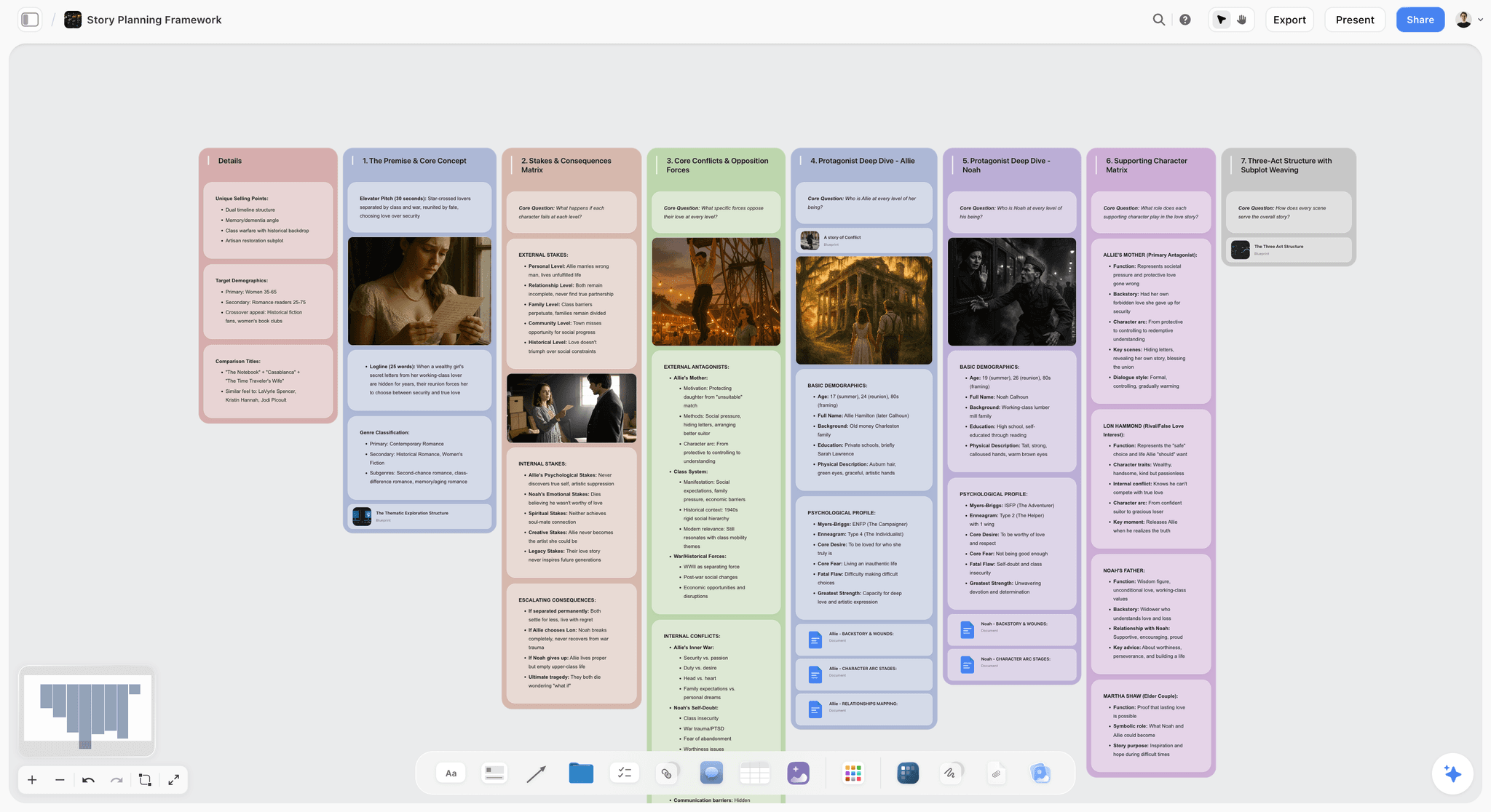
The verdict. The shot list agreement, which prevents the one return visit that is entirely your fault.
Best for. Agreeing coverage per property type before the drive, and defending it afterward.
Pricing. Paid only early access today. Plus is $7.99 per month billed annually or $9.99 monthly, with 200 plus Blueprint Tactics and unlimited file uploads. Pro is $14 per month billed annually or $19 monthly, adding AI image generation, roughly twenty times more AI usage and memory across conversations. Max is $39 per month billed annually or $49 monthly, adding Team Workspace with permissions and roles. Pricing is flat per account rather than per seat, and anyone a paid member invites joins free. The Free plan launches before the end of 2026.
Why it ranks here, and why it is fourth. Let me be straight, because a canvas tool in a real estate photography ranking needs justifying. Storyflow does not take bookings, does not edit, does not deliver files and does not get you paid. Aryeo and Lightroom are the load bearing tools in this business and they are ranked above it for that reason.
What it addresses is the shot list gap, which is the failure mode where the return visit is unambiguously your responsibility. The agent's listing leads on the finished basement, and you shot the standard package.
The practical form is a coverage board: one region per property type, meaning condo, single family, luxury, new build, each with the standard shot list, plus a per property note capturing what this agent said the listing leads on. Because Storyflow's AI reads your full active canvas board by default, plus up to one Tactic and up to three Documents you @-mention, you can ask the board what this property needs beyond standard before you leave, which takes ten seconds and is the entire mechanism.
The second use is package definition. Photographers in this market compete on package clarity, and having the tiers, their contents and the reasoning in one place makes the up sell conversation concrete rather than improvised.
Flat per account pricing also matters if you run second shooters, since they join free rather than each needing a seat.
Strengths.
- Coverage boards per property type, with per property exceptions captured.
- Whole board AI answers what this property needs beyond standard.
- Second shooters join free on a flat per account plan.
- Package definitions and their reasoning stay in one place.
Limitations.
- Does not book, schedule, deliver, invoice or take payment. Aryeo does all of it.
- No editing capability whatsoever.
- No floor plan, tour or virtual staging features.
- No MLS awareness or compliance checking.
- Not a mobile first tool, and this job is done from a phone in a driveway.
- Newer platform, so no real estate specific templates.
The trade off. This is a supporting tool in this discipline, not the centre. If you buy one thing from this page, it should be Aryeo or Lightroom.
5. CubiCasa
The verdict. A phone scan during the walkthrough becomes a deliverable you can charge for.
Best for. Floor plans without measuring anything.
Pricing. Roughly $10 to $30 per floor plan, with subscription options, as of August 2026.
Why it ranks here. Floor plans materially affect listing engagement and used to require either a measuring visit or a separate specialist. CubiCasa turns a five minute phone walkthrough into a professional floor plan delivered within hours.
For this business the important property is that it happens during the visit you were already making, at almost no marginal time cost, and it is billable. That is close to free margin.
It ranks fifth because it is one deliverable rather than a system, but it is one of the few genuinely new capabilities in this market in recent years.
Strengths.
- Five minute scan during the shoot you are already doing.
- Adds a billable deliverable at near zero marginal time.
- No measuring equipment required.
- Fast turnaround.
Limitations.
- Per plan cost eats into the margin unless priced correctly.
- Accuracy is good but not survey grade.
- Requires a reasonably recent phone.
The trade off. Add it to the package and price it. It is the easiest up sell in the discipline.
6. Matterport
The verdict. The premium tier, and the reason some photographers have double the average order value.
Best for. 3D tours as a higher margin package.
Pricing. Software plans from roughly $10 to $70 per month, with camera hardware from several hundred to several thousand dollars, as of August 2026.
Why it ranks here. Photography is commoditizing in this market. Tours are the most reliable way to raise average order value, and they are what distinguishes a photographer from a media provider in an agent's mind.
The economics need care: hardware cost, the extra time on site, and hosting fees per active model. It works when your market has enough higher value listings to sustain the premium, and it does not work in markets where agents will not pay for it.
It ranks sixth because it is a business model decision rather than a workflow improvement.
Strengths.
- Materially raises average order value where the market supports it.
- Differentiates against photography only competitors.
- Well recognized brand that agents ask for by name.
Limitations.
- Real hardware cost and ongoing hosting fees.
- Adds significant time on site.
- Market dependent, and does not sell everywhere.
- Phone based competitors are cheaper if lower quality.
The trade off. Model the numbers for your specific market before buying hardware.
7. Photoshop
The verdict. For the fixes Lightroom cannot do, chiefly sky replacement.
Best for. Sky replacement, object removal and window pulls.
Pricing. Photography plans from roughly $12 to $15 per month bundled with Lightroom, as of August 2026.
Why it ranks here. Sky replacement is close to standard practice in this market, since exterior shots are frequently made in whatever weather the schedule provides. Photoshop's automated sky replacement handles it in seconds with acceptable results.
Object removal matters too: the bin, the car, the estate agent's own sign in a reflection.
The disclosure question is real and worth stating. Sky replacement is broadly accepted; removing or adding permanent features is a misrepresentation issue in many jurisdictions, and photographers should know where their market draws the line and keep an unedited original.
Strengths.
- Automated sky replacement is fast and convincing.
- Object removal handles the recurring annoyances.
- Bundled with Lightroom at no extra cost.
Limitations.
- Slower per image than Lightroom, so use it selectively.
- Editing permanent features raises real misrepresentation issues.
- Steeper learning curve.
The trade off. Use it for skies and clutter. Keep the unedited originals.
8. Airtable
The verdict. Where you find out which agents are actually profitable.
Best for. Job pipeline and per property profitability tracking.
Pricing. Free tier available. Paid from roughly $20 per seat per month billed annually as of August 2026.
Why it ranks here. Volume businesses hide their unprofitable work. The agent who books constantly but is always forty minutes late, or whose properties are never ready, or who requests three rounds of re-edits, is frequently the one the photographer thinks of as their best client.
A jobs table with property, agent, drive time, time on site, edit time and revenue reveals the actual picture, and the answer is usually surprising. Two or three sessions of honest logging is enough to see the pattern.
It ranks eighth because it is a management tool rather than an operational one, and because Aryeo already covers some of it.
Strengths.
- Surfaces which agents are actually profitable.
- Simple pipeline view of what is shot, edited and delivered.
- Free tier is sufficient for a solo operator.
Limitations.
- Requires disciplined logging that many will not sustain.
- Overlaps with Aryeo's job tracking.
- Not operational, so it does not save time directly.
The trade off. Log honestly for one month. The result usually changes who you chase.
9. PhotoPills
The verdict. Eleven dollars to know when the front of the house is lit.
Best for. Scheduling exteriors for the light that actually flatters them.
Pricing. One time purchase of roughly $11 as of August 2026.
Why it ranks here. A front elevation facing north is in shade all day, and a west facing house photographed at 9am has a flat, dead facade. Knowing this before scheduling means you either book the right time or set the agent's expectations.
For a business scheduling four properties a day, being able to sequence the route so exteriors land when their elevations are lit is a genuine quality improvement that costs nothing per shoot.
Strengths.
- Sun position for any address, date and time.
- Lets you sequence a day's route by elevation and light.
- One time purchase.
Limitations.
- Mobile only with a learning curve.
- Route optimization is manual.
- Irrelevant for interiors.
The trade off. Eleven dollars once, and it improves the exteriors that sell the listing.
10. Dropbox
The verdict. The archive, and the delivery fallback.
Best for. Raw archive and any delivery your main platform does not cover.
Pricing. Free tier with limited storage. Paid from roughly $12 per user per month as of August 2026.
Why it ranks here. Raw property files accumulate fast and there is a real reason to keep them: properties relist, agents come back a year later wanting the same images, and having the originals turns a reshoot into a re-export.
It also covers delivery for anything outside your main platform, and for agents who insist on a plain folder.
Strengths.
- Reliable, universal, and agents already have it.
- Keeping raws turns future requests into re-exports.
- Simple sharing without onboarding anyone.
Limitations.
- Storage costs climb quickly with raw files.
- No branding, so it undercuts the professional impression a gallery gives.
- No ordering or invoicing.
The trade off. Archive here, deliver through something branded.
11. Canva
The verdict. Marketing to agents, which is the actual growth channel.
Best for. Agent facing marketing and the social assets agents want with their listing.
Pricing. Free tier available. Pro roughly $15 per month for one person as of August 2026.
Why it ranks here. Real estate photography grows through agent relationships, and the photographers who grow fastest give agents something extra: a branded social carousel of the listing, a just listed graphic, a video snippet formatted for their feed.
That is minutes of work in Canva and it makes the agent look good, which is the thing that generates referrals in this market.
Strengths.
- Fast agent facing assets that drive referral.
- Templates make it repeatable per listing.
- Free tier is sufficient.
Limitations.
- Nothing to do with capture or delivery.
- Template look is recognizable.
- Adds a step per property unless templated.
The trade off. Build three templates once, and include them in the package as a differentiator.
What to Actually Pay For
Pay for delivery and ordering first. Aryeo or an equivalent is the load bearing subscription, because agents choose on convenience and turnaround, and the packaging step is where turnaround slips. This is the tool that protects revenue.
Pay for Lightroom, obviously. It is where the hours go, and building a proper preset library once is worth more than any other single afternoon of work in this business.
Do not buy Matterport hardware speculatively. It is a business model change rather than a tool purchase, and it only works in markets whose agents will pay the premium. Model your specific market first.
Tools to Avoid for This Job
A booking process with no required access fields. The access failure is eliminated by a form field and a night before reminder, and photographers who skip this absorb wasted trips as a cost of doing business when it is not one.
Generic file transfer as the delivery mechanism. It works, it is unbranded, and it removes the referral loop that a branded gallery creates.
Editing each image individually. At 140 images a day this is the difference between finishing at 7pm and finishing at 11pm, and the fix is presets and sync rather than more speed.
Removing permanent features in post. Sky replacement is broadly accepted; editing out a pylon, a neighbouring building or a structural issue raises misrepresentation exposure in many jurisdictions. Know your market's line and keep the originals.
What No Tool on This List Does
None of them will fix an unready property. If the agent has not had the vendor tidy, the shoot will underperform and no editing recovers it, which is why the night before confirmation matters more than any capture tool.
None of them will make a commoditized market pay more. Where every photographer charges the same, the escape route is a different package, meaning tours, floor plans and video, rather than better photographs.
None of them, including Storyflow, will capture a requirement the agent never mentioned. The coverage board prompts the question; somebody still has to ask what the listing leads on, and it takes fifteen seconds on the booking call.
The Bottom Line
Real estate photography rewards process over craft above a fairly low quality floor, because the economics are set by throughput and one return visit erases a day.
Buy the delivery platform, because agents choose on convenience and turnaround and that is where you lose work you never hear about. Build a proper Lightroom preset library in one focused afternoon. Put required access fields on your booking form and automate the night before confirmation, which is the cheapest profit protection available anywhere in this article.
Storyflow sits fourth here deliberately. Its job is narrow: making sure the coverage was agreed before you drove, so the one avoidable reshoot does not happen. That is worth having and it is not the centre of this stack, and a ranking that claimed otherwise would not survive a week of real shooting.
FAQ: Tools for Real Estate Photographers
What is the best software for real estate photographers?
Aryeo or a comparable real estate media platform ranks first, because ordering, delivery, branded galleries and invoicing are where the business actually lives and where turnaround usually slips. Lightroom is second because batch editing at volume is the largest time cost. Storyflow ranks fourth for the shot list agreement that prevents the most avoidable kind of return visit, and it is explicitly a supporting tool here rather than the centre of the stack.
How do real estate photographers avoid reshoots?
By eliminating the three causes separately. Capture access details as required fields at booking and send a night before confirmation, which removes most wasted trips. Ask on the booking call what the listing will lead on and add it to a coverage list, which removes the shot list gap. And protect turnaround by automating the packaging and delivery step, which is where deadlines usually slip.
How much time should editing take per property?
Aim for under thirty minutes per property at 30 to 40 images, which is achievable with a well built preset library, batch sync, and selective Photoshop work only where needed. Photographers spending two hours per property are almost always editing images individually rather than syncing a set, and that is a workflow problem rather than a skill problem.
Is Matterport worth it for real estate photography?
Only where the market supports the premium, which varies enormously by area and price bracket. The calculation has to include hardware cost, ongoing hosting fees per active model and the additional time on site, weighed against the increase in average order value. In markets where agents will not pay for tours, floor plans from a phone scan are the better and cheaper differentiator.
What is the best free setup for a starting real estate photographer?
Lightroom is the one unavoidable cost, at around $12 per month. Beyond that, a free scheduling tool with required access fields, Dropbox's free tier for delivery, Canva's free tier for agent marketing, and a spreadsheet for job tracking will run a starting business. Add a proper media platform once volume passes roughly fifteen properties a month.
Should real estate photographers replace skies?
Sky replacement is broadly accepted practice in most markets and is fast in Photoshop. Removing or altering permanent features, such as a pylon, a neighbouring structure or visible damage, is a different matter and raises misrepresentation exposure in many jurisdictions. Know where your local market and association draw the line, and always retain the unedited original.
Does Storyflow replace Aryeo or Lightroom?
No, and this post ranks both above it for that reason. Storyflow does not take bookings, does not edit images, does not deliver files and does not invoice. It holds the coverage boards and package definitions that prevent a shot list gap, which is a real but supporting job in this discipline. If you buy one tool from this list, it should not be this one.
How do you handle agents who are always late or unprepared?
Measure it first, because volume businesses hide unprofitable clients and the agent who books most is frequently the one costing you most. Log drive time, time on site and edit time per job for a month, then decide whether to raise their rate, add a waiting fee, or let them go. The data conversation is much easier than the impression conversation.
What turnaround do real estate agents expect?
Next business morning is the widely expected standard in most markets, and 24 hours is increasingly the ceiling rather than the target. Turnaround matters more to agent retention than image quality once you clear a competent baseline, because a listing going live without photographs is a problem the agent will not risk twice.
Are floor plans worth adding to a package?
Yes, and they are the easiest up sell available, since a phone based scan takes about five minutes during a visit you are already making and delivers within hours. Floor plans measurably affect listing engagement, and the marginal time cost is close to zero, which makes them close to free margin once priced correctly.
How do real estate photographers get more agent clients?
Almost entirely through referral and through making agents look good, which is why branded galleries agents forward and ready made social assets matter more than portfolio work. The single most effective addition for most photographers is giving each agent a set of listing graphics they can post immediately, because that is visible to other agents in their feed.
How do you plan a route for four properties in a day?
Sequence by exterior light rather than by geography alone, since a north facing front elevation is in shade all day and a west facing one is dead at 9am. PhotoPills will tell you when each elevation is lit for the specific address and date. Then add realistic buffers between properties, because a scheduling tool that assumes zero drive time is how the fourth shoot gets rushed.
What is the difference between real estate and architectural photography?
Real estate is a volume business with fixed pricing, next day turnaround and a standard shot package, so process and throughput determine profitability. Architectural photography is low volume and high craft, with lighting setups, longer schedules and much higher day rates, and the tooling reflects that difference completely. Applying architectural standards to real estate work is a reliable way to lose money.
What is the single change worth making this month?
Add required access fields to your booking form, meaning code, occupancy, pets and parking, and set an automated reminder the night before asking the agent to confirm the property is photo ready. It takes an afternoon, costs around twenty dollars a month, and eliminates the most common cause of a wasted trip.
Table of Contents
- Key Takeaways
- The Return Visit Is the Whole Problem
- At a Glance: The 11 Tools Compared
- How I Ranked These
- Quick Picks by Job Type
- 1. Aryeo
- 2. Lightroom
- 3. Acuity Scheduling
- 4. Storyflow
- 5. CubiCasa
- 6. Matterport
- 7. Photoshop
- 8. Airtable
- 9. PhotoPills
- 10. Dropbox
- 11. Canva
- What to Actually Pay For
- Tools to Avoid for This Job
- What No Tool on This List Does
- The Bottom Line
- FAQ: Tools for Real Estate Photographers
- Related Reading
Templates to check out for this topic


Templates you can use in Storyflow
Every Storyflow board starts from real structure and an AI that reads the whole canvas. Open one of these templates and make it yours.


See Storyflow in Action
A visual AI workspace where every feature lives inside one canvas. No tab-switching, no context lost.
Build your entire board from a single message
Type what you need in the AI chat at the bottom of your canvas. The AI adds cards, headings, and structure directly onto your board.
Use expert frameworks as AI context
Type @ in the AI chat and choose any Tactic. The AI tailors every response to that framework instead of giving generic advice.
Turn your board into a mind map in seconds
Ask the AI to restructure your canvas as a mindmap. It connects your ideas into a visual hierarchy so you can see how everything relates.
Why Storyflow Exists
Storyflow actually began as a personal tool while working on creative and research projects.
We kept running into the same problem: ideas were scattered everywhere: notes, documents, and whiteboards.
Nothing helped us see how everything connected.
So we started building a workspace designed around how ideas actually grow.
→ Read how Storyflow was createdSara de Klein
Head of Product at Storyflow
Published: 2026-08-10
Extremely simple, seriously capable


See how easy it is to get started
Watch a real project come together, from a blank board to a finished plan, clicked through step by step.
Start creating with AI and become more productive
Transform your creative workflow with AI-powered tools. Generate ideas, create content, and boost your productivity in minutes instead of hours.