The 12 Best Celtx Alternatives in 2026 (Tested by a Filmmaker)
The best Celtx alternatives in 2026, tested by a filmmaker. 12 tools compared by the Celtx feature they replace, from Storyflow and StudioBinder to WriterDuet, Arc Studio, and the free options.

Category
Filmmaking
Author

Justkay
Documentary Filmmaker & Founder at Storyflow
Topics
2026-07-10
•
16 min read
•
Filmmaking- best Celtx alternatives 2026
- Celtx alternative
- Celtx vs StudioBinder
- free Celtx alternative
- Celtx replacement
- alternatives to Celtx
What are the best Celtx alternatives in 2026?
The best Celtx alternatives in 2026 are Storyflow (best for AI-powered creative pre-production), StudioBinder (best for production management), WriterDuet (best for collaborative scriptwriting), and Arc Studio (best modern script-and-structure tool). Celtx pioneered the all-in-one browser suite for filmmakers, bundling scriptwriting, breakdown, scheduling, and storyboards. But most people leave Celtx for the same reason: each module is shallower than a dedicated tool, the free tier keeps shrinking, and there is no real AI. This guide maps the best replacement for each thing Celtx does. Storyflow leads because it does the creative pre-production half with an AI that reads your whole board. The short version: Celtx tries to do five jobs in one suite, and each is lighter than a specialist. Call the cost the Suite Tax: the depth, AI, and modern workflow you hand over in exchange for one login. This guide breaks Celtx into its parts and names the best alternative for each, so you stop paying the tax on parts you never use.

Full disclosure: Storyflow is our own product and we list it first for the creative pre-production half of what Celtx does; it is neither a script formatter nor a scheduling engine. StudioBinder leads for the production half of Celtx, with deeper breakdown, call sheets, and scheduling than Celtx ever offered. WriterDuet and Arc Studio are stronger, more modern screenwriters than Celtx's script module. Storyflow earns its place for the creative pre-production half, where its canvas AI reads your whole board of story, references, and structure, but it has no script formatting and no scheduling engine (its strip board and call sheet are drafts it does not send or track), so you pair it with a dedicated screenwriter. We link to every tool so you can judge the fit.
Quick Comparison
These four cover what people actually leave Celtx for: production management, collaborative scriptwriting, AI creative pre-production, and modern script structure.
| Tool | Best For | AI Features | Price |
|---|---|---|---|
| StudioBinder | Production management | Assisted breakdown | Free tier / ~$29 mo |
| Storyflow | Creative pre-production canvas | Canvas AI reads the whole board | $7.99 mo annual (free plan late 2026) |
| WriterDuet | Collaborative scriptwriting | AI outline | Free / paid |
| Arc Studio | Modern script and structure | Story maps | Free / ~$99 yr |
All 12 Celtx Alternatives, Ranked
- Storyflow: best for AI-powered creative pre-production (9.4/10)
- StudioBinder: best for production management and breakdown (9.0/10)
- WriterDuet: best for collaborative scriptwriting (8.8/10)
- Arc Studio: best modern script-and-structure tool (8.6/10)
- Final Draft: best for industry-standard scriptwriting (8.4/10)
- Yamdu: best full production platform (8.2/10)
- Fade In: best affordable professional scriptwriter (8.1/10)
- Milanote: best for visual pre-production (7.9/10)
- Boords: best for storyboarding (7.7/10)
- Gorilla: best for scheduling and budgeting (7.5/10)
- Trelby: best free scriptwriting (7.3/10)
- Beat: best free Mac scriptwriting (7.1/10)
Comparison Table: 12 Celtx Alternatives Compared
| Tool | Replaces (Celtx feature) | Starting Price | Free Option | AI | Rating (/10) |
|---|---|---|---|---|---|
Storyflow | Creative pre-production | $7.99/mo (annual) | Coming late 2026 (invited collaborators join free now) | Canvas AI | 9.4/10 |
StudioBinder | Breakdown and scheduling | ~$29/mo | Yes | Assisted | 9.0/10 |
WriterDuet | Scriptwriting | Free / paid | Yes | Outline | 8.8/10 |
Arc Studio | Script and structure | ~$99/yr | Yes | Story maps | 8.6/10 |
Final Draft | Scriptwriting | ~$199 (one-time) | Trial | Beat Board | 8.4/10 |
Yamdu | Production management | ~$25/mo | Trial | Partial | 8.2/10 |
Fade In | Scriptwriting | ~$79.95 (one-time) | Demo | Outlining | 8.1/10 |
Milanote | Visual pre-production | Free tier | Yes | No | 7.9/10 |
Boords | Storyboards | ~$15/mo | Trial | No | 7.7/10 |
Gorilla | Scheduling and budgeting | Tiered | Trial | No | 7.5/10 |
Trelby | Scriptwriting | Free | Yes | No | 7.3/10 |
Beat | Scriptwriting | Free | Yes | No | 7.1/10 |
Pricing changes often. Confirm current pricing on each site. Ratings reflect how well each tool replaces the Celtx feature people actually use.
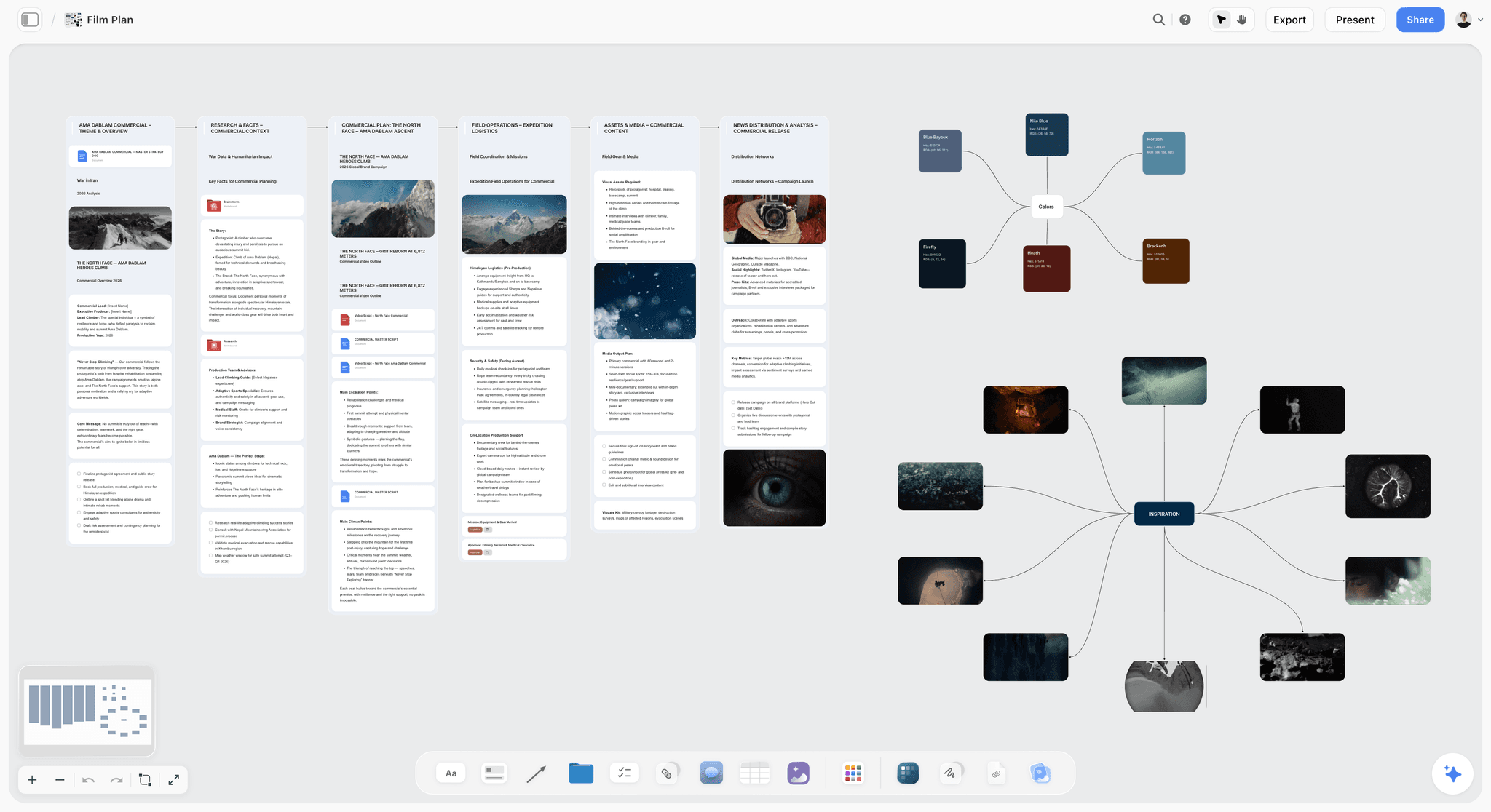
Storyflow canvas replacing Celtx's creative pre-production with an AI that reads the whole board
Replace Celtx's creative half with an AI canvas
Storyflow gives you the AI canvas Celtx lacks: story, references, and pre-production planning on one board the AI reads, with blueprints for structure and a generous free plan. Pair it with a dedicated screenwriter and production tool.

Why People Leave Celtx
Celtx deserves credit: it made an all-in-one filmmaking suite accessible in the browser, and it is still a reasonable choice for students and small teams on a budget. But there are consistent reasons filmmakers look for alternatives, and they all trace back to the same tradeoff.
The all-in-one saves you tabs and charges you depth. That is the Suite Tax in one sentence. You get scriptwriting, breakdown, scheduling, and storyboards behind one login, and in return every module is thinner than the tool built to do only that job. Convenience is real. So is the cost. Here is where you feel it.
Each module is shallow. The script tool is thinner than Final Draft or WriterDuet, the scheduling thinner than StudioBinder, the storyboards thinner than Boords. An all-in-one is only ever as strong as its weakest module, and on a real shoot you tend to live inside the weakest one.
The free tier keeps shrinking. Celtx has repeatedly tightened its free tier, pushing project limits and features behind subscriptions. Users who started free feel squeezed toward paying for a whole suite when they only ever wanted one or two of its parts.
There is no real AI. In 2026, filmmakers increasingly want AI that reads their project and helps with structure, development, and breakdown thinking. Celtx does not offer meaningful AI, and that gap is why many move to a canvas-AI tool for the creative half.
It can feel dated. The suite works, but the interface feels older than modern tools like StudioBinder, Arc Studio, or Storyflow. The Suite Tax compounds here too: a bundle updates five products slowly, where a specialist ships fast on one.
The honest fix is usually not another all-in-one. It is the best tool for the part of Celtx you actually use. If you mostly write, get a real screenwriter. If you mostly manage production, get StudioBinder. If you mostly develop the creative side, get a canvas-AI tool where the story, references, and plan live on one board the AI reads. For the scriptwriting-specific comparison, see the best screenwriting software in 2026.
How We Evaluated These Celtx Alternatives
Every tool here was assessed on how well it replaces the Celtx feature people actually use, not on how many boxes it ticks. Five criteria, weighted in this order:
- Depth in its area. Is it genuinely better than Celtx's module for that job? This is the whole point of leaving a suite.
- AI. Does it offer the AI Celtx lacks, and does that AI read your actual project or just autocomplete text?
- Value. Is the pricing fair, and does the free tier stay usable?
- Modern workflow. Does it feel current, or carry the same dated feel people leave Celtx to escape?
- Migration. How easy is it to move a Celtx project across, in standard formats?
Tested by rebuilding a real Celtx project across the specialist tools: a short documentary from development through a rough schedule. Each tool was judged on how much better it does its one job than Celtx's all-in-one version. We measured the Suite Tax directly.
Quick Picks by Celtx Feature
If you use Celtx mainly for creative development: Storyflow, for the canvas and AI Celtx lacks.
If you use Celtx mainly for production management: StudioBinder or Yamdu.
If you use Celtx mainly for scriptwriting: WriterDuet, Arc Studio, Final Draft, or Fade In.
If you use Celtx mainly for storyboards: Boords.
If you want free: Milanote's free tier for development, Trelby or Beat for scripts.
Detailed Reviews: The 12 Best Celtx Alternatives
1. Storyflow
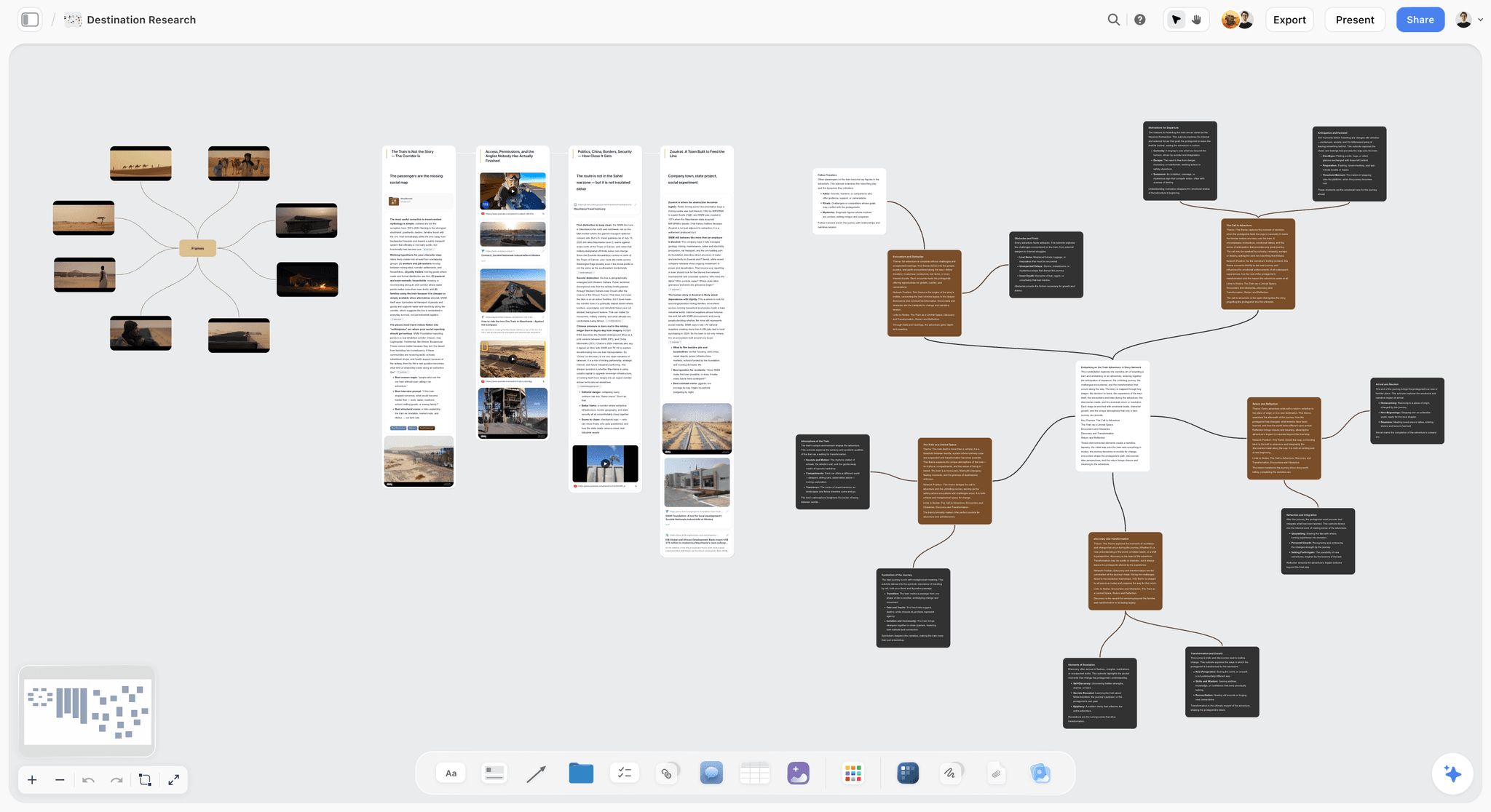
Storyflow is a shared visual canvas that replaces the creative pre-production half of Celtx: story development, structure, references, breakdown thinking, and planning on one board an AI actually reads. Where Celtx gives you shallow modules and no AI, Storyflow gives you a canvas where the AI reads your whole active board and the Story Blueprints scaffold the story. One honest caveat up front: Storyflow is a development and planning canvas, not an all-in-one production-management suite. Its AI drafts breakdown tables, a strip board, a budget table and a call sheet PDF, but it does not run a scheduling engine, a budgeting module (no fringes, top sheet or actuals) or call sheet distribution, so you pair it with a dedicated production tool for the shoot. That is the deliberate trade: it refuses to pay the Suite Tax.
Best for: Filmmakers replacing Celtx for creative development, structure, and pre-production planning.
Verdict: The best Celtx alternative for the creative half. Pair it with a scriptwriter and a production tool for the rest.
Key features
- AI canvas that reads your full active board, plus up to 1 Tactic and 3 Documents you @-mention, which Celtx has no equivalent for.
- 200+ Story Blueprints for story structure, including Hero's Journey and AIDA (Plus, Pro, and Max).
- One board for story, references, and pre-production planning, instead of five separate modules.
- Unlimited boards and unlimited collaboration on every plan; Max adds a team workspace with roles and permissions.
Pricing
Paid-only during early access. Plus: $7.99/mo annual ($9.99 monthly), with unlimited boards and unlimited collaboration. Pro: $14/mo annual ($19 monthly), which adds AI image generation. Max: $39/mo annual ($49 monthly). Flat per account, not per user. A Free plan launches before the end of 2026.
Pros
- The project-aware AI Celtx does not have.
- One canvas, not five shallow modules.
- Unlimited boards on every paid plan, with flat per-account pricing.
Cons
- Not an all-in-one production suite: it drafts a strip board, a budget table and a call sheet PDF, but has no scheduling engine, no day-out-of-days, no budgeting module and no call sheet sending. Pair with StudioBinder or Yamdu for the shoot.
- Not a script formatter. Pair with WriterDuet or Final Draft for the screenplay.
- Cloud-only, so no local-first offline mode for privacy-strict workflows.
- Newer and more general than a filmmaking-specific suite: a canvas you shape, not a rigid template.
For the wider AI picture, see the best AI tools for filmmakers in 2026.
2. StudioBinder
StudioBinder replaces Celtx's production management with a deeper, more modern platform: breakdown, scheduling, call sheets, and shot lists in one clean interface. This is the tool most people mean when they say they want "Celtx but better" for the production side. Where Celtx's scheduling feels like a checkbox, StudioBinder treats it as the core product, so the stripboard, call sheet automation, and contact management are all noticeably deeper. It is the clearest example here of a specialist beating the suite at one job.
Best for: Filmmakers who used Celtx mainly for production management and breakdown.
Verdict: The best Celtx alternative for production. Deeper and more modern than Celtx's modules.
Key features
- Script breakdown and stripboard scheduling.
- Automated call sheets and shot lists.
- Storyboards and contact management.
- Team collaboration and sharing.
Pricing
Indie from around $29/mo. Free tier with limits.
Pros
- Deeper production tools than Celtx.
- Modern, clean, and easy to onboard.
- Usable free tier.
Cons
- Subscription scales as you add features.
- Not a real script-writing tool.
- Prep-focused, not creative development.
3. WriterDuet
WriterDuet replaces Celtx's scriptwriting with a stronger, collaboration-first screenwriter. If two or more people touch the same script, this is the upgrade. Real-time co-writing with reliable version history is the headline, and it beats editing a Celtx script in shifts. The formatting is proper industry standard and import and export are painless. Writers who left Celtx over its afterthought script tool tend to land here and stay.
Best for: Filmmakers and writing teams who used Celtx mainly to write scripts.
Verdict: The best Celtx alternative for scriptwriting, especially for teams.
Key features
- Real-time collaborative writing.
- Deep version history.
- Outline and structure panel.
- Import and export in standard formats.
Pricing
Free for 3 scripts; Pro paid.
Pros
- A far better script tool than Celtx.
- Best-in-class real-time collaboration.
- Genuinely usable free tier.
Cons
- Writing-focused, no production side.
- Strongest inside its own ecosystem.
- No breakdown or scheduling.
4. Arc Studio
Arc Studio replaces Celtx's scriptwriting with a modern script-and-structure tool that keeps your outline visible next to the page. The differentiator is the story map: beats and structure sit alongside the script instead of in a separate document. That is the closest a screenwriter gets to the "everything in one view" feeling that drew people to Celtx, without the Suite Tax on the other four modules. The interface is fast and collaboration is solid.
Best for: Writers who want a modern Celtx script alternative with structure built in.
Verdict: A modern, structure-forward Celtx script alternative.
Key features
- Script editor with linked story maps.
- Structure and beats alongside the page.
- Real-time collaboration.
- Fast, modern interface.
Pricing
Free tier; Pro around $99/yr.
Pros
- Modern and fast.
- Structure tools baked in.
- Clean collaboration.
Cons
- Screenwriting-focused only.
- Smaller ecosystem than Final Draft.
- No production tools.
5. Final Draft
Final Draft replaces Celtx's scriptwriting with the industry-standard formatter every studio reads. If your script has to move through professional hands, this is the safe default, and its Beat Board gives you a light structure workspace Celtx never matched. It is expensive and the interface feels its age, but for correct formatting and industry trust, nothing carries the same weight.
Best for: Writers who want the industry-standard script tool.
Verdict: The industry-standard Celtx script alternative.
Key features
- Industry-standard formatting.
- Beat Board for structure.
- Revision tracking and reports.
- Wide professional adoption.
Pricing
Around $199 one-time.
Pros
- The industry standard.
- Deep, reliable script tools.
- One-time price, no subscription.
Cons
- Expensive up front.
- Writing-only, no production side.
- Dated interface.
6. Yamdu
Yamdu replaces Celtx's production management with a full production platform built to run the whole shoot. Where StudioBinder is the clean indie choice, Yamdu goes wider: scheduling, breakdown, cast and crew, budgeting, and communication in one place. It is the closest thing here to a modern all-in-one, but it earns its bundle by making each module deep rather than shallow, which is exactly what Celtx failed to do.
Best for: Teams who used Celtx for production and want real depth across the board.
Verdict: A deeper full-production Celtx alternative.
Key features
- Scheduling and script breakdown.
- Cast, crew, and budgeting.
- Team communication.
- Reporting and exports.
Pricing
From around $25/mo.
Pros
- Runs an entire production.
- Deeper than Celtx across modules.
- Strong for mid-size teams.
Cons
- More than small shoots need.
- Pricing scales with the team.
- Real learning curve.
7. Fade In
Fade In replaces Celtx's scriptwriting with a professional formatter at a fraction of Final Draft's price. It produces industry-standard output, includes outlining and index cards, and runs on every platform including mobile, all for a one-time purchase. For solo writers who want pro formatting without a subscription or a $199 outlay, it is the best value here. The community is smaller, but the files open cleanly everywhere.
Best for: Writers who want pro script features at a fair price.
Verdict: The best-value professional Celtx script alternative.
Key features
- Industry-standard formatting.
- Outlining and index cards.
- Cross-platform, including mobile.
- One-time purchase.
Pricing
Around $79.95 one-time.
Pros
- Pro output at a fair price.
- Truly cross-platform.
- One-time purchase.
Cons
- Writing-only.
- Smaller community.
- No production tools.
8. Milanote
Milanote replaces Celtx's visual and planning side with elegant, freeform boards. It is the closest tool here to Storyflow's lane: a visual canvas for moodboards, lookbooks, and loose structure. The difference is AI. Milanote has none, so it is a beautiful place to arrange references but not one that reads your project and helps you think. If you used Celtx to gather visual material, Milanote is a clean upgrade.
Best for: Filmmakers who used Celtx for visual planning and moodboards.
Verdict: A strong visual Celtx alternative, without AI or scripts.
Key features
- Freeform visual boards.
- Moodboards and lookbooks.
- Notes and light structure.
- Collaboration and sharing.
Pricing
Free tier; paid for more.
Pros
- Beautiful visual planning.
- Good template library.
- Very easy to use.
Cons
- No AI.
- No script tools.
- Visual-first, thin on structure.
9. Boords
Boords replaces Celtx's storyboarding with a dedicated, better tool. Storyboards were always one of Celtx's shallowest modules, and Boords is the clearest single-purpose upgrade: proper frame management, one-click animatics, and shot details Celtx never handled well. If storyboards are the part of Celtx you open, this swap alone removes a big chunk of the Suite Tax.
Best for: Filmmakers who used Celtx mainly for storyboards.
Verdict: The best Celtx alternative for storyboarding.
Key features
- Dedicated storyboarding.
- One-click animatics.
- Shot and frame details.
- Clean collaboration.
Pricing
From around $15/mo. Trial available.
Pros
- Far better storyboards than Celtx.
- Animatics built in.
- Clean sharing.
Cons
- Storyboard-focused only.
- Subscription.
- No scripts or scheduling.
10. Gorilla
Gorilla replaces Celtx's scheduling and budgeting with deeper indie-focused tools. It is built for producers who need a real stripboard and a proper budget, not the light versions Celtx bundled. The interface is less modern than StudioBinder, but for indie line producers that depth matters more than polish.
Best for: Indie producers who used Celtx for scheduling and budgeting.
Verdict: A deeper scheduling-and-budgeting Celtx alternative for indies.
Key features
- Stripboard scheduling.
- Detailed budgeting.
- Script breakdown.
- Production reports.
Pricing
Tiered.
Pros
- Deeper than Celtx scheduling.
- Budgeting included.
- Indie-friendly pricing.
Cons
- Less modern interface.
- No script tools.
- Smaller community.
11. Trelby
Trelby replaces Celtx's scriptwriting for free on Windows and Linux. It is open-source, produces correct formatting, and includes handy touches like a name database, all at zero cost. It will not win on polish and there is no Mac build, but for a Windows or Linux writer who wants Celtx's script module without the shrinking free tier, it is the honest free answer.
Best for: Writers on Windows or Linux who want a free Celtx script alternative.
Verdict: The best free Celtx script alternative for non-Mac users.
Key features
- Standard screenplay formatting.
- Character name database.
- Import and export.
- Free and open-source.
Pricing
Free and open-source.
Pros
- Completely free.
- Correct formatting.
- Simple and light.
Cons
- No Mac version.
- Dated interface.
- No production tools.
12. Beat
Beat replaces Celtx's scriptwriting for free on Mac. It is Fountain-based, so your scripts are plain text you own forever, with an outline view and clean Final Draft export. Mac writers who left Celtx over the free-tier squeeze find Beat pleasant and capable, if they are comfortable with Fountain. For a free, modern, Mac-native screenwriter, it is the standout.
Best for: Mac writers who want a free Celtx script alternative.
Verdict: The best free Celtx script alternative for Mac.
Key features
- Fountain-based plain-text writing.
- Outline view.
- Final Draft export.
- Free and open-source.
Pricing
Free and open-source.
Pros
- Completely free.
- Pleasant, modern feel.
- Plain-text files you own.
Cons
- Mac-only.
- No production tools.
- Fountain has a small learning curve.
Which Celtx Alternative Should You Choose?
1. You Mostly Develop the Creative Side
Top picks: Storyflow + a free scriptwriter
Storyflow for the AI canvas Celtx lacks, plus Trelby or Beat for free scripts. The modern creative-development stack, and it costs less than a Celtx suite while doing the development job far better.
2. You Mostly Manage Production
Top picks: StudioBinder or Yamdu
StudioBinder for most productions, Yamdu for a full platform. Both are deeper than Celtx's production modules. See the best pre-production tools in 2026.
3. You Mostly Write Scripts
Top picks: WriterDuet + Storyflow
WriterDuet for collaborative scripts, Storyflow for the development canvas. Both beat Celtx at their jobs, and together they cover writing and thinking.
4. You Want One Modern Suite Feel
Top picks: StudioBinder + Storyflow
Not one all-in-one, but two strong tools that together cover Celtx's ground with AI and depth. The cheapest way to escape the Suite Tax without giving up the "everything's handled" feeling.
5. You Want Free
Top picks: Milanote (free tier) + Trelby or Beat
Milanote's free tier covers the visual planning side, Trelby or Beat cover free scripts. A complete free Celtx replacement for the creative side today. Storyflow is paid-only during early access, with a Free plan launching before the end of 2026 for the AI-aware canvas version of this same job.
Who Should Stay on Celtx
Honesty runs both ways. Celtx still wins in a few situations.
- Students on a tight budget who genuinely use all five modules. If script, breakdown, schedule, and storyboard all get touched on the same small project, one login is worth the Suite Tax, and Celtx's education pricing is hard to beat.
- Tiny teams that value one bill over best-in-class depth. If nobody on the team will ever open a specialist tool, a single suite everyone knows beats a stack of five logins.
- Workflows where "good enough everywhere" beats "great somewhere." Short, simple productions never stress any single module, and shallow depth is only a problem when you hit the bottom of it.
The Suite Tax is only worth paying when you use enough of the suite to justify it. If you live inside one or two modules, you are paying for three you never open, and that is the moment to leave.
Honorable Mentions
- StudioBinder free tier: a modern free alternative for the production side.
- Notion: flexible workspace for the wiki and documentation side of Celtx.
- Scrite: free open-source screenwriting with structure tools.
- Storyboarder: free storyboarding for the boards side.
- Google Workspace: for the plain collaboration and documents side.
Where Celtx Alternatives Still Need You
Honest accounting. Alternatives replace tools, not judgment.
- The choice of what to use. Pick the alternative for what you actually do in Celtx, not the longest feature list.
- The migration. Moving projects takes effort, especially breakdowns and schedules.
- The story. No tool makes the film. That is still you.
The right way to leave Celtx in 2026 is to replace the part you use with the best specialist, not another jack-of-all-trades. The filmmaking stays human.
The Bottom Line
The best Celtx alternatives in 2026 are not another all-in-one but the strongest specialist for the part of Celtx you use. Storyflow leads for creative pre-production because it adds the AI canvas Celtx lacks, paired with a production tool for the shoot. StudioBinder and Yamdu are deeper for production, and WriterDuet, Arc Studio, and Final Draft are better for scripts.
The move that changes the most is to stop paying the Suite Tax on modules you never open. The all-in-one saves you tabs and charges you depth. Start a Storyflow board for your development, and pair it with the specialists for the rest.
FAQ: Celtx Alternatives in 2026
What is the best Celtx alternative in 2026?
It depends on what you use Celtx for. For creative pre-production and development, Storyflow is best because it adds the AI canvas Celtx lacks. For production management, StudioBinder or Yamdu are deeper. For scriptwriting, WriterDuet, Arc Studio, or Final Draft beat Celtx's script tool. Rather than another all-in-one, most filmmakers get better results from the strongest specialist for the part they actually use.
Is Celtx still free?
Celtx has a free tier, but it has been repeatedly tightened over the years, with project limits and features pushed behind paid subscriptions. Users who started on the free plan feel squeezed toward paying for the full suite. If free is your priority, Storyflow's Free plan, launching before the end of 2026, will cover creative development with unlimited boards, and Trelby and Beat are free open-source screenwriters, together replacing what most people used Celtx's free tier for.
Is Celtx worth it in 2026?
Celtx is worth it if you genuinely use most of its five modules on the same project and value one login over best-in-class depth, which fits some students and tiny teams. It is not worth it if you live inside one or two modules, because then you pay the Suite Tax on the three you never open. If you only ever touch the script tool, a dedicated screenwriter is both cheaper and better.
What is the best free Celtx alternative?
Milanote's free tier is the best free option for the visual planning half of Celtx, though it has no AI. For scripts, Trelby is the best free choice on Windows or Linux and Beat on Mac. StudioBinder has a free tier for production, and Storyboarder is free for storyboards. Together, Milanote plus a free scriptwriter plus StudioBinder's free tier replaces most of Celtx at no cost. Storyflow adds the AI-aware canvas on top, but it is paid-only during early access, with a Free plan launching before the end of 2026.
What is the best Celtx alternative for scriptwriting?
WriterDuet is best for collaborative scriptwriting, Arc Studio for a modern script-and-structure tool, Final Draft for the industry standard, and Fade In for affordable professional writing. Trelby and Beat are free. All of these are deeper screenwriters than Celtx's script module. If scriptwriting is your main use of Celtx, moving to a dedicated screenwriter is a clear upgrade, and pairing it with Storyflow adds the development canvas.
Does Celtx have AI?
Celtx does not offer meaningful AI as of 2026, which is one of the main reasons filmmakers look elsewhere. Among the alternatives, Storyflow has the strongest AI: it reads your full active canvas board, plus up to 1 Tactic and 3 Documents you @-mention, and helps with structure and development. StudioBinder offers assisted breakdown and Arc Studio has story maps. If AI is the gap you feel in Celtx, Storyflow is the clearest upgrade for the creative side.
Celtx vs StudioBinder: which is better?
For production management, StudioBinder is better. It offers deeper, more modern breakdown, scheduling, call sheets, and shot lists than Celtx's production modules, in a cleaner interface. Celtx still has the advantage of bundling scriptwriting in the same suite, which StudioBinder does not. If you mainly use Celtx for production management, StudioBinder is a clear upgrade; if you rely on Celtx's script tool too, pair StudioBinder with a dedicated screenwriter.
How do I move my projects off Celtx?
Export your scripts from Celtx in a standard format, either Final Draft (.fdx) or Fountain, and import them into your new screenwriter. For breakdowns and schedules, most production tools let you rebuild from the script, which is a good moment to clean them up. Visual and planning material can move to a canvas like Storyflow. Migration takes some effort, but moving to specialists usually pays back quickly.
Should I replace Celtx with one tool or several?
Usually several, because Celtx's value was bundling five jobs, and each is done better by a specialist. The efficient replacement is the strongest tool for each part you use: a canvas-AI tool like Storyflow for development, a dedicated screenwriter for scripts, and production software like StudioBinder for the shoot. Start with just the one or two parts you actually use.
Does any single tool do everything Celtx does?
Yamdu comes closest for the production side, but no single tool matches the full spread of script, breakdown, schedule, storyboard, and budget the way Celtx bundles them. That is by design: the strongest tools now specialize. The all-in-one saves you tabs and charges you depth, so the better move in 2026 is a small stack of specialists over one suite that does everything at a shallow level.
Table of Contents
- All 12 Celtx Alternatives, Ranked
- Comparison Table: 12 Celtx Alternatives Compared
- Why People Leave Celtx
- How We Evaluated These Celtx Alternatives
- Quick Picks by Celtx Feature
- Detailed Reviews: The 12 Best Celtx Alternatives
- Which Celtx Alternative Should You Choose?
- Who Should Stay on Celtx
- Honorable Mentions
- Where Celtx Alternatives Still Need You
- The Bottom Line
- Author
- FAQ: Celtx Alternatives in 2026
- Related Reading
Templates to check out for this topic


Filmmaking templates you can use in Storyflow
Skip the blank canvas. Open one of these filmmaking boards in Storyflow and the AI builds on the structure that is already there, from research through the shot list.


See Storyflow in Action
A visual AI workspace where every feature lives inside one canvas. No tab-switching, no context lost.
Build your entire board from a single message
Type what you need in the AI chat at the bottom of your canvas. The AI adds cards, headings, and structure directly onto your board.
Use expert frameworks as AI context
Type @ in the AI chat and choose any Tactic. The AI tailors every response to that framework instead of giving generic advice.
Turn your board into a mind map in seconds
Ask the AI to restructure your canvas as a mindmap. It connects your ideas into a visual hierarchy so you can see how everything relates.
Why Storyflow Exists
Storyflow actually began as a personal tool while working on creative and research projects.
We kept running into the same problem: ideas were scattered everywhere: notes, documents, and whiteboards.
Nothing helped us see how everything connected.
So we started building a workspace designed around how ideas actually grow.
→ Read how Storyflow was createdJustkay
Documentary Filmmaker & Founder at Storyflow
Published: 2026-07-10
Extremely simple, seriously capable


See how easy it is to get started
Watch a real project come together, from a blank board to a finished plan, clicked through step by step.
Start creating with AI and become more productive
Transform your creative workflow with AI-powered tools. Generate ideas, create content, and boost your productivity in minutes instead of hours.