The 12 Best Mind Mapping Tools for Mac in 2026
A Mac app knows it is on a Mac. An app that runs on a Mac only knows it is in a window. We ranked 12 mind mapping tools by which of the four rungs of Mac native they actually reach.

Category
Tools & Software
Author

Sara de Klein
Head of Product at Storyflow
Topics
2026-08-13
•
24 min read
•
Tools & SoftwareTable of Contents
- Key Takeaways
- A Mac App and an App That Runs on a Mac Are Not the Same Product
- At a Glance: The 12 Tools Compared
- How I Ranked These
- Quick Picks by Job Type
- 1. MindNode
- 2. XMind
- 3. Apple Freeform
- 4. Storyflow
- 5. iThoughts
- 6. MindManager for Mac
- 7. Curio
- 8. Scapple
- 9. SimpleMind
- 10. Obsidian Canvas
- 11. MindMeister
- 12. Miro
- What to Actually Pay For
- Tools to Avoid for This Job
- What No Tool on This List Does
- The Bottom Line
- FAQ: Mind Mapping Tools for Mac
- Related Reading
Templates to check out for this topic


- mind mapping software mac
- best mind mapping software for mac
- best mind map tool mac
- mac mind map app
- mind mapping app macos
- offline mind mapping mac
- apple silicon mind mapping
- icloud mind map sync
What are the best mind mapping tools for Mac in 2026?
MindNode is the best mind mapping tool for Mac in 2026 because it behaves like part of macOS rather than a program you happen to run on it: iCloud sync, Handoff to iPad mid-thought, Shortcuts actions, Quick Look previews and full offline editing. XMind is the better buy if you also work on Windows and need real export formats. Apple Freeform is free, already installed, and better than most people expect. Storyflow ranks fourth as the pick for AI that reads your entire map, with the honest caveat that it is a browser tab with no native Mac build and no offline mode.

Full disclosure: Storyflow is our product and we ranked it fourth here, behind MindNode, XMind and a free app that ships with macOS, because this article is about being a Mac tool and Storyflow is not one. The narrow ground it wins on is AI context: it is the only tool on the list whose AI reads your entire active canvas board rather than a single node or prompt. What it genuinely cannot do: there is no native macOS application, no Apple Silicon binary, no App Store listing, no offline mode, no iCloud sync, no Handoff or Continuity, no Shortcuts actions, no Quick Look, no Spotlight indexing of your content, and no OPML, .mmap, FreeMind or Markdown export. It is also paid only during early access. If you want a Mac app that works on a plane, buy MindNode instead.
Quick Comparison
The ranking axis is not features, it is how much of macOS the app actually reaches. Four rungs: a browser tab, a Dock icon that is still a browser, a real Mac app, and an app macOS itself knows about through iCloud, Handoff, Shortcuts and Quick Look.
| Tool | Best For | AI Features | Price |
|---|---|---|---|
| MindNode | Solo thinking across Mac, iPad and iPhone, online or off | None. No whole map AI | Roughly $19.99 per year, limited free tier |
| XMind | Native Mac speed with Windows compatibility and real exports | Light AI assist, does not read the whole map | Roughly $59.99 per year, usable free tier |
| Apple Freeform | Free visual thinking with images and Apple Pencil | None | Free, bundled with macOS Ventura and later |
| Storyflow | Turning a map into a plan when AI needs to read the whole board | AI reads the full active canvas board, plus 1 Tactic and 3 Documents you @-mention | $7.99 mo annual (free plan late 2026) |
Key Takeaways
- Most "best mind mapping for Mac" lists are generic listicles with the word Mac added. Half the tools on them are websites that open in Safari.
- The sorting question is which rung of Mac native an app sits on, from a browser tab up to something macOS itself knows about.
- MindNode is the only tool here that clears all four rungs: Apple Silicon binary, offline editing, iCloud sync, Handoff, Shortcuts and Quick Look.
- Apple Freeform costs nothing and ships with macOS Ventura and later, but has no outline view, no auto layout and no OPML export.
- Storyflow has no native macOS app, no offline mode, no iCloud sync, no Shortcuts actions and no OPML or .mmap export. For a map on a plane it is the wrong answer.
- Tab and Return in MindNode build a fifty node map in under four minutes. A canvas takes three times as long.
- One time purchases still exist on Mac. Scapple, SimpleMind and Curio are bought once, and over four years that beats every subscription here.
When the map is the start of the project, not the end of it
MindNode and XMind will hold a beautiful map. Storyflow is for the part after that, where the AI reads your entire canvas board and helps turn scattered branches into an outline, a brief or a plan. It runs in the browser on any Mac, with no install and no offline mode. Paid-only during early access; the Free plan lands before the end of 2026.

A Mac App and an App That Runs on a Mac Are Not the Same Product
Search "mind mapping software for Mac" and you get a list of websites. Miro is on it. MindMeister is on it. Most of them run on a Mac in exactly the sense that they run on a Chromebook.
That is fine if a browser is where you work. It is a problem if you chose a Mac for reasons, because none of those reasons apply to a tab.
A Mac app knows it is on a Mac. An app that runs on a Mac only knows it is in a window.
The distinction is not snobbery. It is a set of observable behaviours that stack in a specific order. Call it the Four Rungs of Mac Native.
Rung one: it opens in your browser. Storyflow, MindMeister and most collaborative canvases. They sync and collaborate well, and the moment your connection drops they stop existing. Spotlight cannot find a node.
Rung two: it has a Dock icon and is still a browser. Electron wrappers, where Obsidian and Miro's desktop app sit. Real window, sometimes local files, and you still pay Chromium's memory tax.
Rung three: it is a real Mac app. An Apple Silicon binary, launched from Spotlight, editing local documents with no network, driven from the keyboard. XMind, iThoughts, Scapple, SimpleMind and Curio clear this bar.
Rung four: macOS itself knows about it. iCloud sync that is not a login screen. Handoff, so the map you started on your iPad appears in your Mac's Dock. Shortcuts actions. Quick Look. Spotlight indexing text inside your maps. Only MindNode and Apple Freeform reach here.
Every tool below gets a rung, and the rung explains most of what follows. A rung one tool is not bad. It is a different product with a different failure mode, and the failure mode is a train tunnel.
At a Glance: The 12 Tools Compared
| Tool | Native rung | Edits with Wi-Fi off | Sync path | Text export |
|---|---|---|---|---|
MindNode | 4 | Yes | iCloud, native | OPML, Markdown, CSV |
XMind | 3 | Yes | Own cloud or local files | OPML, Markdown, Word |
Apple Freeform | 4 | Yes | iCloud, native | None |
Storyflow | 1 | No | Cloud only | None |
iThoughts | 3 | Yes | iCloud Drive or Dropbox | mmap, OPML, Markdown |
MindManager for Mac | 3 | Yes | Own cloud or local files | mmap, Word, OPML |
Curio | 3 | Yes | Local folder in iCloud Drive | Limited, OPML on maps |
Scapple | 3 | Yes | Local files, any folder | Plain text, Scrivener |
SimpleMind | 3 | Yes | iCloud, Dropbox, Google Drive | OPML, FreeMind, PDF |
Obsidian Canvas | 2 | Yes | Obsidian Sync or iCloud Drive | JSON Canvas, Markdown |
MindMeister | 1 | No | Cloud only | OPML, Word, PDF |
Miro | 2 | Barely | Cloud only | CSV, PDF, image |
How I Ranked These
I come from documentary, where a map of an argument gets built on a train, edited in a hotel with hostile Wi-Fi and handed to an editor who has never opened your software. I ran every tool here on an Apple Silicon MacBook Pro over the last two years, on real projects.
Five criteria, in order.
1. The plane test. Turn Wi-Fi off, quit the app, relaunch it, open a map and edit it. Binary. Rung one tools fail before the first keystroke.
2. Is it native on Apple Silicon? Read the Kind column in Activity Monitor. It should say Apple, not Intel. Native apps sit in the low hundreds of megabytes with one document open; a Chromium shell often triples that.
3. Can you build a map without the trackpad? Fifty nodes from blank using only Tab for a child, Return for a sibling and arrow keys to move.
4. Does macOS know it exists? Spotlight surfacing text inside your maps, a Shortcuts action, Quick Look rendering the file, Handoff passing a session from iPad to Mac without you saving anything.
5. Can you get your work out? OPML for outliners, .mmap for anyone stuck in a MindManager organisation, Markdown for everything else. A tool with no text export owns your thinking.
Pricing is as of August 2026 and changes frequently. Verify with each vendor.
Quick Picks by Job Type
- Best overall Mac app: MindNode. The only rung four tool that is also a serious mind mapper.
- Best if you also use Windows: XMind. A true native Mac build without locking you to Apple.
- Best free: Apple Freeform. Installed already, syncs through iCloud, costs nothing forever.
- Best AI that reads the whole map: Storyflow. Browser only, worth knowing before you buy.
- Best interoperability: iThoughts. Reads and writes .mmap, OPML, FreeMind and Markdown.
- Best for messy early thinking: Scapple. No hierarchy, no auto layout, roughly $22 once.
- Best research workspace: Curio. Mac only, deeply Mac, and nobody talks about it.
- Best future proofing: Obsidian Canvas. Your map is an open format file on your own disk.
1. MindNode
The verdict. The only tool here designed by people who use a Mac rather than ported by people who own one.
Best for. Solo thinking across Mac, iPad and iPhone, at speed, with or without a connection.
Pricing. Limited free tier, with MindNode Plus at roughly $2.99 per month or $19.99 per year as of August 2026, covering Mac, iPad and iPhone.
Why it ranks here. MindNode clears rung four and nothing else here does while also being a real mind mapper. Start a map on your iPhone walking to a meeting and the Handoff icon is in your Mac's Dock when you sit down. Press space on the file in Finder and Quick Look draws it.
The keyboard model is the daily win. Tab makes a child, Return makes a sibling, arrow keys move the selection, and auto layout reflows so you never drag a branch to make room. I timed fifty nodes at under four minutes without the trackpad. A canvas takes three times as long, because you are positioning as well as thinking.
Its Outline view matters more than the visual polish. Maps stop being useful around a hundred nodes, and a collapsible outline lets you read the structure as an argument, which is the check that catches a branch that has quietly become a second project.
It ranks first with a constraint attached: MindNode is Apple only, so sharing with a PC colleague means exporting a PDF, and a PDF is a picture of your thinking rather than your thinking.
Strengths.
- The only serious mind mapper at rung four: iCloud, Handoff, Shortcuts, Quick Look, widgets.
- Fastest keyboard driven mapping here, with auto layout that removes positioning entirely.
- Outline view turns a large map back into a readable argument.
- One subscription covers Mac, iPad and iPhone, with genuine offline on all three.
- Exports OPML and Markdown, so structure moves into any writing tool.
Limitations.
- Apple only. No Windows client and no browser version.
- No .mmap import or export, so MindManager files are a dead end.
- iCloud sharing is not multiplayer editing in the Miro sense.
- No AI that reads the whole map and answers questions about it.
The trade off. The best Mac experience on this page, bought by accepting that everyone you share with is on Apple hardware or receiving a flat file.
2. XMind
The verdict. The strongest cross platform choice that is still a genuine native Mac application rather than a wrapped website.
Best for. One mapping tool across macOS, Windows and mobile, with exports other people can open.
Pricing. Usable free tier that watermarks image exports. XMind Pro runs roughly $59.99 per year as of August 2026.
Why it ranks here. XMind sits on rung three and sits there solidly: an Apple Silicon native build, fast to launch, editing local files with no connection, without the memory profile of an Electron app.
Its advantage is structural range. XMind renders the same content as a radial map, a logic chart, an org chart, a tree table, a timeline or a fishbone, and switching is one menu. When a brainstorm turns out to be a process, you change the view rather than rebuild the document.
Export is where it beats MindNode outright. XMind writes OPML, Markdown, Word, PDF and images, and imports MindManager .mmap and FreeMind .mm. If someone sends you a decade of corporate maps, XMind opens them.
It ranks second because macOS barely knows it is there: no Handoff, no Quick Look rendering, thin Shortcuts support, and sync through XMind's own cloud rather than iCloud.
Strengths.
- Real Apple Silicon native app with fast launch and genuine offline editing.
- Six structure types on the same content, switchable from a menu.
- Imports .mmap and FreeMind, exports OPML, Markdown and Word.
- Works identically on Windows, so mixed teams are not a problem.
- Free tier is genuinely usable for private work.
Limitations.
- No Handoff, no Quick Look, and Shortcuts support is thin.
- Sync uses XMind's own cloud rather than iCloud Drive.
- The free tier watermarks image exports, which catches people out late.
- Dense interface, and it shows on a 13 inch screen.
The trade off. You give up seamless Apple integration and get portability, export formats and structure switching in return.
3. Apple Freeform
The verdict. Free, already on your Mac, syncing through iCloud, and genuinely good at the stage before a map has a shape.
Best for. Visual thinking with images and handwriting across Mac, iPad and iPhone at zero cost.
Pricing. Free. Bundled with macOS Ventura and later, and iPadOS and iOS 16.2 and later, as of August 2026.
Why it ranks here. Freeform is rung four by birthright. iCloud sync is invisible, collaboration works through the Share Sheet with anyone who has an Apple Account, and everything works offline because the document is local first. On iPad it takes Apple Pencil input properly, which nothing else here matches.
The honest framing is that Freeform is an infinite canvas, not a mind mapper. No auto layout, no Tab to create a child, no outline view, no hierarchy. For a hundred node structured map that is painful. For twenty ideas, some screenshots and a sketch, it is faster than opening anything else.
It ranks third because free and installed is a real argument, and most people searching for a Mac mind mapping tool have never opened the one in their Applications folder. The ceiling arrives quickly: no auto layout turns restructuring into an afternoon of dragging, and no text export means your work stays in Freeform forever.
Strengths.
- Free permanently, with no tier and no upsell.
- iCloud sync, offline editing and real time collaboration with no account to create.
- Best Apple Pencil experience on iPad of anything here.
- Handles images, video, PDFs and links natively on the canvas.
Limitations.
- No auto layout and no hierarchy, so restructuring is manual dragging.
- No outline view, which makes a large map unreadable.
- No OPML, Markdown or .mmap export. PDF and images only.
- Apple only, with no meaningful version history.
The trade off. Nothing beats free and installed, until the map needs structure, and then nothing here helps less.
4. Storyflow
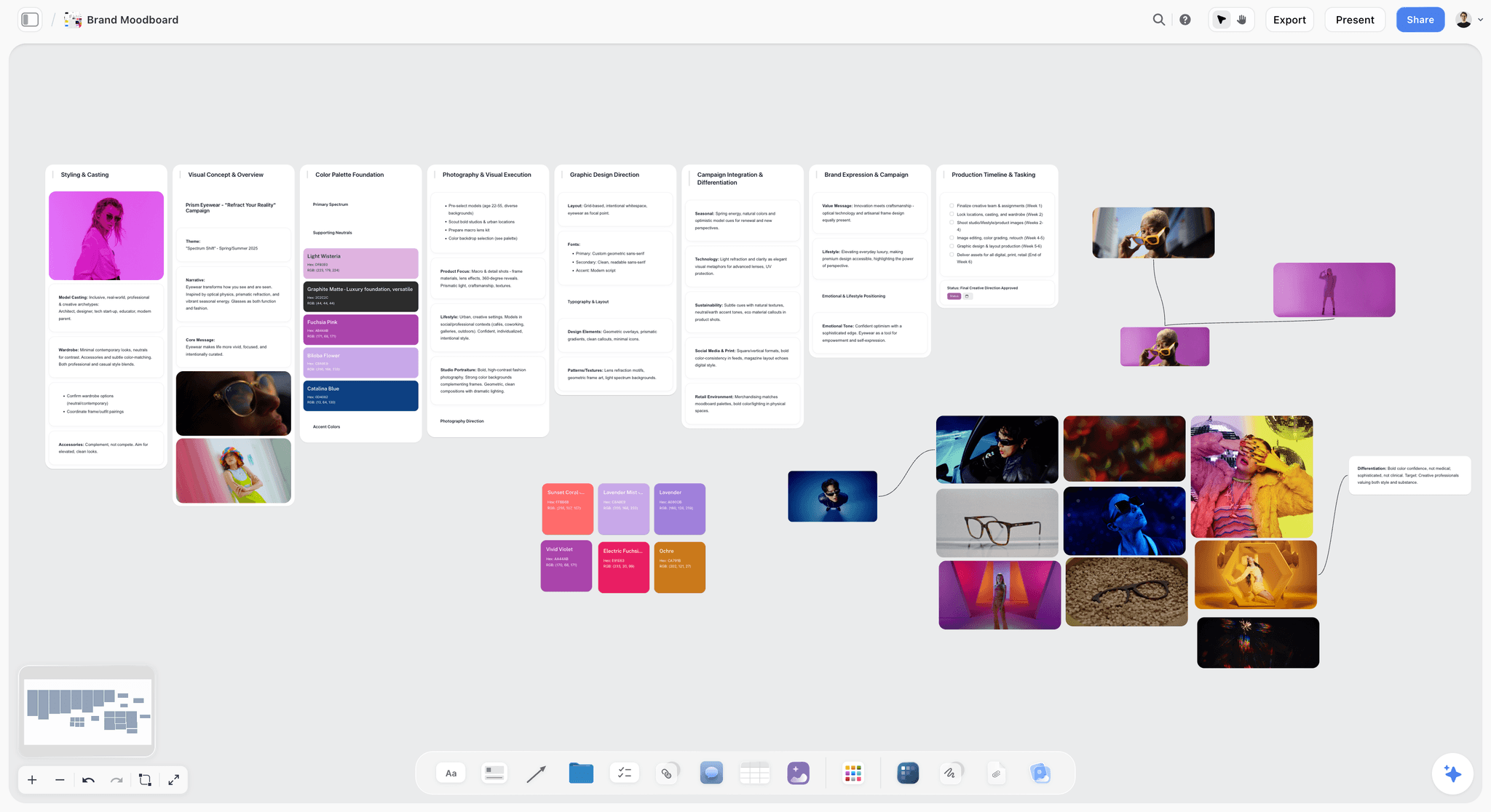
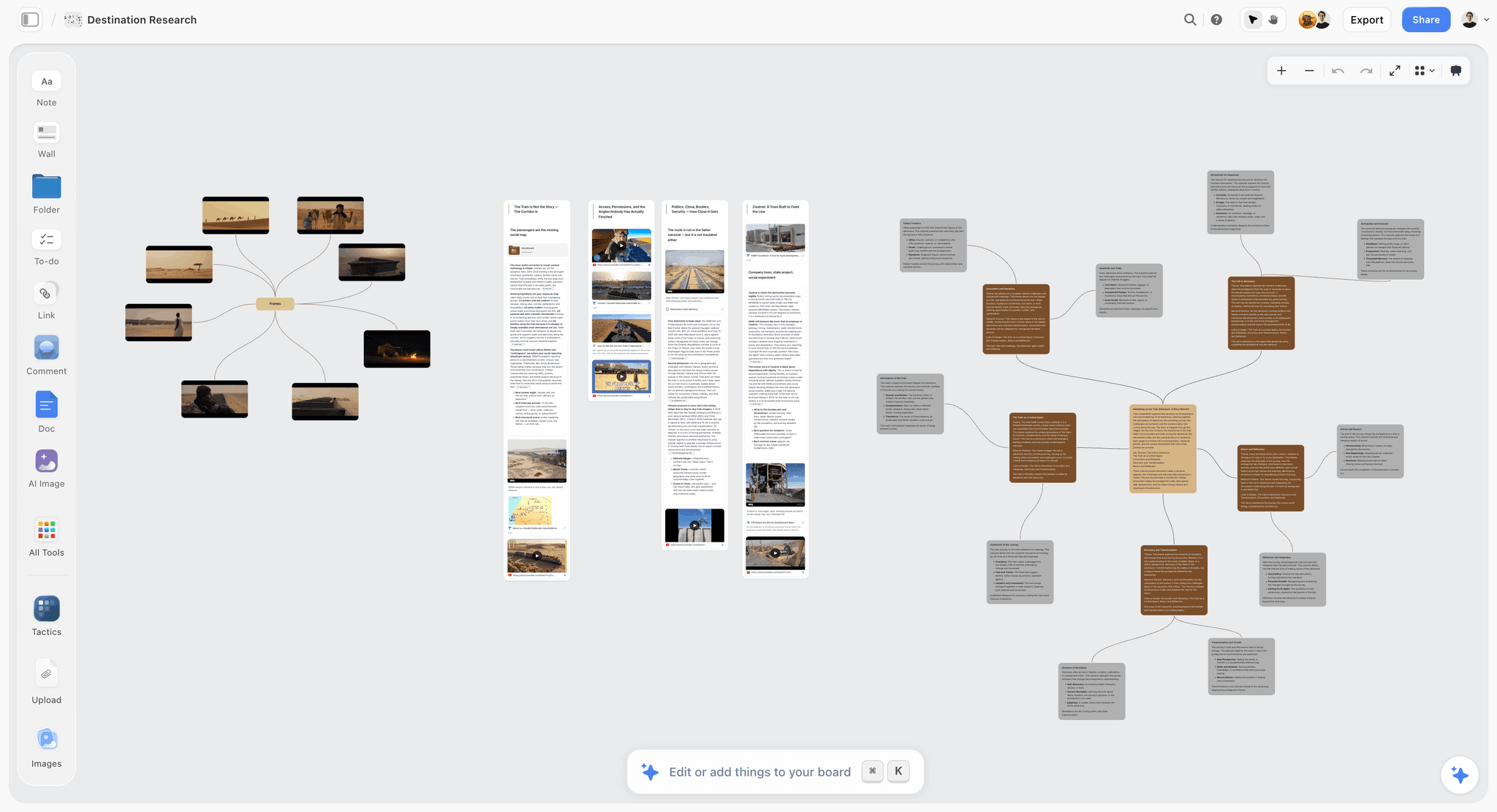
The verdict. The best AI on this page by a wide margin, attached to a browser tab that will not open on a plane.
Best for. Turning a map into a plan, when the map is the beginning of a project rather than the end of one.
Pricing. Paid only during early access. Plus is $7.99 per month billed annually or $9.99 monthly, adding 200 plus Story blueprints and unlimited file uploads. Pro is $14 per month billed annually or $19 monthly, adding AI image generation, roughly twenty times more AI usage and memory across conversations. Max is $39 per month billed annually or $49 monthly, adding forty times more AI and Team Workspace with permissions and roles. Pricing is flat per account rather than per seat, and anyone a paid member invites joins free. The Free plan launches before the end of 2026. Prices as of August 2026.
Why it ranks here. This is our product, and on the Four Rungs it sits on rung one. No native macOS build, no Apple Silicon binary, no offline mode, no iCloud sync, no Handoff, no Shortcuts, no Quick Look. It is a website. If you want a real Mac app that works in a tunnel, stop here and buy MindNode.
What it does that nothing above it does: the AI reads your entire active canvas board as context, plus up to one Tactic and up to three Documents you @-mention. That is different from the chat sidebars bolted onto other mapping tools, which see your prompt and maybe the node you selected. Asking "which of these branches is the same idea in different words" only works if the model can see the whole board, and on this list only Storyflow can.
The second difference is what happens after the map. On a Storyflow canvas the same board holds notes, images, documents and the AI conversation, so the map becomes an outline or a brief without an export step. MindNode's OPML export does that in two moves and loses everything that was not text.
It ranks fourth, behind a free bundled app, because this article is about being a Mac tool and Storyflow is not one. That is a real cost, not a rounding error.
Strengths.
- AI reads the full active canvas board rather than one node or one prompt.
- The map, the references, the documents and the AI conversation live on one surface.
- 200 plus Story blueprints on Plus give a structured start instead of a blank canvas.
- Flat per account pricing, and anyone you invite to a board joins free.
- Identical on macOS, Windows, Linux and ChromeOS, because it is the same browser tab.
Limitations.
- No native macOS application at all. No Apple Silicon binary, no Dock app, no App Store listing.
- No offline mode. Lose your connection and you lose the session. It fails the plane test outright.
- No iCloud sync, no Handoff, no Continuity, no Shortcuts actions, no Quick Look, no Spotlight indexing of your content.
- No OPML, .mmap, FreeMind or Markdown export, so moving a structure into a writing tool means retyping it.
- No keyboard first node creation in the MindNode sense. You position on a canvas rather than drive an outliner.
- Paid only today, with no free tier until later in 2026.
The trade off. You are buying AI that understands the whole board and paying for it with every macOS integration on this page.
5. iThoughts
The verdict. The interoperability specialist, and the app to buy if your maps have to survive other people's software.
Best for. Exchanging maps with MindManager, FreeMind or XMind users, or archiving them for the long term.
Pricing. One time purchase of roughly $50 for the Mac app as of August 2026, with iPad and iPhone sold separately.
Why it ranks here. iThoughts reads and writes more formats than anything else here: .mmap, FreeMind .mm, XMind, OPML, Markdown, OmniOutliner, CSV and plain text. When a client sends a file from a tool nobody has installed since 2014, this opens it.
It is a proper rung three Mac app: local documents, full offline editing, fast keyboard entry, and sync through a folder in iCloud Drive or Dropbox rather than a proprietary service.
It ranks fifth because it is a specialist. The interface is functional rather than pleasant, and if you never touch another format, MindNode does the daily work more comfortably for a fraction of the cost.
Strengths.
- Widest format support on this page, including full .mmap read and write.
- One time purchase rather than a subscription.
- Documents are plain files in a folder you choose.
- Fast keyboard entry and solid offline behaviour.
Limitations.
- Interface is dated next to MindNode and Freeform.
- Mobile apps are separate purchases.
- No real time collaboration and no AI features.
- No Handoff or Quick Look integration.
The trade off. Buy it for the formats, not the feel.
6. MindManager for Mac
The verdict. The corporate standard, available on Mac, and still visibly the second class citizen next to the Windows build.
Best for. People whose organisation has standardised on .mmap and who work inside it from a Mac.
Pricing. Subscription, roughly $169 per user per year as of August 2026, with volume licensing above that.
Why it ranks here. If your company runs on MindManager this is not really a choice, and the Mac version is a real native application. It does the enterprise jobs properly: task data with dates and progress on nodes, roll ups across a branch, filtering by attribute, and Gantt style views nothing else here attempts.
The gap between the Mac and Windows versions is the recurring complaint and it is fair. Features arrive on Windows first and some files round trip imperfectly.
It ranks sixth on price alone. For an individual, $169 a year buys eight years of Scapple, and iThoughts opens the same files for a one time fifty dollars.
Strengths.
- Native .mmap, still the format most large organisations exchange.
- Task data, roll ups and filtering no consumer mind mapper offers.
- Proper native Mac build with offline editing.
- Deep Microsoft Office integration for export to Word and Project.
Limitations.
- Expensive for an individual, by a large multiple.
- Mac version consistently trails Windows on features.
- Heavy interface aimed at project managers rather than thinkers.
- No iCloud, Handoff or Shortcuts integration.
The trade off. Correct if .mmap is mandatory at work, overpriced if it is not.
7. Curio
The verdict. A Mac only research workspace that has quietly done for fifteen years what several funded canvases claim to have invented.
Best for. Long running research where a mind map is one part of a larger dossier.
Pricing. One time purchase, roughly $99 for the standard edition as of August 2026, with paid upgrades between major versions.
Why it ranks here. Curio treats a project as an idea space holding mind maps, index cards, lists, tables, images, PDFs, web clippings and tasks on one page. That is closer to how research accumulates than a pure mind mapper allows, and it is all local and all offline.
It is deeply Mac in the old sense: standard text handling, real document files, Finder and services integration, and a search that indexes everything including PDF text. Rung three, comfortably.
It ranks seventh because there is no iPad or iPhone app at all, which in 2026 is a genuine limitation for a thinking tool.
Strengths.
- Mind maps, lists, tables, clippings and tasks in one local document.
- One time purchase with no subscription.
- Excellent full text search including inside attached PDFs.
- Entirely offline and file based, so archiving is trivial.
Limitations.
- Mac only, with no iPad or iPhone companion.
- No collaboration of any kind.
- The interface rewards learning and punishes casual use.
- Limited export beyond PDF and images.
The trade off. The most capable single Mac document on this list, and the least shareable.
8. Scapple
The verdict. The anti mind mapper, and the best twenty-something dollars here for the stage before you know the structure.
Best for. Messy early thinking where imposing a hierarchy would be a lie.
Pricing. One time purchase of roughly $22 for Mac as of August 2026. No subscription and no mobile app.
Why it ranks here. Every other tool assumes a centre and branches. Scapple assumes nothing. Double click anywhere, type, and you have a note. Drag one note onto another to connect them. No root, no auto layout, no forced tree, which is exactly right when you do not yet know which idea is the parent.
From Literature and Latte, so it shares Scrivener's philosophy: a real Mac app, tiny, instant to launch, entirely offline. Notes drag straight into a Scrivener binder.
It ranks eighth because it deliberately does very little. That restraint is the point, and it also means Scapple is a companion to something else rather than a system.
Strengths.
- No imposed hierarchy, which suits genuinely early thinking.
- Roughly $22 once, forever.
- Launches instantly and never touches the network.
- Notes drag directly into Scrivener.
Limitations.
- No auto layout, so a large board becomes a manual tidying job.
- No iPad or iPhone version.
- No collaboration and no AI.
- Export limited to PDF, image and plain text.
The trade off. Cheap, small, permanent, and it will never grow into your only tool.
9. SimpleMind
The verdict. The value pick: a native Mac app with real export formats, bought once, running everywhere.
Best for. Cross platform mapping on a budget without a subscription.
Pricing. SimpleMind Pro for Mac is roughly $29.99 as a one time purchase as of August 2026, with iOS and Android sold separately. A limited free desktop version exists.
Why it ranks here. SimpleMind is unglamorous and honest: a native Mac build, offline by default, and sync through iCloud, Dropbox or Google Drive rather than a proprietary cloud, so you decide where the files live.
Export is better than the price suggests. OPML, FreeMind .mm, PDF, images and plain text outlines put it close to iThoughts on the export criterion for a fraction of the cost.
It ranks ninth because the interface has not aged well and the auto layout is less graceful than MindNode's, which shows immediately above sixty nodes.
Strengths.
- One time purchase, roughly $30 for the Mac app.
- OPML and FreeMind export at a budget price.
- Sync through iCloud, Dropbox or Google Drive rather than a vendor cloud.
- Available on Mac, Windows, iPad, iPhone and Android.
Limitations.
- Dated interface and less refined auto layout.
- Mobile apps are separate purchases.
- No collaboration and no AI.
- No Handoff, Shortcuts or Quick Look integration.
The trade off. Nearly everything iThoughts does at roughly half the price, with less polish.
10. Obsidian Canvas
The verdict. The choice if you want your mind map to still be a plain file on your own disk in ten years.
Best for. People already in Obsidian who want a spatial view over notes they have written.
Pricing. Free for personal use. Obsidian Sync is roughly $4 per month billed annually as of August 2026, and commercial use requires a licence of roughly $50 per user per year.
Why it ranks here. Canvas stores your map as a .canvas file in the JSON Canvas open format, in a folder of Markdown files you own. Nothing else here is that durable. If Obsidian disappeared tomorrow, your maps are still readable text.
The spatial view over an existing vault is the real feature. Drag notes you already wrote onto a canvas and you are arranging things that exist rather than typing summaries of them.
It ranks tenth because it is rung two. Obsidian is Electron, so launch is slower and memory use higher than any native app above it, and Canvas has no auto layout and no keyboard node creation.
Strengths.
- Files are yours, in an open format, in a folder you control.
- Free for personal use with no functional limits on Canvas.
- Spatial view over notes that already exist in your vault.
- Large plugin ecosystem, including mind map renderers.
Limitations.
- Electron, so it is rung two and behaves like it on launch and memory.
- No auto layout and no keyboard driven node creation.
- Sync is a paid add on unless you manage iCloud Drive yourself.
- No real time collaboration.
The trade off. Maximum durability and control, minimum polish and speed.
11. MindMeister
The verdict. A capable browser mind mapper with a good outline model and nothing Mac specific about it.
Best for. Shared, structured maps with colleagues on mixed hardware.
Pricing. Free tier limited to three maps. Paid plans run roughly $4.50 to $8.50 per user per month billed annually as of August 2026.
Why it ranks here. MindMeister is the cleanest classic mind mapper in a browser. Structure is enforced, keyboard shortcuts work reasonably, real time collaboration is smooth, and OPML and Word export arrive on paid tiers.
Its MeisterTask integration means a branch can become a task, which is the closest thing here to a map turning into work without an export step.
It ranks eleventh in a Mac article because there is no Mac application. Rung one, cloud only, no offline. The iPad and iPhone apps are real, but the Mac experience is Safari.
Strengths.
- Clean, structured mapping with genuine real time collaboration.
- OPML and Word export on paid plans.
- MeisterTask integration turns branches into tasks.
- Identical on any operating system.
Limitations.
- No Mac application and no offline editing. Fails the plane test.
- Free tier caps you at three maps.
- Per user pricing, unlike the one time purchases above.
- No macOS integration of any kind.
The trade off. Good software, wrong article, unless a browser genuinely is where you work.
12. Miro
The verdict. An excellent team whiteboard that does mind mapping as one of forty things, wrapped in Chromium on your Mac.
Best for. Workshops where the map is a group activity rather than personal thinking.
Pricing. Free tier with three editable boards. Starter is roughly $8 per user per month and Business roughly $16 per user per month billed annually as of August 2026.
Why it ranks here. For fourteen people mapping together with timers, voting and comments, Miro is unmatched and nothing else here comes close. The mind map widget gives you Tab to add a child, which is more than most canvases manage.
On a Mac it is rung two. The desktop app is a Chromium shell, offline is read only at best, and memory use on a large board is the highest on this page.
It ranks last because this article is about Mac mind mapping and Miro is a collaboration platform that runs on Macs. For its actual job it would rank first on a different list.
Strengths.
- Best in class real time collaboration, voting, timers and facilitation.
- Vast template library and integrations with Jira, Slack and Figma.
- Mind map widget supports keyboard child creation.
- Free tier is workable for occasional sessions.
Limitations.
- Rung two Chromium shell with heavy memory use on large boards.
- No meaningful offline editing.
- Per user pricing that adds up across a team.
- Overwhelming for solo mind mapping.
The trade off. Buy it for the workshop, not for the map.
What to Actually Pay For
Pay the twenty dollars a year for MindNode Plus if you own more than one Apple device. Handoff and iCloud sync between a Mac and an iPad is the one feature here that changes daily behaviour, and it is the cheapest subscription on the page.
Pay once rather than monthly where you can. Over four years, iThoughts at roughly $50 costs less than four months of MindManager.
Do not pay for a mind mapper before trying Freeform. It is installed, it is free, and for maps under thirty nodes it is sufficient. Find the ceiling before you spend.
Pay for a browser tool only if you are honestly always connected. Storyflow, MindMeister and Miro are worth their price for the jobs they do, and none will open on a flight. If that matters even four times a year, buy a rung three app as well rather than instead.
Tools to Avoid for This Job
Any "Mac app" that is a wrapped website with no offline mode. A Dock icon is not native. Run the plane test before you subscribe, because the marketing page will not tell you.
Intel only builds running under Rosetta. Read the Kind column in Activity Monitor. If it says Intel in 2026, the app is not being maintained and your file format has a countdown on it.
Anything with no text export. A tool that exports only PDF and PNG has taken your structure and handed you a picture of it. OPML or Markdown is the minimum bar.
A general team whiteboard for solo thinking. Miro and FigJam are built for fourteen people in a room. Alone at a desk the facilitation machinery is friction, and you will position things instead of thinking.
What No Tool on This List Does
None of them will index every map you own into one searchable brain. Spotlight gets close for MindNode and the file based apps, and every cloud tool sits outside it entirely.
None of them auto layout a genuinely messy board well. Auto layout works on a tree. The moment your thinking has two centres and a loop, every tool here either fights you or gives up and lets you drag.
And nothing here, Storyflow very much included, gives you AI that understands your whole map and works offline on a plane. Storyflow has the AI and no native Mac app, no offline mode and no OPML export. MindNode and XMind have the Mac app and no whole board AI. A Mac app knows it is on a Mac. An app that runs on a Mac only knows it is in a window. As of August 2026 you pick one side of that.
The Bottom Line
The Mac question is not which mind mapper has the most features. It is which rung of native you actually need, and most people answer it wrongly because they never turned Wi-Fi off and tried.
Buy MindNode if you own more than one Apple device and want the fastest, most integrated thinking tool on the platform for roughly twenty dollars a year. Buy XMind if Windows is in your life or export formats matter. Open Freeform first, because it is free and installed and might end the search. Buy iThoughts or SimpleMind if other people's file formats are the real problem, and Scapple if the structure has not appeared yet.
Choose Storyflow only if AI that reads your whole board is the reason you are choosing at all, and only if you are honestly always connected, because it is a browser tab with no Mac app and no offline mode. A Mac app knows it is on a Mac. An app that runs on a Mac only knows it is in a window. Decide which of those you need before you look at a single feature list.
FAQ: Mind Mapping Tools for Mac
What is the best mind mapping tool for Mac in 2026?
MindNode, for most people. It is the only serious mind mapper that reaches the top rung of Mac native: iCloud sync, Handoff between Mac and iPad, Shortcuts actions, Quick Look previews and full offline editing, for roughly $19.99 a year. XMind is the better answer if you also work on Windows or need OPML, .mmap and Word export. Try Apple Freeform first, since it is already installed and free.
Is there a free mind mapping app for Mac?
Yes, and it is already on your Mac. Apple Freeform ships with macOS Ventura and later, costs nothing, syncs through iCloud and works offline. XMind's free tier is the strongest free option for structured maps, with the caveat that it watermarks image exports. Storyflow is paid only during early access, with a free plan planned before the end of 2026, so it is not the free answer today.
What is the difference between a native Mac app and a web app for mind mapping?
A native Mac app runs as an Apple Silicon binary, edits local documents with no network, launches from Spotlight and hooks into Shortcuts, Quick Look and Handoff. A web app runs in a browser engine and stops working when your connection does. The test is simple: turn Wi-Fi off, quit the app, relaunch it and try to edit a map. Native apps pass. Websites and most wrapped websites fail.
Does MindNode work offline on a plane?
Yes, completely. MindNode stores maps locally and syncs through iCloud when a connection returns, so you can create, edit and reorganise in airplane mode on Mac, iPad and iPhone. XMind, iThoughts, Scapple, SimpleMind, Curio and Apple Freeform also pass this test. Storyflow, MindMeister and Miro do not, because they are cloud tools and the session ends when the connection does.
Which Mac mind mapping tools support Apple Shortcuts?
MindNode has the most complete Shortcuts support, with actions for creating maps and adding nodes that you can chain into automations or trigger from a Focus mode. Apple Freeform integrates through the Share Sheet and iCloud rather than rich Shortcuts actions. XMind, iThoughts and SimpleMind have thin or no support. Browser tools including Storyflow, MindMeister and Miro have none, because Shortcuts cannot reach into a webpage's content.
Can I move a mind map between Mac apps?
Only if both ends speak the same format. OPML is the most widely supported text structure and moves cleanly between MindNode, XMind, iThoughts, SimpleMind and MindMeister. The .mmap format belongs to MindManager, and iThoughts, XMind and MindManager itself handle it. Apple Freeform and Storyflow export neither OPML nor .mmap, so moving structure out of them means retyping it.
Is Apple Freeform good enough as a mind mapping app?
For maps under about thirty nodes, yes. It is free, installed, syncs through iCloud, works offline and handles images and Apple Pencil better than anything else on Apple hardware. What it lacks is structure: no auto layout, no hierarchy, no outline view and no text export. Once you need to reorganise a large map, that absence becomes an afternoon of dragging, and that is where people move to MindNode or XMind.
Does Storyflow have a Mac app?
No. Storyflow runs in the browser and there is no native macOS build, no Apple Silicon binary, no App Store listing and no offline mode. It also has no iCloud sync, no Handoff, no Shortcuts actions and no OPML or .mmap export. Choose it when the reason you want a mapping tool is AI that reads your entire canvas board. It is the wrong choice if you want a Mac app that works without a connection.
What is the fastest way to build a mind map on a Mac?
Keyboard only, in a native outliner style app. In MindNode, Tab creates a child, Return creates a sibling and arrow keys move the selection, with auto layout reflowing so you never position anything by hand. Fifty nodes takes under four minutes without touching the trackpad. Canvas tools including Freeform, Miro and Storyflow require you to place and connect nodes yourself, which roughly triples the time.
Which mind mapping tools sync between Mac and iPad?
MindNode and Apple Freeform sync through iCloud natively and support Handoff, so a session started on iPad appears in your Mac's Dock. SimpleMind and iThoughts sync through iCloud Drive or Dropbox folders, which works reliably but without Handoff. XMind uses its own cloud service. Curio and Scapple have no iPad app at all. Browser tools sync everywhere by definition, since there is nothing local to sync.
Are one time purchase mind mapping apps still worth it on Mac?
Yes, and the arithmetic is straightforward. Scapple at roughly $22, SimpleMind at roughly $30 and iThoughts at roughly $50 are bought once. Over four years iThoughts costs less than four months of MindManager's subscription. The trade off is that one time apps rarely add AI or collaboration, and major version upgrades are usually paid rather than free. If your maps are personal and structural, buy once.
What should I look for in a Mac mind mapping tool specifically?
Five things, in order. Does it edit with Wi-Fi off. Does Activity Monitor report it as Apple rather than Intel. Can you build fifty nodes without the trackpad. Does macOS know it exists through Spotlight, Shortcuts, Quick Look or Handoff. And can you export OPML, Markdown or .mmap so your work outlives the app. Those five answers sort this category faster than any feature table will.
Mind mapping and ideation templates you can use in Storyflow
Map ideas in space, then ask the AI to restructure, expand, or connect them. Open any of these boards and start thinking visually instead of in lists.


See Storyflow in Action
A visual AI workspace where every feature lives inside one canvas. No tab-switching, no context lost.
Build your entire board from a single message
Type what you need in the AI chat at the bottom of your canvas. The AI adds cards, headings, and structure directly onto your board.
Use expert frameworks as AI context
Type @ in the AI chat and choose any Tactic. The AI tailors every response to that framework instead of giving generic advice.
Turn your board into a mind map in seconds
Ask the AI to restructure your canvas as a mindmap. It connects your ideas into a visual hierarchy so you can see how everything relates.
Why Storyflow Exists
Storyflow actually began as a personal tool while working on creative and research projects.
We kept running into the same problem: ideas were scattered everywhere: notes, documents, and whiteboards.
Nothing helped us see how everything connected.
So we started building a workspace designed around how ideas actually grow.
→ Read how Storyflow was createdSara de Klein
Head of Product at Storyflow
Published: 2026-08-13
Start creating with AI and become more productive
Transform your creative workflow with AI-powered tools. Generate ideas, create content, and boost your productivity in minutes instead of hours.