The 11 Best Tools for Memoir Writers in 2026
Memoir has three problems no other form has: verification without citation, consent without contract, and structure without plot. Eleven tools ranked by which they solve.

Category
Writing
Author

Sara de Klein
Head of Product at Storyflow
Topics
2026-08-11
•
17 min read
•
Writing- best tools for memoir writers
- memoir writing software 2026
- how to structure a memoir
- best tool to organize research for writing a book
- writing about family in memoir
- Scrivener alternatives for memoir
What are the best tools for memoir writers in 2026?
The best tool for a memoir writer is Storyflow, and the reason is specific to the form: a memoir has no plot to inherit, so the arrangement of scenes is not a preparation for the authorship, it is the authorship, and that is a spatial decision an outline cannot hold. Storyflow is a canvas where every scene you might use sits visible at once and can be moved until the shape means something. Scrivener ranks second and is where you should actually write, because research and draft belong in one binder. Day One is the best place to capture the material you have not written yet. Airtable, unglamorously, is where the consent conversations belong. This ranking judges all 11 tools on one question: which of the three problems only memoir has does each one help with.

Full disclosure: Storyflow is our own product, and we rank it #1 here for one narrow job: arranging candidate scenes until the juxtapositions carry meaning, which is the authorship in this form. It is not a writing environment. It has no manuscript compilation, no word count targets, no distraction-free drafting and no export format an agent will accept, so we tell you to write in Scrivener and rank Scrivener second. It also has no consent or permissions tracking, which Airtable does properly.
Quick Comparison
These four cover the jobs memoir actually splits into: deciding which scenes go in and what they mean beside each other, writing them with the evidence to hand, capturing raw material as it happens, and keeping track of the people whose lives are in your book.
| Tool | Best For | AI Features | Price |
|---|---|---|---|
| Storyflow | Scene arrangement and juxtaposition | Canvas-wide context AI | $7.99 mo annual (free plan late 2026) |
| Scrivener | Drafting with research in the same binder | None | One-time ~$59.99 licence |
| Day One | Dated, contemporaneous capture with photos | Light AI | Free tier / from ~$34.99 yr |
| Airtable | Consent status and evidence per claim | Light AI | Free tier / from ~$20 per seat mo |
Key Takeaways
- Memoir has three problems that no other form has, and none of them are writing problems.
- Problem one: verification without citation. You cannot footnote your own childhood, and your memory is a genuinely unreliable source that you are contractually presenting as true.
- Problem two: consent without contract. The people in your book are alive, they did not agree to be characters, and most memoirists handle this by not thinking about it until galleys.
- Problem three: structure without plot. A life has chronology, which is not structure. The selection and arrangement of scenes is the entire craft, and it is a spatial problem.
- Storyflow ranks first for problem three. It is not a writing environment: no manuscript compilation, no word count targets, no export an agent will accept.
- Scrivener ranks second and is where the actual writing should happen. Most memoirists should own both and use them at different stages.
- The most common structural failure in memoir is chronology mistaken for shape, which produces a book that is accurate, complete and inert.
Arrange the scenes, find the book
A life has chronology, which is not structure. Storyflow puts every candidate scene on one canvas where you can test whether the hospital corridor at nine detonates the work dinner at thirty-four, before you draft either. Paid-only during early access; the Free plan lands before the end of 2026.

The Three Problems Only Memoir Has
Novelists invent, and journalists verify. Memoirists do a third thing that has no clean name, and it comes with three problems the other two forms do not carry.
Problem one: verification without citation. Your primary source is your own memory, which is reconstructive rather than recorded, and you cannot cite it. Worse, you are presenting it as true, because that is the contract of the form. Every serious memoirist eventually discovers a memory that turns out to be wrong in a checkable way, and the discovery is destabilizing precisely because it implies the unchecked ones are also negotiable. The working response is to gather corroboration where it exists (photographs, letters, other people's accounts, weather records, school timetables) and to be honest in the prose where it does not.
Problem two: consent without contract. Your sister is in the book. She did not audition. She will read it, and so will her children, and the version of her that exists on the page is one you constructed from your own vantage point. This is not primarily a legal problem, though it can become one. It is a relational problem that most memoirists postpone until the manuscript is finished, which is the worst possible moment, because by then the structure depends on the scenes people object to.
Problem three: structure without plot. This is the one that stops books being finished.
A novel gets its shape from invention: you can make the thing happen that the structure needs. Reportage gets its shape from an argument. A memoir has neither. What it has is chronology, and chronology is not structure. It is simply the order things occurred in, which carries no meaning at all about what they meant.
So the memoirist has perhaps two hundred candidate scenes and must decide which forty go in the book and in what order, where the order is doing the interpretive work. The scene from when you were nine, placed after the scene from when you were thirty-four, makes an argument that neither scene makes alone. That is the craft of the form, and it is a decision about proximity and juxtaposition, which is to say a spatial decision.
The most common structural failure in memoir is chronology mistaken for shape, which produces a book that is accurate, complete and inert.
The tools below are ranked by which of these three they help with.
At a Glance: The 11 Tools Compared
| Tool | Best for | Problem it helps with | Pricing shape |
|---|---|---|---|
Storyflow | Arranging scenes until the shape means something | Three | Flat per account |
Scrivener | Writing the thing, with research in the same binder | Three, one | One-time licence |
Day One | Capturing material before you know you need it | One | Per month |
Airtable | Tracking corroboration, consent and permissions | One, two | Per seat |
Obsidian | Linking fragments until a pattern appears | Three | Free or per user |
Otter.ai | Transcribing interviews with family and witnesses | One | Per month |
Plottr | Timeline view when chronology genuinely matters | Three | Licence or subscription |
Ulysses | Distraction-free drafting with a clean library | None directly | Per month |
Milanote | Photographs and objects as prompts for memory | One | Per person |
Notion | Permissions log, submissions and project admin | Two | Per user |
Google Docs | Sharing chapters with the people who are in them | Two | Free or per user |
How I Ranked These
I make documentaries, which is memoir with other people's lives and the same three problems in a different order. I have sat with subjects who discovered mid-interview that a memory they had told for thirty years was not accurate, and I have had the consent conversation late enough to learn why it should happen early.
Every tool below has been used on real long-form work.
Five criteria, weighted in this order.
1. Can you see all your scenes at once? This is first because problem three is the one that stops books. A tool that shows you forty candidate scenes and lets you rearrange them is doing the central work of the form.
2. Does it hold evidence next to memory? The photograph, the letter, the sibling's contradicting account, sitting beside the scene as you drafted it. This is how the honest version of problem one gets handled.
3. Does it help you have the consent conversation early? Mostly a tracking question: who is in the book, in what way, whether they know, and what they asked for. Tools do not have the conversation, but they make its absence visible.
4. Does it get out of the way when you write? Memoir drafting is emotionally expensive and the tool should be silent. Anything that requires management during the writing phase is a cost.
5. Does it survive a decade? Memoirs take a long time and often pause for years. File formats you can open without a subscription matter more here than in almost any other writing category.
Pricing below is as of August 2026. Verify with each vendor.
Quick Picks by Job Type
- Best overall for memoir: Storyflow. All your scenes visible at once, arranged until the juxtapositions do the work an outline cannot.
- Best for the actual writing: Scrivener. Research and draft in one binder, one-time price, and a compile step that produces a real manuscript.
- Best for capturing raw material: Day One. Fragments, photographs and voice notes with dates attached, before you know which ones matter.
- Best for corroboration and consent tracking: Airtable. Who is in the book, what they were told, and what evidence supports each claim.
- Best for interviews: Otter.ai. Transcribing conversations with family, which is where most corroboration actually comes from.
- Best for a chronology-heavy memoir: Plottr. When the timeline genuinely carries the story and you need to see it.
- Best distraction-free drafting: Ulysses. If Scrivener's density is the thing stopping you.
- Best free option: Google Docs plus Obsidian. Adequate, costs nothing, and shares easily with the people in your book.
1. Storyflow
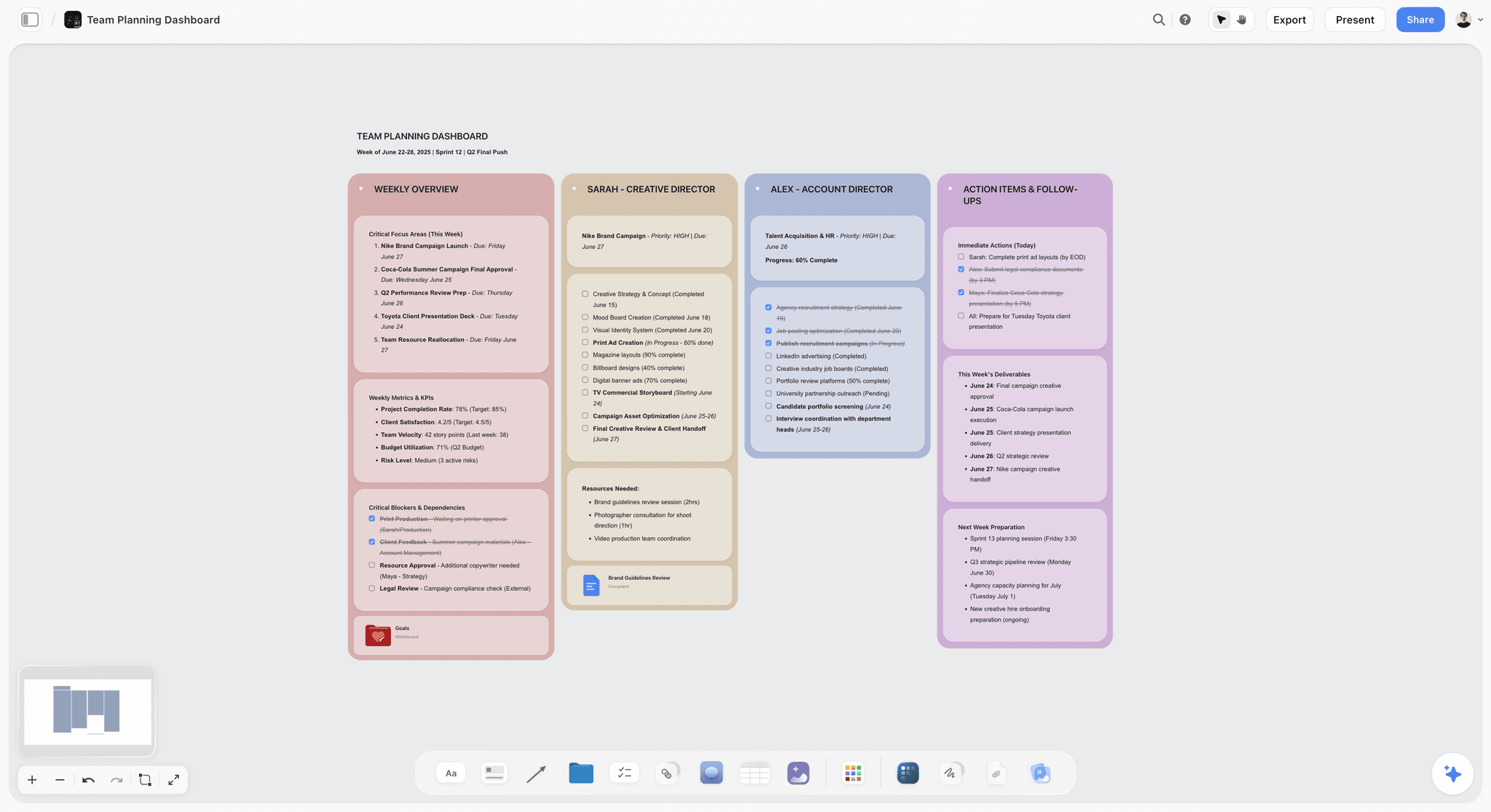
The verdict. The only tool here built for the decision that is actually the memoir: which scenes, in what order, next to what.
Best for. Seeing every candidate scene at once and moving them until the arrangement means something.
Pricing. Paid-only during early access. Plus is $7.99 per month billed annually or $9.99 monthly. Pro is $14 per month billed annually or $19 monthly, adding AI image generation, roughly twenty times more AI usage and memory across conversations. Max is $39 per month billed annually or $49 monthly and adds the Team Workspace with permissions and roles. Pricing is flat per account rather than per seat, and anyone a paid member invites to a board joins free. The Free plan launches before the end of 2026.
Why it ranks here. Problem three is a juxtaposition problem, and juxtaposition is the one thing a list cannot express.
Here is the concrete version. You have a scene from a hospital corridor when you were nine, and a scene from a work dinner when you were thirty-four, and you suspect they belong next to each other. In an outline you can put them adjacent, and you learn almost nothing, because an outline shows sequence and hides everything else. On a canvas you can put them side by side, look at them together for a while, and see whether the second one detonates the first. Sometimes it does not, and you have learned that in ten minutes rather than in a drafted chapter.
At scale this is the whole game. Two hundred scene cards laid out, colour-coded by era or by theme, and the shape of the book becomes visible: this decade has thirty cards and that one has four, the thread you thought was central appears in six scenes and the one you thought was minor appears in nineteen. Memoirists routinely discover their actual subject this way, and they usually discover it late, in draft three, at great cost.
The chronology trap is also visible here in a way it is not elsewhere. Arrange the cards by date and the book looks complete. Arrange them by what they mean and the gaps appear immediately.
The AI reads your full active canvas board by default, plus up to one Tactic and up to three Documents you @-mention, which is useful as an outside view: asking what a board of scenes currently seems to be about is a mirror when you have been inside the material for two years.
Access shape matters more than it sounds for this form. Memoir writers work with an editor, sometimes a writing group, sometimes a sibling who is checking a chapter. Invited collaborators join free, so those conversations do not require anyone to buy a seat.
Strengths.
- Every candidate scene visible at once, which is the central need of the form.
- Juxtaposition is expressible, so you can test whether two scenes detonate each other before drafting.
- Thematic imbalance becomes visible early rather than in draft three.
- Photographs, letters and documents can sit beside the scene they corroborate.
- Invited collaborators join free, so editors and family readers cost nothing.
Limitations.
- Not a writing environment. No manuscript compilation, no word count targets, no chapter export, no format an agent expects to receive.
- No distraction-free drafting mode. You would not write your book here.
- No citation or reference management.
- No transcription of interviews.
- No consent or permissions tracking with required fields, which Airtable does properly.
- Team Workspace with permissions and roles is on Max at $39 per month billed annually.
The trade off. Storyflow answers the question that stops memoirs and none of the questions involved in finishing one. Use it for structure and Scrivener for the writing, which is the pairing this post actually recommends.
2. Scrivener
The verdict. Where the writing should happen, and the best value in long-form writing software.
Best for. Drafting a memoir with research, photographs and transcripts in the same project.
Pricing. One-time licence, historically around $59.99 for macOS or Windows, with an iOS app around $23.99. Verify on literatureandlatte.com.
Why it ranks here. The memoirist's research is unusual: photographs, letters, a birth certificate, a transcript of a conversation with an aunt. All of it needs to be beside the draft, because memoir writing is a constant back-and-forth between what you remember and what the evidence says.
Scrivener's binder holds both, and split-screen puts the photograph next to the paragraph it is producing. For problem one this is the practical answer.
The corkboard covers some of problem three. It is a real structural tool with synopses per scene, and it is genuinely useful once you know roughly what the chapters are. It shows one folder level at a time, which is why it is second here rather than first: during the phase where you do not yet know the shape, seeing a slice at a time is exactly the constraint you are trying to escape.
Strengths.
- Research and draft in one project, essential for evidence-led memoir.
- Corkboard and outliner for structure once the shape is roughly known.
- Compile produces a manuscript an agent will accept.
- One-time purchase and a project format that is a readable folder of files.
- Snapshots make rewriting a difficult chapter less frightening.
Limitations.
- Corkboard shows one folder level at a time, so whole-book juxtaposition is hard to see.
- Dense interface with a real learning curve at exactly the moment you are emotionally taxed.
- Collaboration is essentially absent.
- iOS sync depends on Dropbox and is a recurring frustration.
- No consent or permissions tracking.
The trade off. Buy it and write in it. Its structural tools are good enough that some memoirists need nothing else, and if you are stuck on shape, they are not the ones who were stuck.
3. Day One
The verdict. The best capture tool for the material you have not realized you need yet.
Best for. Fragments, photographs, voice notes and dated entries collected over years.
Pricing. Free tier with limits. Premium from around $34.99 per year. Verify on dayoneapp.com.
Why it ranks here. Memoir has an unusual relationship with time: much of the material is captured long before there is a book, or not at all. Day One's value is that entries carry dates, locations, weather and photographs automatically, which turns a journal into a corroborating record without any discipline on your part.
Writers who kept a Day One journal for five years before starting a memoir have something genuinely valuable: contemporaneous accounts that are not reconstructed. That is the closest thing this form has to a primary source.
Third because it is capture rather than construction, and because it cannot help you if you did not already use it.
Strengths.
- Automatic metadata: date, location, weather, photographs.
- Contemporaneous entries are genuinely stronger evidence than recalled ones.
- Voice and photo capture on a phone, so material gets recorded.
- End-to-end encryption, which matters for personal material.
- Good export options.
Limitations.
- Only helps if you have been using it.
- Subscription for the useful features.
- Not a writing or structuring tool.
- Apple-centric, though other platforms exist.
The trade off. Start it now even if the book is years away. It is the only tool here whose value is entirely determined by when you started.
4. Airtable
The verdict. The unglamorous answer to the two problems memoirists most want to avoid.
Best for. Tracking who is in the book, what they were told, and what evidence supports each claim.
Pricing. Free tier with record limits. Team plans from around $20 per seat per month billed annually. Verify on airtable.com.
Why it ranks here. Problem two, consent, is usually handled by not handling it. The reason is that the work is uncomfortable rather than difficult, and having a structure makes uncomfortable work possible.
A People table listing everyone who appears, how they appear, whether they have been told, what they asked for, and whether a name has been changed. A Claims table for anything checkable, with a field for the corroborating evidence and its location. Neither is complicated. Both convert a vague anxiety into a list, and a list can be worked through.
The publishing benefit is concrete too: when a legal read happens, you have answers, and the process takes days rather than weeks.
Fourth because it does nothing for the writing or the shape.
Strengths.
- Required fields, so a person cannot be logged without a consent status.
- Links claims to evidence and its physical or digital location.
- Filtered views answer legal questions quickly.
- Free tier is sufficient for a single book.
Limitations.
- Needs setting up, which is a barrier at exactly the wrong emotional moment.
- Per-seat pricing if collaborators need in.
- Nothing creative.
- Can become an elaborate form of procrastination.
The trade off. Half an afternoon of setup that removes a category of late-stage panic. Do it in month two, not month twenty.
5. Obsidian
The verdict. Good for the phase where you are collecting fragments and do not yet know the pattern.
Best for. Notes, memories and links between them, in plain files you own.
Pricing. Free for personal use. Sync from around $4 per month. Verify on obsidian.md.
Why it ranks here. A note per memory, linked to the people, places and themes it touches, accumulates into something with visible structure. Backlinks surface that your father appears in nineteen memories you never grouped, which is a real discovery.
Fifth because it requires sustained discipline and because its structural view is a graph, which is beautiful and rarely tells you what to put next to what.
Strengths.
- Plain markdown files you will be able to open in twenty years.
- Backlinks surface patterns you did not consciously build.
- Free for personal use with local storage, which matters for sensitive material.
- Canvas plugin gives a rough spatial view.
Limitations.
- Discipline-dependent.
- The graph view is more attractive than useful.
- No compilation to manuscript.
- Not built for photographs and documents at volume.
The trade off. Strong if you already think in linked notes. Adding the habit mid-project rarely works.
6. Otter.ai
The verdict. The most efficient way to turn family conversations into usable material.
Best for. Recording and transcribing interviews with relatives and witnesses.
Pricing. Free tier with monthly transcription minutes. Paid plans from around $8.33 per month billed annually. Verify on otter.ai.
Why it ranks here. Most memoir corroboration comes from other people, and those conversations are hard to conduct while taking notes, particularly when the material is emotional. Recording and transcribing lets you be present, which produces better conversations and better material.
Two cautions, both important. Ask permission before recording, always, and say what it is for. And treat the transcript as evidence of what somebody said rather than of what happened, because their memory is as reconstructive as yours.
Sixth because it is a capture tool for one input.
Strengths.
- Lets you be present in an emotionally difficult conversation.
- Searchable transcripts, so you can find a phrase two years later.
- Speaker separation on multi-person recordings.
- Usable free tier for a small number of interviews.
Limitations.
- Accuracy drops with accents, overlapping speech and elderly voices, which is exactly your use case.
- Cloud processing of sensitive personal material is a real consideration.
- Subscription for meaningful volume.
- Transcripts always need correction.
The trade off. Genuinely useful, with a consent obligation attached that is not optional.
7. Plottr
The verdict. The right tool when chronology genuinely carries the book rather than merely ordering it.
Best for. Timeline-heavy memoirs with multiple threads across decades.
Pricing. Licence or subscription, historically around $25 per year or a one-time option. Verify on plottr.com.
Why it ranks here. Some memoirs really are timeline problems: a family history across three generations, an illness narrative with a medical chronology, a book where two threads run in parallel. Plottr's timeline with multiple lanes handles that specific shape well.
Seventh because most memoirs are not timeline problems, and using a timeline tool on one reinforces the chronology trap this post warns about.
Strengths.
- Multiple parallel timeline lanes, genuinely useful for family history.
- Character and place tracking across a long span.
- Exports to Scrivener.
- Inexpensive.
Limitations.
- Reinforces chronological thinking, which is the failure mode of the form.
- Built for fiction, so terminology fits awkwardly.
- Not a writing environment.
- Limited for non-linear structures.
The trade off. Right for family history and illness narrative. Actively unhelpful for a memoir whose shape is thematic.
8. Ulysses
The verdict. The calmest drafting environment here, for writers whom Scrivener overwhelms.
Best for. Distraction-free writing with a clean library.
Pricing. Subscription from around $5.99 per month or $49.99 per year. Verify on ulysses.app.
Why it ranks here. Memoir drafting is emotionally taxing, and there is a real argument for a tool that does almost nothing. Ulysses is markdown-based, calm, and its library keeps chapters organized without demanding decisions.
Eighth because it has no structural tools worth the name, no research binder, and it is a subscription for something Scrivener does once.
Strengths.
- Genuinely calm, well-designed writing surface.
- Markdown, so your text is portable.
- Good library organization without configuration.
- Reliable sync across Apple devices.
Limitations.
- Subscription-only.
- Apple ecosystem only.
- No corkboard or structural view.
- No research management.
The trade off. Worth it if Scrivener's density is genuinely stopping you from writing. Otherwise it is a nicer version of a solved problem.
9. Milanote
The verdict. A good place for the photographs and objects that trigger memory.
Best for. Visual prompts: family photographs, documents, places.
Pricing. Free plan capped at 100 notes, images and links across the account. Paid plans from around $12.50 per person per month. Verify on milanote.com.
Why it ranks here. Memory is triggered visually more reliably than verbally, and a board of family photographs, house plans and objects is a genuinely productive way to generate material. Writers report remembering things they had not accessed in decades while arranging photographs.
Ninth because it holds prompts rather than structure, and because the 100-item cap arrives quickly with photographs.
Strengths.
- Excellent for visual memory prompts.
- Intuitive, requires no learning.
- Quiet interface that suits reflective work.
- Good web clipper for archival images.
Limitations.
- 100-item free cap across the account, hit fast with photographs.
- Per-person pricing.
- No writing or structural tools.
- No evidence or consent tracking.
The trade off. Useful in the generative phase. Not a system.
10. Notion
The verdict. Fine for the administration around a memoir, and wrong for the memoir.
Best for. Submission tracking, agent research, permissions log and project admin.
Pricing. Generous free plan for individuals. Paid plans around $10 per user per month billed annually. Verify on notion.so.
Why it ranks here. Every book has an administrative layer: agents queried, submissions sent, permissions requested for quoted material, deadlines. Notion handles that well and most writers already have it.
Tenth because writing a memoir in Notion is a bad idea, and because its database approach to a life produces an inventory rather than a book.
Strengths.
- Good for submissions and permissions administration.
- Databases for agent research and querying.
- Familiar and free for individuals.
- Easy to share with an editor.
Limitations.
- Poor long-form writing environment.
- Cloud-dependent for personal material.
- Everything becomes a document.
- Configuration is seductive procrastination.
The trade off. Admin here, book elsewhere.
11. Google Docs
The verdict. The best tool on this list for the conversation you are avoiding.
Best for. Sharing a chapter with the person who is in it, and receiving their response.
Pricing. Free with a personal account. Business tiers from around $8 per user per month. Verify on workspace.google.com.
Why it ranks here. Problem two eventually requires giving somebody a chapter to read. Google Docs is the lowest-friction way to do that: they need no software, no account conversation, and the comment thread keeps their reaction attached to the specific sentence rather than arriving as a general feeling.
Eleventh because it is a poor place to write a book and offers nothing for structure or research.
Strengths.
- Anyone can open it, on anything, with no setup.
- Comments attach reactions to specific passages.
- Version history has saved many manuscripts.
- Free.
Limitations.
- Degrades badly on long documents.
- No research or structural tools.
- Cloud storage of sensitive personal material.
- No offline reliability.
The trade off. Not your writing tool. Possibly your most important sharing tool.
What to Actually Pay For
Spend almost nothing, and spend it on structure and writing. Scrivener once, a canvas at under $10 a month during the year you are finding the shape. That is the whole necessary stack for most memoirists.
Start the consent tracking in month two. It costs an afternoon and it converts a diffuse dread into a list. Doing it at galley stage is how books get rewritten in six weeks.
Start a journal today regardless of when the book is. Contemporaneous entries are the only primary source this form has, and their value is decided entirely by when you started.
Do not buy a timeline tool unless the timeline is the story. For most memoirs it reinforces exactly the failure mode you are trying to escape.
Do not buy a subscription writing app to avoid learning Scrivener. Learn Scrivener in a weekend and keep the money.
Tools to Avoid for This Job
A single long document as your whole book. Memoir is a selection and arrangement problem, and a monolithic document makes rearrangement expensive enough that you stop testing alternatives. That is how a first structure becomes the final one by attrition.
Chronological outlines as your structure. They look like structure and are not. Ordering your life by date is a description of what happened, not a decision about what it means.
AI writing tools for the prose. The material of memoir is specificity, and generative models produce the average. Use them to summarize, question and mirror your own material if you like, and write the sentences yourself.
Cloud-only storage for sensitive material without encryption. Memoir drafts contain other people's private information as well as your own. This is worth ten minutes of thought about where files actually live.
Delaying the consent conversation until the manuscript is finished. By then the structure depends on the contested scenes and your options are worse. Early conversations are uncomfortable; late ones are expensive.
What No Tool on This List Does
None of these will tell you whether the book is yours to write.
Every memoir contains other people's lives, and the question of how much of somebody else's story you are entitled to tell has no technical answer. Different writers land in genuinely different places, and the ones who have thought about it deliberately produce better books than the ones who did not think about it at all. No permissions tracker resolves this. It only makes visible how many people are involved.
None of them will make you honest, either. The most dangerous thing in memoir is not the memory you get wrong, it is the version of yourself the narrative is quietly flattering. Every draft has one, and it is invisible to the person who wrote it. This is the single strongest argument for an editor, or a reader who is not fond of you.
And none of them will make the writing less painful. Memoir drafting requires going back into material you may have spent years arranging your life around not thinking about. That is real, it is not a productivity problem, and the honest advice is that a good therapist has a better claim on your money than any software on this list.
The Bottom Line
Memoir has three problems that no other form has, and none of them are writing problems: verification without citation, consent without contract, and structure without plot.
Choose by the one that is stopping you. If you cannot verify anything, start a journal today and record your interviews, because contemporaneous material is the only primary source this form has. If you are dreading the family conversation, make a list and start having it now, while the structure can still move.
But if you have the material and cannot see the book, that is chronology mistaken for shape, and outlines will keep hiding it from you because a list can only express sequence. That is the narrow case where Storyflow ranks first here, and it is the only claim this post makes for it.
FAQ: Tools for Memoir Writers
What is the best tool for writing a memoir?
Storyflow for structure and Scrivener for writing. Memoir's binding constraint is arrangement, deciding which scenes go in and what they mean next to each other, and that is a spatial problem a canvas handles and an outline hides. Scrivener is where the actual drafting should happen, with your photographs and transcripts in the same binder.
What is the best tool to organize research for a memoir?
Scrivener's binder for material you are writing against, Day One for anything you capture as you go, and Airtable for tracking corroborating evidence against specific claims. Memoir research is unusual in that much of it is photographs, letters and conversations rather than published sources, so a reference manager matters less here than in other nonfiction.
Is Storyflow a writing app?
No. Storyflow has no manuscript compilation, no word count targets, no distraction-free drafting mode and no export format an agent expects. It ranks first on this list for one job: seeing every candidate scene at once and arranging them until the juxtapositions do the interpretive work. Write in Scrivener or Ulysses.
Is Storyflow free for writers?
Not during early access. Storyflow is paid-only right now, starting at $7.99 per month billed annually on the Plus plan. The Free plan launches before the end of 2026. The genuinely free path today is that anyone a paid member invites to a board joins free, which is useful for sharing a structure board with an editor or a writing group.
How do I structure a memoir when my life has no plot?
Stop ordering by date and start ordering by meaning. Put every candidate scene on a card, lay them all out where you can see them, and test juxtapositions: does the scene from when you were nine change when it sits beside the one from when you were thirty-four. The arrangement is the authorship in this form, and chronological order is a description rather than a decision.
How do I handle writing about family members?
Track it deliberately and start early. List everyone who appears, how they appear, whether they know, and what they have asked for. Then have the conversations while the structure is still movable, not at galley stage when the book depends on the contested scenes. Most memoirists postpone this and most regret the timing rather than the outcome.
What do I do when I discover a memory is wrong?
Write about the discovery. Memoir readers are more forgiving of acknowledged unreliability than of confident inaccuracy, and the moment of finding out that a long-told memory does not survive checking is frequently more interesting than the memory. What you cannot do is quietly keep the version you prefer.
What is the best free tool for memoir writing?
Google Docs for drafting and for sharing chapters with the people in them, Obsidian for notes and fragments in files you own, and Airtable's free tier for consent and evidence tracking. Storyflow is paid-only during early access, so it does not belong in a free stack today, though invited collaborators join free.
Should I record interviews with family?
Yes, with explicit permission and a clear statement of what it is for. Recording lets you be present in a conversation that is often emotional, which produces better material than trying to take notes. Treat the transcript as evidence of what somebody said rather than of what happened, because their memory is reconstructive too.
Scrivener or Ulysses for memoir?
Scrivener for almost everyone, because memoir needs research beside the draft and Ulysses has no binder. Ulysses if Scrivener's density is genuinely preventing you from writing, which is a real phenomenon and not a failure of character.
Can AI help with memoir?
For summarizing and mirroring your own material, modestly. Asking a board of scenes what it currently seems to be about can be a useful outside view after two years inside the material. For the prose, no: memoir lives on specificity and generative models produce the average, which is the exact opposite of what the form requires.
How long should a memoir take?
Longer than you plan, and the reason is usually problem three rather than word count. Writers who spend a fortnight arranging scenes before drafting often finish faster than those who begin at chapter one, because the second group discovers the structure by writing chapters they later cut.
What should I do if I am stuck at fifty thousand words?
Put every scene you have on cards where you can see all of them, and look at the distribution rather than the sequence. Most stuck memoirs have a thematic imbalance that is invisible in the manuscript and obvious on a board, usually a thread that has taken over and a subject that was supposed to be central appearing four times.
What is the single change worth making this week?
Write down the names of everybody who appears in your book and one line on how they appear. It takes twenty minutes, most memoirists have never done it, and roughly half find at least one person on the list they had not consciously registered as a character.
Table of Contents
- Key Takeaways
- The Three Problems Only Memoir Has
- At a Glance: The 11 Tools Compared
- How I Ranked These
- Quick Picks by Job Type
- 1. Storyflow
- 2. Scrivener
- 3. Day One
- 4. Airtable
- 5. Obsidian
- 6. Otter.ai
- 7. Plottr
- 8. Ulysses
- 9. Milanote
- 10. Notion
- 11. Google Docs
- What to Actually Pay For
- Tools to Avoid for This Job
- What No Tool on This List Does
- The Bottom Line
- FAQ: Tools for Memoir Writers
- Related Reading
Templates to check out for this topic


Templates you can use in Storyflow
Every Storyflow board starts from real structure and an AI that reads the whole canvas. Open one of these templates and make it yours.


See Storyflow in Action
A visual AI workspace where every feature lives inside one canvas. No tab-switching, no context lost.
Build your entire board from a single message
Type what you need in the AI chat at the bottom of your canvas. The AI adds cards, headings, and structure directly onto your board.
Use expert frameworks as AI context
Type @ in the AI chat and choose any Tactic. The AI tailors every response to that framework instead of giving generic advice.
Turn your board into a mind map in seconds
Ask the AI to restructure your canvas as a mindmap. It connects your ideas into a visual hierarchy so you can see how everything relates.
Why Storyflow Exists
Storyflow actually began as a personal tool while working on creative and research projects.
We kept running into the same problem: ideas were scattered everywhere: notes, documents, and whiteboards.
Nothing helped us see how everything connected.
So we started building a workspace designed around how ideas actually grow.
→ Read how Storyflow was createdSara de Klein
Head of Product at Storyflow
Published: 2026-08-11
Extremely simple, seriously capable


See how easy it is to get started
Watch a real project come together, from a blank board to a finished plan, clicked through step by step.
Start creating with AI and become more productive
Transform your creative workflow with AI-powered tools. Generate ideas, create content, and boost your productivity in minutes instead of hours.