The 12 Best Script Coverage Tools in 2026 (AI and Human, Tested)
The best script coverage tools in 2026, AI and human, tested on real scripts. 12 tools compared, from ScriptReader.ai and WeScreenplay to Coverfly and the canvas that fixes structure before coverage.

Category
Filmmaking
Author

Justkay
Documentary Filmmaker & Founder at Storyflow
Topics
2026-07-10
•
16 min read
•
Filmmaking- best script coverage tools 2026
- script coverage
- AI script coverage
- screenplay coverage service
- script feedback tools
- ScriptReader.ai
What are the best script coverage tools in 2026?
The best script coverage tools in 2026 are ScriptReader.ai (best AI coverage), WeScreenplay (best human-plus-AI coverage service), Coverfly (best coverage with industry exposure), and The Black List (best evaluations with reach). Script coverage is the professional evaluation of a screenplay: a synopsis, notes, and a verdict of Recommend, Consider, or Pass. You can now get it from AI in minutes or from human readers in days, but the smartest move is often upstream: fix the structural problems while you write, so the coverage you pay for lands on a stronger draft. Storyflow leads that upstream half because its AI reads your whole story and flags weaknesses before a reader ever does. This guide ranks both the coverage tools that evaluate your script and the tool that strengthens it first, and it is honest about which does which.

Full disclosure: ScriptReader.ai leads the ranked list for fast AI coverage, and WeScreenplay is the strongest human coverage service with a real reader's nuance. Storyflow is our own product and is listed first in the reviews and the comparison table: our pick first, then the rest by job. The ranked list places it fifth because it is not a coverage service and produces no Recommend, Consider, or Pass verdict. Its role is upstream: the AI reads your whole story and flags the structural weaknesses a reader would catch while they are still cheap to fix, so you pay for coverage on a draft that is already strong. For the actual verdict you still use ScriptReader.ai or WeScreenplay. We link to every tool so you can judge the fit.
Quick Comparison
These four cover the coverage job from both ends: fast AI coverage, professional human coverage, coverage that comes with industry exposure, and the canvas that strengthens the draft before you pay for any of it.
| Tool | Best For | AI Features | Price |
|---|---|---|---|
| ScriptReader.ai | Fast AI coverage | AI coverage in minutes | Per-script |
| WeScreenplay | Professional human coverage | Human plus AI options | Per-script |
| Coverfly | Coverage plus exposure | Human coverage plus hosting | Free to paid |
| Storyflow | Fix structure before coverage | Canvas AI flags weak structure | $7.99 mo annual (free plan late 2026) |
All 12 Script Coverage Tools, Ranked
- ScriptReader.ai: best AI script coverage (9.1/10)
- WeScreenplay: best human-plus-AI coverage service (9.0/10)
- Coverfly: best coverage with industry exposure (8.7/10)
- The Black List: best evaluations with reach (8.5/10)
- Storyflow: best for fixing structure before coverage (8.4/10)
- Sudowrite: best AI writing and feedback tool (8.1/10)
- ChatGPT: best for DIY AI feedback (7.9/10)
- Claude: best for nuanced DIY feedback (7.8/10)
- Fictionary: best structural analysis of a draft (7.6/10)
- Coverage Ink: best traditional human coverage (7.4/10)
- Final Draft: best built-in script reports (7.2/10)
- Save the Cat! Story cards: best structure self-check (7.0/10)
Best Script Coverage Tool by Job
The overall ranking is not the answer to every question. Match the tool to the job you actually have:
- Best AI script coverage: ScriptReader.ai. Fast, cheap, and consistent notes.
- Best human-plus-AI coverage service: WeScreenplay.
- Best coverage with industry exposure: Coverfly.
- Best way to fix structure before you pay for coverage: Storyflow. It does not produce coverage, and it is the cheapest way to catch the structural problems coverage would flag.
Comparison Table: 12 Script Coverage Tools Compared
| Tool | Coverage Type | Speed | Cost | Verdict / Notes |
|---|---|---|---|---|
Storyflow | Structural feedback | Instant | Subscription | Fixes before coverage |
ScriptReader.ai | AI coverage | Minutes | Per-script | Notes and score |
WeScreenplay | Human plus AI | Days | Per-script | Full coverage |
Coverfly | Human plus hosting | Days | Free to paid | Coverage and exposure |
The Black List | Human evaluation | Days | Per-evaluation | Score and reach |
Sudowrite | AI writing feedback | Instant | Subscription | Notes and rewrite |
ChatGPT | DIY AI feedback | Instant | Free / paid | Prompted notes |
Claude | DIY AI feedback | Instant | Free / paid | Nuanced notes |
Fictionary | Structural analysis | Instant | Subscription | Arc analysis |
Coverage Ink | Human coverage | Days | Per-script | Full coverage |
Final Draft | Script reports | Instant | One-time | Scene reports |
Save the Cat! Story cards | Structure check | Instant | Subscription | Beat check |
Pricing changes often. Confirm current pricing on each site.
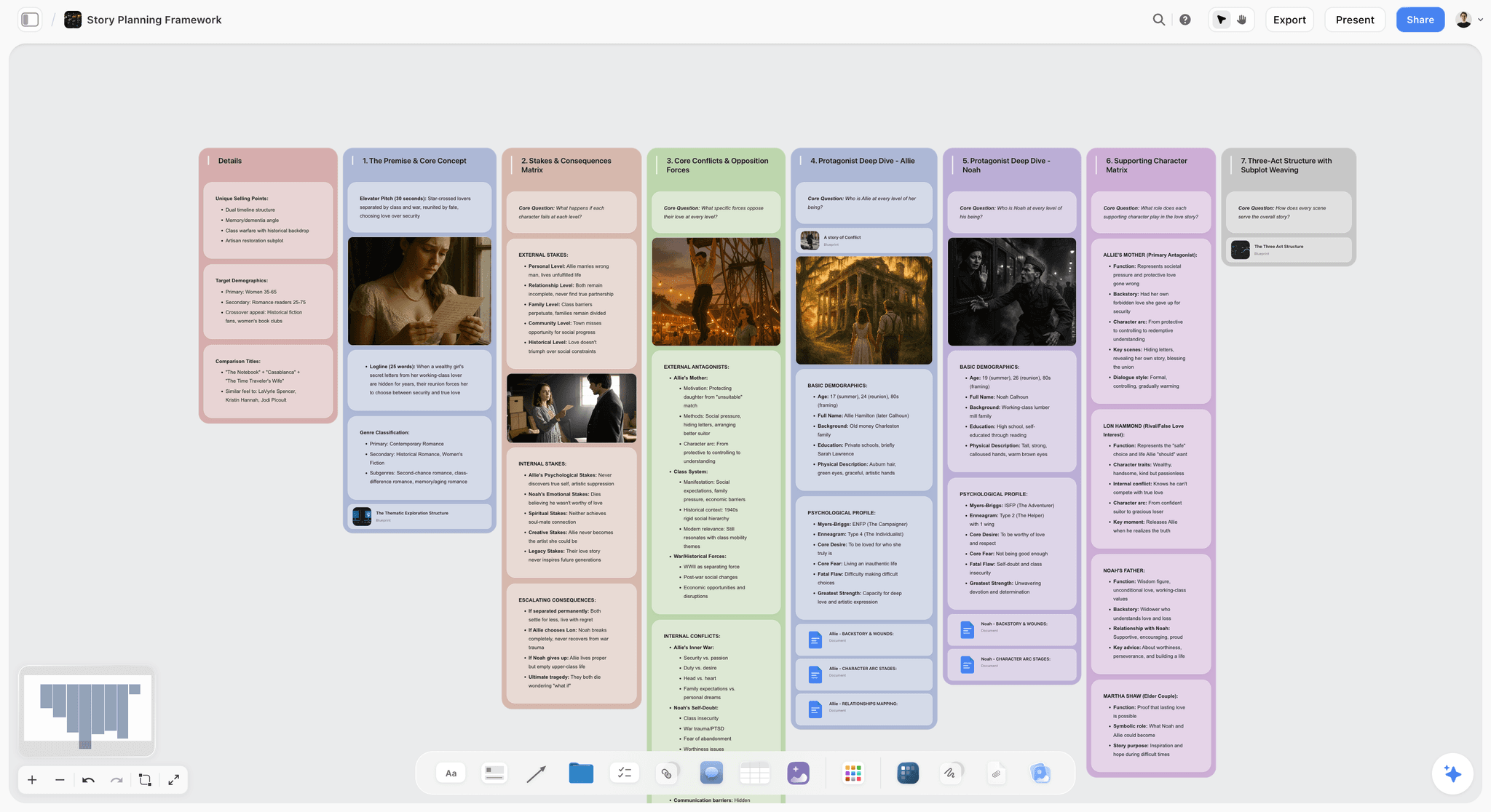
Storyflow canvas where the AI flags structural weaknesses a coverage reader would catch, while they are cheap to fix
Fix the structure before you pay for coverage
Storyflow's AI reads your whole story and flags the structural problems a coverage reader would catch, while they are still cheap to fix. Send your script for coverage once it is already strong. Free to start.

The Four Parts of Coverage (and What Each One Can and Cannot Tell You)
Every coverage document, whether an AI writes it in minutes or a human reader delivers it in days, is built from the same four parts. Knowing what each is for tells you which tool to trust for which job, and why the same note costs nothing during outlining but a page-one rewrite after the draft is done.
Coverage is a verdict, not a fix. Each of the four parts grades your script. None of them rewrites it.
- The logline. One or two sentences that prove the reader understood your premise. If it comes back wrong, your concept did not land on the page. This is the cheapest signal to read: you can test it in an afternoon by asking anyone to summarize your idea back to you.
- The synopsis. A one to two page retelling of the plot, and its real job is diagnostic. Where the synopsis goes vague or speeds up, your structure is thin. A reader who cannot cleanly summarize your second act just told you it does not hold.
- The comments. The paragraphs on structure, character, dialogue, and concept. This is where the value lives and where AI and human coverage diverge most. AI is reliable on structure and pacing; human readers are better on subtext, voice, and whether the script actually moves someone.
- The verdict. Recommend, Consider, or Pass, usually with letter grades. This is the part writers fixate on and the part that helps least. A Pass tells you the reader was not moved, rarely why in a way you can act on.
The pattern across all four is the same. Coverage tells you where the script is weak; closing that gap is craft, and craft is cheapest upstream. Get structural feedback while a note costs an hour, then pay for coverage to confirm the draft rather than discover it is broken.
How We Evaluated These Coverage Tools
Every tool here was assessed on how much it actually improves a script, not just grades it. Five criteria, weighted in this order:
- Feedback quality. Are the notes specific and actionable, or generic?
- Timing. Does it help while you can still cheaply fix things, or only after?
- Craft coverage. Does it address structure, character, dialogue, and concept?
- Value. What do you get for the cost and speed?
- Reach. For paid services, does it also offer industry exposure?
Each was tested by running a real script through AI coverage, human coverage, and structural feedback during development, judged on how much it improved the script.
Detailed Reviews: The 12 Best Script Coverage Tools
1. Storyflow
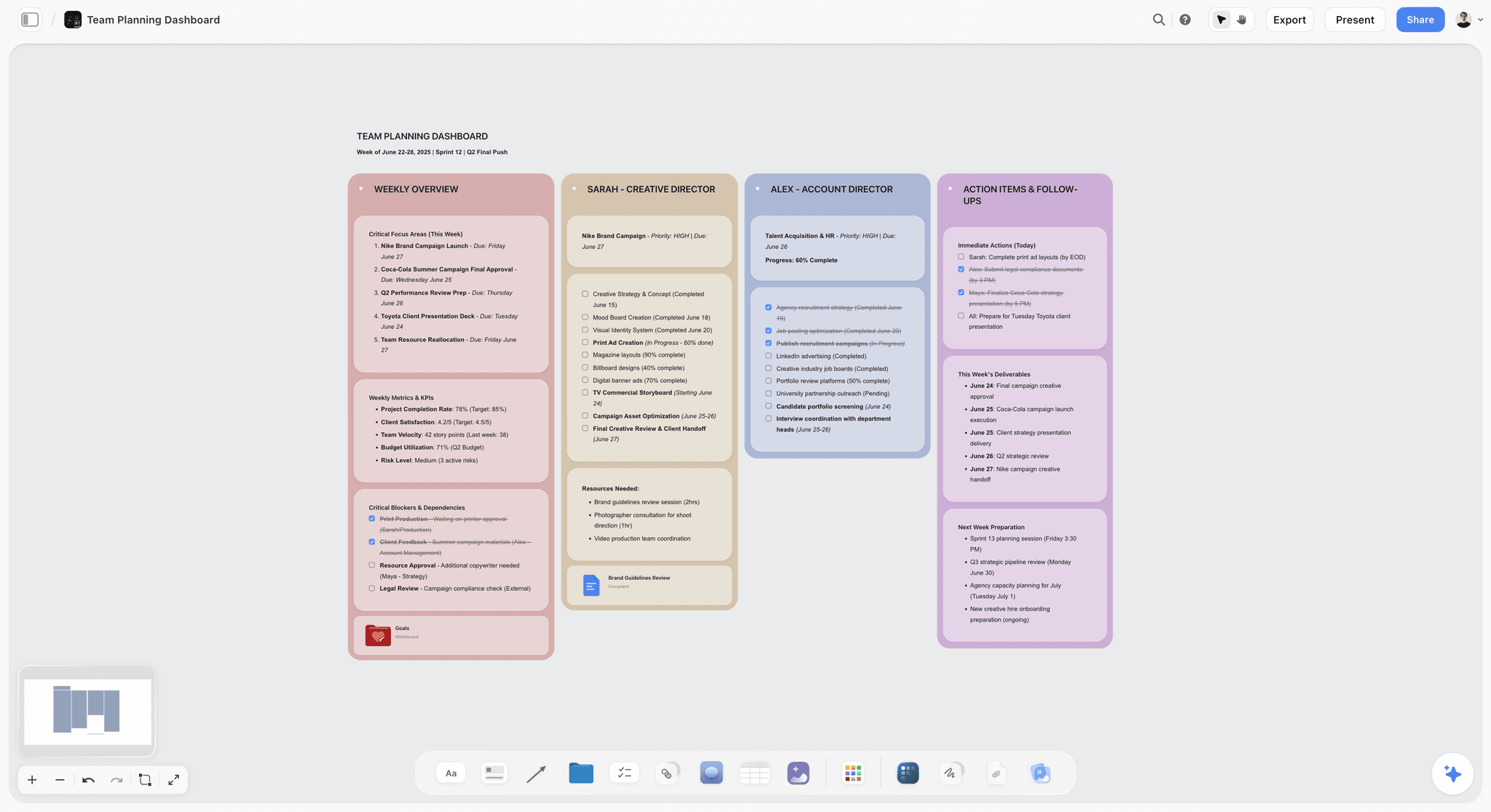
Storyflow is a visual workspace for developing and revising a script, not a formal coverage service, and it does not produce a Recommend, Consider, or Pass verdict. It is the tool that makes your draft strong enough that coverage confirms it.
Best for: Writers who want to fix structure and character before paying for coverage.
Verdict: Not a coverage service. Use ScriptReader.ai or WeScreenplay for the verdict. Use Storyflow to make the draft strong first.
Why it ranks here: Storyflow is here, below four actual coverage products, on purpose: it does not evaluate your script, so it cannot be the best coverage tool. What it does is the upstream job the others assume you already did. The AI reads your active board and flags the structural weaknesses a reader would flag while a note still costs an hour, not a page-one rewrite, and the Story Blueprints let you pressure-test your beats against proven structures first. It is the only tool here that changes the draft rather than grading it, which is why it does not top a coverage ranking.
Key features
- Project-aware AI that reads your active board (plus up to 1 Tactic and 3 @-mentioned documents) and flags structural weaknesses.
- 200+ Story Blueprints to pressure-test the draft against proven structures like the Hero's Journey.
- Movable canvas to fix structure while it is still cheap.
- Unlimited boards and collaboration for shared notes.
Pricing
Free: launching before the end of 2026. Plus: $7.99/mo annual ($9.99 monthly). Pro: $14/mo annual ($19 monthly). Max: $39/mo annual ($49 monthly). Pricing is flat per account, not per seat.
Pros
- Catches structural problems while they are cheap to fix.
- The AI reads the whole story, not one scene.
- Free plan covers the structural work.
Cons
- Not a coverage service: no coverage document, and no Recommend, Consider, or Pass verdict or letter grades. For that, use ScriptReader.ai or WeScreenplay.
- Not a reader service: no human eyes and no industry credibility the way The Black List carries.
- It develops and organizes the script; it does not grade the finished draft, so it never tells you a script is done.
- Cloud-only and newer than the incumbents, so there is no offline option and the library of coverage conventions is thinner.
For the AI screenwriting angle, see the best AI tools for screenwriters in 2026.
2. ScriptReader.ai
Best for: Writers who want fast, affordable coverage on a draft.
Verdict: The best AI coverage tool. Fast and cheap, though it lacks a human reader's nuance.
Why it ranks here: It is the closest thing to a real coverage document an algorithm produces, and the low cost plus instant turnaround let you run coverage after every revision, not just once at the end. It is strong on structure and pacing, weak on subtext and tone, the boundary every AI coverage tool hits. Treat it as the cheap checkpoint between drafts, not the final verdict you send a producer.
Key features
- AI coverage in minutes.
- Notes on craft elements.
- Scoring.
- Affordable per-script.
Pricing
Per-script pricing.
Pros
- Fast and cheap.
- Consistent structure.
- Good for quick checks.
Cons
- Lacks human nuance.
- Generic on subtext.
- Not industry exposure.
3. WeScreenplay
Best for: Writers who want professional human coverage.
Verdict: The best human-plus-AI coverage service. Trusted and thorough.
Why it ranks here: WeScreenplay is the default professional coverage service for a reason: thorough human notes, experienced readers, and ties into the competition ecosystem, so one coverage can double as a contest entry. It costs more than AI and takes days, but that buys a reader who catches voice and subtext no algorithm reads well. The caveat is consistency, since reader quality varies. Send it a draft you already believe in, so the notes refine rather than rescue.
Key features
- Professional human readers.
- AI options.
- Competition coverage.
- Development notes.
Pricing
Per-script pricing.
Pros
- Professional human notes.
- Thorough coverage.
- Competition ties.
Cons
- Costs more than AI.
- Turnaround in days.
- Reader quality varies.
4. Coverfly
Best for: Writers who want coverage plus a path to industry visibility.
Verdict: The best coverage-with-exposure platform. Evaluation and reach together.
Why it ranks here: Coverfly is less a coverage product than an ecosystem: you host your script, enter competitions, climb the rankings, and buy coverage in one place, and a strong ranking can put you in front of people who option material. The exposure is the real draw. The caveat is that it is competitive and relative, a high ranking helps and an average one does nothing, and the coverage itself is not more penetrating than a dedicated service. Enter it with a draft that is already strong.
Key features
- Script hosting and rankings.
- Coverage services.
- Competition integration.
- Industry exposure.
Pricing
Free to host; paid coverage.
Pros
- Coverage plus exposure.
- Rankings can open doors.
- Free hosting.
Cons
- Exposure is competitive.
- Coverage is paid.
- Rankings are relative.
5. The Black List
Best for: Writers who want evaluations with real industry reach.
Verdict: The best evaluations-with-reach service. Real exposure potential.
Why it ranks here: The Black List carries more industry weight than any other evaluation here. A high score is public, credible, and has genuinely helped unknown writers get read by people who make decisions. The trade-off: high scores are rare by design, evaluations are paid, and hosting fees add up. It grades and exposes; it does not develop. Strengthen the draft before you spend here, because an average score buys visibility a weak script cannot convert.
Key features
- Professional evaluations.
- Script hosting.
- Industry discovery.
- Scoring.
Pricing
Per-evaluation and hosting fees.
Pros
- Real industry reach.
- Credible evaluations.
- Discovery potential.
Cons
- Evaluations are paid.
- High scores are rare.
- Costs add up.
6. Sudowrite
Best for: Writers who want AI feedback and rewriting help.
Verdict: A strong AI writing and feedback tool, more craft partner than coverage.
Why it ranks here: Sudowrite gives genuinely useful line-level and scene-level feedback and will rewrite or expand passages on request, which makes it a better writing partner than most chatbots. It leans toward fiction, so it is more at home in a novel than a screenplay, and it produces no formal coverage document or verdict. Reach for it when you want help writing the fix, not a graded assessment.
Key features
- AI feedback and suggestions.
- Rewrite and expand.
- Story tools.
- Genre awareness.
Pricing
Subscription.
Pros
- Good craft feedback.
- Rewrite help.
- Genre understanding.
Cons
- Not formal coverage.
- Subscription.
- Fiction-leaning.
7. ChatGPT
Best for: Writers who want free or cheap AI feedback with good prompting.
Verdict: A capable DIY feedback tool, only as good as your prompt and its context limits.
Why it ranks here: Give ChatGPT a coverage rubric and a scene and it returns coverage-style notes for free, which makes it the obvious zero-budget start. The catch is context: a full feature runs past what it holds cleanly in one pass, so on long scripts it loses the plot and contradicts itself. Use it for fast scene-by-scene spot-checks, not a full-script verdict.
Key features
- Prompted script feedback.
- Flexible analysis.
- Free and paid tiers.
- Fast.
Pricing
Free tier; Plus paid.
Pros
- Free to start.
- Flexible with prompting.
- Instant.
Cons
- Context limits on long scripts.
- Loses the plot over long inputs.
- Generic without good prompts.
8. Claude
Best for: Writers who want nuanced AI notes.
Verdict: A strong DIY feedback tool for nuance, within context limits.
Why it ranks here: Claude handles longer inputs than most chatbots and reads tone and subtext more sensitively, so its DIY notes feel closer to a thoughtful human reader than a checklist. It is the better free choice when you care about voice, not just beat placement. It still needs a good rubric and carries no industry weight, but as a nuanced second opinion it is hard to beat for the price.
Key features
- Nuanced prompted feedback.
- Strong on tone and subtext.
- Large context window.
- Free and paid tiers.
Pricing
Free tier; Pro paid.
Pros
- Nuanced notes.
- Handles longer scripts.
- Instant.
Cons
- Not formal coverage.
- Still needs good prompts.
- No industry reach.
9. Fictionary
Best for: Writers who want structural analysis of a finished draft.
Verdict: A strong structural analysis tool, novel-leaning but useful.
Why it ranks here: Fictionary imports a finished draft and evaluates it scene by scene against a set of story-structure elements, which is genuinely useful for spotting where an arc sags. It was built for novelists, so screenwriters have to translate some of its concepts, and it analyzes rather than covers, meaning no logline, synopsis, or verdict. It is best thought of as a structural microscope for a completed draft, not a coverage service.
Key features
- Story-arc analysis.
- Scene evaluation.
- Structural guidance.
- Manuscript import.
Pricing
Subscription.
Pros
- Analyzes a real draft.
- Structural focus.
- Concrete feedback.
Cons
- Novel-leaning.
- Subscription.
- Not full coverage.
10. Coverage Ink
Best for: Writers who want established human coverage.
Verdict: Reliable traditional human coverage.
Why it ranks here: Coverage Ink has been doing human coverage for years, and that longevity shows in notes that are development-minded rather than just judgmental. It is a solid, established choice when you want a professional read with a track record. It is paid, slower than AI, has no exposure platform, and reader quality varies. Choose it for the notes, not a path to the industry.
Key features
- Professional human coverage.
- Development notes.
- Established service.
- Multiple tiers.
Pricing
Per-script.
Pros
- Established and reliable.
- Human notes.
- Development focus.
Cons
- Paid and slower.
- No exposure platform.
- Reader quality varies.
11. Final Draft
Best for: Writers who want built-in script reports.
Verdict: Useful built-in reports, not a substitute for coverage.
Why it ranks here: If you already write in Final Draft, its scene, character, and location reports and the Beat Board give a light, DIY read on your own structure at no extra cost. But the reports describe your script back to you; they do not evaluate it or return a verdict. It is a formatting tool that happens to expose structure, not a coverage tool, and expensive if reports are all you want.
Key features
- Scene, character, and location reports.
- Structure lines.
- Beat Board.
- Industry-standard formatting.
Pricing
Around $199 one-time.
Pros
- Built-in reports.
- Structure tools.
- Industry standard.
Cons
- Not real coverage.
- No feedback or verdict.
- Expensive for reports alone.
12. Save the Cat! Story cards
Best for: Writers who want a structure self-check.
Verdict: A useful structure self-check, not external coverage.
Why it ranks here: Save the Cat! Story cards let you lay your script against the method's fifteen beats and see where you drift from the template, which is a clean, fast way to self-audit structure early. Its limits are exactly what you would expect from a self-check: it reflects one method, it offers no outside judgment, and it is not coverage. Treat it as a structure ruler you hold up to your own draft, then take the real verdict from a reader once the beats are in place.
Key features
- The fifteen beats.
- Beat checking.
- Genre templates.
- Method guidance.
Pricing
Subscription.
Pros
- Clear beat check.
- Method-based.
- Self-serve.
Cons
- Self-check only.
- One method.
- Not coverage.
Coverage Recommendations by Stage
13. Still Developing
Top picks: Storyflow + ChatGPT or Claude
Storyflow to fix structure while it is cheap, a chatbot for quick DIY notes, so the draft is strong before you pay for coverage. See the best screenplay outlining tools in 2026.
14. Draft Done, Budget Tight
Top picks: Storyflow + ScriptReader.ai
Storyflow for a structural pass, ScriptReader.ai for fast, affordable AI coverage.
15. Ready for Professional Coverage
Top picks: WeScreenplay + Storyflow
WeScreenplay for professional human coverage, Storyflow to fix what it finds efficiently on the canvas.
16. Seeking Industry Exposure
Top picks: Coverfly + The Black List
Coverfly for hosting, rankings, and coverage; The Black List for evaluations with reach. Strengthen the draft in Storyflow first.
17. Free / No Budget
Top picks: Claude, then Storyflow when there is budget
Claude's free tier for structural and DIY notes. Storyflow is paid-only during early access, so add it for the structural board once you can pay. A zero-cost feedback loop before you save up for paid coverage.
Honorable Mentions
- Greenlight Coverage: AI coverage alternative.
- Screencraft: competitions with coverage.
- Industrial Scripts: coverage and development services.
- Grammarly: line-level polish, not coverage.
- ProWritingAid: prose editing for scene description.
Where Coverage Tools Still Need a Human
Honest accounting. Coverage tools evaluate; they do not write the fix.
- The taste. A verdict tells you something is off; fixing it is craft.
- The subtext. AI coverage misses what a great human reader catches.
- The vision. Notes can pull a script toward generic; protecting the vision is yours.
- The rewrite. No tool rewrites the script well. That is the work.
The right use of coverage tools is to catch structural problems early and get a credible verdict late. The writing, and the judgment of which notes to take, stays human.
The Bottom Line
The best script coverage tools in 2026 split into evaluation and improvement. ScriptReader.ai leads AI coverage, WeScreenplay leads human coverage, and Coverfly and The Black List add industry exposure. The highest-leverage move is upstream: Storyflow flags the structural problems a reader would catch while you write, so the coverage you pay for confirms a strong draft instead of uncovering an expensive rewrite.
Coverage is a verdict, not a fix. Stop using coverage to find problems and start using it to confirm you solved them. Fix the structure while it is cheap, then pay for the verdict. Start a Storyflow board to strengthen your draft, and send it for coverage when it is ready.
FAQ: Script Coverage Tools in 2026
What is the best script coverage tool in 2026?
ScriptReader.ai is the best for fast, affordable AI coverage, and WeScreenplay is the best for professional human coverage. Coverfly and The Black List pair evaluation with industry exposure. But the highest-leverage tool is upstream: Storyflow flags the structural problems a coverage reader would catch while you write, so the coverage you pay for confirms a strong draft rather than discovering expensive problems. The best approach combines structural feedback during development with a verdict at the end.
What is script coverage?
Script coverage is a professional reader's evaluation of a screenplay, including a logline, synopsis, comments on structure, character, dialogue, and concept, grades on those elements, and an overall verdict of Recommend, Consider, or Pass. Producers and executives use it to decide what to read, and writers use it to learn what is not working. Coverage can now come from AI in minutes or human readers in days, with different depth and nuance.
Can AI do script coverage?
Yes. AI tools like ScriptReader.ai generate coverage in minutes with notes and a score, and general AI like ChatGPT or Claude can give coverage-style feedback when prompted with a rubric. AI coverage is fast and cheap but misses the nuance and subtext a great human reader catches. The best use is AI for quick, frequent structural checks during writing, plus human coverage for the final, credible verdict before you send the script out.
How much does script coverage cost?
It ranges widely. AI coverage from ScriptReader.ai is inexpensive per script. Human coverage from WeScreenplay, Coverage Ink, or The Black List typically costs more per script and takes days. Coverfly hosts scripts free with paid coverage options. DIY AI feedback via ChatGPT or Claude is free or cheap. Storyflow's structural feedback is included in its free plan. The smart budget move is to fix structure with free tools first, then pay for coverage on a strong draft.
Should I get script coverage before or after rewriting?
Get informal structural feedback continuously while you write and rewrite, and pay for formal coverage when the draft is genuinely strong. Paying for coverage on an early draft wastes money, because it will find structural problems you already suspect and that are expensive to fix late. Use free tools like Storyflow and AI chatbots to catch and fix structure early, then invest in professional coverage when you want a credible outside verdict on a polished draft.
Is script coverage worth it?
Yes, if you use it at the right time on a strong draft. Coverage earns its cost as a credible outside verdict once you have fixed the obvious structural problems, and Coverfly and The Black List add industry exposure. It is not worth it as a way to discover problems you could have caught for free during writing. Strengthen the draft with free tools first, then pay for coverage to confirm it and to open doors.
What is the best script coverage service?
WeScreenplay is the best all-round human coverage service, with experienced readers, thorough notes, and competition ties. Coverage Ink is a reliable, long-established alternative for development notes, and The Black List adds industry weight to a professional verdict. All three are paid and turn around in days. Whichever you choose, send a draft you have already strengthened, so the service confirms your work rather than charging you to find problems you could have fixed for free.
What is the best script coverage software?
For AI coverage software, ScriptReader.ai is the best pick: upload a script and get a logline, synopsis, notes, and a score in minutes. For DIY feedback, ChatGPT and Claude produce coverage-style notes from a rubric, with Claude better on longer scripts and subtext. For structural software that strengthens the draft first, Storyflow flags the weaknesses a reader would catch while they are still cheap to fix. Pair structural software during writing with AI or human coverage at the end.
How long does script coverage take?
AI coverage is nearly instant. Tools like ScriptReader.ai return a full evaluation in minutes, and DIY feedback from ChatGPT or Claude is immediate. Human coverage from WeScreenplay, Coverage Ink, or The Black List typically takes several days, sometimes longer in competition season. Structural feedback inside Storyflow is instant as you work. Use the instant tools continuously while you write, and reserve the multi-day human turnaround for the final verdict on a polished draft.
Does Storyflow give you a Recommend, Consider, or Pass verdict?
No. Storyflow does not produce a coverage document, letter grades, or a Recommend, Consider, or Pass verdict, and it is not a human reader service. It is a visual workspace for developing and revising the script and organizing notes. Its AI reads your active canvas and flags weaknesses while they are cheap to fix, but it never tells you the script is done. For a formal verdict you still need an AI tool like ScriptReader.ai or a human service like WeScreenplay.
Table of Contents
- All 12 Script Coverage Tools, Ranked
- Comparison Table: 12 Script Coverage Tools Compared
- What Script Coverage Is (and Its Hidden Trap)
- The Four Parts of Coverage (and What Each One Can and Cannot Tell You)
- How We Evaluated These Coverage Tools
- Detailed Reviews: The 12 Best Script Coverage Tools
- Coverage Recommendations by Stage
- Honorable Mentions
- Where Coverage Tools Still Need a Human
- The Bottom Line
- Author
- FAQ: Script Coverage Tools in 2026
- Related Reading
Templates to check out for this topic


Templates you can use in Storyflow
Every Storyflow board starts from real structure and an AI that reads the whole canvas. Open one of these templates and make it yours.


See Storyflow in Action
A visual AI workspace where every feature lives inside one canvas. No tab-switching, no context lost.
Build your entire board from a single message
Type what you need in the AI chat at the bottom of your canvas. The AI adds cards, headings, and structure directly onto your board.
Use expert frameworks as AI context
Type @ in the AI chat and choose any Tactic. The AI tailors every response to that framework instead of giving generic advice.
Turn your board into a mind map in seconds
Ask the AI to restructure your canvas as a mindmap. It connects your ideas into a visual hierarchy so you can see how everything relates.
Why Storyflow Exists
Storyflow actually began as a personal tool while working on creative and research projects.
We kept running into the same problem: ideas were scattered everywhere: notes, documents, and whiteboards.
Nothing helped us see how everything connected.
So we started building a workspace designed around how ideas actually grow.
→ Read how Storyflow was createdJustkay
Documentary Filmmaker & Founder at Storyflow
Published: 2026-07-10
Extremely simple, seriously capable


See how easy it is to get started
Watch a real project come together, from a blank board to a finished plan, clicked through step by step.
Start creating with AI and become more productive
Transform your creative workflow with AI-powered tools. Generate ideas, create content, and boost your productivity in minutes instead of hours.