The 12 Best AI Tools for Authors in 2026 (We Tested Them All)
The 12 best AI tools for authors in 2026, tested on real book projects. Brainstorming, drafting, structural editing, and research compared honestly.

Category
Writing
Author

Justkay
Documentary Filmmaker & Founder at Storyflow
Topics
2026-05-14
•
14 min read
•
Writing- best AI tools for authors 2026
- AI for novelists
- Sudowrite vs Claude
- AI book writing tools
What are the best AI tools for authors in 2026?
The best AI tools for authors in 2026 are Storyflow for structural planning, Claude Projects or Sudowrite for long-form prose, Perplexity Spaces or NotebookLM for research, and ProWritingAid for copy editing. No single tool covers a book. AI for authors is a stack, and the trick is matching each tool to the phase of writing where it actually earns its cost. AI changed book writing more than any tool since the personal computer, but not because AI writes the book. It does not. It changes the upstream and downstream work around the book: brainstorming structure, researching subjects, breaking a block with a throwaway draft, copy editing for rhythm. The right tools amplify the author. The wrong ones generate plausible-looking text you then rewrite from scratch. I tested twelve AI tools across three real book projects: a 92,000-word non-fiction manuscript, a 78,000-word historical novel, and a 55,000-word memoir. To keep the twelve tools straight, think of a book as a factory with four rooms. The Four Rooms of the book are Structure, Draft, Research, and Polish, and every AI tool below is really a specialist in one room, not the whole factory. The Structure Room is where you decide what goes where: outline, chapter order, character arcs, argument shape. The Draft Room is where sentences get made. The Research Room is where facts, sources, and world detail come from. The Polish Room is where prose gets tightened, checked, and made publishable. Most authors buy one tool, drag it into all four rooms, and wonder why three of the four feel wrong. The rankings below sort every tool by which room it belongs in.

Full disclosure: Storyflow is our own product, and this guide ranks it first for the Structure Room, where its AI reads your whole book canvas and grounds planning in Story Blueprints like Hero's Journey. That ranking is honest about scope, not a claim to cover the whole book. Storyflow is not a prose editor and has no EPUB or print export, so you draft in Claude or Sudowrite and format in Atticus. For research, Perplexity Spaces and NotebookLM show their sources in a way a planning canvas does not. We link to every tool so you can judge the fit.
Quick Comparison
These four cover the rooms authors get stuck in most: structural planning on a canvas, long-form drafting, fiction-shaped drafting, and source-grounded research.
| Tool | Best For | AI Features | Price |
|---|---|---|---|
| Storyflow | Structural planning canvas | Canvas AI reads your whole book | $7.99 mo annual (free plan late 2026) |
| Claude Projects | Long-form prose drafting | Deep reasoning, project memory | $20/month |
| Sudowrite | Fiction-specific drafting | Describe, Brainstorm, Guided Write | around $19/month |
| Perplexity Spaces | Non-fiction research | Cited live-web answers | around $20/month |

Storyflow canvas with chapter beats, character arcs, and the Save the Cat Tactic Blueprint feeding a novel manuscript
One canvas for the outline, the cast, and the world
Authors juggle a lot of moving parts; Storyflow keeps them on a single board where the AI can see the whole book and help you keep it consistent.

Detailed Reviews: Best AI Tools for Authors 2026
1. Storyflow (Best Structural Canvas with Frameworks)
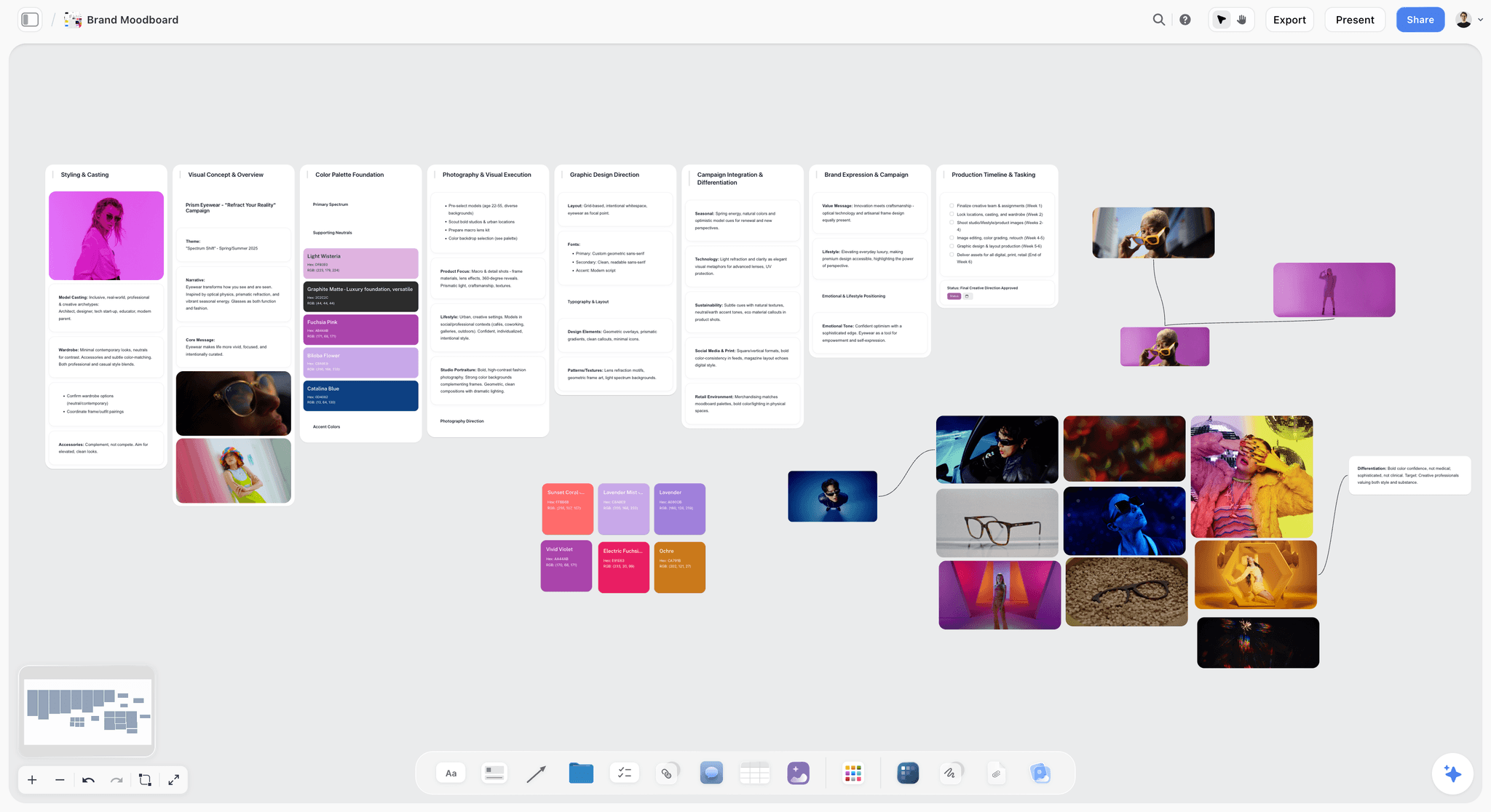
Storyflow is the project canvas where the developmental work of a book lives. A novel project holds a narrative Story Blueprint (the library ships 200+, including Hero's Journey and AIDA), character cards with arcs, chapter beat cards arranged spatially, research source cards, and the working outline, all on one board you can see whole. The AI reads your full active board plus up to 3 @-mentioned Documents and 1 Story Blueprint, so when you ask it to pressure-test a chapter order or find the hole in an argument, it answers against the actual plan rather than a blank prompt. This is the Structure Room, and it is the one room where Storyflow is the tool I reach for first.
Best for: Authors whose book friction is structural. Also great for: authors who draft prose elsewhere and want the plan in one place. Build the structure in Storyflow, then write in the editor you already love.
Pricing: Paid-only early access today; the Free plan (unlimited shared boards, a trial of Storyflow AI, 20 file uploads) launches before the end of 2026, and anyone a paid member invites to a board joins free now. Plus from $7.99/month billed annually ($9.99 monthly). Pro at $14/month annual adds AI image generation. Pricing is flat per account, not per user.
Pros: Canvas paradigm matches structural planning, 200+ Story Blueprints include narrative frameworks, the AI reads the entire active board, the Free plan launching before the end of 2026 looks genuinely functional based on the published feature list.
Cons: Not a prose or manuscript editor, so you draft sentences elsewhere. No EPUB or print export, so formatting and publishing happen in another tool. Cloud-only, with no local-first mode for privacy-strict work. Newer than Scrivener or Notion, so the ecosystem of plugins and tutorials is thinner.
Verdict: Storyflow is the right pick for the developmental side of book writing, not the drafting or publishing side. See The 12 Best Scrivener Alternatives in 2026 for paired prose tools.
2. Claude Projects (Best Long-Form Prose Drafting)
Claude Projects has the strongest reasoning quality for long-form prose in 2026. A Project holds your style notes, character sheets, and a few reference chapters as persistent context, so the model stops forgetting your protagonist's voice between sessions. The large context window means a full chapter with its sources fits in a single prompt, and Claude reasons across all of it rather than sampling the top. In practice it is the tool I trust to answer "where does this argument contradict chapter 4" and actually catch it. The prose it drafts at length reads more naturally than any other general model here, though it is still a first pass you rewrite, not a finished page.
Best for: Long-form prose drafting with reasoning depth. Not for: users who want fiction-specific features.
Pricing: Free for basic chat. Pro from $20/month. Team from $25/user/month.
Pros: Best reasoning quality for prose, large context window, project memory persists.
Cons: Not fiction-specific, no canvas surface, conversational interface.
Verdict: Claude Projects is the right pick for general long-form prose AI.
3. Sudowrite (Best Fiction-Specific AI)
Sudowrite is the author-focused AI with features built specifically for fiction, not general chat repurposed for it. The Describe tool expands a flat line into sensory detail. The Brainstorm tool throws twenty story alternatives at a corner you are stuck in. The Write and Guided modes continue a passage in your established style, and the Canvas surface holds lighter worldbuilding. What separates it from Claude or ChatGPT is that every feature assumes you are writing a novel, so you spend less time explaining what you want. It only serves fiction, so non-fiction and memoir authors get little from it.
Best for: Fiction authors who want fiction-specific AI features. Not for: non-fiction authors.
Pricing: Hobby from $19/month. Professional from $29/month. Max from $59/month.
Pros: Fiction-specific tools, mature feature set, active development.
Cons: Fiction-only, the AI can produce flat prose if unedited, smaller community than Claude or ChatGPT.
Verdict: Sudowrite is the right pick for fiction-specific AI.
4. Perplexity Spaces (Best Non-Fiction Research)
Perplexity Spaces grounds every answer in sources plus the live web, and shows citations inline so you can verify before trusting a claim in your manuscript. A Space keeps the answers scoped to your subject across sessions. For a non-fiction author checking a date or chasing a primary source, this is the difference between research you can footnote and research you have to re-verify. It will not organize the findings into your argument for you, and the workspace is search-shaped rather than canvas-shaped, so the synthesis step still happens somewhere else.
Best for: Non-fiction research with live web grounding. Not for: fiction authors.
Pricing: Free with limits. Pro from $20/month.
Pros: Best source-grounded research, live web integration, citations on every claim.
Cons: No canvas surface, the workspace is search-shaped.
Verdict: Perplexity Spaces is the right pick for non-fiction research.
5. NotebookLM (Best Source-Grounded Corpus)
NotebookLM grounds answers in the sources you upload and nothing else, which is exactly what you want when the research corpus is fixed and the risk is invention. Load your interview transcripts, archival PDFs, and a handful of source books, and it answers only from that set, with citations pointing to the passage. For a memoirist working from journals or a non-fiction author working from a defined stack of references, this closed-corpus grounding is safer than an open-web tool that might blend in something you never read. The Audio Overview, which turns your sources into a two-host podcast discussion, is a genuinely useful bonus. The source cap is the real constraint for large projects.
Best for: Authors with finite research corpora. Not for: large corpora or general research.
Pricing: Free during preview.
Pros: Excellent source grounding, audio overview feature is unique.
Cons: Source cap (50) is restrictive for serious projects, no canvas surface.
Verdict: NotebookLM is the right pick for small-corpus author research. See The 12 Best NotebookLM Alternatives in 2026 for alternatives.
6. ProWritingAid (Best Copy Editing and Polish)
ProWritingAid is the manuscript-level analysis tool, and its depth on long-form work exceeds what real-time grammar checkers reach. The Pacing report flags where a chapter drags. The Repetition and Echoes checks catch the crutch words every author leans on without noticing across 90,000 words. These are patterns a human eye misses at book length and a sentence-by-sentence tool never looks for.
Best for: Manuscript-level copy editing and polish. Not for: real-time grammar checking during drafting.
Pricing: Premium from $30/month. Premium Pro from $36/month. Lifetime licenses available.
Pros: Best manuscript-level analysis, deep reports, mature integrations.
Cons: Real-time grammar checking is lighter than Grammarly, the report depth requires learning.
Verdict: ProWritingAid is the right pick for manuscript-level polish.
7. Grammarly Premium (Best Grammar and Clarity)
Grammarly Premium is the established real-time grammar and clarity layer, and it follows you across the browser, your word processor, and email rather than living in one app. For an author who wants mistakes caught in the moment of typing, not in a separate audit later, this ubiquity is the whole value, and Premium adds clarity rewrites and tone flags on top. Where it falls short for book work is manuscript-level pattern detection: it reads a sentence at a time, so it will not tell you a chapter is pacing slowly or that you have used the same image four times in a scene. Treat it as a first net that catches the obvious, not the final editor that shapes the book.
Best for: Real-time grammar checking during drafting. Not for: manuscript-level analysis.
Pricing: Free basic version. Premium from $30/month.
Pros: Best real-time grammar checking, ubiquitous integration, mature platform.
Cons: Manuscript-level analysis is lighter than ProWritingAid, suggestions can feel generic for literary prose.
Verdict: Grammarly Premium is the right pick for real-time grammar.
8. ChatGPT Projects (Best General AI Conversation)
ChatGPT Projects is the most flexible general AI here, and its breadth is the point: brainstorming titles, drafting a synopsis, or untangling a plot logic problem all happen in the same window. A Project groups related chats with shared files and instructions, so the model keeps your book's context between sessions, and the custom GPT ecosystem usually has a niche assistant built for the exact task you have. What holds it back for authors is prose: on longer passages it drifts flatter than Claude and carries a higher hallucination risk on factual claims, so anything research-adjacent needs checking against a grounded tool. It is a strong general-purpose partner, not a specialist for any single room.
Best for: General AI conversation across diverse tasks. Not for: fiction-specific work or rigorous research.
Pricing: Free with limits. Plus from $20/month.
Pros: Broad ecosystem, easy to use, custom GPTs for niche use cases.
Cons: Hallucination risk, prose quality is lower than Claude on longer pieces.
Verdict: ChatGPT Projects is the right pick for general AI assistance.
9. Plottr (Best Novel Plotting)
Plottr is the dedicated novel-plotting tool, built around a visual timeline where scenes, beats, and character arcs line up in parallel tracks. For a novelist who thinks in structure, this is more purpose-built than a general canvas: the templates ship with the beat frameworks (Save the Cat, the Hero's Journey, three-act) already laid out, so you drop your story into a proven shape rather than drawing one. AI features arrived through 2024 and 2025 to help generate and expand plot points. Where it stops is prose and non-fiction: it is a plotting instrument, so the actual writing happens elsewhere, and its structure assumes a narrative with beats.
Best for: Novelists who plan in beats. Not for: non-fiction or memoir.
Pricing: Basic from $25/year. Pro from $99/one-time.
Pros: Mature timeline plotting, story templates, character arc tracking.
Cons: Plotting-shaped only, prose-writing layer is lighter.
Verdict: Plottr is the right pick for novelists who plan in beats. See 12 Best Beat Sheet and Beat Board Tools for Screenwriters (2026).
10. World Anvil (Best Worldbuilding)
World Anvil is the dedicated worldbuilding platform, and for fantasy and sci-fi authors building an invented world it goes far deeper than any general tool. It holds interlinked articles for cultures, geographies, histories, magic systems, and characters, with maps, timelines, and a wiki structure that cross-references itself as the world grows, so a world with hundreds of moving parts stays navigable instead of scattering across documents. AI features added through 2024 and 2025 help generate culture, geography, and history prompts to break blank-page paralysis. The cost is scope: it only earns its place for worldbuilding-heavy genres, so contemporary fiction and non-fiction authors will find most of it idle, and its AI is still catching up to the dedicated AI tools.
Best for: Fantasy and sci-fi authors who need deep worldbuilding. Not for: contemporary fiction or non-fiction.
Pricing: Free with limits. Journeyman from $5/month. Grandmaster from $13/month.
Pros: Best worldbuilding features in this list, mature templates, active community.
Cons: Only fits worldbuilding-heavy genres, AI features are catching up to dedicated AI tools.
Verdict: World Anvil is the right pick for fantasy and sci-fi worldbuilding.
11. Atticus (Best Self-Publishing Formatting)
Atticus combines writing and book formatting in one cross-platform tool, and it is the clean answer to a specific self-publishing problem: needing Scrivener to write and Vellum to format, when Vellum is Mac-only. Atticus runs in any browser, so Windows authors finally get industry-grade ebook and print output without a second machine. You write in it, then export professionally typeset EPUB and print-ready PDF, and the one-time price beats years of subscriptions. It has no AI to speak of, so it does nothing for the developmental or drafting rooms, and if you do not self-publish, the formatting engine you are paying for sits unused. It is a publishing tool, not a thinking tool.
Best for: Self-publishing authors who want writing plus formatting. Not for: authors who do not self-publish.
Pricing: $147 one-time. 30-day refund.
Pros: Writing plus formatting cleanly, cross-platform, industry-grade ebook output.
Cons: High price for writing-only users, formatting features wasted if you do not self-publish.
Verdict: Atticus is the right pick for self-publishing authors.
12. ChatGPT Free (Best Free General AI)
ChatGPT Free covers general AI tasks for authors who do not yet need a paid tier, and for light use it is genuinely enough. Brainstorming a chapter title, rephrasing an awkward paragraph, or getting a quick second opinion on a synopsis all work on the free plan without a subscription, and the intelligence gap for occasional tasks is smaller than the price gap suggests. The limits show up under load: rate caps interrupt long sessions, the newest models sit behind the paywall, and there is no project memory to hold your book's context between chats. For an author testing whether AI belongs in their process, it is the right place to start before paying for anything.
Best for: Budget-conscious authors with light AI needs. Not for: authors with deep AI workflow needs.
Pricing: Free with limits.
Pros: Free, mature platform, large knowledge base.
Cons: Rate limits on heavy use, older models on free tier.
Verdict: ChatGPT Free is the right pick for light AI needs.
How to Choose the Right AI Tools for Your Book
Start with the room that has your friction, then add tools outward from there: Storyflow or Plottr for structure, Claude or Sudowrite for drafting, Perplexity or NotebookLM for research, ProWritingAid or Grammarly for polish, Atticus for self-publishing. Buy for one room at a time rather than one tool for all four. For broader book tooling, see The 12 Best Book Writing Software in 2026.
The Bottom Line
The best AI tools for authors are a coordinated stack across the book workflow, not a single app pretending to cover it. If you are not sure which fits, take your current book project and ask which phase has the most friction. If structure is unclear, Storyflow. If drafting is slow, Claude or Sudowrite. If research is scattered, Perplexity or NotebookLM. If polish is missing, ProWritingAid. The wrong move is to use general AI for everything and find the prose voice has flattened. AI is leverage when it speeds up work you would have done anyway, and a drain when it makes work you then have to redo. Match each tool to the room where it earns its cost, and the stack pays for itself.
Before the structure work, get the cast clear. Use the free AI character profile generator to turn a one-line idea into a full character, with backstory, motivation, flaw, and arc, then carry the cast into your outline.
FAQ: Best AI Tools for Authors 2026
What are the best AI tools for authors in 2026?
There is no single best tool, because a book is four jobs, not one. For structural planning, Storyflow. For long-form prose drafting, Claude Projects (general) or Sudowrite (fiction). For non-fiction research, Perplexity Spaces or NotebookLM. For copy editing and polish, ProWritingAid. For self-publishing formatting, Atticus. The stack you need depends on your book type and on which of the four jobs is causing you the most friction.
What is the best AI tool for novelists?
For novelists specifically, the strongest stack is Storyflow for structure (character arcs, beats, and outline on one canvas the AI can read), Sudowrite for fiction-shaped drafting, and ProWritingAid for the final polish pass. Plottr is the tighter pick if you plan strictly in beats. If budget matters, Storyflow is paid-only during early access at $7.99/month (Plus); pair it with Claude Free for drafting until its own Free plan launches before the end of 2026. The mistake novelists make is buying one prose tool and expecting it to carry structure too.
Is there a free AI tool for authors?
Yes, several. ChatGPT Free and Claude Free handle general drafting and brainstorming. NotebookLM is free during preview for source-grounded research. Storyflow is paid-only during early access, with its Free plan for canvas-based structural work (unlimited boards, a trial of its AI) launching before the end of 2026. Grammarly has a basic free grammar tier. You can run a real book project across free tiers, then pay only for the room where the free ceiling slows you down.
What is the best AI for fiction writing?
Sudowrite is the leading fiction-specific AI in 2026, with tools like Describe, Brainstorm, and Guided Write built around how novels are made. Claude Projects has the strongest general reasoning and prose quality at length. Storyflow handles the structural planning with narrative Story Blueprints such as Hero's Journey. Most novelists use several: one for structure, one for drafting, one for polish, rather than forcing one app to do all three.
What is the best AI for non-fiction writing?
For non-fiction, the workflow spans four tools: Claude Projects for long-form drafting, Perplexity Spaces or NotebookLM for source-grounded research, Storyflow for structuring the argument, and ProWritingAid for polish. The research layer matters most here because non-fiction lives or dies on verifiable sources, and both Perplexity and NotebookLM show their citations. A reported book leans harder on the research tools than an opinion-driven one.
Can AI write a book for me?
No. AI cannot write a book, and the authors who try to make it usually lose the time they hoped to save. AI accelerates parts of the workflow (brainstorming, research, draft expansion, copy editing) but the ones who generate prose wholesale then rewrite it find the rewriting eats the savings. AI is leverage when it speeds up work you would have done anyway, and a drain when it makes work you then have to redo. Use it on the upstream and downstream work, not the sentences.
Can AI write a novel?
No. AI can help you outline a novel, expand a stuck passage, generate options for a scene, and catch prose problems in editing, but it cannot produce a novel readers will finish. The through-line of voice, the earned emotional turns, and the choices that make a story feel authored are exactly what current models flatten. Treat AI as a structural and editorial partner and keep the prose yours. Outsource the sentences and readers feel the hollowness even when they cannot name it.
What is the best AI tool for memoir writing?
For memoir, Storyflow (a structural canvas for thematic organization) plus Claude Projects (long-form prose drafting) is the leading stack, often with NotebookLM if you write from journals or transcripts. Memoir benefits more from structural AI than from prose-generation AI, because the hard part is not the sentences: it is deciding which stories to tell, in what order, and around which themes. That selection work is a Structure Room job, and it is where the AI reading your whole board actually helps.
What AI tool helps with worldbuilding?
World Anvil is the dedicated worldbuilding platform, with interlinked articles, maps, and timelines built for fantasy and sci-fi. Sudowrite's Canvas handles lighter worldbuilding. Storyflow's canvas holds worldbuilding cards alongside the outline and characters, so the invented world stays connected to the manuscript the AI reads, rather than living in a separate wiki. The right pick depends on depth: a hundred-culture epic wants World Anvil, a contained world wants Storyflow or Sudowrite.
Can I use AI without compromising my voice as a writer?
Yes, and the pattern is specific: use AI for structure, research, and copy editing (the upstream and downstream work) and keep the actual sentences yours. Authors who let AI generate prose lose voice unless they rewrite so heavily the time savings vanish. The rule that protects your voice is to use AI for everything except the writing itself.
Table of Contents
- All 12 AI Tools for Authors, Ranked
- Quick Picks: Best AI Tools for Authors 2026 by Use Case
- Comparison Table: Best AI Tools for Authors 2026
- The Four Rooms of the Book: A Map of the AI-for-Authors Market
- How We Evaluated the Best AI Tools for Authors 2026
- Detailed Reviews: Best AI Tools for Authors 2026
- How to Choose the Right AI Tools for Your Book
- The Bottom Line
- Author
- FAQ: Best AI Tools for Authors 2026
- Related Reading
Templates to check out for this topic


Story and writing templates you can use in Storyflow
Start your next script, novel, or world from a ready-made Storyflow board instead of an empty page. The AI reads the whole canvas, so every suggestion is grounded in your story.


See Storyflow in Action
A visual AI workspace where every feature lives inside one canvas. No tab-switching, no context lost.
Build your entire board from a single message
Type what you need in the AI chat at the bottom of your canvas. The AI adds cards, headings, and structure directly onto your board.
Use expert frameworks as AI context
Type @ in the AI chat and choose any Tactic. The AI tailors every response to that framework instead of giving generic advice.
Turn your board into a mind map in seconds
Ask the AI to restructure your canvas as a mindmap. It connects your ideas into a visual hierarchy so you can see how everything relates.
Why Storyflow Exists
Storyflow actually began as a personal tool while working on creative and research projects.
We kept running into the same problem: ideas were scattered everywhere: notes, documents, and whiteboards.
Nothing helped us see how everything connected.
So we started building a workspace designed around how ideas actually grow.
→ Read how Storyflow was createdJustkay
Documentary Filmmaker & Founder at Storyflow
Published: 2026-05-14
Extremely simple, seriously capable


See how easy it is to get started
Watch a real project come together, from a blank board to a finished plan, clicked through step by step.
Start creating with AI and become more productive
Transform your creative workflow with AI-powered tools. Generate ideas, create content, and boost your productivity in minutes instead of hours.