Shot Lister vs Movie Magic Scheduling (2026): Two Tools That Do Not Compete
Movie Magic Scheduling decides at a desk which scenes shoot on which day. Shot Lister takes today's list onto a phone and times it live. One produces the plan, the other runs it, and under five shoot days you need neither.

Category
Filmmaking Tools
Author

Justkay
Documentary Filmmaker & Founder at Storyflow
Topics
2026-09-02
•
14 min read
•
Filmmaking Tools- shot lister vs movie magic
- movie magic scheduling
- shot lister app
- film scheduling stripboard
- shoot day timing app
Is Shot Lister a replacement for Movie Magic Scheduling?
Shot Lister and Movie Magic Scheduling get compared constantly and they solve different problems at different moments. Movie Magic Scheduling is the pre-production standard: you import a script, break it down, and build a stripboard that decides what shoots on which day, and it is what funded productions, line producers and first ADs expect to receive. Shot Lister is a shoot-day app: it takes the list of shots for today, puts it on a phone or tablet, times each setup against the clock, and tells the AD in real time whether the day is ahead or behind. One decides the plan, the other runs it. A production of any size can legitimately use both, and a small crew usually needs neither, because a stripboard is overkill under about five shoot days and a shot list in any form works on the day. Below is what each actually does, when the honest answer is "neither", and where StudioBinder, Celtx, Yamdu and our own Storyflow sit around them.
Full disclosure: Storyflow is our product and it competes with neither tool in the title. The article states that its strip board is an AI draft with no scheduling engine, no day-out-of-days and no live timing, that anyone whose problem is either of those should buy the tools above, and that it is a companion rather than a replacement.
How the film scheduling tools compare on trust, innovation, ratings and pricing
Which film scheduling tools are the most trusted?
Movie Magic Scheduling, without much competition, because its stripboard and day-out-of-days are the formats first ADs, line producers and financiers already read. That interoperability is a real advantage rather than inertia. Shot Lister is the trusted shoot-day companion on busy sets. StudioBinder is trusted where one tool has to cover both jobs.
Which film scheduling tools have fair pricing?
Shot Lister is the clearest value here, priced low and per device for a job it does well. Celtx from around $15 is the cheapest suite. StudioBinder is the most expensive suite. Movie Magic is professional-tier and priced on the assumption that scheduling is somebody's whole job, which on funded work it is.
Which film scheduling tools are underrated?
Shot Lister's live ahead-or-behind calculation, which changes decisions rather than recording them: knowing at 11am that the day is forty minutes down means cutting a setup is still a choice. Also underrated is the free version of the same thing, which is one person saying the number out loud every hour, and on a small crew that is more reliable than a screen nobody is watching.
Which scheduling approach performs most consistently on small productions?
A shot list in shooting order, a schedule with honest turnaround and the meal break in it, and someone stating the ahead-or-behind number every hour. All three are free and all three outperform a half-learned stripboard. The combinatorial problem Movie Magic solves does not exist below about five shoot days, so buying it early costs learning time that the shot list needed.
When choosing between a scheduler and a shoot-day app, which would you recommend?
Neither, under about five shoot days, and StudioBinder or Celtx if you want one tool. Movie Magic when ordering the shoot is a genuine combinatorial problem and somebody's role. Shot Lister when the day has enough setups that live timing changes what you do. And write the cut list at a desk beforehand regardless, because timing tells you a decision is due and only the cut list tells you what it is.
Quick Comparison
Two specialists and two suites, scored against the job each actually has.
| Tool | Best For | AI Features | Price |
|---|---|---|---|
| Movie Magic | Stripboard and day-out-of-days | None | Licence / subscription |
| Shot Lister | Live shoot-day timing | None | Low, per device |
| StudioBinder | Both jobs in one tool | Light AI | Free / from $29 mo |
| Celtx | Script-derived, cheapest suite | Light AI | Free / from $15 mo |
Article Metadata
By Justkay, Documentary Filmmaker and Founder of Storyflow Published September 2, 2026 · 14 min read · Filmmaking Tools
Table of Contents
- The Two Different Jobs
- What Movie Magic Scheduling Does
- What Shot Lister Does
- The Comparison Table
- When You Need Neither
- Where the All-in-One Tools Sit
- Tool Reviews
- The Day-Timing Problem Nobody Solves at a Desk
- FAQ: Shot Lister vs Movie Magic Scheduling
- The Bottom Line
- Author
- Related Reading
Key Takeaways
- Movie Magic Scheduling decides the plan at a desk. Shot Lister runs it on the day. They are not alternatives.
- A stripboard is overkill below about five shoot days, and a shot list on a phone is not.
- Shot Lister's real value is live timing: knowing at 11am that you are forty minutes behind while you can still act.
- Under five shoot days, StudioBinder or Celtx covers both jobs adequately and costs less than either.
- Movie Magic remains the format funded productions expect to receive, which is a distribution fact rather than a feature.
The Two Different Jobs
Filmmaking splits neatly here, and most confusion between these two products comes from ignoring the split.
Deciding the plan happens at a desk, weeks out, and is a combinatorial problem: forty-two scenes, nine locations, six cast members with different availability, day and night exteriors, and a budget that punishes company moves. What you want is a stripboard, so you can reorder the shoot to group by location and cast, and see immediately what that does to everyone's days. Movie Magic Scheduling is the professional tool for this, and the output is a schedule and a day-out-of-days.
Running the plan happens on a set, at speed, and is a timing problem: eleven setups scheduled, three done by 11am, and the question is whether to cut something now or hope. What you want is the day's shots on a device, ticked as they are captured, with elapsed time against estimate. Shot Lister is the tool for this, and the output is knowing where you stand.
A tool that decides the plan cannot tell you at 11am that you are forty minutes down, and a tool that runs the day cannot solve a nine-location schedule. That is the whole comparison.
What Movie Magic Scheduling Does
The industry standard for stripboards, and standard is the operative word: it is what a line producer, a first AD or a financier expects to be handed, and that expectation is itself a reason to use it on funded work.
- Imports a script and breaks it down into elements: cast, props, wardrobe, vehicles, extras, special equipment
- Builds a stripboard where each scene is a strip you reorder to group by location, cast, or day and night
- Produces a day-out-of-days showing exactly which days each cast member works, which drives contracts and cost
- Handles banners, day breaks and company moves properly
- Exports schedules and reports in formats the industry already reads
Its strength is the combinatorial part. Move a strip and everything downstream recalculates: who is now needed on which day, how many days each actor works, whether the night exterior still falls on the right date. Doing that in a spreadsheet is possible and it is a full-time job.
Its weaknesses are that it is a licensed desktop-era product with a learning curve, it assumes somebody whose job is scheduling, and it does nothing on a shoot day.
What Shot Lister Does
A shoot-day app, and one of the few products in this category built for the person holding the device rather than the person at the desk.
- Holds today's shot list on a phone or tablet
- Estimates time per setup and tracks elapsed time against it
- Tells you, live, whether the day is ahead or behind and by how much
- Reorders on the fly when something changes, and recalculates the day
- Marks shots as complete, so the list is a record as well as a plan
- Works without signal, which is not universal in this category
The feature that earns its place is the running time calculation. An AD who knows at 11am that the day is forty minutes down can cut a setup while cutting is still a choice. An AD who finds out at 4pm is making a different, worse decision.
Its weakness is that it does not decide anything. It assumes the list and the schedule already exist, and it will not tell you that eleven setups never fitted in the daylight available.
The Comparison Table
| Movie Magic Scheduling | Shot Lister | |
|---|---|---|
When it is used | Pre-production, at a desk | Shoot day, on set |
Core job | Decide what shoots when | Run and time the day |
Script breakdown | Yes, full element breakdown | No |
Stripboard | Yes, the standard | No |
Day-out-of-days | Yes | No |
Live timing against estimate | No | Yes, its whole point |
Works on a phone on set | No | Yes |
Offline | Desktop | Yes |
Learning curve | High | Low |
Who it assumes | A scheduler or first AD | Whoever runs the floor |
Pricing | Licence or subscription, professional tier | One-off or low subscription, per device |
Rating (/10) | 8.6/10 for its job | 8.2/10 for its job |
The ratings are not comparable to each other in the way a listicle's usually are, because the two are not competing. Each is scored against its own job.
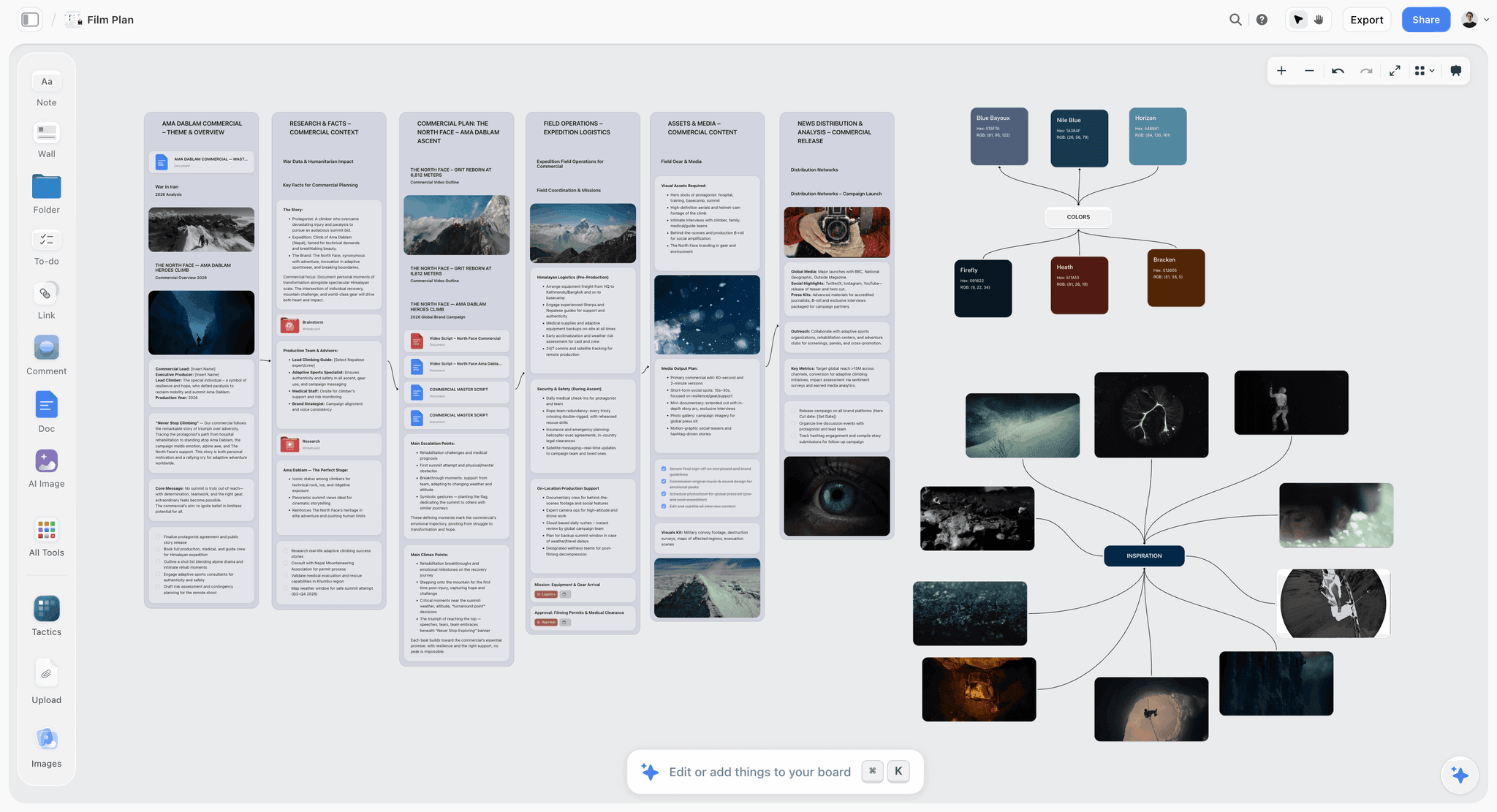
A shot list holding the reason each shot exists, so an 11am cut is an informed decision
Knowing you are forty minutes down is half a decision
The other half is the cut list, written at a desk when nobody is under pressure. Without it, the thing dropped at 11am is whatever is nearest rather than whatever matters least.

When You Need Neither
This is the honest answer for a large share of the people comparing them.
Under about five shoot days, a stripboard is overkill. The combinatorial problem Movie Magic solves does not exist when you have two locations and one shooting day. A schedule written as a list with honest turnaround does the job, and the hours spent learning a stripboard are hours not spent on the shot list.
With one camera and one location, live timing is a watch. Shot Lister's value scales with the number of setups and the cost of a company move. On an eight-setup interview day, the AD is also the producer and they can hold the count in their head.
What you do need, always: a shot list in shooting order grouped by setup, a schedule with real turnaround and the meal break in it, and the discipline to say out loud at 11am whether you are ahead or behind. Those three are free.
The genuine trigger for buying either tool is scale and consequence: enough scenes that ordering is a real problem, or enough crew that being late costs meaningful money.
Where the All-in-One Tools Sit
Most productions comparing these two would be better served by neither, and by one of the suites that does both jobs adequately.
StudioBinder does stripboard scheduling and shot lists, and its mobile view is good enough to run a day. It is not as strong as Movie Magic at the combinatorial problem and not as sharp as Shot Lister at live timing, and for one to ten shoot days it is the better single purchase than either.
Celtx does the same from a script, cheaper, with the breakdown derived from the script itself.
Yamdu does the same inside a whole-production model, and wins on long productions.
The pattern: the specialists are better at their one job and the suites are better value. On funded work with a dedicated scheduler, the specialists win because the one job is a whole role. On everything smaller, the suite wins because nobody has a whole role to give it.
Tool Reviews
1. Movie Magic Scheduling
The professional standard and still the correct choice on a funded production with a real schedule problem. The stripboard, the element breakdown and the day-out-of-days are what the rest of the industry expects to receive, and that interoperability is a genuine feature rather than inertia. Nothing else recalculates a nine-location, six-cast schedule as reliably.
It assumes somebody whose job this is, it costs professional money, and it stops at the desk.
Pros: the standard stripboard; the best day-out-of-days; what financiers and ADs expect to receive.
Cons: steep learning curve; professional pricing; nothing on the shoot day; desktop-era experience.
2. Shot Lister
The best pure shoot-day companion here and unusual in being designed for the person on the floor. Live timing against estimate is the feature, and it changes decisions rather than just recording them. It is inexpensive, quick to learn, and works without signal.
It decides nothing, so it needs a schedule and a shot list from somewhere else, and its value falls away sharply on small setups counts.
Pros: live ahead-or-behind timing; genuinely good on a phone; works offline; cheap.
Cons: no scheduling or breakdown; needs the plan from elsewhere; limited value under about eight setups a day.
3. StudioBinder
The better single purchase for one to ten shoot days, covering both jobs adequately. Stripboard scheduling and the best shot list in the category, linked so the count and the clock stay honest, with a mobile view that holds up at 7am. Weaker than Movie Magic at heavy scheduling and weaker than Shot Lister at live timing, and cheaper than running both.
Pricing: Free tier; paid from $29 per month, commonly used tier around $42.
Pros: covers both jobs in one tool; best call sheets in the category; strong mobile.
Cons: not as deep as Movie Magic on scheduling; no live day timing; weak budgeting.
4. Celtx
The same coverage derived from a script, at a lower price, and with better budgeting than StudioBinder. Weaker on the day and weaker for unscripted work.
Pricing: Free tier; paid from around $15 per month.
Pros: script-derived breakdown; cheapest of the suites; solid budgeting.
Cons: weakest mobile of the suites; poor fit for unscripted.
5. Yamdu
Covers both jobs inside a whole-production model, and is the right answer on productions running months. More setup than a short shoot justifies.
Pricing: from around $20 per month.
Pros: scheduling aware of cast, locations and documents; strongest across a long production.
Cons: real setup cost; unremarkable shot lists; too much for a short shoot.
6. Storyflow

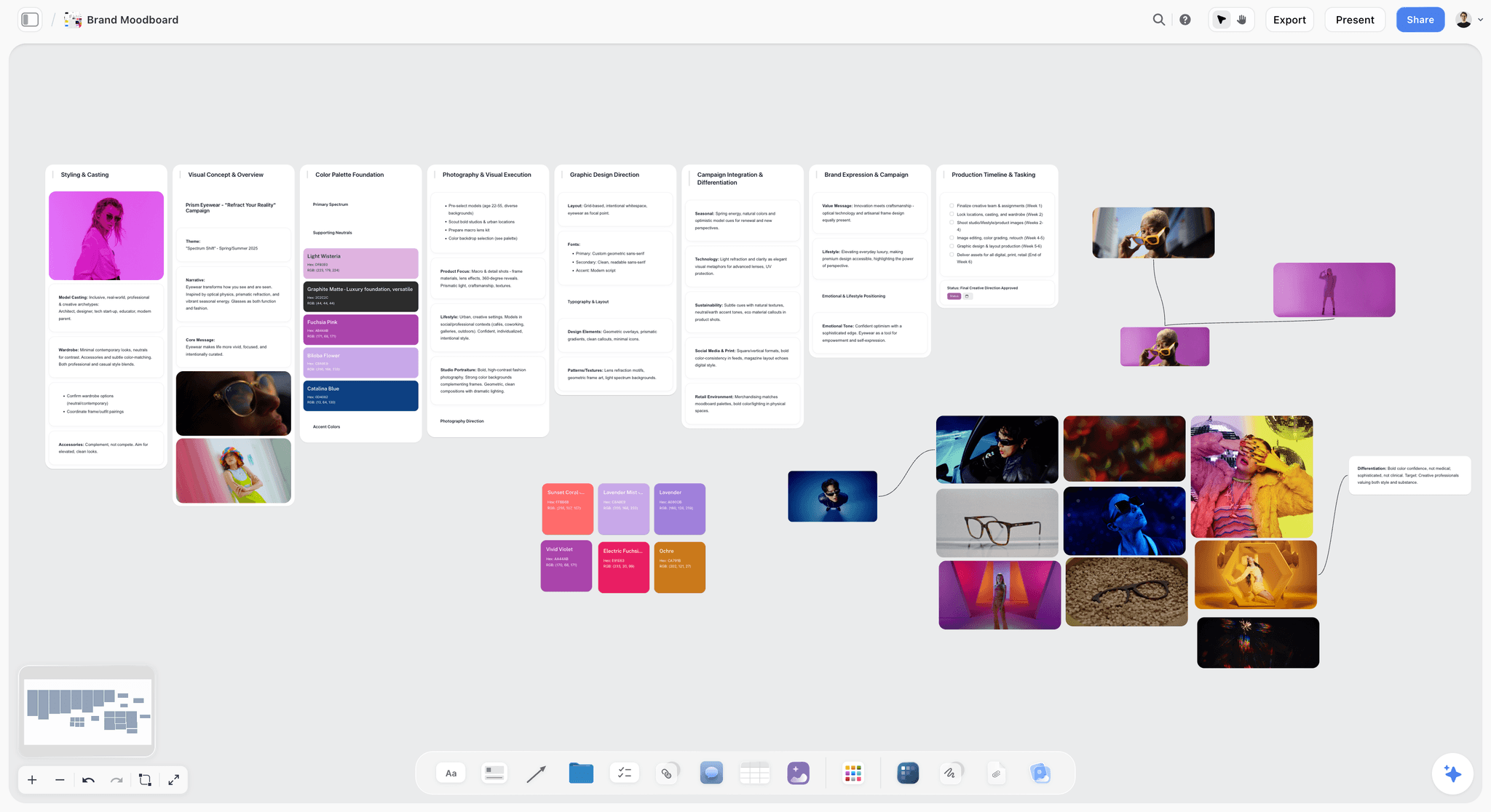
Storyflow is our product and it competes with neither of the two tools in this article's title. Its AI drafts a strip board grouped by page totals, but it has no scheduling engine, no day-out-of-days and no live timing, so it will not replace Movie Magic and will not run your day. Anyone whose problem is either of those should buy the tools above.
What it holds is the layer before the schedule: the treatment, the captioned look reference, and the shot list with the reason recorded next to each shot, on one board whose whole contents the AI reads before answering. That matters here for one narrow reason: when a day runs forty minutes behind and a setup has to go, the decision is better if somebody can see why each shot was on the list. That information normally lives in one person's head.
Storyflow is paid-only during early access; its Free plan launches before the end of 2026, and anyone a paid member invites to a board joins free now.
Pricing: Plus $7.99 per month billed annually ($9.99 monthly); Pro $14; Max $39.
Pros: the reason behind each shot survives to the day; captioned references rather than a mood wall; flat pricing.
Cons: its strip board and call sheet PDF are drafts, with no scheduling engine, no day-out-of-days, no live timing and no call sheet sending. It is a companion to a production tool, never a replacement.
The Day-Timing Problem Nobody Solves at a Desk
Worth separating out, because it is the actual reason people go looking for Shot Lister.
Every shoot day has a moment, usually mid-morning, where the plan and reality separate. The schedule said three setups by 11am and you have two. What happens next decides the day, and there are only three real options: cut a setup, shorten every remaining setup, or accept overtime.
The failure is not choosing badly. It is not noticing until the choice is gone. At 11am all three options are available. At 4pm only the third is.
Live timing is one solution and it is a good one. The free version is a person whose job is to say the number out loud every hour: "we are forty minutes down". On a small crew that is more reliable than an app, because it is a habit rather than a screen nobody is looking at.
Whichever you use, the other half of the answer has to exist beforehand: the cut list, written at a desk when nobody is under pressure. What goes first if we lose two hours, decided in advance. Without it, the 11am decision is made by whoever is nearest.
The Bottom Line
They are not alternatives. Buy Movie Magic Scheduling when ordering the shoot is a real combinatorial problem and somebody's job. Buy Shot Lister when the day has enough setups that live timing changes decisions. Buy neither, and use StudioBinder or Celtx, when the production is under about five days and nobody has a whole role to give either. And whatever you buy, write the cut list at a desk beforehand, because knowing you are forty minutes down is only half of a decision.
FAQ: Shot Lister vs Movie Magic Scheduling
Is Shot Lister a replacement for Movie Magic Scheduling?
No. They solve different problems at different moments. Movie Magic Scheduling decides at a desk which scenes shoot on which day, using a stripboard and a day-out-of-days, and is what funded productions expect to be handed. Shot Lister takes an existing day's shot list onto a phone and times it live against estimate. One produces the plan, the other runs it, and a production of any size can legitimately use both.
Which should a small crew buy?
Usually neither. Below about five shoot days the combinatorial problem Movie Magic solves does not exist, and on an eight-setup day the AD can hold the timing in their head. A shot list in shooting order, a schedule with honest turnaround, and someone saying the ahead-or-behind number out loud every hour costs nothing. If you want one tool, StudioBinder or Celtx covers both jobs adequately for less than running the two specialists.
What is Movie Magic Scheduling best at?
The combinatorial part of pre-production: reordering a stripboard so a shoot groups by location and cast, and instantly recalculating what that does to every cast member's working days. The day-out-of-days it produces drives contracts and cost, and its output formats are what line producers, first ADs and financiers already read, which is a real advantage rather than inertia.
What is Shot Lister best at?
Live timing on a shoot day. Knowing at 11am that you are forty minutes behind, while cutting a setup is still a choice rather than a consequence. It also reorders on the fly and recalculates the day, works offline, and is cheap. Its value scales with the number of setups, so it earns its place on a busy day and does little on an interview day.
Do the all-in-one tools cover both?
Adequately, yes. StudioBinder does stripboard scheduling and shot lists with a mobile view good enough to run a day. Celtx does the same derived from a script at a lower price. Yamdu does it inside a whole-production model. None matches Movie Magic on heavy scheduling or Shot Lister on live timing, and for one to ten shoot days the suite is the better value because nobody has a whole role to give either specialist.
Does Storyflow replace either of these?
No. Storyflow's AI drafts a strip board grouped by page totals, but it has no scheduling engine, no day-out-of-days and no live timing, so it replaces neither and this article recommends the tools above for both jobs. It holds the layer before the schedule: the treatment, the captioned look reference and the shot list with the reason recorded next to each shot, which is what makes an 11am cut decision better informed.
Is Storyflow free?
Not during early access. It is paid-only today from $7.99 per month billed annually on Plus, and its Free plan launches before the end of 2026. Anyone a paid member invites to a board signs up free and can invite others, so a crew collaborating on one production costs a single seat.
What is a day-out-of-days and do I need one?
A grid showing which days each cast member is required, derived from the schedule. It drives contracts, day rates and travel, so it matters as soon as you are paying performers by the day. On a shoot with two contributors and one day it is unnecessary. On anything with six cast across three weeks it is how you find out that reordering the schedule just added four working days to somebody's contract.
How do you decide at 11am whether to cut a setup?
By having decided at a desk. The cut list, written during pre-production, names what goes first if you lose two hours and why. Without it, the decision at 11am is made under pressure by whoever is nearest, and the thing cut is usually the cheapest to skip rather than the least important. Live timing tells you the decision is due; the cut list tells you what it is.
Can you run a shoot day off a spreadsheet?
Yes, and many productions do. A shot list in shooting order with an estimated duration column, and someone updating the actual, gives you the same ahead-or-behind number Shot Lister calculates. What you lose is speed on a phone and automatic recalculation, and what you gain is that everybody already knows how to use it.
Which tools do first ADs actually use?
On funded productions, Movie Magic Scheduling for the plan and increasingly a tablet app for the day, of which Shot Lister is one of the established options. On commercials and branded work, StudioBinder is common for both. On documentary, most of this apparatus is absent and the schedule is a list, because the shooting order is decided by access rather than by optimisation.
Table of Contents
- Article Metadata
- Breadcrumb
- Table of Contents
- Key Takeaways
- The Two Different Jobs
- What Movie Magic Scheduling Does
- What Shot Lister Does
- The Comparison Table
- When You Need Neither
- Where the All-in-One Tools Sit
- Tool Reviews
- 1. Movie Magic Scheduling
- 2. Shot Lister
- 3. StudioBinder
- 4. Celtx
- 5. Yamdu
- 6. Storyflow
- The Day-Timing Problem Nobody Solves at a Desk
- The Bottom Line
- Author
- FAQ: Shot Lister vs Movie Magic Scheduling
- Related Reading
Templates to check out for this topic


Filmmaking templates you can use in Storyflow
Skip the blank canvas. Open one of these filmmaking boards in Storyflow and the AI builds on the structure that is already there, from research through the shot list.


See Storyflow in Action
A visual AI workspace where every feature lives inside one canvas. No tab-switching, no context lost.
Build your entire board from a single message
Type what you need in the AI chat at the bottom of your canvas. The AI adds cards, headings, and structure directly onto your board.
Use expert frameworks as AI context
Type @ in the AI chat and choose any Tactic. The AI tailors every response to that framework instead of giving generic advice.
Turn your board into a mind map in seconds
Ask the AI to restructure your canvas as a mindmap. It connects your ideas into a visual hierarchy so you can see how everything relates.
Why Storyflow Exists
Storyflow actually began as a personal tool while working on creative and research projects.
We kept running into the same problem: ideas were scattered everywhere: notes, documents, and whiteboards.
Nothing helped us see how everything connected.
So we started building a workspace designed around how ideas actually grow.
→ Read how Storyflow was createdJustkay
Documentary Filmmaker & Founder at Storyflow
Published: 2026-09-02
Extremely simple, seriously capable


See how easy it is to get started
Watch a real project come together, from a blank board to a finished plan, clicked through step by step.
Start creating with AI and become more productive
Transform your creative workflow with AI-powered tools. Generate ideas, create content, and boost your productivity in minutes instead of hours.