The Campaign Delivery Checklist (2026): Brief to Live Without the Four Leaks
A campaign leaks in four places between brief and live, and none of them is the creative. An unmeasurable objective, a handoff that moves files but not reasons, an asset count discovered rather than planned, and a launch where tracking is treated as admin.

Category
Marketing
Author

Justkay
Documentary Filmmaker & Founder at Storyflow
Topics
2026-09-02
•
15 min read
•
Marketing- campaign delivery checklist
- campaign brief to delivery
- marketing campaign launch checklist
- campaign asset matrix
- campaign workflow 2026
What should be on a campaign delivery checklist?
A campaign leaks in four places between brief and live, and none of them is the creative work. The brief leaks when it is approved without a measurable objective, so nobody can say afterwards whether it worked. The handoff leaks when strategy passes to production and the reasoning behind a decision does not travel with the asset. The asset stage leaks when the number of deliverables is discovered rather than [counted](/deliverables-list), because every channel wants a different ratio and a different length. And the launch leaks when trafficking, tracking and approvals are treated as admin rather than as work with a lead time. Asana and Monday.com are the strongest tools for running the whole path because dependencies and approvals are real in both, Airtable is the best at the asset matrix specifically, and no tool fixes the handoff, which is a writing habit. Below is the checklist stage by stage, the asset-count trap, and the two-week lead times people discover late.
Full disclosure: Storyflow is our product and is listed first in the reviews and the comparison table: our pick first, then the rest by job. The quick answer leads with Asana. The article states that it has no dependencies, no approval states, no asset tracking and no due-date rollups, that it cannot run a campaign, that it addresses one of the four leaks, and that Asana, Monday or Wrike should run the campaign with Airtable or a spreadsheet for the matrix.
How the campaign management tools compare on trust, innovation, ratings and pricing
Which campaign management tools are the most trusted?
Asana, because the two things that actually block a campaign, dependencies and approvals, are both first class, and legal review can be a real gate with an owner and a date. Monday.com for cross-functional work with an agency. Wrike where the client is an external approver. Airtable is trusted specifically for the asset matrix, which is the stage that breaks schedules.
Which campaign tools have fair and transparent pricing?
Asana's free tier for up to ten users is unusually generous for what it includes. Notion at $10 per seat is clear. Monday.com bands seats with a three-seat minimum. Airtable at $20 per seat is the most expensive here. Storyflow prices flat per account rather than per seat and is paid-only during early access from $7.99 per month billed annually.
Which campaign tools are underrated?
Airtable's not-yet-delivered filter across a twenty-four cell asset matrix, which is the artifact that keeps a campaign on schedule and appears in no feature comparison. And a plain spreadsheet for the same job, because a matrix owned by many people gets updated where they already are rather than in a tool they must log into.
Which campaign practices have the most consistent effect?
Giving the brief's objective a number, a date and an owner, so the campaign can fail and therefore be learned from. Counting the asset matrix cell by cell in week one rather than estimating. And starting legal review, platform review and licensing in week one with incomplete inputs, because each runs on a clock you do not control and each is routinely treated as a same-day task.
When choosing a campaign management tool, which would you recommend?
Asana for most teams, and its free tier covers a small one outright. Monday.com once the campaign spans several functions and an agency. Add Airtable or a spreadsheet for the asset matrix regardless, because no coordination tool handles twenty-four repetitive cells well. Keep the brief and the reasoning in Notion, since no project tool has a field for why.
Quick Comparison
Four tools across the four leaks, and which leak each one closes.
| Tool | Best For | AI Features | Price |
|---|---|---|---|
| Asana | Dependencies and approvals | Asana AI | Free / $10.99 mo |
| Monday.com | Cross-functional coordination | Monday AI | From $9 seat mo |
| Airtable | Twenty-four asset cells | Airtable AI | Free / $20 seat mo |
| Notion | Brief, reasoning, decisions | Notion AI | Free / $10 seat mo |
Article Metadata
By Justkay, Documentary Filmmaker and Founder of Storyflow Published September 2, 2026 · 15 min read · Marketing
Table of Contents
- The Four Leaks
- Stage 1: The Brief
- Stage 2: The Handoff
- Stage 3: Assets and the Count Trap
- Stage 4: Launch
- After: The Two Weeks Nobody Owns
- 8 Tools for Campaign Delivery
- How We Evaluated These Tools
- Tool Reviews
- The Lead Times People Discover Late
- FAQ: Campaign Delivery
- The Bottom Line
- Author
- Related Reading
Key Takeaways
- A brief with no measurable objective cannot fail, which means the campaign cannot be learned from.
- Count the asset matrix in week one. Channels multiply deliverables faster than anyone estimates.
- The handoff loses reasons, not files. Write why a decision was made next to the asset it shaped.
- Trafficking, tracking and legal review have lead times measured in weeks, not days.
- Write the prediction down before launch or every campaign is a success afterwards.
The Four Leaks
Campaigns rarely fail on creative. They fail at four joins, and each one is checkable in advance.
Leak one: the brief. Approved with an objective like "raise awareness", which cannot be measured and therefore cannot fail. Six weeks later nobody can say whether the campaign worked, so nothing is learned and the next brief is equally vague.
Leak two: the handoff. Strategy hands to production. The asset arrives; the reason behind it does not. Production makes a hundred small decisions with no access to why the headline says what it says, and the campaign drifts a few degrees at every one.
Leak three: the assets. The count is discovered rather than planned. Four channels, three ratios, two lengths and five variants is not nineteen assets, it is a matrix, and it is always bigger than the estimate made in week one.
Leak four: the launch. Trafficking, tracking parameters, platform review and legal approval get treated as administrative tasks with no lead time, and each has one.
Stage 1: The Brief
The objective
- One measurable objective, with a number and a date
- The baseline it is measured against, stated
- What would count as failure, agreed
- Who owns the number
The audience
- Who, as a person in a situation, not a segment
- What they currently believe or do
- What we want them to believe or do instead
- Where they actually are, which decides channels
The message
- The one thing, in one sentence
- Three supports with evidence for each
- What we are not saying, and why
- Any claim that needs legal or regulatory review, flagged now
The constraints
- Budget, split between production and media
- Timing, and what is driving it
- Mandatories: legal lines, brand rules, partner requirements
- What already exists that we can reuse
The approvals
- Who approves the strategy
- Who approves the creative
- Who approves the media plan
- What happens when two approvers disagree
The brief is approved when the objective has a number and an owner. Anything else is a conversation, not a brief, and it is the cheapest thing on this list to get right.
Stage 2: The Handoff
The leak nobody instruments, because nothing appears to be missing. Files transfer perfectly; reasons do not.
What fails to cross, reliably:
- Why the headline says what it says. Production shortens it for a banner and removes the load-bearing word.
- What was rejected and why. A direction ruled out in week two gets proposed again in week five by somebody who was not there.
- Which element is load-bearing. Every asset has one thing it cannot lose, and on paper it looks like every other element.
- The audience insight behind a choice. Without it, a decision looks arbitrary and gets optimised away.
The fix is a writing habit, not a tool. Add one line of why next to each decision that production will inherit:
- Headline: "the word 'again' is doing the work here, it implies a prior relationship. Do not cut it for length."
- Image direction: "no smiling. The insight is frustration, not delight."
- Rejected: "we are not using the discount angle. Legal said no in week two."
Three minutes per decision, and it removes a whole class of drift that is otherwise only visible at the end.
Stage 3: Assets and the Count Trap
The stage where schedules break, and it breaks for an arithmetic reason.
Count the matrix in week one, explicitly:
| Dimension | Typical values |
|---|---|
Channels | Paid social, organic social, email, display, landing page, out of home |
Ratios | 1:1, 4:5, 9:16, 16:9 |
Lengths | 6s, 15s, 30s for video |
Variants | Message tests, audience cuts |
Localisation | Each market, each language |
Four channels, three ratios and two message variants is twenty-four assets before you have counted lengths or localisation. Teams estimate "about ten" and produce sixty.
The checklist:
- The full matrix written out, cell by cell, in week one
- Master assets identified, and which are derived from them
- Ratios confirmed against each platform's current specs, not last year's
- Copy length limits per placement, checked before writing
- Every asset named to a convention, decided once
- Alt text for every image on an owned surface
- Captions burned in or attached for every video, since most social video is watched muted
- Accessible contrast checked on anything with text over image
- One person has viewed every asset on a phone
- A "what we will cut first" list, written before the crunch rather than during it
The single most useful line: derive, do not remake. A matrix built from three masters is a resize job. A matrix built from twenty-four independent ideas is twenty-four approval cycles.
Stage 4: Launch
- Landing page live and checked logged-out in a private window
- Every tracking parameter tested by clicking the real link and confirming it lands in analytics
- Conversion events firing, verified, not assumed
- Pixels and tags installed and confirmed
- Ad accounts funded, and payment methods not expiring mid-flight
- Assets uploaded and through platform review, which takes time and can reject
- Audiences and targeting built and checked
- Schedule and budget caps set
- Legal sign-off received in writing
- Email tested across major clients, not just one
- Organic and paid coordinated so they do not contradict each other
- Support and sales briefed on what is going out
- A named person watching the first four hours
- The rollback: which of these can be paused, by whom, how fast
Trafficking and tracking are where launch day actually goes wrong. Creative is usually fine. A campaign live with a broken UTM is invisible in reporting, which is functionally the same as not having run it.
After: The Two Weeks Nobody Owns
- Day 1: check delivery, spend pacing and that tracking is recording
- Day 3: first read on performance, and permission to kill an obviously failing variant
- Day 7: what the winning message actually was, and whether it matches what you predicted
- Day 14: the number against the prediction, written down
- Day 14: what you would cut if you ran it again
- Day 30: the honest result, and the one thing that changes next time
Write the prediction before launch. Without it, every campaign is a success in retrospect, because the number gets interpreted after the fact by people who want it to be good.
8 Tools for Campaign Delivery
| Tool | Best for | Dependencies | Asset matrix | Approvals | Starting price |
|---|---|---|---|---|---|
Storyflow | Strategy and the reasoning behind it | None | Weak | None | $7.99 mo annual (free plan late 2026) |
Asana | The whole path with real gates | Excellent | Good | Excellent | Free / $10.99 mo |
Monday.com | Cross-functional campaigns | Very good | Good | Very good | From $9 seat mo |
Airtable | The asset matrix specifically | Weak | Excellent | Good | Free / $20 seat mo |
Notion | Brief, reasoning and decisions | Weak | Fair | Fair | Free / $10 seat mo |
Wrike | Agency and client campaign work | Very good | Good | Very good | From ~$10 seat mo |
Frame.io | Video asset review and approval | Weak | Good | Excellent | Free / from ~$15 mo |
Google Sheets | The matrix, honestly | None | Good | None | Free |
Prices are publicly listed plans as of early 2026 and change often.

Campaign strategy with the reasoning recorded next to each decision production will inherit
Files transfer perfectly. Reasons do not.
Production makes a hundred small decisions without knowing which word in the headline is load-bearing or what was rejected in week two. One line of why next to each decision removes a whole class of drift.

How We Evaluated These Tools
Four criteria:
- Dependencies and gates, since legal review and platform approval genuinely block work.
- The asset matrix. Whether the tool can express twenty-four cells and show which are missing.
- Approvals. Whether an approval is a recorded state or an email.
- Cost with an agency, which is the common shape and where per-seat pricing bites.
Tool Reviews
1. Storyflow

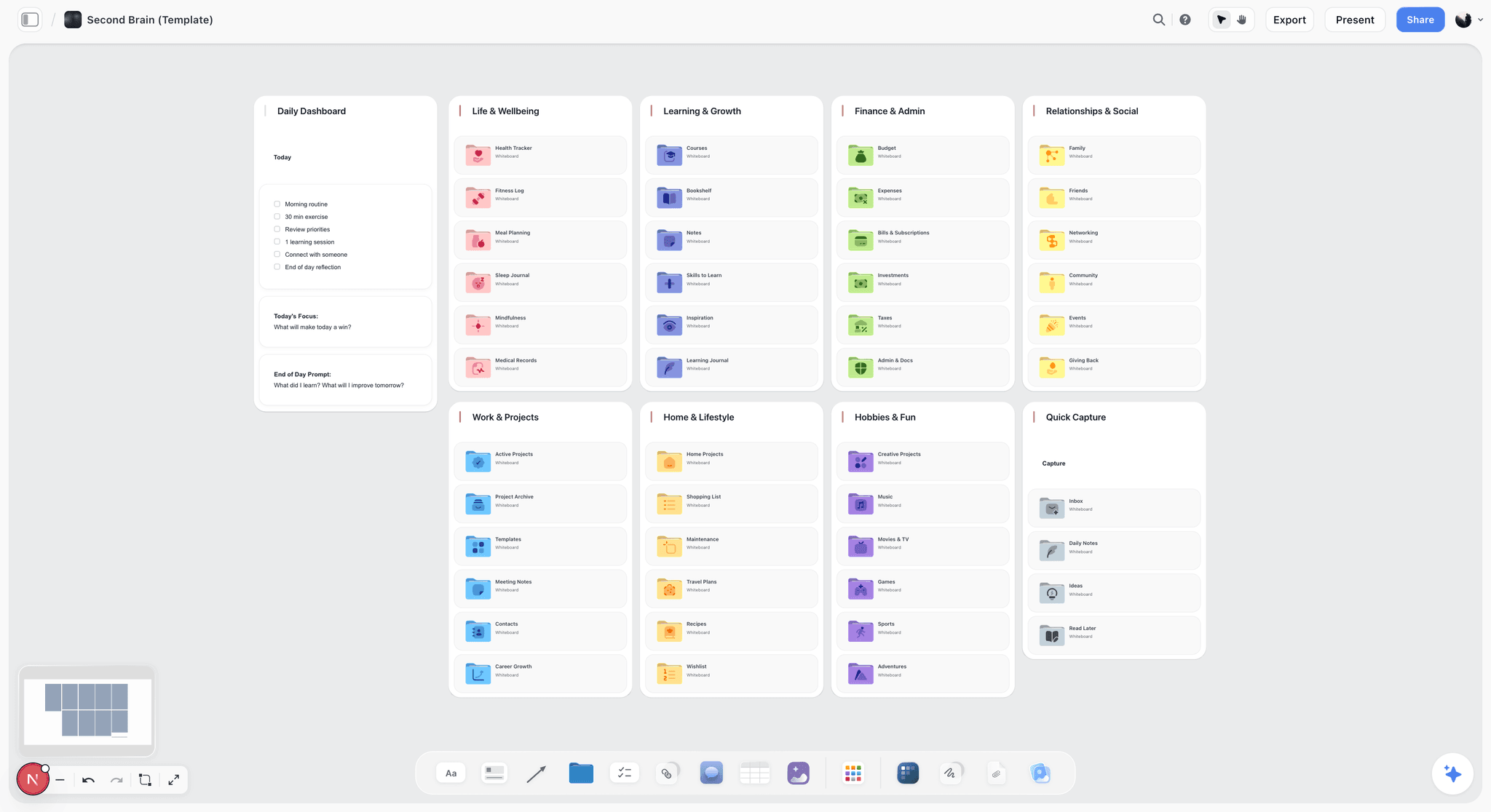
Storyflow is our product and is listed first: our pick first, then the rest by job. It has no dependencies, no approval states, no asset tracking and no due-date rollups, so it cannot run a campaign and this article recommends Asana, Monday or Wrike for that, with Airtable or a spreadsheet for the matrix.
It addresses leak two only. The strategy, the audience insight, the rejected directions and the reason behind each decision sit on one canvas the AI reads in full, which is the material that normally fails to cross the handoff because no project tool has a field for it. That is one leak of four.
Storyflow is paid-only during early access; its Free plan launches before the end of 2026, and anyone a paid member invites to a board joins free now.
Pricing: Plus $7.99 per month billed annually ($9.99 monthly); Pro $14; Max $39.
Pros: holds the reasoning that the handoff loses; flat per-account pricing so an agency costs nothing.
Cons: no tracking, dependencies or approvals; addresses one of four leaks; a second tool is required.
2. Asana
The strongest single tool for campaign delivery, because the two things that actually block a campaign, dependencies and approvals, are both first class. Legal review as a gate with an owner and a due date is expressible, the timeline updates itself from the work, and the workload view catches the week your one designer is booked at 180%.
Its asset-matrix handling is adequate rather than excellent, so many teams pair it with a spreadsheet.
Pricing: Free for up to 10 users; Starter $10.99 per user per month billed annually; Advanced $24.99.
Pros: the best dependencies and approvals here; generous free tier; workload catches overload early.
Cons: the matrix needs a side tool; heavier than a two-person team needs.
3. Monday.com
Strong across the cross-functional shape a campaign takes, and its dashboards get read by people who never open the tool. Automations do the chasing on an asset list with many owners.
Seat minimums and banding make it awkward below about ten people, and it is a poor home for the brief's reasoning.
Pricing: from $9 per seat per month billed annually, three-seat minimum.
Pros: excellent coordination; strong automations; dashboards executives read.
Cons: seat banding; weak for prose and reasoning.
4. Airtable
The best tool here for the asset matrix, which is the stage that breaks schedules. Twenty-four cells with a status, an owner, an attachment and a not-yet-delivered filter is exactly what it is for, and interfaces give stakeholders a clean view without a seat.
Weak dependencies, so it does not run the whole campaign.
Pricing: Free; Team $20 per seat per month billed annually.
Pros: the best asset matrix; grouped views and missing-item filters.
Cons: weak dependencies; highest per-seat cost; setup time.
5. Notion
The best home for the brief, the reasoning and the decision log, which is the leak no project tool addresses. A brief in Notion with a why-column beside each decision travels better than a PDF brief plus a folder.
Poor at dependencies and mediocre at the matrix.
Pricing: Free for personal use; Plus $10 per user per month billed annually.
Pros: the best home for the brief and its reasoning; cheapest to add people to.
Cons: weak dependencies and gates; the matrix is better elsewhere.
6. Wrike
Built for agency-and-client campaign work, with proof review and approval flows that suit a team delivering to an external approver. More structure than an in-house team of five needs.
Pricing: from around $10 per seat per month.
Pros: strong proofing and client approval; good dependency handling.
Cons: heavier than small in-house teams need; interface density.
7. Frame.io
Not a campaign tool and the best video approval loop here. If your campaign is video-led, a versioned asset with timecoded comments and a recorded approval removes a real class of dispute.
Nothing for briefs, dependencies or the wider matrix.
Pricing: Free tier; paid from around $15 per user per month.
Pros: the best video review and approval; strong versioning.
Cons: video only; per-user cost; not a delivery tool.
8. Google Sheets
For the asset matrix specifically, a sheet with a row per cell, an owner and a status is genuinely sufficient and will be filled in by people who would not log into a project tool. No gates, no reminders, no approvals.
Pricing: free.
Pros: free; universally editable; the matrix in its natural shape.
Cons: nothing chases; no approvals; version sprawl.
The Lead Times People Discover Late
Each of these has a clock you do not control, and each is routinely treated as a same-day task.
Legal and regulatory review. One to three weeks depending on the industry, and it can reject a claim you have already built around. Flag claims needing review in the brief, not at the asset stage.
Platform ad review. Hours to days, and it rejects. Upload well before you intend to go live rather than on the morning.
Print and out of home. Weeks, and the deadline is immovable in a way digital never is.
Partner or co-brand approval. However long the partner takes, which is a function of their organisation and not your schedule.
Talent and music licensing. Weeks, and usage terms constrain where the asset can run and for how long, which changes the media plan.
Localisation. Translation plus in-market review plus re-layout, and text expansion breaks layouts designed in English.
Identify which of these apply in week one and start them immediately, with incomplete inputs if necessary. A legal review begun on a near-final claim is far cheaper than one begun on a final asset.
The Bottom Line
Fix the four leaks and the creative takes care of itself. Give the brief's objective a number and an owner, write one line of why next to every decision production will inherit, count the asset matrix cell by cell in week one and derive rather than remake, and treat trafficking, tracking and legal as work with lead times. Then write down what you expect to happen, so that in a month somebody can tell whether it did.
FAQ: Campaign Delivery
What should be on a campaign delivery checklist?
Four stages. The brief, approved only when the objective has a number, a date and an owner. The handoff, where the reasoning behind each decision is written next to the asset it shaped. The assets, counted as a full matrix in week one rather than estimated. And launch, where trafficking, tracking, platform review and legal approval are treated as work with lead times rather than as admin.
Where do campaigns actually go wrong?
Not on creative. Four joins leak: a brief with an unmeasurable objective, a handoff that transfers files but not reasons, an asset count discovered rather than planned, and a launch where tracking and trafficking are treated as same-day tasks. All four are checkable in advance, and none of them is about the quality of the work.
How do you write a campaign brief that does not leak?
Give the objective a number, a date, a baseline and an owner, and agree what would count as failure. A brief whose objective is "raise awareness" cannot fail, which means the campaign cannot be learned from and the next brief will be equally vague. Then flag any claim needing legal review in the brief itself, because that clock starts weeks before anyone expects.
How many assets does a campaign actually need?
More than the week-one estimate, because it is a matrix rather than a list. Four channels times three ratios times two message variants is twenty-four assets before lengths or localisation. Write the matrix out cell by cell in week one, identify which are masters and which are derived, and derive rather than remake, since twenty-four independent ideas means twenty-four approval cycles.
What is the best tool for running a campaign from brief to delivery?
Asana for most teams, because dependencies and approvals are first class and legal review is expressible as a real gate with an owner and a date. Monday.com for cross-functional campaigns with an agency. Airtable alongside either for the asset matrix, since that is the stage that breaks schedules and it needs a not-yet-delivered filter more than it needs a Gantt.
Is Storyflow a campaign management tool?
No. Storyflow has no dependencies, no approval states, no asset tracking and no due-date rollups, so it cannot run a campaign, and this article recommends Asana, Monday or Wrike with Airtable or a spreadsheet for the matrix. It addresses one of the four leaks: the strategy, the audience insight and the reasoning behind each decision, which no project tool has a field for.
Is Storyflow free?
Not during early access. It is paid-only today from $7.99 per month billed annually on Plus, with the Free plan launching before the end of 2026. Anyone a paid member invites to a board signs up free and can invite others, so an agency collaborating on a strategy board costs nothing extra.
What lead times do campaigns underestimate?
Legal and regulatory review at one to three weeks, and it can reject a claim you have built around. Platform ad review, which takes hours to days and rejects. Print and out of home, measured in weeks with immovable deadlines. Partner approval, which runs on their clock. Talent and music licensing, whose usage terms then constrain the media plan. Identify which apply in week one and start them immediately.
How do you stop a campaign drifting between strategy and production?
Write one line of why next to each decision production will inherit: which word in the headline is load-bearing and must not be cut for length, what was rejected and by whom, what the audience insight behind an image direction actually is. Files transfer perfectly and reasons do not, so production makes a hundred small decisions without them and the campaign drifts a few degrees at each one.
What should you check on launch day?
Trafficking and tracking, before anything else. Click the real link and confirm it arrives in analytics, verify conversion events are firing rather than assuming, and confirm pixels are installed. A campaign live with a broken UTM is invisible in reporting, which is functionally the same as not having run it, and it is the most common launch-day failure by a wide margin.
How do you measure whether a campaign worked?
Write the prediction down before launch: expected reach, expected conversion, expected cost per outcome. At day 14 compare the number to the prediction, and at day 30 record the honest result. Without a prediction, the number is interpreted after the fact by people who want it to be good, and every campaign becomes a success, which teaches nothing.
Should paid and organic be coordinated?
Yes, and the failure is not that they are uncoordinated but that they contradict each other. Organic saying one thing while paid says another, or a paid message going live before the organic explanation, reads as incoherent to anyone who sees both. Sequence them deliberately on the launch checklist rather than letting two teams pick their own timing.
Table of Contents
- Article Metadata
- Breadcrumb
- Table of Contents
- Key Takeaways
- The Four Leaks
- Stage 1: The Brief
- Stage 2: The Handoff
- Stage 3: Assets and the Count Trap
- Stage 4: Launch
- After: The Two Weeks Nobody Owns
- 8 Tools for Campaign Delivery
- How We Evaluated These Tools
- Tool Reviews
- 1. Storyflow
- 2. Asana
- 3. Monday.com
- 4. Airtable
- 5. Notion
- 6. Wrike
- 7. Frame.io
- 8. Google Sheets
- The Lead Times People Discover Late
- The Bottom Line
- Author
- FAQ: Campaign Delivery
- Related Reading
Templates to check out for this topic


Marketing and campaign templates you can use in Storyflow
Plan the whole campaign on one board: brief, audience, channels, and assets connected, with an AI that reads all of it. Open a template and start from real structure.


See Storyflow in Action
A visual AI workspace where every feature lives inside one canvas. No tab-switching, no context lost.
Build your entire board from a single message
Type what you need in the AI chat at the bottom of your canvas. The AI adds cards, headings, and structure directly onto your board.
Use expert frameworks as AI context
Type @ in the AI chat and choose any Tactic. The AI tailors every response to that framework instead of giving generic advice.
Turn your board into a mind map in seconds
Ask the AI to restructure your canvas as a mindmap. It connects your ideas into a visual hierarchy so you can see how everything relates.
Why Storyflow Exists
Storyflow actually began as a personal tool while working on creative and research projects.
We kept running into the same problem: ideas were scattered everywhere: notes, documents, and whiteboards.
Nothing helped us see how everything connected.
So we started building a workspace designed around how ideas actually grow.
→ Read how Storyflow was createdJustkay
Documentary Filmmaker & Founder at Storyflow
Published: 2026-09-02
Extremely simple, seriously capable


See how easy it is to get started
Watch a real project come together, from a blank board to a finished plan, clicked through step by step.
Start creating with AI and become more productive
Transform your creative workflow with AI-powered tools. Generate ideas, create content, and boost your productivity in minutes instead of hours.