The 11 Best Tools for PhD Thesis Research in 2026
A doctorate accrues three debts: citation, coherence and writing. They all come due in the final months. Eleven tools ranked by which one each helps you repay.

Category
Research
Author

Sara de Klein
Head of Product at Storyflow
Topics
2026-08-11
•
17 min read
•
Research- best tools for PhD thesis research
- reference manager for a thesis
- Zotero vs Mendeley for PhD
- how to organize a literature review
- best tool to organize research for writing
- academic writing software 2026
What are the best tools for PhD thesis research in 2026?
The best tool for PhD thesis research is Zotero, and it is not close: a doctorate accrues thousands of citations over several years, the debt comes due in a single terrifying month at the end, and Zotero is free, open source, and the only responsible way to pay it. Obsidian ranks second because a thesis is an argument built from reading, and linked notes are the closest thing to a machine for that. Scrivener ranks third for the writing itself. Storyflow ranks fourth, for one narrow problem it happens to solve well, and this post is explicit that it is not a reference manager and cannot generate a single citation. This ranking judges all 11 tools on one question: which of the three debts of a doctorate does each one help you repay.

Full disclosure: Storyflow is our own product and we rank it #4 here, below three tools we do not make, two of which are free. It cannot generate a citation, produce a bibliography, annotate a PDF, search a document library, code qualitative data or compile a thesis in any format a department accepts. Zotero is required alongside it and Zotero is free. We also tell readers to try Obsidian's free canvas plugin before paying us anything.
Quick Comparison
These four cover the jobs a doctorate actually splits into: making every claim sourceable, turning years of reading into an argument, writing it in pieces you can start today, and rearranging the structure when your notes turn out to be organized by the wrong principle.
| Tool | Best For | AI Features | Price |
|---|---|---|---|
| Zotero | Citations, PDFs and bibliographies in any style | None | Free (paid storage tiers) |
| Obsidian | Linked notes in plain files you own | Via plugins | Free personal / from ~$4 mo sync |
| Scrivener | Chapters as movable sections with research attached | None | One-time ~$59.99 (education discount) |
| Storyflow | Spatial view of claims and their supporting evidence | Canvas-wide context AI | $7.99 mo annual (free plan late 2026) |
Key Takeaways
- A doctorate accrues three debts, and all three come due at the same time, in the final months, when you have the least capacity to pay any of them.
- The citation debt: thousands of claims, each needing a verifiable source, accumulated over years. Solved entirely by installing Zotero in week one and never solved comfortably afterwards.
- The coherence debt: you read in the order material became available and must argue in the order the argument requires. Nobody warns you these are different orders.
- The writing debt: writing gets deferred because reading feels like progress, and the deferral compounds until the thesis becomes one impossible act rather than three years of small ones.
- Storyflow ranks fourth and cannot generate a citation, produce a bibliography, annotate a PDF or compile a thesis. It earns its place for the coherence debt specifically.
- Reference managers are not interchangeable at the end. Migrating a library of two thousand items in your final year is a genuinely bad week, so choose in year one.
- The single highest-return habit is writing two hundred words about each paper as you read it, and almost nobody does it.
See which claims are underevidenced
Outlines show sequence and hide weight, which is why a chapter with two supports looks the same as one with eleven. Storyflow puts every claim above its evidence on one canvas the AI can read end to end. Zotero still does your citations, and it is free. Paid-only during early access; the Free plan lands before the end of 2026.

The Three Debts of a Doctorate
Nobody tells you that a PhD is a debt structure. You find out in the last year.
A doctorate accrues three debts, and all three come due at the same time, in the final months, when you have the least capacity to pay any of them.
The citation debt. Every claim in a thesis needs a source, and over three to seven years you will make thousands. Each one you fail to record properly is a small loan at a punitive rate: finding a half-remembered paper again costs twenty minutes, and there will be two hundred of them. Students who install a reference manager in week one repay this debt continuously and barely notice it. Students who intend to sort it out later spend a month of their final year doing archaeology, and some of them cannot find things at all and quietly cut the claim.
The coherence debt. You read in the order material became available: what your supervisor recommended, what came up in a search, what a conference put in front of you. You must argue in the order the argument requires, which is an entirely different order and bears no relation to the first. Nobody warns you these differ, so most students spend the first year of writing discovering that their beautifully organized literature notes are organized by the wrong principle: by source, or by date read, or by subfield, rather than by the role each piece plays in their argument.
The writing debt. Reading feels like progress and writing feels like exposure, so writing gets deferred. The deferral compounds. A student who writes eight hundred words a week from month six has a rough thesis by year three. A student who reads for two years and then writes has one impossible act ahead of them, and the reason it is impossible is not word count. It is that they have never tested whether their argument survives contact with prose, and the first test arrives at the worst possible moment.
The three debts want different instruments. Citation wants a database with strict metadata. Coherence wants a structure you can rearrange. Writing wants a surface you can be in every day without ceremony.
The tools below are ranked by which debts they repay.
At a Glance: The 11 Tools Compared
| Tool | Best for | Debt it repays | Pricing shape |
|---|---|---|---|
Zotero | Citations, sources and bibliographies | Citation | Free plus storage |
Obsidian | Notes that link into an argument | Coherence | Free or per user |
Scrivener | Writing the thesis in movable pieces | Writing | One-time licence |
Storyflow | Seeing and rearranging the argument's shape | Coherence | Flat per account |
Overleaf | LaTeX writing and collaboration with a supervisor | Writing, citation | Free or per user |
DEVONthink | Very large PDF archives with real search | Citation | One-time licence |
Connected Papers | Finding what you have not read yet | Citation | Free or per month |
NVivo | Coding qualitative data properly | Coherence | Licence |
Notion | Project tracking, chapter status and supervision admin | Writing | Per user |
Elicit | Screening literature at volume | Citation | Free or per month |
Google Docs | Sharing drafts with a supervisor who uses comments | Writing | Free or per user |
How I Ranked These
I am not an academic. I research documentaries, which shares the citation and coherence problems and none of the institutional ones. This list has been shaped substantially by doctoral researchers who corrected an earlier draft, and where their view and mine differed I have taken theirs, particularly on qualitative analysis software and LaTeX workflows.
Five criteria, weighted in this order.
1. Does it repay the citation debt automatically? Not "can it store references" but "does a reference get captured correctly without you thinking about it". This is first because it is the debt with the harshest terms and the clearest solution.
2. Will it still exist and open your files in seven years? Doctorates outlive software companies. Open formats and export paths are worth more than features, and this criterion eliminates several otherwise attractive tools.
3. Does it help you argue in a different order from the one you read in? The coherence debt is the least discussed and the most structurally difficult, and a tool that lets you rearrange without rewriting is doing real work.
4. Does it lower the barrier to writing today? Anything that makes it easier to write eight hundred words this week is worth more than anything that makes your notes prettier.
5. Does it fit your discipline's actual conventions? A humanities thesis and a computational one have different requirements, and the correct answer to "Word or LaTeX" is entirely determined by your field rather than by taste.
Pricing below is as of August 2026, and most of these have institutional licences worth checking before you pay anything. Verify with your university first.
Quick Picks by Job Type
- Best overall for a doctorate: Zotero. Free, open source, captures correctly, generates any citation style, and repays the harshest debt continuously.
- Best for building an argument from reading: Obsidian. Linked notes in plain files, where connections between papers become visible.
- Best for writing the thesis: Scrivener. Chapters as movable pieces, with research in the same project.
- Best for seeing the argument's shape: Storyflow. Spatial arrangement when your notes are organized by the wrong principle.
- Best for LaTeX disciplines: Overleaf. Collaborative LaTeX with your supervisor commenting in the document.
- Best for a huge PDF archive: DEVONthink. Search that works across thousands of documents.
- Best for finding what you have missed: Connected Papers. Visual citation graphs that surface adjacent literature.
- Best for qualitative data: NVivo or ATLAS.ti. If you have interviews or transcripts to code, this is a discipline requirement rather than a preference.
1. Zotero
The verdict. The single most important tool in this list, free, and the reason to stop reading this post and go install it.
Best for. Every citation you will ever make, from week one.
Pricing. Free and open source. Optional cloud storage from around $20 per year for 2GB, and many universities provide unlimited institutional storage. Verify on zotero.org and with your library.
Why it ranks here. The citation debt is the harshest and the most completely solved. The browser connector captures a paper with correct metadata and the PDF in one click. Notes and annotations attach to the item. At the end, the bibliography generates in whatever style your department demands, and when the department changes its mind you regenerate it in four seconds instead of four days.
Two things make it the right choice specifically rather than a reference manager generally. It is open source, which means your library is not hostage to a publisher's business model, a lesson the field learned when Mendeley was acquired. And group libraries mean you can share a corpus with collaborators or a supervisor without exporting anything.
The word processor plugin is the part students underrate. Citations inserted from Zotero into Word or LibreOffice stay live, so a late style change is a click rather than a crisis.
Strengths.
- Free, open source, and institutionally backed rather than commercially owned.
- One-click capture with correct metadata from almost every source.
- Live citations in Word and LibreOffice, with instant style switching.
- Group libraries for shared corpora.
- Excellent PDF reader and annotation in recent versions.
Limitations.
- Free storage is small, though universities frequently provide more.
- Organizing a library of two thousand items still takes discipline.
- The interface is utilitarian.
- Not a thinking, structuring or writing tool in any sense.
The trade off. There is no trade off. Install it in week one. The only real decision is Zotero versus your institution's supported alternative, and if there is no strong institutional reason, choose Zotero for the open format.
2. Obsidian
The verdict. The best available machine for turning reading into an argument, if you have the discipline it demands.
Best for. A note per paper and per idea, linked until the structure of your contribution becomes visible.
Pricing. Free for personal use. Sync from around $4 per month, commercial licence around $50 per user per year. Verify on obsidian.md.
Why it ranks here. The coherence debt is repaid by writing about what you read in your own words, immediately, and connecting it to what you already think. Obsidian is built for exactly that, and the Zotero integration means a note can carry its citation key so the two systems reinforce each other.
The specific mechanism that matters: backlinks. When you write a note about a concept and six paper-notes link to it, you have discovered that six authors are addressing the same thing, which is very often where a literature review chapter's actual structure lives. Nobody assembled that; it accumulated.
Second rather than first because it is entirely discipline-dependent. Obsidian without the habit of writing notes in your own words is a folder of markdown files, and the tool will not tell you that you are failing.
Strengths.
- Plain markdown files you own and can read in twenty years, which matters over a doctorate's timescale.
- Backlinks surface structure you did not consciously build.
- Strong Zotero integration through community plugins.
- Free for personal use, local-first, and fine with sensitive data.
- Canvas plugin gives a rough spatial view for structural work.
Limitations.
- Requires sustained discipline that nobody enforces.
- The graph view is seductive and rarely useful.
- Plugin dependency means a workflow can break on an update.
- No thesis compilation or formatting.
- Struggles with very large PDF collections.
The trade off. Transformative with the note-writing habit and inert without it. Commit to writing two hundred words per paper or use something simpler.
3. Scrivener
The verdict. The best environment for writing a thesis in pieces small enough to actually start.
Best for. Drafting chapters as movable sections with research in the same project.
Pricing. One-time licence, historically around $59.99, with education discounts frequently available. Verify on literatureandlatte.com.
Why it ranks here. The writing debt is repaid by writing today, and the largest barrier is that a thesis chapter is an intimidating object. Scrivener breaks it into sections you can draft in an hour, then rearranges them without cut and paste, which is the practical form of repaying the coherence debt too.
Its second value is that a long document in Word becomes slow and fragile, and a two-hundred-page thesis in a single file is a genuine risk that many students discover at the worst time.
Third because it is not a reference manager, and because LaTeX disciplines will find its workflow awkward.
Strengths.
- Chapters as small movable sections, which lowers the barrier to starting.
- Research, PDFs and notes in the same project as the draft.
- Compile to Word, PDF or LaTeX with consistent formatting.
- One-time purchase with education pricing.
- Snapshots make rewriting a chapter less costly.
Limitations.
- No citation management; you need Zotero alongside.
- LaTeX workflows are possible but awkward.
- Dense interface with a real learning curve.
- Essentially no collaboration, which matters when a supervisor wants to comment.
- Dropbox-based sync between desktop and iOS is a known irritation.
The trade off. Excellent for humanities and social science theses. Overleaf is the better answer if your field writes in LaTeX.
4. Storyflow
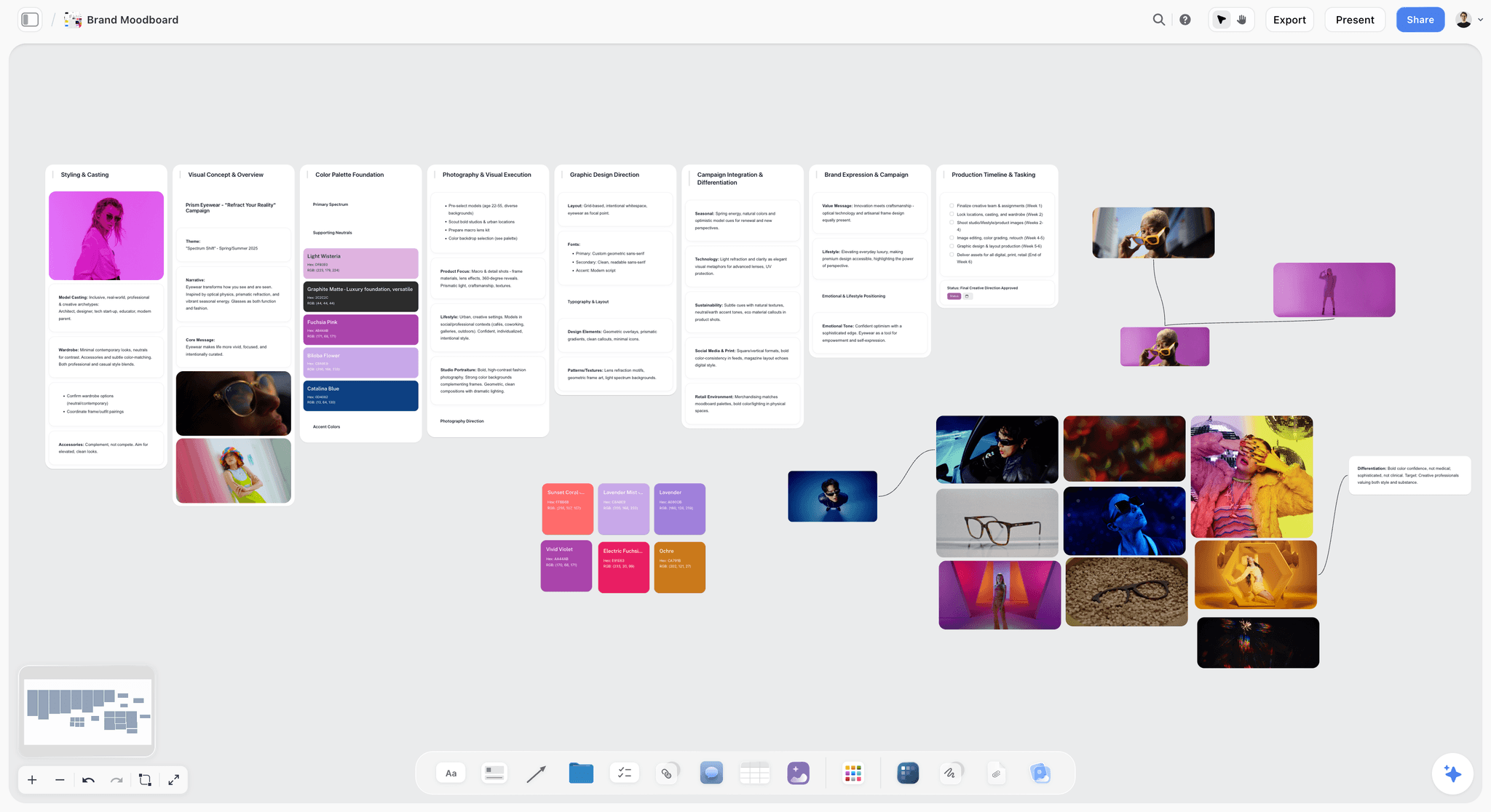
The verdict. Useful for one specific crisis, common in year two, and useless for everything else on this list.
Best for. Seeing your whole argument at once when your notes turn out to be organized by the wrong principle.
Pricing. Paid-only during early access. Plus is $7.99 per month billed annually or $9.99 monthly. Pro is $14 per month billed annually or $19 monthly. Max is $39 per month billed annually or $49 monthly. Pricing is flat per account rather than per seat, and anyone a paid member invites to a board joins free. The Free plan launches before the end of 2026.
Why it ranks here, and why fourth. Let me be precise, because this is our product and it belongs below three tools we do not make.
Zotero, Obsidian and Scrivener each repay a debt continuously across a doctorate. Storyflow does not. It addresses a moment: the point, usually in the second year, when a student realizes their literature is organized by source or subfield and their argument needs it organized by function, and they cannot see how to get from one to the other.
That is a spatial problem. Each claim your thesis makes, laid out with the evidence supporting it underneath, across the whole argument, so you can see that chapter three has eleven supports and chapter five has two. That view is not available in an outline, which shows sequence and nesting and hides weight entirely. It is the reason people put index cards on walls.
The AI reads your full active canvas board by default, plus up to one Tactic and up to three Documents you @-mention, which is useful as an outside view on what an argument board currently claims.
Collaborators join free, which matters if you work with a supervisor or a writing group.
Strengths.
- Whole-argument visibility, showing which claims are underevidenced.
- Rearrangement is free, so you can test structures without rewriting.
- Helps convert reading-order organization into argument-order organization.
- Invited collaborators join free, so a supervisor can look without a licence.
- Canvas-wide AI context for summarizing what an argument board currently says.
Limitations.
- Cannot generate a single citation. No bibliography, no citation styles, no word processor plugin, no library. Zotero is required and Zotero is free.
- No PDF annotation, no document library, no full-text search across papers.
- No thesis writing or compilation. No LaTeX, no formatting, no export your department will accept.
- No qualitative coding, no data analysis.
- No institutional licensing or procurement path, which some universities require.
- Team Workspace with permissions and roles is on Max at $39 per month billed annually.
The trade off. A doctorate needs Zotero and something to write in. It does not need this. If you are specifically stuck on structure in year two, it is $8 a month for the month you need it, and the honest recommendation is to try Obsidian's free canvas plugin first.
5. Overleaf
The verdict. The correct answer for any discipline that writes in LaTeX, which is most of the sciences.
Best for. Collaborative LaTeX writing with a supervisor in the document.
Pricing. Free tier with limits. Paid plans from around $21 per month, though many universities provide institutional access. Verify on overleaf.com and with your department.
Why it ranks here. If your field expects LaTeX, this is not a preference. Overleaf removes the local installation problem, handles collaboration properly, and integrates with reference managers so your bibliography stays correct.
The supervisory workflow is the real argument: your supervisor comments in the document rather than returning a PDF with annotations you must transcribe.
Fifth because it is discipline-specific, and a humanities student choosing LaTeX for its own sake is choosing a longer route.
Strengths.
- No LaTeX installation or version problems.
- Real-time collaboration and commenting with supervisors.
- Templates for most journals and many university thesis formats.
- Integrates with Zotero and Mendeley.
- Often free through institutional agreements.
Limitations.
- LaTeX has its own steep learning curve.
- Paid tiers required for longer compile times and full history.
- Cloud-dependent, which some departments restrict.
- Awkward for text-heavy humanities writing.
The trade off. Mandatory in LaTeX fields, unnecessary outside them. Check your institutional licence before paying.
6. DEVONthink
The verdict. The right answer above a certain archive size, and only then.
Best for. Thousands of PDFs, scans and archival documents with search that works.
Pricing. One-time licence with tiers, historically from around $99 to $499. Verify on devontechnologies.com.
Why it ranks here. For archive-heavy doctorates, historical, legal or documentary work, DEVONthink's search and concordance surface related documents by content rather than by tags you remembered. OCR for scans is essential for archival material and it does that well.
Sixth because it is expensive, macOS-only and unnecessary below a few thousand documents, which describes most doctorates.
Strengths.
- Best search across large document collections.
- Concordance surfaces genuinely related material.
- OCR for archival scans.
- One-time purchase, local storage.
Limitations.
- Expensive with confusing editions.
- macOS and iOS only.
- Steep learning curve.
- Not a citation manager or writing tool.
The trade off. Buy it if your archive is genuinely large. Otherwise Zotero's search plus folders is enough.
7. Connected Papers
The verdict. The best cheap answer to the question that keeps doctoral students awake.
Best for. Discovering literature adjacent to what you already have.
Pricing. Limited free graphs per month. Paid plans from around $6 per month. Verify on connectedpapers.com.
Why it ranks here. "What have I missed" is a genuine anxiety and a genuine risk, and citation-graph tools answer it visually: give it one paper and it shows the cluster around it, including things a keyword search would never surface.
Seventh because it is a discovery tool used occasionally rather than a system, and because the free tier covers most students' needs.
Strengths.
- Surfaces adjacent literature keyword searches miss.
- Visual clusters make a field's shape legible quickly.
- Useful free tier.
- Excellent for orienting in a new subfield.
Limitations.
- Coverage depends on the underlying citation databases.
- Free graph limits.
- Not a library or reference manager.
- Biased toward well-cited work, which can reinforce blind spots.
The trade off. Use it a few times a year at the start of each chapter. Do not mistake it for a systematic review method.
8. NVivo
The verdict. A discipline requirement if you have qualitative data, not a choice.
Best for. Coding interviews, transcripts and qualitative material systematically.
Pricing. Licence-based, frequently provided by universities. Verify with your institution first.
Why it ranks here. If your thesis involves interviews, focus groups or documentary analysis, coding must be systematic and defensible, and doing it in a spreadsheet will not survive a viva. NVivo and ATLAS.ti are the standards and your department almost certainly licences one.
Eighth on a general list because it is irrelevant to theses without qualitative data, which is many.
Strengths.
- Rigorous, auditable coding of qualitative material.
- Handles interviews, documents, images and video.
- Queries and visualizations that support real analysis.
- Usually covered by institutional licences.
Limitations.
- Expensive without an institutional licence.
- Steep learning curve.
- Irrelevant for quantitative or theoretical work.
- Proprietary format with awkward export.
The trade off. Not optional if you have qualitative data. Ask your department before buying anything.
9. Notion
The verdict. Good for the administration of a doctorate and bad for its content.
Best for. Chapter status, supervision notes, deadlines and conference tracking.
Pricing. Free plan for individuals, with a free education plan frequently available. Verify on notion.so.
Why it ranks here. A doctorate has a project management layer: which chapter is at which draft, what your supervisor asked for last time, which conferences have deadlines, which ethics forms are outstanding. Notion handles that well and its education plan is generous.
Ninth because writing a thesis in Notion is a mistake and because its databases turn literature into an inventory.
Strengths.
- Good for supervision and progress tracking.
- Free education plan for students.
- Familiar and quick to set up.
- Easy to share a status view with a supervisor.
Limitations.
- Poor long-form writing environment.
- No citation management.
- Cloud-dependent over a multi-year project.
- Configuration is procrastination that feels productive.
The trade off. Admin here. Thesis elsewhere.
10. Elicit
The verdict. Genuinely useful for screening at volume, with a caution attached.
Best for. First-pass filtering of large literature sets.
Pricing. Free tier with credits. Paid plans from around $10 per month. Verify on elicit.com.
Why it ranks here. Screening four hundred abstracts to find the thirty that matter is real, tedious work, and Elicit's extraction of findings and methods into a table genuinely accelerates it.
Tenth because of the caution, which is not minor: AI summaries of papers are sometimes wrong in ways that are invisible unless you read the paper. Use it to decide what to read, never to decide what to cite.
Strengths.
- Fast first-pass screening across large sets.
- Extracts methods and findings into comparable tables.
- Useful free tier.
- Genuinely saves time in systematic review preparation.
Limitations.
- Summaries can be subtly wrong, which is the dangerous kind.
- Coverage is limited to indexed open literature.
- Credit limits on the free tier.
- Encourages citing things you have not read, which is a viva risk.
The trade off. A screening tool, never a reading substitute. Every paper you cite should be one you have opened.
11. Google Docs
The verdict. The best supervision surface here, and a poor thesis environment.
Best for. Sending a chapter to a supervisor who comments in the margin.
Pricing. Free with a personal or institutional account. Verify with your university.
Why it ranks here. Supervisory feedback works best as comments attached to specific sentences, and Google Docs does that better than any other tool on this list. Many productive supervision relationships run entirely through it.
Eleventh because it degrades badly past about eighty pages, has no citation management, and offers nothing structural.
Strengths.
- Best-in-class commenting for supervision.
- Free and universally accessible.
- Version history that has rescued many chapters.
- Works on anything.
Limitations.
- Slow and fragile on long documents.
- No citation management or research organization.
- Cloud-dependent.
- No structural view.
The trade off. Share chapters here. Write them elsewhere.
What to Actually Pay For
Pay nothing for the most important tool. Zotero is free and is the highest-value item on this page by a wide margin. Install it in week one.
Check your institutional licences before buying anything. Universities frequently provide Overleaf, NVivo, unlimited Zotero storage and sometimes DEVONthink. Students routinely pay for things their library already covers.
Buy Scrivener once, with the education discount. Roughly the price of two textbooks, and it lowers the barrier to writing today, which is the debt that compounds fastest.
Spend on structure only if you are actually stuck. Obsidian's canvas plugin is free and covers the same need for many people. Reach for a paid spatial tool if free options have not worked.
Do not migrate reference managers in your final year. Choose in year one and stay. Moving two thousand items with attached PDFs and annotations is a bad week you can simply avoid.
Tools to Avoid for This Job
A folder of PDFs named by download date. This is the citation debt accruing at maximum interest. Every paper not in a reference manager is a future twenty-minute search.
Writing your thesis in one Word file. Two hundred pages in a single document is slow, fragile and a genuine loss risk. Chapters as separate files at minimum, Scrivener or LaTeX preferably.
A reference manager owned by a publisher, without an exit plan. The field has learned this lesson. Check your export path before committing five years to a library.
AI summaries as a substitute for reading. Citing a paper you have not opened is a viva risk and an integrity risk, and summary tools are wrong in exactly the subtle ways an examiner will catch.
Reorganizing your system instead of writing. The most attractive procrastination in academia. If you have changed note-taking systems twice this year, the system is not what is stopping you.
What No Tool on This List Does
None of these will tell you whether your contribution is original.
That judgment requires knowing a field well enough to know its edges, and it is the thing a supervisor is actually for. No citation graph, no AI summary and no note system substitutes, and students who lean on tools for this reassurance tend to discover the problem at the viva.
None of them will write the two hundred words about the paper you just read. That habit is the single highest-return practice in doctoral research and it is entirely a matter of doing it. A note saying what the paper argues, what it gets wrong, and what it means for your work takes fifteen minutes and saves you a fortnight later. Every tool here makes it easier to store; none makes it happen.
And none of them will manage the isolation, which is the actual attrition risk in doctoral study. A thesis is years of largely solitary work with feedback arriving in sparse, high-stakes doses. Writing groups, regular deadlines with other humans and a supervisor you speak to often are the interventions that work, and they are not on any tools page.
The Bottom Line
A doctorate accrues three debts, and all three come due at the same time, in the final months, when you have the least capacity to pay any of them.
Repay the citation debt continuously, from week one, with Zotero, which is free and which no other tool on this page replaces. Repay the writing debt by writing eight hundred words a week from month six, in Scrivener or Overleaf depending on your field. Repay the coherence debt by writing about what you read in your own words as you read it, which is what Obsidian is for.
Storyflow ranks fourth here and is not part of that core. It addresses a specific stuck moment in year two, and if you are not in that moment you do not need it. That is the only claim this post makes for it.
FAQ: Tools for PhD Thesis Research
What is the best tool for PhD research?
Zotero, unambiguously, and it is free. It captures references correctly, holds your PDFs and annotations, and generates a bibliography in any style at the end. Everything else on this list is a preference; a reference manager is a requirement, and installing it in week one rather than year three is the difference between a continuous small effort and a month of archaeology.
Zotero or Mendeley?
Zotero, for a structural reason rather than a feature one: it is open source and community-governed, whereas Mendeley is owned by a publisher. Your library will outlive several business decisions, and open formats protect you. Mendeley remains capable, and if your department standardizes on it the collaboration benefit may outweigh this.
Is Storyflow useful for a thesis?
For one specific problem, and it ranks fourth here behind three tools we do not make. It cannot generate a citation, produce a bibliography, annotate a PDF, compile a thesis or export a format your department accepts. It helps when your literature turns out to be organized by source or subfield and your argument needs it organized by function, which is a spatial problem outlines hide. Try Obsidian's free canvas plugin first.
Is Storyflow free for students?
Not during early access. Storyflow is paid-only right now, starting at $7.99 per month billed annually on the Plus plan. The Free plan launches before the end of 2026, and there is no student discount programme to point to today. The genuinely free path is that anyone a paid member invites to a board joins free, so a supervisor or writing group can look without paying.
How do I organize literature for a literature review?
By the role each piece plays in your argument, not by author, date or subfield. The most common failure is notes organized by source, which is the order you read in rather than the order you argue in. Write a note per paper in your own words, link them to the concepts they touch, and let the concept notes become the review's structure.
When should I start writing my thesis?
Month six, at the latest, and in small pieces. The writing debt compounds because writing tests whether your argument survives prose and reading does not. Students who write eight hundred words a week from early on have a rough thesis by year three; students who read for two years first face one impossible act with no evidence that the argument works.
What is the best free tool stack for a PhD?
Zotero for references, Obsidian for notes, Google Docs for supervisor feedback, Connected Papers' free tier for discovery, and Overleaf or LibreOffice for writing depending on your discipline. This stack is genuinely sufficient for a doctorate and costs nothing. Storyflow is paid-only during early access, so it does not belong in a free stack today.
Should I use LaTeX or Word?
Whatever your discipline uses, and this is not a matter of taste. Mathematics, physics and computer science expect LaTeX and the toolchain assumes it. Humanities and most social sciences use Word, and your supervisor's comment workflow probably depends on it. Fighting your field's convention costs time you need elsewhere.
Can AI help with a literature review?
For screening, yes, and for reading, no. Tools like Elicit genuinely accelerate deciding which of four hundred abstracts deserve your attention. They should never determine what you cite, because AI summaries are wrong in subtle ways that are invisible unless you read the paper, and an examiner will find the one you did not open.
How do I stop losing track of what I have read?
Write two hundred words per paper at the time of reading: what it argues, what it gets wrong, what it means for your work. This is the single highest-return habit in doctoral research, it takes fifteen minutes, and almost nobody does it consistently. A reference manager stores the paper; only the note stores your thinking about it.
How much should PhD tools cost?
Close to nothing. Zotero is free, Obsidian is free for personal use, and your institution likely licences Overleaf and NVivo. A one-time Scrivener licence with an education discount is the only purchase most students genuinely need to make, and the total is under a hundred pounds across several years.
What do I do if my notes are organized wrong?
Do not reorganize them note by note. Lay your argument out spatially instead, claim by claim with its supporting evidence underneath, and let that view tell you which claims are underevidenced. Then pull only the notes you need for the structure that emerges. Restructuring the notes themselves is usually a year of tidying that produces no thesis.
Should I switch tools mid-PhD?
Almost never, and never for your reference manager. Migration costs are real and they land precisely when you are least able to absorb them. Adding a tool for a specific stuck moment is fine; replacing your core stack in year three is a self-inflicted deadline.
What is the single change worth making this week?
Write two hundred words about the last five papers you read, from memory first and then checking. It is uncomfortable, it takes an hour, and it will show you exactly which papers you have stored rather than read.
Table of Contents
- Key Takeaways
- The Three Debts of a Doctorate
- At a Glance: The 11 Tools Compared
- How I Ranked These
- Quick Picks by Job Type
- 1. Zotero
- 2. Obsidian
- 3. Scrivener
- 4. Storyflow
- 5. Overleaf
- 6. DEVONthink
- 7. Connected Papers
- 8. NVivo
- 9. Notion
- 10. Elicit
- 11. Google Docs
- What to Actually Pay For
- Tools to Avoid for This Job
- What No Tool on This List Does
- The Bottom Line
- FAQ: Tools for PhD Thesis Research
- Related Reading
Templates to check out for this topic


Research templates you can use in Storyflow
Gather sources, personas, and findings on one canvas, then let the AI read across all of it. Open any of these research boards to start.


See Storyflow in Action
A visual AI workspace where every feature lives inside one canvas. No tab-switching, no context lost.
Build your entire board from a single message
Type what you need in the AI chat at the bottom of your canvas. The AI adds cards, headings, and structure directly onto your board.
Use expert frameworks as AI context
Type @ in the AI chat and choose any Tactic. The AI tailors every response to that framework instead of giving generic advice.
Turn your board into a mind map in seconds
Ask the AI to restructure your canvas as a mindmap. It connects your ideas into a visual hierarchy so you can see how everything relates.
Why Storyflow Exists
Storyflow actually began as a personal tool while working on creative and research projects.
We kept running into the same problem: ideas were scattered everywhere: notes, documents, and whiteboards.
Nothing helped us see how everything connected.
So we started building a workspace designed around how ideas actually grow.
→ Read how Storyflow was createdSara de Klein
Head of Product at Storyflow
Published: 2026-08-11
Extremely simple, seriously capable


See how easy it is to get started
Watch a real project come together, from a blank board to a finished plan, clicked through step by step.
Start creating with AI and become more productive
Transform your creative workflow with AI-powered tools. Generate ideas, create content, and boost your productivity in minutes instead of hours.