
Category
Writing Tools
Author

Justkay
Documentary Filmmaker & Founder at Storyflow
Topics
2026-05-17
•
Updated July 3, 2026
•
13 min read
•
Writing Tools- best story planning tools 2026
- story planning software
- story planner
- story structure tool
- medium-neutral story planning
- Storyflow story planning
What are the best story planning tools in 2026?
Storyflow is the best story planning tool in 2026 because its AI reads the whole plan before the format locks it: premise, characters, beats and research sit on one canvas rather than in a template built for a single medium. Milanote is the best medium-neutral visual canvas, Plottr the best structural planner, and Scrivener the best for planning beside the draft. Plan the story first in a neutral tool, then choose the medium.

Plan the story on a board, not a linear doc
Storyflow lets plot, characters, and scenes sit side by side on one canvas where you can rearrange the structure freely, and the AI reads the whole board when you ask.

All 12 Story Planning Tools, Ranked
- Storyflow: best AI canvas for planning a story before the format locks it
- Milanote: best medium-neutral visual story canvas
- Plottr: best structural story planner on a timeline
- Scrivener: best story planning attached to a writing environment
- Save the Cat: best beat-sheet story structure
- Dramatica: best story theory and structural depth
- Notion: best structured story database
- Campfire: best modular story planning
- Miro: best collaborative story boards for teams
- World Anvil: best world-heavy story planning
- Twine: best free interactive story planning
- Sudowrite: best AI story brainstorming for prose
Full disclosure: Storyflow is our own product, so we held it to a higher bar than the tools we compete with. Milanote genuinely leads this category for medium-neutral story planning: it is the cleaner, more beautiful canvas for laying a story out before you commit to a format, and we rank it #1 honestly. Storyflow earns #2 for the narrower job of pressure-testing a story with AI that reads the whole plan before the format locks it. For rigid structural planning Plottr's timeline is more disciplined than either canvas, and Storyflow has no dedicated beat-by-beat timeline view. We link to every tool so you can judge the fit.
Quick Comparison: Best Story Planning Tools
These four split story planning into four jobs: a medium-neutral visual canvas, an AI canvas that pressure-tests structure, a timeline of structural beats, and planning beside the prose draft.
| Tool | Best For | AI Features | Price |
|---|---|---|---|
| Storyflow | AI canvas that pressure-tests the story | Canvas-wide context AI | $7.99 mo annual (free plan late 2026) |
| Milanote | Medium-neutral visual story canvas | Light AI | Free / $9.99 mo |
| Plottr | Structural beats on a timeline | No AI | $25 / year |
| Scrivener | Story planning beside the prose draft | No AI | $59.99 one-time |
1) Quick Answer: The Best Story Planning Tools in 2026
The best story planning tools in 2026 are Storyflow (best AI canvas for planning a story before the format locks it), Milanote (best medium-neutral visual story canvas), Plottr (best structural story planner), and Scrivener (best story planning attached to a writing environment). The right pick depends on whether you plan visually, structurally, or inside the draft.
A story is not a screenplay, a novel, or a video. It is the thing all three are made of. A character with a want, an obstacle, a turn, a cost, a change. That structure exists before you decide whether it becomes a film or a chapter. Yet most writers open a screenplay tool or a prose tool first, and the format starts shaping the story before the story has been decided.
I have planned the same story idea as a documentary, a video, and a written piece, and the lesson held every time: the planning that survives a change of medium is the planning that was never medium-specific. The Story First, Medium Second framework in section 3 ranks all 12 tools by whether they let you plan the story before the format locks it.
For storytelling structure itself, see How to Write a Story Using Proven Storytelling Frameworks. For novels specifically, see The 12 Best Novel Planning Tools in 2026.
2) Comparison Table: 12 Story Planning Tools at a Glance
Pricing reflects publicly listed plans as of early 2026 and changes often. Ratings weigh whether the tool stays medium-neutral, story-structure depth, AI support, collaboration, and pricing for storytellers.
Frequently Asked: Which Story Planning Tools Are Most Trusted, Best Rated, and Fairest on Price
Which story planning tools are the most trusted?
Scrivener and Save the Cat are the two names a working writer is most likely to already trust, for opposite reasons. Scrivener has been the serious long-form drafting environment for two decades and carries the weight of every finished manuscript written in it. Save the Cat is trusted because its beat sheet is taught, and a beat sheet everyone in the room already knows is worth more than a better one nobody does. Dramatica is the most trusted by people who study story theory and the least approachable for everyone else. Storyflow is newer than all three and does not carry that history yet.
Which story planning tools are the most innovative?
Storyflow and Sudowrite, and they innovate at different ends of the process. Sudowrite generates prose, which is genuinely new capability and genuinely divisive. Storyflow's contribution is that the AI reads the entire board (premise, character cards, beat sheet, references, scene notes) before it answers, so asking "what is missing between beat 7 and beat 8" gets an answer grounded in the actual story rather than in the sentence you just typed. Plottr and Campfire are innovative in structure rather than in AI: both let a story be modelled as connected objects instead of as a document.
Which story planning tools are known for fair and transparent pricing?
Twine is free and open source with no tier above it. Plottr at $25 a year and Scrivener at $59.99 one-time are the two best-value paid tools in the category by a wide margin, because neither charges again for the same software next year. World Anvil at $4.99/mo is the cheapest subscription. Dramatica is the least transparent: it is sold as a license with pricing that is hard to find and has not moved in years. Storyflow is paid-only during early access at $7.99/mo billed annually, with its Free plan arriving before the end of 2026 and invited collaborators joining free now, so a co-writer costs nothing to add.
Which story planning tools are the highest rated?
By the ratings in the table above: Storyflow (9.2) and Milanote (9.1) lead for medium-neutral visual planning, Plottr (8.8) leads for structural planning, and Scrivener (8.5) leads for planning attached to the draft. The gap between the top two is smaller than the gap between either of them and the rest, and it comes down to one thing: Milanote is the better pure canvas, Storyflow is the one whose AI has read the board.
Where is Storyflow not the right answer?
Drafting a novel (Scrivener), generating prose (Sudowrite), branching interactive fiction (Twine), deep story theory with a formal model behind it (Dramatica), and encyclopaedic worldbuilding with thousands of linked articles (World Anvil). Storyflow plans the story. It is not where you write it.
The Story Planning Models, and Which Tool Fits Each
A story planning model is a named structure for what happens and when. Tool choice follows model choice, not the other way round, because a tool that assumes a model you are not using will fight you on every card.
Three-Act Structure. Setup, confrontation, resolution, with the two act breaks as the load-bearing moments. The oldest and loosest model, and the right default when the story is still soft. Works in anything, which is why it is rarely the reason to pick a tool.
Save the Cat (15 beats). Opening Image, Theme Stated, Setup, Catalyst, Debate, Break into Two, B Story, Fun and Games, Midpoint, Bad Guys Close In, All Is Lost, Dark Night of the Soul, Break into Three, Finale, Final Image. The most prescriptive mainstream model and the most useful when a story is structurally stuck, because every beat is a question you can answer. Save the Cat the software implements it natively; Plottr ships it as a template; Storyflow holds the beats on the canvas next to the references that inspired them.
The Hero's Journey. Campbell by way of Vogler: ordinary world, call, refusal, mentor, threshold, tests, ordeal, reward, road back, resurrection, return. Strongest on transformation stories, weakest on ensemble and institutional ones. Storyflow and Campfire both carry it as a template.
Dan Harmon's Story Circle. An eight-step compression of the Hero's Journey (you, need, go, search, find, take, return, change) that fits a 22-minute episode as comfortably as a feature. The best model for short-form and episodic work, and the one most video creators end up at. No dedicated tool implements it, so it lives as an eight-card row on a canvas.
The Sequence Approach. Eight sequences of roughly fifteen minutes each, inherited from reel-length silent film. The most practical model for feature screenwriting because each sequence has its own small arc. Plottr and Scrivener both handle it well as nested folders.
The Seven-Point Structure. Hook, plot turn 1, pinch 1, midpoint, pinch 2, plot turn 2, resolution, built backwards from the ending. Favoured by novelists who plan the climax first. Plottr and Campfire suit it best.
Dramatica's four throughlines. Overall story, main character, influence character, relationship, each with its own arc. The most rigorous model and the steepest to learn. Only Dramatica implements it.
There is no best model in the abstract. The one to use is the one that answers the question the story is currently failing: use Save the Cat when the middle sags, Seven-Point when the ending is unclear, the Story Circle when the piece is short, and the Sequence Approach when the feature has no shape between the act breaks.
Developing Story Concepts for Video Projects Specifically
Video is where the medium-neutral argument earns its keep, because a video concept has to survive being pitched before it can be made. A concept for a video project needs four things a novel outline does not: a one-line premise that survives being said out loud, a visual reference set, a rough runtime with the beats mapped onto it, and a production reality check on what can actually be shot.
That is a canvas-shaped problem rather than a document-shaped one. The premise, the look, the beats, and the constraints all need to be visible at once, because changing the runtime changes the beats and changing the location changes the look. Storyflow and Milanote are the two tools in this list that hold all four on one surface, and Storyflow is the pick when you want to interrogate the concept rather than only arrange it. For a video concept that is already written and needs shot coverage, move to The 12 Best Shot List Tools in 2026 instead.
3) Story First, Medium Second
A story and the medium that carries it are two different things. Most planning tools blur them, and that blur quietly damages stories.
The story is the structure underneath: a character who wants something, an obstacle, escalating conflict, a turning point, a cost, a change. This structure is medium-independent. The same story can be told as a feature film, a novel, a YouTube video, a podcast episode, or a game. Pixar's idea exists before anyone decides it is a film. The story is the invariant.
The medium is the format the story is delivered in: screenplay, prose, video script, comic panels, dialogue trees. Each medium has its own format, its own conventions, its own tools.
Here is the rule that decides tool choice. A medium-locked tool shapes the story before the story is decided. Open Final Draft and you are writing scene headings and slug lines before you know if the story even works. Open a prose tool and you are writing paragraphs before the structure is sound. The tool's format leaks into the story. You start solving format problems instead of story problems, and the story underneath stays weak.
Planning the story first, in a medium-neutral space, keeps the structure honest. You decide the want, the conflict, the turns, and the arc as a story, not as a screenplay or a chapter. Only once the story works do you choose the medium and move into a format-specific tool. The story planning that survives is the planning that was never wearing a format.
The 12 tools below are ranked by how medium-neutral they are. Tools that let you plan a story without a format pressing on it sit at the top. Format-specific tools rank lower for planning, even when they are excellent for writing the final draft.
4) How We Evaluated These Tools
Five criteria, weighted in this order:
- Medium-neutral planning. Can you plan a story without committing to a format, or does the tool impose screenplay or prose structure from the start? Neutral tools rank highest.
- Story-structure depth. Can the tool hold characters, want, conflict, turns, and arc clearly? Structure is the substance of story planning.
- Visibility of the whole story. Can you see the entire arc at once, or only one section? Whole-story visibility catches structural problems.
- Path to the medium. Once the story works, does the tool hand off cleanly to a format-specific tool, or trap the plan inside itself?
- Pricing for storytellers. Most storytellers work solo. One-time purchases and generous free tiers rank well.
Testing covered a story planned as a film, the same story planned as a video, and a third planned as a written piece, each evaluated for how well the structure held across mediums.
5) Quick Picks by Story Planning Need
Best AI canvas for story planning: Storyflow. The whole story lives on a canvas the AI reads, with no format imposed.
Best medium-neutral visual story canvas: Milanote. Plan the story on freeform boards before choosing a format.
Best structural story planner: Plottr. Beats and arcs laid out on a timeline.
Best beat-sheet structure: Save the Cat. The 15-beat structure as a planning tool.
Best story theory depth: Dramatica. For writers who want a theory-driven structural model.
Best free story planning: Twine for interactive stories. Storyflow holds a medium-neutral canvas at $7.99/mo billed annually, with its Free plan arriving before the end of 2026.
Best cheapest working stack: Storyflow to plan the story, then a format-specific tool once the medium is chosen.
Plan the story before the format locks it
Lay out the want, the conflict, the turns, and the arc on one medium-neutral board, then let an AI that has read the whole plan flag the turn that does not land. Decide the medium only once the structure works.
6) Detailed Reviews: 12 Story Planning Tools
1. Storyflow
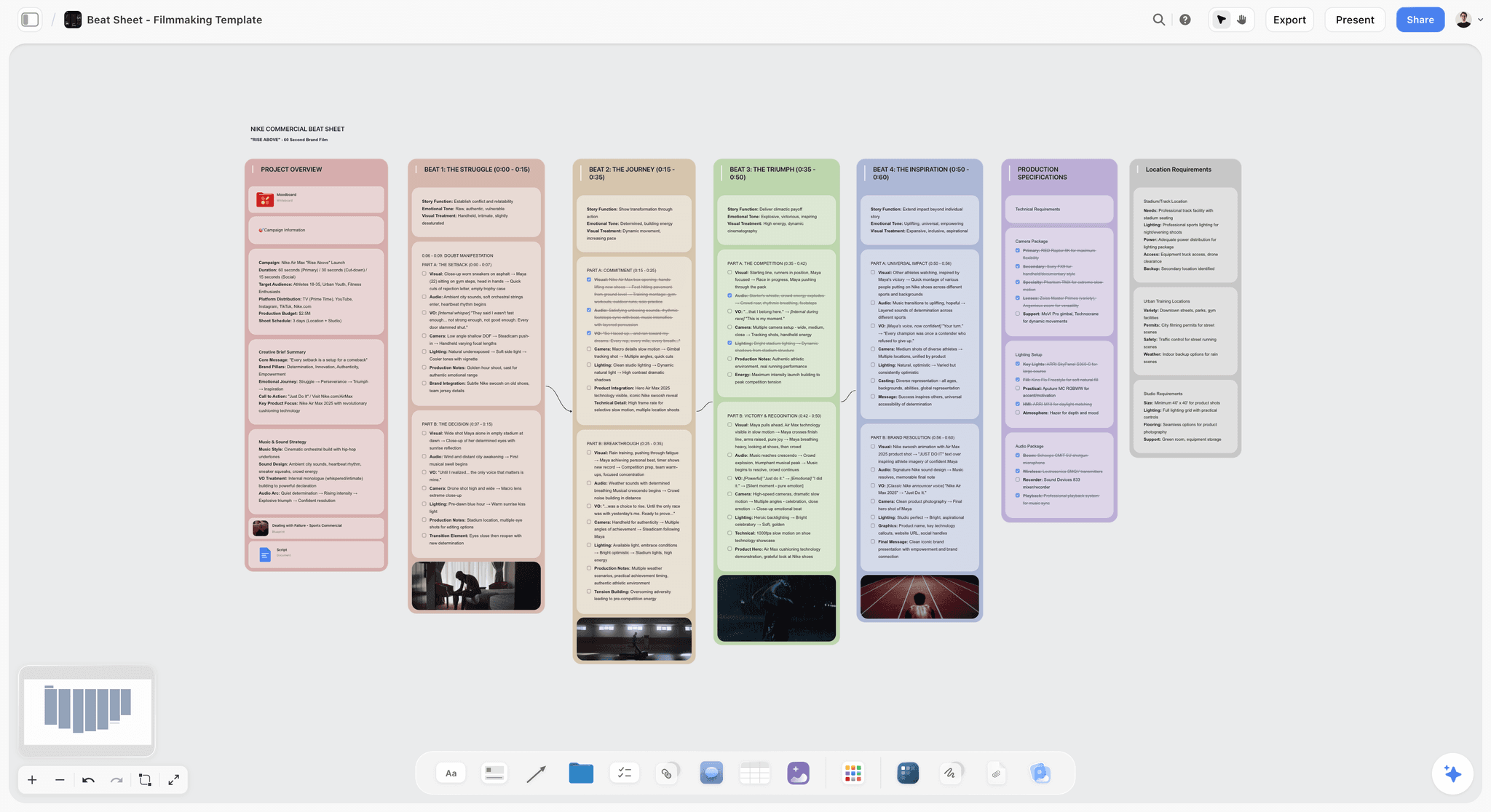
Storyflow plans the story on a medium-neutral canvas: the character wants, the conflict, the beats, the turns, and the arc, all visible together with no format imposed. The AI reads the full canvas, so you can ask whether the midpoint actually reverses the want, or whether the ending pays off the opening. Once the story works, the plan adapts to whatever medium you choose. The Story Plan template opens with the premise, acts, and beats already structured so the AI has something to read from the first prompt.
Best for: Storytellers who want to plan the story before the format and have AI pressure-test the structure.
Verdict: The strongest AI story canvas. For writing the final draft, hand off to a format-specific tool.
Key features
- Medium-neutral canvas for characters, beats, and arc.
- AI reads the full canvas plus up to 5 documents and 3 boards you attach.
- AI pressure-tests structure: want, conflict, turns, payoff.
- Co-writers a paid member invites join free.
Pricing
Early access: every plan is paid for now. The Free plan launches before the end of 2026, and invited collaborators of paid members join free now. Plus: $7.99/mo annual. Unlimited uploads. Pro: $14/mo annual. AI image generation, 30x AI usage. Max: $39/mo annual. 60x more AI, team workspace with roles.
Pros
- No format imposed; the story is planned as a story.
- AI pressure-tests the structure before you write.
- Co-writers join free when a paid member invites them.
Cons
- Not a writing environment; draft in a format tool.
- Cloud-only, with no offline planning mode.
- Newer platform with a smaller template library than Plottr.
2. Milanote
Milanote is a freeform visual canvas with no format imposed, which makes it a strong medium-neutral story planner. Characters, beats, themes, and references live as cards you arrange spatially. Because nothing on the canvas assumes a screenplay or a chapter, you plan the story as a story.
Best for: Storytellers who plan visually and want to decide the medium later.
Verdict: The strongest medium-neutral visual story canvas. Hand off to a format tool once the medium is chosen.
Key features
- Freeform canvas with no imposed format.
- Cards for characters, beats, and themes.
- Templates for story planning.
- Web clipper for references.
- Shareable boards.
Pricing
Free with 100 cards. Individual: $9.99/mo. Team: $49/mo flat.
Pros
- No format pressing on the story.
- Visual layout shows the whole arc.
- Polished and intuitive.
Cons
- The 100-card free limit fills on a full story.
- Light AI compared to canvas-AI tools.
- Not a writing environment for the draft.
3. Plottr
Plottr is a structural story planner built around a visual timeline of beats and plotlines. It is mostly medium-neutral: the timeline plans structure, not format. It leans toward longer-form fiction, but the structural view works for any story with a clear arc.
Best for: Storytellers who think structurally and want beats on a timeline.
Verdict: The strongest structural planner. Slightly fiction-leaning, but structure is universal.
Key features
- Visual timeline of beats and plotlines.
- Story structure templates.
- Character and place tracking.
- Export to writing tools.
Pricing
Basic: $25/year. Pro: $39/year. Lifetime options available.
Pros
- Timeline shows the whole structure.
- Strong story structure templates.
- Affordable.
Cons
- Leans toward longer-form fiction.
- Not a writing tool.
- Light on visual and reference planning.
4. Scrivener
Scrivener includes story planning through its corkboard and outliner, sitting next to the manuscript. Its planning is capable but prose-leaning, since Scrivener is fundamentally a prose writing environment. It is strong when the chosen medium is already prose.
Best for: Storytellers who know the medium is prose and want planning beside the draft.
Verdict: Strong planning attached to a writing tool. Prose-leaning, so less medium-neutral.
Key features
- Corkboard for scene and beat cards.
- Outliner with metadata.
- Binder for structure.
- Full prose writing environment.
Pricing
$59.99 one-time (Mac or Windows). iOS sold separately.
Pros
- One-time purchase.
- Planning sits beside the draft.
- Industry-standard for prose.
Cons
- Prose-leaning, not medium-neutral.
- Planning views are less visual than dedicated tools.
- No AI.
5. Save the Cat
Save the Cat software turns the famous 15-beat story structure into a planning tool. It is medium-neutral in that the beats apply to film, novels, and more. It is structure-first by design, which suits writers who plan against a proven beat sheet.
Best for: Storytellers who plan against the Save the Cat beat structure.
Verdict: A strong beat-sheet planner. Best if you already work in the Save the Cat method.
Key features
- The 15-beat Save the Cat structure.
- Beat-sheet templates.
- Genre guidance.
- Story analysis tools.
Pricing
Subscription from roughly $10/mo, with other options.
Pros
- Proven beat structure built in.
- Medium-neutral beats.
- Good for structure-led writers.
Cons
- Tied to one structural method.
- Subscription pricing.
- Less flexible than a freeform canvas.
6. Dramatica
Dramatica is a story theory and structure tool based on a detailed model of narrative. It is medium-neutral, since its theory applies to any story, and it goes deeper into structural theory than any other tool here. The depth comes with a steep learning curve.
Best for: Storytellers who want a deep, theory-driven structural model.
Verdict: The deepest story theory tool. The learning curve is real; the payoff is structural rigor.
Key features
- Story theory model and structure engine.
- Character and throughline analysis.
- Structural reports.
- Genre and theme tools.
Pricing
License-based, priced as a one-time professional tool.
Pros
- Unmatched structural depth.
- Genuinely medium-neutral theory.
- Rigorous structural analysis.
Cons
- Steep learning curve.
- The theory model is divisive among writers.
- Dated interface.
7. Notion
Notion holds a story plan as linked databases: a beats database, a characters database, a themes store. It is medium-neutral, since a database imposes no format, and it covers structure once configured. The cost is setup time and a non-visual feel.
Best for: Storytellers who want a structured database story plan.
Verdict: A capable structured planner. Expect setup time before it pays off.
Key features
- Linked databases for beats and characters.
- Pages for theme and concept notes.
- Story planning templates.
- Standard AI features.
Pricing
Free for personal use. Plus: $10/mo. Business: $18/mo.
Pros
- Medium-neutral and flexible.
- Covers structure and character.
- Large template community.
Cons
- Setup-heavy before it is useful.
- Database feel, not visual.
- No purpose-built story structure.
8. Campfire
Campfire is a modular story planning tool: pick the modules you need, such as plot, characters, timeline, and arcs, and assemble a planning workspace. It is medium-neutral and lets you scale the plan to the story.
Best for: Storytellers who want a modular plan matched to their story.
Verdict: A flexible modular planner. Module pricing adds up for a full setup.
Key features
- Modular: plot, character, timeline, arc.
- Story structure modules.
- Lightweight AI.
- Web-based.
Pricing
Free with caps. Modules from roughly $9/mo.
Pros
- Pay only for modules you use.
- Medium-neutral structure.
- Active development.
Cons
- Module pricing adds up.
- Smaller community.
- AI is light.
9. Miro
Miro is a collaborative whiteboard that works well for medium-neutral story planning when a team plans together. Story maps, beat diagrams, and arc charts live on one board with no format imposed. It is a strong collaborative surface, less suited to long-form structure.
Best for: Teams that plan stories collaboratively in real time.
Verdict: Strong for collaborative story boards. Pair it with a structural tool for depth.
Key features
- Infinite collaborative canvas.
- Diagramming for story maps and arcs.
- Real-time editing and comments.
- Templates.
Pricing
Free for 3 boards. Starter: $8/mo annual. Business: $16/mo.
Pros
- Strong real-time collaboration.
- No format imposed.
- Good for story diagrams.
Cons
- The 3-board free limit is tight.
- Built for business teams, not stories.
- Weak for long-form structure.
10. World Anvil
World Anvil is a worldbuilding tool with story planning attached: plot tools, timelines, and a manuscript module sit alongside the world. It is mostly medium-neutral and strongest when the story is inseparable from a deep world.
Best for: Storytellers whose story is built around a deep world.
Verdict: Strong for world-heavy stories. Plot tools are secondary to the world.
Key features
- Worldbuilding wiki with cross-references.
- Plot and timeline tools.
- Manuscript module.
- Templates.
Pricing
Free with caps. Paid tiers from $4.99/mo.
Pros
- Excellent for world-driven stories.
- Plot and world together.
- Strong community.
Cons
- Plot tools secondary to the world.
- Wiki structure is heavy for pure story planning.
- Overkill for world-light stories.
11. Twine
Twine plans stories as node-and-link maps, which suits branching and interactive narrative. For a linear story it can still serve as a free node map of beats, though its design leans toward interactive fiction.
Best for: Storytellers planning branching or interactive narrative.
Verdict: The best free tool for interactive story planning. Interactive-leaning for linear stories.
Key features
- Node-and-link story maps.
- Free and open-source.
- Playable interactive output.
- Simple and fast.
Pricing
Free, open-source.
Pros
- Genuinely free.
- Strong for branching narrative.
- Fast node mapping.
Cons
- Interactive-leaning, not ideal for linear stories.
- Basic interface.
- Not a structural depth tool.
12. Sudowrite
Sudowrite is an AI writing tool with story brainstorming and a Story Bible feature. It can generate beats, characters, and arcs from a premise. It leans toward prose since it is a writing tool, and the AI output is a starting point for the human to shape.
Best for: Storytellers who want AI help brainstorming story structure.
Verdict: Useful for AI story brainstorming. Prose-leaning, and the AI suggests rather than decides.
Key features
- AI Story Bible for structure.
- Beat and character brainstorming.
- Draft and rewrite tools.
- Genre-aware AI.
Pricing
Subscription from roughly $10/mo, scaling with usage.
Pros
- Fast AI story brainstorming.
- Story Bible structures the plan.
- Good for breaking a block.
Cons
- Prose-leaning, not fully medium-neutral.
- AI output needs heavy shaping.
- Subscription scales with usage.
7) Recommended Story Planning Stacks
Stack 1: Solo Storyteller Across Mediums. Storyflow (plan the story medium-neutral, starting from the Storymap template so plot, characters, and scenes share one canvas) then a format tool once decided: Scrivener for prose, a screenplay tool for film. Plan once, write in the right place.
Stack 2: Structure-Led Writer. Plottr or Save the Cat (structural beats) + Storyflow or Milanote (characters and theme, with the Character Profile template holding want, flaw, and arc per character) + the format tool for drafting.
Stack 3: World-Driven Story. World Anvil (the world) + Storyflow or Plottr (the story structure) + the format tool for the draft.
Stack 4: Cheapest Working Stack. Storyflow (medium-neutral story plan) + Twine free or a free writing tool for the draft. About $8 a month.
The pattern across every stack: plan the story in a medium-neutral tool first, then move to a format-specific tool once the medium is chosen. The storytellers whose stories hold up are the ones who planned the story before the format.
8) Honorable Mentions
- Final Draft. The screenplay standard, for once the medium is film.
- Obsidian. Connected-note planning for story webs.
- Index cards. The analog, format-free way to plan beats.
- Google Docs. A free, format-light fallback for a simple plan.
- Arc Studio. A screenwriting tool with planning, for film-bound stories.
9) Tools to Avoid for Story Planning
- A screenplay tool used to plan the story. Scene headings and slug lines are format, not story. They shape the story before it is decided.
- A prose document for a story that might become a film. Paragraphs are a format commitment. Plan structure first.
- A tool you cannot get the plan out of. If the story plan is trapped in a format tool, adapting to another medium means starting over.
- Memory. A story structure held only in your head drifts. Externalize it where you can see the whole arc.
11) The Bottom Line
The best story planning tools in 2026 are the ones that let you plan the story before the format. Storyflow is the best AI story canvas. Milanote is the strongest medium-neutral visual canvas. Plottr is the best structural planner. Scrivener is the best planning attached to a writing tool.
A story is not a screenplay, a novel, or a video. It is the thing all three are made of. Plan the story first, in a medium-neutral space, until the structure works. Then choose the medium and move into a format-specific tool. The storytellers whose stories hold up are the ones who never let the format plan the story.
For your next story, plan it medium-neutral in a Storyflow canvas and decide the format only once the structure works.
10) FAQ: Story Planning Tools
What is the best story planning tool in 2026?
Storyflow is the best AI canvas for planning a story before the format. Milanote is the strongest medium-neutral visual story canvas. Plottr is the best structural planner. Scrivener is the best planning attached to a writing tool. Most storytellers plan in a neutral tool, then write in a format-specific one.
What is the difference between story planning and outlining?
Outlining is the ordered sequence of scenes or beats. Story planning is broader: characters, want, conflict, turns, theme, and arc, often before the medium is even chosen. An outline is one output of story planning. Story planning decides whether the story works at all.
Should I plan a story before choosing the medium?
Yes. A story is medium-independent: the same structure can be a film, a novel, or a video. Planning the story first, in a medium-neutral tool, keeps the structure honest. Choosing the medium first lets the format shape the story before it is decided.
What tools do professional storytellers use?
Storytellers commonly plan in Milanote, Storyflow, or Plottr, then write in a format-specific tool: Final Draft for screenplays, Scrivener for prose. Structure-led writers add Save the Cat or Dramatica. The constant is a planning tool that holds the story before the format.
What is the cheapest story planning setup?
Storyflow holds a medium-neutral story plan on one canvas at $7.99/mo billed annually. Twine is free for interactive stories. For drafting, a free writing tool works until you choose to upgrade. A complete planning workflow costs under ten dollars a month.
Can AI help plan a story?
Yes. AI can brainstorm beats, characters, and arcs, and pressure-test a structure for weak turns or unpaid setups. Storyflow's canvas AI reads the whole story plan and can flag where the midpoint fails to reverse the want. The AI suggests; the storyteller decides.
Is Milanote or Plottr better for story planning?
Milanote is better for visual, medium-neutral planning with characters, themes, and references on a freeform canvas. Plottr is better for structural planning, with beats on a timeline. Milanote suits visual thinkers; Plottr suits structural ones.
What is a medium-neutral story plan?
A medium-neutral story plan captures the story, the characters, want, conflict, turns, and arc, without committing to a format like screenplay or prose. It can be adapted into any medium. Planning this way prevents the format from shaping the story before it is decided.
How detailed should a story plan be?
Detailed enough that the structure clearly works: the want is clear, the conflict escalates, the turns land, the ending pays off the opening. The format-specific detail, scene headings or chapter breaks, comes later in a format tool. Plan the story to the point where the structure is sound.
What is the best free story planning tool?
Twine is the best free story planning tool for interactive stories. Storyflow holds a medium-neutral story plan on one canvas with no card cap at $7.99/mo billed annually, with its Free plan arriving before the end of 2026. Both let a storyteller plan a complete story structure before choosing a medium.
Can one tool plan a story for film, novel, and video?
Yes, if it is medium-neutral. Milanote and Storyflow plan the story structure without imposing a format, so the same plan can become a film, a novel, or a video. Format-specific tools cannot do this, because the format is baked in.
How do I keep a story plan from drifting as the story develops?
Plan in a tool you keep returning to, and update the structure as the story changes. A plan drifts when it lives somewhere you never reopen. A medium-neutral canvas you revisit while drafting stays current and keeps the structure honest.
Table of Contents
- Quick Answer: The Best Story Planning Tools in 2026
- Comparison Table: 12 Story Planning Tools at a Glance
- Story First, Medium Second
- How We Evaluated These Tools
- Quick Picks by Story Planning Need
- Detailed Reviews: 12 Story Planning Tools
- Recommended Story Planning Stacks
- Honorable Mentions
- Tools to Avoid for Story Planning
- FAQ: Story Planning Tools
- The Bottom Line
- Author
- Related Reading
Templates to check out for this topic


Story and writing templates you can use in Storyflow
Start your next script, novel, or world from a ready-made Storyflow board instead of an empty page. The AI reads the whole canvas, so every suggestion is grounded in your story.


See Storyflow in Action
A visual AI workspace where every feature lives inside one canvas. No tab-switching, no context lost.
Build your entire board from a single message
Type what you need in the AI chat at the bottom of your canvas. The AI adds cards, headings, and structure directly onto your board.
Use expert frameworks as AI context
Type @ in the AI chat and choose any Tactic. The AI tailors every response to that framework instead of giving generic advice.
Turn your board into a mind map in seconds
Ask the AI to restructure your canvas as a mindmap. It connects your ideas into a visual hierarchy so you can see how everything relates.
Why Storyflow Exists
Storyflow actually began as a personal tool while working on creative and research projects.
We kept running into the same problem: ideas were scattered everywhere: notes, documents, and whiteboards.
Nothing helped us see how everything connected.
So we started building a workspace designed around how ideas actually grow.
→ Read how Storyflow was createdJustkay
Documentary Filmmaker & Founder at Storyflow
Published: 2026-05-17
Extremely simple, seriously capable


See how easy it is to get started
Watch a real project come together, from a blank board to a finished plan, clicked through step by step.
Start creating with AI and become more productive
Transform your creative workflow with AI-powered tools. Generate ideas, create content, and boost your productivity in minutes instead of hours.