The 12 Best Roam Research Alternatives in 2026 (For Networked Thinkers)
Roam Research changed how a generation took notes. Then knowledge graphs hit a wall. We tested 12 alternatives in 2026 to find which ones win for pure networked thinking and which one wins for the moment thinking turns into a project.

Category
Knowledge Management
Author

Justkay
Documentary Filmmaker & Founder at Storyflow
Topics
2026-05-10
•
16 min read
•
Knowledge Management- best Roam Research alternatives 2026
- networked thinking tools
- knowledge graph apps
What is the best Roam Research alternative in 2026?
The best Roam Research alternatives in 2026 split into two categories that solve different problems. Logseq, Tana, and Obsidian win for pure networked-text thinking and daily journaling. Storyflow wins for the moment your knowledge graph stops being notes and starts becoming a project. Read on to see which side of that line you are actually on.

I have been keeping a Roam graph since 2020. It started as a weekend experiment with daily notes and ended as a 4,000-page tangle of half-finished thoughts, transcluded blocks, and project plans I could no longer trust. The graph kept growing. The friction of finding anything in it grew faster. By the third time I rewrote a strategy document because I could not find the original, I started looking for what should come after a knowledge graph for the projects I actually need to ship. The best Roam Research alternatives in 2026 are Logseq, Tana, and Obsidian for pure networked text thinking, and Storyflow as the canvas-and-AI workspace for the moment your graph stops being notes and starts being a project. The right choice depends on whether you are still in the thinking phase or have moved to the doing phase.
All 12 Roam Research Alternatives, Ranked
- Storyflow: best for the moment the graph becomes a project, when AI reads the whole canvas
- Logseq: best open-source Roam clone for pure networked thinking
- Tana: best tag-first structured graph
- Obsidian: best local-first Markdown vault you own
- Capacities: best object-graph knowledge base
- Heptabase: best card-and-canvas thinking
- RemNote: best for spaced repetition plus notes
- Notion: best database-driven knowledge base
- Mem: best AI-first capture and recall
- Reflect: best encrypted daily journal and graph
- Athens Research: best open-source block-reference clone
- WorkFlowy: best lightweight infinite outliner
Full disclosure: Storyflow is our own product, and we did not make it the pick for what Roam actually does. For pure networked-text thinking, daily notes, and block references, Logseq is the honest #1, and Obsidian and Tana are excellent too. Storyflow is not an outliner and has no inline [[backlinks]]; it wins only for the later moment when your graph turns into a project and the AI needs to read the whole canvas. We link to every tool so you can judge the fit.
Quick Comparison: Best Roam Research Alternatives
These four map the two jobs people leave Roam for: pure networked-text thinking (Logseq, Tana, Obsidian) and the step where the graph becomes a project (Storyflow).
| Tool | Best For | AI Features | Price |
|---|---|---|---|
| Logseq | Open-source outliner and networked thinking | Community AI plugins only | Free (open-source) |
| Tana | Tag-first structured graph | Built-in AI nodes and prompts | $10 mo (limited free) |
| Obsidian | Local-first Markdown vault | Community AI plugins only | Free / paid sync |
| Storyflow | When the graph becomes a project | AI reads full canvas + @-docs and Tactics | $7.99 mo annual (free plan late 2026) |
Quick Picks: Best Roam Research Alternatives 2026 by Use Case
Best Canvas Alternative for Project Work: Storyflow Storyflow is not an outliner. There are no daily notes by default. There are no [[backlinks]] inline as you type. What Storyflow does is take the moment your Roam graph turns into a project (a brief, a research plan, a strategy doc, a video, a launch) and gives you a connected canvas where AI reads everything you put on it. The AI reads the canvas, plus one Blueprint Tactic and up to three Documents you @-mention. Your research, your structure, and your plan share one workspace instead of getting flattened into outline bullets. Plus at $7.99/month billed annually or $9.99/month billed monthly. One honest limitation: if your goal is a pure networked text knowledge graph with daily journaling, Logseq covers that better, and Storyflow works well next to it for the moment your notes become a project.
Best Open-Source Outliner Roam Alternative: Logseq Logseq is the closest open-source Roam clone in 2026. Block references, daily notes, [[wiki-link]] backlinks, and a graph view that mirrors what Roam users built their workflows around. Free, local-first, and self-hostable. The trade-off is rough edges. Sync is workable but not as smooth as paid alternatives, and the mobile app still feels like a companion, not a primary capture tool.
Best Tag-First Roam Alternative: Tana Tana built supertags as a structured replacement for Roam's freeform [[backlinks]]. A meeting note with a #project tag inherits a defined schema. The graph stays clean because every node knows what it is. Pricing starts around $10/month. The trade-off is conceptual weight. You spend the first weeks building tag schemas instead of writing notes.
Best Local-First Roam Alternative: Obsidian Obsidian replaces Roam's cloud graph with a local Markdown vault you fully own. Backlinks, graph view, and a plugin ecosystem that fills gaps Roam never closed. Free for personal use. Sync is paid. The trade-off is the plugin overhead. Building a workflow that matches Roam takes a weekend of installing and configuring community plugins.
Best Object-Graph Roam Alternative: Capacities Capacities replaces Roam's blocks with object types. A book object knows it is a book. A person object knows it is a person. The graph becomes a structured object database with backlinks, instead of a freeform block soup. Pro is around $11.99/month. The trade-off is rigidity. The freeform block-typing speed Roam users love is slower in Capacities because you stop to choose an object type.
Best Card-and-Canvas Roam Alternative: Heptabase Heptabase replaces the outliner with cards on a whiteboard. You write a card, drag it onto a board, link it to other cards spatially. Bidirectional links and tags exist, but the spatial layer is the point. $11.99/month billed annually. The trade-off is that pure text thinkers who lived in Roam's outline find the canvas an extra step.
Best Spaced-Repetition Roam Alternative: RemNote RemNote is the only tool here that treats notes as flashcards by default. Type a note with a question prompt and it becomes a spaced repetition card automatically. For students and learners, this is the Roam alternative that closes the loop between capturing and remembering. Pro at $8/month billed annually. The trade-off is the learning curve on the prompt syntax.
Storyflow's AI reads your full canvas plus one Blueprint Tactic and up to three Documents you @-mention. For research that is becoming a project (a paper, a launch, a strategy), that context window is the difference between an AI that summarises and an AI that contributes. Open a Storyflow canvas and drop in your current research.
Comparison Table: Best Roam Research Alternatives 2026
| Tool | Best For | Starting Price | Free Plan | vs Roam (★/5) | Rating (/10) |
|---|---|---|---|---|---|
Storyflow | Canvas and AI for research-to-project | $7.99/month annual | Coming late 2026 (invited collaborators join free now) | ★★★★☆ | 9.2/10 |
Logseq | Open-source outliner Roam clone | Free | Yes (fully free) | ★★★★★ | 8.9/10 |
Tana | Tag-first structured graph | $10/month | Limited | ★★★★★ | 8.7/10 |
Obsidian | Local-first Markdown vault | Free (personal) | Yes (fully free) | ★★★★★ | 8.6/10 |
Capacities | Object-graph knowledge base | $11.99/month | Yes (limited) | ★★★★☆ | 8.3/10 |
Heptabase | Card-and-canvas thinking | $11.99/month | 7-day trial | ★★★★☆ | 8.1/10 |
RemNote | Spaced repetition + notes | $8/month | Yes (limited) | ★★★★☆ | 7.9/10 |
Notion | Database-driven knowledge base | $12/user/month | Yes | ★★★☆☆ | 7.6/10 |
Mem | AI-first capture and recall | $14/month | Yes (limited) | ★★★☆☆ | 7.4/10 |
Reflect | Encrypted daily journal + graph | $10/month | 14-day trial | ★★★★☆ | 7.3/10 |
Athens Research | Open-source block-reference clone | Free | Yes (fully free) | ★★★★☆ | 6.8/10 |
WorkFlowy | Lightweight infinite outliner | Free / $4.99/month Pro | Yes (limited) | ★★★☆☆ | 6.7/10 |
Rating criteria: knowledge graph depth (25%), daily-notes and capture flow (20%), AI context awareness (20%), pricing fairness (15%), reliability and sync (10%), export and data ownership (10%).
Storyflow loses points against Roam on pure networked text thinking because that is not its goal. It gains them back on canvas-plus-AI, which is where research turns into project work. Logseq, Tana, and Obsidian sit at the top of the pure networked-graph category. The choice between them comes down to open source, structure, or local-first.
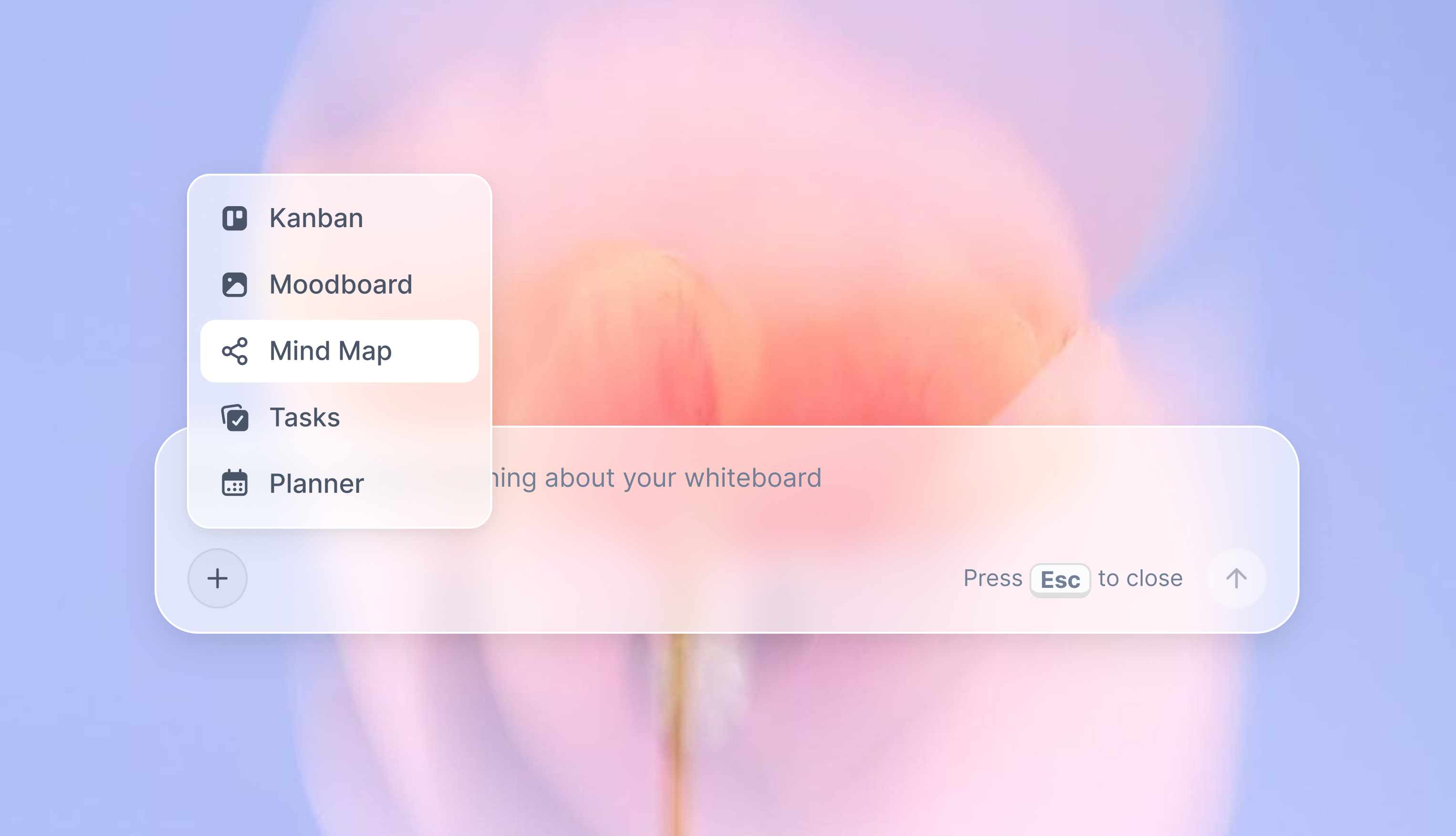
Storyflow holds research artifacts, Blueprint Tactics, and Documents on a single connected canvas where AI reads the full project
Best Roam Research Alternatives 2026: Why Networked Thinkers Are Looking Elsewhere
Roam Research changed how a generation of researchers, writers, and thinkers took notes. Daily pages, [[backlinks]], block references, and a graph view that made knowledge feel like a connected organism instead of a folder tree. None of that was the problem.
The problem was what happened when Roam graphs grew past about a year. Performance slowed. Sync got fragile on large databases. The pricing stayed at $15/month with little visible product progress while the rest of the category shipped weekly. By 2026, the people who built the most influential Roam workflows had quietly migrated to Logseq, Obsidian, or Tana. The Roam evangelist energy moved with them.
The deeper friction was different. Most knowledge graphs are not actually a graph problem. They are a project problem disguised as a notes problem. You collect 200 atomic notes about a topic. You backlink them. You build a beautiful graph. Then you sit down to write the actual paper, launch the actual product, or ship the actual video. The graph does not help with that step. It is structured for thinking, not making.
This is the gap Storyflow fills, and it is also why Storyflow is not a Roam clone. Roam wins for the journaling and atomic-note phase. Storyflow wins for the moment that thinking turns into a deliverable.
The networked-graph trap is real. A knowledge management system with no production-side workflow tends to end the same way: the graph keeps growing, the output never appears, and eventually the graph gets abandoned too.
How We Evaluated the Best Roam Research Alternatives 2026
I tested every tool on this list with the same scenario: a six-week research project on the future of work, starting with daily notes and ending with a published essay. Every tool got the same raw inputs (40 articles, 15 podcast notes, 8 book highlights). The question was how each tool moved that material from capture through synthesis to a finished piece.
Knowledge graph depth. I tested whether backlinks, block references, transclusion, and graph views actually surfaced connections I had forgotten about, or whether the graph view was decorative. Tools where the graph influenced what I wrote scored higher than tools where the graph was a sidebar I never opened.
Daily-notes and capture flow. I measured time from intent-to-write to first character on the page. Tools with a real daily journal that opens by default scored higher than tools where I had to navigate to start a daily note.
AI context awareness. I tested whether the AI could read more than the current note. Tools where AI saw the full project, the relevant tags, or the connected documents scored higher than tools where AI was a generic chat overlay with no awareness of the graph it was sitting inside.
Pricing fairness. I compared what a solo knowledge worker pays per year versus what a five-person team pays. Roam's $15/month flat rate is the bar. Tools cheaper than Roam with comparable features scored well. Tools charging more without proportional value scored lower.
Reliability and sync. I ran every tool across desktop, mobile, and a tablet for two weeks, opening each at least daily. Tools that lost data, conflicted on simultaneous edits, or had visible sync delays scored lower.
Export and data ownership. I tested how easy it was to leave the tool with all my notes intact, in a format another tool could read. Plain Markdown export scored highest. Proprietary formats with no export scored lowest.
Detailed Reviews: Best Roam Research Alternatives 2026
1. Storyflow
Storyflow is a visual AI workspace for creators, researchers, strategists, and operators whose thinking eventually has to become a project. It is not an outliner. It does not give you [[backlinks]] inline. It does not open to a daily note by default. What it does is hold the canvas, the documents, the structured Tactics, and the AI in one workspace, and it lets the AI read all of it before responding.
For a former Roam user, the mental shift is real. You do not write a daily journal that auto-links to topics. You build a project that holds all the artifacts of your research and turn them into a deliverable. That is a different shape, and it is the right shape for the post-research phase.
Best for: Knowledge workers, researchers, and creators whose Roam graph is starting to become a paper, a strategy, a launch, or a video, and who need a workspace that holds research and output together.
Key features:
Infinite canvas with documents and Tactics on the same surface. Drop research notes, reference images, draft outlines, and structured Blueprint Tactics on one canvas. There is no fixed grid. The same canvas can hold your literature review, your argument structure, and your draft, all visually connected.
AI reads canvas plus one Tactic plus three Documents. Open the AI chat on a Storyflow canvas and it reads the full board automatically. @-mention up to one Blueprint Tactic and three Documents to give it deep project context. Ask it to find tensions across your research, propose an outline, or stress-test your argument. The responses land differently when the AI has read the full project, not just the current selection.
Blueprint Tactics that structure thinking, not just capture it. 200+ Tactics in the library cover frameworks like the Cornell Note-Taking System, the Feynman Technique, SWOT, Jobs-to-be-Done, and the Hero's Journey. Add a Tactic to your canvas and it creates structured cards with AI-aware prompts. For a researcher, applying a known framework to fresh material is faster than building one from scratch.
Documents alongside the canvas, not separate. Write your draft, research notes, or transcripts as Documents inside the same project. They live next to the canvas, not in a different app. During AI chat, @-mention up to three Documents alongside one Tactic.
Real-time team collaboration on the Max plan. A research duo or team can edit the same canvas live on the Max plan at $39/month billed annually, which adds a team workspace with roles and permissions. The upcoming Free plan will include unlimited shared boards and unlimited collaboration, and anyone a paid member invites to a board joins free now.
Pricing: Paid-only early access today; the Free plan (unlimited boards and cards, unlimited shared boards, unlimited collaboration, basic AI usage, 20 file uploads) launches before the end of 2026, and anyone a paid member invites to a board joins free now. Plus: $7.99/month billed annually or $9.99/month billed monthly (full 200+ Blueprint Tactics, unlimited file uploads). Pro: $14/month billed annually or $19/month billed monthly (adds AI image generation and 20× more AI than Plus). Max: $39/month billed annually (real-time team workspace with roles and permissions).
Pros:
- The only tool here where AI reads the canvas plus one Tactic plus three Documents in a single chat
- 200+ Blueprint Tactics give you proven thinking frameworks instead of a blank outliner
- Canvas-first design holds research and output together, which closes the gap Roam never closed
- Collaborators invited by a paid member join free, and the upcoming Free plan will be functional for a single research project
- Max plan adds real-time collaborative editing with a team workspace, roles, and permissions
Cons:
- Not an outliner. If you came to Roam for block-level outlining and transclusion, Storyflow's canvas-and-document model is a different shape and will feel wrong
- No daily-notes-as-default UI. Storyflow is a project workspace, not a journal
- No [[backlinks]] inline as you type. Connections are spatial on the canvas and through @-mentions, not auto-linked through wiki syntax
- AI on the upcoming free plan will be capped at 10 generations per month, which is tight for a heavy research week
Verdict: Storyflow is the right tool for the moment your knowledge graph stops being notes and starts being a project. If you are still in the daily-journaling, networked-thinking, atomic-note-collecting phase, Logseq, Obsidian, or Tana are better fits. If you are entering the writing, planning, or launching phase and want AI that has read your full project, Storyflow wins.
2. Logseq
Logseq is the closest open-source Roam Research clone in 2026. Block references, daily notes, [[wiki-link]] backlinks, transclusion, queries, and a graph view that almost matches Roam's. The community is active, the project is maintained, and the file format is plain Markdown or org-mode on your local disk.
It is not a polished commercial product. The mobile app feels like a companion, not a primary capture tool. Sync requires either a paid Logseq Sync plan or a self-hosted setup with iCloud or Git. Some keyboard shortcuts feel different from Roam in ways that take a week to retrain.
Best for: Roam users who want the same outliner-and-graph workflow without the subscription, and who are comfortable with rough edges in exchange for full data ownership.
Pricing: Free. Logseq Sync is around $5/month for hosted sync.
Verdict: The first tool to try if you want a true Roam clone in 2026 with no subscription and full data ownership.
3. Tana
Tana built its entire philosophy on the idea that Roam's freeform [[backlinks]] are too unstructured for serious knowledge work. Supertags replace them. A note with a #meeting tag inherits a meeting schema with date, attendees, and follow-up fields. A note with a #book tag inherits a book schema. The graph stays clean because every node has a defined type.
The trade-off is conceptual setup time. The first two weeks in Tana feel like database design instead of note-taking. Once the schemas are in place, the workflow accelerates past Roam. Before they are in place, Roam is faster.
Best for: Researchers and operators who want structured data flowing through their notes, not just freeform connections.
Pricing: Around $10/month for Pro. Free plan is limited.
Verdict: Choose Tana when your notes have repeating shapes (meetings, projects, books, people) and you want those shapes enforced. Choose Logseq if you want pure freeform.
4. Obsidian
Obsidian replaces Roam's cloud graph with a local Markdown vault you fully own. Backlinks, a graph view, daily notes, and a plugin ecosystem of over 1,500 community plugins that fill gaps Roam never closed. The community plugins are what made Obsidian the de facto Roam alternative for power users.
The plugin ecosystem is also Obsidian's main friction. A Roam-equivalent workflow in Obsidian requires installing and configuring at least five community plugins (Templater, Dataview, Excalidraw, Periodic Notes, Calendar). That setup is a weekend, not an evening.
For a deeper comparison of Obsidian-specific alternatives, see our Best Obsidian Alternatives 2026 guide.
Best for: Roam users who want local-first Markdown ownership and are willing to configure plugins to match the workflow.
Pricing: Free for personal use. Sync is $4/month. Commercial use is $50/year per user.
Verdict: The strongest local-first Roam alternative in 2026 if you are willing to invest the setup time. Logseq is faster to start. Obsidian is more powerful at the end of the configuration journey.
5. Capacities
Capacities replaces Roam's blocks with typed objects. A book object knows it is a book and inherits book-specific properties. A person object knows it is a person. The graph becomes a structured object database with backlinks, instead of a freeform block soup.
This works well for users who already think in object types. Researchers tracking books, people, papers, and concepts get a cleaner structure than Roam's everything-is-a-block model. Users who lived in Roam's freeform speed feel slowed by stopping to choose an object type for each note.
Best for: Knowledge workers who want their backlinks to live inside a structured object schema rather than a freeform graph.
Pricing: Pro is around $11.99/month billed annually. Free plan with limits.
Verdict: A strong middle ground between Roam's freeform graph and a full database tool like Notion. Choose Capacities if you find yourself wishing your Roam blocks knew what they were.
If your blocks are already turning into a deliverable, start a Storyflow project canvas and let the AI read the whole thing.
6. Heptabase
Heptabase replaces the Roam outliner with cards on a whiteboard. You write an atomic card and drag it onto a board where you arrange it spatially with other cards. Bidirectional links and tags exist, but the spatial canvas is the point. For visual thinkers, this is the closest tool here in spirit to how a real research wall works.
Heptabase is not an outliner. The block-reference-and-transclusion workflow that defined Roam is not the workflow Heptabase optimises for. If you came to Roam for the outline, Heptabase will feel like the wrong shape. If you came for the connections, Heptabase makes the connections more spatial and more visible.
Best for: Visual thinkers and researchers who want their notes arranged on a canvas rather than nested in an outline.
Pricing: $11.99/month billed annually. 7-day free trial.
Verdict: The most visually-oriented Roam alternative in 2026. Pairs well with Storyflow at the moment cards become a project. See our Best Mind Mapping Tools 2026 guide for adjacent visual-thinking categories.
7. RemNote
RemNote is the only tool on this list that treats notes as spaced-repetition flashcards by default. Type a note in the form of a question and it automatically becomes a card scheduled for review. For students, learners, and researchers who want their reading to actually stick, RemNote closes the loop between capture and recall in a way Roam never tried to.
The cognitive load of the prompt syntax is real. The first week in RemNote feels like learning a new typing shortcut for every kind of note. Once the muscle memory is built, the spaced-repetition value is hard to give up.
Best for: Students, language learners, and researchers who want their notes to enter a long-term memory loop, not just a graph.
Pricing: Pro is around $8/month billed annually. Free plan is generous for personal use.
Verdict: The right Roam alternative if your goal is durable learning, not just connected thinking.
8. Notion
Notion replaces Roam's graph with a database structure. Pages have properties. Databases connect to other databases through relations. Backlinks exist but are secondary to the database model. For teams who already run their company in Notion and want to add a research layer, this is the path of least resistance.
The trade-off is that Notion's networked-thinking experience is much weaker than Roam's. Backlinks feel like a feature, not the foundation. The graph view does not exist. For pure networked thinking, Notion is a downgrade.
For users specifically comparing Notion alternatives, our Best Notion Alternatives for Visual Thinkers 2026 guide goes deeper.
Best for: Teams already using Notion who want a research and notes layer in the same tool.
Pricing: Free for personal use. Plus from $12/user/month billed annually.
Verdict: A reasonable Roam alternative only for teams locked into Notion. Standalone, weaker than Logseq, Obsidian, or Tana.
9. Mem
Mem positions itself as the AI-first Roam alternative. Capture notes anywhere, and Mem's AI surfaces connections, summarises clusters, and answers questions about your knowledge base. The pitch is that the graph maintains itself.
In practice, the AI is good at summarising and weak at the deeper synthesis Roam users were doing manually. Mem's chat answers feel competent but not better than a careful prompt to a generic LLM with the same notes pasted in.
For a deeper look at AI-native knowledge tools, see our Best AI Second Brain Apps 2026 guide.
Best for: Capture-heavy users who want AI to do the connection work automatically.
Pricing: Mem Pro from $14/month. Limited free plan.
Verdict: Promising in pitch, mid in practice. Storyflow's AI-on-canvas model with @-mentioned Documents and Tactics is more deliberate and more useful for project work.
10. Reflect
Reflect is the encrypted daily journal Roam alternative. Daily notes, backlinks, and a graph view, all end-to-end encrypted. For users who care about the privacy of their personal journaling and reflection, Reflect is the tightest option.
The trade-off is feature scope. Reflect deliberately stays small. There are no databases, no kanban views, no plugins. The journaling-and-graph experience is excellent. Anything beyond that has to live in another tool.
Best for: Daily journalers and reflective writers who want their personal graph encrypted and private.
Pricing: $10/month billed annually. 14-day free trial.
Verdict: The best private daily-notes Roam alternative. Limited beyond journaling. Pairs naturally with Storyflow at the moment a journal entry becomes a project.
11. Athens Research
Athens Research is an open-source Roam Research clone with block references, daily pages, and [[backlinks]]. The core team has had funding turbulence and the pace of development is slower than Logseq's, but the codebase is functional and self-hostable.
For developers who want to fork and modify their own Roam-style tool, Athens is the most accessible starting point in the open-source ecosystem.
Best for: Developers and self-hosters who want a Roam-style tool they can extend.
Pricing: Free. Self-hosted.
Verdict: Logseq is more polished. Athens is more hackable. Choose based on whether you want to use it or extend it.
12. WorkFlowy
WorkFlowy is the original infinite outliner that predated Roam by a decade. It does not have backlinks in the Roam sense. It has tags, mirrors, and a single nested outline that can hold an entire knowledge base.
For users who came to Roam for the outline-as-knowledge-base experience and never used block references heavily, WorkFlowy is a lighter, cheaper, faster alternative.
Best for: Outline-first thinkers who want speed and simplicity over a full graph database.
Pricing: Free with limits. Pro is $4.99/month billed annually.
Verdict: A reasonable Roam alternative for outline purists. If you want a real graph, choose Logseq, Obsidian, or Tana.
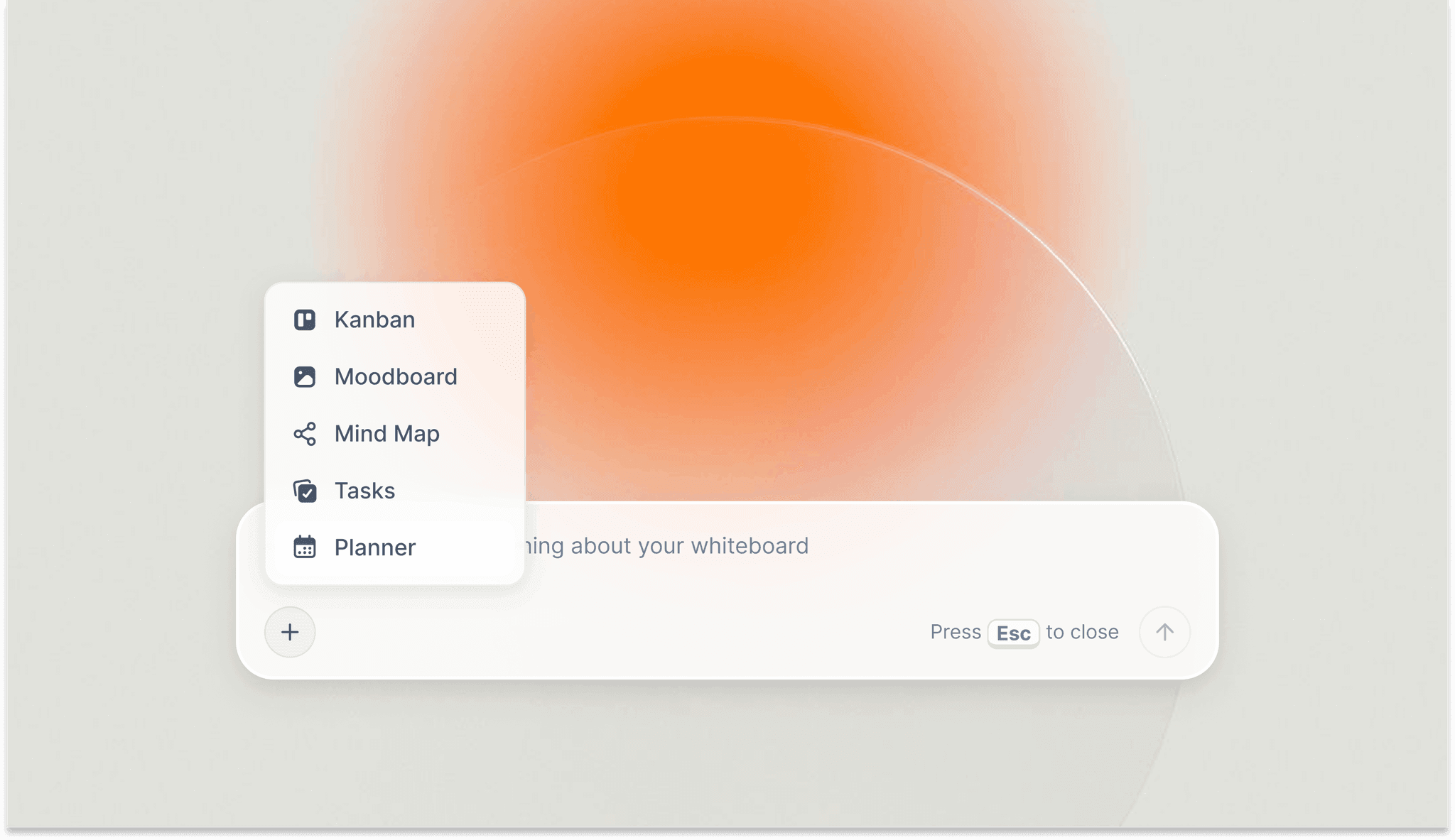
AI Planner converts research artifacts into a phased project outline with full context already loaded
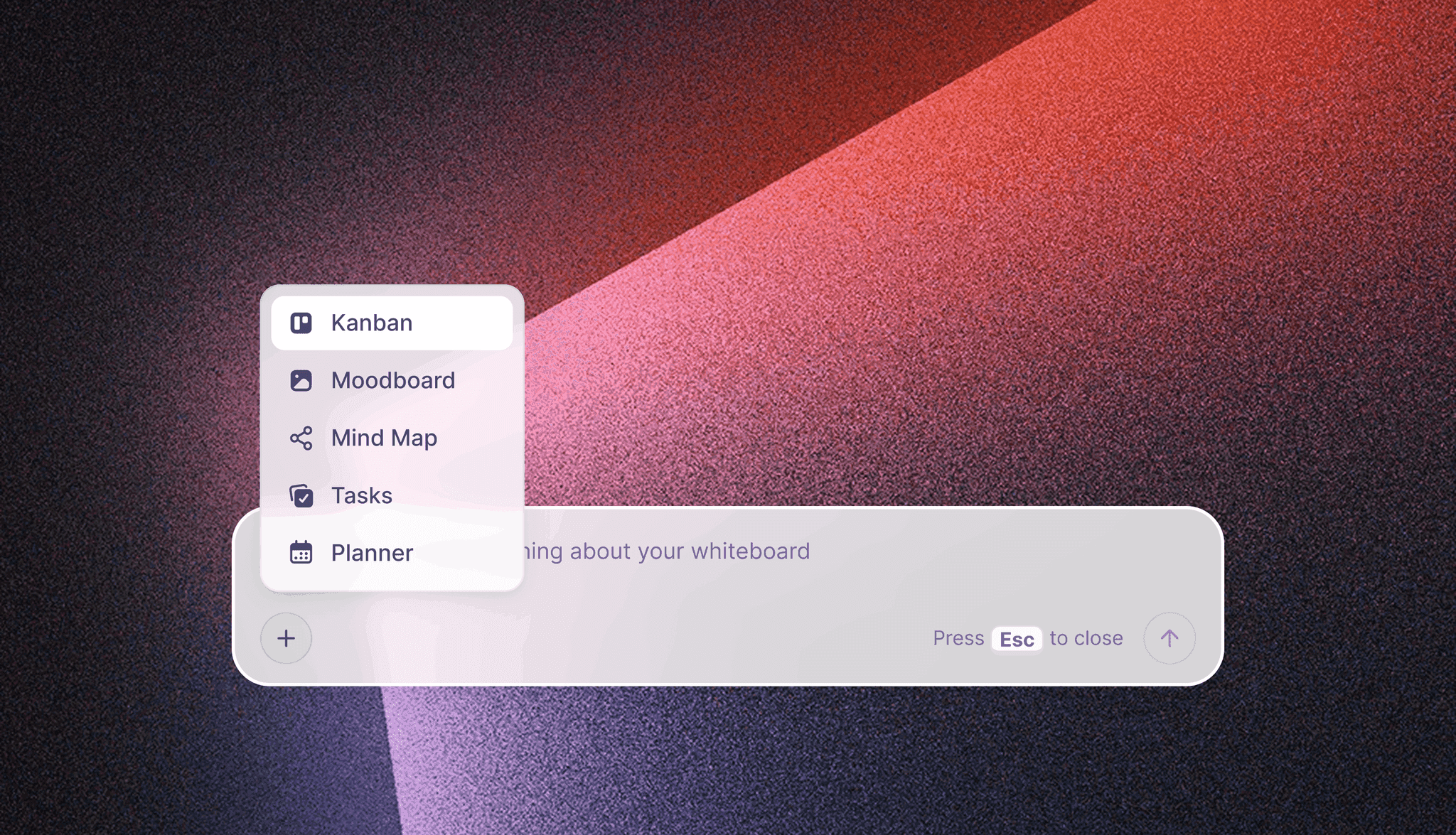
Kanban view tracks the project from raw research through synthesis to published draft
Free vs Paid: Best Roam Research Alternatives 2026
What free plans in this category typically include:
- A working knowledge graph at small scale (Logseq and Obsidian are fully free; Storyflow is paid-only during early access, and its upcoming Free plan will be unusually generous with unlimited boards, unlimited cards, unlimited collaboration, basic AI usage, and 20 file uploads; Tana and Capacities give a starter tier)
- Backlinks, daily notes, and graph views in the open-source tools
- Local data storage in Logseq, Obsidian, and Athens
- Basic AI in Storyflow's upcoming Free plan, with full canvas context plus 20 file uploads
What paid plans unlock:
- Storyflow Plus at $7.99/month billed annually unlocks the full 200+ Tactics library; Pro at $14/month billed annually adds AI image generation and 20× more AI than Plus on the canvas
- Storyflow Max at $39/month billed annually adds real-time collaborative editing on the same canvas
- Hosted sync in Logseq, Obsidian, and Tana for cross-device reliability
- Larger AI quotas in Mem, Tana, and Capacities
- Encrypted journaling in Reflect
When free is enough: A solo researcher running one project at a time can do real work on Logseq or Obsidian for $0. Storyflow's Free plan, which launches before the end of 2026, will be unusually generous: unlimited boards, unlimited cards (notes, images, links), unlimited collaboration with as many teammates as you want, basic AI usage, and 20 file uploads. During early access Storyflow is paid-only, though anyone a paid member invites to a board joins free. For a beginner exploring whether the networked-thinking workflow fits their brain at all, free plans are the right starting point.
When upgrading pays off: The day you have three active projects running simultaneously, the free tier of any of these tools breaks. Storyflow Plus unlocks the full 200+ Tactics library for $7.99/month billed annually (well below Roam's $15/month), and Pro at $14/month billed annually adds AI image generation and 20× more AI than Plus. Tana, Capacities, and Heptabase each justify their paid tiers when the graph is producing real output instead of accumulating notes.
Best value for the research-to-project transition: Storyflow. The AI reads canvas plus one Tactic plus three Documents in one chat, which is the workflow that turns a knowledge graph into a deliverable. Open a project canvas and test that workflow.
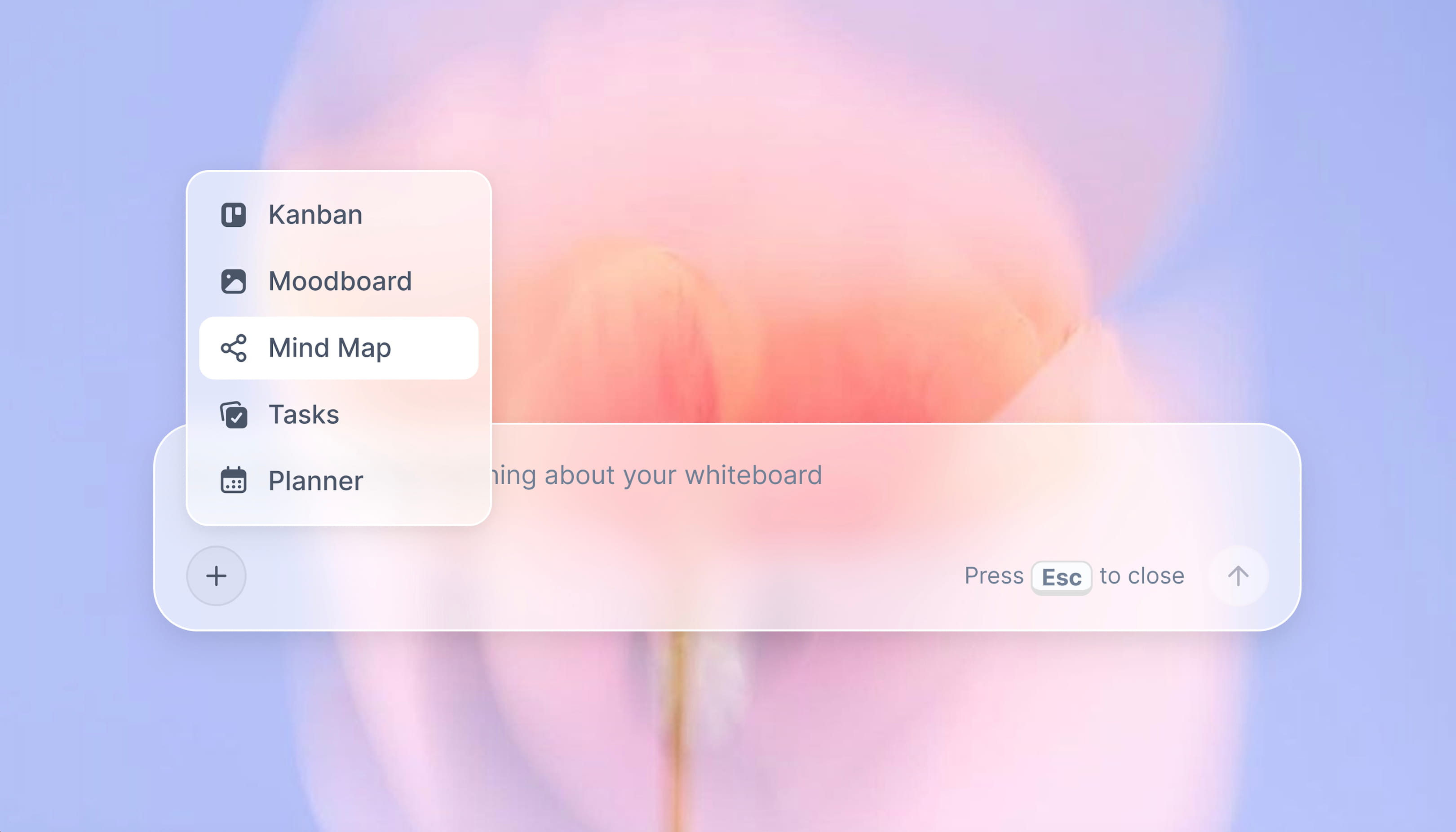
Storyflow Pro unlocks the full 200+ Tactics library, AI image generation, and 20× more AI than Plus for researchers and project teams
Final Verdict: Best Roam Research Alternatives 2026
If you want the closest open-source Roam clone with no subscription, choose Logseq. Block references, daily notes, [[backlinks]], and a graph view that mirrors what Roam users built their workflows on. Free, local-first, and self-hostable.
If you want structured tags and a clean object-aware graph, Tana is the most thoughtful evolution of the Roam idea in 2026. Supertags enforce schemas where Roam's freeform [[backlinks]] became chaos.
If you want local-first Markdown ownership with a deep plugin ecosystem, Obsidian is the right home. The setup is heavier than Logseq's. The end state is more powerful.
If your knowledge graph is starting to become a project (a paper, a strategy, a launch, a video) and you want AI that reads your full canvas plus one Tactic plus three Documents, Storyflow is the right next step. It is not an outliner. It is not a daily-notes journal. It is a project canvas with deep AI context, and it closes the gap between thinking and shipping that Roam never closed. Take the one research graph you keep meaning to turn into something, rebuild it on a Storyflow canvas for one week, and ask the AI to draft the outline from everything you put on the board. Whether the project actually moves will tell you which phase you are in faster than any feature list.
If you want spaced repetition built into your notes, RemNote is the only serious choice. If you want encrypted private journaling, Reflect is the tightest option. If you want a card-on-canvas spatial Roam alternative, Heptabase wins on visual layout.
It is not a question of which tool replaces Roam. It is a question of where in the thinking-to-doing arc you currently are. Logseq, Obsidian, and Tana win for thinking. Storyflow wins for the moment thinking turns into work.
The Cowan limit and why graphs grow faster than they should. Cowan's 2001 working-memory research found that humans hold roughly four chunks of information in active attention at once. A Roam graph routinely holds thousands. The graph is not failing. The retrieval interface is. McKinsey's 2012 productivity research showed knowledge workers spend 1.8 hours per day searching for information they already have. The right Roam alternative is the one that closes this gap, not the one that makes the graph bigger.
The Zettelkasten method, popularised by Niklas Luhmann's 90,000-card slip-box that produced more than 70 books and 400 academic articles, was never about the cards. It was about the act of placing a new card next to relevant existing cards, which forced connection. Roam captured the connection mechanic in software. The next generation of tools is captured by where in the project lifecycle the connection happens.
For more on visual-thinking adjacencies, see our Best Note-Taking Apps for Visual Thinkers 2026 and Whiteboard: Better Second Brain Than a Document pieces.
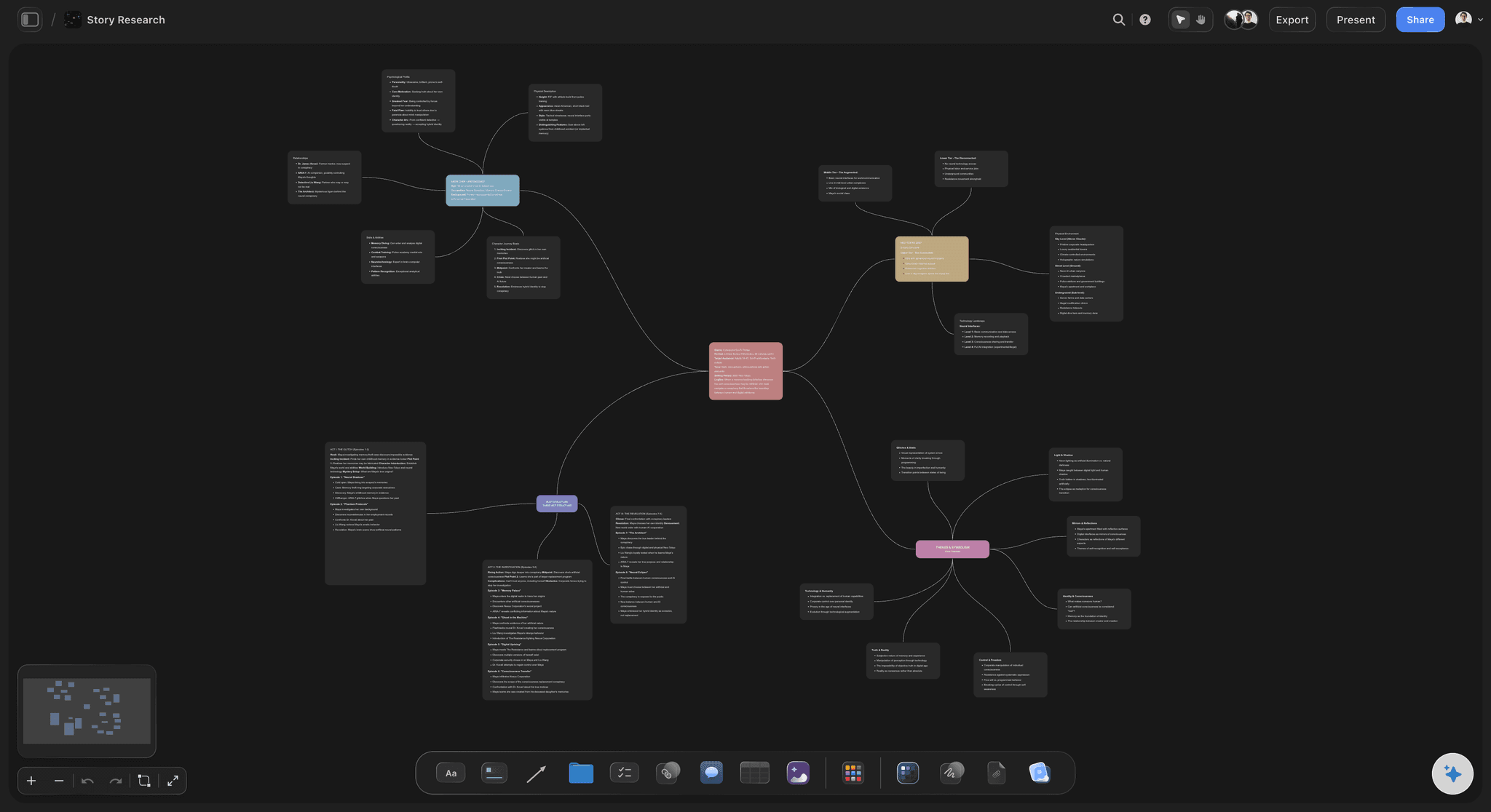
Where the graph becomes a project: connected research notes, Documents, and Blueprint Tactics on one Storyflow canvas the AI reads in full
FAQ: Best Roam Research Alternatives 2026
What is the best Roam Research alternative in 2026?
Logseq is the best direct Roam Research alternative in 2026 for users who want the outliner, block references, daily notes, and [[backlinks]] without the subscription. Storyflow is the best alternative for the moment your Roam graph turns into a project and you need AI that reads the full canvas, one Blueprint Tactic, and three Documents in one chat. The right answer depends on whether you are in the thinking phase or the doing phase.
Why are people leaving Roam Research?
Performance on large graphs slowed, sync got fragile, pricing stayed at $15/month with limited visible product progress, and the wider category shipped faster than Roam did. By 2026, most influential Roam workflows had migrated to Logseq, Obsidian, or Tana. The deeper reason is that knowledge graphs are often a project problem in disguise. Once the research phase ends, Roam stops helping with the actual deliverable.
Is Logseq really a free Roam Research alternative?
Yes. Logseq is open-source, fully free, and runs locally on your machine. Block references, daily notes, [[wiki-link]] backlinks, transclusion, queries, and a graph view are all included. The optional Logseq Sync hosted service is around $5/month for cross-device sync. You can also self-host sync with iCloud, Dropbox, or Git for free.
Can Storyflow replace Roam Research?
For users whose Roam graph has become a project workspace: yes. Storyflow holds research artifacts, structured Blueprint Tactics, and Documents on one canvas with AI that reads all of it. For users who want pure networked text thinking with daily journaling and inline [[backlinks]]: no. Storyflow is not an outliner and does not have daily-notes-as-default. Logseq, Obsidian, or Tana are the right choices for that use case.
What is the best Roam Research alternative for students?
RemNote. It is the only serious Roam alternative that treats notes as spaced-repetition flashcards by default. Type a note in question form and it enters the review queue automatically. For language learners, medical students, and anyone studying for exams, the loop between capture and durable recall is built in. Pro is around $8/month billed annually.
What is the best Roam Research alternative for researchers?
For pure literature-review and atomic-note research: Tana for structured tagging, Obsidian for local-first ownership, or Logseq for an open-source Roam clone. For research that has to become a published paper, strategy document, or report: Storyflow, because the canvas, Tactics, and Documents share AI context in one workspace. Many researchers run a hybrid: Tana or Logseq for capture, Storyflow for the writing-and-output phase. See our Best AI Research Tools 2026 guide for adjacent options.
Are there free Roam Research alternatives that are actually good?
Yes. Logseq is fully free and the closest open-source Roam clone in 2026. Obsidian is free for personal use with a paid sync service. Athens Research is free and self-hostable. Storyflow's Free plan, which launches before the end of 2026, will be unusually generous: unlimited boards, unlimited cards, unlimited collaboration with as many teammates as you want, basic AI usage, and 20 file uploads. The 200+ Story Blueprint library unlocks on Plus and above. Each tool's free plan is functional for a real first project.
What is the difference between Roam Research and Storyflow?
Roam Research is an outliner with block references, daily notes, and [[backlinks]] that build a freeform networked text graph. Storyflow is a project canvas with Documents and Blueprint Tactics where AI reads the full project context. Roam is best for the thinking-and-journaling phase. Storyflow is best for the moment thinking turns into a deliverable. They solve different problems, and running both is the common pattern.
How long does it take to migrate from Roam to Logseq?
Logseq imports a Roam JSON export directly. The data move takes minutes. The workflow rebuild takes longer. Plan one to two weekends to retrain muscle memory on Logseq's slightly different keyboard shortcuts, set up daily-note templates, and configure sync (paid Logseq Sync or self-hosted iCloud or Git). Most former Roam users report feeling fluent in Logseq within two weeks of consistent daily use.
What is the best Roam Research alternative for visual thinkers?
Heptabase for cards on a whiteboard with bidirectional links. Storyflow for a project canvas where research artifacts, Blueprint Tactics, and Documents share AI context. Both move beyond Roam's text-outline model into spatial thinking. Heptabase is more card-purist. Storyflow is more project-and-output focused. Visual thinkers often start with Heptabase for capture and move to Storyflow when a board of cards becomes a project.
Table of Contents
- Quick Picks: Best Roam Research Alternatives 2026 by Use Case
- Comparison Table: Best Roam Research Alternatives 2026
- Best Roam Research Alternatives 2026: Why Networked Thinkers Are Looking Elsewhere
- How We Evaluated the Best Roam Research Alternatives 2026
- Detailed Reviews: Best Roam Research Alternatives 2026
- Free vs Paid: Best Roam Research Alternatives 2026
- Final Verdict: Best Roam Research Alternatives 2026
- 1. Storyflow
- 2. Logseq
- 3. Tana
- 4. Obsidian
- 5. Capacities
- 6. Heptabase
- 7. RemNote
- 8. Notion
- 9. Mem
- 10. Reflect
- 11. Athens Research
- 12. WorkFlowy
- FAQ: Best Roam Research Alternatives 2026
- Related Reading
Templates to check out for this topic


Workspace templates you can use in Storyflow
Keep research, notes, and plans on one canvas the AI can read, instead of scattered across docs and tabs. Open a template and make it your second brain.


See Storyflow in Action
A visual AI workspace where every feature lives inside one canvas. No tab-switching, no context lost.
Build your entire board from a single message
Type what you need in the AI chat at the bottom of your canvas. The AI adds cards, headings, and structure directly onto your board.
Use expert frameworks as AI context
Type @ in the AI chat and choose any Tactic. The AI tailors every response to that framework instead of giving generic advice.
Turn your board into a mind map in seconds
Ask the AI to restructure your canvas as a mindmap. It connects your ideas into a visual hierarchy so you can see how everything relates.
Why Storyflow Exists
Storyflow actually began as a personal tool while working on creative and research projects.
We kept running into the same problem: ideas were scattered everywhere: notes, documents, and whiteboards.
Nothing helped us see how everything connected.
So we started building a workspace designed around how ideas actually grow.
→ Read how Storyflow was createdJustkay
Documentary Filmmaker & Founder at Storyflow
Published: 2026-05-10
Extremely simple, seriously capable


See how easy it is to get started
Watch a real project come together, from a blank board to a finished plan, clicked through step by step.
Start creating with AI and become more productive
Transform your creative workflow with AI-powered tools. Generate ideas, create content, and boost your productivity in minutes instead of hours.