The 12 Best Positioning and Message Testing Tools in 2026 (We Tested Them All)
Almost all message testing measures which option people prefer, and preference is close to worthless: the respondents will never buy, nobody sees your options side by side, and liking a sentence is not the behaviour you want to cause.

Category
Marketing
Author

Storyflow Team
Product & Research Team
Topics
2026-09-22
•
19 min read
•
MarketingFull disclosure: Storyflow is our own product and we rank it EIGHTH here, below seven competitors, because it tests nothing. It runs no studies, recruits no respondents, has no panel, runs no A/B tests, collects no survey responses and produces no statistics. Wynter, Maze, UserTesting, Google Ads, PickFu, Attest and Typeform all do things it cannot. It appears for the step either side of a test, holding the positioning, the variants and what each one scored so the tested version is the one that ships. The article also gives a free five-question comprehension test that needs no tool at all and outperforms most paid panel work, and says plainly that a dated document does most of what Storyflow does here.
Quick Comparison
Three of these measure comprehension or behaviour and one measures preference, which is the distinction the whole page turns on. The cheapest genuinely honest test is a hundred dollars of real traffic.
| Tool | Best For | AI Features | Price |
|---|---|---|---|
| Wynter | Verified B2B panels scored on clarity | AI response summaries | From about $600 per test |
| Maze | Fast comprehension at scale | AI follow-up questions | Free tier / from about $99 mo |
| Google Ads | Behaviour instead of opinion | AI bidding and assets | From about $100 per test |
| PickFu | Fifty consumer opinions within the hour | AI result summaries | From about $50 per poll |
Article Metadata
By the Storyflow Team, Product & Research Published September 22, 2026 · 19 min read · Marketing
The sentence that tested well is not the one on the homepage
Positioning drifts because the tested version, the score and the reasoning end up in three different places, each rewritten from memory. Keep the wording, the date and the verbatims together and check new copy against them. Paid-only during early access, from $7.99 a month billed annually.

Table of Contents
- Quick Answer: The Best Message Testing Tools in 2026
- Comparison Table: 12 Message Testing Tools at a Glance
- Comprehension Before Preference
- How We Evaluated These Tools
- Quick Picks by Testing Need
- Detailed Reviews: 12 Message Testing Tools
- What You Can Test and What You Cannot
- The Five-Question Comprehension Test
- Recommended Message Testing Stacks
- What Message Testing Costs
- Honorable Mentions
- Message Testing Mistakes to Avoid
- FAQ: Positioning and Message Testing
- The Bottom Line
- Author
- Related Reading
1) Quick Answer: The Best Message Testing Tools in 2026
Wynter is the best message testing tool in 2026 for B2B, because it tests with verified people in your actual target role rather than with whoever answers surveys, and that single property decides whether the result means anything. Maze is the best for unmoderated comprehension tasks at speed. PickFu is the fastest and cheapest for consumer preference, provided you understand what preference does and does not tell you. Google Ads is the only test on this list where people spend their own attention, which makes it the most honest and the slowest.
Almost all message testing measures which option people prefer, and preference is close to worthless. Asking a panel which of two headlines they like produces a winner, a percentage and a feeling of rigour. It predicts nothing, because the people answering will never buy, they are comparing options no real buyer ever sees side by side, and liking a sentence is not the behaviour you are trying to cause.
The test that matters is comprehension: can someone in your target role, seeing this once, say what it is and who it is for. That is a low bar and most positioning fails it. The Comprehension Before Preference framework in section 3 ranks all 12 tools on which of the two they actually measure, and section 8 gives the five-question test you can run for nothing.
Storyflow is our own product and it is eighth here, for holding the positioning and its evidence rather than testing anything.
For the strategy upstream of this, see The 12 Best AI Tools for Creative Strategists in 2026.
All 12 Message Testing Tools, Ranked
- Wynter: best B2B message testing, with verified target-role panels
- Maze: best unmoderated comprehension tasks at speed
- UserTesting: best moderated comprehension with think-aloud
- Google Ads: the only test where people spend real attention
- PickFu: fastest and cheapest consumer preference, used correctly
- Attest: best consumer panel research at scale
- Typeform: best DIY comprehension survey to your own audience
- Storyflow: best for holding the positioning and what tested well
- VWO: best on-site A/B testing of live messaging
- Claude: best for generating variants worth testing
- Perplexity: best scan of the language competitors already use
- SparkToro: best for finding where your audience actually is
Best Message Testing Tool by Job
- Best for B2B positioning: Wynter. Verified job titles and seniority mean the response comes from someone who could actually buy, which is the only thing that makes a message test worth running.
- Best for "do they understand it": Maze for unmoderated comprehension at scale, UserTesting when you want to hear someone think aloud.
- Best for consumer headlines: PickFu, treating the result as a signal about clarity rather than as validation.
- Best honest test: Google Ads. A hundred dollars of traffic against two landing pages measures behaviour rather than opinion.
- Best free test: a Typeform sent to your own list, or the five questions in section 8 asked of ten people.
- Best for keeping what you learned: Storyflow. Positioning drifts because the tested version and the reasoning live in different places.
2) Comparison Table: 12 Message Testing Tools at a Glance
| Tool | Best For | Measures | Right Audience | Starting Price | Rating (/10) |
|---|---|---|---|---|---|
Wynter | B2B message testing | Comprehension and clarity | Yes, verified roles | From about $600 per test | 9.2/10 |
Maze | Unmoderated comprehension | Comprehension, behaviour | If you recruit well | Free tier / from about $99 mo | 8.6/10 |
UserTesting | Moderated comprehension | Comprehension, reasoning | Panel or your own | Enterprise quote | 8.3/10 |
Google Ads | Real-attention testing | Behaviour | Yes, actual searchers | From about $100 per test | 8.2/10 |
PickFu | Fast consumer polls | Preference, some clarity | General consumer | From about $50 per poll | 7.8/10 |
Attest | Consumer panel research | Preference, awareness | Yes, targeted consumer | From about $500 per study | 7.5/10 |
Typeform | DIY survey to your own list | Comprehension if written well | Yes, your own audience | Free tier / from about $25 mo | 7.3/10 |
Storyflow | Holding positioning and evidence | Nothing, it is not a test | n/a | $7.99 mo annual (free plan late 2026) | 7.1/10 |
VWO | On-site A/B of live messaging | Behaviour at scale | Yes, real visitors | From about $199 mo | 7.0/10 |
Claude | Generating variants | Nothing, it drafts | n/a | Free / about $17 mo annual | 6.8/10 |
Perplexity | Competitor language scan | Nothing, it gathers | n/a | Free / about $20 mo | 6.5/10 |
SparkToro | Finding the audience to test with | Nothing, it locates | n/a | Free tier / from about $50 mo | 6.2/10 |
Pricing reflects publicly listed plans in 2026 and changes often; several of these price per test or per study rather than monthly, which is the right shape for work you do occasionally. Ratings weigh whether the tool measures comprehension or preference, whether the respondents could plausibly buy, and cost per usable result.
Message Testing Tools: Pricing Compared
| Tool | Free tier | Entry paid plan | What the paid plan unlocks | Billing model |
|---|---|---|---|---|
Wynter | No | from about $600 per test | Verified B2B panel and structured scoring | Per test or subscription |
Maze | Yes, limited studies | from about $99/month | More studies, panel access, advanced analysis | Per account, tiered |
UserTesting | No | Enterprise quote | Panel access, moderated and unmoderated | Annual contract |
Google Ads | No | from about $100 per meaningful test | Real traffic against real pages | Per click |
PickFu | No | from about $50 per poll | Targeted respondent attributes | Per poll |
Attest | No | from about $500 per study | Targeted consumer panels at scale | Per study or subscription |
Typeform | Yes, limited responses | from about $25/month | More responses and logic | Per account, response tiers |
Storyflow | No, early access; invited collaborators join free | $7.99/month billed annually | Unlimited boards, canvas-wide AI | Per account for individuals |
VWO | Free tier for basic testing | from about $199/month | Full experimentation platform | Per account, traffic tiered |
Claude | Yes, daily limits | about $17/month billed annually | Higher limits and Projects | Per user |
Perplexity | Yes, limited Pro searches | about $20/month | More Pro searches | Per user |
SparkToro | Yes, limited searches | from about $50/month | More searches and full data | Per account |
The pricing shape here is per-test rather than per-month, which is correct and unusual. Positioning does not change monthly, so a subscription to a testing platform mostly goes unused. Wynter at about $600 a test and Attest at about $500 a study are expensive per event and cheap per year if you test twice. The trap is the opposite: a $199 monthly experimentation platform bought for a positioning question, then paid for eleven months of not testing anything.
Frequently Asked: Which Message Testing Tools Teams Trust, and Which Results Mean Nothing
Which message testing tools are most trusted by marketing teams?
Wynter has the strongest reputation in B2B specifically, and the reason people give is the panel: responses come from verified job titles at real companies, so the result survives the obvious objection that the respondents are not buyers. UserTesting carries the deepest enterprise trust because its process withstands procurement and its recordings are persuasive internally. Maze is trusted for fast unmoderated work, and Attest for consumer studies at scale. Google Ads is trusted by the people who have been burned by panel results, because paying for real attention removes the audience objection entirely. Storyflow is a newer product in early access and tests nothing; it is eighth here for holding the positioning and its evidence.
Which message testing tools are known for fair and transparent pricing?
PickFu at about $50 a poll and Wynter at about $600 a test both publish per-event prices, which suits work you do a few times a year. Typeform from about $25 and Claude at about $17 are flat and cheap. Storyflow is $7.99/month billed annually. The opaque one is UserTesting, quote-only on an annual contract. And VWO at about $199 a month is transparent but the wrong shape for positioning work specifically, because you will pay for months in which you test nothing.
Which message testing tools have improved the most recently?
Wynter has widened beyond pure message testing into ongoing audience insight, which makes the per-test cost easier to justify. Maze has added AI follow-up questions, which partly closes the gap between unmoderated speed and moderated depth. Claude and similar models have changed the drafting half completely: generating twelve credible variants costs minutes rather than a workshop, which shifts the bottleneck entirely onto testing them properly. PickFu has improved respondent targeting, though the underlying limitation in section 3 remains.
When choosing a message testing tool, which would you recommend?
Decide whether you are measuring comprehension or preference, because that determines everything. For B2B positioning take Wynter, because the panel is the product and a cheaper test with the wrong people is worth less than no test. For consumer, run the five questions in section 8 with ten real people before buying anything, then PickFu for quick clarity checks and Attest if the decision is large. If you have traffic, Google Ads or an on-site A/B measures behaviour, which beats every stated preference. The mistake is buying a monthly experimentation platform for a question you will ask twice a year.
Where is Storyflow not the right answer?
Testing anything. Storyflow runs no studies, recruits no respondents, has no panel, runs no A/B tests, collects no survey responses and produces no statistics. Wynter, Maze, UserTesting, PickFu, Attest, Typeform and VWO all do things it cannot, and this article ranks seven of them above it. It is eighth for the step either side of the test: holding the positioning, the variants, what each one scored and why, so the version that tested well is the version that ships. It is paid-only during early access, and the free version of that is a document with the tested wording and the date.
3) Comprehension Before Preference
Most message testing asks a version of: which of these do you prefer? It returns a percentage, a winner and a sense of rigour, and it is close to worthless for three reasons that compound.
The respondents will never buy. A general survey panel contains almost nobody in your target role with your target problem. They are answering a question about a product they do not need, so what you have measured is which sentence reads more pleasantly to a stranger. That is a copywriting signal at best.
Nobody sees your options side by side. A real buyer encounters one message, once, among competing demands on their attention. A comparative test creates a condition that does not exist and measures relative preference within it. Options B and C can both be terrible, and one of them still wins.
Liking is not the behaviour you want. You want comprehension, then relevance, then action. Preference correlates with none of them reliably, and a message that people like and do not understand is the most common failure in positioning.
The test that matters is comprehension, and the bar is low: shown this once, can a person in your target role say what it is and who it is for. Most positioning fails this. It fails because it was written by people who know the answer, and inside a company every sentence is comprehensible because everyone already has the context.
So the useful sequence, in order:
1. Comprehension. Show one version to someone in the target role. Ask what it does and who it is for. Aim for seven of ten answering roughly correctly. This is the gate; nothing downstream matters until it passes.
2. Relevance. Does the problem it names match a problem they actually have, in their words. A message can be perfectly clear and about something nobody cares about.
3. Differentiation. Could a competitor say the same sentence. If yes, it is category language rather than positioning, and it is doing no work.
4. Behaviour. Would they click, reply, or ask a question. Only a real-attention test measures this honestly, which is why Google Ads ranks fourth on this list despite not being a research tool.
Preference sits nowhere in that sequence, and that is the argument. It is worth running only as a cheap tie-break between two versions that have already passed comprehension, which is a much narrower use than the tools are sold for.
This is why the panel matters more than the platform. Wynter ranks first not because its interface is better but because it verifies that respondents hold the job title you are selling to. A comprehension test with the wrong people tells you that strangers do not understand a message about a problem they do not have, which was never in question.
4) How We Evaluated These Tools
Five criteria, weighted in this order:
- Whether it measures comprehension or preference, which is the difference between a usable result and a number.
- Whether respondents could plausibly buy, because the panel decides the value of everything else.
- Whether it measures behaviour rather than opinion, which is the strongest evidence available.
- Time from question to answer, since positioning decisions rarely wait two weeks.
- Cost per usable result, counting per-test pricing rather than monthly subscriptions.
Testing ran three real exercises over a quarter: a B2B repositioning tested at three stages, a consumer headline decision, and a homepage message tested against live traffic.
5) Quick Picks by Testing Need
Best for B2B positioning: Wynter. The verified panel is the whole value.
Best for "do they understand it": Maze for unmoderated scale, UserTesting to hear someone reason aloud.
Best honest test if you have any traffic: Google Ads or an on-site A/B. Behaviour beats opinion every time.
Best fast consumer check: PickFu at about $50, treated as a clarity signal rather than validation.
Best free test: The five questions in section 8, asked of ten people in your target role. Costs nothing, takes an afternoon, and outperforms most paid panel work.
Best free tool setup: Typeform free to your own list, Claude free for variants, Perplexity free to scan competitor language, and your own customers as the panel. Genuinely zero. Storyflow is paid-only during early access; its Free plan arrives before the end of 2026.
Best cheapest paid setup: PickFu at about $50 for an occasional check plus Storyflow at $7.99 billed annually to hold what tested well.
6) Detailed Reviews: 12 Message Testing Tools
1. Wynter
Wynter tests messaging with verified B2B professionals filtered by job title, seniority, company size and industry, and scores it on clarity, relevance and value rather than preference. That combination, the right people answering the right questions, is why it ranks first despite being the most expensive per test.
Best for: B2B companies testing positioning, homepage or landing page messaging.
Verdict: The best message testing tool for B2B by a clear margin. Per-test pricing makes it a considered purchase rather than a habit, which is appropriate.
Key features
- Verified panels filtered by role, seniority and firmographics.
- Structured scoring on clarity, relevance and value proposition.
- Qualitative responses explaining each score.
Pricing
From about $600 per test, with subscription options for regular use.
Pros
- The panel is verified, which removes the main objection to every other result.
- Asks comprehension questions rather than preference questions.
- Qualitative responses explain the scores, which is where the insight is.
Cons
- Expensive per test, which limits iteration.
- B2B only; consumer work needs a different tool.
- Panel sizes are small by survey standards, so read direction rather than precision.
2. Maze
Maze runs unmoderated studies at speed, and for message testing the useful shape is a comprehension task: show the message, ask what the product does and who it is for, in open text, before showing any options. Fifty responses in two days.
Best for: Fast comprehension testing at a scale that produces a pattern.
Verdict: The best speed-to-answer here for comprehension. The result is only as good as who you recruit into it.
Key features
- Unmoderated study flows with open and closed questions.
- AI follow-up questions on open responses.
- Panel access on higher tiers, or bring your own audience.
Pricing
Limited free tier. Paid from about $99/month.
Pros
- Fifty data points in days rather than weeks.
- Open-text comprehension questions are easy to set up correctly.
- Works with your own audience, which solves the panel problem cheaply.
Cons
- Unmoderated, so you cannot follow an interesting answer.
- Monthly pricing for occasional work.
- Panel quality on lower tiers is a real variable.
3. UserTesting
UserTesting's value for messaging is the think-aloud recording: watching someone read your homepage and narrate their confusion is more persuasive internally than any percentage, and it surfaces the specific word that broke comprehension.
Best for: Understanding why a message fails, not just that it does.
Verdict: The most persuasive output here. Quote-only pricing puts it beyond most teams doing this occasionally.
Key features
- Moderated and unmoderated studies with video recordings.
- Large managed panel with targeting.
- AI summaries across sessions.
Pros
- A recording of someone not understanding your headline ends internal arguments.
- Identifies the specific word or claim that breaks comprehension.
- Panel removes recruiting entirely.
Cons
- Quote-only with an annual commitment.
- Practised panel participants behave differently from real buyers.
- Heavy for a single positioning question.
4. Google Ads
Google Ads is not a research tool and it is the most honest test on this list. Run two landing pages against the same keywords with the same budget and measure which one people act on. Nobody is answering a survey; they are spending their own attention.
Best for: Testing whether a message causes behaviour rather than opinion.
Verdict: The strongest evidence available at this price. Slower, noisier and more setup than any panel tool.
Key features
- Real traffic from people actively searching.
- Behavioural outcomes rather than stated preference.
- Works at roughly a hundred dollars for a directional result.
Pros
- Removes the panel objection completely.
- Measures action, which is what you actually want.
- Cheap for a directional signal.
Cons
- Needs enough traffic for significance, which small budgets struggle with.
- Confounded by ad copy, targeting and page design as well as the message.
- Setup and interpretation take real skill.
5. PickFu
PickFu returns fifty consumer opinions on a comparison within an hour for about $50, with written explanations. Used as a preference test it is close to worthless, per section 3. Used as a clarity check, reading the explanations rather than the percentages, it is genuinely useful and very fast.
Best for: Quick consumer clarity checks where speed matters more than rigour.
Verdict: The fastest and cheapest here. Read the written reasons and ignore the winning percentage.
Key features
- Results within roughly an hour.
- Written explanations for every vote.
- Respondent attribute targeting.
Pricing
From about $50 per poll.
Pros
- Fastest result on this list by a wide margin.
- The open comments are where the value is.
- Cheap enough to run several.
Cons
- General consumer panel, rarely your buyer.
- Forced comparison creates a condition real buyers never face.
- Easy to over-trust a percentage that means little.
6. Attest
Attest provides targeted consumer panels at scale with proper research tooling, which is the right instrument when a consumer positioning decision is large enough to justify a real study.
Best for: Consumer brands making a significant positioning decision.
Verdict: The most rigorous consumer option here. Priced per study, which suits occasional use.
Key features
- Large targeted consumer panels across markets.
- Proper survey logic and quality controls.
- Brand tracking over time.
Pricing
From about $500 per study.
Pros
- Panel quality and targeting are genuinely good.
- Research tooling supports more than a preference question.
- Per-study pricing avoids paying for idle months.
Cons
- Expensive for an iterative question.
- Consumer only.
- Survey design skill matters more than the platform.
7. Typeform
Typeform sent to your own list is an underrated message test: the respondents are real prospects or customers, which is the property every panel tool is trying to buy. Ask the comprehension questions in section 8 and you have a better test than most paid studies.
Best for: Testing with your own audience, free or nearly free.
Verdict: The best value here if you have any list at all. Everything depends on writing the questions correctly.
Key features
- High completion rates for surveys.
- Logic jumps and open-text questions.
- Free tier with limited responses.
Pricing
Limited free tier. Paid from about $25/month, tiered on responses.
Pros
- Your own audience is the right audience, which no panel can beat.
- Free or very cheap.
- Open-text comprehension questions are easy to build.
Cons
- Your list is biased toward people who already understand you.
- No panel, so reach is limited to who you have.
- Badly written questions produce confidently wrong answers.
8. Storyflow
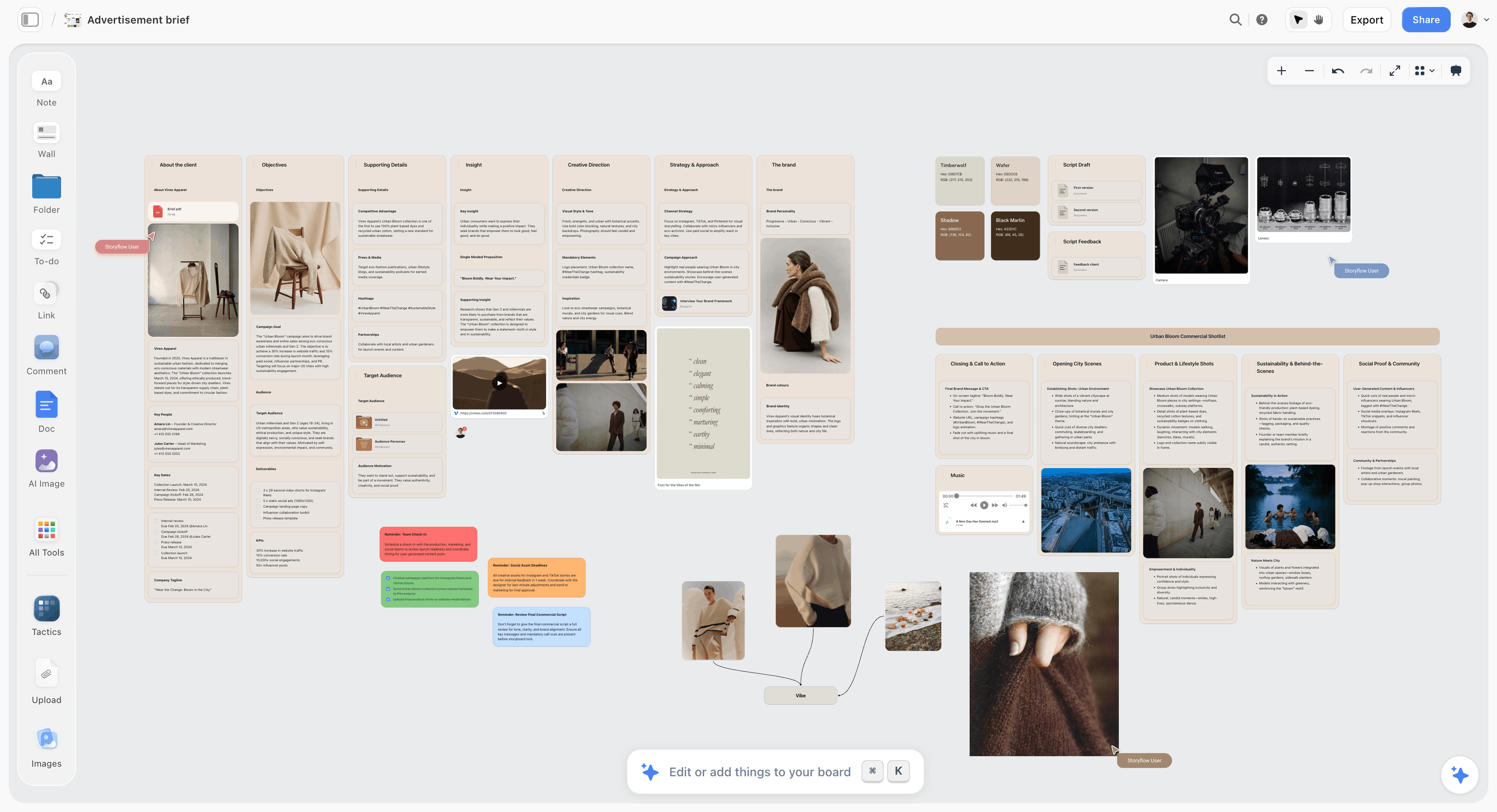
Storyflow tests nothing. It is on this list for the step either side of the test: holding the positioning, the variants, which one was tested, what it scored, the verbatim responses and the reasoning, all on one canvas. That matters because positioning drifts: the tested sentence goes on the homepage, then a different version appears in the deck, then a third in the ads, and nobody notices they diverged. The AI reads the whole board, so it can be asked whether the copy on the board still matches the version that actually tested well.
Best for: Keeping the tested wording and the evidence for it in one place.
Verdict: A complement to a testing tool and no substitute for one. Take Wynter or Maze for the test itself.
Key features
- Infinite canvas holding positioning, variants, results and verbatims together.
- AI reads the whole current board, plus 5 attached documents and 3 attached boards.
- Anyone a paid member invites to a board joins free, including stakeholders.
- 200+ story blueprints including messaging frameworks.
Pricing
Early access: every plan is paid for now. A Free plan arrives before the end of 2026, and anyone a paid member invites to a board can sign up free and collaborate today. Plus: $7.99/mo annual, $9.99/mo monthly. Unlimited boards and uploads. Pro: $14/mo annual, $19/mo monthly. AI image generation, more AI usage, memory across conversations. Max: $39/mo annual, $49/mo monthly. Team workspace with roles and permissions.
Pros
- Keeps the tested version and the evidence together, which prevents drift.
- Verbatims sit beside the score, which is where the insight is.
- Cheapest tool here, priced per account.
Cons
- Runs no tests, recruits nobody and produces no statistics.
- No panel, survey or experimentation capability of any kind.
- Paid-only during early access.
9. VWO
VWO runs A/B and multivariate tests on live traffic, which measures behaviour rather than opinion. For a site with meaningful traffic it is the most rigorous way to test messaging that is already live.
Best for: Testing live on-site messaging where traffic supports significance.
Verdict: The most rigorous behavioural test here. Useless below a few thousand relevant visitors a month.
Key features
- A/B and multivariate testing on live pages.
- Heatmaps, recordings and funnel analysis.
- Statistical significance reporting.
Pricing
Free tier for basic testing. Paid from about $199/month, tiered by traffic.
Pros
- Behaviour rather than stated preference.
- Complementary analytics explain the result.
- Real visitors with real intent.
Cons
- Needs substantial traffic for a conclusive result.
- Monthly cost for work done occasionally.
- Only tests messages already live, not new positioning.
10. Claude
Claude is the drafting half. Give it the audience, the problem in the customer's words and the constraint, and it will produce twelve credible variants in minutes, which used to be a workshop. It is not a test and should never be used as one.
Best for: Generating variants worth putting in front of people.
Verdict: The best drafting partner here. Asking a model which message is better returns the consensus answer, which is the opposite of what you need.
Key features
- Long context for supplying real customer language.
- Fast generation of many variants.
- Good at tightening a version that is nearly right.
Pricing
Free with daily limits. Paid from about $17/month billed annually.
Pros
- Removes the blank page on variant generation.
- Works from your own customer language if you supply it.
- Free tier is enough for this job.
Cons
- Its opinion on which variant is better is worthless.
- Defaults to category-average phrasing without strong constraints.
- No respondents, no data, no test.
11. Perplexity
Perplexity scans the language your category already uses, which is useful negatively: it shows you the phrases everybody says, so you can stop saying them. Differentiation is partly a matter of not sounding like the eleven other options.
Best for: Finding the category language to avoid.
Verdict: A good input to drafting. It measures nothing.
Key features
- Sourced scans of competitor messaging.
- Current rather than stale.
- Fast comparison across many competitors.
Pricing
Free with limited Pro searches. Paid about $20/month.
Pros
- Quickly reveals the phrases everyone in the category uses.
- Sourced, so you can verify.
- Free tier is sufficient.
Cons
- Not a test in any sense.
- Only sees public messaging.
- Shallow synthesis.
12. SparkToro
SparkToro is here because the hardest part of message testing is reaching the right people, and it tells you where they actually are: which communities, publications and podcasts. That is a recruiting route for a test rather than a test.
Best for: Finding where to reach the audience you need to test with.
Verdict: Useful upstream of a test. It measures nothing about your message.
Key features
- Audience attention data across channels.
- Behaviour-based audience definitions.
- Free tier with limited searches.
Pricing
Free tier with limited searches. Paid from about $50/month.
Pros
- Solves the recruiting problem cheaply for niche audiences.
- Reveals communities where you can ask directly.
- Free tier is enough to evaluate.
Cons
- Not a testing tool.
- Coverage is thinner in smaller markets.
- Describes attention, not opinion.
7) What You Can Test and What You Cannot
A useful boundary, because a great deal of effort goes into testing things that cannot be tested.
You cannot test a positioning. Positioning is a strategic choice about which market you are in, which customer you serve and what you are to them. It plays out over years, involves trade-offs a respondent cannot evaluate, and the counterfactual does not exist. Asking a panel whether you should target enterprises or individuals produces an answer that means nothing.
You can test the sentence that expresses it. Whether a specific wording is understood, whether it sounds relevant, whether it sounds different from competitors. That is a real, answerable question and it is what every tool on this list actually does.
Conflating the two produces two opposite failures. Some teams conclude that because strategy cannot be tested, nothing can, and ship untested language for years. Others run a preference test between two sentences and treat the winner as validation of the strategic choice underneath, which it is not.
What is testable, in practice:
- Comprehension. Can they say what it is and who it is for. Strongly testable, cheap, and the most commonly skipped.
- Relevance. Does it name a problem they recognise in their own words. Testable with the right audience.
- Differentiation. Could a competitor say this. Testable, and frequently testable by you alone in ten minutes by putting five competitor headlines beside yours.
- Believability. Does the claim seem plausible from a company like yours. Testable and often overlooked; a true claim nobody believes performs like a false one.
- Behaviour. Would they act. Testable only with real attention, which is why Google Ads and on-site A/B rank where they do.
What is not testable:
- Whether the strategy is right.
- Whether a new category will exist.
- Long-term brand effects, at any budget a normal company has.
- Anything where your sample cannot plausibly include a buyer.
The practical rule: test the sentence, decide the strategy. A comprehension failure is information; a preference result is decoration; and neither tells you whether you picked the right market, which remains a judgement you have to make and then live with long enough to learn from.
8) The Five-Question Comprehension Test
This costs nothing, takes an afternoon, and outperforms most paid panel work. Run it with ten people in your target role who have not heard of you.
Show the message once. Homepage headline and subhead, or the positioning sentence. Give them ten seconds, then take it away. Real buyers do not study.
1. What does this company do? Open text, their words. You are looking for seven of ten roughly correct. Below that, comprehension has failed and nothing else matters.
2. Who is it for? If they say "everyone" or "businesses", your positioning names no one, which means it will be chosen by no one.
3. What problem does it solve? Compare their phrasing to yours. When they restate the problem in words you did not use, those words are frequently better than yours and worth stealing.
4. How is it different from what you use now? If they cannot answer, the message is category language. This is the question that most often exposes a headline any competitor could run.
5. What would you want to know next? Their first objection, unprompted. That objection belongs immediately below the headline, and most sites answer it three scrolls down or not at all.
Reading the results:
- Fewer than seven correct on question one: rewrite for clarity before doing anything else. No amount of persuasion survives not being understood.
- "Everyone" on question two: narrow it. Naming a specific audience loses nobody who was going to buy and wins the ones who were unsure.
- Their words differ from yours on question three: adopt theirs. This is the single cheapest improvement available in positioning.
- Silence on question four: you are describing a category, not a position.
The failure to avoid: running this with people who know you, which includes your team, your investors and your existing customers. They all have context that a new visitor does not, and their comprehension is borrowed. Ten strangers in the right role beats a hundred friendly responses.
9) Recommended Message Testing Stacks
Stack 1: B2B company repositioning. Wynter (the test) + Claude free (variants) + Storyflow (holding what tested well). About $608 per test plus $8/month.
Stack 2: Small team, no budget. The five questions with ten people + Typeform free to your own list + Claude free for variants. Zero, and better than most paid work.
Stack 3: Consumer brand. PickFu (fast clarity checks) + Attest (the large decision) + Storyflow. About $550 per study plus $8/month.
Stack 4: Company with traffic. Google Ads or VWO (behaviour) + Maze (comprehension) + Storyflow. About $107 to $207/month.
Stack 5: Cheapest useful paid. PickFu at about $50 occasionally + Storyflow at $7.99 billed annually.
| Company shape | Tests with | Drafts with | Holds the result in | Cost |
|---|---|---|---|---|
B2B repositioning | Wynter | Claude free | Storyflow | about $608/test plus $8/mo |
No budget | Ten people, Typeform free | Claude free | A document | $0 |
Consumer brand | PickFu, Attest | Claude free | Storyflow | about $550/study plus $8/mo |
Has traffic | Google Ads, Maze | Claude free | Storyflow | about $107 to $207/mo |
Cheapest paid | PickFu | Claude free | Storyflow | about $58 |
The pattern: one test with the right people, one cheap way to generate variants, and one place the tested version lives. Teams that own an experimentation platform and no access to their actual buyers have the least useful configuration.
10) What Message Testing Costs
Per test rather than per month, and that is the right shape. Wynter at about $600, Attest at about $500 a study, PickFu at about $50, Google Ads at about $100 for a directional read. Positioning changes rarely, so a monthly platform subscription mostly buys idle months.
The cost of testing with the wrong people, which is the real waste. A cheap test with a general panel produces a number that feels like evidence and is not, and decisions made on it are worse than decisions made on judgement alone, because false confidence removes the caution that would otherwise apply.
The cost of not testing, which is the largest and most invisible. Positioning that fails comprehension does not announce itself; it shows up as a channel underperforming, a landing page converting at 0.4% and a sales team saying leads are weak, and teams fix all three before questioning the message. That failure chain costs months, which is the argument for spending an afternoon on the five questions in section 8 before spending anything at all.
| Cost driver | Where it lands | Rough size | The move |
|---|---|---|---|
Per-test pricing | Occasional | $50 to $600 per event | Prefer per-test over monthly platforms |
Testing with the wrong panel | Every cheap test | The whole cost, plus false confidence | Pay for the right audience or use your own |
Monthly platform, idle | VWO, Maze | 11 months of nothing | Only if you test continuously |
Untested positioning | Months of misdiagnosis | The largest cost here | Run the five questions first; it is free |
11) Honorable Mentions
- Respondent and User Interviews. Recruiting platforms if you want to run the test yourself with the right people.
- Prolific. Academic-grade panel, often cheaper for general population work.
- Optimizely and Convert. VWO alternatives for on-site experimentation.
- UsabilityHub, now Lyssna. Cheap five-second tests, which are a genuine comprehension instrument.
- Reddit and niche communities. Free, direct access to real audiences; read the rules and be honest about who you are.
- Your own sales calls. How prospects describe their problem back to you is free message testing that most companies never transcribe.
- A landing page and $100. Still the most honest test on this page.
12) Message Testing Mistakes to Avoid
- Testing preference instead of comprehension. The central error, and the one every cheap tool encourages.
- Testing with people who could never buy. A general panel answering about a problem they do not have measures nothing.
- Showing options side by side. Real buyers see one message once; comparative tests create a condition that does not exist.
- Testing with your own team, investors or existing customers. Their comprehension is borrowed from context a stranger does not have.
- Treating a preference winner as strategic validation. Section 7: you can test the sentence, not the positioning.
- Asking a model which message is better. It returns the consensus answer, which is exactly the average you are trying to escape.
- Letting the tested version drift. The sentence that tested well goes on the homepage and a different one appears in the deck within a month.
14) The Bottom Line
The best message testing tools in 2026 are Wynter for B2B, because the verified panel is the whole value, Maze for fast comprehension at scale, PickFu for cheap consumer clarity checks, and Google Ads for the only test where people spend real attention.
Almost all message testing measures preference, and preference is close to worthless: the respondents will never buy, nobody sees your options side by side, and liking a sentence is not the behaviour you want. The test that matters is comprehension, the bar is low, and most positioning fails it.
Run the five questions in section 8 with ten people in your target role before you spend anything. Then keep the version that tested well, the date and the verbatims in one place, because the sentence that drifts is the one nobody could check.
FAQ: Positioning and Message Testing
What is the best message testing tool in 2026?
Wynter is the best message testing tool for B2B, because it tests with verified people in your actual target role and asks comprehension questions rather than preference questions, from about $600 per test. Maze is the best fast unmoderated option, PickFu the cheapest consumer check at about $50, and Google Ads the most honest test available because people spend real attention rather than answering a survey. Before buying anything, run the five-question comprehension test in section 8 with ten people, which costs nothing and outperforms most paid panel work.
Can you test positioning?
You can test the sentence that expresses a positioning, not the positioning itself. Whether a wording is understood, feels relevant, sounds different and is believable are all answerable questions. Whether you should serve enterprises or individuals is a strategic choice involving trade-offs no respondent can evaluate, and asking a panel produces an answer that means nothing. Test the sentence, decide the strategy.
Why is preference testing not useful?
Three reasons that compound: the respondents will usually never buy, so you are measuring how a sentence reads to a stranger; nobody sees your options side by side, so a comparative test creates a condition real buyers never face; and liking a message is not the behaviour you want to cause. A message people like and do not understand is the most common positioning failure, and preference testing cannot detect it.
How do I test my messaging for free?
Run the five-question comprehension test with ten people in your target role who have not heard of you. Show the message for ten seconds, then ask what the company does, who it is for, what problem it solves, how it differs from what they use now, and what they would want to know next. Aim for seven of ten answering the first question roughly correctly. A Typeform to your own list and Claude's free tier for variants complete a zero-cost setup.
Wynter or PickFu?
Wynter for B2B, because the verified panel means the response comes from someone who could plausibly buy, which is the property that makes a result worth anything. PickFu for consumer work where speed and cost matter more than rigour, reading the written explanations rather than the winning percentage. They are not really competitors: one is a research instrument and the other is a fast opinion poll.
How many people do I need to test a message with?
Ten to fifteen for comprehension, because you are looking for a pattern rather than a percentage, and a comprehension failure shows up in the first five. Fifty or more if you need a number robust enough to survive an argument. For behavioural tests such as Google Ads or on-site A/B, you need enough traffic for statistical significance, which is a different and much larger question.
What questions should I ask in a message test?
Open ones, before any options are visible: what does this company do, who is it for, what problem does it solve, how is it different from what you use now, and what would you want to know next. Open text in their own words is the point, because when respondents restate your problem in words you did not use, those words are frequently better than yours.
Should I A/B test my homepage message?
If you have enough traffic for significance, yes, because behaviour beats stated preference. Below a few thousand relevant visitors a month an A/B test will not conclude, and you are better served by a comprehension test with ten of the right people. The other limitation is that on-site testing only compares messages you have already committed to building pages for, so it refines rather than discovers.
How much does message testing cost?
Between nothing and about $600 per test. The five-question test is free. PickFu is about $50, Google Ads gives a directional behavioural read for about $100, Attest from about $500 a study and Wynter from about $600 a test. Per-test pricing is the right shape, because positioning changes rarely and a monthly experimentation subscription mostly buys idle months.
Can AI test my messaging?
No, and asking it to is actively counterproductive. A model asked which message is better returns the consensus answer, which is the category average, and escaping the category average is usually the point of the exercise. What AI does well here is generate twelve credible variants in minutes and tighten a version that is nearly right, which shifts the bottleneck entirely onto testing them with real people.
Who should I test my message with?
People in your target role who have not heard of you. That last clause matters more than it sounds: your team, your investors and your existing customers all have context a new visitor lacks, so their comprehension is borrowed and their approval is misleading. Ten strangers in the right role beats a hundred friendly responses.
How do I stop my positioning drifting after testing?
Keep the tested wording, the date it was tested and the evidence in one place, and check new copy against it rather than against memory. Drift happens because the tested sentence goes on the homepage while a different version appears in the deck and a third in the ads, each written by someone working from a recollection. This is the narrow reason Storyflow is on this page, and a dated document does most of the same job.
What if the test says my message is unclear?
Rewrite for clarity before considering anything else, because nothing downstream works without comprehension. Take the words respondents used to describe the problem and use those instead of yours. Then narrow who it is for, because "everyone" tests badly and always has. Retest with ten fresh people; the improvement from one rewrite is usually large and obvious.
Table of Contents
- Article Metadata
- Breadcrumb
- Table of Contents
- 1) Quick Answer: The Best Message Testing Tools in 2026
- All 12 Message Testing Tools, Ranked
- 2) Comparison Table: 12 Message Testing Tools at a Glance
- Frequently Asked: Which Message Testing Tools Teams Trust, and Which Results Mean Nothing
- 3) Comprehension Before Preference
- 4) How We Evaluated These Tools
- 5) Quick Picks by Testing Need
- 6) Detailed Reviews: 12 Message Testing Tools
- 7) What You Can Test and What You Cannot
- 8) The Five-Question Comprehension Test
- 9) Recommended Message Testing Stacks
- 10) What Message Testing Costs
- 11) Honorable Mentions
- 12) Message Testing Mistakes to Avoid
- 14) The Bottom Line
- 15) Author
- 16) Related Reading
- FAQ: Positioning and Message Testing
Templates to check out for this topic


Templates you can use in Storyflow
Every Storyflow board starts from real structure and an AI that reads the whole canvas. Open one of these templates and make it yours.


See Storyflow in Action
A visual AI workspace where every feature lives inside one canvas. No tab-switching, no context lost.
Build your entire board from a single message
Type what you need in the AI chat at the bottom of your canvas. The AI adds cards, headings, and structure directly onto your board.
Use expert frameworks as AI context
Type @ in the AI chat and choose any Tactic. The AI tailors every response to that framework instead of giving generic advice.
Turn your board into a mind map in seconds
Ask the AI to restructure your canvas as a mindmap. It connects your ideas into a visual hierarchy so you can see how everything relates.
Why Storyflow Exists
Storyflow actually began as a personal tool while working on creative and research projects.
We kept running into the same problem: ideas were scattered everywhere: notes, documents, and whiteboards.
Nothing helped us see how everything connected.
So we started building a workspace designed around how ideas actually grow.
→ Read how Storyflow was createdStoryflow Team
Product & Research Team
Published: 2026-09-22
Extremely simple, seriously capable


See how easy it is to get started
Watch a real project come together, from a blank board to a finished plan, clicked through step by step.
Start creating with AI and become more productive
Transform your creative workflow with AI-powered tools. Generate ideas, create content, and boost your productivity in minutes instead of hours.