The 10 Best Mural Alternatives in 2026 (Whiteboards That Actually Beat Mural)
Most teams using Mural are workshop facilitators, but most teams searching for a Mural alternative aren't. We tested 10 whiteboards to find which ones actually beat Mural for project-canvas work, AI context, and the kind of thinking that doesn't fit a sticky-note vote.

Category
Visual Thinking
Author

Justkay
Documentary Filmmaker & Founder at Storyflow
Topics
2026-05-09
•
14 min read
•
Visual Thinking- best mural alternatives 2026
- mural alternative
- ai whiteboard tools
What is the best Mural alternative in 2026?
Storyflow is the best Mural alternative in 2026 for project-canvas work (its AI reads the full active board plus @-mentioned Tactics and Documents). Miro is the best enterprise upgrade, FigJam the best move for Figma teams, and Klaxoon the sharpest pick for facilitated workshops, the one job where Mural still wins.

Most teams I meet who pay for Mural are facilitators. They are running design sprints, retros, workshop weeks, sticky-note votes with eight stakeholders in a room and four more remote. Mural is genuinely good at that. The voting, the timer, the structured workshop templates, the way a facilitator can drive a room of forty people through a Lightning Decision Jam without losing anyone. That is the work Mural was built for and it is still the work it does best in 2026. But most teams who land on a "Mural alternatives" article are not facilitators. They are creative leads, project managers, founders, strategists, video producers. They are not running a workshop on Tuesday. They are trying to think through a project. They opened Mural, ran a session, then watched it sit untouched for six weeks until the next workshop. And every renewal they ask the same question: is the rest of our work even fitting in here? In 2026 the answer for a lot of teams is no. The shape of work has changed. AI is not a feature you bolt onto a whiteboard, it is the reason a canvas is useful at all. The teams winning are the ones whose AI reads the full active project, not the cluster of stickies you happened to select. So the real question is not "what is like Mural but cheaper." The real question is: which whiteboard fits the actual shape of what you do? We tested ten to find out.
Full disclosure: Storyflow is our own product, and we rank it #1 for one job: an AI-context project canvas where the model reads the full active board plus @-mentioned Tactics and documents. For enterprise breadth and deeper integrations Miro is stronger, and for Figma-native design teams FigJam is the more natural fit. Facilitated live workshops are the one job where Mural itself still wins, and Storyflow is not built to replace a dedicated workshop facilitator. We link to every tool so you can judge the fit.
Quick Comparison: Best Mural Alternatives
These four split the reasons teams leave Mural: an AI-context project canvas, enterprise breadth, Figma-native design, and facilitated workshops.
| Tool | Best For | AI Features | Price |
|---|---|---|---|
| Storyflow | AI-context project canvas that reads the whole board | Reads full board + @-Tactics and docs | $7.99 mo annual (free plan late 2026) |
| Miro | Enterprise breadth and integrations | AI Sidekicks | Free / $8 user mo |
| FigJam | Figma-native design teams | FigJam AI | Free / $3 seat mo |
| Klaxoon | Energy-driven facilitated workshops | Workshop AI templates | Free / $9.90 user mo |
All 10 Mural Alternatives, Ranked
- Storyflow - best AI-context project canvas; the AI reads the full active board plus @-mentioned Tactics and Documents
- Miro - best direct enterprise upgrade from Mural
- FigJam - best for Figma-native design teams
- Klaxoon - best energy-driven workshop facilitation
- Stormboard - best structured workshop templates
- Lucidspark - best workshop-to-diagram handoff
- Whimsical - best lightweight visual tool for small teams
- Conceptboard - best for regulated and EU-based teams
- Boardmix - best budget Mural-class whiteboard
- MeetingPulse - best for polling-heavy stakeholder sessions
The full ratings, the specific friction we hit with each tool, and the one category where Mural itself still wins are below.
Quick Picks: Best Mural Alternatives 2026 by Use Case
Best for AI-Context Project Canvas: Storyflow Storyflow is the whiteboard where the AI reads the entire active canvas before it answers, plus your @-mentioned Tactics and Documents. For project work that needs context (a brief, references, a framework, a plan all in one place) that is the difference between AI as a sidebar and AI as a thinking partner. Storyflow is paid-only during early access, with a Free plan (unlimited projects, basic AI usage, 20 file uploads) launching before the end of 2026. Plus is $7.99/month annual ($9.99 monthly). One friction: Storyflow is not optimized for sticky-note workshop voting. It is not a workshop facilitation tool. If your weekly job is running a forty-person Lightning Decision Jam, Mural still wins that scenario.
Best Enterprise Mural Alternative: Miro Miro is the most direct head-to-head competitor to Mural. It does almost everything Mural does and several things Mural does not, especially around enterprise integrations and a deeper template library. The friction: Miro is so broad that teams adopting it without intent end up with the same untouched-board problem they had in Mural.
Best Mural Alternative for Figma Teams: FigJam If your design team already lives in Figma, FigJam is the obvious move off Mural. The handoff between FigJam exploration and Figma execution happens inside one file with no export step. The friction: FigJam is light on enterprise workshop tooling and is built around design teams, not cross-functional facilitation.
Best Energy-Driven Workshop Mural Alternative: Klaxoon Klaxoon was built for facilitators who want their sessions to feel like an event, not a meeting. The voting, energiser games, and live audience tools are stronger than Mural's. Friction: less of a daily-canvas tool, more of a session tool.
Best Structured-Template Mural Alternative: Stormboard Stormboard's structured grids fix the one thing Mural workshops often break: a board that drifts into chaos by hour two. Friction: the structure that helps in workshops can feel rigid for open-ended creative thinking.
Best Diagrams Plus Workshop Mural Alternative: Lucidspark Lucidspark plus Lucidchart is the cleanest path for teams who need a workshop tool that hands directly to a formal diagram. Friction: weaker on AI-driven creative work than Storyflow or Miro.
Best Lightweight Mural Alternative: Whimsical Whimsical is the fastest, cleanest tool for a small team that wants a whiteboard, a flowchart, and a mind map without the enterprise sprawl. Friction: not built for thirty-person workshops or deep AI context.
Storyflow is the right call when the whiteboard is the project, not the workshop. The AI reads the full active canvas, you can @-mention up to three Documents and a Blueprint Tactic in the same chat, and your brief, references, plan, and thinking all sit on one board the AI actually understands. Try Storyflow and see what an AI canvas feels like when it has your full project context, not just the selected sticky note.
Comparison Table: Best Mural Alternatives 2026
| Tool | Best For | Starting Price | Free Plan | vs Mural (★/5) | Rating (/10) |
|---|---|---|---|---|---|
Storyflow | AI-context project canvas | $7.99/month annual | Coming late 2026 (invited collaborators join free now) | ★★★★★ | 9.4/10 |
Miro | Enterprise whiteboard breadth | $8/user/month annual | Yes (3 boards) | ★★★★★ | 9.0/10 |
FigJam | Figma-native teams | $3/seat/month annual | Yes (Figma plan) | ★★★★☆ | 8.5/10 |
Klaxoon | Energy-driven workshops | $9.90/user/month annual | Yes (limited) | ★★★★☆ | 8.1/10 |
Stormboard | Structured workshop templates | $10/user/month annual | Yes (5 boards) | ★★★★☆ | 7.9/10 |
Lucidspark | Diagrams plus workshops | $9/user/month annual | Yes (3 boards) | ★★★★☆ | 7.8/10 |
Whimsical | Lightweight visual work | $10/editor/month | Yes (3 boards) | ★★★☆☆ | 7.6/10 |
Conceptboard | Regulated and EU teams | $7.50/user/month annual | Yes (limited) | ★★★☆☆ | 7.4/10 |
Boardmix | Affordable whiteboard work | $4.99/user/month annual | Yes (5 boards) | ★★★☆☆ | 7.2/10 |
MeetingPulse | Polling-heavy sessions | $39/month base | Yes (limited) | ★★★☆☆ | 6.9/10 |
Rating criteria: the depth of project-canvas work was weighted most heavily (30%) because that is the gap most Mural users describe when they look for an alternative. AI context (20%), workshop facilitation (15%), collaboration (15%), pricing (10%), integrations (10%). Storyflow leads on the AI-context project canvas axis. Miro leads on enterprise breadth. Klaxoon leads on workshop energy. There is no single tool that beats Mural on every axis, which is the point: the best alternative depends on which axis Mural is failing for you.
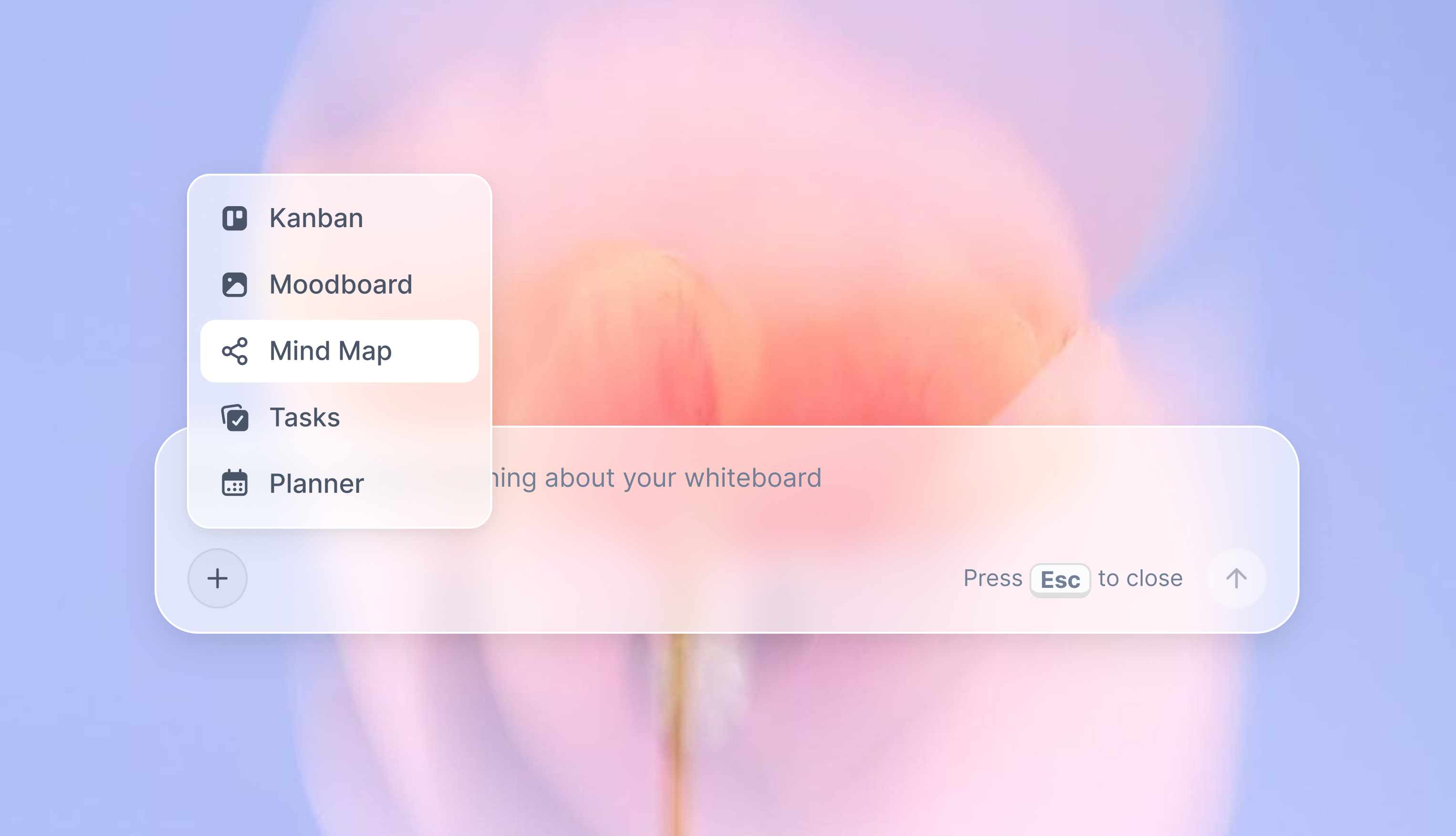
Storyflow holds project context, Blueprint Tactics, and AI chat on a single canvas the AI reads end to end
Why Teams Look for Mural Alternatives in 2026
The Mural-replacement search is not a complaint about Mural. It is a question about what the whiteboard is for. Three things have changed since teams first adopted Mural.
The first is AI. In 2025, AI on a whiteboard meant "summarise these stickies." In 2026, AI on a whiteboard means "read my entire project, my brief, my plan, my references, my framework, and respond with that context." That is a different product. Mural's AI is functional but does not approach the canvas as a project the model has read end to end. Teams who feel the gap usually feel it on the same Tuesday: they ask Mural's AI a question that needs the brief and the framework and the references, and the response only saw what was selected.
The second is the shape of remote work. Cowan's 2001 working memory research established that humans hold roughly four chunks of information actively at once. McKinsey's 2012 productivity research found knowledge workers spend 28% of the workweek on email and 19% searching for information. Mednick's 1962 research on creative thinking defined creativity as connecting remote ideas into new combinations, and that connecting work collapses when the ideas live in five different tools. The implication for whiteboards is direct: if your tool fragments thinking across boards, tabs, and exports, the cognitive overhead is the bottleneck, not the feature list. Teams want one canvas that holds the project, not five boards that hold pieces of it.
The third is pricing. Mural is enterprise-priced. For small teams and individual creators, that pricing assumes a workshop-facilitator workflow they may not run. The "what am I actually paying for" question becomes loud after the first renewal where the board is open three days a quarter.
It is not that Mural is bad. It is that Mural was built for a specific shape of work, and a lot of teams who land on it are doing different work. The good news is the alternatives in 2026 are sharper than they were two years ago, and the right one depends on which shape of work you actually do.
How We Evaluated the Best Mural Alternatives 2026
Five criteria determined every rating. Here is what each test specifically involved.
Project-canvas depth: I started a real project in each tool: a brief, three reference images, a framework, a rough plan. I measured whether the canvas could hold the whole project usefully or whether each artefact ended up needing a different tool. Tools that treat the whiteboard as a project workspace scored higher than tools that treat it as a session artefact.
AI context: I asked each tool the same question with the same canvas state: "given everything on this board, what is the next move." The scoring was on how much of the board the AI actually saw. Tools whose AI read the full active canvas scored top. Tools whose AI only read the selection or a single text block scored low.
Workshop facilitation: I ran a hypothetical retro with voting, a timer, and a sticky-note synthesis exercise. Mural is the bar in this category. Tools that match or exceed Mural here scored top. Tools that admit they are not workshop tools were not penalised: they were just rated honestly on the axis they cover.
Collaboration: I tested real-time multi-cursor editing, comment threads, guest access without seat purchase, and how cleanly a non-account viewer could see a board.
Pricing for the actual work: I priced a five-person team using each tool for one year of project work, then a forty-person workshop scenario. Tools that scale cleanly across both scenarios scored well.
Every tool here was tested with a live project, not a feature checklist.
Put your next project on a canvas the AI has actually read
Mural holds your workshop. Storyflow holds the project between workshops: brief, references, framework, and plan on one board the AI reads end to end before it answers.

Detailed Reviews: Best Mural Alternatives 2026
1. Storyflow
Storyflow is a visual AI workspace built for creators, founders, project managers, and strategists whose work lives on a project canvas, not in a facilitated workshop. It is not a workshop tool. It is not optimized for sticky-note voting, timed energisers, or thirty-person live sessions with audience polls. If that is the shape of your week, Mural or Klaxoon is a better fit and you should keep reading the other entries on this list.
What Storyflow is built for is the work that happens between workshops, or instead of workshops. The brief, the references, the framework, the plan, the project as a single living canvas with AI that reads all of it. Add a Blueprint Tactic to structure your project (Hero's Journey, AIDA, SCAMPER, AARRR, dozens of others on Pro), drop your brief in as a Document, drop your references onto the board, and ask the AI for the next move. The response lands differently because the model has read the project, not a fragment of it. It is not a whiteboard with a sidebar AI. It is an AI workspace that happens to be a whiteboard. The fastest way to feel the difference is to skip the blank board: start from the Marketing Campaign template or the Campaign Brief template, drop your own brief in, and ask the AI for the next move. The board opens with structure the AI can read.
The friction worth naming: Storyflow is not built for sticky-note voting workshops. There is no native voting timer, no audience-polling overlay, no facilitator-driver-mode for thirty remote participants. If that is your job once a week, Storyflow will frustrate you. If that is your job once a year and the rest of the time you are trying to think through a real project, Storyflow is the cleaner tool by a wide margin.
Best for: Creators, founders, project managers, and strategists whose whiteboard work is project-shaped, not workshop-shaped, and who want AI that has read the whole project.
Key features:
AI that reads the full active canvas. When you open AI chat on a Storyflow board, the AI reads everything currently on that canvas. Notes, image references, Tactic Blueprints, drawn shapes, connections. You do not have to select the right cluster. The model has the room. For project work where context is the entire point, this is the feature that changes how AI feels.
@-mention up to three Documents plus one Blueprint Tactic. Inside the AI chat you can @-mention three Documents (your brief, your script, your strategy doc) and one Blueprint Tactic (the framework you are running) in the same prompt. The AI now has the canvas, three documents, and a framework all loaded. That is more project context than any other tool on this list ships in a single chat.
200+ Blueprint Tactics on Pro. Tactics are structured frameworks that drop onto the canvas with guided cards. Hero's Journey, Lean Canvas, AIDA, AARRR, SCAMPER, Eisenhower, dozens more. The Free plan, arriving before the end of 2026, will include 3. Pro unlocks the full library of 200+. For project work that benefits from structure, the framework is right there on the canvas, not in a tab you forget to open.
Team workspace with roles on Max. The Free plan, launching before the end of 2026, will include unlimited collaboration on shared boards. The Max plan (from $39/month annual) adds a team workspace with permissions and roles plus 40x more AI, for teams who need same-canvas co-editing with access control.
Pricing: Paid-only early access today; the Free plan (unlimited projects, unlimited shared boards, basic AI usage, 20 file uploads) launches before the end of 2026, and anyone a paid member invites to a board joins free now. Plus: $7.99/month annual or $9.99/month monthly (full 200+ blueprints library, unlimited file uploads). Pro: $14/month annual or $19/month monthly (adds AI image generation and 20× more AI than Plus). Max: from $39/month annual (team workspace with permissions and roles, 40x more AI).
Pros:
- AI reads the full active canvas plus @-mentioned Documents and Tactics, which is the deepest project context of any tool on this list
- 200+ Blueprint Tactics on Pro turn the canvas into a structured project workspace, not a blank board
- Invited collaborators join a paid member's board free, so growing a team does not multiply the bill
- Pricing is clean for a project-canvas-first tool: $7.99/month annual on Plus, $14/month annual on Pro
Cons:
- Not optimized for sticky-note voting workshops, audience polling, or thirty-person facilitated sessions. Mural and Klaxoon win that category cleanly.
- Team workspace with permissions and roles is a Max-plan feature. Smaller teams get shared boards on every tier, but access control and roles sit on Max.
- The blueprints workflow has a small learning curve compared to a blank board. Teams expecting "open and start clicking" may take a session or two to feel the structured-canvas value.
Verdict: Storyflow is the right call when the whiteboard is the project. If your work is brief plus references plus framework plus plan, all needing AI that has actually read it, Storyflow beats Mural on the axis that matters most in 2026. If your work is workshop facilitation, Mural still wins that category and Storyflow does not pretend to compete there. Teams who want both sometimes run Mural for sessions and Storyflow for project work, which is a sane stack and not redundant.
2. Miro
Miro is the most direct Mural competitor and in many head-to-head reviews it edges Mural on enterprise integrations, template library depth, and overall feature breadth. For teams who want a Mural-shaped tool but better, Miro is the obvious answer.
Where Miro beats Mural: the template library is significantly larger, the integrations are deeper (Jira, Asana, Slack, Microsoft Teams, the standard enterprise stack), and the AI features ship faster. Miro has been aggressive on the AI roadmap through 2025 and into 2026, and the pace shows. The diagram-mode and developer-handoff features also outpace what Mural ships.
Where Miro gives something up versus Mural: Miro's breadth can feel overwhelming for a team that just wants a workshop tool. Mural's facilitator workflow is slightly tighter for the specific job of running a structured workshop with thirty people. If your only job is workshops, the Mural-to-Miro switch is a lateral move with extra learning curve. If your job is broader, Miro is the better long-term tool.
Best for: Enterprise teams who want everything Mural offers plus deeper integrations, a larger template library, and a more aggressive AI roadmap.
Pricing: Starts at $8/user/month annual. Free plan includes 3 editable boards.
Verdict: It is not a workshop tool stretched into a project tool. It is a project tool that also runs workshops well. For most teams replacing Mural, Miro is the safe bet. For teams whose work is project-canvas-first with AI context, Storyflow goes deeper on that axis. For teams whose work is pure facilitation, Mural is still the cleaner workshop tool.
3. FigJam
FigJam is the natural Mural alternative for design-led teams already in Figma. The handoff between FigJam ideation and Figma execution stays inside one workspace: a flow that starts on a FigJam board lands as Figma frames without an export step. For design teams, this single fact often outweighs every other comparison.
Where FigJam beats Mural: the design-team integration is the killer feature. Sticky notes turn into prototypes turn into shipped UI in one workspace. The collaborative-editing performance on FigJam is also notably faster than Mural for medium-sized teams. AI features have been catching up through 2025.
Where FigJam gives up to Mural: enterprise workshop tooling is lighter. Voting, timer, and structured workshop templates exist but feel less polished than Mural's. FigJam is also much weaker for non-design teams: a marketing or operations team adopting FigJam without designers in the room finds a thinner workflow than Mural offers them.
Best for: Design teams already in Figma who want their whiteboard to live in the same workspace as their UI work.
Pricing: $3/collaborator seat per month billed annually through a Figma plan. Free plan available.
Verdict: It is not a Mural replacement for cross-functional teams. It is a Mural replacement for design-led teams whose whiteboard work eventually becomes shipped product. For that scenario, FigJam is the cleanest answer on this list. For teams who want broader project-canvas AI context, Storyflow is the deeper tool. Design teams interested in the broader category should also read Best FigJam Alternatives 2026.
4. Klaxoon
Klaxoon was built for facilitators who want their sessions to feel like events. Voting, polls, energiser games, live audience reactions, structured workshop sequences, all designed to keep a session at workshop-energy rather than meeting-energy. For teams whose Mural use is genuinely workshop-driven, Klaxoon often beats Mural on the experience layer.
Where Klaxoon beats Mural: the workshop energy. Klaxoon ships features Mural simply does not have, including audience polling overlays, energiser games for mid-session resets, and a more event-shaped session structure. Live audience tools are noticeably stronger.
Where Klaxoon gives up to Mural: the everyday canvas tool. Klaxoon is sharpest during a session and quieter between sessions. Mural's general whiteboard feel for asynchronous work is more developed than Klaxoon's. Klaxoon also has a smaller template library than Mural.
Best for: Facilitators and workshop leads whose primary job is running energetic group sessions, not maintaining a long-running project canvas.
Pricing: Starts at around $9.90/user/month billed annually. Limited free plan available.
Verdict: It is not a project-canvas tool. It is a session tool. For teams whose Mural usage is workshop-shaped and who want a sharper workshop experience, Klaxoon is a real upgrade. For teams whose work happens between workshops on a project canvas, Klaxoon is not the answer and Storyflow or Miro will fit better.
5. Stormboard
Stormboard's structured-grid templates fix the one thing Mural workshops often break: a board that drifts into visual chaos by hour two. Stormboard imposes structure: rows, columns, organised template zones, which keeps a session legible from kickoff through synthesis.
Where Stormboard beats Mural: the structured-grid approach. Workshops stay visually organised in a way Mural's free-form boards do not enforce. The reporting feature, which auto-generates a structured document from a completed board, is also stronger than Mural's session export.
Where Stormboard gives up to Mural: free-form creative work. The structure that helps a workshop hurts open-ended creative thinking. Teams who want a blank canvas with full visual freedom find Stormboard restrictive.
Best for: Workshop facilitators who run highly structured sessions and want the canvas to enforce that structure rather than rely on facilitator discipline.
Pricing: Starts at around $10/user/month billed annually. Free plan includes 5 boards.
Verdict: It is not a free-form creative whiteboard. It is a structured-workshop workspace. For teams whose Mural workshops keep losing structure, Stormboard fixes that specific problem. For teams who want creative breathing room, Mural or Storyflow gives more room.
6. Lucidspark
Lucidspark is the Mural alternative for teams who need a workshop tool that hands off cleanly into formal diagrams. The Lucidspark plus Lucidchart pairing means a workshop on Tuesday becomes a polished architecture diagram on Friday in the same vendor.
Where Lucidspark beats Mural: the diagram-mode handoff. A rough flow on a Lucidspark board can move into Lucidchart for formal architecture without re-drawing. Teams who do both workshop work and formal diagram work get a single-vendor stack.
Where Lucidspark gives up to Mural: AI-driven creative work. Lucidspark's AI is competent but not ahead of Mural's, and noticeably behind Miro's or Storyflow's. The workshop facilitation tooling is also slightly behind Mural's polish.
Best for: Teams whose workflow includes both workshop ideation and formal diagram production, who want a single vendor for both.
Pricing: Starts at around $9/user/month billed annually. Free plan includes 3 boards.
Verdict: Not the strongest pure workshop tool, not the deepest project canvas. The right call when the diagram handoff is the feature that matters and a single vendor for ideation plus formal diagrams is the goal.
7. Whimsical
Whimsical is the cleanest, fastest, lightest visual tool on this list. Flowcharts, mind maps, wireframes, sticky notes, all in a tool that loads in seconds and never feels enterprise-heavy. For small teams and solo creators, Whimsical is the anti-Mural: small, fast, focused.
Where Whimsical beats Mural: speed and clarity. A Whimsical board feels lighter and loads faster than a Mural board. The flowchart and mind-map tools are sharper. For the specific job of "I want a clean visual artefact in five minutes," Whimsical is best in class.
Where Whimsical gives up to Mural: scale and AI context. Whimsical does not run a thirty-person workshop. Whimsical's AI does not approach project-canvas depth. A team adopting Whimsical for project work outgrows it as the project grows.
Best for: Small teams, solo creators, and individuals who want a clean visual tool without enterprise sprawl.
Pricing: Starts at $10/editor/month. Free plan includes 3 boards. For mind-map-specific evaluations, see Best Mind Mapping Tools 2026.
Verdict: It is not a workshop tool. It is not a project-canvas tool. It is a small, fast visual tool that solves a focused problem cleanly. For teams whose Mural usage was always lightweight and never used the workshop tooling, Whimsical is a quiet upgrade.
8. Conceptboard
Conceptboard is the Mural alternative for regulated industries and EU-based teams who need the canvas plus serious data-residency and compliance posture. ISO 27001, GDPR-native hosting, an EU-based company, the kind of compliance posture that a procurement team in finance or healthcare needs before a tool gets approved.
Where Conceptboard beats Mural: compliance and EU data residency. For teams whose blocker on Mural is procurement, Conceptboard often clears legal review faster.
Where Conceptboard gives up to Mural: the consumer-grade polish. The interface is functional but feels a half-step behind Mural and Miro on UX refinement. AI features are lighter.
Best for: Regulated-industry and EU-based teams who need strong compliance posture and data residency.
Pricing: Starts at $7.50/user/month billed annually. Limited free plan available.
Verdict: It is not the most polished whiteboard. It is the whiteboard that clears procurement in regulated industries, which for some teams is the only feature that matters.
9. Boardmix
Boardmix is the affordable Mural alternative. Same general feature set, significantly lower per-user pricing, an active development pace through 2025 and into 2026. For budget-conscious small teams, Boardmix delivers most of what Mural offers at a fraction of the cost.
Where Boardmix beats Mural: pricing. At under $5/user/month annual on its base paid tier, Boardmix is one of the cheapest serious whiteboards in 2026.
Where Boardmix gives up to Mural: enterprise polish, integration depth, and brand maturity. Boardmix is younger and the product feel is closer to a fast-moving startup than to an enterprise platform. AI features are improving but are not ahead.
Best for: Budget-conscious small teams and individuals who want a Mural-class feature set at a startup price.
Pricing: Starts at around $4.99/user/month billed annually. Free plan includes 5 boards.
Verdict: Not the most polished, not the deepest, but real value at the price point. For teams whose primary blocker on Mural is cost, Boardmix is a credible answer.
10. MeetingPulse
MeetingPulse is less of a whiteboard and more of a live-audience polling tool, but it lands on Mural-alternative lists because for some teams the Mural use case is "we run polled sessions with stakeholders." MeetingPulse is built specifically for that scenario: live polls, audience Q and A, surveys, and lightweight visual collaboration.
Where MeetingPulse beats Mural: live polling depth. The polling and audience-engagement features are significantly stronger than Mural's.
Where MeetingPulse gives up to Mural: the canvas itself. MeetingPulse is not really a whiteboard. It is a polling-and-engagement tool with a light canvas overlay. Teams who want a real visual canvas should not use MeetingPulse as a Mural replacement.
Best for: Teams whose Mural usage is dominated by polling-heavy stakeholder sessions rather than canvas-driven work.
Pricing: Starts at $39/month base. Limited free plan available.
Verdict: It is not a whiteboard. It is a polling tool. Listed honestly because some teams arrive at Mural alternatives looking for polling-first sessions, and MeetingPulse is the right answer for that specific niche.
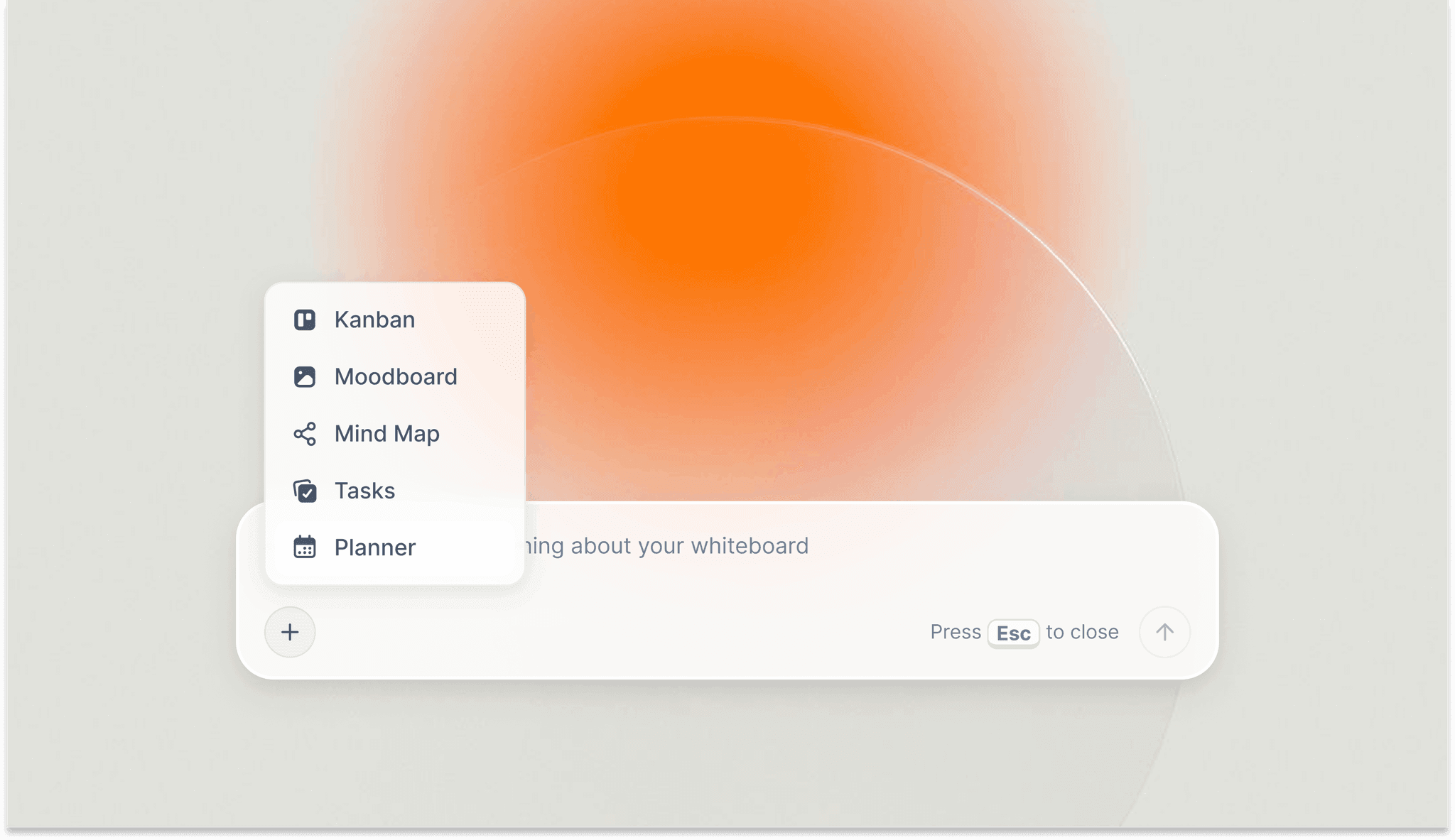
AI Planner turns a project canvas into a structured plan without leaving the board
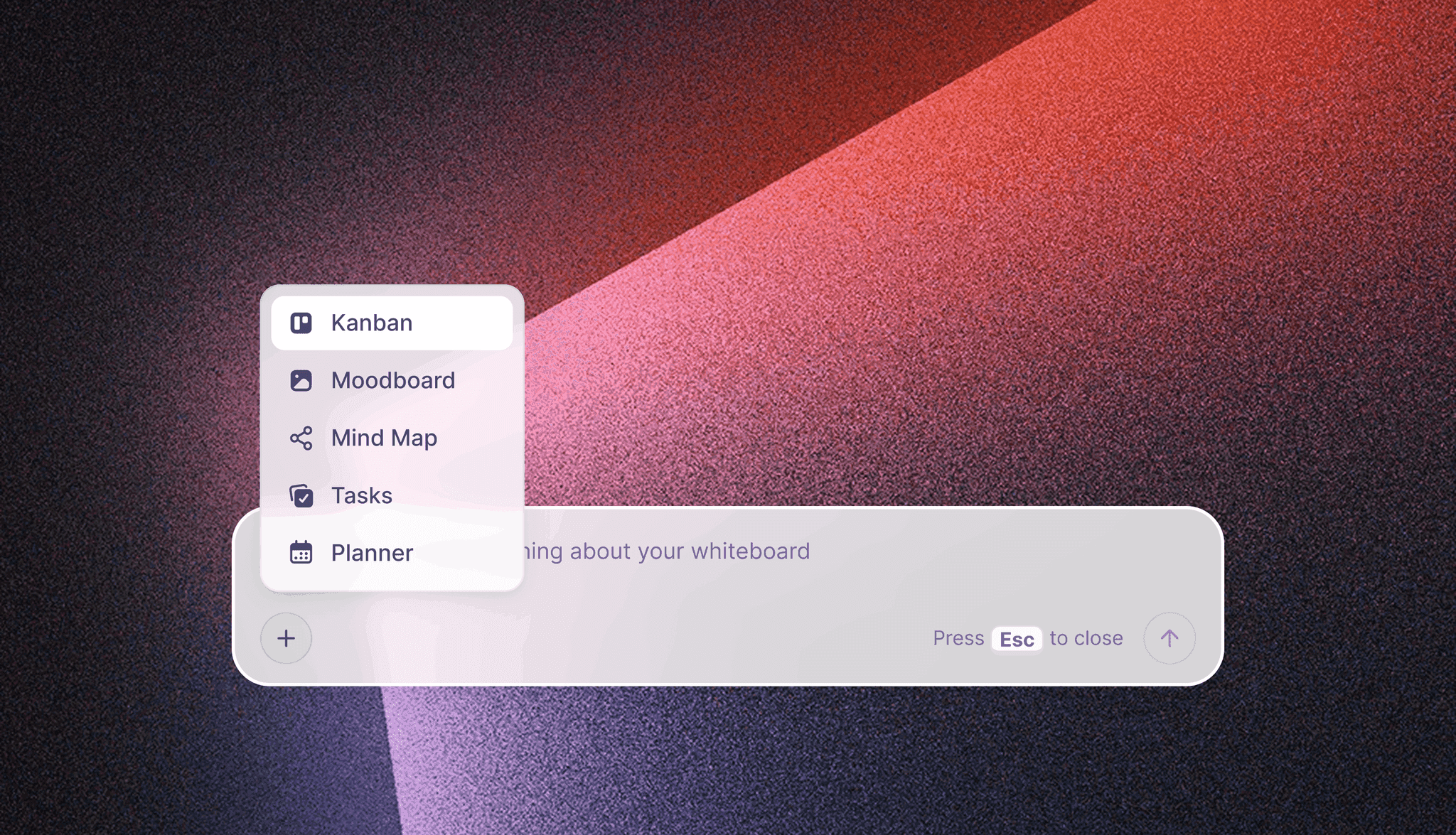
Kanban view tracks project work without breaking out into a separate task manager
How to Choose the Best Mural Alternative
The honest framing: there is no single tool that beats Mural on every axis. The right alternative depends on which axis Mural is failing for you. Here are the four most common ones we see in 2026.
If Mural is failing on AI context: the answer is Storyflow. Storyflow's AI reads the full active canvas plus @-mentioned Documents and Tactics in the same chat, which is the deepest project context any whiteboard ships in 2026. For project work where the AI needs to know the brief, the framework, the references, and the plan all at once, the difference is not subtle. A quick test: open the Mindmap template, dump the half-formed project from your head onto it, and ask the AI what is missing. For deeper AI evaluation, see Best AI Whiteboard Tools 2026.
If Mural is failing on enterprise breadth: the answer is Miro. Miro is broader, deeper, and faster on the AI roadmap. Most enterprise Mural users who switch end up at Miro and the move is rarely regretted. For Miro-specific evaluation, see Best Miro Alternatives 2026.
If Mural is failing on workshop polish: the answer is Klaxoon. Klaxoon's session experience is sharper than Mural's. If your job is genuinely workshop-driven and you want better energy, polling, and live tools, Klaxoon is a real upgrade. For broader brainstorming and team-session evaluations, see Best Brainstorming Tools for Teams 2026.
If Mural is failing on cost: the answer is Boardmix or Whimsical. Boardmix gives you Mural-class breadth at startup pricing. Whimsical gives you a smaller, faster tool that costs less because it does less, cleanly. For broader tool evaluations across creative teams, see Best Collaboration Tools for Creative Teams 2025.
The frame that helps most teams: ask whether your whiteboard work is workshop-shaped or project-shaped. If workshop-shaped, optimise for facilitation tools (Mural, Klaxoon, Stormboard). If project-shaped, optimise for canvas plus AI context (Storyflow, Miro). Mixing the two shapes inside one tool is what made the original Mural setup feel undefined for so many teams in the first place.
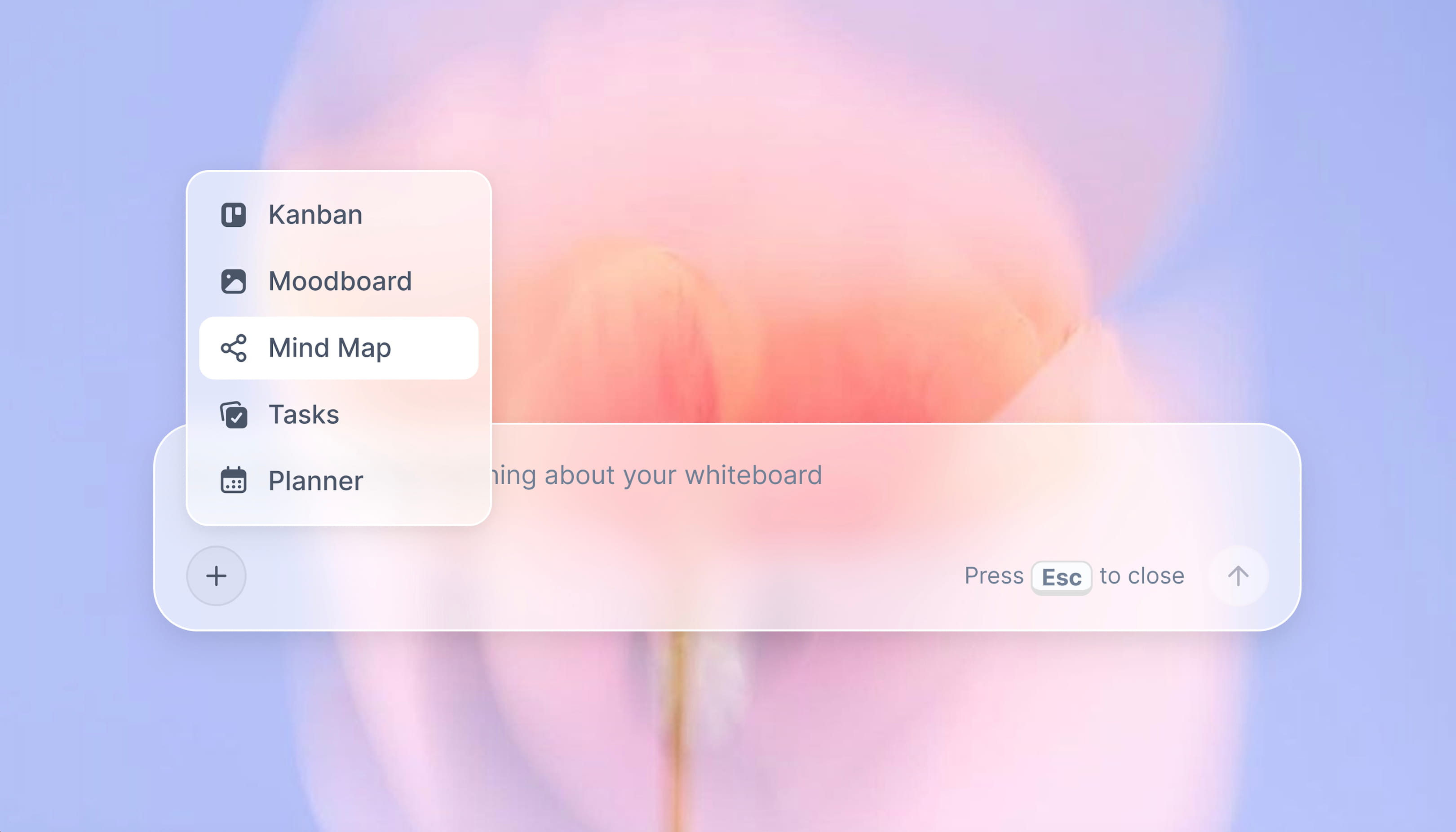
Storyflow Pro unlocks 200+ Blueprint Tactics for teams whose work lives on a project canvas, not in a workshop
The Bottom Line: Best Mural Alternatives 2026
If your work is project-canvas-first with AI context, the answer is Storyflow. The AI reads the entire active canvas, you can @-mention three Documents and a Blueprint Tactic in the same prompt, and your brief, references, framework, and plan all live on one canvas the AI actually understands. That is a different shape of tool from Mural, and it fits a different shape of work. For most teams who landed on this article, that shape of work is what they are actually doing. The honest test: take the project that has been sitting half-dead in Mural between workshops, rebuild it in Storyflow for one week, and ask the AI for the next move. If the answer lands with your full project in view, you will know.
If your work is enterprise-broad and you want everything Mural offers plus deeper integrations, Miro is the cleanest upgrade. Most enterprise Mural users who switch end up at Miro and the move rarely regretted.
If your work is design-led and already in Figma, FigJam is the natural answer. The handoff between exploration and execution in the same workspace is the feature that matters.
If your work is genuinely workshop-driven, Mural is still the cleaner workshop tool, and Klaxoon or Stormboard are the sharpest direct alternatives if you want better workshop energy or stronger structure.
The best Mural alternative is the one that fits the actual shape of what you do, not the one with the most features. Start with whether your whiteboard work is workshop-shaped or project-shaped, then pick the tool that goes deepest on that axis.
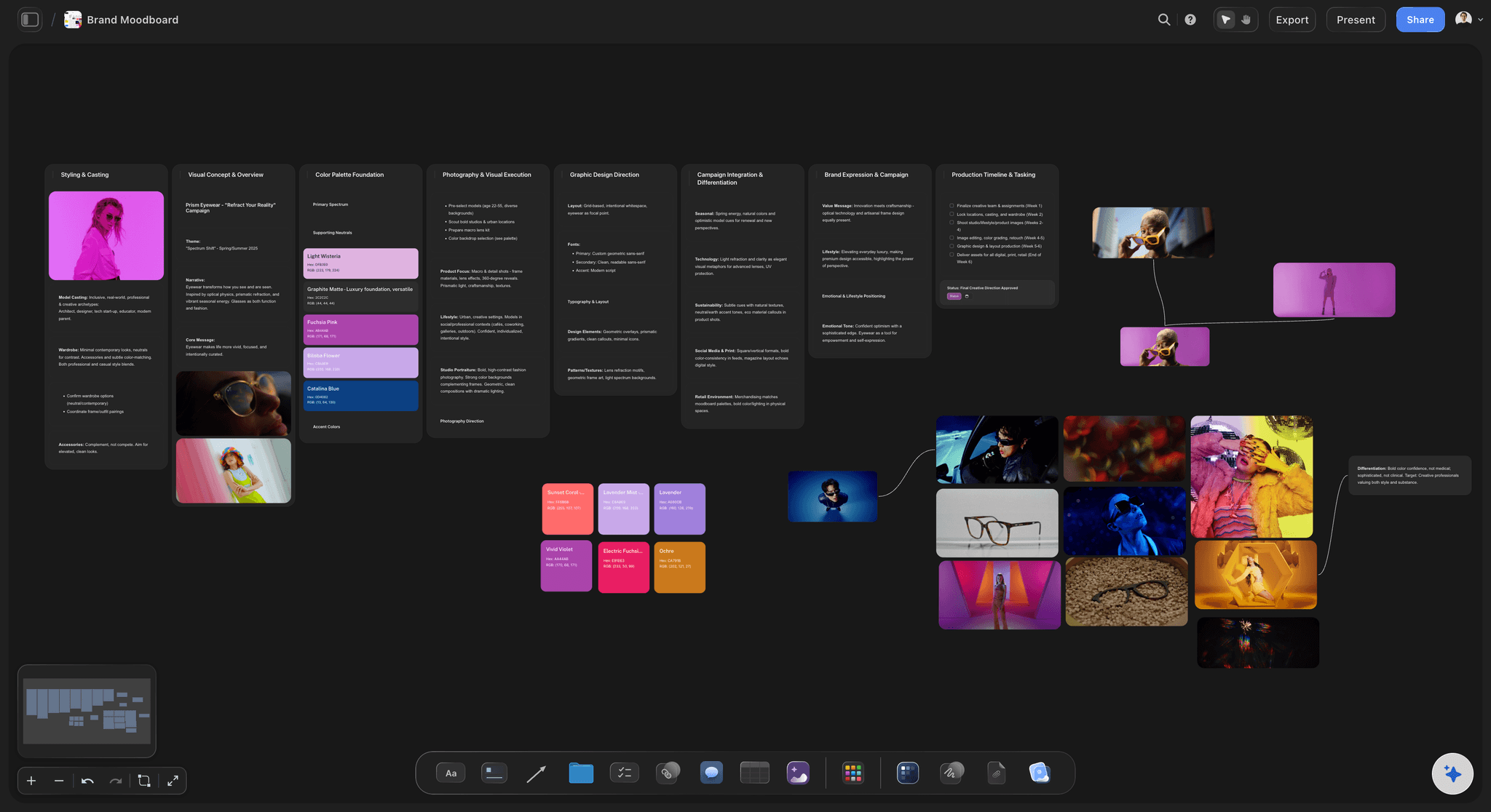
A Storyflow brand moodboard: references, color direction, and AI all on one active canvas
FAQ: Best Mural Alternatives 2026
What is the best Mural alternative in 2026?
The best Mural alternative in 2026 depends on the shape of your work. For project-canvas work with AI context, Storyflow is the strongest because its AI reads the entire active canvas plus @-mentioned Documents and Tactics. For broad enterprise whiteboard breadth, Miro is the most direct upgrade from Mural. For Figma-native design teams, FigJam is the natural move. For workshop-energy facilitation, Klaxoon is sharper than Mural. There is no single winner across every axis.
Why are teams looking for Mural alternatives in 2026?
Most teams looking for Mural alternatives are not running workshop facilitation as their primary job. They adopted Mural because it was the visible whiteboard tool, ran a few workshops, then watched the board sit untouched between sessions. As AI context and project-canvas tools matured in 2026, the gap between "tool optimised for workshops" and "tool optimised for ongoing project work" became visible enough to drive the search.
What is the difference between Storyflow and Mural?
Storyflow is a project-canvas-first AI workspace. Mural is a workshop-facilitation tool. Storyflow's AI reads the full active canvas plus three @-mentioned Documents and one Blueprint Tactic in the same chat, which gives the AI deep project context. Mural is optimised for sticky-note voting, structured workshop templates, and timed facilitation sessions. They solve different problems. Storyflow is not a workshop tool and Mural is not optimised for ongoing project canvas work.
Is Miro better than Mural in 2026?
For most teams looking to upgrade from Mural while keeping the same shape of tool, Miro is the cleaner choice in 2026. Miro has a larger template library, deeper enterprise integrations, and a faster AI roadmap. The exception is teams whose only job is structured workshop facilitation: Mural's facilitator workflow is still slightly tighter for that specific scenario. For broader project work, Miro is the better long-term bet.
Can I run Mural-style workshops in Storyflow?
Storyflow is not a workshop facilitation tool. There is no native voting timer, no audience-polling overlay, and no facilitator-driver mode for thirty-person live sessions. If your weekly job is running structured workshops, Mural or Klaxoon is the better fit. Storyflow is built for the project work that happens between workshops, where the canvas is the project itself, not a session artefact.
What is the cheapest Mural alternative in 2026?
Boardmix at around $4.99/user/month annual is the cheapest serious Mural alternative in 2026. For solo creators and small teams, Storyflow's Free plan, which launches before the end of 2026, will be unusually generous: unlimited boards, unlimited cards (notes, images, links), unlimited collaboration with as many teammates as you want, basic AI usage, and 20 file uploads. Covers more value than most paid tiers on this list because the AI context is genuinely useful at the free level. Whimsical's free plan (3 boards) is also a credible free option for lightweight visual work.
What does Storyflow's free plan include?
Storyflow's Free plan, which launches before the end of 2026, will be unusually generous: unlimited boards, unlimited cards (notes, images, links), unlimited collaboration with as many teammates as you want, basic AI usage, and 20 file uploads. During early access Storyflow is paid-only, though anyone a paid member invites to a board joins free. The AI on that Free plan will read the full active canvas, the same way it does on paid tiers. The Plus plan ($7.99/month annual or $9.99 monthly) unlocks the full 200+ Tactics library; Pro ($14/month annual or $19 monthly) adds AI image generation and 20x more AI than Plus. Real-time multi-cursor co-editing plus Team Workspace with Permissions and Roles is on the Max plan, starting from $39/month annual.
Which Mural alternative is best for AI?
For depth of AI context on a whiteboard in 2026, Storyflow leads the category. The AI reads the full active canvas, plus three @-mentioned Documents, plus one @-mentioned Blueprint Tactic, all in the same chat. That is more project context than any other tool on this list ships in a single AI prompt. Miro's AI roadmap is the most aggressive among the larger enterprise tools, and the gap is closing, but Storyflow is the deepest AI canvas in the project-shaped use case. For broader visual thinking tools, see Best Visual Thinking Tools 2026.
Is Mural still worth it in 2026?
Mural is still worth it for teams whose primary job is running structured workshops with ten or more participants on a recurring schedule. The facilitator workflow, the voting tools, the structured workshop templates, and the session-driver mode are still genuinely strong. For teams whose work is project-canvas-shaped rather than workshop-shaped, Mural's strengths often go underused, which is the most common reason teams search for an alternative.
Table of Contents
- All 10 Mural Alternatives, Ranked
- Quick Picks: Best Mural Alternatives 2026 by Use Case
- Comparison Table: Best Mural Alternatives 2026
- Why Teams Look for Mural Alternatives in 2026
- How We Evaluated the Best Mural Alternatives 2026
- Detailed Reviews: Best Mural Alternatives 2026
- How to Choose the Best Mural Alternative
- The Bottom Line: Best Mural Alternatives 2026
- Author
- 1. Storyflow
- 2. Miro
- 3. FigJam
- 4. Klaxoon
- 5. Stormboard
- 6. Lucidspark
- 7. Whimsical
- 8. Conceptboard
- 9. Boardmix
- 10. MeetingPulse
- FAQ: Best Mural Alternatives 2026
- Related Reading
Templates to check out for this topic


Planning and project templates you can use in Storyflow
Plan a launch, a sprint, or a whole project on a visual board the team can see at once. Open one of these templates and start from real structure.


See Storyflow in Action
A visual AI workspace where every feature lives inside one canvas. No tab-switching, no context lost.
Build your entire board from a single message
Type what you need in the AI chat at the bottom of your canvas. The AI adds cards, headings, and structure directly onto your board.
Use expert frameworks as AI context
Type @ in the AI chat and choose any Tactic. The AI tailors every response to that framework instead of giving generic advice.
Turn your board into a mind map in seconds
Ask the AI to restructure your canvas as a mindmap. It connects your ideas into a visual hierarchy so you can see how everything relates.
Why Storyflow Exists
Storyflow actually began as a personal tool while working on creative and research projects.
We kept running into the same problem: ideas were scattered everywhere: notes, documents, and whiteboards.
Nothing helped us see how everything connected.
So we started building a workspace designed around how ideas actually grow.
→ Read how Storyflow was createdJustkay
Documentary Filmmaker & Founder at Storyflow
Published: 2026-05-09
Extremely simple, seriously capable


See how easy it is to get started
Watch a real project come together, from a blank board to a finished plan, clicked through step by step.
Start creating with AI and become more productive
Transform your creative workflow with AI-powered tools. Generate ideas, create content, and boost your productivity in minutes instead of hours.