The 10 Best Movie Magic Alternatives in 2026 (Tested by a Filmmaker)
StudioBinder is the best Movie Magic alternative for most productions, Yamdu for long-form and Celtx for script-first work. The caveat most lists skip: Movie Magic is still what funded productions expect to receive, so check who reads your schedule before you switch.

Category
Filmmaking Tools
Author

Justkay
Documentary Filmmaker & Founder at Storyflow
Topics
2026-09-02
•
16 min read
•
Filmmaking Tools- movie magic alternatives
- movie magic scheduling alternative
- film scheduling software
- stripboard software
- studiobinder vs movie magic
What is the best alternative to Movie Magic Scheduling?
StudioBinder is the best Movie Magic alternative for most productions, because it covers stripboard scheduling, breakdowns, shot lists and call sheets in one browser-based tool at a fraction of the licence cost, and its call sheets are better than anything Movie Magic offers. Yamdu is the better replacement on long-form work where scheduling is only one part of a whole production model. Celtx is the cheapest credible option and the strongest when a script is the spine. The honest caveat that most alternatives lists skip: Movie Magic Scheduling and Movie Magic Budgeting are still what funded productions expect to receive, so if your schedule or budget goes to a line producer, a completion bond or a financier, the alternative has to export into their world or you have bought yourself a translation job. Below are ten alternatives ranked for real productions, what each one gives up, and the three situations where the honest answer is to keep Movie Magic. Storyflow, our own product, is ninth on that list and replaces none of Movie Magic's scheduling: its AI drafts a strip board, but it holds the layer before the schedule, not a scheduling engine.
Full disclosure: Storyflow is our product and is listed first in the reviews and the table: our pick first, then the rest by job. The ranked list places it ninth for replacing Movie Magic. The article states that it has no day-out-of-days, no scheduling engine and no budgeting module (its AI drafts a strip board, breakdown tables and a budget table, not Movie Magic's depth), that it does not replace Movie Magic in any respect, and that anyone whose problem is the schedule should choose one of the other tools.
How the film scheduling and production tools compare on trust, innovation, ratings and pricing
Which film scheduling tools are the most trusted?
Movie Magic Scheduling and Movie Magic Budgeting remain the most trusted on funded productions, and the reason is distribution rather than features: line producers, first ADs, completion bond companies and financiers already read their formats. StudioBinder is the most trusted browser-based replacement. Gorilla is trusted as the indie like-for-like. Yamdu is trusted on long-form.
Which film scheduling tools have fair and transparent pricing?
Celtx from around $15 and Yamdu from around $20 are the fairest for what they cover. Gorilla at around $25 is honest for a direct stripboard swap. StudioBinder is the most expensive alternative here at $29 and up. Movie Magic is professional-tier licensing priced on the assumption that scheduling is somebody's whole job, which on funded work it genuinely is.
Which of these tools have consistent product performance?
Movie Magic and Celtx have the longest records and both show their age while remaining reliable. StudioBinder has improved steadily, particularly on mobile, which matters because the schedule and call sheet are read on a phone and nowhere else. Gorilla is stable and narrow. Filmustage is the newest and its breakdown output needs reviewing rather than trusting.
Which film scheduling alternatives are underrated?
Gorilla, for anyone who genuinely wants the stripboard and the day-out-of-days without professional licensing and does not need a suite. And Yamdu's budgeting, which is the strongest of any alternative here and the thing most likely to send a production back to Movie Magic when it is missing.
When choosing a Movie Magic alternative, which would you recommend?
StudioBinder for one to ten shoot days, because most people leaving Movie Magic want coverage rather than a better stripboard. Yamdu for long-form. Celtx for script-first. Keep Movie Magic Budgeting if a financier or bond company reads your budget, since splitting the schedule and the budget across two tools is far more common than replacing both. Under five shoot days, a spreadsheet is the honest answer.
Quick Comparison
Four alternatives that actually replace part of Movie Magic, and which part.
| Tool | Best For | AI Features | Price |
|---|---|---|---|
| StudioBinder | Schedule plus everything around it | Light AI | Free / from $29 mo |
| Yamdu | Long-form and budgeting | Light AI | From $20 mo |
| Celtx | Script-derived breakdown | Light AI | Free / from $15 mo |
| Gorilla | Like-for-like stripboard | None | From $25 mo |
Article Metadata
By Justkay, Documentary Filmmaker and Founder of Storyflow Published September 2, 2026 · 16 min read · Filmmaking Tools
Table of Contents
- Why People Leave Movie Magic
- The Interoperability Problem
- All 10 Alternatives, Ranked
- Comparison Table
- How We Evaluated These Tools
- Tool Reviews
- When to Keep Movie Magic
- Recommended Stacks by Production Type
- FAQ: Movie Magic Alternatives
- The Bottom Line
- Author
- Related Reading
Key Takeaways
- StudioBinder is the best all-round replacement for one to ten shoot days. Yamdu for long-form. Celtx for script-first.
- Movie Magic's real moat is not features, it is that the industry reads its output. Check who receives your schedule before switching.
- Movie Magic Scheduling and Movie Magic Budgeting are separate problems. Most alternatives replace one and not the other.
- Below about five shoot days, the stripboard is not the thing you needed, and no alternative fixes that.
- Budgeting is where the alternatives are weakest. Yamdu and Celtx are the only two that seriously try.
Why People Leave Movie Magic
Four reasons, in the order they actually come up.
Cost. Movie Magic is priced on the assumption that scheduling is somebody's job. On an indie production where the director is also the first AD, that price buys a tool used for one week.
The learning curve. A stripboard is a genuinely powerful abstraction and it takes real time to learn. Productions with three shoot days never recover that investment.
It stops at the desk. Movie Magic produces a plan and does nothing on a shoot day, nothing for call sheets, nothing for shot lists, and nothing after wrap. Everyone using it is running three other tools.
Collaboration. It is a desktop-era product in a world where the schedule needs to be readable by six people on their phones at 7am.
What people are usually looking for is not "a better stripboard". It is one tool that covers the schedule and the four or five things around it, and that is why the top of this list is dominated by suites rather than by scheduling specialists.
The Interoperability Problem
This is the part most alternatives lists omit and it is the one that causes regret.
Movie Magic's advantage is not really the software. It is that a stripboard, a day-out-of-days and a Movie Magic budget are the formats a line producer, a first AD, a completion bond company and a financier already read. On a funded production, handing someone a schedule they cannot open is your problem, not theirs.
So before switching, answer one question: who receives your schedule and your budget?
- Nobody outside the core team. Switch freely. Everything below is a real option.
- A first AD or line producer you are hiring. Ask them. Many will work in anything; some will want Movie Magic and it is cheaper to give them that than to argue.
- A financier, a bond company, or a broadcaster. Assume Movie Magic Budgeting for the budget, and check whether the schedule format is specified in your paperwork. It sometimes is.
The practical middle path a lot of productions land on: an alternative for the working schedule and shot lists, and Movie Magic Budgeting only for the budget that goes outside. Splitting the two is far more common than replacing both.
All 10 Alternatives, Ranked
- StudioBinder: best overall replacement, and better than Movie Magic at everything except the stripboard itself
- Yamdu: best for long-form, where scheduling is one part of a whole production model
- Celtx: best script-first replacement and the cheapest credible option
- Gorilla Scheduling: closest like-for-like at indie pricing
- Scenechronize: best for larger productions that need distribution and access control
- Filmustage: best AI script breakdown, feeding whatever you schedule in
- Shot Lister: best shoot-day companion, replaces nothing at the desk
- Airtable: best custom build for a production that does not fit any template
- Storyflow: best for the layer before the schedule, not a scheduler
- Google Sheets: honest default for productions under about five days
Comparison Table
| Tool | Best for | Stripboard | Day-out-of-days | Budgeting | Starting price |
|---|---|---|---|---|---|
Storyflow | The layer before scheduling | AI draft by page totals | None | Budget table only | $7.99 mo annual (free plan late 2026) |
StudioBinder | All-round replacement | Very good | Good | Weak | Free / from $29 mo |
Yamdu | Long-form productions | Very good | Very good | Very good | From ~$20 mo |
Celtx | Script-first work | Very good | Good | Very good | Free / from ~$15 mo |
Gorilla | Indie like-for-like | Very good | Very good | Good | From ~$25 mo |
Scenechronize | Larger crews, distribution | Very good | Very good | Fair | Enterprise |
Filmustage | AI breakdown upstream | Fair | Fair | Fair | From ~$20 mo |
Shot Lister | The shoot day | None | None | None | Low, per device |
Airtable | Custom production builds | Manual | Manual | Manual | Free / $20 mo |
Google Sheets | Under five shoot days | Manual | Manual | Manual | Free |
Prices are publicly listed plans as of early 2026 and change often.
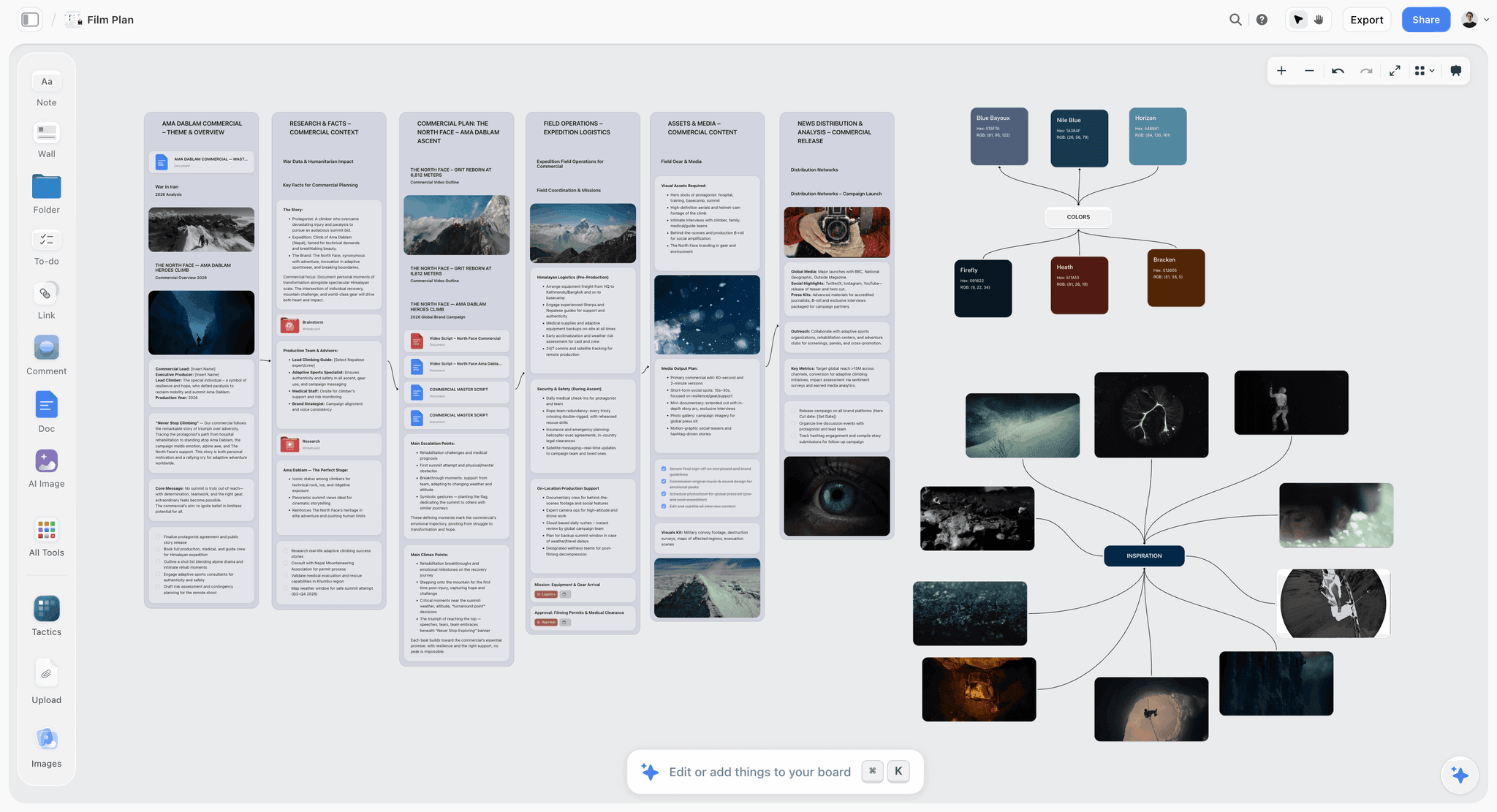
A film plan holding the reasoning behind the schedule, which no scheduler has a field for
Check who reads your schedule first
Movie Magic's real moat is not features, it is that line producers, first ADs and financiers already open its files. If your budget goes outside the production, the alternative has to export into their world or you have bought a translation job.

How We Evaluated These Tools
Five criteria, weighted in this order:
- Scheduling depth. Can it reorder a real shoot by location and cast and recalculate everyone's days? This is the thing Movie Magic is for.
- What it adds. Call sheets, shot lists, mobile access, post. Most people leaving Movie Magic want coverage rather than a better stripboard.
- Interoperability. Whether the output is readable by people outside your production.
- Budgeting. Usually the weakest area of every alternative, and the one most likely to send you back.
- Cost against a real indie production, meaning three to fifteen shoot days and no dedicated scheduler.
Testing covered a fifteen-day narrative schedule, a five-day documentary, and a two-day commercial.
Tool Reviews
1. Storyflow

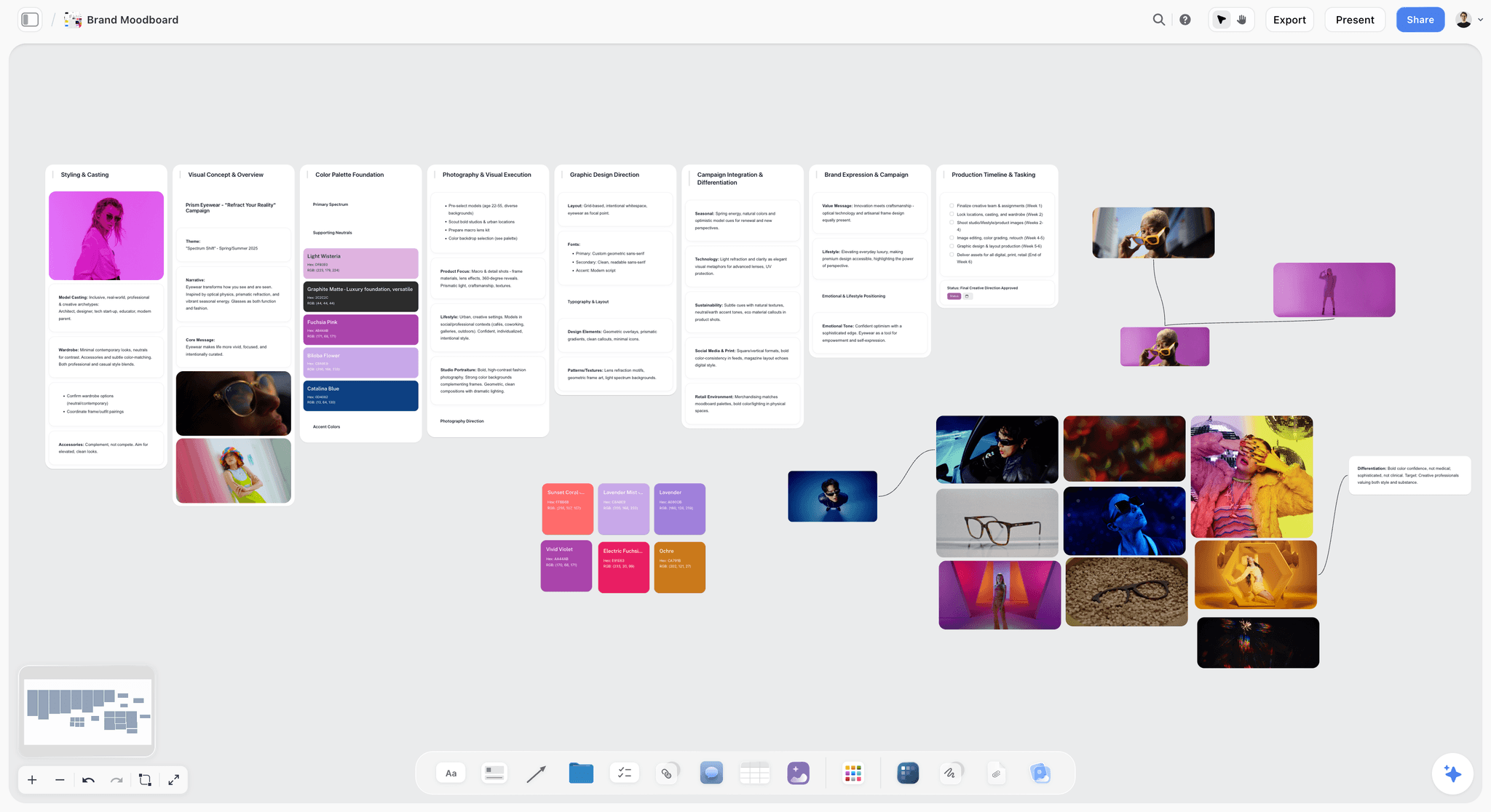
Storyflow is our product and we list it first here: our pick first, then the rest by job. On the ranked list above it sits ninth, deliberately, because it is not a scheduling tool and does not replace Movie Magic in any respect. It has no day-out-of-days, no scheduling engine and no budgeting module: its AI drafts a strip board grouped by page totals, breakdown tables from an attached script and a budget table, but it does not tag elements in the script or do fringes, a top sheet or conflict reports. Anyone whose problem is the schedule should choose from the tools below.
It is on this list because a recurring reason for leaving Movie Magic is that the plan lives in a tool nobody can read and the reasoning behind it lives nowhere at all. Storyflow holds the layer before the schedule: the treatment, the captioned look reference, the shot list with the reason recorded next to each shot, and the cut list, on a board whose whole contents the AI reads before answering. Productions using it run StudioBinder, Celtx or Yamdu for the schedule.
Storyflow is paid-only during early access; its Free plan launches before the end of 2026, and anyone a paid member invites to a board joins free now.
Pricing: Plus $7.99 per month billed annually ($9.99 monthly); Pro $14; Max $39.
Pros: holds the reasoning that no scheduler has a field for; flat per-account pricing; invited collaborators join free.
Cons: no scheduling engine, no day-out-of-days, no budgeting module; its strip board, budget table and call sheet PDF are AI drafts, and it does not send call sheets or track confirmations. Not an alternative to Movie Magic and should not be read as one.
2. StudioBinder
The best replacement for most people, and the reason is coverage rather than scheduling. Its stripboard is very good and slightly behind Movie Magic on heavy multi-location work. Everything around it is better: the best call sheets in the category with open tracking, the best shot lists, real contact management, and a mobile experience that works at 7am. It runs in a browser, so the schedule is readable by the whole crew without a licence.
Where it gives ground is budgeting, which is thin, and the deepest scheduling scenarios. Productions with nine locations and six contracted cast will feel the difference; productions with three locations will not.
Key features: stripboard scheduling, script breakdowns, call sheets with open tracking, shot lists, storyboards, contacts, production reports.
Pricing: Free tier; paid from $29 per month, commonly used tier around $42.
Pros: replaces Movie Magic and three other tools; excellent call sheets; browser-based and strong on mobile; low learning curve.
Cons: budgeting is weak enough that most users keep a spreadsheet; not as deep as Movie Magic on complex schedules; no post tracking.
3. Yamdu
The right answer on long-form. Yamdu models the whole production, so the schedule is aware of cast contracts, location availability and document status, and a conflict surfaces as a conflict rather than as something you discover later. Its budgeting is the best of any alternative here, and it is the only one that tracks which paperwork is outstanding.
The cost is setup. A crew of four on a five-day shoot will get less from it than from StudioBinder.
Key features: all-phase production management, scheduling, call sheets, cast and crew, document status, budgeting, post tracking.
Pricing: from around $20 per month.
Pros: best budgeting among the alternatives; schedule aware of the whole production; genuine paperwork tracking.
Cons: real setup cost; heavier than short productions justify; unremarkable shot lists.
4. Celtx
The strongest option when a script is the spine, because the breakdown derives from the script and stays tied to it, and the schedule cannot disagree with the script about what is in a scene. Budgeting is genuinely good, better than StudioBinder's, which matters for a Movie Magic replacement specifically. It is also the cheapest credible choice here.
Weaker for documentary and unscripted work, and its mobile experience trails StudioBinder's, which matters on the day.
Key features: scriptwriting, script-derived breakdown, scheduling, shot lists, call sheets, budgeting.
Pricing: Free tier; paid from around $15 per month.
Pros: script-to-schedule linkage; real budgeting; cheapest of the serious options.
Cons: poor fit for unscripted; dated in places; weakest mobile of the top three.
5. Gorilla Scheduling
The closest like-for-like replacement at indie pricing. If what you actually want is Movie Magic's stripboard and day-out-of-days without the professional price, this is the answer, and it does not try to be a suite. Budgeting is decent.
It shares Movie Magic's limitation of stopping at the desk, so you will run other tools alongside.
Pricing: from around $25 per month.
Pros: the most direct feature-for-feature swap at a lower price; solid day-out-of-days.
Cons: same coverage gap as Movie Magic; smaller ecosystem; dated interface.
6. Scenechronize
Built for larger productions where distributing documents to a big crew with access control is a real problem. Strong scheduling and strong distribution. It is priced and shaped for productions above the size this article mostly addresses.
Pricing: enterprise, quoted.
Pros: excellent distribution and permissions at scale; solid scheduling.
Cons: enterprise pricing and process; overkill for indie work.
7. Filmustage
Not a scheduler so much as the step before one. Its AI script breakdown is genuinely fast and it tags elements well, then hands off to whatever you schedule in. Useful as an upstream addition rather than a replacement, and it can cut real hours off a long script.
Pricing: from around $20 per month.
Pros: the fastest breakdown here; genuinely saves time on long scripts.
Cons: breakdown accuracy needs review; not a full scheduler; another subscription.
8. Shot Lister
Replaces none of Movie Magic and belongs on this list because a lot of people searching for alternatives actually want the shoot-day half. It takes today's list onto a phone and times it live, telling the AD at 11am whether the day is down. Cheap, quick, offline.
Pricing: low, per device.
Pros: live ahead-or-behind timing; excellent on a phone; works offline.
Cons: no scheduling or breakdown at all; needs the plan from elsewhere.
9. Airtable
For a production that does not fit any template, a custom base with scenes, cast, locations and days is a legitimate build, and it will do things no production tool does. What it will not do is a stripboard, and building one is a project.
Pricing: Free; Team $20 per seat per month billed annually.
Pros: fits any production shape; the best paperwork tracking if you build it; strong views.
Cons: you are building the tool; no stripboard; per-seat cost.
10. Google Sheets
Under five shoot days, this is the honest answer and it beats a half-learned stripboard. A sheet with scenes, days, cast and locations, sorted and re-sorted by hand, does the job when the combinatorial problem is small. Above about five days it stops scaling and you will feel it.
Pricing: free.
Pros: free, universal, editable by everyone, no learning curve.
Cons: no automatic recalculation; no day-out-of-days; breaks down on complex schedules.
When to Keep Movie Magic
Three situations where switching is the wrong call, stated plainly because most alternatives lists will not.
Your budget goes to a financier or a bond company. Movie Magic Budgeting is the expected format. Producing a budget nobody wants to read is a problem you have created for yourself.
You have hired a first AD who works in it. Their speed in a familiar tool is worth more than your licence saving, and asking an experienced AD to learn your preferred software during prep is a bad trade.
The schedule is genuinely hard. Nine locations, six contracted cast, day and night exteriors, weather cover, and company moves that cost real money. Movie Magic still recalculates that better than anything else on this list, and on a production where a mis-ordered schedule costs five figures, that is the whole point.
Everything else is fair game.
Recommended Stacks by Production Type
One to two day commercial or branded shoot: StudioBinder free tier, or a spreadsheet plus a PDF call sheet. No stripboard needed.
Five-day documentary: StudioBinder for schedule, call sheets and contacts. A phone camera roll for continuity. Frame.io if review matters.
Fifteen-day narrative short or feature: Celtx if script-first, StudioBinder if not, plus Movie Magic Budgeting only if the budget goes outside. Shot Lister on the day if the setup count is high.
Long-form documentary over months: Yamdu, for the document status tracking and the schedule that knows about contributor availability.
Funded feature with a hired AD: ask the AD. If they say Movie Magic, use Movie Magic for the schedule and something browser-based for call sheets and shot lists so the crew can read them.
The Bottom Line
Most people leaving Movie Magic do not want a better stripboard, they want one tool that covers the schedule and the five things around it. StudioBinder is that tool for one to ten shoot days, Yamdu for long-form, Celtx for script-first work. Before you switch, check who reads your schedule and your budget, because Movie Magic's real moat is that the industry already opens its files. And if your production is under five shoot days, the stripboard was never the thing you were missing.
FAQ: Movie Magic Alternatives
What is the best alternative to Movie Magic Scheduling?
StudioBinder for most productions, because it covers stripboard scheduling plus call sheets, shot lists, contacts and a real mobile experience for a fraction of the licence cost. Yamdu is better on long-form productions where the schedule needs to know about cast contracts and location availability. Celtx is the best script-first option and the cheapest credible one. Gorilla is the closest like-for-like swap if the stripboard alone is what you want.
Is StudioBinder better than Movie Magic?
At the stripboard itself, no, particularly on complex multi-location schedules with contracted cast. At everything around the stripboard, yes and by a wide margin: call sheets, shot lists, contacts, mobile access, and the fact that the whole crew can read the schedule in a browser without a licence. For one to ten shoot days that trade is clearly worth it; for a funded feature with a hard schedule it may not be.
Is there a free Movie Magic alternative?
Celtx and StudioBinder both have free tiers, both tight enough that a real production usually moves off them. Under about five shoot days, a Google Sheet is a legitimate free answer, because the combinatorial problem a stripboard solves does not exist yet. There is no free tool that replaces Movie Magic's scheduling depth, and anything claiming to is replacing a simpler job.
Do any alternatives replace Movie Magic Budgeting?
Yamdu and Celtx are the only two that seriously try, and Yamdu is the stronger of the two. StudioBinder's budgeting is weak enough that most of its users keep a spreadsheet. The important caveat is that if your budget goes to a financier, a completion bond or a broadcaster, Movie Magic Budgeting is the expected format regardless of what you prefer, and a lot of productions run an alternative for the schedule and keep Movie Magic for the budget.
Why do people switch away from Movie Magic?
Cost, because it is priced on the assumption that scheduling is somebody's whole job. The learning curve, which a three-day shoot never recovers. Coverage, because it produces a plan and does nothing for call sheets, shot lists, the shoot day or post. And collaboration, because a desktop-era licence is awkward when six people need the schedule on their phones at 7am.
Does Storyflow replace Movie Magic?
No, in every respect. Storyflow has no day-out-of-days, no scheduling engine and no budgeting module (its strip board and budget table are AI drafts, not Movie Magic's depth), and this article ranks it ninth precisely because it is not a scheduler. It holds the layer before the schedule: the treatment, the captioned look reference, the shot list with the reason next to each shot, and the cut list. Productions using it run StudioBinder, Celtx or Yamdu for the schedule itself.
Is Storyflow free?
Not during early access. It is paid-only today from $7.99 per month billed annually on Plus, with its Free plan launching before the end of 2026. Anyone a paid member invites to a board signs up free and can invite others, so a crew collaborating on one production costs a single seat.
What should I check before switching from Movie Magic?
Who receives your schedule and your budget. If it is only the core team, switch freely. If you are hiring a first AD or line producer, ask what they work in, because their speed in a familiar tool usually beats your licence saving. If a financier or bond company is involved, assume Movie Magic Budgeting for the budget and check whether the schedule format is specified in your paperwork, because it sometimes is.
Is Gorilla a good Movie Magic alternative?
It is the closest like-for-like at indie pricing, and if what you want is a stripboard and a day-out-of-days without professional licensing, it is the most direct swap on this list. It shares Movie Magic's limitation of stopping at the desk, so you will still run separate tools for call sheets, shot lists and the shoot day, which is why StudioBinder outranks it here for most productions.
Do I even need a stripboard?
Below about five shoot days, no. The combinatorial problem a stripboard exists to solve, reordering many scenes across many locations and cast to minimise cost, does not appear until a schedule is genuinely complex. Under that, a shot list in shooting order and a schedule with honest turnaround is the right artifact, and time spent learning a stripboard is time not spent on those.
What about Filmustage and AI breakdowns?
Filmustage sits upstream of scheduling rather than replacing it. Its AI breakdown tags script elements fast and can save real hours on a long script, then hands off to whatever you schedule in. The output needs reviewing rather than trusting, and it is another subscription, so it earns its place on scripted features and rarely on anything shorter.
Which alternative works best for documentary?
StudioBinder for shoots of a few days, since it does not assume a script and its call sheets and contacts are strong. Yamdu for documentaries shot across months, because contributor availability, releases and access windows spread over a year is exactly its shape, and it is the only tool here that tracks which releases are still outstanding. Celtx is the weakest documentary fit of the serious options.
Table of Contents
- Article Metadata
- Breadcrumb
- Table of Contents
- Key Takeaways
- Why People Leave Movie Magic
- The Interoperability Problem
- All 10 Alternatives, Ranked
- Comparison Table
- How We Evaluated These Tools
- Tool Reviews
- 1. Storyflow
- 2. StudioBinder
- 3. Yamdu
- 4. Celtx
- 5. Gorilla Scheduling
- 6. Scenechronize
- 7. Filmustage
- 8. Shot Lister
- 9. Airtable
- 10. Google Sheets
- When to Keep Movie Magic
- Recommended Stacks by Production Type
- The Bottom Line
- Author
- FAQ: Movie Magic Alternatives
- Related Reading
Templates to check out for this topic


Templates you can use in Storyflow
Every Storyflow board starts from real structure and an AI that reads the whole canvas. Open one of these templates and make it yours.


See Storyflow in Action
A visual AI workspace where every feature lives inside one canvas. No tab-switching, no context lost.
Build your entire board from a single message
Type what you need in the AI chat at the bottom of your canvas. The AI adds cards, headings, and structure directly onto your board.
Use expert frameworks as AI context
Type @ in the AI chat and choose any Tactic. The AI tailors every response to that framework instead of giving generic advice.
Turn your board into a mind map in seconds
Ask the AI to restructure your canvas as a mindmap. It connects your ideas into a visual hierarchy so you can see how everything relates.
Why Storyflow Exists
Storyflow actually began as a personal tool while working on creative and research projects.
We kept running into the same problem: ideas were scattered everywhere: notes, documents, and whiteboards.
Nothing helped us see how everything connected.
So we started building a workspace designed around how ideas actually grow.
→ Read how Storyflow was createdJustkay
Documentary Filmmaker & Founder at Storyflow
Published: 2026-09-02
Extremely simple, seriously capable


See how easy it is to get started
Watch a real project come together, from a blank board to a finished plan, clicked through step by step.
Start creating with AI and become more productive
Transform your creative workflow with AI-powered tools. Generate ideas, create content, and boost your productivity in minutes instead of hours.