The 11 Best Tools to Organize Research for a Nonfiction Book in 2026
Research reaches a finished book through four hops, and the tools that exist mostly serve the first and the last. Eleven tools ranked on the two hops where books actually stall: highlight to claim, and claim to structure.

Category
Writing
Author

Justkay
Documentary Filmmaker & Founder at Storyflow
Topics
2026-08-26
•
20 min read
•
Writing- organize research for writing a book
- book research tools
- nonfiction book research
- Zotero vs Obsidian
- Scrivener for nonfiction
- research organization software
What is the best tool to organize research for writing a nonfiction book?
Research reaches a finished book through four hops, and the tools that exist mostly serve the first and the last. Eleven tools ranked on the two hops where books actually stall: highlight to claim, and claim to structure.
Full disclosure: Storyflow is our own product and we rank it fifth of eleven. It has no citation management, no bibliography, and no PDF annotation, and it is not where a manuscript should be written, so Zotero and Scrivener rank above it and you will still need both. It earns fifth place for one hop only: turning a pile of claims into a structure, where the AI can read the whole set and answer which claims are duplicates, which chapter is thin, and what is resting on a single source. It is also paid-only during early access and cloud-only, which over a multi-year book is a real trade against Obsidian's free local markdown files, and its review says so. The Free plan launches before the end of 2026, and anyone a paid member invites to a board joins free, which covers bringing in a researcher or an editor.
Quick Comparison
These four cover the chain a nonfiction book actually travels: capturing sources with citations intact, converting highlights into claims you would defend, finding the structure, and writing it with the source one click away.
| Tool | Best For | AI Features | Price |
|---|---|---|---|
| Zotero | One-click capture, PDF annotation, real bibliographies | None core | Free / storage from ~$20 yr |
| Obsidian | Linked markdown notes on your own disk | Via community plugins | Free personal / ~$50 yr commercial |
| Scrivener | Binder structure and a research folder beside the draft | None | One-off ~$59 |
| Heptabase | PDF highlight straight to a card on a whiteboard | AI over your own cards | From ~$11.99 mo annual |
Key Takeaways
- Research reaches a finished book through four hops, and the tools that exist mostly serve the first and the last.
- Read to Capture (highlight becomes note), Capture to Claim (note becomes something you are prepared to assert), Claim to Structure (claim finds its place in the book), Structure to Sentence (it gets written, with the citation intact).
- Almost every book research failure is hop two or hop three. Nine hundred highlights and no claims is hop two. Forty claims and no shape is hop three. Neither feels like a problem until month eight.
- Zotero is non-negotiable for citations and it is free. Obsidian is the strongest note-to-draft chain. Scrivener is still where the manuscript should live.
- No tool tells you whether the research adds up to a book. That judgment is hop three, it is the one authors avoid longest, and it is the only reason a research pile becomes a proposal.
The Source-to-Sentence Chain
A nonfiction book is a very long argument with receipts. Every meaningful sentence in it can, in principle, be traced back to something you read, watched, or were told.
The failure mode people expect is losing the receipt: you write a claim, cannot remember where it came from, and either spend an hour finding it or quietly soften the sentence until it needs no source. That happens, and it is the least serious of the failures.
The real failures happen earlier and they are quieter. Here is the chain, in full.
Hop 1: Read to Capture. You read something and a piece of it becomes a note. Well served. Readwise, Zotero, DEVONthink, Kindle exports, and a scanner all do this, and doing it more efficiently is what most "research tool" marketing is about.
Hop 2: Capture to Claim. A note becomes something you are prepared to assert. This is a judgment, not a transfer. It requires reading the note again, deciding whether you believe it, deciding whether it is interesting, and writing down the thing you would actually say. This is where most book research dies. An author with nine hundred highlights and no claims has done a lot of work and made no progress, and it does not feel that way at the time, because capturing feels like research.
Hop 3: Claim to Structure. Each claim finds its place in the argument, and the argument acquires a shape. This is where you discover that four of your claims are the same claim, that chapter six is thin, that the thing you thought was chapter two is actually the book. It is comparison work across the whole body of material, and almost nothing supports it.
Hop 4: Structure to Sentence. The writing, with the source still attached. Scrivener, Word, Obsidian, and a citation manager all serve this well.
Look at where the tooling is. Hop one is crowded. Hop four is crowded. Hops two and three, which are where books actually stall, are served by roughly nothing, and they are the hops that require thinking rather than transferring.
This list ranks on which hop each tool serves, and it says plainly where the chain is still yours to walk.
At a Glance: The 11 Tools Compared
| Tool | Strongest hop | Citations | Your files, forever | Price |
|---|---|---|---|---|
Zotero | Capture, and citations | Best in class | Yes, open format | Free / storage from ~$20 yr |
Obsidian | Capture to Claim, and Sentence | Via plugin | Yes, local markdown | Free personal / ~$50 yr commercial |
Scrivener | Structure to Sentence | Via companion tools | Yes, local project | One-off ~$59 |
Heptabase | Capture to Claim | No | Export available | From ~$11.99 mo annual |
Storyflow | Claim to Structure | No | No, cloud only | $7.99 mo annual (free plan late 2026) |
DEVONthink | Capture, and retrieval | No | Yes, local | One-off from ~$99 |
Readwise | Read to Capture | No | Export available | From ~$8.99 mo |
Notion | Capture, and light structure | No | Export available | Free tier / from ~$10 mo annual |
Logseq | Capture to Claim | Via plugin | Yes, local markdown | Free, open source |
Milanote | Claim to Structure, visually | No | Export available | Free (100 notes) / from ~$12.50 mo |
Google Docs and Sheets | Sentence, and a research log | Manual | Export available | Free tier / Workspace from ~$7 mo |
Prices are the publicly listed rates at the time of writing and change often. Check before committing.

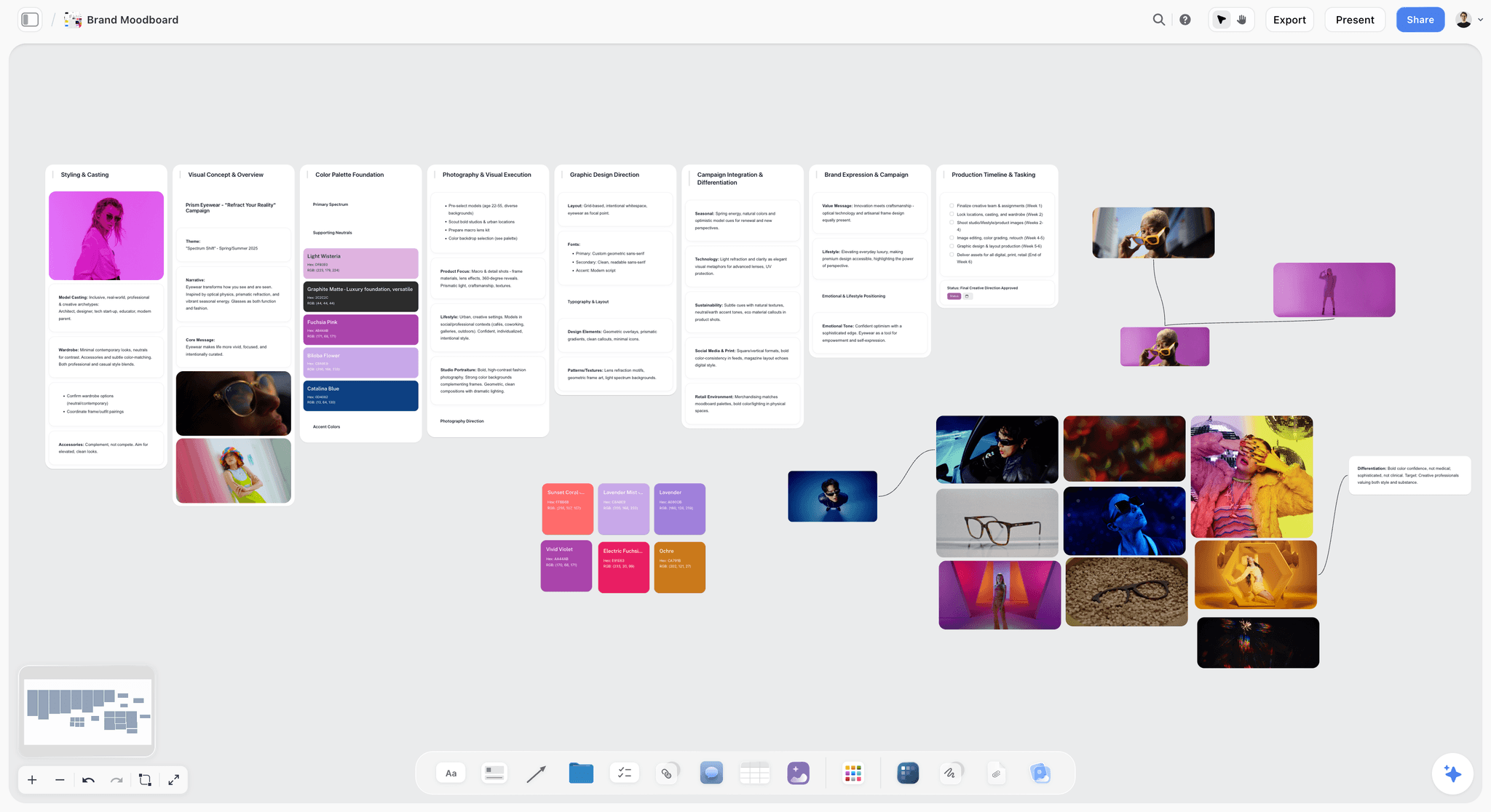
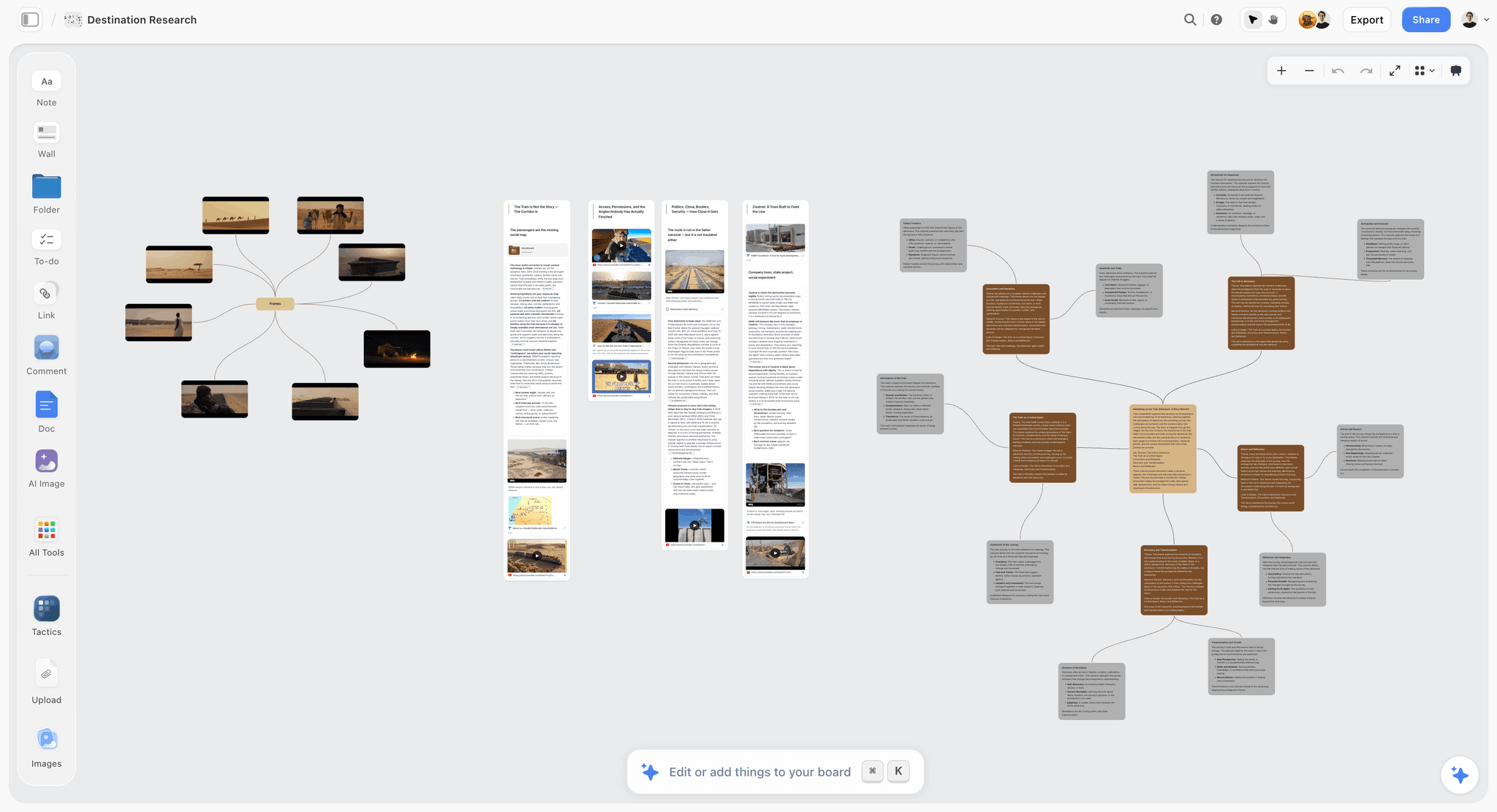
A hundred and forty research claims laid out on a Storyflow canvas so duplicates, thin chapters and single-sourced assertions are visible at once
Find the book inside the pile
A hundred and forty claims do not fit in working memory, which is why authors have always used a wall. Storyflow puts them on a canvas the AI reads, so which claims are duplicates, which chapter is thin, and what rests on a single source become questions rather than a week of sorting. Citations still belong in Zotero and the manuscript in Scrivener.

How I Ranked These
I make documentaries, which is nonfiction with a camera and the same chain. A film with two hundred hours of interviews and four hundred documents has exactly the hop-two and hop-three problems a book has, and I have failed at both.
Every tool below I used on real long-form work rather than a trial. Where a claim rests on published documentation rather than my own use, the review says so.
Five criteria, in this order:
- Which hop it serves, and how completely. Hops two and three are weighted highest because that is where books stall.
- Whether the source survives the chain. A claim that arrives at the draft with no attached source is a claim you will soften or cut.
- Durability over a multi-year project. Books take years. Subscriptions lapse, companies close, and formats rot.
- Retrieval at volume. Search that finds the thing you half remember across a thousand notes, including inside PDFs.
- Honest cost across the life of a book, which is a different calculation from a monthly one.
Deliberately not weighted: AI writing assistance. Nonfiction is judged on accuracy and voice, and generated prose is bad at both.
Hop Two Is Where Books Die
It is worth being specific, because the failure is so comfortable that most authors do not notice it happening.
You are researching. You read constantly, you highlight, and everything syncs into a beautiful growing library. Six months in you have nine hundred highlights across sixty sources, tagged, searchable, backed up. It feels like the book is being built.
It is not. What you have is a very well-organised record of your reading. A book is not made of what other people said; it is made of what you say, supported by what other people said. Nine hundred highlights contain zero of your assertions.
The hop from a highlight to a claim is small and effortful. It looks like this:
> Highlight: "Between 1979 and 1985, the plant's workforce fell from 4,200 to 900." (Harrison, p.114) > > Claim: The town's collapse was not gradual. Three quarters of the jobs went in six years, which is why nobody adapted; there was no time to. (Harrison p.114; corroborated by council minutes, March 1983)
The first is a fact somebody else established. The second is an argument you are making, with an interpretation in it that you would have to defend. Only the second can go in a book.
Two things make this hop hard. It requires deciding what you think, which is harder than reading. And it produces less visible output than capturing does, so on a bad day capturing feels productive and claiming feels like staring.
The practical fix is a discipline rather than a tool: every research session ends by converting some highlights into claims, in your own words, with the source attached. Ten a session. If a highlight cannot become a claim, it was interesting rather than useful, and knowing that early is worth more than storing it.
Tools that help are the ones where a note is a real document you write in rather than a row in a library: Obsidian, Heptabase, and Logseq are all built around this. Tools that hurt are the ones that make capture so frictionless that you never stop.
Hop Three Is Where Proposals Come From
The second underserved hop is the one that turns a pile of claims into a book.
You now have, say, one hundred and forty claims. Somewhere in them is a book, and the questions you need answered are all comparison questions:
- Which of these are actually the same claim wearing different clothes?
- Which chapter is thin, and is it thin because the research is missing or because the chapter should not exist?
- Which claim is the book, as opposed to a good claim?
- What is the argument's weakest link, the one a hostile reviewer goes for first?
- What am I asserting with only one source?
Every one of those requires seeing the whole set at once. That is why authors historically did this on a wall, or a floor, or a stack of index cards on a big table, and why it fails in a list-shaped tool. You cannot compare a hundred and forty things by scrolling.
This is the hop that produces a proposal. An agent does not want your research; they want the argument and the shape. Books that stall in research have almost always skipped from hop two straight to hop four, and discovered in the writing that the structure was never decided.
Two tool shapes help. Spatial ones, where every claim is visible and physically groupable: Milanote, Storyflow, Heptabase's whiteboards, or literal index cards, which remain excellent. And AI that reads the whole set rather than one prompt, which can answer "which of these are duplicates" and "what am I asserting with one source" against your actual material. That capability is rare and it is the specific reason Storyflow is on this list.
Quick Picks by Job
- Best overall for a nonfiction book: Zotero for sources, Obsidian for notes, Scrivener for the manuscript. This stack has produced a very large number of published books.
- Best citation manager: Zotero, free, and the only tool here that makes a real bibliography painless.
- Best for turning reading into claims: Obsidian, or Heptabase if your sources are mostly PDFs.
- Best for finding the shape: Storyflow or Milanote, or index cards on a table, which still work.
- Best for a huge document archive: DEVONthink, for retrieval across thousands of files including OCR'd scans.
- Best for capture from everything you read: Readwise, which feeds the top of the chain.
- Best free stack: Zotero plus Obsidian plus Logseq. Genuinely capable, permanently free, files yours.
- Best place for the manuscript: Scrivener, still, and it is a one-off cost.
1. Zotero
Zotero ranks first because it is the only tool here that is close to mandatory, and it is free.
For a book with real sources, citations become a genuine problem around the point you have two hundred of them, and they become an emergency during copyedit when someone asks for page numbers. Zotero solves this permanently: a browser connector that captures a source with correct metadata in one click, PDF storage with annotation, group libraries if you have a researcher, and a word processor plugin that produces formatted citations and a bibliography in whatever style your publisher wants.
It has moved beyond citation management too. The built-in PDF reader with annotations that sync into notes covers hop one properly, and its notes are good enough that some authors never leave.
Against it: the interface is functional rather than pleasant, and it is a library rather than a thinking space, so hops two and three are not its business. Free storage is limited, though the paid tiers are inexpensive and you can point it at your own storage.
Pricing: Free and open source. Storage from around $20/year.
2. Obsidian
Obsidian is the strongest tool here for hop two, and it wins the durability criterion outright.
Its notes are plain markdown files in a folder on your disk. For a project running three or four years, that matters more than any feature: no subscription can lapse, no company can close, and the format will open in fifty years. Books have outlived a lot of software.
For turning reading into claims it is close to ideal, because a note is a document you write in rather than a record you file. Linking claims to each other, and to the sources they came from, builds the argument's connective tissue as a by-product of note-taking. Vault-wide search is the best retrieval in this list for text you wrote. The plugin ecosystem covers citations (Zotero integration), spaced review, and a canvas for the spatial half.
Against it: it is a configuration project, and the time you spend building your system is time not spent writing, which is a well-documented trap in this community. Canvas is basic compared with the dedicated spatial tools. Collaboration is awkward if you work with a researcher or an editor.
Pricing: Free for personal use. Commercial licence around $50/user/year. Sync is a separate add-on.
3. Scrivener
Scrivener remains where a nonfiction manuscript should live, and a one-off price of around $59 for a tool that carries a three-year project is the best value on this page.
Its structural model is what matters: a book is a binder of documents you can reorder freely, so a chapter is a folder and a section is a card, and rearranging the argument is dragging rather than cutting and pasting across a hundred-thousand-word file. The corkboard view gives you a real, if limited, hop-three surface. And the research folder sitting inside the same project, holding PDFs, images, and web pages next to the draft, is exactly right for nonfiction: the source is one click from the sentence.
Compile handles the export mess at the end, which is worse than first-time authors expect.
Against it: it is a writing tool, not a research system. Citations need a companion, search across a large research folder is weaker than DEVONthink or Obsidian, and the interface is dense. Sync between devices has improved and still requires care.
Pricing: One-off, around $59, with separate licences per platform.
4. Heptabase
Heptabase is the best single tool here for the middle of the chain, and for a PDF-heavy nonfiction project it is the strongest argument against the classic three-tool stack.
Its model: a card is a real document, cards live in a searchable library, and the same card can appear on many whiteboards. That separation of authoring from arranging is exactly what hops two and three need, because you can restructure the argument repeatedly without ever touching the underlying material.
Its PDF annotation is the tightest source-to-note path in this list. Highlight in the PDF, the highlight becomes a card with the source attached, and the card goes onto a whiteboard where the argument is being built. That is hops one, two, and three in one motion.
Against it: no citation management, so Zotero is still required for a book with a bibliography. The learning curve is the steepest here. It is subscription-only with no free tier beyond a trial, which over a four-year book is a real cost. And it is a thinking tool rather than a writing tool, so the manuscript still belongs elsewhere.
Pricing: From around $11.99/month annual.
5. Storyflow

Storyflow is our own product, and it does not manage citations, does not have a bibliography, and is not where a manuscript should be written. Zotero and Scrivener are above it for good reason and you will still need both.
It ranks fifth for hop three, the one that turns a pile of claims into a shape.
What it does is put the claims on a canvas the AI can read, all of them, at once. Then the comparison questions become askable: which of these claims are the same claim in different words, which chapter here is thin, what is being asserted with only one source, what is the weakest link in this argument, which of these is the actual book rather than a good aside. Those are questions about the whole set, and they are unanswerable in a chat window because the set is not present, and slow by hand because a hundred and forty claims do not fit in working memory.
Spatially it works the way the index-card table works: claims group into chapters by being dragged together, chapters nest as boards inside the book's board, and the arrangement persists, so the structure you found in March is still there in June with the reasoning visible in the layout.
Against it, plainly: it is paid-only during early access, which over a multi-year book is a genuine cost that Obsidian's free personal tier and Zotero's free licence do not carry. The Free plan launches before the end of 2026; today the only free path is that anyone a paid member invites to a board joins free, which does cover bringing in a researcher or an editor. It is cloud-only, so it fails the durability criterion that Obsidian wins outright, and for a project you expect to still be working on in 2030 that is worth weighing. The AI reads the current board, not every board you own, with extra context from @-mentioning up to one Tactic and three documents. And it does no PDF annotation, so hop one belongs to Zotero or Heptabase.
Pricing: Plus $7.99/month annual or $9.99 monthly. Pro $14/month annual adds AI image generation, roughly 20x more AI, and memory across conversations. Max $39/month annual adds 40x more AI and a team workspace. No free plan until late 2026.
6. DEVONthink
DEVONthink is the right answer for a book built on a large document archive: court records, historical papers, freedom-of-information releases, decades of press cuttings.
Its retrieval is unmatched here. OCR on scans means a handwritten-era archive becomes searchable, the AI-assisted "see also" surfaces documents you had forgotten that relate to what you are reading, and it handles tens of thousands of files without complaint. Everything is stored locally, which suits sensitive material and long timelines.
Against it: Mac and iOS only, the interface is unashamedly utilitarian, and the price is a real one-off. It is an archive, not a thinking space, so hops two and three happen elsewhere. For a book with sixty sources rather than six thousand documents, it is more tool than the job needs.
Pricing: One-off from around $99, with separate iOS pricing.
7. Readwise
Readwise sits at the very top of the chain and does hop one better than anything else: highlights from Kindle, articles, PDFs, and podcasts flow into one place automatically and then into Obsidian, Notion, or Logseq.
Its spaced-repetition review is more valuable for a book than it first appears, because being shown a highlight from four months ago is frequently what triggers the hop to a claim.
Against it, and this is a warning rather than a criticism: it makes capture so effortless that it can become the whole activity. A Readwise library of two thousand highlights is a very efficient way to not write a book. Use it with a hard rule that highlights get converted, or it becomes a museum.
Pricing: From around $8.99/month.
8. Notion
Notion is where a lot of nonfiction research actually lives, and for a book that is more reported than archival it holds up reasonably.
A database of sources with fields for type, credibility, date, and status, linked to a database of claims, gives you something genuinely useful: a claims table you can filter by chapter or by how many sources support it. That last filter is a real hop-three tool, and it is the strongest thing Notion offers here.
Against it: it is cloud-only with a company between you and your files, which matters over a four-year project. There is no citation management. And the interface is lists and tables, which is precisely the shape that hop three resists.
Pricing: Free tier for personal use. Paid from around $10/month annual.
9. Logseq
Logseq is the outliner counterpart to Obsidian: free, open source, local markdown files, and built around a daily journal with block-level references.
For a certain kind of researcher this fits better than Obsidian. Everything goes into today's page, blocks get tagged and referenced, and structure emerges from the linking rather than being imposed by filing. Block references in particular are excellent for claims, because a claim can be written once and referenced into three chapter outlines without duplication.
Against it: the outline format constrains longer prose. Performance degrades at very large graph sizes. Development has been less predictable than Obsidian's, which matters for a multi-year commitment.
Pricing: Free and open source.
10. Milanote
Milanote is the free-tier answer to hop three, and it is the best-structured spatial tool in this list.
Boards nest inside boards without limit, so a book becomes a board, chapters become boards inside it, and claims become notes and images arranged the way an index-card table is arranged. Anyone who has laid a book out on a floor will recognise what it is doing.
Against it: no AI, so the comparison questions stay manual. No citations. The free tier's 100-note cap is genuinely limiting for a book, though enough to lay out a structure. And it is not where research should be stored, only where it should be arranged.
Pricing: Free with a 100-note limit. Paid from around $12.50/month.
11. Google Docs and Sheets
Included because a surprising number of published nonfiction books were researched this way, and dismissing it would be dishonest.
A spreadsheet with one row per claim, columns for the claim, the source, the page, the chapter, and a confidence rating is a legitimate hop-two and hop-three tool. It sorts, it filters, it shows you every claim resting on one source in about four seconds, and it will still open in twenty years. Docs handles the draft and comments handle an editor.
Against it: no PDF handling, no linking, weak retrieval across many documents, and manual citation formatting, which becomes painful at scale. It is the floor rather than the ceiling, and the floor is higher than most tool marketing admits.
Pricing: Free tier. Workspace from around $7/month.
Recommended Stacks
The classic, and still the best default. Zotero for sources and citations, Obsidian for notes and claims, Scrivener for the manuscript. Roughly $59 once plus optional sync, and it has produced an enormous number of published books.
PDF-heavy academic or historical work. Zotero plus Heptabase plus Scrivener. Heptabase's annotate-to-card path is worth the subscription when the reading is dense.
Archive-driven investigative work. DEVONthink for the archive, Zotero for citations, Scrivener for the draft. This is the stack for a book built on documents rather than reading.
Stuck between research and proposal. Add a spatial surface and nothing else. Milanote free, Storyflow, or index cards on a large table. The problem is hop three and no new capture tool touches it.
Completely free. Zotero, Obsidian, and Logseq. Nothing on this page is out of reach without a budget, and the free stack is durable in a way the paid ones are not.
Tools to Avoid for This Job
A capture tool with no conversion habit. The most common failure in this category. Frictionless capture without a rule that highlights become claims produces a beautiful library and no book.
A single enormous document. Search inside it is weak, structure cannot be rearranged, and the source-to-claim link exists only in your memory of where you pasted things.
A cloud-only tool as the sole home of a multi-year project. Companies close and terms change. Keep an export habit, or keep the primary copy in files you own.
An AI writing tool for the prose. Nonfiction is judged on accuracy and voice. Generated passages are confidently wrong in ways that are hard to spot in your own manuscript, and a fabricated citation in a published book is a career problem.
A system you are still building in month six. Tool-building is the most legitimate-looking form of procrastination available to a writer.
What No Tool on This List Does
None of them tell you whether there is a book here. That judgment is hop three and it belongs to you, an agent, or an editor. Software will organise a research pile that is not a book, indefinitely and beautifully.
None of them make you decide what you think. Hop two is a judgment. A note is a fact somebody else established; a claim is an argument you would have to defend, and no tool crosses that gap for you.
None of them verify anything. Every tool here will store a wrong fact from a bad source with the same care as a good one. Corroboration is a discipline, and the single most useful column in any research system is the one that shows what is resting on one source.
None of them stop you researching. The decision to stop reading and start writing is the hardest one in nonfiction, and every tool in this list makes reading feel productive right up until the deadline.
The Bottom Line
The research tool market is built around capture, because capture is measurable, satisfying, and easy to sell. Highlights synced, sources filed, PDFs annotated, everything searchable.
None of that is where books stall.
Books stall at the hop from highlight to claim, which is a judgment nobody can make for you and which produces almost nothing visible while you make it. And they stall again at the hop from claim to structure, where a hundred and forty claims have to become a shape, and where the only thing that works is seeing all of them at once and being honest about which chapter is thin.
So: Zotero, because citations become an emergency at exactly the wrong moment and it is free. Obsidian, because your notes should be files you own when the project is still going in three years. Scrivener, because a book is a binder you reorder rather than a document you scroll.
Then a rule that no tool supplies: end every research session by turning ten highlights into claims in your own words. And when the claims stop accumulating, put all of them where you can see them at once, and find out whether there is a book in there before you spend another year assuming there is.
FAQ: Organizing Research for a Nonfiction Book
What is the best tool to organize research for writing a book?
Zotero for sources and citations, Obsidian for notes and claims, Scrivener for the manuscript. That three-tool stack costs about $59 once and has produced a very large number of published books. If your sources are mostly PDFs, Heptabase can replace the middle. If you are stuck between research and a proposal, add a spatial surface such as Milanote, Storyflow, or index cards.
What is the best free tool for book research?
Zotero, Obsidian, and Logseq together, all free, all storing files you own in open formats. For a project running several years, that durability is worth more than any paid feature. Google Sheets as a claims table is a legitimate free addition and better than its reputation.
How do you organize research for a nonfiction book?
Capture sources with a citation manager so page numbers survive. Convert highlights into claims in your own words, with the source attached, on a regular schedule rather than at the end. Lay the claims out spatially to find the structure, checking for duplicates, thin chapters, and anything resting on a single source. Then write, with the source one click from the sentence.
Why does book research never turn into a book?
Almost always because the hop from highlight to claim never happens. Nine hundred highlights are a record of your reading, not an argument, and capturing feels productive in a way that deciding what you think does not. The fix is a rule rather than a tool: end each research session by converting ten highlights into claims you would be prepared to defend.
Is Notion good for book research?
It is adequate and it is not the strongest option. A claims database with a filter for how many sources support each claim is genuinely useful. Against that: no citation management, cloud-only storage for a project that may run four years, and a list-and-table interface, which is the worst shape for the structural hop where books actually stall.
Do I need Zotero if I use Obsidian?
Yes, for any book with a bibliography. Obsidian holds your thinking, Zotero holds the sources with correct metadata and produces formatted citations in whatever style your publisher requires. They connect through a plugin, and doing citations by hand across two hundred sources is a mistake you make once.
Is Storyflow good for organizing book research?
For the structural hop, which is finding the book inside a pile of claims, yes, and that is the only part it serves. It has no citation management, no bibliography, no PDF annotation, and it is not where a manuscript should be written, so Zotero and Scrivener rank above it and you will still need both. It is also paid-only during early access and cloud-only, which over a multi-year book is a real trade against Obsidian's free local files.
How many sources does a nonfiction book need?
Fewer than most first-time authors assume, and better corroborated. What matters is not the count but the distribution: a book where twenty claims each rest on a single source is more fragile than one with half the sources and consistent corroboration. Track which claims are single-sourced, because that is the list a fact-checker will build anyway.
Scrivener or Obsidian for writing a nonfiction book?
Scrivener for the manuscript, because its binder makes restructuring a long argument into dragging rather than surgery, and its research folder puts sources beside the draft. Obsidian for the research and the claims, because linked markdown files you own are the better long-term home for thinking. Many authors run both, and that is the right answer more often than choosing.
How do you stop researching and start writing?
Set a claim target rather than a reading target, and write the structure before you feel ready. In practice the signal that you have enough is that new sources stop changing your claims and start confirming them. If the last three books you read added nothing to the argument, you are researching to avoid writing, which is extremely common and worth naming honestly.
Can AI help organize book research?
Usefully for the structural hop, if it can read your whole set of claims: finding duplicates, spotting thin chapters, and flagging single-sourced assertions are comparison tasks that are slow by hand. Not for the prose, where generated passages are confidently wrong in ways that are hard to catch in your own manuscript. And never for citations, because fabricated references in a published nonfiction book are a serious problem.
What is the difference between a note and a claim?
A note records what a source said. A claim is what you assert, in your own words, with an interpretation you would have to defend, and with the source attached. "The workforce fell from 4,200 to 900 between 1979 and 1985" is a note. "The collapse was not gradual, which is why nobody adapted" is a claim. Only claims can go in a book, and converting notes into them is the work most research systems quietly let you skip.
Table of Contents
- Key Takeaways
- The Source-to-Sentence Chain
- At a Glance: The 11 Tools Compared
- How I Ranked These
- Hop Two Is Where Books Die
- Hop Three Is Where Proposals Come From
- Quick Picks by Job
- 1. Zotero
- 2. Obsidian
- 3. Scrivener
- 4. Heptabase
- 5. Storyflow
- 6. DEVONthink
- 7. Readwise
- 8. Notion
- 9. Logseq
- 10. Milanote
- 11. Google Docs and Sheets
- Recommended Stacks
- Tools to Avoid for This Job
- What No Tool on This List Does
- The Bottom Line
- FAQ: Organizing Research for a Nonfiction Book
- Related Reading
Templates to check out for this topic


Research templates you can use in Storyflow
Gather sources, personas, and findings on one canvas, then let the AI read across all of it. Open any of these research boards to start.


See Storyflow in Action
A visual AI workspace where every feature lives inside one canvas. No tab-switching, no context lost.
Build your entire board from a single message
Type what you need in the AI chat at the bottom of your canvas. The AI adds cards, headings, and structure directly onto your board.
Use expert frameworks as AI context
Type @ in the AI chat and choose any Tactic. The AI tailors every response to that framework instead of giving generic advice.
Turn your board into a mind map in seconds
Ask the AI to restructure your canvas as a mindmap. It connects your ideas into a visual hierarchy so you can see how everything relates.
Why Storyflow Exists
Storyflow actually began as a personal tool while working on creative and research projects.
We kept running into the same problem: ideas were scattered everywhere: notes, documents, and whiteboards.
Nothing helped us see how everything connected.
So we started building a workspace designed around how ideas actually grow.
→ Read how Storyflow was createdJustkay
Documentary Filmmaker & Founder at Storyflow
Published: 2026-08-26
Extremely simple, seriously capable


See how easy it is to get started
Watch a real project come together, from a blank board to a finished plan, clicked through step by step.
Start creating with AI and become more productive
Transform your creative workflow with AI-powered tools. Generate ideas, create content, and boost your productivity in minutes instead of hours.