How to Plan a Novel You Have Not Outlined Yet
Plan a novel you have not outlined by arranging fragments in space before you try to sequence them, because an outline template asks for order at the exact moment you do not yet know the shape.

Category
Writing
Author

Justkay
Documentary Filmmaker & Founder at Storyflow
Topics
2026-08-29
•
12 min read
•
Writing- how to plan a novel you have not outlined yet
- novel writing
- outlining
- story structure
- fiction
- writing process
- Storyflow
How do you plan a novel when you do not have an outline yet?
Plan a novel you have not outlined by arranging fragments in space before you try to sequence them, because an outline template asks for order at the exact moment you do not yet know the shape. Write every scene, image, line and half-idea you already have onto separate cards, group them by what they have in common, and let the sequence emerge from the groupings rather than imposing one from a structure you read about. The order comes last and it comes easily once the material is visible. Storyflow is what I use for this because scenes can sit in loose clusters and be rearranged until the shape appears, and then be turned into an order, which a document cannot do because a document is an order from the first line.
Key Takeaways
- Do not start with structure. A three-act template applied to material you do not yet understand produces a plan you will abandon.
- Get everything out of your head onto separate movable pieces first. Scattered fragments are data; a blank outline is a demand.
- Group before you sequence. The groups are what tell you what the book is about.
- The gaps between groups are the most useful output. They show you what you have not invented yet.
- Structure templates are diagnostic tools, not generative ones. Use them to check a shape you already have.
- Keep the material after you outline. The fragments you did not use are where the second draft finds its fixes.
Arrange before you sequence
An outline template asks for order before you know the shape, which is why the blank document wins. Storyflow lets scenes and fragments sit in space until the sequence becomes obvious, then turns them into an order.

Why Outlines Fail Before They Start
A blank outline asks two things simultaneously: what happens, and in what order. Answering both at once is hard even when you know the book, and impossible when you do not.
What most writers actually have at this stage is a pile: three scenes they can see clearly, a character who is vivid, an ending that feels right, a setting, a line of dialogue that started the whole thing, and a vague sense of what it is about. That is real material and it is not an outline, and trying to force it into chapter one, chapter two, chapter three produces one of two failures.
Premature commitment. You invent connective material to fill the template. It is structurally sound and dead, because it was generated to satisfy a form rather than because the book needed it. Most abandoned novels have twenty thousand words of this at the front.
Paralysis. You cannot fill the template honestly, so you do not start. This is the more common outcome and it is often mistaken for lack of discipline, when it is actually an accurate signal that the material is not ready to be ordered.
The underlying problem is that sequence is the last thing you should decide. Sequence depends on knowing what the pieces are and what they do. A pile of fragments has no order because the order has not been determined yet, and the fragments are not the problem.
A useful diagnostic: if you can write the outline easily, you did not need it. If you cannot, an outline template is the wrong tool for where you are.
Step 1: Empty the Pile
Get everything onto separate movable pieces. One idea per piece.
Everything means everything: scenes you can see, characters, an image you cannot place, a line, a theme, a question you want the book to answer, a structural idea, a title candidate, something that happened to you that belongs in this somehow.
Do not filter. The instinct is to only write down things that seem important, which means you filter using a judgement you do not yet have. Something that looks trivial now is frequently the hinge, and the cost of writing it down is nothing.
Do not order them. Resist the urge to put them in the order they occur to you, because that order reflects the sequence of your remembering, which has nothing to do with the book.
Expect thirty to eighty pieces. Fewer than about twenty and you are still filtering. More than a hundred and you have started writing rather than planning, which is not a problem but is a different activity.
This step usually takes an hour and it is uncomfortable, because seeing how little you have is confronting. It is also the first honest look at the actual state of the book, and everything afterwards is easier for it.
Step 2: Group Without a Scheme

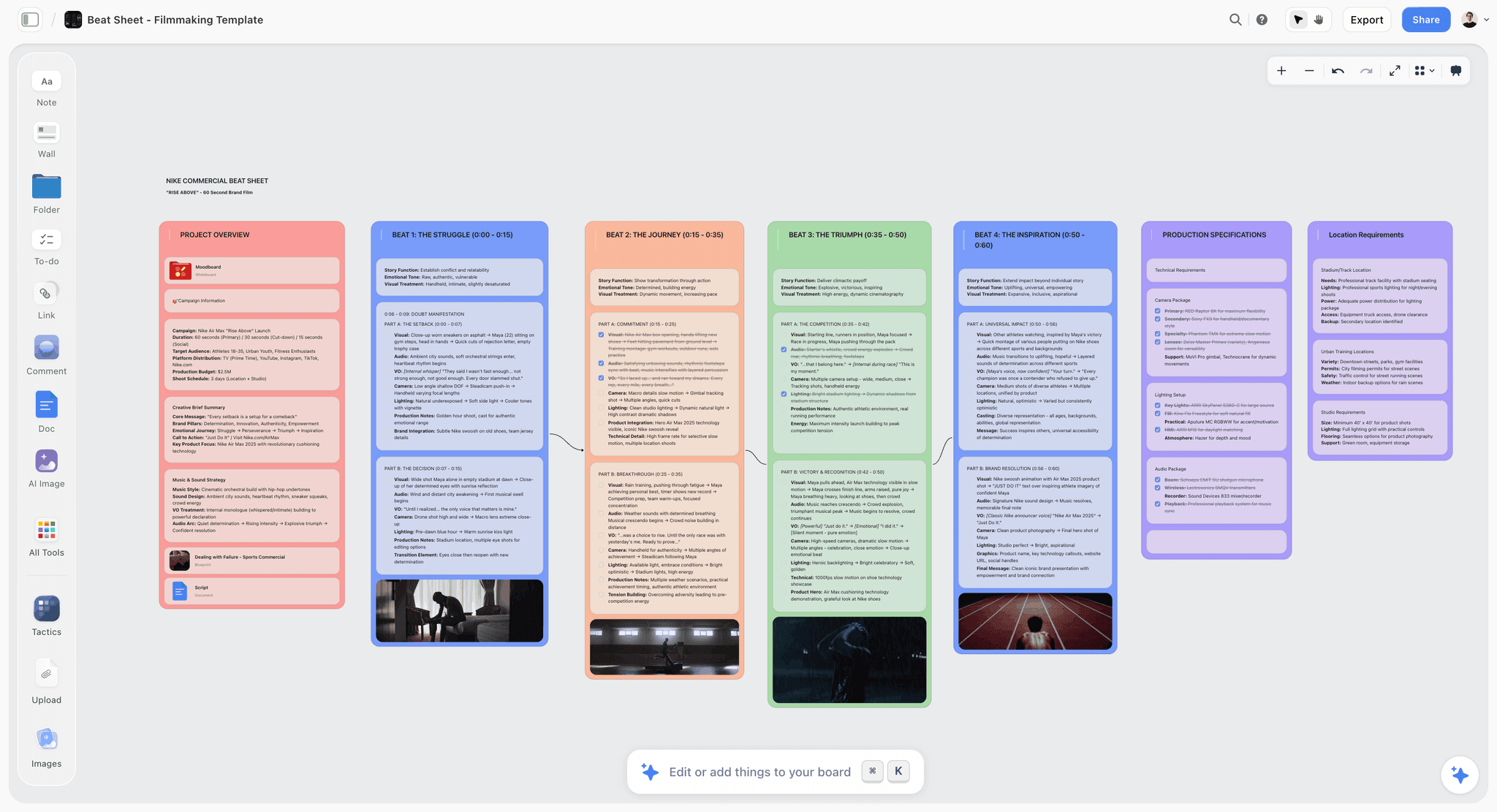
Move the pieces around until things that belong together are near each other. Do not decide in advance what the categories are.
This is the step that does the work, and it only functions if the pieces are genuinely movable. Index cards on a floor work. A canvas works. A numbered list does not, because a list has an order and the order will bias every grouping decision you make.
Groups will form and you will not be able to name them at first. That is correct. Name them once they are stable, and the names will surprise you. What you thought was a book about a marriage turns out to have four clusters about work and one about the marriage, which is information you could not have got any other way.
Some pieces belong to two groups. Duplicate them. Something that recurs across clusters is usually thematic material and often turns out to be what the book is actually about.
Some pieces belong to nothing. Leave them in a holding area. Do not delete them and do not force them. Orphans are either the seed of a group you have not developed, or they belong to a different book, and you cannot tell which yet.
Look at the gaps. When you have five clusters and one has two thin pieces while the others have twelve each, that thin cluster is a part of the book you have not invented. That is the most valuable thing this exercise produces: a specific, actionable list of what is missing, rather than a general sense that the book is not ready.
On a canvas this is genuinely faster than physical cards because you can zoom out to see the whole shape, and because clusters can be moved wholesale once they are formed. Storyflow's AI reads the whole board, so asking which clusters are thin, or what a group of scenes seems to have in common, gives you an answer from your material rather than a generic prompt, which is useful precisely at the moment you cannot name a cluster yourself.
Step 3: Find the Question
Look at the clusters and write, in one sentence, the question the book is asking.
Not the plot. The question. "Can a person who has built their life on being needed survive being unnecessary?" "What does it cost to be the one who tells the truth?"
This is usually visible from the clusters and almost never from the pile. It is the reason grouping precedes outlining: the question emerges from what the material clusters around, and it cannot be decided in advance without producing a thesis rather than a novel.
The question is what tells you which orphans matter and which clusters are load-bearing. Everything downstream gets checked against it.
If you cannot write it yet, that is fine and it means you have more inventing to do. Go back and add material to the thin clusters, then look again.
Step 4: Sequence Last
Only now does order become a sensible question, and it is much easier than it would have been at the start.
Order the clusters first, not the scenes. Five or six clusters have a natural sequence far more readily than sixty scenes do, because the number is small enough to hold in your head and the units are meaningful.
Then order within each cluster. Now you are sequencing eight or ten related things, which is a tractable problem.
Then look at the joins. The places where one cluster hands to the next are where the connective material goes, and now you know exactly what it has to do, which means you are inventing with a purpose rather than filling a template.
Now, and only now, is a structure template useful. Lay a three-act shape or a beat sheet over what you have and see where it disagrees. If your midpoint has nothing in it, that is worth knowing. If the structure says you need a reversal at sixty percent and you have one at forty, that is a decision to make consciously rather than an error to correct automatically.
Templates used this way are diagnostic and valuable. Used generatively, they produce competent, familiar, lifeless books.
| Stage | What you are doing | What it produces | Do not |
|---|---|---|---|
Empty the pile | Externalise everything, unfiltered | 30 to 80 fragments | Filter or order |
Group | Move until things cohere | 4 to 7 named clusters, plus orphans | Decide categories in advance |
Find the question | Read the clusters | One sentence | Impose a theme |
Sequence | Order clusters, then within | A working outline | Sequence before grouping |
Diagnose | Lay a template over it | A list of gaps | Let the template generate |
Step 5: Keep the Material
Do not throw the pile away once the outline exists.
The orphans and the pieces that did not make it are the most useful thing you own during a second draft. When a chapter is not working, the fix is frequently sitting in the holding area: an image you could not place in month one that turns out to be exactly what the scene needed.
Keep the clusters visible alongside the draft. A novel outlined this way can be re-planned when it stops working, because the reasoning behind the sequence is still there. An outline in a document, detached from the material that produced it, can only be obeyed or abandoned.
What Goes Wrong
Starting with a template. Produces connective tissue nobody wants to read and a plan you will abandon by chapter four.
Filtering during the pile stage. You keep only what seems important and lose the hinge.
Naming groups too early. You decide the categories and then sort into them, which reproduces your prior assumptions instead of showing you the book.
Deleting the orphans. They are next draft's material.
Sequencing scene by scene. Sixty units is too many to order. Order the clusters.
Treating a thin cluster as a problem with the method. It is the method working. It found the part of the book you have not written yet.
The Bottom Line
Structure is the last decision, not the first. Empty everything you have onto separate movable pieces, group them without deciding the categories in advance, read the question out of the clusters, and only then find the order.
The gaps between clusters tell you what to invent next, which is a far more useful output than a chapter list you cannot fill. Keep the material afterwards, because the second draft will need the pieces the first one did not use.
FAQ: Planning a Novel Without an Outline
Is this just plotting versus pantsing?
No, it is a third thing. Pantsing discovers by writing prose, which is expensive when it goes wrong. Plotting decides the structure up front, which requires knowing the book already. This is discovery at the planning stage, using cheap fragments rather than chapters, so a wrong turn costs an hour instead of a month.
How many fragments should I have before grouping?
Thirty at minimum, and sixty to eighty is comfortable. Below thirty the clusters will not form clearly and you will end up with two vague groups. If you cannot reach thirty, the honest answer is that the book needs more invention before it needs planning.
What if the clusters do not form?
Usually it means the pieces are too abstract. Fragments like "the theme of loss" do not cluster with anything because they are categories rather than material. Replace them with the specific scenes, images and moments that made you write "loss", and grouping becomes possible.
When should I use a beat sheet or three-act structure?
After sequencing, as a diagnostic. Lay it over what you have and look at where it disagrees with you. Every disagreement is a decision to make deliberately. Using structure to generate material rather than to check it is what produces the familiar, competent novel nobody finishes.
Is Storyflow free for novel planning?
Not during early access. Storyflow is paid-only right now, with Plus at $7.99 per month billed annually, and the Free plan launches before the end of 2026. Anyone a paid member invites to a board joins free. If you want a free option today, physical index cards genuinely work for this method and cost nothing.
Does this work for a series?
Yes, and run it per book first. Grouping fragments across three books at once produces clusters that span volumes and obscure the shape of any single one. Plan book one this way, then look at the orphans, which is frequently where book two is hiding.
Table of Contents
Templates to check out for this topic


Story and writing templates you can use in Storyflow
Start your next script, novel, or world from a ready-made Storyflow board instead of an empty page. The AI reads the whole canvas, so every suggestion is grounded in your story.


See Storyflow in Action
A visual AI workspace where every feature lives inside one canvas. No tab-switching, no context lost.
Build your entire board from a single message
Type what you need in the AI chat at the bottom of your canvas. The AI adds cards, headings, and structure directly onto your board.
Use expert frameworks as AI context
Type @ in the AI chat and choose any Tactic. The AI tailors every response to that framework instead of giving generic advice.
Turn your board into a mind map in seconds
Ask the AI to restructure your canvas as a mindmap. It connects your ideas into a visual hierarchy so you can see how everything relates.
Why Storyflow Exists
Storyflow actually began as a personal tool while working on creative and research projects.
We kept running into the same problem: ideas were scattered everywhere: notes, documents, and whiteboards.
Nothing helped us see how everything connected.
So we started building a workspace designed around how ideas actually grow.
→ Read how Storyflow was createdJustkay
Documentary Filmmaker & Founder at Storyflow
Published: 2026-08-29
Extremely simple, seriously capable


See how easy it is to get started
Watch a real project come together, from a blank board to a finished plan, clicked through step by step.
Start creating with AI and become more productive
Transform your creative workflow with AI-powered tools. Generate ideas, create content, and boost your productivity in minutes instead of hours.