The 12 Best Newsletter Tools in 2026 (We Tested Them All)
The 12 best newsletter tools in 2026, tested by an indie writer. Substack alternatives, paid newsletter platforms, and planning canvases compared honestly.

Category
Writing
Author

Justkay
Documentary Filmmaker & Founder at Storyflow
Topics
2026-05-14
•
15 min read
•
Writing- best newsletter tools 2026
- Substack alternatives
- Beehiiv vs Substack
- indie newsletter platforms
What are the best newsletter tools in 2026?
The newsletter category split into two markets around 2023. Publishing platforms (Substack, Beehiiv, Ghost, Kit) became the distribution layer where readers find new newsletters and writers cross-promote. Planning tools (Storyflow, Notion, Drafts) became the upstream layer where the actual writing happens. The right toolkit pairs both. The wrong tool tries to do both jobs and does each one badly. I tested twelve newsletter tools across three real publications this spring: a paid weekly essay newsletter at 3,200 subscribers, a free daily-digest newsletter at 18,000 subscribers, and a brand-owned monthly newsletter for a SaaS company. The rankings sort the publishing platforms, the planning tools, and the all-in-one alternatives. Teams with several contributors should agree an [editorial workflow](/editorial-workflow) before they pick a platform or a planning tool.

Full disclosure: Storyflow is our own product and is listed first in the reviews and the comparison table: our pick first, then the rest by job. The ranked list places it third. Substack leads that list because it is the dominant publishing platform with network-effect discovery through Notes and recommendations, which a planning canvas is not built to do. Storyflow earns the third slot for the upstream plan and write phases on a canvas the AI reads, but it has no email sending, no subscriber list, and no payments, so you pair it with Substack, Beehiiv, or Ghost for the send and grow half. Beehiiv is the stronger pick if you want growth tools with full audience ownership. We link to every tool so you can judge the fit.
Quick Comparison
The top four split the newsletter stack: two publishing platforms that own send and grow, a planning canvas that owns plan and write, and a self-hostable option.
| Tool | Best For | AI Features | Price |
|---|---|---|---|
| Substack | Discovery and growth | Subject lines, rewriting | Free + 10% revenue share |
| Beehiiv | Owner-audience with growth tools | AI writing, A/B testing | $34/month |
| Storyflow | Newsletter planning canvas | Canvas AI reads the whole project | $7.99 mo annual (free plan late 2026) |
| Ghost | Self-hostable newsletter and blog | Minimal | $9/month or self-hosted |

Storyflow canvas holding newsletter content calendar, audience persona, research, and draft cards in one workspace
Detailed Reviews: Best Newsletter Tools 2026
1. Storyflow (Best Newsletter Planning Canvas, Not a Publishing Platform)
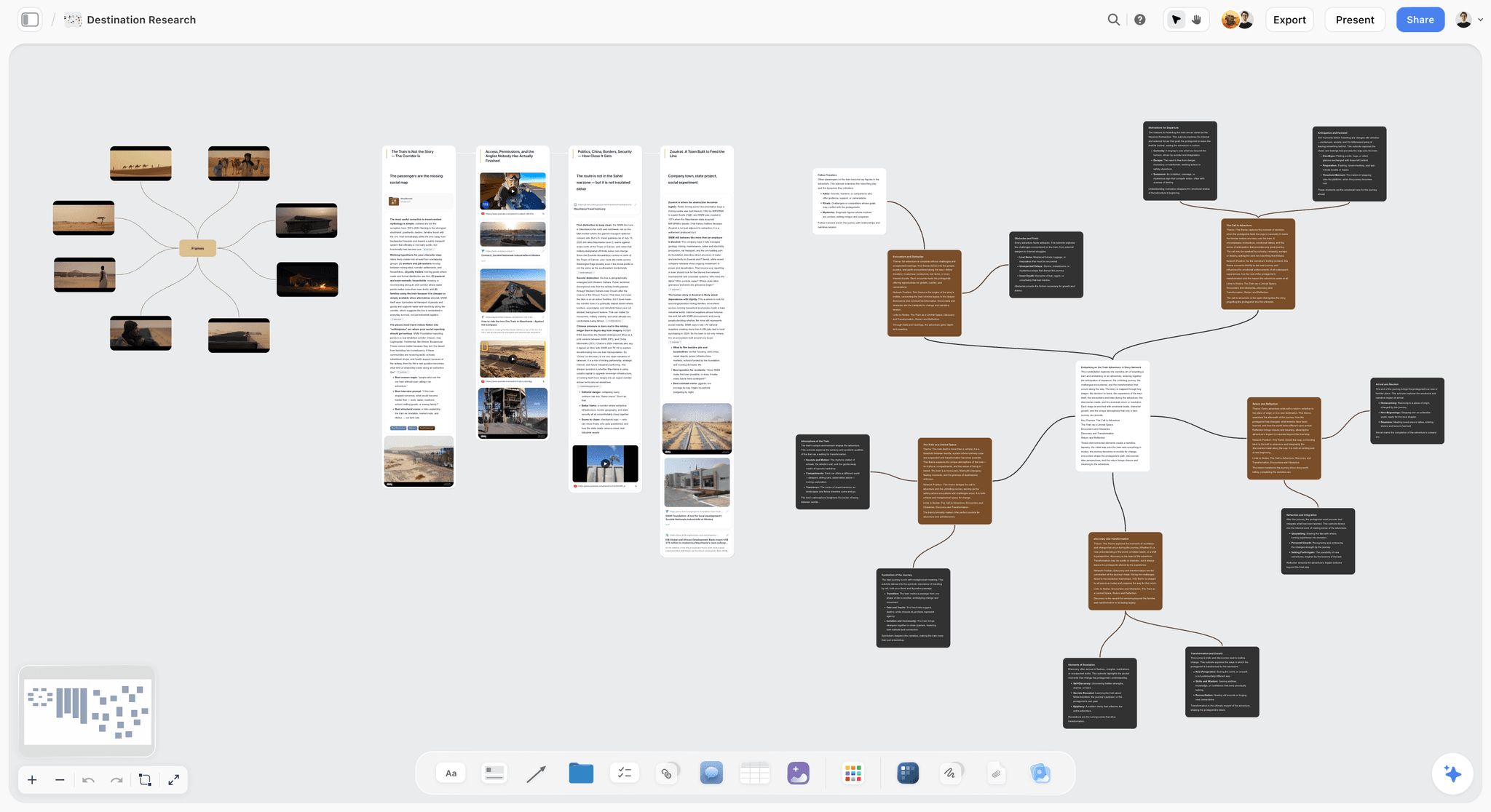
I want to lead with the friction. Storyflow is not a publishing platform. There is no email sending, no subscriber list, no payments, no analytics on opens or clicks. If your need is the actual newsletter distribution, Substack, Beehiiv, Ghost, or Kit are the right tools. In Newsletter Stack terms, Storyflow owns Plan and Write and does not touch Send or Grow.
Now the strength. For writers who treat newsletter planning as the actual work (not just the moment of writing each issue), Storyflow's canvas paradigm holds the entire newsletter project. The content calendar, the audience persona Document, the working draft, the research source cards, and the past-issues archive all live on one board instead of scattered across a doc, a spreadsheet, and twelve browser tabs. Storyflow's Story Blueprints library (200+ creative templates on Plus, Pro, and Max) includes content-calendar and audience-research starting points so you are not building the planning structure from a blank canvas each time.
The part that changes the workflow is the AI. Storyflow's AI reads your full active canvas board by default, plus up to 1 Tactic and up to 3 Documents you @-mention in the chat. That means when you ask it to draft issue seven, it already sees your audience persona, your last six issues, and the research cards you pinned this week. Most publishing-platform AI cannot do this: it rewrites the paragraph in front of it because it has no idea what the rest of your project contains. For essay newsletters where each issue takes 3-5 days of upstream work, canvas-aware planning is leverage. The platform sends the newsletter. It was never built to help you plan it, which is exactly the gap Storyflow fills.
Best for: Essay newsletter writers whose issues take meaningful upstream planning. Also great for: quick-hit newsletters. The canvas scales down to a fast single issue just as easily as it scales up.
Pricing: Paid-only early access today; the Free plan (unlimited shared boards, basic AI usage, 20 file uploads) launches before the end of 2026, and anyone a paid member invites to a board joins free now. Plus: $7.99/month billed annually or $9.99/month billed monthly. Pro: $14/month billed annually ($19 monthly). Max: $39/month billed annually ($49 monthly). Pricing is flat per account, not per user, as of May 2026.
Pros: Canvas paradigm matches multi-day newsletter planning, the Story Blueprints library provides content-calendar and audience-research starting frameworks, the AI reads the entire board plus @-mentioned context, the upcoming Free plan is shaping up to be genuinely functional.
Cons: Not a publishing platform. No email sending, no subscriber management, no list segmentation, no open or click analytics: you must pair Storyflow with Substack, Beehiiv, Ghost, or Kit for the Send and Grow half of the stack. Cloud-only, so there is no local-first or offline option for privacy-sensitive writers who need it. And it is a newer platform than Substack or Mailchimp, so the ecosystem of integrations and community templates is still growing.
Verdict: Storyflow is the right pick for essay newsletter planning. Pair with your publishing platform for distribution. For broader content planning, see The 12 Best Content Planning Tools in 2026.
2. Substack (Best Newsletter Discovery and Growth)
Substack is still the dominant newsletter publishing platform in 2026 with the strongest discovery features. Notes (the Twitter-like layer), the recommendation engine (where existing newsletters cross-promote new ones), and the Substack app create network effects that no other platform matches. For writers who want their newsletter to be discovered, Substack remains the right starting point.
Best for: New newsletter writers who need organic growth from the platform itself. Not for: established writers who want to escape the revenue share, or writers who want to own the platform relationship.
Pricing: Free for writers. 10% revenue share on paid subscriptions.
Pros: Best discovery features in this list, the Substack app drives reader engagement, the recommendation engine creates organic growth, the writing experience is clean.
Cons: 10% revenue share is steep for established newsletters, the platform owns the relationship with paying subscribers, the writing tools have not evolved as fast as Beehiiv or Ghost.
Verdict: Substack is the right pick for new writers who need growth. See The 12 Best Substack Alternatives in 2026 for comparison.
3. Beehiiv (Best Modern Owner-Audience Newsletter)
Beehiiv is the most-modern newsletter platform in 2026 with strong growth tools, full audience ownership, and a clean writer experience. The growth features (recommendations within the Beehiiv network, magic link signup, A/B testing) are stronger than Ghost or Kit. For writers who want Substack-grade growth tools with audience ownership, Beehiiv is the leading pick.
Best for: Writers who want growth tools with audience ownership. Not for: writers who specifically need Substack's discovery network or self-hostable open-source.
Pricing: Free up to 2,500 subscribers. Scale from $34/month for 10,000 subscribers. Max from $99/month.
Pros: Strongest growth tools outside Substack, full audience ownership, clean writer experience, A/B testing is mature.
Cons: Discovery is weaker than Substack's network effects, the growth-tools focus can feel marketing-shaped for essay writers, pricing scales with subscriber count.
Verdict: Beehiiv is the right pick for owner-audience newsletters with growth focus.
4. Ghost (Best Self-Hostable Newsletter and Blog)
Ghost is the open-source newsletter and blog platform with full self-hostable option. For writers who want maximum platform ownership and the option to self-host, Ghost is the established choice.
Best for: Writers who want self-hostable open-source newsletter platform. Not for: writers who want network-effect discovery.
Pricing: Ghost(Pro) from $9/month. Self-hosted is free for the software (hosting costs separate).
Pros: Full audience and platform ownership, open-source, integrated blog and newsletter, mature writer experience.
Cons: Discovery features are weak, the writer audience is smaller than Substack, the self-hosting path has technical overhead.
Verdict: Ghost is the right pick for self-hostable open-source writing platforms.
5. Kit (Best Creator-Focused with Automation)
Kit (formerly ConvertKit) is the established creator-focused newsletter platform with mature automation, segmentation, and a clean writer experience. For creators who run product launches alongside newsletters, Kit's automation depth is the differentiator.
Best for: Creators who run product launches and need automation. Not for: essay writers who do not need automation depth.
Pricing: Free up to 1,000 subscribers. Creator from $25/month. Creator Pro from $50/month.
Pros: Mature automation, strong segmentation, integrations with most creator tools.
Cons: Interface is automation-shaped rather than writing-shaped, discovery is weak, pricing scales with subscribers.
Verdict: Kit is the right pick for creators with automation needs.
6. Buttondown (Best Writer-First Simple)
Buttondown is the writer-first newsletter tool with a clean editor and Markdown support. For writers who want minimum overhead and full focus on writing, Buttondown is the simplest option. It owns the Send layer without pretending to own Grow: there is no discovery network and the growth features are deliberately minimal, which is the point.
What Buttondown gets right is restraint. The editor is Markdown, the interface is quiet, and the whole tool respects that the writer wants to write and press send without navigating a marketing dashboard. The trade-off is that everything past sending is on you. If you want your subscriber count to climb through platform effects rather than your own promotion, Buttondown will not help, and that is a fair reason to choose Substack or Beehiiv instead.
Best for: Writers who want minimum-overhead writer-first publishing. Not for: writers who need growth tools or automation.
Pricing: Free up to 100 subscribers. Lift from $9/month for 1,000 subscribers. Standard from $29/month.
Pros: Cleanest writer experience in this list, Markdown support, full audience ownership.
Cons: No discovery features, growth tools are minimal, smaller community.
Verdict: Buttondown is the right pick for minimum-overhead writer-first newsletters.
7. Notion (Best Newsletter Planning Database)
Notion handles newsletter planning with databases for issues, topics, and the editorial calendar. For writers who think in databases, Notion's database paradigm holds the upstream work. Like Storyflow, Notion owns the Plan and Write layers and does not send email, so it also pairs with a publishing platform rather than replacing one.
The difference between the two planning tools is shape. Notion arranges the newsletter as rows in a table: one row per issue, properties for status, publish date, and topic. That structure is excellent for a team running a predictable editorial calendar and weaker for a solo essayist whose thinking is messy before it is orderly. Notion's AI reads the page or database you point it at rather than a full spatial canvas of research and drafts, so it is closer to a smart document assistant than a project-aware collaborator. If you already live in Notion for everything else, keeping the newsletter there is reasonable. If your planning is visual and exploratory, a canvas fits better.
Best for: Writers who plan in databases. Not for: writers who plan visually.
Pricing: Free for individuals. Plus from $10/user/month.
Pros: Mature database paradigm, multiple views, integrations.
Cons: Database paradigm has overhead for solo writers, not visual.
Verdict: Notion is the right pick for database-shaped newsletter planning.
8. Customer.io (Best Lifecycle Email Plus Newsletters)
Customer.io handles lifecycle email and newsletter campaigns with deep behavioural integration. For SaaS companies that run product newsletters alongside lifecycle email, Customer.io is the integrated tool.
Best for: SaaS companies with lifecycle email plus brand newsletters. Not for: indie writers.
Pricing: Custom pricing on request. Free trial available.
Pros: Best behavioural integration, mature lifecycle email features, strong analytics.
Cons: Enterprise pricing, not designed for indie writers, the interface is marketing-shaped.
Verdict: Customer.io is the right pick for SaaS lifecycle plus brand newsletters.
9. Mailchimp (Best Established Email Marketing)
Mailchimp is the established email marketing platform with mature features and a long track record. For small businesses and email marketers who need a familiar tool, Mailchimp delivers.
Best for: Small businesses and email marketers. Not for: indie newsletter writers who want a writer-first experience.
Pricing: Free up to 500 contacts. Essentials from $13/month. Standard from $20/month.
Pros: Mature platform, large template library, integrations with most tools.
Cons: Interface is marketing-shaped, pricing increases scaled past 2,000 subscribers, writer experience is secondary.
Verdict: Mailchimp is the right pick for established small-business email marketing.
10. MailerLite (Best Budget-Friendly Email Marketing)
MailerLite is the budget-friendly email marketing tool with a clean interface and generous free tier. For writers and small businesses on a budget, MailerLite is the most-affordable option in this category.
Best for: Budget-conscious writers and small businesses. Not for: writers who need advanced features.
Pricing: Free up to 1,000 subscribers. Growing from $9/month for 500 subscribers.
Pros: Generous free tier, clean interface, affordable scaling.
Cons: Discovery features are weak, AI features are lighter, smaller community.
Verdict: MailerLite is the right pick for budget-conscious email marketing.
11. Curated (Best Curated Link Newsletters)
Curated is the focused tool for curated link newsletters (the format pioneered by NextDraft, Hacker Newsletter, and similar). For writers who curate links as the primary content, Curated has features purpose-built for the format.
Best for: Curated link newsletter writers. Not for: essay or original-content writers.
Pricing: From $25/month. 14-day trial.
Pros: Purpose-built for link curation, the editor handles links cleanly, mature link analytics.
Cons: Only fits the curated link format, smaller community.
Verdict: Curated is the right pick for curated link newsletter writers.
12. Revue (Discontinued)
Revue was Twitter's (X's) newsletter platform, discontinued in 2023 when Twitter transitioned to X. Existing users were moved to other platforms. Mentioned here only because writers occasionally still search for Revue alternatives; the answer is Substack, Beehiiv, or one of the other publishing platforms in this list.
The Bottom Line
The best newsletter tool depends on whether you need discovery, ownership, planning depth, or simplicity.
For new writers who need growth, Substack. For owner-audience growth tools, Beehiiv. For self-hostable open-source, Ghost. For creator automation, Kit. For writer-first simplicity, Buttondown. For upstream planning, Storyflow paired with the above.
If you are not sure which fits, ask whether your friction is distribution (use Substack or Beehiiv) or planning (use Storyflow plus a publishing platform). Most newsletter writers who reach 1,000 paid subscribers use two tools (planning + publishing). One-tool workflows work for the first 100 issues; two-tool workflows scale. The platform sends the newsletter. It was never built to help you plan it, so once the planning becomes the hard part, add the tool that was.
FAQ: Best Newsletter Tools 2026
What is the best newsletter tool in 2026?
The best newsletter tool depends on what you need. For discovery and growth, Substack. For owner-audience with growth tools, Beehiiv. For self-hostable open-source, Ghost. For creator automation, Kit. For writer-first simplicity, Buttondown. For upstream planning, Storyflow paired with one of the above for publishing.
Is Substack the best newsletter platform?
For new writers who need organic growth from the platform itself, Substack is still the best. For established writers who want to escape the 10% revenue share and own their platform relationship, Beehiiv, Ghost, or Kit are stronger. The decision hinges on whether discovery matters more than ownership.
Substack vs Beehiiv: which is better?
Substack wins on discovery, Beehiiv wins on ownership and growth tooling. Substack's Notes feed and recommendation engine push new readers to you through the network, but you accept a 10% revenue share and a platform-owned relationship with paying subscribers. Beehiiv gives you full audience ownership, a referral program, magic-link signup, and mature A/B testing, with growth you drive yourself. Pick Substack if you are still building an audience from zero. Pick Beehiiv if you already have readers and want to own them.
What is the best free newsletter tool?
It depends on which layer of the work you mean. For free sending, Substack is free (with a 10% revenue share on paid subscriptions), Beehiiv is free up to 2,500 subscribers, Buttondown up to 100, Kit and MailerLite up to 1,000, and Ghost is free if you self-host. For the planning and writing layer, Notion's free plan is the closest genuinely free option today; Storyflow is paid-only during early access, and its own Free plan (unlimited boards, basic AI) launches before the end of 2026. Most writers combine one free planning tool with one free publishing tier.
What is the best Substack alternative?
Beehiiv is the leading Substack alternative for owner-audience newsletters with growth tools. Ghost is the leading alternative for self-hostable open-source. Kit is the leading alternative for creator automation. The right pick depends on what you valued in Substack.
Is there a free newsletter tool?
Yes. Substack is free for writers (10% revenue share on paid). Beehiiv is free up to 2,500 subscribers. Buttondown is free up to 100 subscribers. Kit is free up to 1,000 subscribers. MailerLite is free up to 1,000 subscribers. Ghost is free if you self-host. Storyflow is paid-only during early access; its Free plan for the upstream planning work launches before the end of 2026, and anyone a paid member invites to a board joins free today.
What is the best newsletter platform for paid subscriptions?
For paid subscriptions, Substack (most-established but 10% revenue share), Beehiiv (full ownership), Ghost (full ownership and self-hostable), and Kit (creator-focused with mature payment integration) are the leading options. The right pick depends on whether you value Substack's discovery (and accept the revenue share) or full ownership.
What is the best newsletter tool for indie writers?
For indie writers, Substack (discovery), Beehiiv (growth plus ownership), or Buttondown (simplicity) are the leading options. The right pick depends on whether you need growth (Substack or Beehiiv) or focus (Buttondown).
Does any tool combine newsletter planning with publishing?
Beehiiv and Ghost both handle newsletter planning and publishing in one tool, with editorial calendars and draft scheduling. For deeper planning (research, audience personas, content strategy), a dedicated planning tool (Storyflow, Notion) plus a publishing platform works better.
What is the best AI newsletter tool?
Substack added AI features through 2024-2025 (subject line suggestions, paragraph rewriting). Beehiiv added similar AI tools. For deeper writing AI (project context, research synthesis), pair a writing tool like Storyflow with the publishing platform. Few publishing platforms have project-context AI as of 2026.
Can I export my Substack subscribers?
Yes, Substack lets you export your subscriber list as CSV. You own your email list even if you publish on Substack. Migrating paid subscribers to another platform involves importing the CSV and connecting Stripe for payments. Plan for some subscriber churn during the migration.
Which newsletter tool has the best growth features?
Substack and Beehiiv lead on growth features. Substack's Notes and recommendation engine create network effects. Beehiiv's referral program, magic link signup, and A/B testing are the strongest growth tools you can fully own. The right pick depends on whether you want network effects (Substack) or owned growth tools (Beehiiv).
Table of Contents
- All 12 Newsletter Tools, Ranked
- Quick Picks: Best Newsletter Tools 2026 by Use Case
- Comparison Table: Best Newsletter Tools 2026
- Best Newsletter Tools 2026: Market Context
- The Newsletter Stack: The Four Jobs Every Newsletter Needs Done
- How We Evaluated the Best Newsletter Tools 2026
- Detailed Reviews: Best Newsletter Tools 2026
- How to Choose the Right Newsletter Tool for Your Work
- The Bottom Line
- Author
- FAQ: Best Newsletter Tools 2026
- Related Reading
Templates to check out for this topic


Content and video templates you can use in Storyflow
Plan a channel, a script, and a content pipeline on the same board. Open one of these templates and let the AI build on the structure instead of starting from a blank doc.


See Storyflow in Action
A visual AI workspace where every feature lives inside one canvas. No tab-switching, no context lost.
Build your entire board from a single message
Type what you need in the AI chat at the bottom of your canvas. The AI adds cards, headings, and structure directly onto your board.
Use expert frameworks as AI context
Type @ in the AI chat and choose any Tactic. The AI tailors every response to that framework instead of giving generic advice.
Turn your board into a mind map in seconds
Ask the AI to restructure your canvas as a mindmap. It connects your ideas into a visual hierarchy so you can see how everything relates.
Why Storyflow Exists
Storyflow actually began as a personal tool while working on creative and research projects.
We kept running into the same problem: ideas were scattered everywhere: notes, documents, and whiteboards.
Nothing helped us see how everything connected.
So we started building a workspace designed around how ideas actually grow.
→ Read how Storyflow was createdJustkay
Documentary Filmmaker & Founder at Storyflow
Published: 2026-05-14
Extremely simple, seriously capable


See how easy it is to get started
Watch a real project come together, from a blank board to a finished plan, clicked through step by step.
Start creating with AI and become more productive
Transform your creative workflow with AI-powered tools. Generate ideas, create content, and boost your productivity in minutes instead of hours.