The 10 Best Enterprise Whiteboard Tools in 2026 (Ranked by Security Review, Not Features)
Procurement does not buy features. It buys evidence. Three gates decide the enterprise whiteboard shortlist, and most tools fail at the first one before anybody opens the canvas.

Category
Tools & Software
Author

Sara de Klein
Head of Product at Storyflow
Topics
2026-08-13
•
20 min read
•
Tools & SoftwareTable of Contents
- Key Takeaways
- The Procurement Gate
- At a Glance: The 10 Tools Compared
- How I Ranked These
- Quick Picks by Job Type
- 1. Miro
- 2. Mural
- 3. Lucid
- 4. FigJam
- 5. Microsoft Whiteboard
- 6. Conceptboard
- 7. Bluescape
- 8. Canva Whiteboards
- 9. Excalidraw (Self-Hosted)
- 10. Storyflow
- What to Actually Pay For
- Tools to Avoid for This Job
- What No Tool on This List Does
- The Bottom Line
- FAQ: Enterprise Whiteboard Tools
- Related Reading
Templates to check out for this topic


- enterprise whiteboard tools
- SOC 2 whiteboard software
- ISO 27001 collaboration tools
- SAML SSO whiteboard
- SCIM provisioning whiteboard
- data residency whiteboard
- Miro vs Mural enterprise
- FigJam enterprise security
What are the best enterprise whiteboard tools in 2026?
If you are buying a whiteboard for an organisation that has a security review, the shortlist is short and the canvas does not decide it. Miro ranks first on its published compliance posture and the depth of its admin surface: SSO, SCIM, audit logging, residency options and legal hold. Mural, Lucid and FigJam clear the same gates and differ in what you get once through. Microsoft Whiteboard wins outright for teams that cannot add a vendor, because it lives in a tenant you already approved. Storyflow, our own product, is ranked last and does not belong on an enterprise shortlist today.

Full disclosure: Storyflow is our product and it is ranked tenth out of ten here, which is where it honestly belongs for this reader. Enterprise whiteboard buying is decided by three gates: Evidence (a SOC 2 Type II report, ISO 27001 certificate, DPA and subprocessor list), Identity (SAML SSO and SCIM provisioning) and Custody (audit logs, retention, data residency and legal hold). Storyflow clears none of them today. There is no published SOC 2 Type II report and no ISO 27001 certificate, no SAML SSO and no SCIM, so deprovisioning is manual. There is no admin audit log, no data residency choice, no configurable retention and no legal hold or eDiscovery export. Roles and permissions exist only on the Max plan at $39 per month billed annually through Team Workspace, and there is no role model below that tier. Miro, Mural, Lucid, FigJam and Microsoft Whiteboard genuinely win this category and we rank them above ourselves for that reason. Storyflow is a strong creative planning canvas for individuals and small teams with no procurement process, which is a different article. Compliance claims about every other vendor here describe what that vendor publishes or advertises, not something we have audited: request the current report from the vendor's trust centre and read its scope.
Quick Comparison
Ranked by how far each tool gets through the three procurement gates: Evidence, Identity and Custody. Only after all three are cleared does the canvas itself matter.
| Tool | Best For | AI Features | Price |
|---|---|---|---|
| Miro | The default enterprise canvas with the deepest admin surface | AI sticky clustering, summaries and diagram generation on paid tiers | $16 mo Business, Enterprise quoted |
| Mural | Facilitated workshops at enterprise scale | AI clustering and summarisation inside facilitated sessions | $18 mo Business, Enterprise quoted |
| Lucid | Whiteboard plus formal diagramming in one contract | AI diagram generation and Lucidspark idea grouping | $9 user mo team, Enterprise quoted |
| FigJam | Design-led orgs already approved on Figma | AI sorting, summarising and template generation on the canvas | $5 editor mo, Org and Enterprise per full seat |
Key Takeaways
- Security review evaluates evidence, not canvases, and most whiteboard tools are eliminated before anyone opens the product.
- Three gates decide this category: Evidence (published reports and a DPA), Identity (SAML SSO and SCIM), and Custody (audit logs, residency, retention and legal hold).
- SSO is priced into an enterprise tier almost everywhere. Budget for the tier, not the seat.
- SCIM matters more than SSO. SSO decides who logs in today. SCIM decides whether a leaver's access disappears when HR closes the account.
- Microsoft Whiteboard is the strongest procurement answer here and the weakest canvas, and plenty of enterprises should take that trade.
- Storyflow has no published SOC 2 Type II or ISO 27001, no SAML SSO, no SCIM, no audit log and no residency choice. Roles exist only on Max.
- A certification badge is not a report. Ask for the current one, check Type I against Type II, and read the scope section.
Planning before procurement gets involved
If you are a small team without a security review, Storyflow gives you a canvas whose AI reads your full active board so you can question the whole plan at once, not one card at a time. If you have a procurement gate to pass, buy one of the nine tools ranked above this and come back to us later. Paid-only during early access; the Free plan lands before the end of 2026.

The Procurement Gate
There is a version of this article that compares infinite canvases, sticky note limits and AI summarisers. It is useless to you, because in an organisation of any size the decision is made before anyone sees the product.
What happens instead is this. A team finds a whiteboard, uses it for a quarter, then asks for a company account. The request reaches IT or security and hits a gate with three doors, in a fixed order.
Gate one: Evidence. Can you prove the vendor is safe to trust with company work? The artifacts are a SOC 2 Type II report, an ISO 27001 certificate with its statement of applicability, a recent penetration test summary, a signed DPA and a current subprocessor list. No evidence, no evaluation. Most whiteboard tools die here, and they die quietly, because nobody tells the requesting team that a missing PDF was the reason.
Gate two: Identity. Can you control who gets in and, more importantly, who gets out? SAML SSO is the entry fee. SCIM provisioning is what matters, because it makes deprovisioning automatic. A tool with SSO and no SCIM leaves an orphaned account behind every leaver, and orphaned accounts are what turn up as audit findings.
Gate three: Custody. Six months from now, can you answer a question about the data? Who opened this board. Who exported it. Where is it stored. How long is it kept. Can you place a hold on it and produce it. Custody separates a tool with an admin panel from a tool an enterprise can defend.
Procurement does not buy features. It buys evidence. That is the ranking axis below: how far each tool gets through the three gates, then, among those clearing all three, how much whiteboard you get.
One caution. Compliance status changes constantly, so everything below describes what a vendor publishes or advertises, not what I have audited. For any tool you seriously consider, request the current report under NDA and read the scope section rather than the cover page.
At a Glance: The 10 Tools Compared
| Tool | Gate it clears | Identity controls | Custody controls | Tier required |
|---|---|---|---|---|
Miro | All three | SAML SSO, SCIM | Audit log, residency options, legal hold add-on | Enterprise |
Mural | All three | SAML SSO, SCIM | Audit log, admin export, public sector option | Enterprise |
Lucid | All three | SAML SSO, SCIM | Audit log, residency advertised | Enterprise |
FigJam | All three | SAML SSO, SCIM | Activity logs, EU residency advertised | Figma Organization or Enterprise |
Microsoft Whiteboard | All three, inherited | Entra ID SSO and provisioning | Purview retention, eDiscovery, legal hold | Microsoft 365 |
Conceptboard | Evidence and Identity | SAML SSO | EU hosting, on-premises option | Enterprise or self-hosted |
Bluescape | Evidence and Identity | SAML SSO | Private cloud and on-premises deployment | Quoted |
Canva Whiteboards | Evidence and Identity | SAML SSO, SCIM | Admin controls, limited board-level logging | Canva Enterprise |
Excalidraw self-hosted | Custody only, by ownership | Whatever you build | Whatever you build | Self-hosted |
Storyflow | None | None | None | Not applicable |
How I Ranked These
I come from documentary, where the equivalent gate is broadcaster delivery: nobody watches the film first, they check the E&O insurance, the releases, the cue sheet and the tech spec, and a missing item stops transmission however good the programme is. Since then I have spent two years answering vendor security questionnaires for our own product, which teaches you fast which questions have no good answer yet.
Five criteria, in order.
1. Is there a trust centre you can reach without a sales call? The test: search the vendor name plus "trust center" and see whether you can request a SOC 2 report yourself under NDA.
2. Is SAML SSO available, and on which plan? The test: find the row on the pricing page. If SSO only appears under "contact us", the real price is an enterprise contract, not the per-seat number.
3. Does deprovisioning actually happen? The test: SCIM. Disable a user in your identity provider and check whether board access dies with the account, or whether the account keeps working because it was created by email invitation.
4. Can you answer a question about a board six months later? The test: ask whether an admin can produce a record of who viewed, edited and exported a board, how long it is retained, and whether you can place a hold on it.
5. Where does the data sit, and who else touches it? The test: a signed DPA, a current subprocessor list, and a residency choice you select at contract time. If a regulation names a jurisdiction, this outranks everything above it.
Pricing is as of August 2026 and changes frequently. Verify with each vendor.
Quick Picks by Job Type
- Best overall for enterprise procurement: Miro. Deepest published posture and the most complete admin surface.
- Best for facilitated workshops at scale: Mural. Same gates cleared, better facilitator controls.
- Best when the diagram is the compliance artifact: Lucid. Whiteboard and formal diagramming in one contract.
- Best for design-led organisations: FigJam. If Figma is approved, FigJam is a plan decision, not a vendor decision.
- Best when you cannot add a vendor: Microsoft Whiteboard. No new procurement, because the tenant already passed.
- Best for EU data residency: Conceptboard. German hosting and an on-premises path.
- Best for high-assurance environments: Bluescape. Private cloud and on-premises deployments.
- Best self-hosted escape hatch: Excalidraw. You own the risk, which some security teams prefer.
1. Miro
The verdict. The most complete answer to a security questionnaire in this category, which is why it is the default.
Best for. Large organisations needing one canvas across many departments, defensible to security, legal and privacy.
Pricing. Free tier available. Starter around $8 per member per month billed annually, Business around $16, Enterprise quoted and typically subject to a member minimum. Enterprise Guard capabilities are commonly an add-on. As of August 2026.
Why it ranks here. Miro publishes the widest set of compliance artifacts here. Its trust centre lists SOC 2 Type II reporting and ISO certifications across the 27001 family, and the request process is self-serve under NDA. Gate one cleared without a sales call is the difference between a two week review and a two month one.
Gate two is clean: SAML SSO across the major identity providers, SCIM provisioning and deprovisioning, and roles separating company admins, team admins and guests. Test external guest access during the pilot, because whiteboards leak through link sharing far more often than through account compromise, and Miro lets you restrict sharing scope centrally.
Gate three is where Miro separates from the field: audit logging, residency selected at contract time, and Enterprise Guard covering eDiscovery, legal hold and DLP integration. The counterweight is cost. Enterprise pricing with member minimums is wasted below a certain size, and a forty person company usually does better on Business plus a strict sharing policy.
Strengths.
- Broadest published compliance set with a self-serve trust centre.
- SAML SSO plus SCIM, with granular guest and external sharing controls.
- eDiscovery, legal hold and DLP integration at the enterprise tier.
- Residency selectable at contract time across multiple regions.
Limitations.
- The controls that matter sit behind Enterprise pricing and member minimums.
- Enterprise Guard is commonly an add-on, so the quoted number moves.
- More surface to configure means more ways to misconfigure it.
- Very large boards with heavy embeds slow down noticeably.
The trade off. You pay for the paperwork and the admin console as much as the canvas, and at enterprise scale that is correct.
2. Mural
The verdict. The same gates cleared as Miro, with a better story for facilitated sessions.
Best for. Organisations where the whiteboard is mostly used for structured workshops with a facilitator present.
Pricing. Free tier available. Team plans around $12 per member per month billed annually, Business around $18, Enterprise quoted. As of August 2026.
Why it ranks here. Mural publishes SOC 2 Type II and ISO 27001 and supports SAML SSO and SCIM at enterprise tier, clearing gates one and two. It also advertises a separately managed offering for public sector customers. If you need a named authorization such as FedRAMP, get the current status in writing, because these statuses move and the marketing page is the last thing updated.
Gate three is solid rather than exceptional. Admin audit visibility and export controls exist, but eDiscovery and legal hold depth is behind Miro. If legal drives your requirements, that is the deciding difference between these two.
Where Mural wins on product is facilitation: timers, private mode so participants cannot see each other's contributions before reveal, dot voting, and controls that move everyone's viewport at once. With twenty people from four departments in a session, those are the difference between a workshop and a mess. Miro has facilitation features, but Mural's were designed by people who run workshops.
Strengths.
- Publishes SOC 2 Type II and ISO 27001, with SSO and SCIM at enterprise tier.
- Best facilitation controls here: timers, private mode, voting, viewport following.
- Public sector offering for organisations needing a separately managed environment.
- Cleaner canvas than Miro at comparable capability.
Limitations.
- Custody layer is thinner, particularly around legal hold and eDiscovery.
- Smaller integration and template ecosystem.
- Enterprise controls again require the enterprise tier.
The trade off. Choose Mural over Miro when workshops are the primary use and legal hold is not a named requirement.
3. Lucid
The verdict. One contract covering both the loose whiteboard and the formal diagram, which is a real procurement advantage.
Best for. Organisations where architecture diagrams, process maps and whiteboards all need somewhere defensible to live.
Pricing. Free tier available. Individual plans from around $8 per month, team plans around $9 per user per month billed annually, Enterprise quoted. As of August 2026.
Why it ranks here. Lucid publishes SOC 2 Type II and ISO 27001 and offers SAML SSO, SCIM and admin audit capability at enterprise tier, clearing all three gates. It also advertises residency options for enterprise customers, worth raising explicitly if you have a European requirement.
The strategic reason it ranks here is scope. Lucidspark is the whiteboard, Lucidchart the diagramming tool, and they are sold together. In many enterprises those arrive as two procurement requests from two teams, meaning two reviews, two DPAs and two renewal cycles. Collapsing that into one vendor saves review time, the hidden cost nobody puts in a business case.
Lucidchart also produces diagrams that survive being an official artifact: versioned, precise and legible as a PDF. A sticky note canvas is not that, and teams that force it end up screenshotting a whiteboard into an audit document. Where Lucid loses is the free-form experience, which is stiffer than Miro or Mural.
Strengths.
- Whiteboard and formal diagramming under one contract and one security review.
- Publishes SOC 2 Type II and ISO 27001, with SSO, SCIM and audit at enterprise tier.
- Diagrams precise enough to be compliance artifacts rather than thinking aids.
- Strong Atlassian, Google Workspace and Microsoft 365 integrations.
Limitations.
- Lucidspark's canvas is less fluid than Miro or Mural.
- Two products means two learning curves for people who need one.
- Advanced diagramming pushes non-technical participants out.
The trade off. Buy Lucid when the diagram matters as much as the brainstorm, and accept a stiffer whiteboard for it.
4. FigJam
The verdict. If Figma is already approved, FigJam is a plan change rather than a new vendor, and that shortcut beats any feature.
Best for. Design-led organisations and product teams already standardised on Figma.
Pricing. FigJam-only editor seats start around $5 per editor per month billed annually. Organization and Enterprise plans are priced per full seat, commonly in the $45 to $75 range. Figma changed its seat model in 2025, so verify the current structure. As of August 2026.
Why it ranks here. Figma publishes SOC 2 Type II and ISO 27001, supports SAML SSO on Organization plans, and adds SCIM and activity log access on Enterprise. It also advertises EU data residency for enterprise customers, which was a genuine gap until recently.
The procurement argument is the interesting one. FigJam is not separately procured. It is a capability of a Figma plan, so if your organisation already assessed Figma, adding FigJam is a licensing conversation with a vendor that already passed. Procurement does not buy features. It buys evidence, and the strongest position is having already submitted the evidence for something else.
That same fact is the limitation. If Figma is not in the building, buying it to get FigJam is expensive, because the enterprise controls live on plans priced for design tooling. A finance department paying $75 a seat for a sticky note board is a bad outcome.
Strengths.
- No incremental vendor review where Figma is already approved.
- Publishes SOC 2 Type II and ISO 27001, with SSO, SCIM and activity logs at the right tiers.
- EU data residency advertised for enterprise customers.
- Direct handoff into Figma design files, which nothing else here matches.
Limitations.
- Enterprise controls require Figma Organization or Enterprise pricing, not the cheap FigJam seat.
- Weaker facilitation controls than Mural for large sessions.
- Audit and activity logging is thinner than Miro's.
- Poor fit for organisations with no design function.
The trade off. Close to free if Figma is already in the building, and expensive if it is not.
5. Microsoft Whiteboard
The verdict. The strongest procurement answer on this page attached to the weakest canvas.
Best for. Organisations standardised on Microsoft 365 where adding a vendor is genuinely difficult.
Pricing. Included with most Microsoft 365 business and enterprise subscriptions. Business Standard sits around $12.50 per user per month billed annually. No separate whiteboard line item. As of August 2026.
Why it ranks here. Whiteboard content is stored in OneDrive for Business, so it inherits the controls you already configured. Entra ID handles identity and provisioning, Purview handles retention, eDiscovery and legal hold, and residency follows your existing Microsoft 365 data location commitments. All three gates cleared by inheritance, not by the product doing anything clever.
That is not a small point. The expensive part of adopting a collaboration tool in a regulated organisation is not the licence. It is the review, the DPA negotiation, the data map update, the privacy assessment and the annual re-review. Microsoft Whiteboard costs zero of that.
The product is where it falls down: a basic canvas next to Miro or Mural, thin templates, effectively no facilitation controls, awkward external sharing. Verify rather than assume which Purview capabilities cover Whiteboard content specifically, because "it is in OneDrive so it is covered" is exactly the assumption that fails during a real eDiscovery request.
Strengths.
- No new vendor, no new DPA, no new review cycle.
- Entra ID identity and provisioning already configured.
- Purview retention, eDiscovery and legal hold apply to tenant content.
- Included in existing licensing, so no incremental spend.
Limitations.
- Canvas capability is well behind Miro, Mural and Lucid.
- External collaboration with people outside the tenant is clumsy.
- Thin templates and effectively no facilitation controls.
- Purview coverage of Whiteboard content needs confirming, not assuming.
The trade off. You trade product quality for a procurement process you can finish in an afternoon, and in a bank or a hospital that is often right.
6. Conceptboard
The verdict. The European answer, and the only tool in the top half with a genuine on-premises path.
Best for. Organisations with a hard EU residency requirement or a policy preference for European vendors.
Pricing. Paid plans start around $10 per user per month, with enterprise and on-premises deployments quoted. As of August 2026.
Why it ranks here. Conceptboard is a German vendor that advertises hosting in German data centres and GDPR alignment as its primary positioning, and offers on-premises and private cloud deployment. For a European buyer whose requirement comes from a regulator rather than a preference, that is a stronger starting point than a US vendor with an EU region option.
Ask for its current certification list rather than assuming ISO 27001 is in place. This is exactly the case where a regional vendor's actual posture may be excellent while the published artifacts are organised differently to what your reviewer expects, and the only route through is requesting the documents.
Gate two is adequate rather than deep. SAML SSO is available on business plans, and SCIM support is worth confirming for your specific identity provider, because this is where a smaller vendor's "we support it" and the reality often diverge.
Strengths.
- German hosting and an explicit GDPR-first positioning.
- On-premises and private cloud deployment genuinely available.
- Section-level permissions are unusually granular for the price.
- Less surface to govern than the large platforms.
Limitations.
- Certification set is narrower than the US leaders. Request the current list.
- SCIM depth varies by identity provider and needs confirming.
- Smaller ecosystem, fewer integrations, thinner templates.
- Custody features such as legal hold are not comparable to Miro's.
The trade off. The right pick when residency is a legal requirement, and the wrong pick when you need the deepest admin console.
7. Bluescape
The verdict. Built for environments where the deployment model itself is the security control.
Best for. Defence, government and regulated engineering organisations needing private cloud or on-premises.
Pricing. Quoted. There is no meaningful published per-seat number for the deployments this tool exists for. As of August 2026.
Why it ranks here. Bluescape advertises deployments in government, defence and highly regulated commercial environments, including private cloud and on-premises options. For buyers whose question is not "where is the data" but "which network is it on", that architecture is the point, and no multi-tenant SaaS whiteboard substitutes for it.
If a named authorization is part of your requirement, ask for its current status and scope in writing. Authorizations have effective dates, boundaries and conditions, and a vendor being in process is a completely different fact from being authorized. Do not accept a logo as the answer.
The trade is predictable. Adoption is harder, the ecosystem is small, and implementation is a project rather than a purchase. If nothing forces this deployment model, Miro or Mural give you more for less effort.
Strengths.
- Private cloud and on-premises deployment as a first-class option.
- Designed for large-format displays and mixed physical and remote rooms.
- Handles very large canvases with heavy media well.
- Built for buyers whose requirements exclude standard SaaS.
Limitations.
- Interface and polish are behind the mainstream platforms.
- Implementation is a project with a real timeline.
- Small ecosystem and limited third-party integrations.
- Opaque pricing makes comparison shopping difficult.
The trade off. Only correct if a requirement forces it, and a lot of unnecessary complexity if nothing does.
8. Canva Whiteboards
The verdict. A credible enterprise posture attached to a whiteboard that is a feature of a design platform rather than a product.
Best for. Marketing-heavy organisations already buying Canva Enterprise.
Pricing. Teams plans around $10 per user per month with seat minimums, Canva Enterprise quoted and commonly around $30 per user per month. As of August 2026.
Why it ranks here. Canva publishes SOC 2 Type II and ISO 27001 and offers SAML SSO and SCIM on Canva Enterprise, alongside brand controls and admin management, so gates one and two are cleared. Gate three thins out: board-level activity logging and retention controls are not comparable to Miro's, and legal hold is not a story Canva tells.
The reason to consider it is FigJam's reason. If Canva Enterprise is already approved for marketing, the whiteboard arrives with it at no incremental review cost, and it connects straight into the design work that follows.
The reason not to consider it is that it is not built for the workshop or the systems diagram. There is no facilitation layer, and the canvas is organised around Canva's design objects rather than around structured thinking.
Strengths.
- Publishes SOC 2 Type II and ISO 27001, with SSO and SCIM on Enterprise.
- Arrives with a Canva Enterprise contract many marketing teams already hold.
- Direct path from whiteboard into finished design assets.
- Brand controls prevent off-brand output at scale.
Limitations.
- Custody controls are thin, with no meaningful legal hold or eDiscovery story.
- No facilitation features for large structured sessions.
- Enterprise pricing is high if the whiteboard is the only reason you are buying.
- Not suitable for technical diagramming.
The trade off. Effectively free if you already hold Canva Enterprise, and a poor reason to buy it if you do not.
9. Excalidraw (Self-Hosted)
The verdict. The escape hatch for organisations that would rather own the risk than assess someone else's.
Best for. Engineering-led organisations with a platform team and a policy preference for self-hosting.
Pricing. The open source project is free. Excalidraw Plus, the hosted commercial product, sits around $7 per user per month. As of August 2026.
Why it ranks here. Self-hosting inverts the problem. There is no vendor to assess because the data never leaves your infrastructure, so gate one becomes a question about your own controls and gate three is answered by your existing logging, backup and retention policy. Some security teams strictly prefer that to reading another vendor's SOC 2.
Be clear about what you take on. The open source project makes no certification claims and does not need to, because it is software you run. Self-hosting is not a compliance shortcut, it is a transfer of the compliance burden onto a team that has to carry it, and organisations that self-host without that team end up worse off than if they had bought Miro.
Identity is whatever you build, with no SCIM implementation waiting for you. The canvas is excellent for what it is: fast, keyboard-friendly, well suited to sketching architecture and flows. It is not a workshop tool and does not pretend to be.
Strengths.
- Data never leaves your infrastructure, resolving residency by construction.
- No vendor assessment, no DPA, no subprocessor list to review.
- Genuinely fast and pleasant for technical sketching.
- Free, with a hosted option if you change your mind.
Limitations.
- You own patching, availability, backup and access control entirely.
- No SSO or SCIM out of the box. Identity integration is your project.
- No facilitation, voting, timers or workshop features.
- A bad idea without a platform team.
The trade off. Owning the risk is cheaper than assessing it only if you already have the people to own it.
10. Storyflow
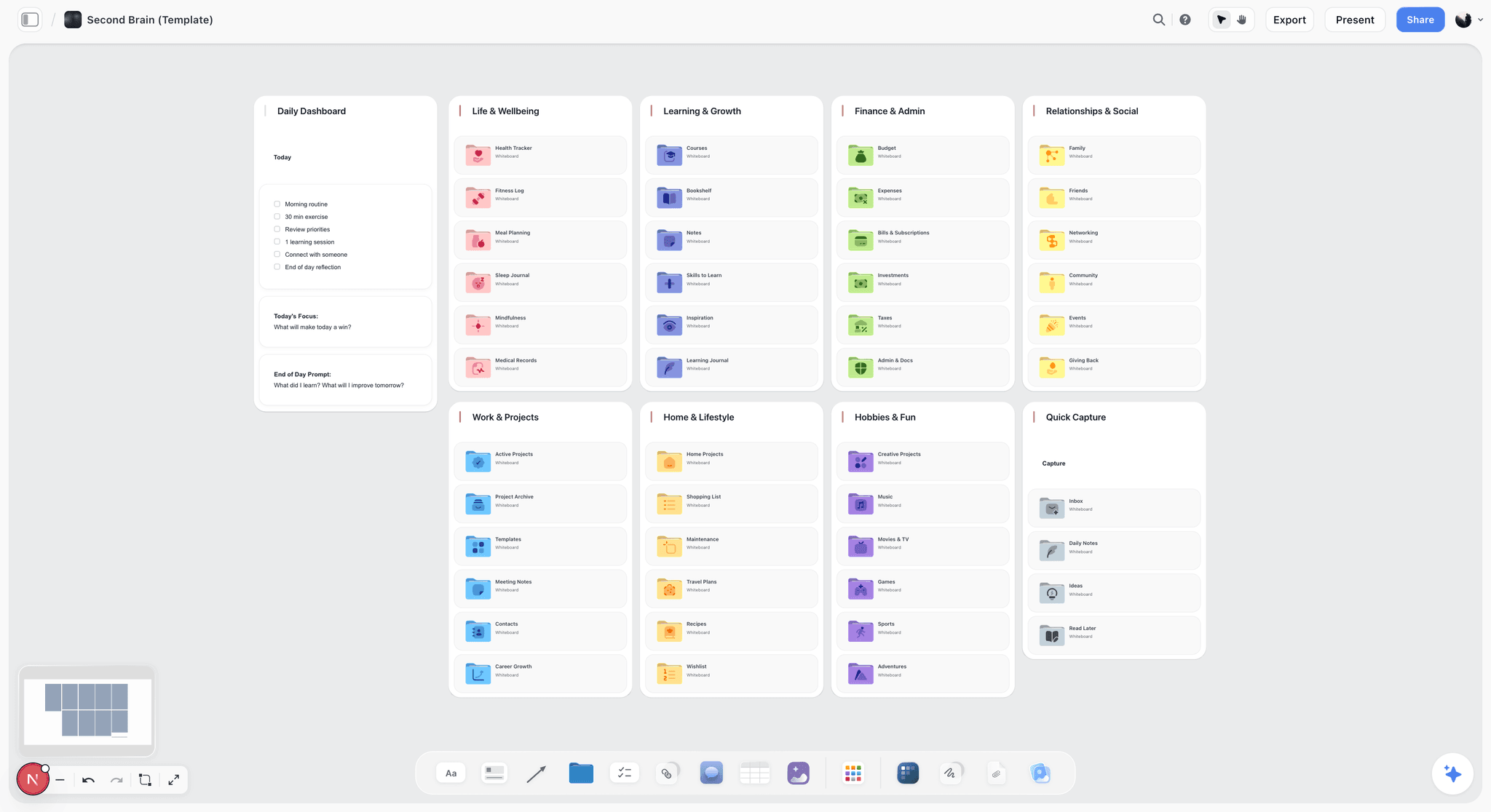
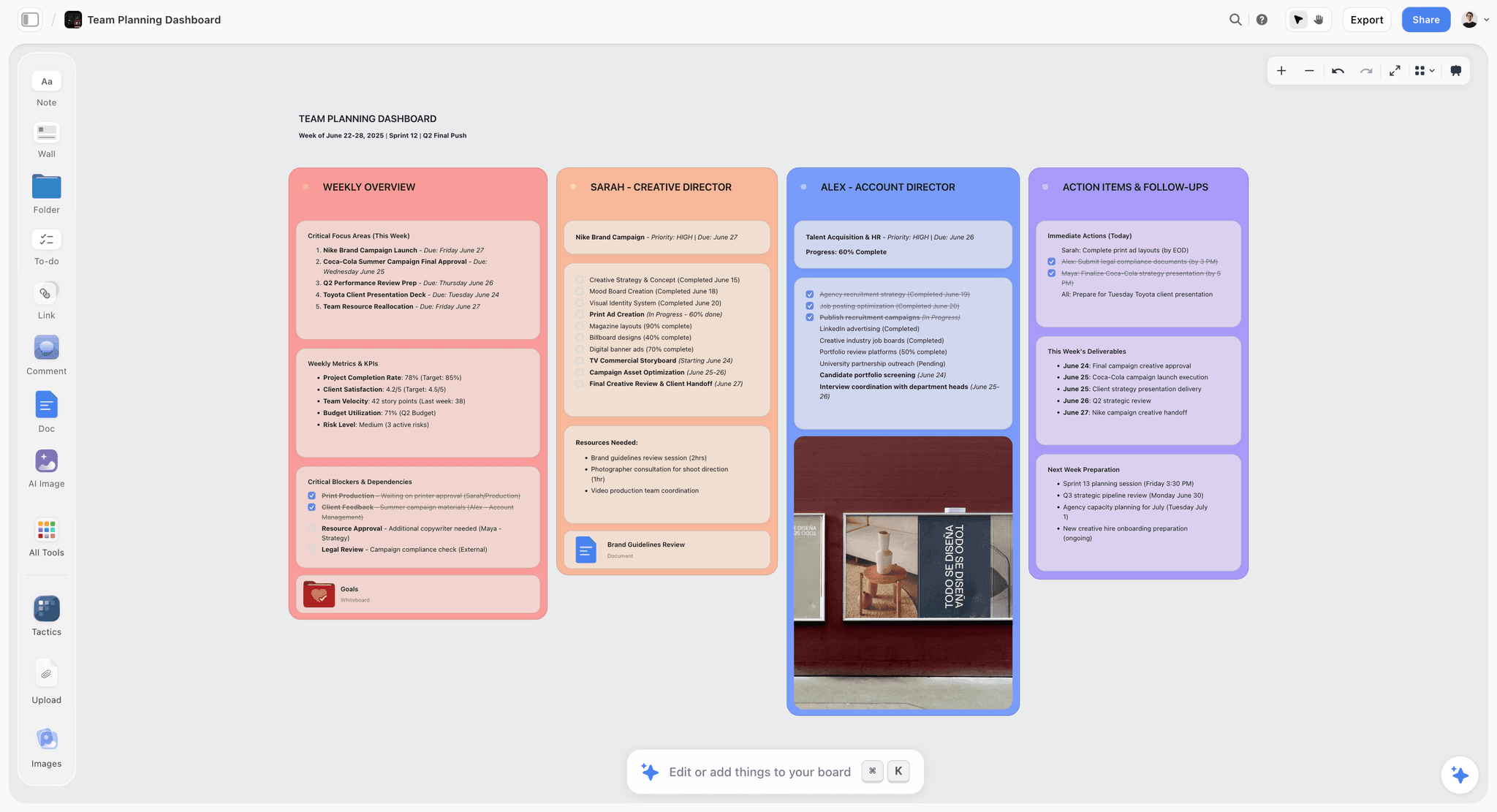
The verdict. Storyflow is our product, and it does not belong on an enterprise shortlist today. It fails gate one.
Best for. Individuals and small teams doing creative planning where no security review exists. That is a real audience and it is not the audience of this article.
Pricing. Paid only during early access. Plus is $7.99 per month billed annually or $9.99 monthly, adding 200 plus Story blueprints and unlimited file uploads. Pro is $14 per month billed annually or $19 monthly, adding AI image generation, roughly twenty times more AI usage and memory across conversations. Max is $39 per month billed annually or $49 monthly, adding forty times more AI and Team Workspace with permissions and roles. Pricing is flat per account rather than per seat, and anyone a paid member invites joins free. The Free plan launches before the end of 2026. As of August 2026.
Why it ranks here. Because it does not clear the first gate, and everything after that is irrelevant to the reader of this post. There is no published SOC 2 Type II report and no ISO 27001 certificate to hand to a reviewer. If your security team asks for evidence, we do not have the evidence yet. Procurement does not buy features. It buys evidence, and on that measure we are not competitive with any of the nine tools above.
Gate two is not cleared either. There is no SAML SSO and no SCIM provisioning. Accounts are created by invitation and removed by hand, so a leaver's access depends on somebody remembering to revoke it. That is precisely the finding an auditor writes up. Gate three is empty: no admin audit log, so nobody can reconstruct who opened or exported a board; no residency choice, so an EU-only requirement cannot be met; no configurable retention and no legal hold.
The one thing worth stating accurately is that permissions and roles do exist, on the Max plan at $39 per month billed annually, through Team Workspace. That is a role model, not an enterprise identity story. Where Storyflow is genuinely good is the work before governance is the question: a canvas whose AI reads your full active board, plus up to one Tactic and up to three Documents you @-mention, so you can interrogate a plan as a whole rather than a card at a time. If you are a five person studio, that matters and none of this article applies to you. If you have a security reviewer, buy Miro.
Strengths.
- Flat per-account pricing rather than per seat, and invited collaborators join free.
- AI reads the full active canvas board, which most whiteboards cannot do.
- 200 plus Story blueprints on Plus and above for structured creative planning.
- Fast to adopt in a small team with no administrative overhead.
Limitations.
- No published SOC 2 Type II report and no ISO 27001 certificate. Gate one fails outright.
- No SAML SSO and no SCIM provisioning, so deprovisioning is manual.
- No admin audit log, so board access and export cannot be reconstructed later.
- No data residency choice and no EU-only hosting option.
- No configurable retention policy and no legal hold or eDiscovery export.
- Roles and permissions exist only on Max, with no role model below it.
The trade off. A good creative canvas and a bad procurement answer, and this article is about the second thing.
What to Actually Pay For
Pay for the tier that has SCIM, not the tier that has SSO. SSO is the visible line item and SCIM is the one that prevents the audit finding. It stops being optional roughly at the point where you can no longer name every person with access from memory, which in practice means around fifty users, or any headcount with real turnover.
Pay for residency only when a regulation names it. Residency options carry real cost and real constraints, including which features ship in which region. If your requirement is a preference rather than a citation, spend the money on access control instead.
Pay for legal hold if legal has ever asked you for collaboration content. If they have not, it is the most over-bought capability in this category. If they have, it is non-negotiable and it cuts your shortlist to roughly two tools.
Do not pay enterprise pricing for a forty person company. Miro Business or Mural Business plus a strict external sharing policy beats an enterprise contract whose admin console nobody has time to configure.
Tools to Avoid for This Job
Any tool where SSO is not available at any price. That is not a feature gap, it is the vendor telling you it does not sell to organisations like yours. Treat it as a disqualification rather than something to work around.
A SOC 2 badge with no report behind it. Ask for the report and check three things: Type I or Type II, the period covered, and the scope section listing which systems are included. A Type I report describes controls at a point in time and tells you very little.
Free tiers running inside a licensed organisation. The company buys Miro Enterprise, three teams keep using a free workspace on personal accounts, and none of that content is covered by anything you paid for. Fix it by making the approved tool genuinely available, not by writing a policy.
Self-hosting as a compliance strategy with no platform team. Running your own instance moves patching, backup, availability and access control onto you. Done well it is excellent. Done to dodge a vendor review, it is worse than the vendor.
Link sharing defaulted to anyone with the link. Whiteboards leak through sharing settings far more often than through breaches. Set the organisational default to restricted and make people opt out deliberately.
What No Tool on This List Does
None of them stops a screenshot. Every control here governs the account and the file, and content on a screen can leave through a phone camera. If your threat model includes a determined insider, an admin console is not your control.
None of them gives you real visibility into what is on the boards. Data loss prevention on a canvas is weak everywhere, because the content is spatial fragments rather than documents. A credential pasted onto a sticky note will not be caught by the tooling that catches it in an email, and that is true of the four leaders as much as anyone.
A SOC 2 Type II report is not proof a vendor is secure. It is an auditor's opinion that specified controls operated over a period, inside a scope the vendor defined. Reading the scope is the work.
And to be plain about our own product: Storyflow clears none of the three gates. No published SOC 2 Type II, no ISO 27001, no SAML SSO, no SCIM, no audit log, no residency choice, no legal hold. That is not a caveat at the end of a recommendation, it is why Storyflow is tenth on a list of ten.
The Bottom Line
Enterprise whiteboard buying is not a product comparison. It is a sequence of three gates, and the canvas only gets evaluated by the people who reach the third one. Evidence, then identity, then custody.
Miro clears all three with the most depth, which is why it is the default and will likely stay there. Mural is the better workshop tool at the same gate level, Lucid collapses two procurement requests into one, and FigJam is nearly free if Figma already passed your review. Microsoft Whiteboard is the pragmatic answer where adding a vendor takes a quarter. Conceptboard, Bluescape and self-hosted Excalidraw exist for buyers whose requirement is residency, deployment model or ownership rather than features.
Storyflow is tenth because it fails at the first gate and there is no honest way to write around that. Procurement does not buy features. It buys evidence. We do not have the evidence yet, and pretending otherwise would cost you a review cycle and cost us the only thing worth having on a page like this, which is your ability to trust the other nine entries.
FAQ: Enterprise Whiteboard Tools
What is the best enterprise whiteboard tool in 2026?
Miro, for most large organisations. It publishes the widest set of compliance artifacts, offers SAML SSO and SCIM, and is the only tool here with a complete custody layer covering audit logs, residency selection, legal hold and eDiscovery. Mural is better when facilitated workshops are the primary use, Lucid when formal diagrams matter as much as brainstorming, and Microsoft Whiteboard when your organisation cannot realistically add a new vendor at all.
Which whiteboard tools have SOC 2 Type II and ISO 27001?
Miro, Mural, Lucid, Figma (which covers FigJam) and Canva all publish SOC 2 Type II reporting and ISO 27001 certification on their trust centres. Microsoft Whiteboard inherits Microsoft 365's posture. Do not treat that as current on my word: visit the vendor's trust centre, request the report under NDA, and check the effective period and the scope section. Certifications lapse and scopes get amended more often than buyers expect.
Do I need SCIM or is SSO enough?
SCIM matters once you pass roughly fifty users. SSO controls authentication, so it decides who can log in today. SCIM controls provisioning and deprovisioning, so it decides whether a leaver's access disappears when HR closes their account. Without SCIM, removal depends on somebody remembering, and orphaned accounts are among the most common audit findings against collaboration tools. Buy the tier that includes SCIM, not the one that stops at SSO.
Which whiteboard tools offer EU data residency?
Miro offers residency selection across several regions at contract time. Figma advertises EU data residency for enterprise customers, and Lucid advertises residency options for enterprise. Conceptboard hosts in German data centres by default and offers on-premises deployment. Self-hosted Excalidraw resolves residency by construction, since the data never leaves your infrastructure. Confirm the specific regions and which features are available in each, because regional deployments sometimes lag on functionality.
What does a security review actually ask about a whiteboard tool?
Three things, in order. Evidence: SOC 2 Type II report, ISO 27001 certificate, penetration test summary, signed DPA and a current subprocessor list. Identity: SAML SSO against your identity provider, plus SCIM provisioning and deprovisioning. Custody: admin audit logs, retention policy, data residency and legal hold. Most tools fail at the first one, and the requesting team usually never learns that a missing document was the reason it stalled.
Is Microsoft Whiteboard good enough for enterprise?
For procurement it is the strongest answer on this list, because content sits in OneDrive for Business and inherits your tenant's Entra ID identity, Purview retention, eDiscovery and legal hold. You add no vendor and no DPA. For product quality it is clearly behind Miro, Mural and Lucid, with thin templates, minimal facilitation controls and awkward external sharing. Verify which Purview capabilities cover Whiteboard content specifically rather than assuming tenant coverage is complete.
How much does an enterprise whiteboard actually cost?
Expect the enterprise tier rather than the advertised per-seat price. Miro Business sits around $16 per member per month billed annually with Enterprise quoted and subject to member minimums, Mural Business around $18, and Lucid team plans around $9 per user. FigJam-only seats start near $5, but the enterprise controls live on Figma Organization or Enterprise plans priced per full seat. Add-ons such as eDiscovery are frequently separate. Figures are as of August 2026.
Can we self-host a whiteboard tool?
Yes. The realistic options are Excalidraw for a self-managed open source deployment, Conceptboard for a commercial on-premises option, and Bluescape for private cloud or on-premises in high-assurance environments. Understand what self-hosting means before choosing it: you take on patching, availability, backup, access control and identity integration. It is an excellent outcome with a platform team behind it and a worse outcome than buying SaaS without one.
Why is Storyflow ranked last on this list?
Because it fails the first gate. Storyflow has no published SOC 2 Type II report and no ISO 27001 certificate, so a security reviewer has nothing to assess. It also has no SAML SSO, no SCIM provisioning, no admin audit log, no data residency choice and no legal hold. Roles and permissions exist only on the Max plan at $39 per month billed annually. It is our product, and it is a good creative canvas for small teams with no procurement process.
What is the difference between SOC 2 Type I and Type II?
Type I describes whether controls were suitably designed at a single point in time. Type II describes whether those controls actually operated effectively across a period, usually three to twelve months. Type II is meaningfully harder and is what enterprise reviewers expect. Vendors sometimes advertise "SOC 2" without specifying which, which is why you request the report rather than trusting the badge, and read the scope to confirm it covers the system you are buying.
How do we stop teams using unapproved whiteboards?
Make the approved tool genuinely available rather than writing a policy. The usual failure is that the company buys an enterprise licence, provisioning takes two weeks, and a team with a deadline signs up for a free workspace on personal accounts in four minutes. Fix the provisioning speed, cover the use cases the approved tool handles badly, and audit for the common alternatives. Policy alone does not compete with a tool that works immediately.
Do we need legal hold on a whiteboard?
Only if your legal or compliance team has previously asked for collaboration content during a dispute, investigation or regulatory request. If they have, it narrows the shortlist sharply, with Miro and Microsoft Whiteboard through Purview as the credible answers. If they have not, legal hold is the most over-bought capability in this category, and the budget does more good on access control and provisioning, which prevent more real incidents.
Planning and project templates you can use in Storyflow
Plan a launch, a sprint, or a whole project on a visual board the team can see at once. Open one of these templates and start from real structure.


See Storyflow in Action
A visual AI workspace where every feature lives inside one canvas. No tab-switching, no context lost.
Build your entire board from a single message
Type what you need in the AI chat at the bottom of your canvas. The AI adds cards, headings, and structure directly onto your board.
Use expert frameworks as AI context
Type @ in the AI chat and choose any Tactic. The AI tailors every response to that framework instead of giving generic advice.
Turn your board into a mind map in seconds
Ask the AI to restructure your canvas as a mindmap. It connects your ideas into a visual hierarchy so you can see how everything relates.
Why Storyflow Exists
Storyflow actually began as a personal tool while working on creative and research projects.
We kept running into the same problem: ideas were scattered everywhere: notes, documents, and whiteboards.
Nothing helped us see how everything connected.
So we started building a workspace designed around how ideas actually grow.
→ Read how Storyflow was createdSara de Klein
Head of Product at Storyflow
Published: 2026-08-13
Start creating with AI and become more productive
Transform your creative workflow with AI-powered tools. Generate ideas, create content, and boost your productivity in minutes instead of hours.