
What is the Creative Process? A Complete Framework for Any Project (2026)
The creative process is the structured sequence of cognitive phases that converts a problem into a finished creative solution. This complete guide covers the five stages, techniques, real-world examples, and common misconceptions.

Category
Creative Strategy
Author

Sara de Klein
Head of Product at Storyflow
Topics
2026-04-12
•
24 min read
•
Creative Strategy- what is the creative process
- creative process definition
- stages of the creative process
- creative process framework
- how creativity works
What is the creative process?
The creative process is the structured sequence of cognitive phases that converts a problem or opportunity into a finished creative solution. Most models identify five stages: preparation (research and problem immersion), incubation (deliberate stepping away to allow unconscious thinking), illumination (the insight or breakthrough), evaluation (selection and judgment), and elaboration (development and execution). Understanding the sequence matters because each phase creates the conditions for the next, and skipping phases reliably produces weaker creative outcomes.
What is the Creative Process?
Creative process definition:
When a project stalls between having an idea and producing work worth sharing, the creative process provides a navigation system. It is the structured sequence of cognitive phases that converts a problem into a developed creative solution. Unlike a production timeline, which tracks what gets made, the creative process describes what gets thought, and why moving through the phases in order produces better outcomes than jumping straight to execution.
The most influential early model was published by Graham Wallas in his 1926 book The Art of Thought. Wallas identified four stages: preparation, incubation, illumination, and verification. His framework was built on interviews with scientists, artists, and inventors about how their most significant insights actually arrived. The consistent finding was that breakthroughs followed a pattern, and that pattern was not random inspiration but the result of prior immersion and deliberate stepping away.
Contemporary models typically add a fifth stage (elaboration or execution) and sometimes a problem-finding phase before preparation. The additions reflect a more sophisticated understanding of creative work: that defining the right problem is itself a creative act, and that executing a concept requires as much creative judgment as generating it.
What the model cannot capture is the recursive nature of real creative work. In practice, you move through the stages in order and then loop back. A filmmaker in post-production (elaboration) discovers a scene is not working and returns to evaluation. A marketer deep in execution realizes the brief was wrong and returns to preparation. The process is not a checklist. It is a navigation system you use when you are lost.
Why the Creative Process Matters
The creative process matters because it changes where you intervene when work gets stuck. Without a process framework, the instinct when blocked is to generate more ideas or work harder at the problem. Both responses are often wrong. Research on unconscious thought theory by Dijksterhuis and Meurs (2006), published in Psychological Science, found that unconscious processing during deliberate breaks from a problem produced more creative solutions than continuous conscious effort, specifically for complex decisions with many variables. The implication is practical: sometimes the right response to creative block is to leave the problem completely, not to push harder.
Teresa Amabile's research on creativity in organizations at Harvard Business School has consistently found that intrinsic motivation and psychological safety are the two strongest predictors of creative output quality. But a third factor is less discussed: whether people have a working model of how creativity functions. Practitioners who understand that first ideas are preparation for better ideas, not the goal, handle the uncertainty of the generative phase differently. They do not mistake incubation for failure. They do not rush to evaluation before the idea pool is rich enough to produce something worth selecting.
The most common failure mode in creative work is not lack of talent or inspiration. It is evaluation contaminating generation: judging ideas while they are still forming, which kills the most unconventional directions before they have a chance to develop. A named process gives practitioners a structural way to separate the two cognitive modes. The five stages are not bureaucracy. They are protection for the thinking that produces the most interesting work.
The Five Stages of the Creative Process
Each stage has a different cognitive mode, a different set of outputs, and a different failure mode when rushed or skipped. The stages build on each other sequentially, but they are entered and exited repeatedly on longer projects.
Stage 1: Preparation
Preparation is the research and immersion phase. You define the problem precisely, gather relevant material, and develop deep familiarity with the domain. This is the stage most commonly under-resourced because it feels like work that delays the creative work. It is the creative work. The quality of everything that follows depends on the depth of preparation.
Example: A documentary filmmaker in preparation watches 30 films in the genre, interviews 40 people about the subject, and writes a 20-page research document before developing a single creative idea. The instinct to shortcut this phase produces documentaries that cover a topic without illuminating it.
Common failure mode: Rushing to generate ideas before the problem is understood well enough to produce surprising responses to it.
Stage 2: Incubation
Incubation is the deliberate pause. After thorough preparation, you step away from the problem completely. No notes. No trying to think about it. The unconscious continues processing the material from preparation and makes connections that deliberate analytical thinking misses. This phase is the most counterintuitive and the most consistently underused.
Example: A campaign strategist who has been working intensively on a brief takes a weekend off before the Monday concept presentation. The campaign idea arrives Saturday morning in a shower. This is not random inspiration. It is preparation having done its work.
Common failure mode: Interpreting incubation as laziness or as time that could be spent generating more material. Filling the incubation window with more research prevents the unconscious synthesis that incubation is designed to enable.
Stage 3: Illumination
Illumination is the insight: the moment when a direction, connection, or solution emerges clearly. It is the phase people romanticize most and misunderstand most. Illumination is not lightning striking a passive mind. It is the product of preparation and incubation working. It tends to arrive not during focused problem-solving but during low-cognitive-demand activities: walks, showers, commutes, the edge of sleep.
Example: Archimedes in the bath. Newton under the apple tree. These are cultural shorthand for a real cognitive phenomenon. The insight arrived not despite the preparation but because of it. The bath and the garden were the incubation conditions.
Common failure mode: Forcing illumination by spending longer at the desk. If illumination has not arrived, the most reliable response is to re-enter incubation, not to push harder at the problem.
Stage 4: Evaluation
Evaluation is the judgment phase. The insight from illumination is examined against the brief, the audience, the constraints, and the practical requirements of execution. This is where critical thinking appropriately applies. The failure mode here is the opposite of preparation: evaluating too gently because you are attached to the insight, or too harshly because you have lost confidence in the direction.
Example: A brand strategist emerges from incubation with a campaign concept that feels strong. Evaluation means running it through a kill-test: Does it address the specific belief the brief requires changing? Can it be executed within the budget? Would it work for this audience or just for audiences in general? The concept that survives the kill-test is worth developing.
Common failure mode: Applying evaluation criteria retroactively: deciding what the idea needs to do after you have already decided you like it, which ensures the criteria bend to protect the idea rather than test it honestly.
Stage 5: Elaboration
Elaboration is development and execution. The selected direction is built out into a finished deliverable: a film, a campaign, a product, a strategy document. This phase requires the same creative judgment as the earlier stages. Execution is not mechanical. A script that was strong in outline often reveals structural problems when written in full. A campaign that passed the kill-test sometimes fails in production because the proof cannot be built at the required scale.
Example: A content creator who has selected a video concept enters elaboration to write the script, build the visual treatment, plan the shoot, and edit the final film. Each of these tasks requires creative decisions that can send them back to evaluation or, rarely, to preparation if a fundamental assumption fails.
Common failure mode: Treating elaboration as implementation rather than continued creative work, which produces deliverables that match the brief technically but feel mechanical because the judgment was switched off the moment the concept was approved.
The recursive nature of the process deserves emphasis: these stages are entered and re-entered throughout a project. The first pass produces a viable direction. Subsequent passes develop it into something that could not have been planned at the outset.
The specific problem that breaks creative process discipline is fragmentation: brief in one document, research in another, concept notes in a third. Storyflow is built to hold all five stages on one canvas, with AI that reads the full active board (plus up to one blueprint and three @-mentioned documents) before responding. When you move from preparation into concept development, the AI already knows what you researched. Run your next project through all five stages on one Storyflow board and watch the connections between phases stay visible instead of scattering across tabs.
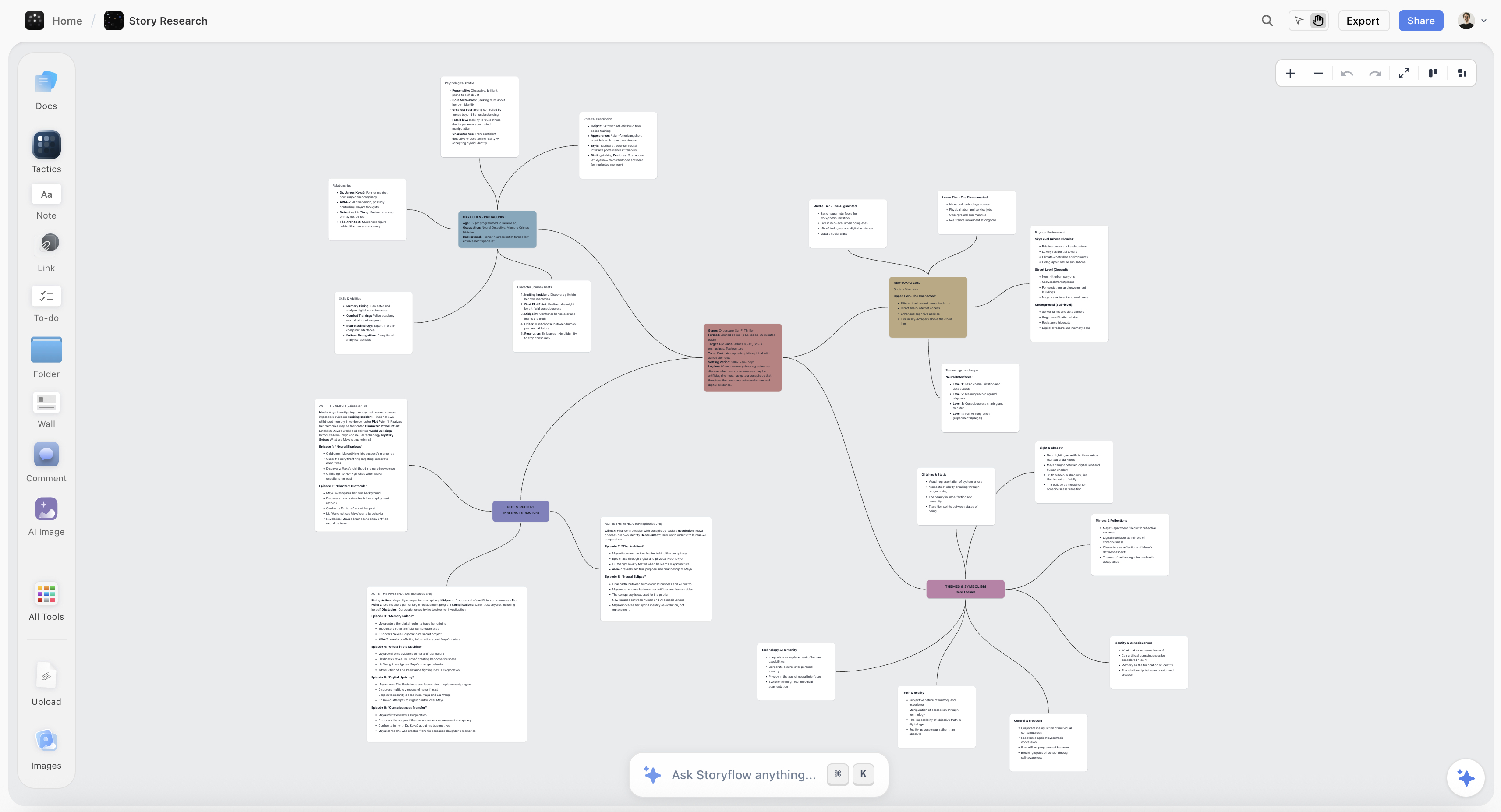
The preparation stage in Storyflow: research notes, audience context, and problem framing on one canvas so the AI reads the full context before any concept development begins
Creative Process vs. Design Thinking vs. Ideation
These three frameworks cover overlapping territory and often get conflated in team discussions. They are related but describe different things, and choosing the wrong framing for a project shapes how work gets structured and evaluated.
| Creative Process | Design Thinking | Ideation | |
|---|---|---|---|
| Purpose | Navigate from problem to finished creative solution | Solve human-centered problems through prototyping and testing | Generate and select creative ideas within a problem space |
| Origin | Cognitive psychology, creativity research (Wallas 1926) | Design methodology, formalized by IDEO and Stanford d.school | Broader applied creativity and innovation practice |
| Key output | A finished creative deliverable | A tested prototype or validated solution | A developed idea or concept direction |
| Best for | Any creative project: film, writing, marketing, strategy | Product and service design with user-testing cycles | The divergence and convergence phase of any creative project |
| Relationship | The overarching framework | A specific methodology with its own stage system | One phase within the creative process (stages 2 and 4) |
The practical distinction that matters most: the creative process is the broadest framework, applicable to any creative discipline. Design thinking is a specific methodology with its own structured stages (Empathize, Define, Ideate, Prototype, Test) that maps well to product and service design but is often misapplied to narrative or expressive creative work. Ideation, which we cover in depth in a separate guide, is the divergence-and-convergence phase that sits inside both frameworks.
The choice between them is not competitive. A filmmaker working on a documentary applies the creative process framework. A product team designing a new feature applies design thinking. A marketing team generating campaign concepts applies ideation techniques within the broader creative process. Knowing which framework applies to your project determines how you structure your time and where you expect to encounter the most resistance.
Creative Process Techniques That Actually Work (2026)
Techniques are tools for specific phases of the creative process. The most useful ones are those that make a phase more productive, not those that make the whole process feel more structured. Each technique below names the phase it targets.
Diverge-Then-Converge
Phase: Preparation into Incubation
What it is: The foundational mechanism of generative creative work: separate idea generation from idea evaluation with a strict temporal and sometimes spatial gap.
When to use it: Use at every creative session. This is not one technique among many. It is the operating principle behind every other technique on this list.
How it works: In a session, spend the first half generating without judgment (write every idea, including terrible ones), and the second half evaluating with explicit criteria. Do not let the two modes overlap. Teams that fail to enforce this rule will unconsciously evaluate during generation and miss the most unconventional ideas before they are fully formed.
Best for: All creative practitioners. Teams that apply this explicitly produce consistently more interesting first concepts than those that do not.
Problem Inversion
Phase: Preparation
What it is: Restate the problem as its opposite, generate solutions to the opposite problem, then reverse them into solutions to the original problem.
When to use it: When the problem feels stuck at the obvious framing and every idea feels like a variation of what already exists.
How it works: Take the brief: 'How might we make our customer onboarding feel less overwhelming?' Invert it: 'How might we make our onboarding as overwhelming as possible?' Generate: send 40 emails on day one, show all features simultaneously, require 30 minutes of configuration before the first useful action. Reverse each: send one email, surface one feature, enable immediate value. Many of the reversed ideas are things you would never have reached through direct problem-solving.
Best for: Strategy and concept development phases. Especially useful when the team keeps returning to the same solution space.
Constraint Addition
Phase: Incubation into Illumination
What it is: Deliberately impose an artificial constraint on the problem to force the generative mind out of its default solution patterns.
When to use it: When preparation has been thorough but the incubation phase is producing variants of the obvious rather than genuinely new directions.
How it works: Constraints can be arbitrary (tell the story in exactly six words, design the experience for someone who has never used technology before, make the entire campaign without showing the product). The constraint's role is not to be realistic. It is to displace the brain from the comfortable solution space it already knows.
Best for: Practitioners with deep domain expertise who are generating within a well-known problem space. The constraint breaks the pattern without requiring a change of problem.
Parallel Concept Development
Phase: Evaluation
What it is: Develop three or four concept directions simultaneously to evaluation-ready quality rather than polishing one direction to perfection.
When to use it: Before any concept is presented to a client, stakeholder, or collaborator for selection.
How it works: This technique resists the instinct to fall in love with the first viable direction and polish it until it is too developed to abandon. When three directions reach the same level of development, evaluation becomes genuine comparison rather than defense of an existing investment. The concept you would not have developed if the first one had been strong enough is often the one that wins.
Best for: Creative directors, strategists, and anyone who presents concepts for external approval. Essential for any brief where the client has not pre-decided the direction.
The Incubation Window
Phase: Incubation
What it is: Scheduling deliberate pauses between intensive preparation and concept development sessions, treating incubation as a production activity rather than downtime.
When to use it: After any intensive research or preparation session. Before any major creative presentation.
How it works: Block time in the project schedule explicitly for incubation. Label it. Defend it. During this time, do not work on the problem. Go for a walk, do administrative tasks, exercise, sleep. The research evidence, including Wallas's original observations and subsequent cognitive psychology literature, consistently shows that returning to a problem after sleep produces qualitatively different ideas than working through the night on it.
Best for: Any creative practitioner. This is the most underused technique on this list because it requires resisting the appearance of productivity in favor of actual creative output.
The Oblique Strategy
Phase: Illumination into Evaluation
What it is: Apply a randomly selected lateral prompt to a stuck creative problem to displace thinking from the familiar solution space.
When to use it: When a project is stuck between incubation and illumination: you have done the preparation, you have let the problem rest, and nothing useful has arrived.
How it works: Brian Eno and Peter Schmidt developed the Oblique Strategies card deck in 1975 specifically for this moment. The cards contain prompts like 'What would your most admired person do?', 'Use an old idea', 'Honour thy error as a hidden intention'. The random prompt displaces the analytical mind from its stuck position. The specific prompt matters less than its function as a pattern interrupt.
Best for: Artists, musicians, writers, and creative directors who work in expressive disciplines. Less applicable to problem-solving-first disciplines where constraints are tightly specified.
Retrospective Brief Analysis
Phase: Evaluation into Elaboration
What it is: After a project is completed, write the brief it would have needed to produce the actual outcome, then compare it to the brief you started with.
When to use it: At the end of any project, before starting the next one in the same discipline.
How it works: This is not a quality review. It is a diagnostic tool. The gap between the brief you wrote and the brief the work actually needed reveals where your briefing consistently fails. Over time, retrospective brief analysis is one of the most effective ways to improve the quality of your preparation phase, because it shows you the patterns in what you consistently under-specified.
Best for: Creative directors, strategists, and team leads responsible for briefing creative work. Unusually valuable for practitioners who work on recurring formats (advertising campaigns, documentary series, content programs).
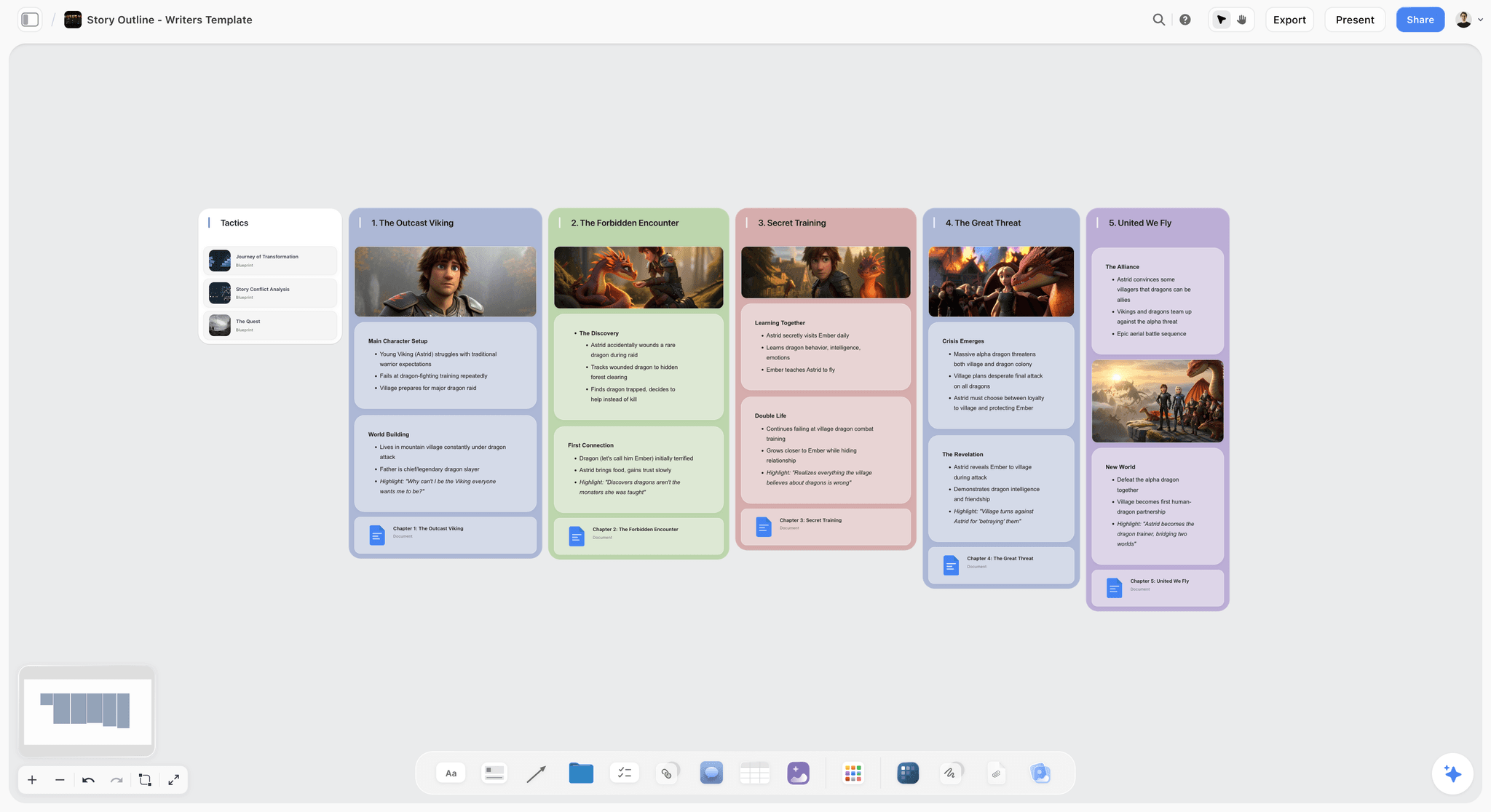
The elaboration phase on a Storyflow canvas: concept cards, structural outline, and connections visible simultaneously so creative judgment continues through execution
How to Apply the Creative Process to Your Work (2026)
Knowing the stages is necessary but not sufficient. The challenge is applying the framework when you are under deadline pressure and the instinct is to skip the stages that feel slow. The following sequence is how to make the process practical rather than theoretical.
1. Write the problem precisely before any research begins
Not the project goal. The specific gap between what is true now and what you need to be true after the work is done. A content creator might write: 'Viewers understand the topic after watching this video but do not feel motivated to act on it.' That sentence defines what the preparation phase needs to address.
2. Do the research you do not think you need
Preparation consistently fails when it covers only the immediately obvious territory. The material that produces surprising concepts is the material at the edge of the obvious: adjacent disciplines, historical precedents, the way people outside your industry have solved related problems. Budget 30 percent more preparation time than feels comfortable.
3. Build your preparation on a single surface, not across multiple documents
When research notes are in one place, interview bullets in another, and reference images in a third, the connections between them stay invisible. Storyflow's canvas lets you place all three types of material spatially so your own eye, and the AI, can see the relationships. A connection that lives 40 meters away in your research folder will not surface during incubation. A connection placed next to a related note on a shared canvas might.
4. Schedule the incubation window explicitly in the project calendar
Incubation that is not scheduled gets eliminated under deadline pressure. Block a minimum of 24 hours between the end of intensive preparation and your first concept development session. For significant projects, block 48 to 72 hours. This will feel like waste. It is the opposite.
5. Generate concepts before you evaluate any of them
In your first concept development session, spend the first 45 minutes writing every direction you can think of, including the terrible ones. Write the safe concepts, the weird concepts, the concepts that break the brief, the concepts that would embarrass you if anyone saw them. The unusual directions in that list are what incubation produced. Evaluating too early kills them before they can be developed.
6. Run kill-tests, not polish sessions, before evaluation is complete
A kill-test asks what would make this concept fail with the specific audience for this specific brief. Run it on every concept before any of them receive significant development time. Storyflow's AI can run kill-tests on concepts directly from your canvas, reading the brief and audience notes you placed there during preparation and applying them to challenge each direction specifically.
7. Treat elaboration as a continuation of creative judgment, not implementation
The most expensive creative failures happen when elaboration is delegated or automated without maintaining the creative oversight that produced the concept. A script that works as an outline often reveals structural problems in full draft. A campaign that passes evaluation sometimes fails in production. The judgment applied in preparation and evaluation needs to continue through elaboration.
For the complete step-by-step process applied to a specific project type, see: How to Run an Ideation Session with AI or How to Plan a Video Project from Start to Finish with AI.
Tools That Support the Creative Process
No tool makes the creative process happen. But the wrong tools actively impede it by fragmenting the phases across disconnected surfaces. The right tools do one thing that matters: they keep the work visible and connected so the relationships between phases are preserved as the project develops.
Storyflow
Storyflow is built specifically for the creative process problem of fragmentation. The infinite canvas keeps preparation research, concept development notes, mood references, and script drafts on one surface simultaneously, so the connections between phases stay visible. The AI reads the full canvas before responding, which means when you move from preparation into concept development, asking the AI to challenge a concept direction produces responses that already account for your audience research and brief constraints, rather than generic feedback on the concept in isolation.
Storyflow's Story blueprints library provides pre-built creative frameworks for specific disciplines (Hero's Journey, AIDA, and Retention Hooks among 200+ on the Plus, Pro, and Max plans). A blueprint sits on the canvas alongside your material, and you can @-mention up to one blueprint and up to three documents in AI chat, which gives the AI structured framework language on top of your live board context. For practitioners who want a creative framework to work alongside rather than over their project, this avoids the disconnect of consulting a framework template in a separate tab.
Where Storyflow loses: if your preparation phase lives in a years-deep, link-heavy personal knowledge base that you query across many projects, Obsidian's local graph beats a per-project canvas. Storyflow is also cloud-only, so practitioners with strict local-first privacy requirements should not use it. Storyflow is built for the project you are actively moving through the five stages, not for an archive you maintain for years.
Take your most stalled current project, place its brief and research on one Storyflow board, and ask the AI to challenge your first concept. The fragmentation problem becomes obvious the moment the feedback already knows your research.Miro
Strong for collaborative workshop phases of the creative process, particularly the group diverge-then-converge sessions in preparation and evaluation. Template library covers the full range of creative facilitation formats. Not designed for AI that reads project context: the AI sees the current board but not earlier preparation sessions or documents.
Notion
Excellent for organizing preparation-phase research as a document and database system: literature notes, interview records, and reference materials. Weak for the concept development and elaboration phases because its linear structure works against the spatial thinking that the creative process generates best. Notion AI reads the current page, not the full project across multiple documents.
Obsidian
Best for long-term personal knowledge management during preparation: the linked note graph surfaces connections across years of research that a linear filing system would never reveal. The steepest learning curve of any tool on this list, with no cloud sync on the free plan. Most useful for practitioners who do deep, ongoing research across multiple projects in the same domain.
For a full comparison including testing notes across all phases of the creative process, see: The 12 Best Creative Workspace Tools in 2026.
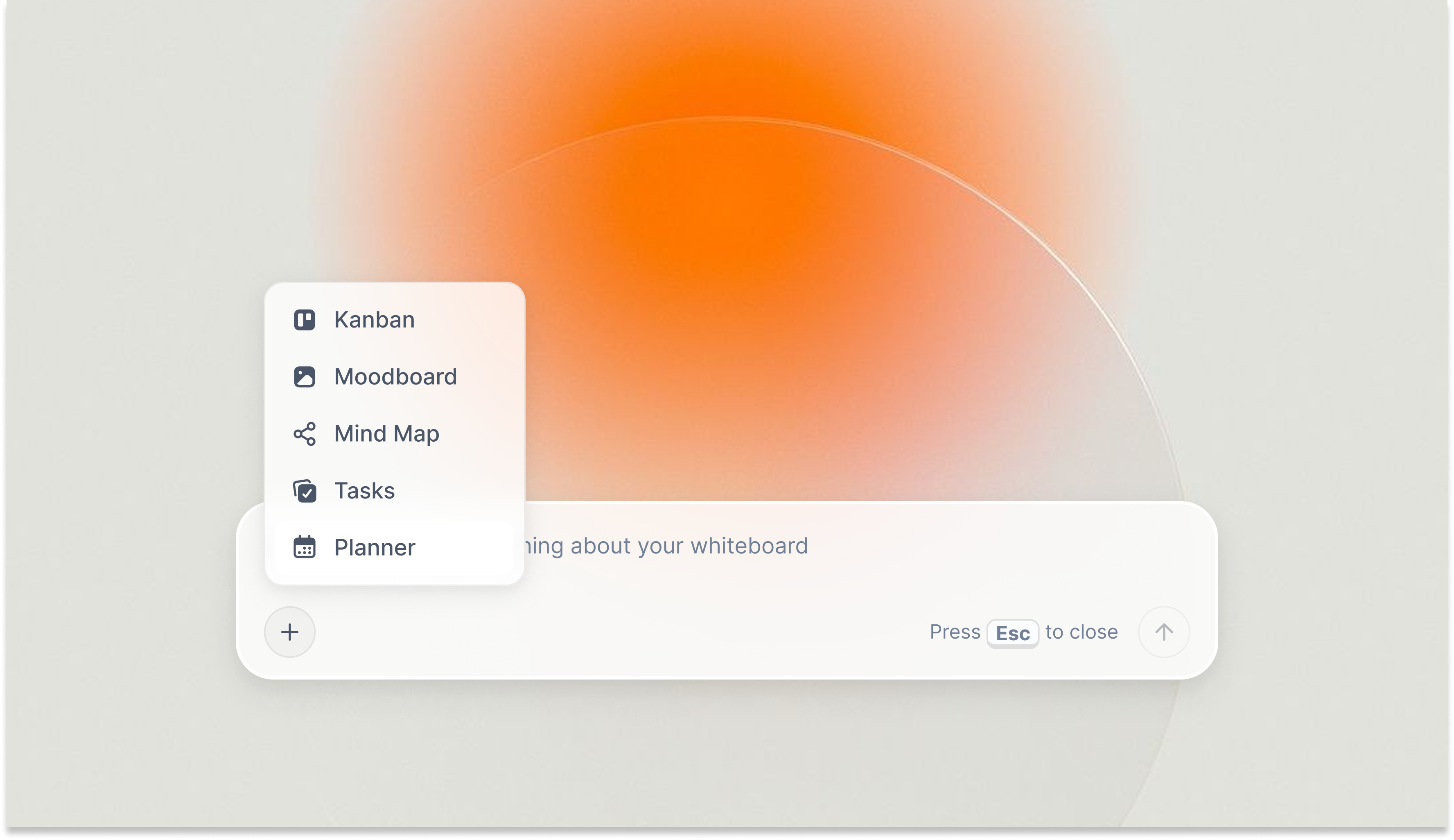
Storyflow's Story blueprints panel: creative frameworks (Hero's Journey, AIDA, and 200+ others) sit alongside your live project material so the framework supports the work rather than replacing it
Real-World Examples of the Creative Process
The creative process is not specific to any discipline. The following examples show how the same five-stage framework applies across different professional contexts, and what each stage looks like in practice rather than in theory.
Documentary Filmmaker
Preparation runs for months before any concept exists: watching comparable films, interviewing dozens of subjects, reading primary source material. Incubation happens during travel to locations, between interview sessions, and during the edit, when the filmmaker steps away from the footage to let the structure emerge. Illumination is the moment when the film's spine becomes clear: not the topic, which was always known, but the specific argument the film will make and why audiences will care about it. Evaluation is the rough cut review, where earlier preparation assumptions are tested against the actual material shot. Elaboration is the edit itself, which requires the same creative judgment as every earlier phase because the footage never matches the original concept completely.
Outcome: Documentaries that follow this process produce films that feel discovered rather than constructed, because the preparation was deep enough to allow the material to surprise the filmmaker during elaboration.
Brand Strategist
Preparation covers competitive audit, customer interviews, and stakeholder briefing to define the specific belief that needs to change in the audience. Incubation is the weekend before the concept presentation when the strategist deliberately leaves the problem. Illumination arrives as a campaign direction that did not exist in any of the preparation documents but is recognizably the right synthesis of all of them. Evaluation runs the concept through a kill-test against the brief: Does it change the specific belief? Can it be proved at scale? Does it survive for a skeptical buyer in this specific category? Elaboration develops the surviving concept into a creative brief that a production team can execute.
Outcome: The campaigns that emerge from this process have a specificity that clients recognize as earned rather than generic, because the preparation was deep enough to produce a direction that could only work for this audience and this brief.
Product Manager
Preparation covers user research, analytics review, competitive benchmarking, and problem definition. Incubation often happens between user interviews, during which unexpected connections between separate user frustrations surface as a unified problem statement. Illumination is the insight that reframes the feature scope: not a collection of individual improvements but a single interaction change that addresses the underlying problem all the improvements were symptoms of. Evaluation asks whether the insight is technically feasible within the existing architecture and whether users would actually change behavior in response to it. Elaboration is the specification, design, and build process, which surfaces additional problems that send the team back to evaluation repeatedly.
Outcome: Product teams that apply the creative process to feature development produce features that feel coherent rather than accumulated, because the problem definition was sharp enough to produce a specific direction rather than a list of additions.
Content Creator
Preparation covers competitive research on existing content in the topic area, audience comment analysis to identify the questions that are not being answered elsewhere, and definition of the specific understanding gap this piece of content can close. Incubation happens between research sessions and during the mental downtime of daily tasks. Illumination is the framing that makes the content genuinely different from what already exists: a perspective, angle, or structure that answers the preparation question in a way no competitor has. Evaluation runs the concept against the actual search and audience data from preparation to confirm the differentiation. Elaboration is the full production of the piece, from outline through final edit.
Outcome: Content created this way tends to attract links and citations because it contains a perspective that was not available before, rather than a better version of something that already existed.
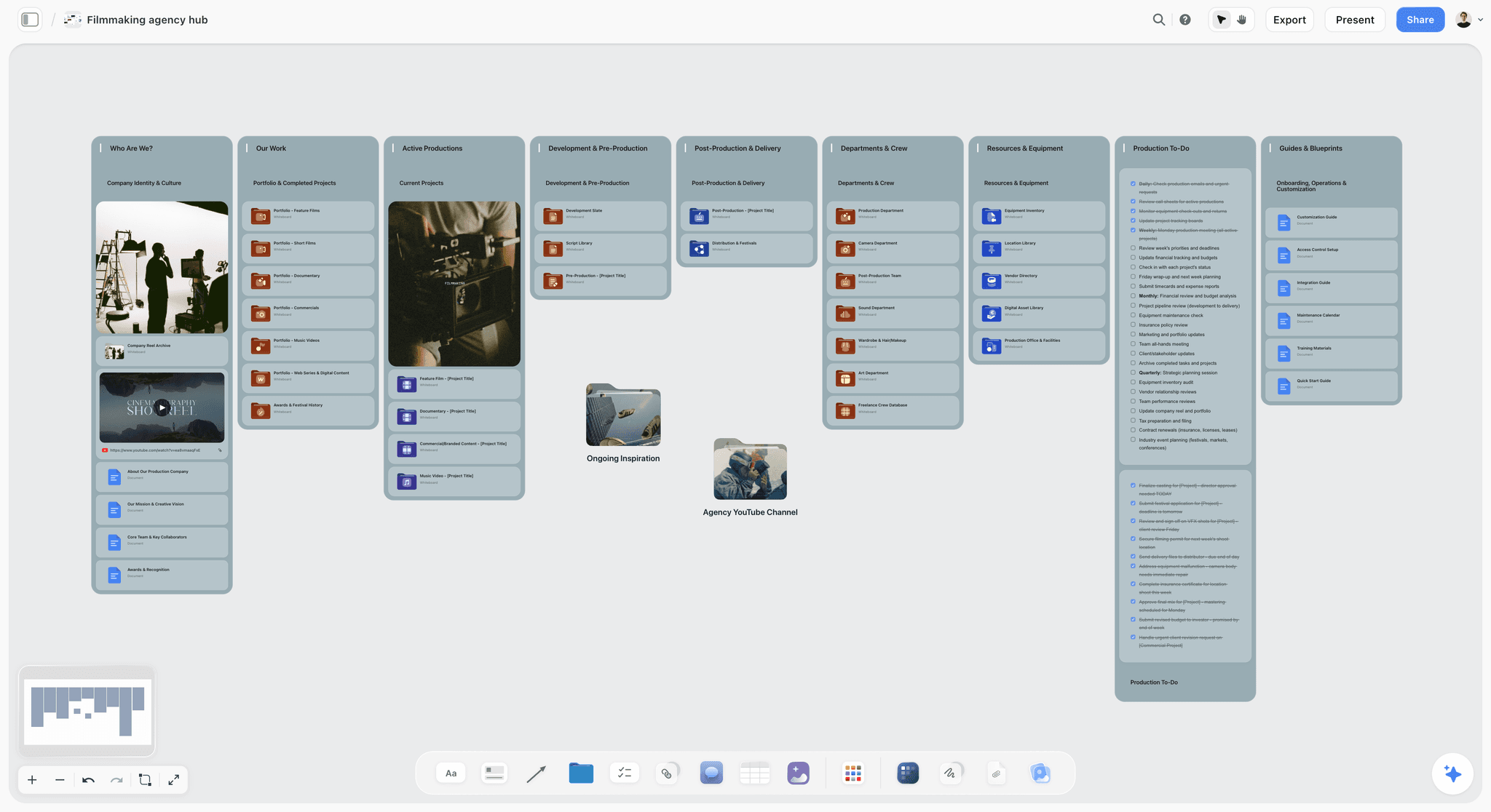
A creative team's active Storyflow board in production: preparation research, concept cards, and elaboration notes on one canvas, reflecting how the creative process layers across a real project
Common Misconceptions About the Creative Process
Misconception: “Creative people don't need a process”
Reality: The empirical evidence consistently shows the opposite. The most productive creative practitioners across disciplines (Beethoven, Darwin, Picasso, Maya Angelou) had explicit, habitual processes that they applied consistently. The misconception confuses temperament (creativity as personality trait) with method (creativity as a set of cognitive practices). Process does not constrain creative thinking; it creates the conditions for it to produce finished work rather than abandoned ideas.
Misconception: “Inspiration strikes randomly and you can't predict it”
Reality: Inspiration reliably follows preparation and incubation. What feels random is the timing of the illumination moment, which is genuinely unpredictable. But the occurrence of illumination is not random: it requires prior preparation to have something to work with and prior incubation to create the conditions for unconscious synthesis. Practitioners who skip preparation consistently report fewer and weaker insights. This is not coincidence.
Misconception: “The creative process is linear”
Reality: This is the most important misconception to correct for intermediate practitioners, not beginners. Experienced practitioners loop through the stages multiple times on a single project. Moving from elaboration back to evaluation, or from evaluation back to preparation, is not failure. It is the process working correctly. A script that is fundamentally wrong reveals itself in elaboration and requires a return to earlier stages. Treating this as a problem to avoid produces projects that continue in the wrong direction because no one wanted to acknowledge that a loop was needed.
Misconception: “The best creative work comes from unconstrained thinking”
Reality: Decades of creativity research find that constraints consistently improve creative output quality, not reduce it. The explanation from cognitive science: unlimited possibility space is cognitively expensive and produces generic outputs because the mind defaults to familiar patterns. Constraints force displacement from those patterns. The constraint technique described in the Techniques section is effective precisely because it prevents the obvious solution from being chosen.
Misconception: “Collaboration always produces more creative output than solo work”
Reality: Research on brainstorming groups consistently shows that nominal groups (the same number of people working individually, then combining outputs) produce more and higher-quality ideas than interacting groups. The reason is production blocking and social inhibition. This does not make collaboration bad. It makes collaboration timing important. The preparation and incubation phases often produce better work solo. Evaluation and elaboration often produce better work collaboratively. Applying collaboration to the wrong phases reduces output quality.
The five stages are not bureaucracy. They are protection for the thinking that produces the most interesting work.
FAQ: What is the Creative Process?
What is the creative process in simple terms?
The creative process is the structured sequence of mental phases that converts a problem or opportunity into a finished creative solution. Most models describe five stages: preparation (research and problem definition), incubation (stepping away to let unconscious thinking work), illumination (the insight or breakthrough), evaluation (judging and selecting the best directions), and elaboration (developing and executing the chosen direction). Understanding the sequence matters because skipping stages reliably produces inferior outcomes.
What is the difference between the creative process and creative thinking?
Creative thinking is the cognitive capacity: the ability to make novel connections, question assumptions, and generate ideas outside conventional patterns. The creative process is the applied system: the structured sequence of phases that channels creative thinking into a finished deliverable. You can have strong creative thinking and still produce poor work if you have no process. The creative process does not replace creative thinking; it gives it structure so insights can be developed rather than lost.
What are the best tools for the creative process?
Storyflow is the strongest tool for keeping all phases of the creative process on one visual surface, because the AI reads your entire canvas before responding. This means when you move from preparation into concept development, the AI already knows what you researched. For teams doing structured workshops, Miro provides solid facilitation templates. For solo practitioners, a physical sketchbook remains one of the most effective incubation tools because it removes the pressure of a digital workspace.
Is learning the creative process worth the effort?
Yes, decisively. The creative process is worth deliberate study for one specific reason: it changes where you intervene when work gets stuck. Without a process framework, most practitioners restart from scratch when blocked. With one, they diagnose which phase they are in and what that phase requires. The difference in project output quality between practitioners who have internalized a creative process model and those who work by instinct alone is consistently visible, and it compounds over a career.
How long does the creative process take?
The timeline varies by project scale, but the phase pattern holds across all of them. A 30-second ad campaign and a three-year documentary go through the same stages at different durations. Preparation takes longer than most people expect (rushed research produces obvious concepts). Incubation takes as long as it takes (forcing illumination rarely works). Elaboration almost always takes longer than planned. For most professional projects, experienced practitioners budget 30 to 40 percent of total project time to preparation and incubation combined.
What makes the creative process effective?
Three conditions working in combination: sufficient immersion in the problem during preparation (so the unconscious has real material to work with during incubation), genuine separation between generative and evaluative thinking (judging ideas too early kills the most interesting ones), and deliberate elaboration discipline (following through on a selected direction even when it feels uncertain). Most creative failures happen not from lack of ideas but from evaluating too early or abandoning directions before they are fully developed.
How many stages does the creative process have?
Graham Wallas's foundational 1926 model identifies four stages: preparation, incubation, illumination, and verification. Most contemporary models add a fifth (elaboration or execution) and some add a problem-finding stage before preparation. The number of stages is less important than the principle: that creativity is not a single event but a sequence, and that each stage creates the conditions for the next. Collapsing stages together reliably produces worse creative outcomes than working through them in sequence.
What is the incubation phase in the creative process?
Incubation is the phase where you deliberately step away from active problem-solving after thorough preparation. Research in cognitive psychology, including work by Dijksterhuis and Meurs (2006) on unconscious thought theory, shows that unconscious processing continues during incubation and often produces connections that deliberate conscious thinking misses. The practical implication is counterintuitive: the most reliable way to accelerate insight is to work intensely on a problem, then leave it completely for hours or days before returning.
How do you know when you are stuck in the creative process?
The diagnostic question is: which phase are you stuck in? If you have no ideas at all, you may have skipped preparation and moved to generation too early. If you have ideas but none feel compelling, you are likely in incubation and the answer is to leave the problem and return later. If you have a direction but cannot develop it, the elaboration phase needs more concrete constraint: a specific format, length, or constraint that forces decisions. Being stuck feels identical across phases but has completely different solutions.
What is the difference between the creative process and problem-solving?
Problem-solving is convergent: it works toward a specific correct answer. The creative process is divergent before it is convergent: it deliberately opens the problem space before closing it. This makes the creative process more appropriate for ill-defined problems (where the goal is to discover the best possible direction among many viable ones) and problem-solving more appropriate for well-defined problems (where a correct solution exists and the goal is to find it efficiently). Most interesting professional challenges require both at different stages.
How do filmmakers use the creative process?
In documentary and narrative filmmaking, the creative process maps closely to pre-production structure: research and discovery (preparation), development labs and time away from the material (incubation), the breakthrough that unlocks the film's spine (illumination), the decision to commit to a direction after seeing rough assembly (evaluation), and production and editing (elaboration). Experienced filmmakers are explicit about protecting incubation time and resist the industry pressure to move to script before the material has had time to settle.
What happens when you skip phases in the creative process?
Skipping preparation produces concepts built on assumptions rather than evidence: they feel original to the creator but fail to surprise or move the intended audience. Skipping incubation produces obvious first ideas presented as final directions. Skipping evaluation produces work that reflects the creator's preferences rather than the brief's requirements. Skipping elaboration produces concepts that exist only as pitches, never as finished work. Each skip has a different consequence, but all of them are detectable in the final output by practitioners who know what to look for.
The Bottom Line on the Creative Process
What separates practitioners who produce excellent creative work consistently from those who produce it occasionally is not talent. It is the ability to recognize which phase of the creative process they are in and what that phase requires. The failure mode for talented practitioners who lack a process framework is recognizable: excellent first instincts, weak follow-through, and projects that stall or collapse the moment the first obvious direction fails. The process does not replace the instinct. It creates conditions for the instinct to be developed rather than abandoned at the first obstacle.
Storyflow was built for the specific problem that breaks creative process discipline most often: fragmentation. When brief, research, concept notes, mood references, and script drafts exist in five different applications, the connections between them stay invisible and the AI that might help with any one phase has no access to what was built in the others. The canvas model, where all phases of a project live on one surface with AI that reads the full context before responding, is not a productivity feature. It is a direct structural response to the fragmentation that makes the creative process harder than it needs to be.
The fastest way to go from understanding the creative process to actually using it is to open a project and run the first two phases: write the problem precisely, then place your preparation research on a single canvas before you generate a single concept. Start your first creative process project in Storyflow and see what preparation and incubation look like when the whole project lives in one place.
Written by Sara de Klein, Head of Product at Storyflow. Sara has spent six years building Storyflow's workspace features for creative professionals and has worked with hundreds of filmmakers, brand strategists, and content creators to understand how the creative process actually functions under deadline pressure versus how it is described in textbooks.
Related Reading
The practical companion to this guide: a step-by-step process for applying the diverge-then-converge technique with AI assistance, specific to the illumination and evaluation phases.
For filmmakers and video producers: how the creative process maps onto video pre-production, from brief writing through shot lists and delivery.
Ideation is the phase of the creative process where divergence happens. This guide covers the specific methods for generating and selecting ideas within a single discipline.
The cognitive foundation beneath the creative process: why working spatially and visually produces better creative outcomes than linear note-taking.
For readers ready to choose a workspace: a full comparison of the environments where the creative process actually runs, tested across the full preparation-to-elaboration cycle.
Brainstorming is one technique within the divergence phase of the creative process. This guide covers the full mechanics of how to run it effectively.
Table of Contents
- What is the Creative Process?
- Why the Creative Process Matters
- The Five Stages of the Creative Process
- Creative Process vs. Design Thinking vs. Ideation
- Creative Process Techniques That Actually Work
- How to Apply the Creative Process to Your Work
- Tools That Support the Creative Process
- Real-World Examples
- Common Misconceptions About the Creative Process
- FAQ: What is the Creative Process?
- The Bottom Line on the Creative Process
Templates to check out for this topic


Templates you can use in Storyflow
Every Storyflow board starts from real structure and an AI that reads the whole canvas. Open one of these templates and make it yours.


See Storyflow in Action
A visual AI workspace where every feature lives inside one canvas. No tab-switching, no context lost.
Build your entire board from a single message
Type what you need in the AI chat at the bottom of your canvas. The AI adds cards, headings, and structure directly onto your board.
Use expert frameworks as AI context
Type @ in the AI chat and choose any Tactic. The AI tailors every response to that framework instead of giving generic advice.
Turn your board into a mind map in seconds
Ask the AI to restructure your canvas as a mindmap. It connects your ideas into a visual hierarchy so you can see how everything relates.
Why Storyflow Exists
Storyflow actually began as a personal tool while working on creative and research projects.
We kept running into the same problem: ideas were scattered everywhere: notes, documents, and whiteboards.
Nothing helped us see how everything connected.
So we started building a workspace designed around how ideas actually grow.
→ Read how Storyflow was createdSara de Klein
Head of Product at Storyflow
Published: 2026-04-12
Extremely simple, seriously capable


See how easy it is to get started
Watch a real project come together, from a blank board to a finished plan, clicked through step by step.
Start creating with AI and become more productive
Transform your creative workflow with AI-powered tools. Generate ideas, create content, and boost your productivity in minutes instead of hours.