The 10 Best Backlog Refinement Tools in 2026
The ticket survives the session. The reason usually does not. Ten backlog refinement tools ranked by how much of the conversation is still readable three weeks later.

Category
Productivity
Author

Sara de Klein
Head of Product at Storyflow
Topics
2026-08-14
•
22 min read
•
ProductivityTable of Contents
- Key Takeaways
- Refinement Is a Conversation With a Paper Trail
- At a Glance: The 10 Tools Compared
- How I Ranked These
- Quick Picks by Job Type
- 1. Jira
- 2. Linear
- 3. Azure DevOps
- 4. Shortcut
- 5. Parabol
- 6. Miro
- 7. Productboard
- 8. Aha!
- 9. Storyflow
- 10. Notion
- What to Actually Pay For
- Tools to Avoid for This Job
- What No Tool on This List Does
- The Bottom Line
- FAQ: Backlog Refinement Tools
- Related Reading
Templates to check out for this topic


- backlog refinement tools
- backlog grooming software
- refinement session tools
- story splitting tools
- planning poker tools
- agile backlog tools
What are the best backlog refinement tools in 2026?
Backlog refinement is the recurring session where a team takes items too vague to build and makes them buildable, and every tool here competes on one thing: how much of that conversation is still readable three weeks later when somebody picks the item up. Jira ranks first because its issue history is the most complete paper trail in the category, even though it is the slowest tool here to run a live session in. Linear ranks second because the session happens inside the item instead of beside it. Azure DevOps wins on traceability from the decision to the commit. Parabol is the only tool built for the meeting rather than the backlog. Storyflow ranks ninth, and this post explains why.

Full disclosure: Storyflow is our product and it ranks ninth here, not first, because it is not a refinement tool. It has no backlog and no ticket object, no estimation and no Planning Poker, no acceptance criteria fields, no split or link operations between items, no ordering or ranked list primitive, and no sync to Jira, Linear, Shortcut, Azure DevOps or any other tracker. The narrow ground it holds is the discovery conversation before an item is worth writing down, held on a canvas that does not force a ticket shape on unformed thinking. For the Wednesday refinement session itself, use one of the first four tools on this list.
Quick Comparison
Ten tools ranked by one question: does the reason an item was split, deferred or resized survive to the person who picks it up three weeks later?
| Tool | Best For | AI Features | Price |
|---|---|---|---|
| Jira | The most complete audit trail of a refinement session | Atlassian Intelligence summaries and issue drafting | Free to 10 users, Standard around $8 per user mo |
| Linear | Splitting and annotating items live without stalling the room | AI issue summaries and similar issue detection | Free tier, Basic around $8 per user mo annual |
| Parabol | Facilitated Planning Poker synced back to your tracker | AI meeting summaries | Free tier, Team around $6 per user mo |
| Storyflow | The pre item discovery conversation, before anything is ticketable | AI reads your full active canvas board, plus 1 Tactic and 3 Documents you mention | $7.99 mo annual, flat per account (free plan late 2026) |
Key Takeaways
- Refinement is a continuous activity in Scrum, not a formal event. The Scrum Guide describes ongoing work and defines no refinement meeting or timebox.
- The output of a good session is not smaller tickets. It is shared understanding plus a written record of the questions asked and answered.
- A backlog groomed into 200 tickets nobody remembers the purpose of is worse than 40 vague ones, because vague items trigger a conversation and tidy ones do not.
- Every tool here captures an item's shape. Half capture the decision behind the shape. Almost none capture the open question and its owner.
- INVEST, the story quality checklist attributed to Bill Wake, is a conversation prompt. Turn it into form fields and you get the form, not the conversation.
- Planning Poker, originated by James Grenning and popularised by Mike Cohn, is valuable for the disagreement it exposes, not the number it produces.
- Jira, Linear, Azure DevOps and Shortcut all split items. Only Azure DevOps links the decision to the commit that implemented it, years later.
- Storyflow has no backlog, no tickets, no estimation and no tracker sync. Its ground is narrow: the discovery conversation before an item is worth writing down.
Hold the conversation before it becomes a ticket
Storyflow is a canvas for the discovery conversation that happens before an item is worth writing down: scattered notes, evidence, competing framings and the questions nobody can answer yet. The AI reads your full active board, so you can ask what the recurring theme actually is across forty loose notes. It does not replace Jira or Linear, and it is not trying to. Paid-only during early access; the Free plan lands before the end of 2026.

Refinement Is a Conversation With a Paper Trail
Ask a team what refinement produced and they point at the backlog. Fourteen items, sized, split, acceptance criteria filled in.
Now ask the developer who picks up item nine three weeks later why it is scoped that way. Why the export half was pulled into a separate item. Why the estimate went from a five to a three. Whether the question about the legacy tenant IDs ever got answered, and by whom.
They will not know. The item is beautifully shaped and completely mute.
The ticket survives the session. The reason usually does not.
That is why the ranking below does not reward the tools with the most features. It rewards the ones where the reasoning lives attached to the item rather than filed near it.
The Three Layers of Residue
Every session leaves residue, in three layers, and tools are wildly uneven across them.
Layer one is Shape. Title, description, acceptance criteria, estimate, split, ordering. Every tool here handles it and every vendor markets it. Shape is table stakes in 2026.
Layer two is Decision. Why the item was split at that seam rather than another. Why it was deferred instead of dropped. Why the group landed on three points after somebody spoke. Decision residue is what the item cannot tell you by looking at it, and roughly half the tools here capture it, only if a human deliberately types it.
Layer three is the Open Question. What the room did not know, phrased as a question, with a named owner and a date the answer is needed by. It decides whether an item is genuinely ready or merely tidy, and almost nothing here treats it as a first class object. Most teams approximate it with a comment.
The ranking below weights Layers two and three heavily, because Layer one is solved.
The Honest Failure Mode
There is a way to do refinement badly that looks exactly like doing it well. The session runs every Wednesday, items get split and sized, and the backlog grows to 200 items that all conform to INVEST. Six weeks later nobody remembers why half of them exist, because the purpose was in the conversation and was never recorded.
That backlog is worse than 40 vague items. A vague item is honest about needing a conversation, so somebody has one before building it. A perfectly shaped item with no surviving rationale is a trap: it looks safe to pick up, so nobody asks, and the developer reconstructs an intent that may not match what the room agreed. Refinement that produces 200 tidy amnesiac tickets has not reduced risk, it has hidden it behind formatting. What tools can do is make reasoning cheap enough to record that people record it.
For the two axis map of user journeys, see the best user story mapping tools. For the full ceremony stack, see the best Scrum tools. This post is about the grooming session and what happens to one item inside it.
At a Glance: The 10 Tools Compared
| Tool | Where the session happens | What survives three weeks later | Estimation support | Price signal |
|---|---|---|---|---|
Jira | In the item, slowly | Shape, decision, full field history | Points, third party poker apps | Free to 10 users, then per user |
Linear | In the item, quickly | Shape and decision, if typed | Native estimates, no poker | Free tier, then per user |
Azure DevOps | In the work item | Shape, decision, link to the commit | Points, poker extensions | Five users free, then low per user |
Shortcut | In the story, beside a doc | Shape, decision if the doc is linked | Native estimates, no poker | Free to 10 users, then per user |
Parabol | In a facilitated meeting | Meeting notes and the estimate trail | Poker is the core feature | Free tier, then low per user |
Miro | On a shared canvas | Whatever the export or sync carries | Voting and poker via apps | Free tier, then per member |
Productboard | Above the backlog | Insight to feature reasoning | None | Per maker, expensive |
Aha! | Above the backlog | Goal to feature reasoning | Rough sizing only | Per user, expensive |
Storyflow | Before the item exists | The discovery conversation | None | $7.99 mo annual, flat per account |
Notion | In a page beside the backlog | Everything, until it drifts | Manual, in a table column | Free tier, then per user |
How I Ranked These
I come from documentary, where the equivalent of refinement is the pre interview: you sit with a subject before you shoot, work out what the story is, and write down the questions you still cannot answer. Skip it and you get a beautifully framed shot of a person saying nothing. Over two years I have run refinement sessions in all ten tools here, on teams from four to thirty.
Five criteria, in order.
1. Does the reason survive to the person who picks the item up? The test: open an item split six weeks ago and find out why it was split at that seam without asking anyone.
2. Can the session happen inside the tool without wrecking the pace? The test: time a split, a retitle of both halves and two lines of rationale while eleven people watch. Over ninety seconds and the team stops doing it live.
3. Does deferring an item leave a trace? Dropping an item to the bottom is a decision. Most tools record a rank change with no reason, which is why the same item gets re-discussed every six weeks.
4. Can an unanswered question be assigned and tracked? The test: can you record "we do not know whether legacy tenants have a billing address, Priya is finding out by Thursday" so it surfaces before the item is picked up.
5. What it costs for the whole room. Refinement involves engineers, a product owner, often design and QA, so per seat pricing is a different calculation.
Pricing is as of August 2026 and changes frequently. Verify with each vendor.
Quick Picks by Job Type
- Best overall paper trail: Jira. Nothing else records field level history this completely.
- Best live session pace: Linear. Splitting and retitling fast enough to do while the room watches.
- Best decision to code traceability: Azure DevOps. The decision and the commit are linked.
- Best for teams who write things out: Shortcut. Docs and stories in one product.
- Best facilitated session: Parabol. Built for the meeting, syncs the outcome back.
- Best visual decomposition: Miro. The conversation surface, with the persistence caveat.
- Best why layer: Productboard. Customer insight attached to the feature it justifies.
- Best pre item discovery: Storyflow. The conversation before anything is worth ticketing.
1. Jira
The verdict. The most complete refinement paper trail in the category, and the slowest tool here to run a session in.
Best for. Teams where the audit trail matters more than the meeting tempo.
Pricing. Free for up to 10 users. Standard is roughly $8 per user per month and Premium roughly $16 per user per month, as of August 2026. Planning Poker functionality comes from Marketplace apps, typically $1 to $3 per user per month on top.
Why it ranks here. Jira wins Layer two by brute force. Every field change is recorded with who changed it and when, so even when nobody documents a decision, its shadow is recoverable: the estimate was five on Tuesday and three on Wednesday, the description gained two paragraphs in the same edit, the item was linked to a spike an hour later. Nowhere else can you reconstruct that much of a session from residue nobody intended to leave.
Layer one is comprehensive to a fault: sub tasks, splitting, typed issue links, custom acceptance criteria fields, and a Definition of Ready enforceable with a workflow validator. Layer three is merely adequate. An open question becomes a comment, an app checklist, or a spike issue that blocks the original. Only the spike survives, and creating one per question is friction few teams sustain past the second sprint.
The real cost is pace. Splitting live means a modal, a field set, a save, a reload, and a second edit to fix what the split did not carry over: comfortably over the ninety second test. So teams refine in a document and transcribe afterwards, which is how reasoning gets stranded there. It still ranks first because more survives here than anywhere else.
Strengths.
- Full field level change history on every issue, recoverable years later.
- Typed issue links make a blocking open question visible on the item.
- Automation rules can force a rationale field before an item leaves refinement.
- Marketplace covers estimation, poker and Definition of Ready checklists.
Limitations.
- Slow enough in a live session that teams refine elsewhere and transcribe.
- Deferring an item records a rank change with no reason attached.
- Configuration sprawl means the same field means different things per project.
The trade off. The best record in the category, paid for with the worst tempo. Change the session, not the tracker.
2. Linear
The verdict. The only tool where a full split and rewrite happens fast enough that people do it in front of the room instead of promising to do it later.
Best for. Teams who want the session inside the tracker rather than in a doc that gets transcribed.
Pricing. Free tier with limited issue history. Basic is roughly $8 per user per month and Business roughly $14, billed annually, as of August 2026.
Why it ranks here. Criterion two exists because of Linear. Keyboard driven creation, inline editing, sub issues spawned from the parent without a modal, and a UI that responds instantly mean a facilitator can split an item, retitle both halves and type two lines of reasoning while the discussion is still happening. That is the difference between a decision recorded and a decision lost, and Layer two therefore does better than the feature list predicts: fewer places to write reasoning than Jira, but fast enough to use in the moment.
Layer one is deliberately narrower. Estimates are a simple points scale, there is no native Planning Poker, issue relations are fewer and less typed than Jira's, and no custom field system enforces a Definition of Ready. Layer three is the weak spot: an open question is a comment or a sub issue, and while a sub issue titled as a question with an assignee surfaces on the parent, nothing in the product suggests that pattern and no team I watched found it unprompted.
It ranks second on one honest count. Linear's history is thinner than Jira's: an activity feed, not a full field level diff going back years. On a team that documents deliberately this never matters. On a team that does not, Jira quietly saves you and Linear does not.
Strengths.
- Fast enough to split, retitle and annotate live without stalling the room.
- Sub issues surface on the parent, making them usable as tracked questions.
- Projects and initiatives give a light why layer above individual items.
- Triage inbox stops the backlog collecting items nobody refines.
Limitations.
- Activity history is thinner than Jira's, so undocumented decisions vanish.
- No native Planning Poker or estimation session mode.
- Free tier caps issue history, which is precisely the residue this post cares about.
The trade off. You trade depth of record for speed of capture, and that is the right trade because speed determines whether anything gets recorded at all.
3. Azure DevOps
The verdict. The only tool here where the refinement decision and the commit that implemented it are two clicks apart, years later.
Best for. Engineering organisations needing traceability from a conversation to shipped code, especially under audit.
Pricing. First five users free on Basic. Beyond that, roughly $6 per user per month for Basic, as of August 2026. Planning Poker and refinement extensions in the Marketplace are frequently free.
Why it ranks here. Azure DevOps has the least fashionable interface here and the most durable answer to the question this post asks. Work items carry full revision history like Jira and link natively to branches, pull requests and commits. Open an item eighteen months later and you can read the discussion, see the estimate change, and jump to the code that resulted. Nothing else closes that loop without an integration.
Layer two benefits from the discussion field being genuinely used, because Azure DevOps grew up in engineering organisations where the norm is to write reasoning in the work item. Layer three works like Jira's: a linked task or a comment, no first class question object. The advantage is that a task under a parent is light enough that teams do create them for open questions, and the parent shows the child's state.
The pace problem is slightly worse than Jira's. The work item form is dense, the query language is unfriendly, and Boards has a roughness that makes a live session feel like admin. It ranks third because refinement is a product conversation as much as an engineering one, and the product side of the room finds this tool actively unpleasant. That is not small when participation is the point.
Strengths.
- Work item to branch, pull request and commit linking is native and permanent.
- Full revision history on every work item, comparable to Jira.
- Free for five users and roughly $6 per user after that.
- Marketplace estimation and poker extensions cost nothing.
Limitations.
- The work item form is slow and dense for a live session.
- Product and design participants routinely disliked using it.
- Process customisation is powerful and genuinely hard to undo.
The trade off. The best long term traceability here, in the interface people are least willing to open.
4. Shortcut
The verdict. The one tracker that ships a real document editor next to the backlog, removing the most common reason reasoning ends up in a different product.
Best for. Small and mid sized teams who write the reasoning out and want it one click from the story.
Pricing. Free for up to 10 users. Team is roughly $8.50 per user per month and Business roughly $12, billed annually, as of August 2026.
Why it ranks here. The most common refinement anti pattern in 2026 is a Notion page holding the thinking and a tracker holding the ticket, joined by a link that rots. Shortcut's Docs feature is the tidiest answer: the doc lives in the same product, the story references it natively, and the doc references back. Layer two is therefore strong when the team uses Docs and unremarkable when they do not, and nothing forces a doc.
Layer one is competent rather than deep: stories, epics, iterations, native estimates and a reasonable split flow, faster than Jira and slower than Linear. There is no native Planning Poker, so estimation happens elsewhere and the number gets typed in afterwards. Layer three is a checkbox or a comment, the same gap as almost everything here.
It ranks fourth because it does everything above it adequately and nothing better. The reason to choose it is the package for a team of fifteen: tracker, docs and a usable free tier, without assembling three subscriptions.
Strengths.
- Docs live in the same product as stories, so the reasoning link does not rot.
- Free tier to 10 users is unusually complete.
- Faster than Jira for live editing, more structured than Linear.
- Story relationships and epics handle normal decomposition cleanly.
Limitations.
- No native estimation or Planning Poker session.
- Nothing prompts a doc, so reasoning capture is entirely habit dependent.
- History is an activity feed, not a full field diff.
The trade off. The cleanest single product answer for a team under twenty five, with less depth than the three above it.
5. Parabol
The verdict. The only tool designed for the meeting instead of the backlog, and the only one that treats the estimation disagreement as the point.
Best for. Distributed teams wanting a facilitated session written back to the tracker.
Pricing. Free tier covering up to two teams. Team plans run roughly $6 per user per month, as of August 2026.
Why it ranks here. Every other tool here is a place items live, into which a meeting intrudes. Parabol is a place meetings happen, from which items are updated. That inversion matters.
Its Sprint Poker session pulls items from Jira, Linear, GitHub or Azure DevOps, runs a round with hidden votes revealed simultaneously, and holds the discussion when votes disagree. The value of Planning Poker was never the number. James Grenning's original point, and the reason Mike Cohn's popularisation stuck, is that a spread of votes reveals people are looking at different work. Parabol makes the spread the trigger, then writes the agreed estimate back.
Layer two both shines and disappoints. The meeting record is excellent: notes per item, who voted what, what changed. But it lives in Parabol, and what syncs back is the estimate and optionally a comment, so the richest decision residue here sits one system away from the item it explains. Layer three is absent. It ranks fifth because it does not own the backlog: as an addition to Jira or Linear it is useful and cheap, and as an answer to where refinement lives it is half of one.
Strengths.
- Real Planning Poker with simultaneous reveal, built into the meeting flow.
- Pulls items from Jira, Linear, GitHub and Azure DevOps, writes estimates back.
- Timeboxed facilitation keeps a distributed session from sprawling.
- Also runs retrospectives, so it is not a single purpose subscription.
Limitations.
- The rich meeting record lives in Parabol, not on the item it explains.
- No backlog ordering, splitting or item authoring of its own.
- No mechanism for an owned, dated open question.
The trade off. Buy it for session quality and accept that the best of what it captures does not land in your tracker.
6. Miro
The verdict. The best surface for the visual part of refinement, with the worst answer to what happens to that surface afterwards.
Best for. Distributed teams working through a decomposition where the structure is not yet obvious.
Pricing. Free tier with a board limit. Starter is roughly $8 per member per month and Business roughly $16, billed annually, as of August 2026.
Why it ranks here. Some refinement is genuinely spatial. Breaking a large feature apart, finding the seams, seeing that two items overlap, arranging steps in the order a user hits them: those are shape problems, and a canvas holds them better than a list. Miro is the mature tool for that, with a Jira card integration that keeps stickies bound to real issues.
Layer two is the interesting case. A canvas is unusually good at capturing why, because clustering and annotations encode reasoning prose would take three paragraphs to say. And it is unusually bad at delivering that reasoning to whoever opens the ticket three weeks later, because they open the ticket, not the board. The ticket survives the session. The reason usually does not. A Miro board is the most vivid form that lost reason takes.
Layer one is excellent during the session and fragile after it, since a board of loose stickies is not a backlog. Layer three has no answer beyond a sticky with a name on it. It ranks sixth because a great session surface is attached to a poor persistence story, and the teams that get value transcribe the same day, which most do not.
Strengths.
- The right shape for finding seams in a large feature before splitting it.
- Mature app ecosystem covering estimation, voting and poker.
- Jira card integration binds stickies to real issues during the session.
- Excellent for distributed rooms that need to point at something.
Limitations.
- Board reasoning does not reach the person who opens the ticket later.
- Boards proliferate and go stale quickly without an owner.
- Per member pricing across a whole refinement room adds up.
The trade off. Great for the twenty minutes where structure is unclear, then harvest the board the same day or it becomes archaeology.
7. Productboard
The verdict. The strongest answer to why an item exists, and no answer to what happens to it during a session.
Best for. Teams who need customer evidence attached to the features they are about to break down.
Pricing. Essentials starts around $25 per maker per month and Pro around $75 per maker per month, billed annually, as of August 2026.
Why it ranks here. Productboard is built around a chain: raw customer insight, attached to a feature, attached to a release. That chain is Layer two residue of a valuable kind, because it answers the question refinement most often fails to: why this rather than something else.
In a session that chain is upstream context, not working material. You cannot split an item into two with two estimates and a rationale here. What teams who use it well do is open the feature alongside the backlog item and read the customer quotes that justified it, which improves the conversation without replacing the tracker. Layer three is absent and Layer one is out of scope by design.
It ranks seventh because this post ranks refinement sessions, not product discovery. Where it beats everything above it is the team that keeps re-litigating whether an item is worth building: if that argument recurs, the insight chain ends it faster than any ticket hygiene.
Strengths.
- Customer insight linked permanently to the feature it justifies.
- Ends the recurring "why are we building this" argument with evidence.
- Prioritisation scoring makes trade offs explicit rather than political.
- Two way Jira sync keeps the feature and the epic aligned.
Limitations.
- No estimation, no poker, no story level splitting during a session.
- Per maker pricing is the most expensive on this list per participant.
- Setup and taxonomy work is substantial before it returns anything.
The trade off. Buy it for the why layer above the backlog and keep refining in your tracker.
8. Aha!
The verdict. Strategy to feature traceability done thoroughly, at a distance from the room where items get broken down.
Best for. Organisations where features must be traceable to a stated goal.
Pricing. Aha! Roadmaps starts around $59 per user per month billed annually. Aha! Develop starts around $9 per user per month, as of August 2026.
Why it ranks here. Aha! answers a different question than Productboard from the same altitude: not what customers said, but which company goal the feature serves. The goal to initiative to epic to feature chain is the most complete strategic paper trail in any product tool, and for organisations that operate that way it is worth the price.
For the session itself, Aha! Roadmaps offers feature level requirements and rough sizing: enough for a product owner preparing items, not enough for a room breaking them down. Aha! Develop closes that gap and is competent, but it competes with Jira and Linear on their ground and does not win. Layer two above the item is excellent, inside the item average, Layer three absent.
It ranks eighth because the further you sit from the tracker the less this post's question applies, and Aha! is far from the tracker by design. The teams it suits already know it, usually because someone above them requires the reporting.
Strengths.
- Goal to initiative to epic to feature traceability is thorough and durable.
- Strong roadmap presentation for stakeholders outside the team.
- Aha! Develop offers a first party path to engineering work.
- Requirements under features handle basic decomposition.
Limitations.
- Roadmaps pricing per user is high for a whole refinement room.
- Two products needed to cover strategy and execution.
- Feature level sizing is too coarse for sprint level refinement.
The trade off. Excellent above the backlog, unnecessary inside the session, priced for the former.
9. Storyflow
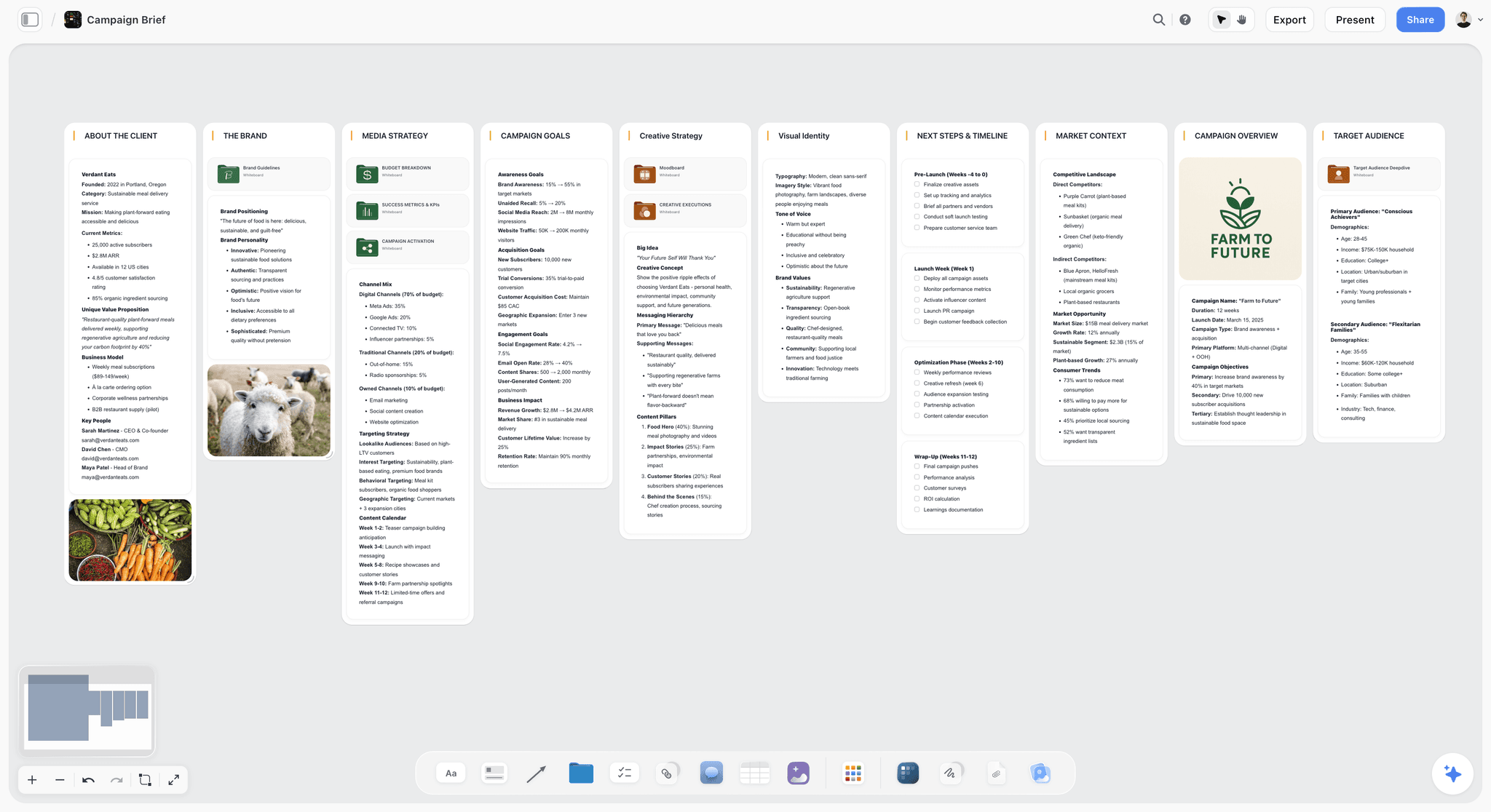
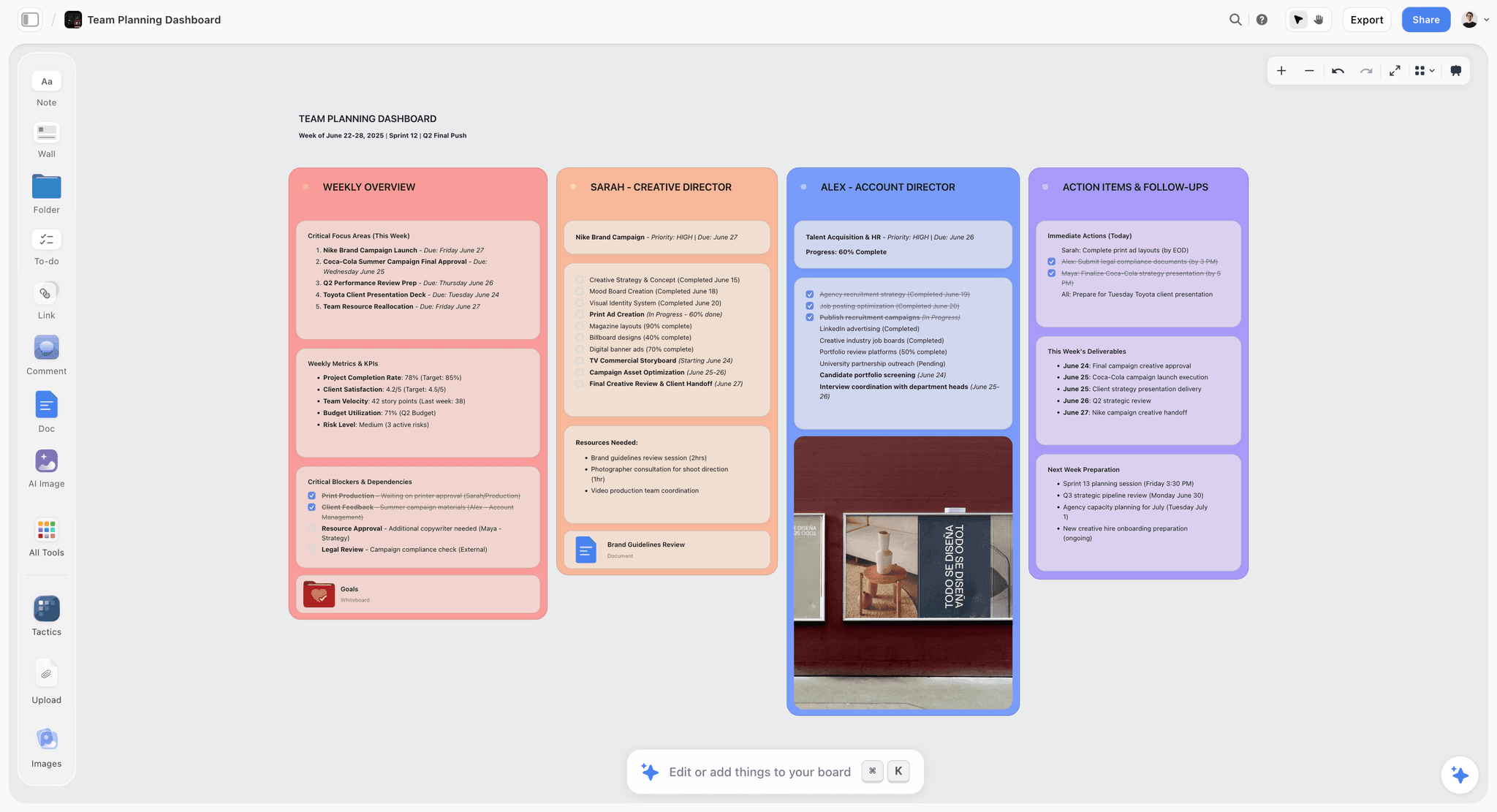
The verdict. Not a refinement tool. A canvas for the discovery conversation before an item is worth writing down, which is a real job and a narrow one.
Best for. The thinking that precedes the backlog, when nothing exists yet to size.
Pricing. Paid only during early access. Plus is $7.99 per month billed annually or $9.99 monthly, adding the 200 plus Story blueprints and unlimited file uploads. Pro is $14 per month annual or $19 monthly, adding AI image generation, roughly twenty times more AI and memory across conversations. Max is $39 per month annual or $49 monthly, adding forty times more AI and Team Workspace with permissions and roles. Pricing is flat per account rather than per seat, and anyone a paid member invites joins free. The Free plan launches before the end of 2026.
Why it ranks here. This is our product and it ranks ninth because it honestly ranks ninth for this job. Storyflow has no backlog object and no ticket object, no estimation of any kind and no Planning Poker, no acceptance criteria field, no split operation and no link relationship between items of the kind Jira, Linear and Azure DevOps all provide. It syncs to no tracker, and it has no ordering or ranked list primitive, so it cannot represent a prioritised backlog at all. If your question is where the Wednesday session should live, the answer is one of the first four tools here.
The narrow ground it holds is upstream of all that. Before an item is worth writing down there is a conversation where nobody yet knows what the item is: a support pattern somebody noticed, three half formed ideas about the cause, an argument about whether this is one problem or two. Forcing that into a ticket is how teams end up with 200 tidy amnesiac items, because a ticket demands a title and a scope before either exists.
A canvas holds that stage without demanding a shape. Storyflow's AI reads your full active canvas board, plus up to one Tactic and up to three Documents you @-mention, so you can ask what the recurring theme across forty scattered notes is, or which of three framings the evidence supports. That is a question about a body of unstructured thinking, and it is the one thing here a list based tool cannot answer. What it produces is not a refined item, but the understanding that lets somebody write a good one in Jira ten minutes later.
Against the framework: Layer one, nothing. Layer two, strong but attached to no item because there are no items. Layer three, an open question can sit beside the thinking that produced it, with a name on it. It will never surface on the ticket, because no connection exists between the two.
Strengths.
- Holds the pre item conversation without forcing a ticket shape on it too early.
- Whole board AI answers questions about a body of unstructured thinking.
- Flat per account pricing and free invited collaborators put the whole room on it.
- 200 plus Story blueprints give a discovery session a starting structure.
Limitations.
- No backlog and no ticket object. Nothing here is a work item.
- No estimation, no story points, no Planning Poker, no sizing of any kind.
- No acceptance criteria field and no Definition of Ready.
- No split operation and no link relationship between items.
- No sync or integration with Jira, Linear, Shortcut, Azure DevOps or any tracker.
- No ordering or ranked list primitive, so it cannot express a prioritised backlog.
The trade off. Use it for the twenty minutes before anything is ticketable, then write the item in your tracker. It replaces nothing here.
10. Notion
The verdict. The best place to write a refinement record and the worst place to keep one, because it drifts from the backlog on the first missed update.
Best for. Teams under about eight people who run refinement as a written discussion.
Pricing. Free personal tier. Plus is roughly $10 per user per month and Business roughly $20, billed annually, as of August 2026.
Why it ranks here. Notion can express everything this post asks for: a database of items with an estimate column, a status, a rationale field, a linked question with an owner and a date. On Layer three it is the most capable tool here, because a related database of open questions with assignees and due dates takes fifteen minutes to build, and nothing else offers a first class question object.
It ranks last anyway, and the reason is drift. The engineering work lives in Jira or Linear, where branches, pull requests and deploys connect. The Notion database becomes a hand maintained second representation of the same backlog: accurate on the day of the session and wrong by the following Tuesday. A record that is wrong is worse than none, because someone will trust it.
Teams that avoid this use Notion for session notes only, never as a parallel backlog. That works, and it means Notion is doing a smaller job than the product suggests, which Shortcut does better by keeping doc and story in one system.
Strengths.
- A linked open question database with owner and date is unmatched here.
- Refinement notes and decision records are pleasant to write and search.
- Templates make a consistent weekly session record cheap to produce.
- Free tier is sufficient for a small team's written record.
Limitations.
- A Notion backlog duplicating a real tracker goes stale within days.
- No estimation session, no poker, no ordering a tracker respects.
- No connection between the written reasoning and the branch or pull request.
The trade off. Use it for the session record, never as the backlog, and accept that docs beside the tracker do the same job with less drift.
What to Actually Pay For
Pay for the tracker your engineers already accept. Jira, Linear, Shortcut and Azure DevOps all clear the bar on Layers one and two. Migrating trackers to improve refinement is the most expensive way to fix a facilitation problem.
Pay the six dollars for Parabol if your estimates are theatre. If sizing is one loud person saying a number and everyone agreeing, a hidden simultaneous reveal changes the session immediately, and Parabol is the cheapest way to get one that writes the result back.
Pay for Miro only if your refinement is genuinely spatial. If the hard problem is finding the seams in a large feature, a canvas earns its cost. If the hard problem is vague items, you get vague stickies instead.
Do not pay for Productboard or Aha! to improve refinement. Both are excellent and neither is a refinement tool. Buy them for prioritisation evidence or strategic traceability, and expect the session to be unchanged.
Tools to Avoid for This Job
A spreadsheet as the refinement record. It holds Layer one and destroys Layer two, because a cell comment is not findable by anyone who was not in the room, and it diverges from the tracker immediately.
A chat thread as the decision record. Refinement decisions made in Slack are unrecoverable within a week. If a decision changed an item, it belongs on the item before the conversation moves on.
A Definition of Ready enforced as required fields. The intent is good and the effect is that people fill the fields. INVEST was written by Bill Wake as a conversation prompt: an item that is not Estimable should trigger a discussion, not a validation error somebody satisfies by typing "TBD".
Refining more than two sprints ahead. Detail added to items you will not start for six weeks will be wrong when you get there, and it is the fastest route to the 200 tidy amnesiac tickets this post opened with.
What No Tool on This List Does
None makes a room say what it actually thinks. The highest value moment in refinement is somebody admitting they do not understand the item, and no software produces that. Facilitation does.
None treats an open question as a first class object with an owner, a date and a surfacing rule, except Notion, which does it disconnected from the item. That is the most obvious unfilled gap in the category in 2026.
None of them, including Storyflow, closes the loop between the conversation and the item. Storyflow's gap is total rather than partial: it syncs to no tracker, so nothing from a discovery session reaches Jira or Linear except by a human retyping it. This post is not going to soften that.
And none of them stops you doing refinement badly at speed. The ticket survives the session. The reason usually does not. That is a habit problem wearing a tooling costume, and the tools above can only make the right habit cheaper.
The Bottom Line
Refinement tooling in 2026 is solved at the layer everyone markets and unsolved at the layer that matters. Every tool here shapes an item well. Half let you record why. Almost none will surface, at the moment the item is picked up, the question the room could not answer.
Stay on the tracker your engineers accept. Jira if the record matters most, Linear if session pace does, Azure DevOps if you need the decision linked to the commit, Shortcut if you want the doc in the same product. Add Parabol if your sizing rounds are one voice and a nod, and Miro only if finding the seams is your hard problem.
Whatever you buy, change one thing about the session: write the reason down while the conversation is still happening, in the item, not in a document beside it. The ticket survives the session. The reason usually does not. No tool here will do that for you, and it is worth more than all of them.
FAQ: Backlog Refinement Tools
What is the best backlog refinement tool in 2026?
For most teams it is the tracker you already use. Jira ranks first because its field level history makes the reasoning behind an item partly recoverable even when nobody documented it. Linear ranks second and is better if session pace matters more than depth of record, since splitting and annotating live is fast enough that people actually do it. Azure DevOps wins when you need the decision linked to the commit.
Is backlog refinement an official Scrum event?
No. The Scrum Guide describes Product Backlog refinement as an ongoing activity of breaking down and further defining items, and defines no meeting, timebox or required attendees. Most teams schedule a recurring session anyway, because a standing slot is easier to protect than continuous effort. That is a team convention rather than a rule, and treating it as mandatory ceremony is where refinement becomes performance.
What is the difference between backlog grooming and backlog refinement?
They describe the same activity. Refinement is the current term and grooming the older one, largely dropped because of the word's other connotations. The activity is unchanged: taking items too large or too vague and making them clear and small enough that a team can commit to them with confidence. If you see grooming in an older article, read it as refinement.
How long should a backlog refinement session be?
Since the Scrum Guide defines no timebox, the useful constraint is attention. Most teams find sixty to ninety minutes is where the room stops thinking and starts agreeing so the meeting will end. A better measure than duration is items covered properly: three genuinely understood beats eleven given a size. If you run out of time, refine fewer items rather than faster ones.
Do we need Planning Poker or is it a waste of time?
Planning Poker earns its place when your estimates are one confident voice and silent agreement. Originated by James Grenning and popularised by Mike Cohn, its value is the spread rather than the number: when votes disagree, two people are looking at different work, and finding the difference exposes a hidden assumption. If your team surfaces those disagreements already, skip it.
What does INVEST mean for user stories?
INVEST is a checklist for story quality attributed to Bill Wake: Independent, Negotiable, Valuable, Estimable, Small, Testable. Each letter is a conversation prompt rather than a pass or fail test, and an item that is not Estimable is a signal to ask what the team does not know. The common failure is turning INVEST into required form fields, which produces items nobody understands.
How do you record why a backlog item was split?
Type it as the first line of both resulting items' descriptions, during the session, before the conversation moves on. Every tool here supports that and none prompts it. Splitting silently and relying on memory fails within two sprints. Azure DevOps and Jira preserve the change in history, so the shape of a split stays recoverable even when the reason is not: a partial safety net, not a fix.
Can Storyflow replace Jira for backlog refinement?
No, and not partially. Storyflow has no backlog, no ticket object, no estimation, no acceptance criteria fields, no split or link operations, no ordering primitive and no sync to any tracker. It cannot represent a prioritised backlog. Its use here is upstream: the discovery conversation before an item is worth writing down, on a canvas that does not force a ticket shape on unformed thinking.
How far ahead should you refine the backlog?
About one to two sprints of ready work. Refining further ahead produces detail that will be wrong by the time the work starts, and it consumes session time better spent on the next thing you will actually build. The signal that you have gone too far is items being re-refined because their context changed. That is rework created by planning rather than by change.
What should a refinement session actually produce?
Shared understanding plus a written record of the questions asked and the answers given. Smaller items are a side effect, not the goal. The test: pick an item the session refined, and three weeks later ask whoever picks it up why it is scoped that way and whether anything is still unknown. If they can answer from the item alone, the session worked.
Who should attend backlog refinement?
The people who will build the item, the person accountable for the product decision, and anyone holding knowledge the room lacks, usually design or QA. Attendance beyond that adds cost without understanding. The wrong shape is a product owner presenting finished items to a passive room, because that is a briefing. If nobody asks a question in your session, the wrong people are in it.
What is the biggest mistake teams make in backlog refinement?
Measuring the session by tickets processed. That produces items that are perfectly sized, INVEST compliant and completely mute about why they exist. A backlog groomed into 200 tidy tickets nobody remembers the purpose of is worse than 40 vague ones, because vague items are honest about needing a conversation and tidy ones look safe to pick up. The reason is the output.
Templates you can use in Storyflow
Every Storyflow board starts from real structure and an AI that reads the whole canvas. Open one of these templates and make it yours.


See Storyflow in Action
A visual AI workspace where every feature lives inside one canvas. No tab-switching, no context lost.
Build your entire board from a single message
Type what you need in the AI chat at the bottom of your canvas. The AI adds cards, headings, and structure directly onto your board.
Use expert frameworks as AI context
Type @ in the AI chat and choose any Tactic. The AI tailors every response to that framework instead of giving generic advice.
Turn your board into a mind map in seconds
Ask the AI to restructure your canvas as a mindmap. It connects your ideas into a visual hierarchy so you can see how everything relates.
Why Storyflow Exists
Storyflow actually began as a personal tool while working on creative and research projects.
We kept running into the same problem: ideas were scattered everywhere: notes, documents, and whiteboards.
Nothing helped us see how everything connected.
So we started building a workspace designed around how ideas actually grow.
→ Read how Storyflow was createdSara de Klein
Head of Product at Storyflow
Published: 2026-08-14
Start creating with AI and become more productive
Transform your creative workflow with AI-powered tools. Generate ideas, create content, and boost your productivity in minutes instead of hours.