
How to Plan a YouTube Channel with AI: A Step-by-Step Guide (2026)
Most new channels fail because they start with random video ideas instead of a real content system. This guide shows how to shape your niche, personal brand, formats, first 10 videos, and monetization path with AI.

Category
YouTube
Author

Sara de Klein
Head of Product at Storyflow
Topics
2026-03-08
•
25 min read
•
YouTube- how to plan a YouTube channel with AI
- AI YouTube channel planning
- YouTube channel with AI step by step
How do you plan a YouTube channel with AI?
To plan a YouTube channel with AI, define the channel strategy first (audience, promise, niche, and pillars), then use AI to pressure-test positioning, format fit, and the first video slate before you publish anything. The mistake most people make is jumping straight to video ideas before they decide what the channel should be known for. A visual AI workspace like Storyflow helps here because its assistant reads your full active board, so the strategy, competitor notes, and draft pillars inform every suggestion instead of living in disconnected tabs. By the end of this guide you will have a channel direction, a content plan, and a first batch of videos worth making.
Key Takeaways
- Plan the channel as an 11-step system, not a list of video ideas. A channel is a product with a point of view, and the biggest mistake is jumping to video ideas before deciding what the channel should be known for.
- Give the channel a job with the sentence "This channel exists to help...". A transformation like "turn research into clear story structure" beats a topic like "filmmaking" every time.
- Test a niche by naming 20 to 30 useful video ideas for the same viewer. If you cannot, the niche is either too vague or too narrow, because "productivity" is too broad to sustain a channel.
- Choose three content pillars, and make each one a promise, not a theme. Three gives enough clarity and variety, while more than five usually means the channel still lacks focus.
- Plan the first 10 videos as one connected season: 3 foundational, 3 proof, 2 tactical, 2 experimental. They should introduce the promise and teach the viewer what the channel is for, not run as ten disconnected uploads.
- Build a format stack of flagship, medium-effort, and lightweight pieces matched to real capacity. One sustainable weekly upload beats an ambitious three-a-week plan that collapses by week three.
- Template each video into five fields: audience problem, core promise, title angle, proof, and next-step CTA. That alone can cut planning from 45 to 60 minutes per video down to 10 to 15.
- Use AI to challenge the plan, not confirm it, and set a 30-day review before video one. Ask what the plan is missing and which pillar overlaps, then measure signal like click-through rate and returning viewers instead of vanity subscriber counts.
The Problem With How Most People Plan a YouTube Channel
Most new channels start with enthusiasm and a notes app full of disconnected ideas. One tab has competitor screenshots, another has title ideas, a third has a half-finished Notion template, and none of it adds up to a real publishing system.
Then the first three videos all pull in different directions. One is educational, one is personal, one is trend-chasing, and none of them teach the viewer why they should come back. The problem is rarely effort. It is that the channel was treated like a list of video ideas instead of a product with a point of view.
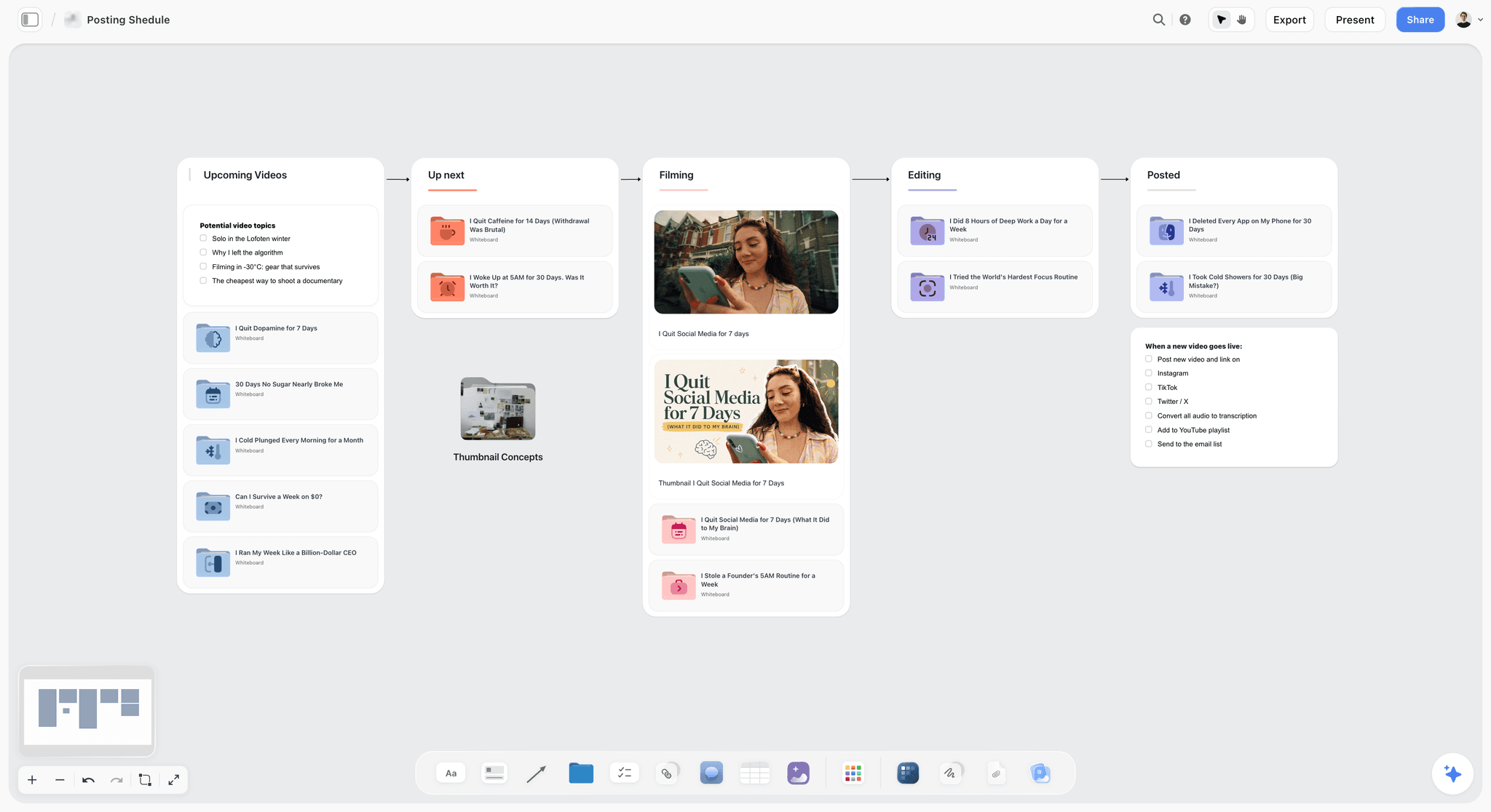
Channel planning works better when positioning, pillars, and video ideas stay visible together
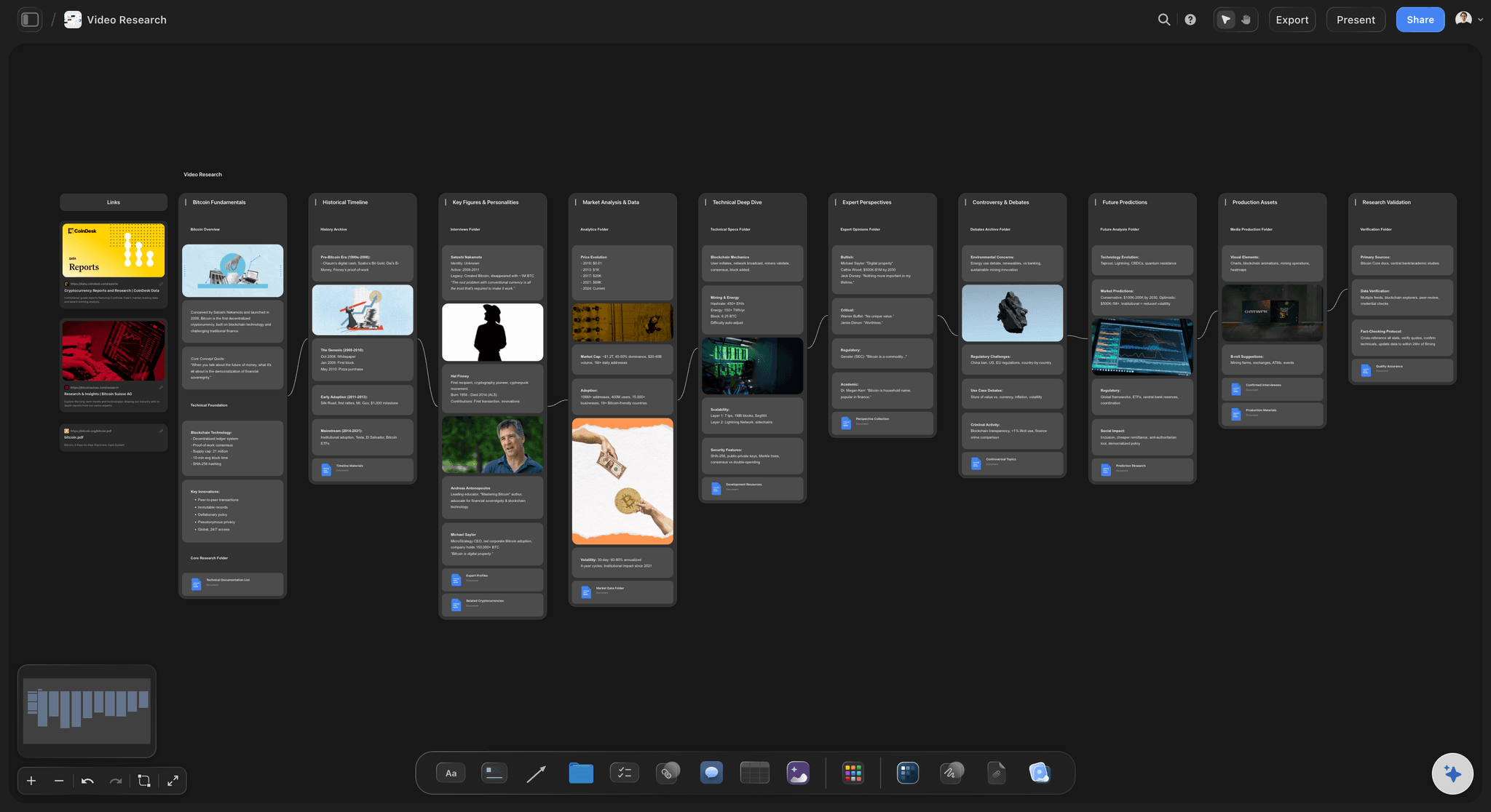
Research, strategy, and scripting become easier when the workflow lives in one place
What You Need Before You Start
- A rough area of expertise or obsession: You do not need the final niche yet, but you do need a subject area where you can make at least 20 useful videos without forcing it.
- A realistic production constraint: Write down how much time you can give the channel each week. A plan built for three uploads a week will collapse if you can only sustain one.
- A sample set of comparable channels: Pick 5 to 10 channels in or near your category so you can study patterns, gaps, and overused formats.
- A first success metric: Choose one early indicator such as returning viewers, click-through rate, watch time, or subscriber conversion so the channel has a measurable direction.
- A visual workspace where your AI can see everything - your research, your outline, your references - at once. Storyflow's free tier works for this guide.
How to Plan a YouTube Channel with AI: Step by Step in 2026
Step 1: Define what the channel is trying to do
This step gives the channel a job beyond "grow on YouTube."
Write one sentence that finishes: "This channel exists to help..." Then add the audience, the problem, and the promised result. A better answer sounds like a transformation, not a topic. "This channel exists to help first-time documentary filmmakers turn research into clear story structure" is stronger than "This channel is about filmmaking."
Then define one business or career role for the channel. The channel might attract clients, sell a course, support a product, build reputation, or become the product itself. The role matters because it changes what type of content makes sense. A reputation channel is planned differently from a channel designed to generate qualified leads.
Use this fill-in template:
- This channel exists to help `who`
- Solve `what recurring problem`
- So they can achieve `what result`
- And over time this channel should support `what business or career outcome`
Example: "This channel exists to help solo YouTube creators build stronger story-driven videos without burning out on production." Role: build authority for a creator education business and convert viewers into newsletter subscribers.
Where Storyflow helps: Put the channel statement, audience problem, and business role at the top of one board. Storyflow's AI assistant can then use those constraints every time you ask it to shape ideas, which prevents the planning from drifting into generic "viral content" advice.
Common mistake: Treating "growth" as the channel goal when growth is the result of a clear audience promise, not a strategy on its own.
Step 2: Write the personal brand angle behind the channel
This step defines why someone should watch your version of this topic instead of anyone else's.
Most channels become forgettable because the creator picks a niche but never defines the perspective they bring to it. Your personal brand is not a slogan or a logo. It is the combination of experience, taste, values, and recurring obsessions that shapes how you explain something. That is what makes two channels in the same niche feel completely different.
Write a short paragraph with four parts: what you care about, what frustrates you about the niche, what style of content you naturally enjoy making, and what kind of viewer relationship you want to build. This is where long-term alignment happens. A channel can perform well for a few videos while pulling you away from the type of work you actually want to make. That usually ends in burnout or a quiet pivot.
Useful prompts:
- What do I genuinely enjoy explaining even when nobody asks?
- What kind of content feels energising to make instead of draining?
- What advice in this niche do I disagree with?
- What do I want viewers to feel after watching my videos?
- If this channel works, what kind of reputation do I want it to create for me?
Example: "I care about helping creators build calmer systems, not louder growth hacks. I am frustrated by YouTube advice that talks about virality without showing the planning work behind it. I naturally like making board-based walkthroughs, structured breakdowns, and reflective case studies. I want the viewer relationship to feel like thoughtful collaboration, not hype."
Where Storyflow helps: Put this personal brand statement beside the channel strategy and niche options on the same board. Storyflow is useful here because the AI can compare the ideas you are considering against the type of creator you actually want to be, not only the content that looks commercially promising.
Common mistake: Choosing a niche that looks viable on paper but does not match the kind of creator identity you want to build for years.
Step 3: Choose a niche with enough depth, not just enough trend momentum
This step turns a broad topic into a channel category that can actually sustain a series.
The test for a niche is simple: can you name 20 to 30 useful video ideas that solve related problems for the same viewer? If not, the niche is either too vague or too narrow in the wrong way. "Productivity" is too broad to create a coherent channel. "Workflow systems for freelance video editors" is more useful because it points to a recurring audience problem.
Use AI here as a stress-test, not a chooser. Ask it to generate likely subtopics, recurring questions, and dead ends inside the niche you are considering. If the same five ideas repeat with different wording, that is a warning sign. A healthy niche produces multiple categories of videos: beginner problems, intermediate mistakes, comparisons, case studies, and frameworks.
Example: A creator considering "AI for creators" might tighten it into "AI systems for YouTube planning and script development." That shift immediately creates clearer topic territories: planning workflow, scripting, hooks, retention, channel positioning, and review systems.
Where Storyflow helps: Use the canvas to map three possible niche directions side by side, then ask the AI assistant to compare them for audience clarity, depth, and overlap. Seeing the options spatially makes trade-offs much easier to judge than switching between three docs.
Common mistake: Choosing a niche because it is large rather than because you can serve a distinct audience inside it repeatedly.
Step 4: Study 5 to 10 channels and find the content gap
This step identifies where your channel can be familiar enough to be understood and different enough to matter.
Pick 5 direct channels and 3 to 5 adjacent channels. Direct channels share your audience. Adjacent channels solve similar problems in a different style or category. Review their latest 20 uploads for recurring formats, title patterns, thumbnail logic, posting rhythm, and obvious blind spots. This usually takes 45 to 60 minutes the first time, and it saves weeks of vague experimentation later.
You are not looking for "what works on YouTube" in the abstract. You are looking for repeated audience demand and repeated creator habits. For example, if every channel in your niche explains concepts but few channels show the planning process behind those concepts, that gap might be your edge.
Example: In a creator-education niche, you may find dozens of videos on "how to get views" but far fewer on "how to build a repeatable planning system for a channel." That tells you the market may already have advice content, but not enough workflow content.
Where Storyflow helps: Drop screenshots, titles, notes, and observations onto one board and use the AI assistant to summarise recurring patterns. The Video Research template opens with the collection structure already laid out, so your competitor notes, gaps, and early positioning ideas can live beside each other instead of being split across tabs.
Common mistake: Studying only the biggest channels, which teaches you category conventions but often hides smaller, sharper opportunities in the middle of the market.
Step 5: Define three content pillars and the transformation each one promises
This step gives the channel structure so viewers know what kind of value to expect.
Choose three content pillars that sit at the intersection of audience need, creator expertise, and channel differentiation. Three is enough for clarity and enough variety to keep the channel from feeling repetitive. More than five usually means the channel still lacks focus.
Then write the transformation each pillar creates for the viewer. A pillar is not only a theme. It is a promise. One pillar might help viewers make better strategic channel decisions. Another might help them improve story structure. A third might help them build a workflow that keeps the channel alive long enough to matter.
Example: Pillar 1: Channel strategy, transformation = "help me stop guessing what my channel is for." Pillar 2: Script structure, transformation = "help me keep people watching longer." Pillar 3: Planning systems, transformation = "help me publish without chaos."
Where Storyflow helps: This is a strong use case for Storyflow's Story blueprints (the 200+ template library on the Plus, Pro, and Max plans). Start the board itself from the YouTube Channel Plan template, then a planning framework can sit beside your pillar map, so the AI assistant can help pressure-test whether each pillar solves a distinct problem or whether two of them should be merged before you start publishing.
Common mistake: Confusing topics with pillars. "Interviews," "shorts," and "vlogs" are formats, not strategic pillars.
Step 6: Choose formats that fit both the niche and the creator
This step decides how the channel should communicate, not only what it should talk about.
Different niches reward different formats. Some niches respond to concise tactical teaching. Others reward personality-led commentary, documentary storytelling, teardown analysis, or process-driven making videos. The strongest format is usually the one that sits at the overlap of three things: what the audience already responds to, what the niche underuses, and what you can make repeatedly without becoming resentful of your own channel.
To test format fit, write down five candidate formats and score each one on clarity, audience demand, production effort, and personal fit. A format can perform in the niche and still be the wrong format for you. If you hate making fast trend commentary, planning your channel around it is a strategic mistake even if the market rewards it short term.
Simple scoring rubric:
- `Clarity:` Would a viewer immediately understand what this format gives them?
- `Demand:` Does this format already show signs of working in the niche?
- `Differentiation:` Does this format help the channel feel distinct?
- `Personal fit:` Would you still want to make this format 30 times?
- `Production reality:` Can you produce it at the cadence your life allows?
Example: In a creator-education niche, possible formats might be channel audit breakdowns, whiteboard strategy sessions, script teardown videos, creator case studies, and behind-the-scenes build logs. A whiteboard strategy session may win because it fits the creator's real strengths and gives the channel a more distinct identity than generic talking-head advice.
Where Storyflow helps: Put the possible formats into columns on a board and attach examples, effort notes, and audience outcomes to each. Storyflow makes this easier because you can compare the strategic fit and the production reality at the same time instead of choosing format on instinct alone.
Common mistake: Choosing the format that seems most popular in the niche without checking whether it actually matches the kind of videos you want to keep making.
Step 7: Build a format stack and publishing rhythm you can actually sustain
This step makes the channel operational instead of aspirational.
Most people plan a channel as if every upload will be their maximum-effort video. That is not a strategy. It is a burnout plan. Instead, create a format stack with three levels: flagship videos, medium-effort support videos, and lightweight repeatable pieces. This matters because channels grow faster when they can publish consistently enough to learn, not just occasionally enough to impress.
Then choose a rhythm that matches your actual production capacity. For many solo creators, one strong weekly upload is a better system than trying and failing to do three. If one flagship video takes 8 to 12 hours, your plan must account for that. A sustainable plan beats an ambitious one that collapses by week three.
Example: One creator might choose one flagship analysis video every week, one lower-effort short clip extracted from the same research, and one community post that tests future titles or ideas.
Where Storyflow helps: Use one board to lay out your format stack visually: pillar, format, effort level, and publishing cadence. Storyflow's AI assistant can then help rebalance the plan if the production load is too heavy for the time you actually have.
Common mistake: Building the plan around ideal output instead of available capacity.
Step 8: Plan the first 10 videos as a coherent slate, not isolated ideas
This step gives the channel a strong starting sequence instead of ten disconnected uploads.
Your first 10 videos should work together. They should introduce the channel promise, cover a few obvious audience problems, establish format variety, and start teaching the viewer what your channel is for. Think of this as a first season, not a random backlog.
A useful structure is: 3 foundational videos, 3 proof or case-study videos, 2 tactical quick wins, and 2 experimental edges. Foundational videos define the channel. Proof videos build trust. Tactical videos convert curiosity into action. Experimental videos test where the strongest response might come from. Planning the first 10 this way gives you early range without losing coherence.
Example: For a YouTube-planning channel, the first slate might include: `How to Plan a YouTube Channel with AI`, `The 3 Content Pillars Every Small Creator Needs`, `Why Most New Channels Burn Out by Video 5`, `How I Would Audit a Tiny Channel with 500 Subscribers`, and `A 7-Part Script Template for Better Retention`.
Where Storyflow helps: Map the first 10 videos on a board, cluster them by pillar, and attach short notes for angle, outcome, and CTA. This is where Storyflow becomes more useful than a list because you can see balance, repetition, and gaps across the whole slate at once.
Common mistake: Choosing first videos only by excitement, which often produces a slate with no strategic progression.
Step 9: Decide how the channel could monetize before growth forces the question
This step keeps monetization aligned with the channel rather than awkwardly attached later.
Long-term monetization strategy should shape the channel early, even if revenue is not the immediate priority. Not because every channel needs to sell fast, but because monetization changes what type of trust you need to build. A creator who eventually wants to sell courses needs different content architecture than a creator who wants sponsorships, consulting leads, memberships, or a media brand.
Write down one primary monetization path and one secondary path. Then test whether the channel promise, content pillars, and format stack support that path naturally. For example, a sponsorship-heavy strategy may reward broad reach and repeatable audience themes. A consulting-led strategy often benefits more from high-trust, expertise-signaling content. A digital-product path usually needs clearer frameworks, stronger transformation promises, and more search-friendly educational content.
Monetization planning questions:
- What do I want the channel to make possible in 12 to 24 months?
- Do I want revenue to come from audience scale, audience trust, or both?
- Would my current content plan attract the kind of viewer who buys that offer?
- What proof would a future sponsor, client, or customer need from this channel?
- Which pillar is most likely to drive monetizable trust, not just views?
Example: A creator planning a YouTube strategy channel might choose primary monetization = cohort-based workshop or consulting, secondary monetization = templates and affiliates. That would favor channels built around diagnosis, process, and proof rather than pure entertainment.
Where Storyflow helps: Put monetization paths on the same board as pillars and video ideas. Storyflow is useful here because the AI can point out when the channel strategy and monetization path are pulling in different directions, which is one of the most common hidden problems in channel planning.
Common mistake: Avoiding monetization strategy because it feels too early, then discovering six months later that the channel grew around the wrong type of demand.
Step 10: Turn each video idea into a repeatable planning template
This step is what makes the channel easier to run after the first burst of motivation fades.
For each video, define the same five fields: audience problem, core promise, title angle, proof or example, and next-step CTA. Once those fields exist, you are no longer starting from zero every time. You are filling out a system. That alone can cut planning time from 45 to 60 minutes per video down to 10 to 15 once the pattern is in place.
Then decide what parts of the workflow repeat across all videos. Hook structure, supporting examples, CTA style, thumbnail logic, and description format are all candidates for templating. The more repeatable pieces you define early, the more mental energy stays available for the actual creative judgment.
Example: A recurring template might use: hook problem in line one, false assumption in line two, framework in line three, proof example in line four, and actionable takeaway in line five.
Where Storyflow helps: This is another place where Storyflow's blueprints are useful. The YouTube Video Plan template is that repeatable structure as a ready-made board: instead of remembering every part of the planning logic, you work through a visible structure and let the AI assistant help fill weak spots in the angle, framing, or proof.
Common mistake: Treating each video as a separate creative event instead of part of a channel system.
Step 11: Define the first 30-day review before you publish video one
This step keeps the channel from becoming an emotional guessing game.
Pick three early metrics and one qualitative review question. For example: click-through rate, average view duration, returning viewers, and "Which pillar seems to create the clearest audience response?" Early channel planning should measure signal, not vanity. Subscriber count is too slow and too noisy to be your only lens.
Then decide what would trigger a change. If the foundational videos get clicks but not watch time, the packaging may be working while the structure is weak. If one pillar consistently outperforms the others, the channel may need to narrow faster. A 30-day review turns data into decisions instead of vague feelings about whether the channel is "working."
Where Storyflow helps: Keep the strategy, first 10-video slate, and review notes on the same board so the metrics stay connected to the original plan. That makes iteration cleaner because you can see what changed in the work, not only what changed in the numbers.
Common mistake: Waiting until several videos are already live before deciding what success should look like.
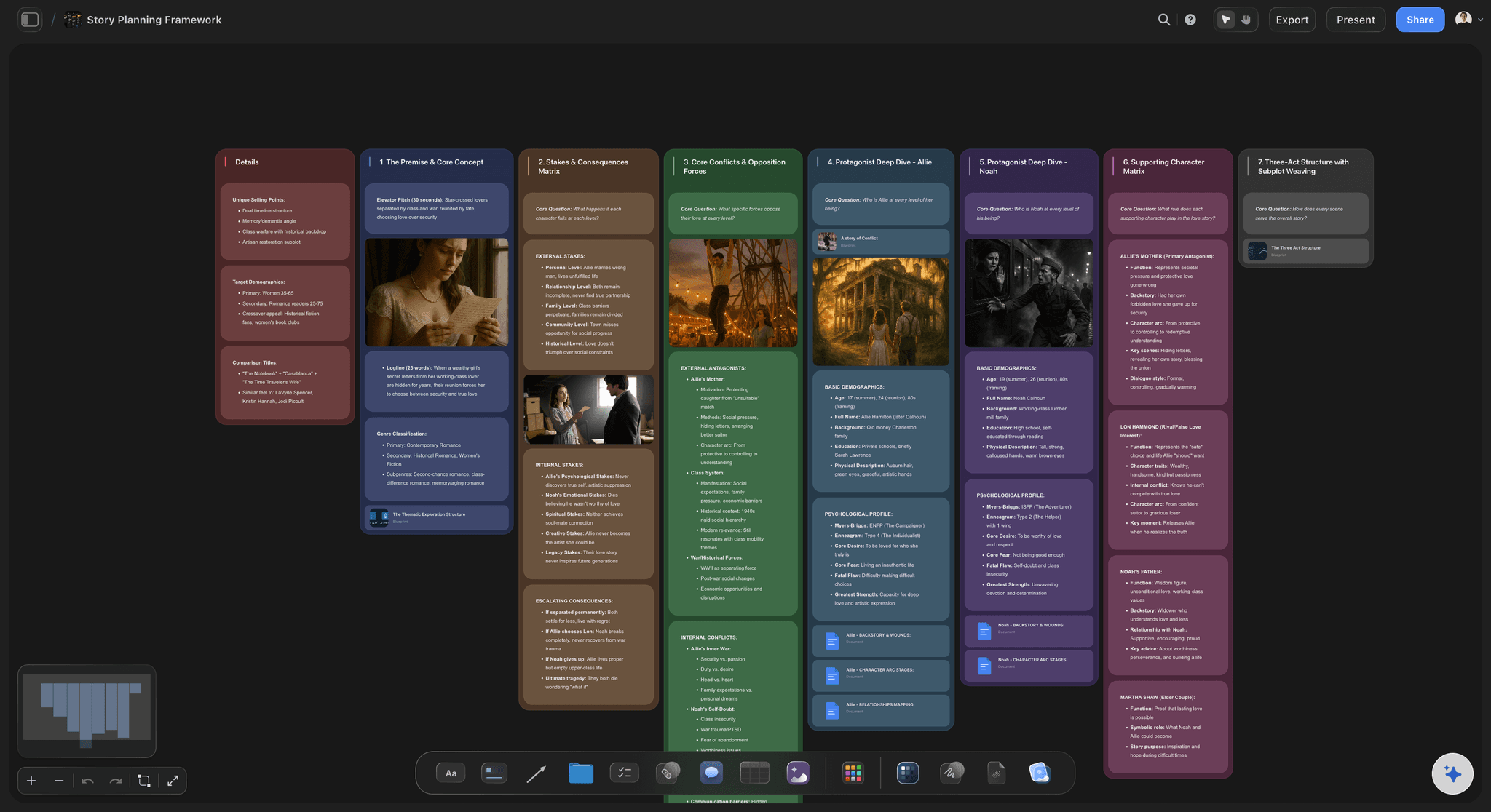
A first 10-video slate is easier to shape when you can see the whole channel system at once
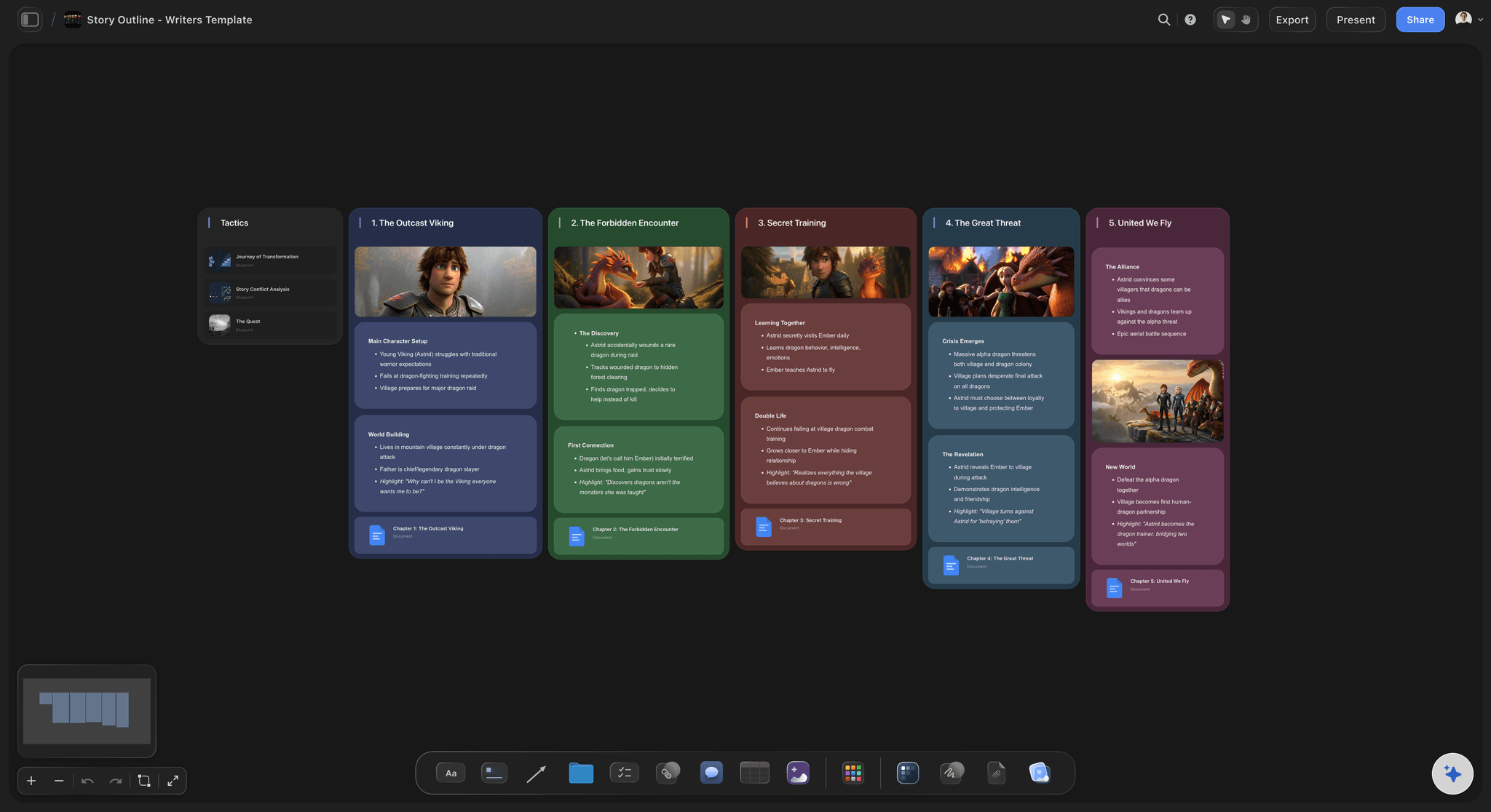
Strong channel planning connects positioning, formats, and story structure before production begins
Stress-test your pillars with a real video slate
Describe your channel direction and let AI generate a batch of video ideas with hooks and angles, then sort them under your three pillars to see which pillar is thin before you publish anything.

Quick Reference Summary
This is the condensed version of the workflow for people who want the checklist first.
The 11-Step Process at a Glance:
- Define the channel role - decide what the channel exists to do
- Write the personal brand angle - define the perspective behind the channel
- Choose the niche - pick depth over trend momentum
- Study the market - find the content gap
- Set content pillars - define the transformation each one promises
- Choose formats - match niche fit with creator fit
- Build the format stack - match cadence to capacity
- Plan the first 10 - create a real starting slate
- Define monetization - align revenue with the channel direction
- Template the workflow - make planning repeatable
- Set the 30-day review - decide what you will measure
Tips and Best Practices
These are the habits that make a YouTube channel plan survive contact with real production.
Plan around viewer return, not only video performance
A good channel plan is not only about making one strong video. It is about teaching viewers why they should come back. If a channel produces one-off spikes without a repeatable reason to return, growth gets harder than it should be.
Use AI to challenge your assumptions, not confirm them
If you only ask AI to validate your first idea, you will get polished versions of your bias. Ask it what your plan is missing, which pillar overlaps too much, and what a skeptical viewer would find unclear. The value is in pressure-testing, not flattery.
Build fewer pillars than you want
Most creators start with too many themes because too many interests feel exciting. Three pillars usually outperform five because the viewer learns the channel faster. Clarity compounds.
Make one pillar the identity pillar
One pillar should teach the viewer what the channel is fundamentally known for. The others can support it, widen it, or make it more personal. If all pillars have equal weight, the channel often feels flat.
Match monetization to trust, not only to audience size
Some channels should aim for sponsorship scale. Others should aim for depth strong enough to sell a workshop, a product, a service, or a membership. Planning monetization early helps you avoid building a channel that attracts attention but not the kind of relationship your business model needs.
Treat the first 10 videos as a diagnostic phase
Your first 10 uploads are not only content. They are research. I have seen creators protect early plans too hard when the smarter move was to notice what the response was teaching them and narrow faster.
Keep planning, scripting, and review in the same workspace
This is where Storyflow helps in a practical way. If the strategy lives in one place, the script draft in another, and the review notes somewhere else, the channel starts fragmenting immediately. Keeping the board, documents, and AI context together makes iteration much cleaner.
Common Mistakes to Avoid
Mistake: Choosing a topic instead of a channel promise It happens because topics are easier to list than transformations. The result is a channel that sounds broad but gives viewers no reason to subscribe. Write the promise first, then choose topics that prove it.
Mistake: Planning the channel around maximum effort videos It happens because creators imagine the ideal version of the channel, not the sustainable one. The result is a plan that looks exciting for two weeks and impossible by the fourth upload. Build a format stack that matches the time and energy you actually have.
Mistake: Copying successful channels too literally It happens because market research easily turns into imitation. The result is a channel that feels familiar but replaceable. Study patterns and gaps, then build a point of view that is recognisable as yours.
Mistake: Treating every video as a separate idea It happens because individual titles are easier to judge than channel structure. The result is a slate that has variety but no coherence. Plan the first 10 as a connected season with different roles inside it.
Mistake: Ignoring monetization until the channel already has momentum It happens because revenue planning feels premature when the channel is still small. The result is a channel that may grow in the wrong direction for the kind of business or career you actually want. Choose a primary and secondary monetization path early so content and trust are built toward something coherent.
Mistake: Measuring too late It happens because creators want to "see what happens" before deciding what success means. The result is that weak performance feels mysterious when it is actually untracked. Choose your first review metrics before video one goes live.
Start Your First YouTube Channel Plan Today
What usually stops people is not a lack of ideas. It is the fear of choosing the wrong niche, committing to the wrong format, or building a plan they cannot sustain. That uncertainty is normal. It is also exactly why a planning system matters.
Here is the concrete first move. Open a new Storyflow board, write the one-sentence channel promise at the top, then map three possible niche directions, one personal brand paragraph, and three draft pillars underneath it. If you are short on concrete video concepts to stress-test those pillars, generate a batch of video ideas with AI and sort them under the pillars they fit. Give yourself one focused session, and at the end ask the AI assistant to name which niche has the most distinct audience and which pillar overlaps too much. The free tier is enough to do that well, because the assistant becomes useful the moment your niche ideas, channel role, and competitor notes are visible in the same project instead of scattered across tabs.
The point of channel planning is not to control every future upload. It is to give your next ten videos a direction strong enough that the audience can tell why they should come back.
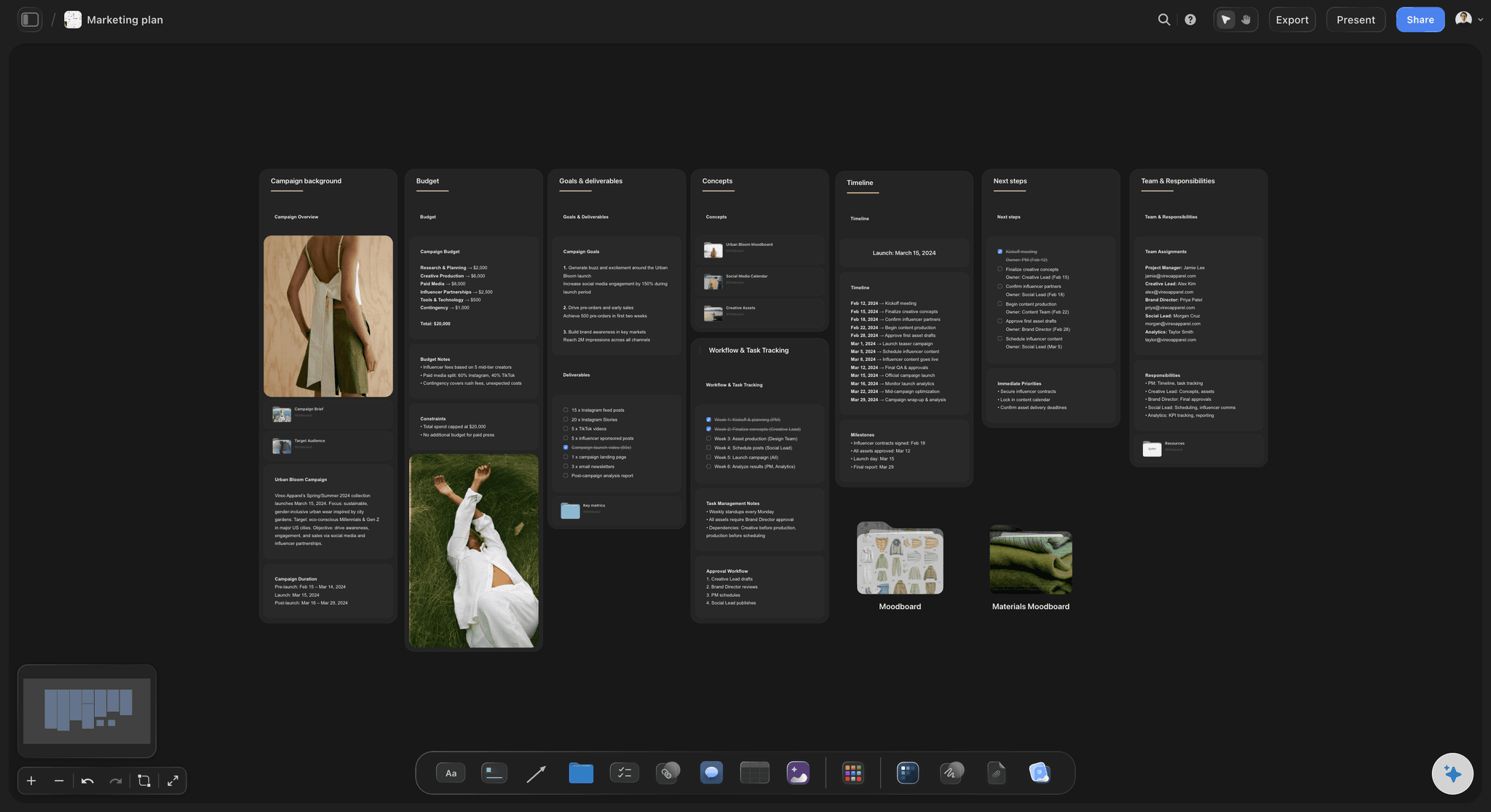
Storyflow's free tier is enough to map your niche, pillars, first video slate, and review system
FAQ: How to Plan a YouTube Channel with AI in 2026
How long does it take to plan a YouTube channel with AI?
Planning a YouTube channel with AI usually takes 90 minutes to 3 hours for the first solid version. Step 1 through Step 4 can often be done in one focused session, while planning the first 10 videos and building templates usually takes a second session. The process gets much faster once the channel has pillars and repeatable formats.
Is planning a YouTube channel with AI better than doing it manually?
Yes, if AI is used to structure and challenge the plan rather than invent the whole channel for you. Manual planning is often strong on intuition but weak on consistency. AI helps compare niche directions, surface overlap between pillars, and pressure-test the first slate. The strategy still needs human judgment.
How many content pillars should a YouTube channel have?
A YouTube channel usually works best with 3 content pillars at the start. Fewer than 3 can make the channel feel too narrow, while more than 5 often confuses both the creator and the viewer. Three gives you enough variety to publish consistently and enough clarity for the audience to understand what the channel is about.
What should the first 10 YouTube videos be about?
The first 10 YouTube videos should introduce the channel promise, prove you can solve a real viewer problem, and show enough range to establish your formats. A useful mix is 3 foundational videos, 3 proof or case-study videos, 2 tactical quick wins, and 2 experimental tests. That gives the channel a clear first season instead of a random opening batch.
How do I make sure the channel fits my personal brand?
The channel fits your personal brand when the niche, formats, and tone all reinforce the kind of creator you want to become over several years. A good test is whether you would still want to make this category of video after the novelty wears off. If the plan looks smart on paper but feels out of character in practice, the channel will eventually drift or stall.
Can I plan a YouTube channel with AI if I am a beginner?
Yes, beginners can use AI effectively for channel planning because the most useful part of the process is structure, not advanced strategy vocabulary. AI can help map audience problems, compare niche directions, and organise the first slate. The main thing beginners still need to do themselves is choose a promise they can sustain with real knowledge or curiosity.
What is the best AI tool for planning a YouTube channel?
The best AI tool for planning a YouTube channel is the one that can see your research, pillars, draft ideas, and workflow in the same place. Storyflow is strong for this because its AI reads your full active canvas board by default, plus up to 1 Tactic and 3 Documents you @-mention, so suggestions reflect the whole plan rather than a single isolated prompt. Where Storyflow loses: if you only need to publish to a calendar, schedule uploads, and track analytics, a dedicated tool like TubeBuddy or vidIQ does that job better. Storyflow plans the channel. It does not run the publishing pipeline. General chat tools are useful for isolated prompts but weaker for channel-level planning because they forget the rest of your project between questions.
Can I use ChatGPT or Notion instead of Storyflow for YouTube channel planning?
Yes, you can use ChatGPT or Notion for parts of the process. ChatGPT is useful for idea expansion and prompt-based comparisons, while Notion is useful for storing the final structure. Storyflow is stronger when you want the strategy, board, notes, and AI context visible together, which matters once the plan starts turning into real production work.
How often should I change my YouTube channel plan?
You should not change the core plan every week, but you should review it every 30 days during the early phase of the channel. The point is to protect the strategy long enough to generate signal while still responding to real patterns. Most creators change too early from emotion or too late from stubbornness.
What metrics matter most when planning a new YouTube channel?
The most useful early metrics are click-through rate, average view duration, returning viewers, and the relative performance of each content pillar. Subscriber growth matters, but it is too lagging to guide the first month alone. Early planning should focus on whether the packaging works, whether the videos hold attention, and whether one strategic direction is clearly stronger.
What is the best monetization strategy for a small YouTube channel?
The best monetization strategy for a small YouTube channel depends on what kind of trust the channel is building. Sponsorships usually reward scale and broad relevance. Services, consulting, products, memberships, or templates often reward depth and specificity. Small channels usually monetize better by aligning with a clear business model early than by chasing generic growth first and figuring revenue out later.
Table of Contents
- Key Takeaways
- The Problem With How Most People Plan a YouTube Channel
- What You Need Before You Start
- How to Plan a YouTube Channel with AI: Step by Step in 2026
- Quick Reference Summary
- Tips and Best Practices
- Common Mistakes to Avoid
- Start Your First YouTube Channel Plan Today
- Step 1: Define what the channel is trying to do
- Step 2: Write the personal brand angle behind the channel
- Step 3: Choose a niche with enough depth, not just enough trend momentum
- Step 4: Study 5 to 10 channels and find the content gap
- Step 5: Define three content pillars and the transformation each one promises
- Step 6: Choose formats that fit both the niche and the creator
- Step 7: Build a format stack and publishing rhythm you can actually sustain
- Step 8: Plan the first 10 videos as a coherent slate, not isolated ideas
- Step 9: Decide how the channel could monetize before growth forces the question
- Step 10: Turn each video idea into a repeatable planning template
- Step 11: Define the first 30-day review before you publish video one
- FAQ: How to Plan a YouTube Channel with AI in 2026
- Related Reading
Templates to check out for this topic


Content and video templates you can use in Storyflow
Plan a channel, a script, and a content pipeline on the same board. Open one of these templates and let the AI build on the structure instead of starting from a blank doc.


See Storyflow in Action
A visual AI workspace where every feature lives inside one canvas. No tab-switching, no context lost.
Build your entire board from a single message
Type what you need in the AI chat at the bottom of your canvas. The AI adds cards, headings, and structure directly onto your board.
Use expert frameworks as AI context
Type @ in the AI chat and choose any Tactic. The AI tailors every response to that framework instead of giving generic advice.
Turn your board into a mind map in seconds
Ask the AI to restructure your canvas as a mindmap. It connects your ideas into a visual hierarchy so you can see how everything relates.
Why Storyflow Exists
Storyflow actually began as a personal tool while working on creative and research projects.
We kept running into the same problem: ideas were scattered everywhere: notes, documents, and whiteboards.
Nothing helped us see how everything connected.
So we started building a workspace designed around how ideas actually grow.
→ Read how Storyflow was createdSara de Klein
Head of Product at Storyflow
Published: 2026-03-08
Extremely simple, seriously capable


See how easy it is to get started
Watch a real project come together, from a blank board to a finished plan, clicked through step by step.
Start creating with AI and become more productive
Transform your creative workflow with AI-powered tools. Generate ideas, create content, and boost your productivity in minutes instead of hours.