
How to Plan a Brand Campaign with AI: A Step-by-Step Guide (2026)
Most brand campaigns fail in the plan, not in the edit. This eight-step method locks objectives and audience tension before AI touches creative, keeps every decision on one board, and ends with a spine stakeholders can freeze before production spend rises.

Category
Marketing
Author

Sara de Klein
Head of Product at Storyflow
Topics
2026-04-08
•
20 min read
•
Marketing- how to plan a brand campaign with AI
- brand campaign planning AI
- AI marketing campaign tool
How do you plan a brand campaign with AI?
To plan a brand campaign with AI, lock your success metrics and audience tension first, then use a board-aware AI workspace like Storyflow to pressure-test creative territories against those constraints on one visual canvas. The order matters: most plans collapse because tactics arrive before anyone writes the job, so slides list channels and hooks while no one defines winning. Work the eight steps below and you finish with a campaign spine, three scored territories, a phased asset scope, and review gates you can defend in a stakeholder meeting.
The Problem: When Campaign Planning Becomes a Slide Stack With No Spine
How to plan a brand campaign with AI still misfires when nobody publishes a spine: models can draft copy, but they cannot invent the success definition you never wrote.
The broken process looks familiar: someone starts a deck, fragments of research live in Google Docs, priorities sit in Notion templates meant for another team, and the project chat spawns a dozen summaries nobody trusts. By week three, every creative review debates taglines because no one can point to the sentence that defines success. AI tools layered on that mess only accelerate busywork. They do not create alignment.
Planning should produce a spine everyone defends: what we need the audience to believe, how we will prove it, where we will show up, and when decisions lock. This guide builds that spine before AI touches headlines, and it keeps the plan on one visual workspace so context does not evaporate between tabs.

Keep objectives, audience tension, and channel roles on one board so reviews stay anchored to the same spine
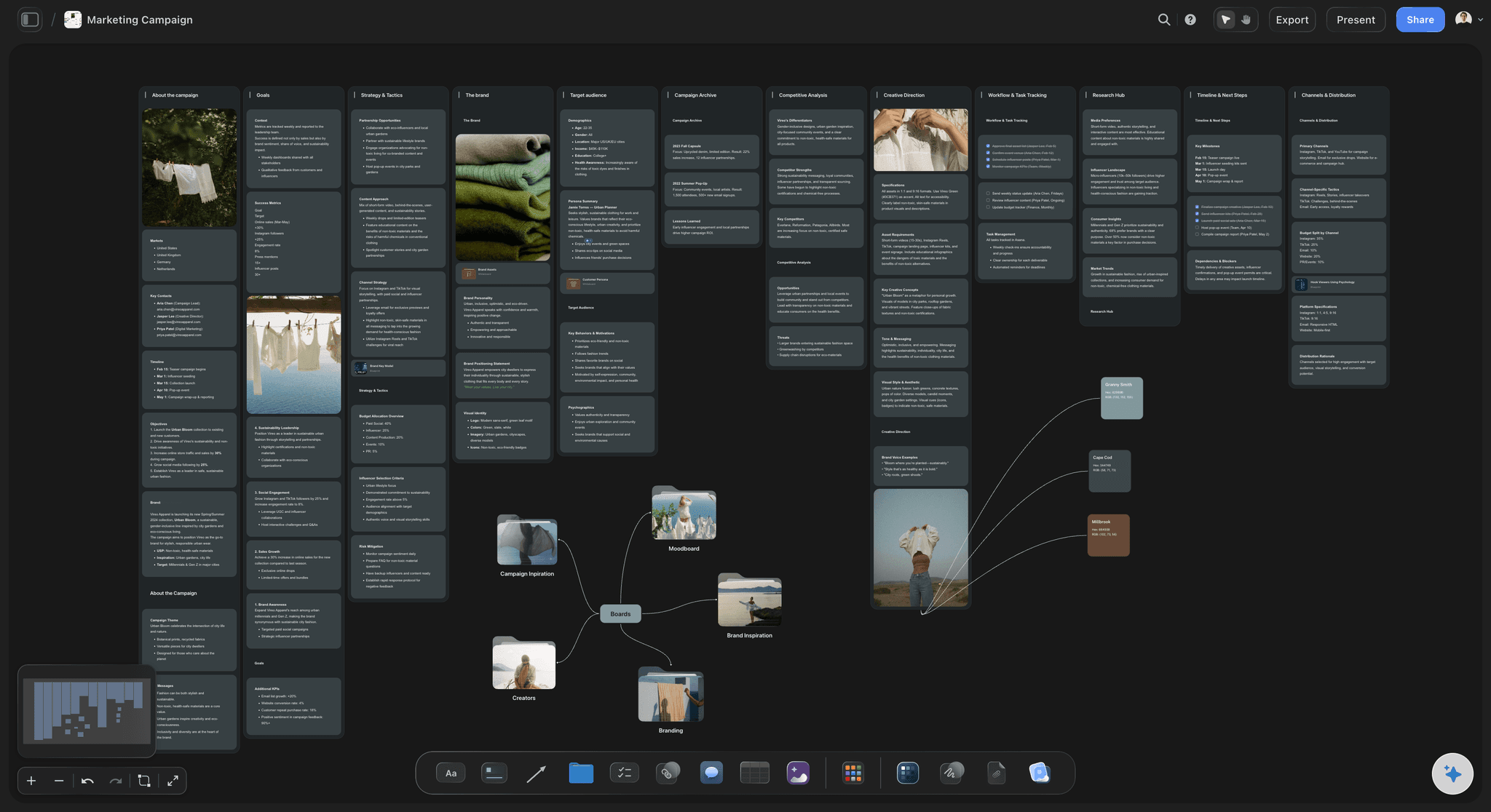
Campaign planning stops being a scattered slide stack when proof, promises, and milestones share one surface
What You Need Before You Plan a Brand Campaign With AI
Sponsorship from someone who can say no to scope creep: Without that voice, Steps 1 and 4 become wish lists. Identify them before you invite the full room.
Rough budget band and launch window even if numbers move slightly: AI cannot prioritize channels honestly if resources are undefined.
Any non-negotiable brand or legal rails in writing: Paste them on the board early so territories do not celebrate ideas that cannot ship.
90 minutes of focused solo time before the first group session: You need quiet thinking to draft the scorecard without performance pressure.
Storyflow as the visual campaign workspace: The free tier supports three projects, unlimited boards, and ten AI generations per month, enough to complete this guide once you keep assets together on one active board.
How to Plan a Brand Campaign with AI: Step by Step (2026)
Step 1: Define the Job, Constraints, and Success Scorecard
Output: A one-page scorecard: objective, metrics, budget band, timeline, non-goals
Campaign planning fails when the group debates creative before anyone commits to what success measures. Step 1 produces a short scorecard you will reuse in every later decision. Write one business outcome (pipeline, revenue, perception shift, or retention move), the audience slice that matters, the time window, and the proof you will accept at the end. Add constraints: budget band, legal lines you cannot cross, brand equities you cannot break, and explicit non-goals so teams stop chasing vanity ideas.
Example scorecard fragment: Objective: increase qualified trials from mid-market finance teams by 18 percent in Q3. Audience: ops leaders who already use spreadsheets for compliance reporting. Proof: sustained lift in activated trials plus qualitative win-loss notes, not raw impressions.
Spend 45 to 60 minutes here the first time. Rushing this step is why later creative reviews collapse into opinion. If leadership cannot sign the scorecard, stop. No channel map will fix unclear success.
Where Storyflow helps: Create a dedicated Storyflow board for the campaign and place the scorecard cards at the top center. When you open the AI assistant later, it reads those cards on the active board first, so suggestions stay tied to the objective instead of drifting into unrelated headline ideas.
Common mistake: Listing twelve KPIs so every tactic can claim a win; narrow to one primary outcome and one guardrail metric.
Step 2: Capture Audience, Tension, and Proof Burden
Output: A half-page tension narrative plus the evidence you need people to believe
Audiences do not fail campaigns; vague audience writing does. Capture who they are today, what they believe that blocks you, and what observable behavior would show belief changed. Pair that with proof burden: what would a reasonable skeptic need to see to trust your proposition?
Example tension note: Ops leaders believe lightweight tools cannot survive audit scrutiny, so they stick with spreadsheets even when the process hurts. Proof burden might be a third-party compliance summary, a filmed testimonial from a risk lead, or a transparent security architecture diagram.
Pull supporting quotes, metrics, or qualitative notes onto the board as reference cards. Unstructured research in an email thread is where AI hallucination starts because the model never sees the nuance you skimmed.
Where Storyflow helps: Drop research snippets, interview bullets, and competitor screenshots directly on the canvas around your tension card. When you @-mention up to three documents in AI chat, you can point the assistant at a longer research doc while it still sees the live board layout.
Common mistake: Writing personas with demographics only; if you cannot name the belief that hurts you, Step 3 will produce slogans, not strategy.
Step 3: Write the Single-Minded Proposition
Output: One sentence promise, one proof type, one reason to believe
Translate scorecard tension into a single-minded proposition: the specific change you want the audience to understand. If you need multiple sentences, you still have multiple ideas. Pair the sentence with the proof vehicle you will lead with.
Example proposition: "Compliance-grade workflow visibility without exporting another CSV archive," proof led by a side-by-side time-on-task benchmark verified by finance ops.
This output is the lens every territory must pass through in Step 5. Skip revising this until stakeholders agree; otherwise territories become arguments about wording instead of direction.
Where Storyflow helps: Place the proposition in a bold card linked back to sentiment and proof cards with connectors so creatives trace the logic visually. Blueprint Tactics such as AIDA (available among Storyflow Tactics) can sit beside the card when you want structured prompts that relate attention, interest, desire, and action to your live draft.
Common mistake: Confusing a tagline for a proposition; taglines ornament, propositions decide what work the campaign must do.
Step 4: Map Channels by Role, Not Popularity
Output: A table of channels with role sentences tied to the proposition
List only channels you will actually resource. For each, answer: what job does this surface do for the belief shift, what asset type leads, and what success signal fires first? If a channel cannot answer in two lines, cut it.
Example row: LinkedIn sponsor plus founder POV posts: seed credibility for skeptical ops leaders; lead asset is 60-second narrative proof clip; early signal is engaged comments from target titles, not total views.
AI is strongest at generating long lists of tactics. Your job is aggressive deletion. Feeding the trimmed map back into AI is what produces useful adaptation ideas instead of generic media mixes.
Where Storyflow helps: Lay channels out spatially (priority left, experimental right) so stakeholders see tradeoffs. Because the layout lives on the active board, you can ask the assistant to stress-test under-resourced channels against the scorecard without retyping context.
Common mistake: Giving every channel equal weight because stakeholders expect parity; parity is how under-funded ideas sneak into execution.
Step 5: Develop Three Creative Territories and Run Kill-Tests
Output: Three named territories, each scored against the Step 1 scorecard
Draft three territories: name, emotional hook, proof centerpiece, and media behavior. Do not polish copy yet. Run each territory through kill-tests: Does it change the belief named in Step 2? Can we prove it inside the budget? Does it violate a non-goal?
Example territory snapshot: Territory B "Ledger Relief" focuses on the emotional release when monthly reconciliation ends on time; proof centerpiece is a diary-style film with finance ops; kill-test fails if legal cannot support spoken claims about time saved.
Use AI to argue against your favorite territory. Ask what would make each direction fail with a skeptical buyer, which proof gaps appear, and what cheaper proof could substitute. The point is not to trust the critique blindly; it is to rehearse objections before media spend locks.
Where Storyflow helps: Cluster territory cards in their own canvas zone. Ask Storyflow's assistant to challenge assumptions while your scorecard and proposition remain visible on the same board, and add a Blueprint Tactic via @ mention when you want framework language layered onto the critique.
Common mistake: Falling in love with the first clever line; cleverness that fails the scorecard burns calendar, not lack of talent.
Step 6: Scope Assets and Production Waves
Output: Wave-one asset list with owners, formats, and dependencies
Translate the winning direction into buildables: hero asset, supporting cuts, landing updates, sales enablement, and measurement hooks. Split wave one (launch-critical) from wave two (learn-and-iterate). Assign rough hours or budget bands so producers can flag fantasy scope early.
Example wave-one row: Hero film 90 seconds, director treatment due Thursday, legal review of claims tied to Step 2 proof sheet, landing module swapping the outdated compliance paragraph.
If procurement needs vendor bids, attach rough specs here so pricing compares apples to apples.
Where Storyflow helps: Use a simple column layout on the board (cards per wave) or convert to a lightweight document inside the same Storyflow project when partners need paragraphs. AI can help draft specs or checklists while reading the asset cards you placed, which reduces mismatch between strategy language and production language. Honest limit: Storyflow plans the campaign; it does not buy media, run flights, or report performance. Keep your media buying and analytics in the platforms built for them (Meta Ads Manager, Google Ads, your BI tool) and use the board as the spine those tools execute against.
Common mistake: Planning every asset for launch; leave at least two spare slots for learnings from Step 7 reviews.
Step 7: Build Milestones, Owners, and Review Gates
Output: A dated line with approvals ordered before spend escalates
Create milestones for brief lock, creative review, legal, media booking, and launch-ready analytics. Name owners in plain text; ambiguity here becomes slippage. Build at least one midpoint review that can kill or pivot without shame.
Late-stage rework usually drops when legal and brand guardians see the spine from Step 1 before they see craft. If your organization needs formal sign-offs, mirror those gates explicitly.
Assuming 2026 collaboration norms, remember real-time multi-editor sessions on the canvas are a Storyflow Max plan feature; solo and Pro plans still support sharing links and comments for async review.
Where Storyflow helps: Pin the milestone strip at the bottom of the board so every screenshot you export for leadership includes dates plus context. AI can summarize readiness risks for the next gate using the cards above it, which saves pre-meeting memo time.
Common mistake: Skipping a mid-campaign metrics checkpoint; that is how underperforming flights burn full budget before anyone notices.
Step 8: Run the Stakeholder Readout and Freeze v1
Output: Signed spine PDF or email thread capturing edits and frozen decisions
Walk stakeholders through the board in order: scorecard, tension, proposition, trimmed channels, chosen territory, wave-one assets, milestones. Capture edits live and park out-of-scope ideas in a visible parking lot so they do not derail closure.
Export the board or summary document after the meeting. Freezing v1 means new ideas go to a backlog, not back into the spine without another review. That discipline is what preserves timeline integrity during execution.
Teams that skip a documented freeze often repeat the same argument in craft reviews because nobody remembers which tradeoffs were accepted.
Where Storyflow helps: Export the board as PDF or image for records, and keep the live Storyflow project as the working system of truth while agencies iterate. When new questions appear, reopen AI chat with the frozen cards still present so answers extend the approved plan instead of rewriting it silently.
Common mistake: Ending with verbal alignment; Send the recap within 24 hours or drift begins immediately.
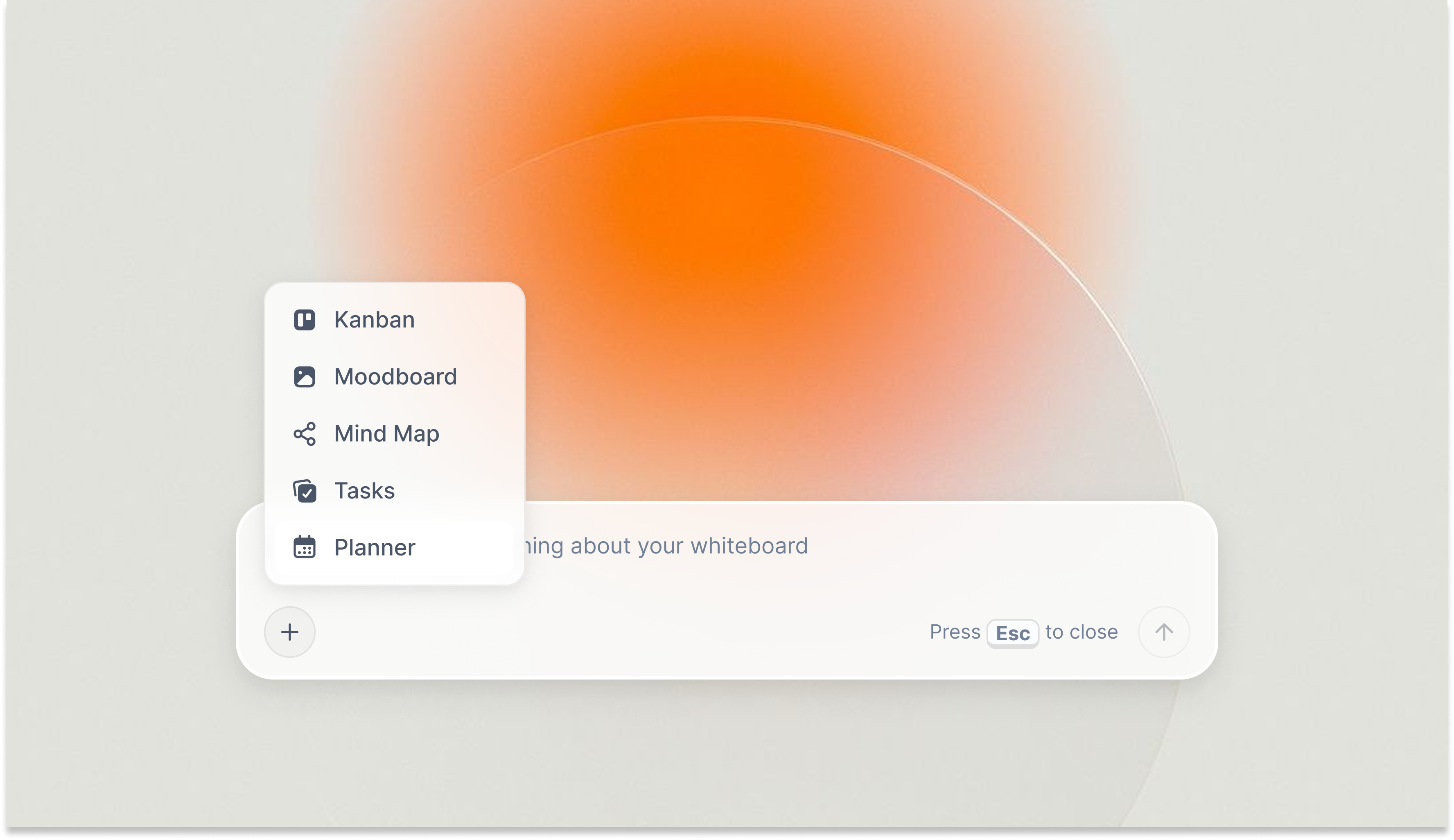
Use AI on the active board to turn territories and milestones into execution-ready checklists without losing the spine
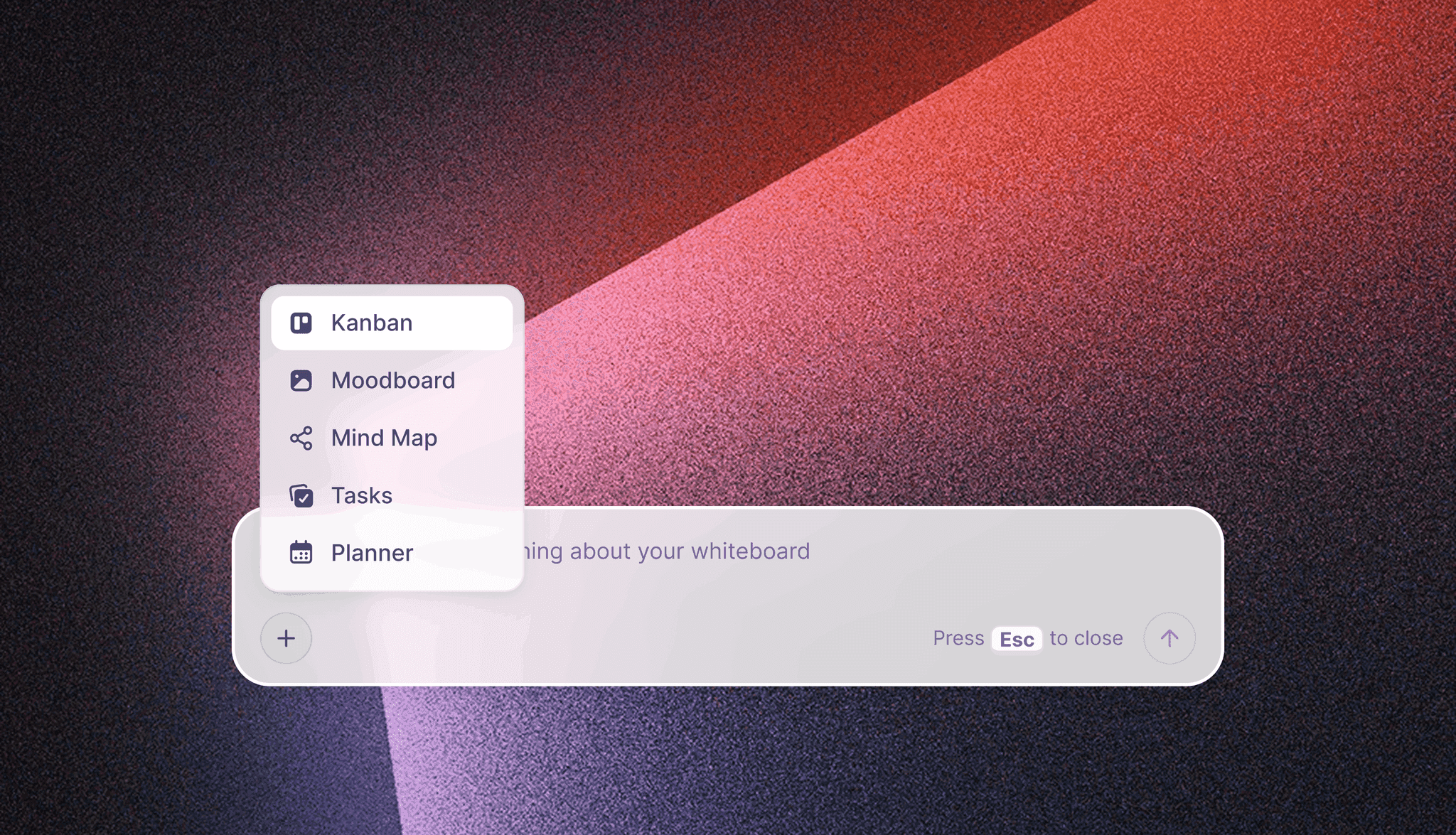
Move wave-one and wave-two assets through visible stages so reviewers see status without another status meeting
The 8-Step Process at a Glance
The full brand campaign planning process with AI in 2026, reduced to a checklist you can paste above your workspace:
- Define the job and scorecard - Objective, constraints, proof
- Capture audience tension - Belief shift plus proof burden
- Write single-minded proposition - Promise plus proof type
- Map channels by role - Jobs per surface only
- Develop territories - Kill-test against scorecard
- Scope asset waves - Wave one versus later beats
- Build milestones - Owners plus review gates
- Stakeholder readout - Freeze v1 plan
Tips and Best Practices for Brand Campaign Planning With AI
Score the spine before you score headlines
If leadership has not agreed on the scorecard, creative reviews become Rorschach tests. I sit stakeholders for fifteen minutes on Step 1 alone. The arguments that feel annoying there save multiples of that time when media flights are live.
Keep the active board sparse enough to screenshot
If you cannot export a single image that tells the story, executives will cherry-pick slides instead. I once cluttered a board with forty reference cards and watched the team ignore half of them in review. Now I archive deep research into linked documents and keep the canvas legible.
Use Storyflow documents for long narrative, cards for decisions
Narrative research belongs in docs you can @-mention; decisions stay on cards in the field of view. Mixing everything into paragraphs hides the commitments you need stakeholders to acknowledge.
Make AI argue the opposite of your lead territory
The useful moment is when the model surfaces a risk you were emotionally avoiding. You still decide; you stop treating surprise as an attack on taste.
Schedule the freeze email before the workshop ends
Block twenty minutes on calendars for the recap before people scatter. Momentum dies when summaries wait until tomorrow.
Pair quantitative gates with one qualitative signal
Numbers alone miss sentiment swings; qualitative alone hides efficiency problems. The spine should name both so analytics setup is not an afterthought.
Common Mistakes to Avoid
Mistake: Letting AI pick channels before Step 1 is finished
Why it happens: It feels fast to ask for a media plan on day one.
What goes wrong: You optimize for list length, not for the one belief your campaign must move.
What to do instead: Finish the scorecard and tension narrative, then ask AI to critique a draft map you wrote.
Mistake: Treating brainstorm output as strategy
Why it happens: Sticky notes feel productive.
What goes wrong: You inherit dozens of half ideas with no proof plan, then argue in circles during creative reviews.
What to do instead: Force every surviving idea through the scorecard and kill-tests in Step 5.
Mistake: Skipping legal or brand early when claims are central
Why it happens: Teams delay hard conversations to keep energy high.
What goes wrong: Creative heroes get killed late, budgets burn, and morale craters.
What to do instead: Book a 30-minute constraints readout right after Step 2 when proof is material to the story.
Mistake: Running Step 8 without a written recap
Why it happens: Everyone leaves assuming alignment.
What goes wrong: Execution teams remember different promises within days.
What to do instead: Send the frozen spine recap the same day with explicit deferred ideas listed.
Mistake: Assuming shared drives equal shared context
Why it happens: Links feel like transparency.
What goes wrong: Nobody opens the same file version; AI chats lack the live truth.
What to do instead: Keep decisions on the Storyflow active board and link out for depth, not the reverse.
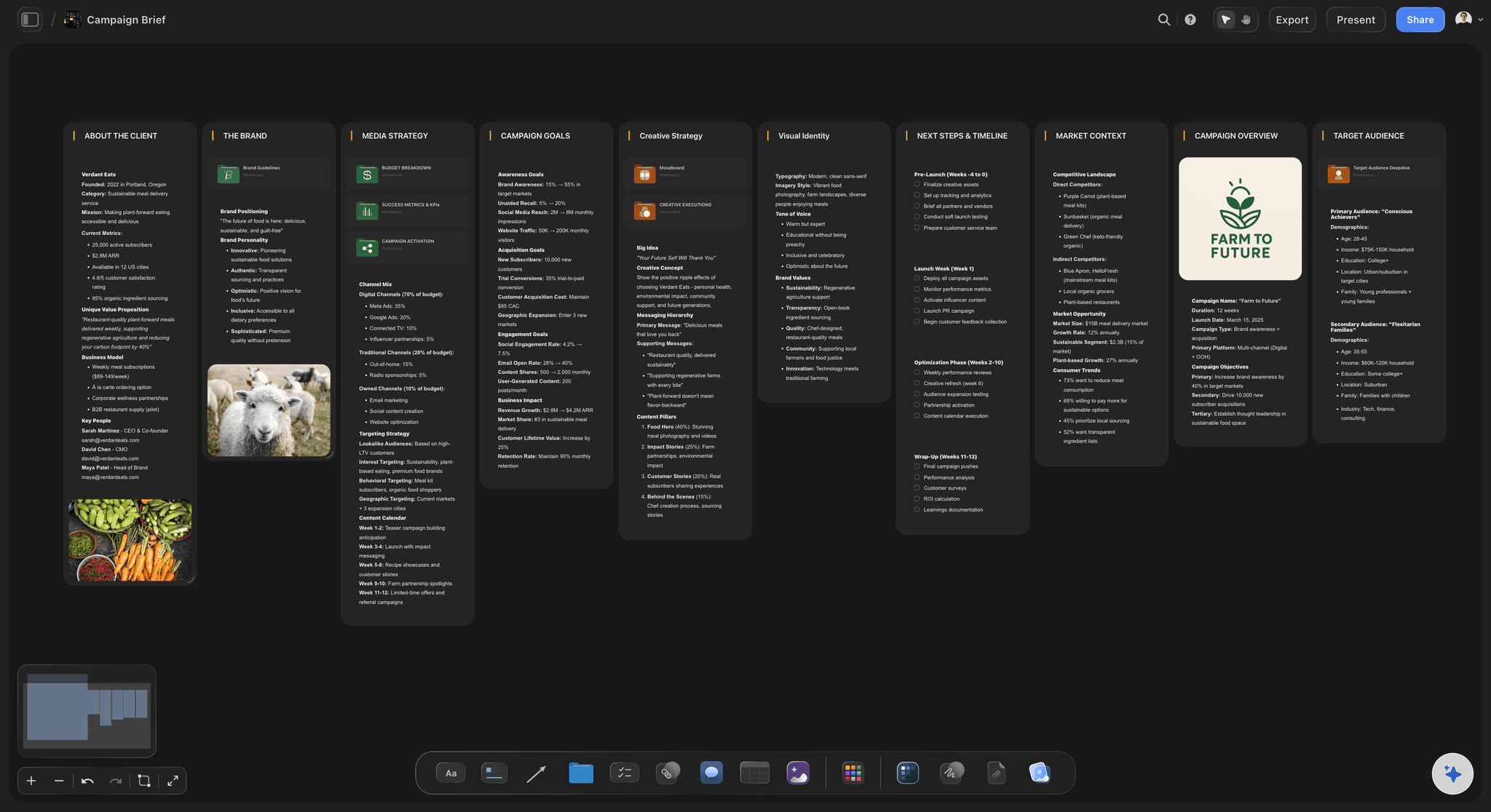
One Storyflow project can hold the entire spine so your next campaign builds on templates instead of memories
FAQ: How to Plan a Brand Campaign with AI
How long does it take to plan a brand campaign with AI?
A thorough first pass takes roughly 5 to 8 hours for a solo marketer or strategist, usually split across two working days so research and judgment have time to settle. A second campaign using the same board template often drops to 3 to 4 hours because objectives, audience notes, and channel roles copy forward. AI reduces drafting and variation work; it does not remove the hours you spend deciding what you believe about the audience.
How is planning a brand campaign with AI different from the traditional approach?
Traditional planning often happens in silos: a budget spreadsheet, a slide deck, and a separate doc nobody opens. AI does not change the strategy sequence, but it speeds research synthesis, territory variation, and stress-testing. The larger shift is operational: when briefs, references, and decisions sit on one active board, prompts stay tethered to what you already agreed. Without that shared surface, AI output tends to float into generic headlines.
What is the best AI tool to plan a brand campaign?
Storyflow is the strongest fit when your campaign plan needs to live on one visual board, because its AI reads the full active canvas before answering instead of starting from a blank chat. That matters for campaign work, where objectives, audience tension, territories, and assets all reference each other. Pure chat tools like ChatGPT are excellent for drafting a single section, and Notion AI is strong if your team already runs everything in documents. The honest trade-off: Storyflow plans the campaign but does not buy media or report performance, so pair it with your ad platforms and analytics for execution.
Can I plan a brand campaign with ChatGPT or Notion AI instead of Storyflow?
You can draft sections in ChatGPT or summarize research in Notion AI. Both break down when the campaign plan is larger than one paste window and stakeholders need to see the same spine. You end up re-explaining context in every new thread. Storyflow keeps objectives, audience tension, territories, and assets on the active board, and the assistant uses that board as context before answering. You can deepen prompts by @-mentioning one Blueprint Tactic and up to three documents when you need extra structure.
What is a creative territory in a brand campaign?
A territory is a coherent creative direction defined by a promise, a tone, and a proof plan, not a single headline. Strong teams carry at least two territories into review so leadership compares real options instead of rubber-stamping the first acceptable line. Each territory should fail fast against the scorecard you wrote in Step 1. If a territory cannot explain how it changes belief or behavior, it is still a mood, not a plan.
How many channels should a brand campaign include in 2026?
Include fewer channels than your instinct suggests. Most durable plans prioritize three primary surfaces where the audience actually evaluates the brand, plus one experiment slot. Every extra channel needs a role sentence, an owner, and a success signal. If you cannot write those in two minutes, the channel is decoration. AI can list every possible touchpoint; your job is to refuse the ones the objective does not require.
Do I need a finished creative concept before I plan the campaign?
No. The plan should define the job, audience tension, proof burden, and territories before anyone locks final copy or cuts. Final assets come after stakeholders align on which territory won. If you reverse the order, you negotiate inside craft reviews and timeline slips become personal. Finish Step 7 milestones before you brief high-cost production.
How do I know if my campaign objective is specific enough?
A strong objective names the business behavior you want, the audience segment, and the time window. If every channel tactic could still fit after you swap audiences, the objective is too loose. If no honest creative team could imagine work against it, it is too narrow. Run the sentence through your legal and finance partners early when claims or discounts are involved so the plan does not rewrite at week five.
What should be in a one-page brand campaign spine?
Carry the objective, constraints, audience tension, single-minded proposition, three territory names with one-line proofs, channel roles, wave-one assets, and milestone dates with owners. Anything longer than a page is usually hiding unclear decisions. That spine becomes the document new collaborators read before touching tactics.
Can a small team run this process without an agency?
Yes. Smaller teams move faster on Steps 1 through 4 because fewer calendars compete. The tradeoff is honest capacity on production and analytics. Budget external partners for where you lack craft depth, not for rewriting objectives you never wrote. Storyflow supports the full planning loop from its cheapest paid tier: Plus is $7.99/month billed annually and gives you unlimited boards and the full Blueprint Tactic library, with Pro adding AI image generation and 20x more AI when you run campaigns monthly. It is paid-only during early access, and the Free plan launches before the end of 2026.
Start Your First Brand Campaign Plan Today
What stops teams is not access to models; it is the fear of committing to the wrong spine. Perfectionism shows up as yet another research doc. The wrong tool shows up as a blank chat window with no shared scorecard. Both delay the moment you could pressure-test a real direction.
Run the cheapest possible test of this method: take the next campaign on your roadmap and rebuild only Steps 1 through 3 on one Storyflow board this week, scorecard, tension, and proposition, nothing else. Pull a Blueprint Tactic like AIDA beside the cards if you want structured prompts while you draft, then ask the board-aware AI to challenge what is missing before you touch territories. If the spine holds up in front of one skeptical stakeholder, you already know whether the rest of the process is worth your team's calendar. Start a Storyflow project and keep your next campaign spine where the team can see it.
Getting reliable at campaign planning is what frees your creative bets later. The same discipline powers launches, repositioning pushes, and the long arcs your competitors still treat as one-off decks.
Related Reading
Use spatial maps to stress-test how audience, offer, and proof connect before you spend budget on assets.
Translate this campaign spine into annual or quarterly planning language leadership expects.
Move from approved territory into a brief your creators can execute without another strategy meeting.
After the spine is frozen, plug publishing beats into a calendar that respects pillar balance and buffer.
Compare workspaces if you are choosing where campaign planning and creative execution should live long term.
Apply the campaign spine to a launch, sequencing pre-launch and post-launch beats.
About the author
Sara de Klein is Head of Product at Storyflow, the visual AI workspace where creators, filmmakers, marketers, and strategists plan and ship work on one board. She builds product by running the same planning rituals this guide describes, then tightening Storyflow so Blueprint Tactics, documents, and board-aware AI stay in sync with how teams actually decide.
Table of Contents
- The Problem: When Campaign Planning Becomes a Slide Stack With No Spine
- What You Need Before You Plan a Brand Campaign With AI
- How to Plan a Brand Campaign with AI: Step by Step (2026)
- The 8-Step Process at a Glance
- Tips and Best Practices
- Common Mistakes to Avoid
- FAQ: How to Plan a Brand Campaign with AI
- Start Your First Brand Campaign Plan Today
Templates to check out for this topic


Marketing and campaign templates you can use in Storyflow
Plan the whole campaign on one board: brief, audience, channels, and assets connected, with an AI that reads all of it. Open a template and start from real structure.


See Storyflow in Action
A visual AI workspace where every feature lives inside one canvas. No tab-switching, no context lost.
Build your entire board from a single message
Type what you need in the AI chat at the bottom of your canvas. The AI adds cards, headings, and structure directly onto your board.
Use expert frameworks as AI context
Type @ in the AI chat and choose any Tactic. The AI tailors every response to that framework instead of giving generic advice.
Turn your board into a mind map in seconds
Ask the AI to restructure your canvas as a mindmap. It connects your ideas into a visual hierarchy so you can see how everything relates.
Why Storyflow Exists
Storyflow actually began as a personal tool while working on creative and research projects.
We kept running into the same problem: ideas were scattered everywhere: notes, documents, and whiteboards.
Nothing helped us see how everything connected.
So we started building a workspace designed around how ideas actually grow.
→ Read how Storyflow was createdSara de Klein
Head of Product at Storyflow
Published: 2026-04-08
Extremely simple, seriously capable


See how easy it is to get started
Watch a real project come together, from a blank board to a finished plan, clicked through step by step.
Start creating with AI and become more productive
Transform your creative workflow with AI-powered tools. Generate ideas, create content, and boost your productivity in minutes instead of hours.